


Report Overview
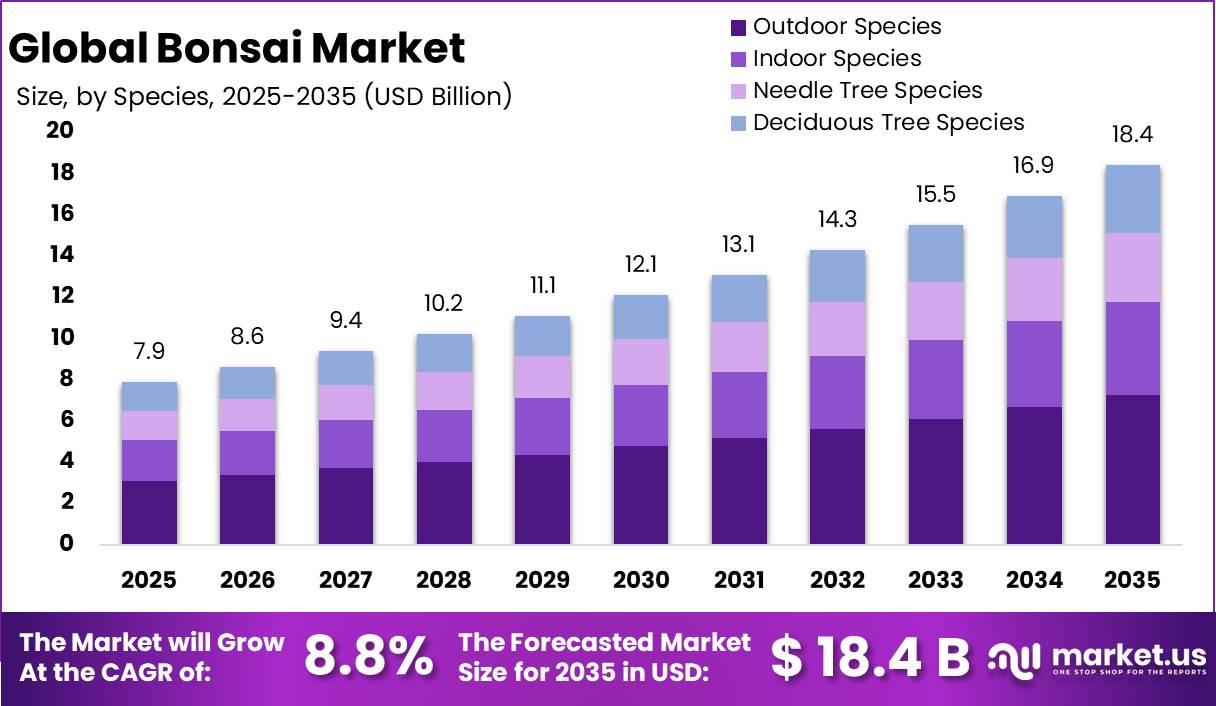
The Global Bonsai Market size is expected to be worth around USD 18.4 Billion by 2035, from USD 7.9 Billion in 2025, growing at a CAGR of 8.8% during the forecast period from 2026 to 2035. In 2025, Asia Pacific held a dominant market position, capturing more than a 48.5% share, holding USD 3.8 Billion revenue.
Bonsai sits within ornamental horticulture, serving compact indoor décor, gifting, wellness, hobby gardening and premium nursery retail. Globally, ornamental horticulture was valued by AIPH at US$70 billion in 2024, with data coverage across 50+ countries, showing the sector’s broad commercial base.
Industry demand is supported by urban living, smaller homes, online plant retail and rising interest in indoor greenery. In the EU, live plants and floriculture represent 10% of world flower-production area and 44% of world flower and pot-plant production, making Europe a key production and trade region for bonsai-related ornamental plants.
In the United States, USDA reported 2024 floriculture sales of US$928.4 million for foliage plants used indoors/patios and US$1.25 billion for potted flowering plants, showing strong adjacent demand for decorative living plants. USDA also recorded 7,535 floriculture operations with hired workers in 2024, up 15% from 2023. The United Nations states that 55% of the world’s population lives in urban areas and this is expected to rise to 68% by 2050, strengthening demand for small-format plants suited to apartments and urban consumers.
Demand is being driven by urban consumers seeking compact, long-life decorative plants, while bonsai also benefits from wellness, craftsmanship, and high-value collector positioning. Government sustainability agendas indirectly support this category: the EU Farm to Fork strategy targets 25% organic agricultural land by 2030, while EU biodiversity policy supports greener urban and rural ecosystems. EU ornamental trade also shows resilience; in 2024, the EU exported €98.9 million of selected flower bulbs against €4.7 million of imports.
Government and policy support is also linked to urban greening. The EU Nature Restoration Regulation targets restoration measures covering at least 20% of EU land and sea areas by 2030 and all ecosystems needing restoration by 2050, indirectly improving long-term demand for nursery plants, trees and green infrastructure.
Government-backed greening also supports plant awareness; the USDA Urban and Community Forestry programme received up to US$1.5 billion for urban tree and forestry investments. In 2025, Union Fleurs stated that the EU ornamental sector generated €20 billion in production value and supported more than 760,000 jobs, while EU–UK flower and live-plant trade exceeded €1.45 billion annually.
Mistral Bonsai represents a large European production-led model. The company states that it has operated since 1986, with 140,000 m² of greenhouses, a permanent exhibition of 200,000 bonsais, and more than 250 species grown and acclimatized. Its facilities also include 23 hectares of field cultivation and 5,500 m² of warehouses. Mistral Bonsai, based in Spain, strengthens the European scenario through large-scale exhibition, education, and collector engagement; its 2025 Bonsai Conference was scheduled for 5–6 April 2025, with free entrance, free parking, guided visits, and an exhibition area of more than 10,000 m².
Key Takeaways
- Bonsai Market size is expected to be worth around USD 18.4 Billion by 2035, from USD 7.9 Billion in 2025, growing at a CAGR of 8.8%.
- Outdoor Species held a dominant market position, capturing more than a 39.4% share of the bonsai market.
- Residential held a dominant market position, capturing more than a 56.2% share of the bonsai market.
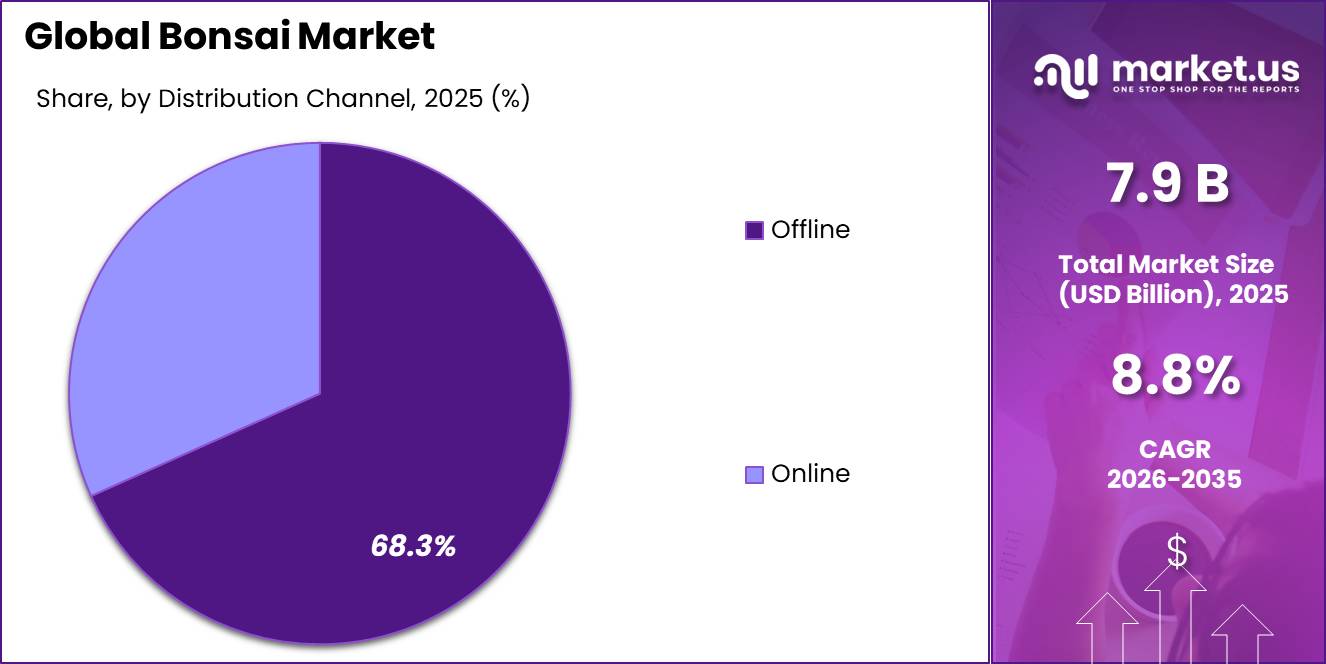
- Offline held a dominant market position, capturing more than a 68.3% share of the bonsai market.
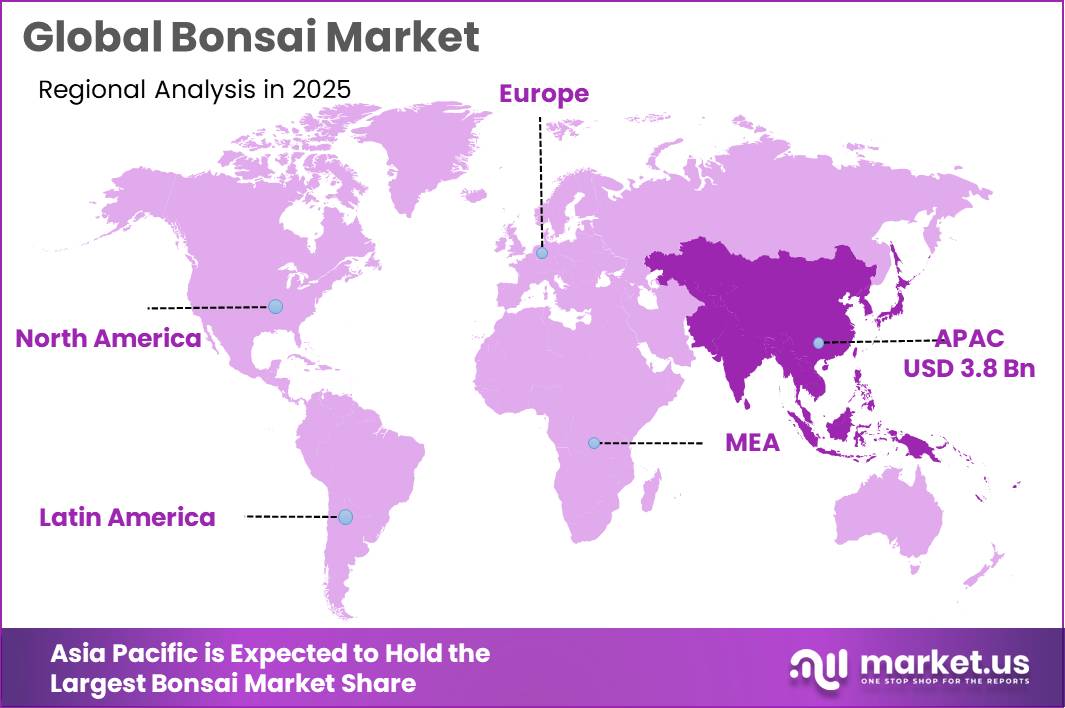
- Asia Pacific held the dominant position in the global bonsai market, accounting for 48.5% of total market revenue and reaching a value of approximately USD 3.8 billion.
By Species Analysis
Outdoor Species dominates with 39.4% share due to its strong appeal in gardens, patios, and landscape décor.
In 2025, Outdoor Species held a dominant market position, capturing more than a 39.4% share of the bonsai market by species type. The strong presence of outdoor bonsai was mainly supported by growing consumer interest in natural garden aesthetics, outdoor living spaces, and landscape enhancement. Many homeowners, gardening enthusiasts, and commercial property owners preferred outdoor bonsai because these plants can thrive in natural environmental conditions while adding a unique artistic element to outdoor settings. Popular species such as Juniper, Pine, Maple, and Elm continued to attract buyers due to their durability, seasonal beauty, and long lifespan.
By Application Analysis
Residential dominates with 56.2% share driven by rising home gardening and indoor décor preferences.
In 2025, Residential held a dominant market position, capturing more than a 56.2% share of the bonsai market by application. This leadership was largely supported by the growing popularity of home gardening, indoor plant decoration, and wellness-focused living environments. Bonsai trees became a preferred choice among homeowners looking to enhance the visual appeal of living rooms, balconies, patios, and personal gardens. Their compact size, artistic appearance, and ability to create a peaceful atmosphere made them highly suitable for residential spaces.
By Distribution Channel Analysis
Offline dominates with 68.3% share as buyers prefer seeing and selecting bonsai plants in person.
In 2025, Offline held a dominant market position, capturing more than a 68.3% share of the bonsai market by distribution channel. The segment’s strong performance was driven by consumer preference for physically inspecting bonsai trees before making a purchase. Since bonsai plants vary in shape, size, age, and overall appearance, many buyers preferred visiting nurseries, garden centers, and specialty plant stores to assess plant quality firsthand. This hands-on buying experience played a major role in supporting the continued dominance of offline sales.
Key Market Segments
By Species
- Indoor Species
- Outdoor Species
- Needle Tree Species
- Deciduous Tree Species
By Application
- Residential
- Commercial
- Others
By Distribution Channel
- Online
- Offline
Emerging Trends
Indoor Wellness and Nature-Based Living Are Becoming a Strong Bonsai Trend
One of the latest trends shaping the bonsai market is the growing consumer focus on indoor wellness and nature-inspired living spaces. People are increasingly adding plants to homes, offices, cafés, and workspaces to create a more peaceful and visually appealing environment. Bonsai trees are becoming especially popular because they combine greenery with artistic design while fitting easily into small indoor spaces. According to the World Health Organization (WHO), urban green spaces can improve mental and physical health, reduce stress, and support overall well-being.
This growing awareness has encouraged consumers to invest in decorative plants that bring a sense of calm into daily life. Bonsai trees are often viewed as both a hobby and a wellness-focused lifestyle choice. Governments and urban planning organizations are also promoting greener living environments as part of sustainable city development programs. As a result, demand for compact ornamental plants such as bonsai continues to increase among urban households looking for natural elements within modern living spaces.
Urban Greening Programs Are Increasing Interest in Decorative Trees
Another important trend in the bonsai market is the rising global focus on urban greening and city beautification projects. According to the Food and Agriculture Organization (FAO), more than half of the world’s population already lives in cities, and urban populations are expected to continue growing significantly in the coming decades. To improve environmental quality, governments and local authorities are investing in green infrastructure, urban forests, rooftop gardens, and community planting initiatives. FAO also highlights that urban forests help improve air quality, reduce pollution, and support healthier living conditions.
These efforts are encouraging greater public interest in ornamental plants and miniature trees that can be maintained in limited spaces. Bonsai fits naturally into this trend because it offers a combination of greenery, artistic value, and space efficiency. Consumers are increasingly purchasing bonsai trees not only for decoration but also as part of sustainable lifestyle practices. The continued expansion of urban greening initiatives is expected to support long-term interest in bonsai cultivation across residential and commercial settings.
Drivers
Rising Urban Gardening Trends Are Increasing Demand for Bonsai Plants
One of the major driving factors supporting the growth of the bonsai market is the increasing popularity of urban gardening and home-based green spaces. As cities become more crowded and living spaces become smaller, many consumers are turning toward compact plants that fit easily in apartments, balconies, rooftops, and indoor environments. Bonsai trees have gained attention because they offer both decorative value and a connection with nature without requiring large garden areas.
According to the United States Department of Agriculture (USDA), urban agriculture currently contributes around 15% to 20% of the global food supply, highlighting the growing interest in urban cultivation and plant-based lifestyles. This broader gardening movement has positively influenced demand for ornamental plants, including bonsai. Governments and environmental organizations are also promoting urban greenery to improve air quality and sustainability.
Government Support for Urban Green Spaces Encourages Bonsai Adoption
Government initiatives focused on urban greening and sustainable living are also contributing to the growth of the bonsai market. Several countries are encouraging citizens to create rooftop gardens, home gardens, and community green spaces to reduce environmental stress in urban areas. In 2025, the Odisha government in India launched a rooftop gardening awareness campaign across major cities including Bhubaneswar and Cuttack to increase urban greenery and promote sustainable lifestyles.
In addition, the Food and Agriculture Organization (FAO) highlights that trees and urban green spaces improve environmental quality, support mental well-being, reduce heat effects, and enhance city landscapes. These benefits are encouraging more households to include decorative plants as part of their daily living environment. Bonsai trees fit well within these initiatives because they require limited space while offering a natural and artistic appearance.
Restraints
High Maintenance Requirements Limit Wider Bonsai Adoption
One of the major factors restraining the growth of the bonsai market is the high level of care and maintenance required to keep bonsai trees healthy over long periods. Unlike many common indoor plants, bonsai trees need regular pruning, watering, repotting, wiring, and close monitoring of environmental conditions. For beginners, maintaining the right balance of sunlight, moisture, and nutrients can be challenging. As a result, many consumers hesitate to purchase bonsai plants despite their decorative appeal.
According to the Food and Agriculture Organization (FAO), nearly 40% of the world’s land is already degraded, reducing plant health and increasing vulnerability to environmental stress. This broader environmental challenge highlights the growing difficulty of maintaining healthy plant systems, including specialty plants such as bonsai. Extreme weather conditions, rising temperatures, and changing rainfall patterns can further increase maintenance needs. For many busy urban consumers, the time and effort required for bonsai care remain a significant barrier, limiting the expansion of the market among first-time plant owners.
Limited Consumer Knowledge and Plant Survival Concerns Affect Demand
Another challenge for the bonsai market is the lack of consumer knowledge regarding proper cultivation and long-term care. Bonsai trees are living art forms that require specialized attention compared to standard ornamental plants. Many buyers are attracted by their appearance but often underestimate the expertise needed to maintain them successfully. According to the United Nations Environment Programme (UNEP), approximately 40% of the world’s land is degraded, affecting ecosystem health and increasing pressures on plant cultivation globally. Environmental changes associated with land degradation and climate stress can make bonsai maintenance even more difficult, especially for inexperienced owners.
In response, governments and horticultural organizations in several countries have expanded public awareness programs related to urban gardening and sustainable plant care. However, consumer education remains limited in many regions. The fear of plant loss due to improper care often discourages potential buyers from entering the hobby. This concern continues to act as a restraint on market growth, particularly among new consumers seeking low-maintenance decorative plants.
Opportunity
Expanding Urban Green Living Trends Create Strong Opportunities for Bonsai Sales
One of the biggest growth opportunities for the bonsai market comes from the rising demand for urban green living and compact home gardening solutions. As cities continue to expand, people are increasingly looking for ways to bring nature into smaller living spaces. Bonsai trees are well suited for apartments, balconies, office desks, and rooftop gardens because they require limited space while offering a natural and decorative appearance.
According to the United Nations, around 55% of the global population currently lives in urban areas, and this figure is expected to increase to 68% by 2050. This rapid urbanization is encouraging consumers to adopt indoor and space-efficient plants that improve aesthetics and create a calming environment. Governments and environmental organizations are also promoting urban greening projects to improve sustainability and quality of life in cities. As more households seek greenery without needing large gardens, bonsai trees are becoming an attractive option.
Government Green City Programs Support Future Bonsai Demand
Another major opportunity for the bonsai market is the increasing number of government-supported green city and urban forestry programs. Many countries are investing in urban landscaping, rooftop gardens, and community green spaces to improve environmental health and reduce the impact of urbanization. The Food and Agriculture Organization (FAO) states that metropolitan areas are already home to about 41% of the world’s population and contribute nearly 60% of global GDP.
The organization also notes that the urban population is expected to reach 68% by 2050. To address environmental challenges, FAO’s Green Cities Initiative supports the development of greener and more sustainable urban environments. These programs are encouraging the use of ornamental plants and small trees in residential and public spaces. Bonsai trees fit naturally into these efforts because they offer greenery in a compact and visually appealing form.
Regional Insights
Asia Pacific Dominates the Bonsai Market with 48.5% Share, Valued at USD 3.8 Billion
In 2025, Asia Pacific held the dominant position in the global bonsai market, accounting for 48.5% of total market revenue and reaching a value of approximately USD 3.8 billion. The region’s leadership is strongly linked to its deep cultural connection with bonsai cultivation, particularly in countries such as Japan and China, where the art of growing miniature trees has been practiced for centuries. Bonsai remains an important part of traditional gardening culture across the region, supporting steady consumer demand from both hobbyists and professional collectors.
Supportive government initiatives promoting urban greening and sustainable landscaping have also contributed to market growth. Several countries across Asia Pacific continue to invest in public parks, green infrastructure, rooftop gardens, and urban forestry programs, creating greater awareness of ornamental horticulture. In addition, bonsai exhibitions, gardening festivals, and educational workshops held throughout the region have helped expand consumer participation and appreciation for the art form.
Key Regions and Countries Insights
- North America
- US
- Canada
- Europe
- Germany
- France
- The UK
- Spain
- Italy
- Rest of Europe
- Asia Pacific
- China
- Japan
- South Korea
- India
- Australia
- Rest of APAC
- Latin America
- Brazil
- Mexico
- Rest of Latin America
- Middle East & Africa
- GCC
- South Africa
- Rest of MEA
Key Players Analysis
Brussel’s Bonsai is one of the largest bonsai nurseries in North America, founded in 1973 by Brussel Martin. The company operates across approximately 20 acres dedicated to bonsai cultivation and maintains more than 180,000 sq. ft. of greenhouse space. Its facility also includes a 5,000 sq. ft. office and an 18,000 sq. ft. shipping and production center. The nursery employs around 50 employees and reports annual revenue exceeding US$5 million, supporting large-scale retail, wholesale, and online bonsai distribution activities.
Mistral Bonsai is among Europe’s leading bonsai producers and distributors, operating since 1986. The company manages approximately 55,000 m² of greenhouse facilities and maintains a collection exceeding 200,000 bonsai trees. Its portfolio covers more than 190 bonsai species, enabling broad product diversification across indoor and outdoor varieties. The company’s large-scale production, educational events, and international distribution network strengthen its position within the European ornamental horticulture and specialty bonsai market.
Abana Homes operates as a bonsai-focused e-commerce and green-gifting company with approximately 6 acres of cultivation land. The company reported a target of delivering more than 60,000 bonsai plants in a single year and serves both retail and corporate customers. Its portfolio includes bonsai ranging from 3-year-old starter plants to premium specimens aged 15 years. The company also highlights green-gifting solutions priced from approximately ₹250 to ₹50,000, supporting diversified revenue streams within the ornamental plant sector.
Top Key Players Outlook
- Brussels Bonsai
- Mistral Bonsai
- Kaizen Bonsai
- Abana Homes
- Lodder Bonsai BV
- Bonsai Network Japan
- Bonsaischule Wenddorf
- B Bonsai Outlet
- Bonsai Empire
- Herons Bonsai Limited
- Maillot Bonsai
- Kimura Bonsai Garden
- Wigerts Bonsai
- Shanghai Penjing Garden
- Chrysal International
Recent Industry Developments
In 2025, Lodder Bonsai BV remained a key European bonsai player, supported by a long operating history that began in 1896 and a 4th-generation family business model. The company has almost 60 years of bonsai trading and cultivation experience and operates from Harmelen, Netherlands, where its nursery covers over 16,000 m². For investment and expansion, Lodder strengthened its reach through online and offline channels, including Bonsai Shop, a collaboration between Bonsai Empire and Lodder Bonsai BV.
In 2025, Mistral Bonsai continued to work as a specialized bonsai company focused on cultivation, production, import, export, and online sales. The company has been active since 1986, giving it more than 35 years of operating experience in the bonsai sector. Its nursery is located in the Ebro Delta, Spain, with around 55,000 m² of greenhouses and a permanent exhibition of nearly 200,000 bonsai trees, covering more than 190 bonsai species. Its online store offers around 1,500 products, including bonsai trees, prebonsai, tools, treatments, oriental trees, and decorative items.
Report Scope
| Report Features | Description |
|---|---|
| Market Value (2025) | USD 7.9 Bn |
| Forecast Revenue (2035) | USD 18.4 Bn |
| CAGR (2026-2035) | 8.8% |
| Base Year for Estimation | 2025 |
| Historic Period | 2020-2024 |
| Forecast Period | 2026-2035 |
| Report Coverage | Revenue Forecast, Market Dynamics, Competitive Landscape, Recent Developments |
| Segments Covered | By Species (Indoor Species, Outdoor Species, Needle Tree Species, Deciduous Tree Species), By Application (Residential, Commercial, Others), By Distribution Channel (Online, Offline) |
| Regional Analysis | North America – US, Canada; Europe – Germany, France, The UK, Spain, Italy, Rest of Europe; Asia Pacific – China, Japan, South Korea, India, Australia, Singapore, Rest of APAC; Latin America – Brazil, Mexico, Rest of Latin America; Middle East & Africa – GCC, South Africa, Rest of MEA |
| Competitive Landscape | Brussels Bonsai, Mistral Bonsai, Kaizen Bonsai, Abana Homes, Lodder Bonsai BV, Bonsai Network Japan, Bonsaischule Wenddorf, B Bonsai Outlet, Bonsai Empire, Herons Bonsai Limited, Maillot Bonsai, Kimura Bonsai Garden, Wigerts Bonsai, Shanghai Penjing Garden, Chrysal International |
| Customization Scope | Customization for segments, region/country-level will be provided. Moreover, additional customization can be done based on the requirements. |
| Purchase Options | We have three licenses to opt for: Single User License, Multi-User License (Up to 5 Users), Corporate Use License (Unlimited User and Printable PDF) |





































