


Market Overview
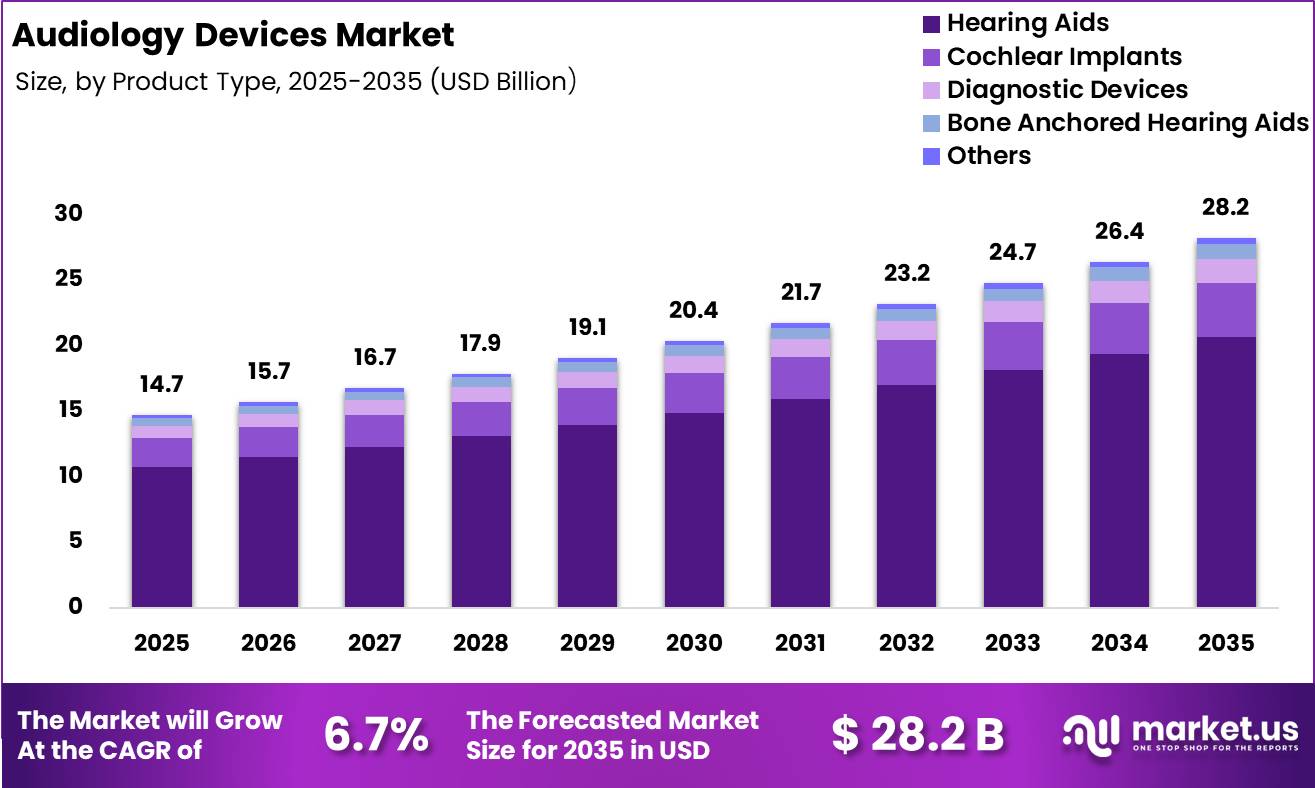
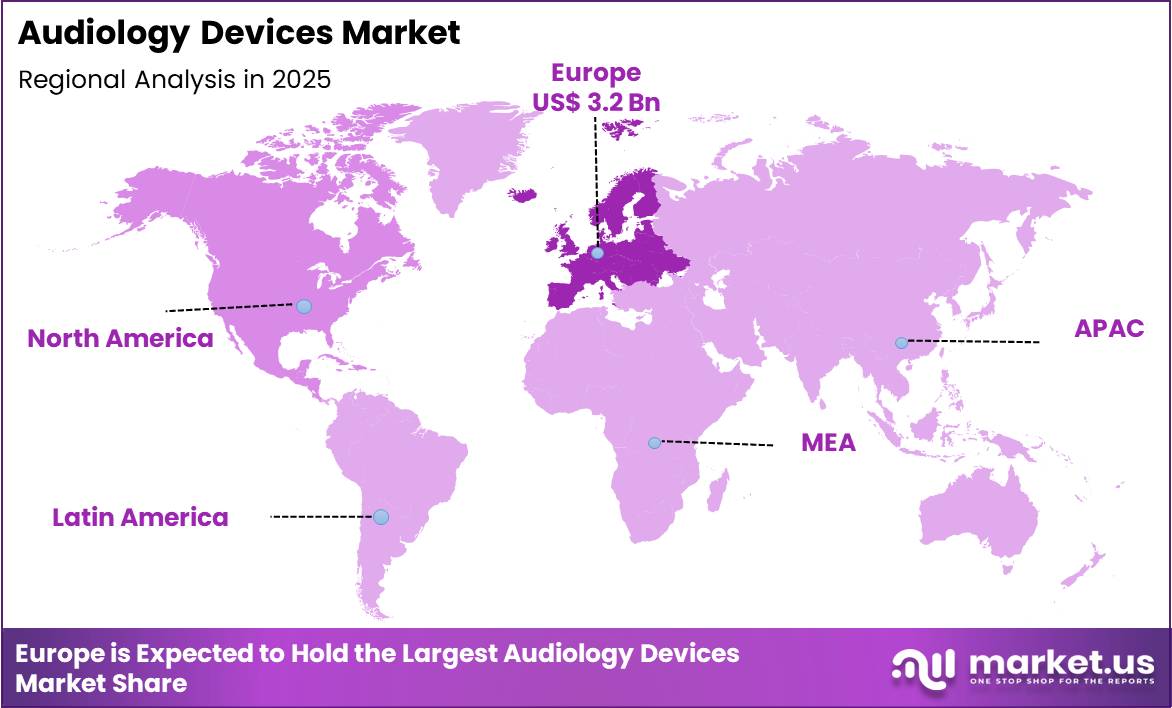
Global Audiology Devices Market size is expected to be worth around US$ 28.2 Billion by 2035 from US$ 14.7 Billion in 2025, growing at a CAGR of 6.7% during the forecast period from 2026 to 2035. In 2025, Europe led the market, achieving over 34.8% share with a revenue of US$ 1.3 Billion.
Global Audiology Devices Market is experiencing steady expansion driven by rising prevalence of hearing impairment, aging populations, and increased exposure to occupational and recreational noise.
According to the World Health Organization (WHO), over 1.5 billion people currently live with some degree of hearing loss, and this number is projected to reach 2.5 billion by 2050, with more than 430 million individuals requiring rehabilitation support. This growing disease burden is accelerating demand for hearing aids, cochlear implants, and diagnostic audiology equipment.
Increasing government screening programs for newborn hearing loss, expanding reimbursement policies, and technological advancements such as digital signal processing and rechargeable hearing devices are further supporting adoption.
Public health initiatives by global healthcare authorities continue to emphasize early diagnosis and intervention improving quality of life and productivity for affected populations worldwide. These trends align with global efforts to expand universal ear and hearing care under primary healthcare systems worldwide supported by WHO public health guidance initiatives globally.
Key Takeaways
- The global Audiology Devices Market was valued at US$ 14.7 Billion in 2025.
- The global Audiology Devices Market is projected to grow at a CAGR of 6.7% and is estimated to reach US$ 28.2 Billion by 2035.
- By Product Type, Hearing Aids dominated the market, accounting for 73.2% of the total market share in 2025.
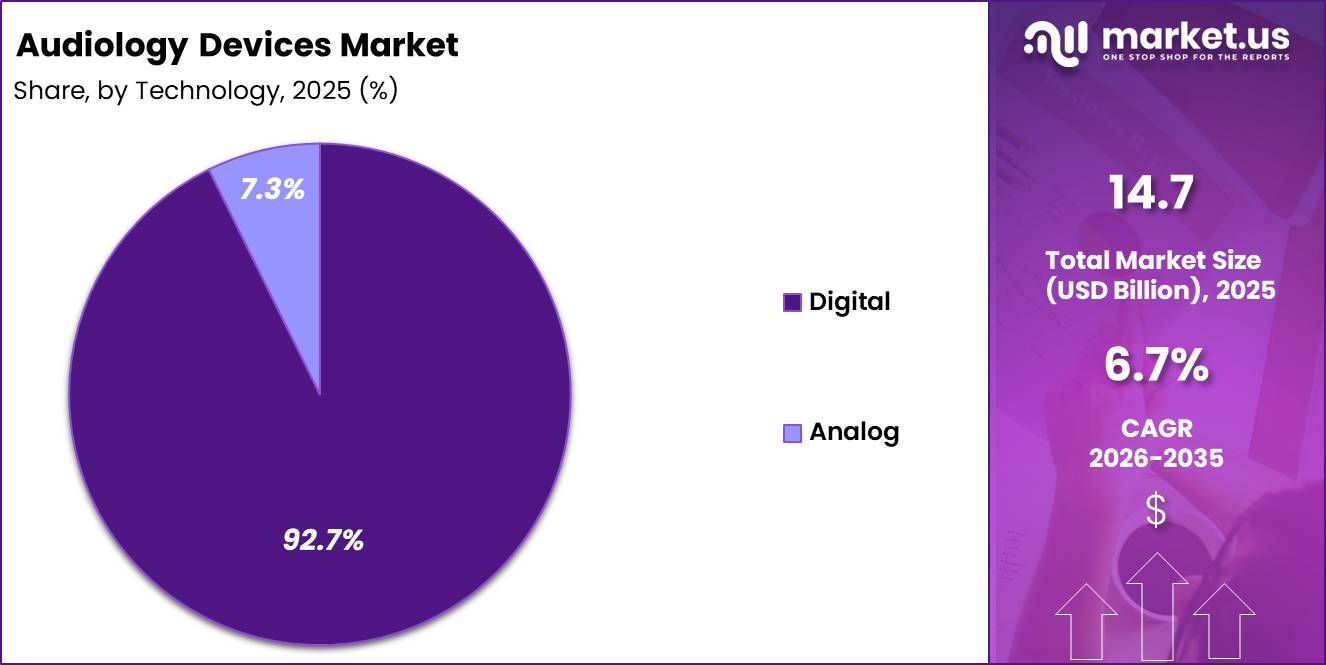
- Based on Technology type, Digital dominated the market, constituting 92.7% of the total market share..
- By Patient Type, Geriatric dominated the market, constituting 61.4% of the total market share
- By By Hearing Loss Type, Sensorineural Hearing Loss dominated the market, constituting 68.5% of the total market share
- Among end users, Audiology & ENT Clinics dominated the market, accounting for 48.2% of the total market share.
- Among regions, Europe emerged as the leading regional market, contributing 34.8% of the global Audiology Devices Market
revenue in 2025.
By Product Type
By product type is primarily segmented into hearing aids, cochlear implants, diagnostic devices, and bone-anchored hearing aids (BAHA). Hearing aids dominate the market with a significant 73.2% share in 2025, driven by rising global prevalence of hearing impairment, especially among the aging population, and continuous advancements in miniaturization, connectivity, and battery efficiency.
Cochlear implants account for 14.8% of the market, serving patients with severe to profound hearing loss where conventional hearing aids are insufficient. Their adoption is increasing due to improved surgical techniques and expanding reimbursement coverage in developed economies.
Diagnostic devices hold a 6.5% share and play a critical role in early detection and assessment of hearing disorders, supporting timely intervention and treatment planning. Bone-anchored hearing aids contribute 3.9% of the market and are mainly used for conductive hearing loss or single-sided deafness cases.
Overall, the dominance of hearing aids reflects strong demand for non-invasive, cost-effective solutions, while implantable and diagnostic segments continue to grow steadily with technological advancements and improved healthcare access.
By Technology
By technology is segmented into digital and analog systems, with digital technology overwhelmingly dominating the landscape. In 2025, digital audiology devices account for 92.7% of the market share, reflecting the widespread transition from traditional analog systems to advanced digital platforms.
Digital devices offer superior sound processing, noise reduction, feedback suppression, and connectivity features such as Bluetooth and smartphone integration, significantly improving user experience and adoption rates. The integration of artificial intelligence and machine learning in modern hearing aids further enhances sound personalization and adaptive performance across different environments.
In contrast, analog devices represent only 7.3% of the market and are largely confined to price-sensitive regions or users with minimal feature requirements. Their usage continues to decline due to limited functionality and lower sound quality compared to digital alternatives.
The strong dominance of digital technology is further supported by increasing R&D investments, rapid technological innovation, and growing consumer preference for discreet, high-performance hearing solutions. As a result, the segment is expected to maintain its leadership position throughout the forecast period.
By Patient Type
By patient type is segmented into geriatric, adult, and pediatric populations, with the geriatric segment holding a dominant 61.4% market share in 2025. This dominance is primarily attributed to the high prevalence of age-related hearing loss, also known as presbycusis, which affects a significant portion of the elderly population worldwide.
Increasing life expectancy and a rapidly aging global demographic are key factors driving demand for hearing aids and related audiology solutions among geriatric patients.
Adults represent a substantial secondary segment, driven by occupational noise exposure, chronic health conditions, and lifestyle-related hearing impairments. The pediatric segment, while smaller, is gaining importance due to early screening programs, newborn hearing assessments, and improved awareness of childhood hearing disorders.
Early intervention in children is crucial for speech and cognitive development, supporting steady demand in this category. Overall, the strong dominance of the geriatric segment underscores the demographic-driven nature of the audiology devices market, while other segments continue to expand gradually with improved diagnostic outreach and healthcare accessibility.
By Hearing Loss Type
By hearing loss type is categorized into sensorineural, conductive, and mixed hearing loss, with sensorineural hearing loss dominating the market at 68.5% share in 2025. This type of hearing loss is primarily caused by damage to the inner ear or auditory nerve and is most commonly associated with aging, prolonged noise exposure, and genetic factors.
The high prevalence of sensorineural cases significantly drives demand for advanced hearing aids and cochlear implants, which are designed to compensate for inner ear damage.
Conductive hearing loss, which results from obstructions or dysfunction in the outer or middle ear, represents a smaller but clinically significant segment and is often treatable through medical or surgical interventions, sometimes reducing reliance on long-term device use.
Mixed hearing loss, combining both sensorineural and conductive components, also contributes to overall market demand, particularly in complex clinical cases requiring hybrid treatment approaches. The dominance of sensorineural hearing loss highlights the growing need for technologically advanced audiology solutions capable of delivering precise sound amplification and signal processing for long-term auditory rehabilitation.
By End User
The audiology devices market by end user is segmented into audiology & ENT clinics, hospitals, retail & specialty stores, and home care settings. Audiology & ENT clinics dominate the market with a 48.2% share in 2025, as they serve as the primary point of diagnosis, fitting, and follow-up care for patients with hearing disorders.
These clinics offer specialized expertise, advanced diagnostic equipment, and personalized fitting services, making them the preferred choice for hearing aid adoption and adjustment. Hospitals also represent a significant segment, particularly for surgical procedures such as cochlear implantation and treatment of complex ear disorders.
Retail and specialty stores contribute to market growth by improving accessibility and offering a wide range of over-the-counter and prescription devices. Meanwhile, home care settings are expanding steadily due to rising adoption of remote fitting technologies, tele-audiology services, and user-friendly self-adjustable hearing aids.
Overall, the dominance of audiology & ENT clinics reflects the clinical nature of hearing care delivery, while technological advancements are gradually decentralizing care toward more accessible and patient-centric models.
Market Segmentations
By Product Type
- Hearing Aids
- Cochlear Implants
- Diagnostic Devices
- Bone Anchored Hearing Aids
By Technology
- Digital
- Analog
By Patient Type
- Geriatric
- Adult
- Pediatric
By Hearing Loss Type
- Sensorineural Hearing Loss
- Conductive Hearing Loss
- Mixed Hearing Loss
By End User
- Audiology & ENT Clinics
- Hospitals
- Homecare Settings
Challenge
Rare-Earth & Semiconductor Supply Fragility
Rare-earth and semiconductor supply fragility is emerging as a notable constraint for the hearing aid industry. China’s 2024–2025 export controls on 12 of the 17 critical rare-earth elements, including dysprosium, terbium, and gadolinium used in hearing aid receivers and bone-anchored transducers, have reduced supply visibility, while non-Chinese inventories were estimated at only 5–6 months of buffer stock by late 2025.
As supply tightens, component costs for receiver assemblies are projected to rise by approximately 8%–14% in the near term. Simultaneously, although mainstream chip shortages have eased, advanced AI-inference and specialized packaging semiconductors used in next-generation dual-chip hearing aids continue to face lead times exceeding 40–52 weeks.
These combined pressures are forcing manufacturers to pursue multi-sourcing strategies and product redesign efforts, increasing development costs, stretching engineering resources, and slowing innovation cycles.
The resulting supply-chain disruption is expected to impose an estimated 1.2% friction drag on the market’s maximum CAGR potential during 2026–2030, with the greatest exposure concentrated across North American and European manufacturing bases and key APAC logistics hubs.
| Challenge | (~) % CAGR Friction Drag | Geographic Relevance | Mitigation Horizon |
|---|---|---|---|
| Rare-Earth & Semiconductor Supply Fragility | ~-1.2% | North America, EU manufacturing hubs, APAC logistics corridors | Medium term (2–4 years) |
| Structural Audiologist Workforce Deficit | ~-0.9% | North America core, Sub-Saharan Africa, South Asia (India, rural APAC) | Long term (≥4 years) |
| AI Chip Integration — Power & Cost Ceiling | ~-0.8% | Global premium segment; EU, North America R&D hubs | Medium term (2–4 years) |
| Fragmented Global Reimbursement Architecture | ~-1.0% | APAC emerging markets, Latin America, MEA; partial EU gaps | Long term (≥4 years) |
| Oligopolistic Market Concentration Risk | ~-0.7% | Global (concentrated in EU/US manufacturer base) | Long term (≥4 years) |
| Cybersecurity & Data Privacy Exposure | ~-0.5% | North America, EU (GDPR zones), connected-device APAC markets | Short-to-Medium term (≤3 years) |
Opportunity
Hearing Device–Wearable Health Platform Pivot (Biometric & Neuro Monitoring)
The convergence of hearing aids with wearable health monitoring technologies represents one of the most significant long-term growth opportunities for the audiology industry. Advances in sensor integration have already enabled features such as activity tracking, fall detection, and social engagement monitoring since 2018, laying the foundation for the evolution of hearing devices into multifunctional health platforms.
Future hearing aids are increasingly being developed as “earable” health devices capable of supporting functions such as ECG/PPG-based cardiovascular monitoring, atrial fibrillation detection, sleep apnea screening, body temperature measurement, and cognitive health assessment.
This evolution could expand reimbursement pathways beyond traditional audiology into remote patient monitoring, cardiology, and neurology programs, creating new recurring revenue streams and broadening the addressable patient base. Early hybrid devices that combine hearing enhancement with other wearable form factors further validate this trend.
As manufacturers introduce regulatory-cleared health-monitoring capabilities into premium product lines, revenue generated per device could increase by an estimated 40–60% compared with conventional hearing aids, creating substantial new monetization opportunities and positioning health-platform convergence as one of the most impactful growth catalysts for the sector over the next decade.
| Opportunity | (~) % Potential CAGR Upside | Geographic Relevance | Execution Window |
|---|---|---|---|
| Hearing Aid–Cognitive Health Convergence (Dementia Prevention Positioning) | +2.2% | North America core, Western Europe, APAC-Japan/Korea | Medium term (2–4 years) |
| OTC & DTC Channel Monetization Beyond Mild Loss — Self-Fitting Adjacency | +1.8% | North America, EU regulatory markets | Short term (≤ 2 years) |
| Hearing-as-a-Service (HaaS) Subscription & Outcome-Based Reimbursement Models | +2.5% | North America, EU, Aus/NZ | Medium term (2–4 years) |
| Emerging Market TAM Capture — SSA, MEA & South/Southeast Asia Leapfrog | +2.0% | Sub-Saharan Africa, Middle East, India, SEA | Long term (≥ 4 years) |
| Audiology Clinic Roll-Up via Private Equity & Vertical Integration | +1.5% | North America, Western Europe, APAC-Australia | Medium term (2–4 years) |
| Hearing Device–Wearable Health Platform Pivot (Biometric & Neuro Monitoring) | +2.8% | North America, EU, APAC premium tier | Long term (≥ 4 years) |
Driver
Noise-Induced Hearing Loss (NIHL)- Occupational & Recreational
Noise-induced hearing loss (NIHL) is emerging as an important growth driver for the audiology device industry by expanding demand beyond the traditional elderly population into working-age adults. Globally, approximately 5% of the population is affected by NIHL, while occupational noise-induced hearing loss accounts for 16.87% of all disabling hearing loss cases worldwide.
The occupational NIHL burden reached 7.85 million DALYs in 2021, representing a 104.5% increase compared with 1990, with the highest impact concentrated across East Asia, South Asia, Southeast Asia, and Eastern Sub-Saharan Africa.
In the United States, at least 10 million adults under age 70 are estimated to exhibit features of NIHL, while the potential affected population could reach 40 million adults when including sub-clinical hearing damage.
Beyond workplace exposure, more than 1 billion young adults worldwide are considered at risk of permanent hearing loss due to unsafe listening habits associated with personal audio devices and high-volume recreational environments.
From a commercial perspective, NIHL creates an earlier-entry customer segment that often requires hearing intervention during midlife, resulting in longer device usage and replacement cycles. The trend also expands opportunities through occupational health programs, employer-sponsored screening initiatives, and consumer wellness channels, making NIHL a significant long-term demand catalyst for audiology devices.
| Driver | (~) % Impact on CAGR Forecast | Geographic Relevance | Impact Timeline |
|---|---|---|---|
| Aging-Driven Hearing Loss Surge: Accelerating geriatric population expansion amplifies baseline demand structurally | +1.8–2.2% | North America (core), Western EU, East Asia (Japan, South Korea, China) | Long term (≥ 4 years) |
| AI-Embedded Device Innovation: Next-gen onboard AI chips (DNN/real-time DSP) elevate ASP and clinical adoption rates | +1.5–1.8% | North America, EU, APAC premium corridors (Japan, Australia, South Korea) | Medium term (2–4 years) |
| OTC Regulatory Liberalization & DTC Channel Expansion: FDA OTC rule (Oct 2022) and EU MDR simplification (Dec 2025) unlock mass-market volume segments | +1.2–1.6% | North America (dominant), EU spillover, emerging APAC | Short–Medium term (1–4 years) |
| Noise-Induced Hearing Loss (NIHL) — Occupational & Recreational: Rising industrial and recreational noise exposure extends addressable market into younger demographics | +0.9–1.2% | South Asia, East Asia (industrial corridors), North America, EU, Sub-Saharan Africa | Medium term (2–4 years) |
| Teleaudiology & Remote Care Platform Adoption: Tele-fitting and AI-assisted remote dispensing reduce clinician dependency and improve post-sale compliance | +0.8–1.1% | Scandinavia (pioneer), North America, APAC frontier markets (India, SE Asia) | Short–Medium term (1–3 years) |
| Reimbursement Expansion & Insurance Coverage Scaling: Medicare Advantage hearing benefit growth, state Medicaid mandates, and APAC insurance reforms lower cost barriers | +1.0–1.3% | North America (critical), Western EU, India (emerging via Ayushman Bharat expansion) | Medium–Long term (2–5 years) |
Restraint
Regulatory compliance requirements remain a significant restraint on growth in the audiology device industry, increasing both the cost and time required to bring new products to market. In Europe, manufacturers of Class IIa and IIb audiology devices often face certification timelines of 18–36 months under the Medical Devices Regulation (MDR), while a limited pool of approximately 40 operational Notified Bodies has created approval bottlenecks.
Enhanced post-market surveillance, EUDAMED reporting obligations, and evolving health data compliance requirements can add an estimated EUR 300,000–1.5 million in compliance costs per product for mid-sized manufacturers.
In the United States, regulatory pathways for hearing aids and implantable hearing devices may require clinical evaluation investments ranging from approximately USD 500,000 to more than USD 5 million for novel technologies.
For companies seeking simultaneous approvals across multiple jurisdictions, regulatory expenditures can consume 12–18% of projected first-year product revenue. These requirements increase development complexity, delay product launches, and extend new product introduction cycles by an estimated 12–24 months for advanced audiology devices, limiting innovation speed and reducing growth potential.
As a result, regulatory compliance burden is expected to impose an estimated 0.6 percentage point drag on market CAGR over the medium term.
| Restraint | (~) % Impact on CAGR Forecast | Geographic Relevance | Impact Timeline |
|---|---|---|---|
| Structural Reimbursement & Coverage Gaps | -1.8% | North America core, EU periphery, APAC corridors | Medium term (2–4 years) |
| High Device Cost & Affordability Barrier | -1.5% | Global; most severe in South Asia, Sub-Saharan Africa, LatAm | Long term (≥ 4 years) |
| Audiologist Workforce Shortage | -0.9% | North America, Western Europe, rural APAC, Africa | Medium term (2–4 years) |
| OTC Disruption & Premium Segment Margin Compression | -0.8% | North America primary; EU and APAC secondary | Short–Medium term (1–3 years) |
| Supply Chain Fragility: MEMS & Semiconductor Inputs | -0.7% | Global; Taiwan, China, Vietnam corridors most exposed | Short term (≤ 2 years) |
| Regulatory Compliance Burden (EU MDR / FDA 510(k) Complexity) | -0.6% | EU, UK post-Brexit, US; selective APAC impact | Medium term (2–4 years) |
Regional Analysis
In 2025, Europe led the market, achieving over 34.8% share with a revenue of US$ 1.3 Billion.
In 2025, Europe dominated the audiology devices market.This leadership reflects strong public healthcare coverage, widespread access to hearing screening programs, and rapid adoption of advanced hearing aids and cochlear implants. An aging population across Western and Northern Europe, combined with favorable reimbursement policies and early diagnosis initiatives, continues to sustain high demand.
North America represents the second-largest regional market, driven primarily by high prevalence of hearing loss, robust private insurance penetration, and rapid uptake of premium digital and AI-enabled hearing devices. The United States, in particular, benefits from strong innovation pipelines, direct-to-consumer hearing aid channels, and growing awareness of untreated hearing impairment among adults.
The Asia-Pacific region is expected to register the fastest growth over the forecast period. Rising geriatric populations, increasing noise-induced hearing loss, improving healthcare infrastructure, and expanding middle-class affordability in countries such as China, Japan, and India are accelerating market expansion, albeit with pricing sensitivity.
Meanwhile, Latin America shows moderate growth supported by gradual improvements in audiology access and public health programs, while the Middle East and Africa market remains nascent, constrained by limited specialist availability but offering long-term potential as healthcare investment and awareness increase.
Key Regions and Countries
North America
- The US
- Canada
Europe
- Germany
- France
- The U.K.
- Italy
- Spain
- Russia & CIS
- Rest of Europe
Asia Pacific
- China
- India
- Japan
- South Korea
- ASEAN
- Australia & New Zealand
- Rest of Asia Pacific
Middle East & Africa
- GCC
- South Africa
- Rest of Middle East & Africa
Latin America
- Brazil
- Mexico
- Rest of Latin America
Key Player Analysis
The audiology devices market is moderately consolidated, with a small number of global manufacturers controlling a significant share of premium hearing aids and implantable solutions, alongside a growing set of service- and technology-oriented challengers.
The market is in a late growth to early maturity phase, characterized by stable replacement demand, expanding elderly populations, and incremental innovation rather than disruptive shifts. Competitive differentiation increasingly centers on digital signal processing, connectivity, personalized fitting algorithms, and data-enabled hearing care pathways rather than purely hardware performance.
Tier I: Global integrated manufacturers Companies such as Sonova Holding AG, Demant A/S, GN Store Nord A/S, WS Audiology A/S, Starkey Hearing Technologies, and Cochlear Limited operate across R&D, manufacturing, and distribution, enabling scale advantages, broad portfolios, and sustained investment in digital and implant technologies.
Tier II: Implant-focused and specialty innovators MED-EL GmbH, Nurotron Biotechnology Co., Ltd., Oticon Medical A/S, and Sivantos Group focus on niche indications, implant innovation, and selective geographic expansion, often competing on clinical outcomes and surgeon engagement.
Tier III: Retail- and service-led challengers Amplifon S.p.A., Audika Group, Miracle-Ear, Inc., Eargo, Inc., and Lively Hearing Corporation emphasize direct-to-consumer models, tele-audiology, and bundled care to improve access and affordability.
Across tiers, competition is shaped by sustained R&D investment, software-driven personalization, partnerships with audiology clinics, and tighter integration of diagnostics, fitting, and long-term hearing management ecosystems.
Top Key Players
- Sonova Holding AG
- Demant A/S
- GN Store Nord A/S
- WS Audiology A/S
- Starkey Hearing Technologies
- Cochlear Limited
- MED-EL GmbH
- Nurotron Biotechnology Co., Ltd.
- Amplifon S.p.A.
- Audika Group
- Oticon Medical A/S
- Sivantos Group
- Miracle-Ear, Inc.
- Eargo, Inc.
- Lively Hearing Corporation
Recent Developments
- In 2025–2026, Cochlear advanced next-generation cochlear implant sound processors with upgraded connectivity and MRI-safe implant compatibility enhancements
- In March 2026, Amplifon agreed to acquire GN Hearing in a transformative deal valued at approximately €2.3 billion, creating a vertically integrated audiology leader
- In March 2026, GN Store Nord agreed to sell its entire Hearing business (including ReSound and Beltone) to Amplifon for approximately €2.3 billion.
Report Scope
| Report Features | Description |
|---|---|
| Market Value (2025) | US$ 14.7 Billion |
| Forecast Revenue (2035) | US$ 28.2 Billion |
| CAGR (2026-2035) | 6.7% |
| Base Year for Estimation | 2025 |
| Historic Period | 2020-2024 |
| Forecast Period | 2026-2035 |
| Report Coverage | Revenue Forecast, Market Dynamics, Competitive Landscape, Recent Developments |
| Segments Covered | By Product Type (Hearing Aids ,Cochlear Implants ,Diagnostic Devices ,Bone Anchored Hearing Aids) By Technology (Digital ,Analog) By Patient Type (Geriatric ,Adult ,Pediatric) By Hearing Loss Type (Sensorineural Hearing Loss ,Conductive Hearing Loss ,Mixed Hearing Loss) By End User (Audiology & ENT Clinics ,Hospitals, Homecare Settings) |
| Regional Analysis | North America – The US, Canada; Europe – Germany, France, U.K., Italy, Spain, Russia & CIS, Rest of Europe; Asia Pacific – China, India, Japan, South Korea, ASEAN, Australia & New Zealand, Rest of Asia Pacific; Middle East & Africa – GCC, South Africa, Rest of Middle East & Africa; Latin America – Brazil, Mexico, Rest of Latin America |
| Competitive Landscape | Sonova Holding AG ,Demant A/S ,GN Store Nord A/S ,WS Audiology A/S ,Starkey Hearing Technologies, Cochlear Limited ,MED-EL GmbH ,Nurotron Biotechnology Co., Ltd. ,Amplifon S.p.A. ,Audika Group ,Oticon Medical A/S ,Sivantos Group ,Miracle-Ear, Inc. ,Eargo, Inc. ,Lively Hearing Corporation |
| Customization Scope | Customization for segments, region/country-level will be provided. Moreover, additional customization can be done based on the requirements. |
| Purchase Options | We have three licenses to opt for: Single User License, Multi-User License (Up to 5 Users), Corporate Use License (Unlimited User and Printable PDF) |





































