


Market Overview
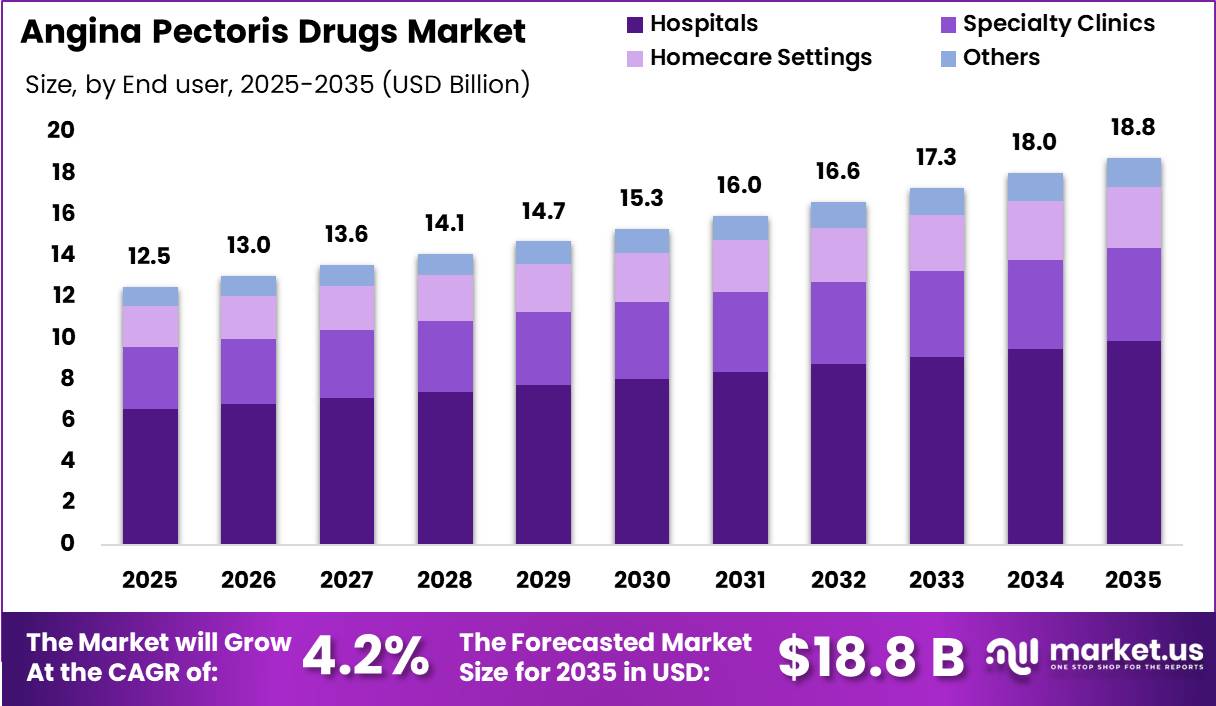
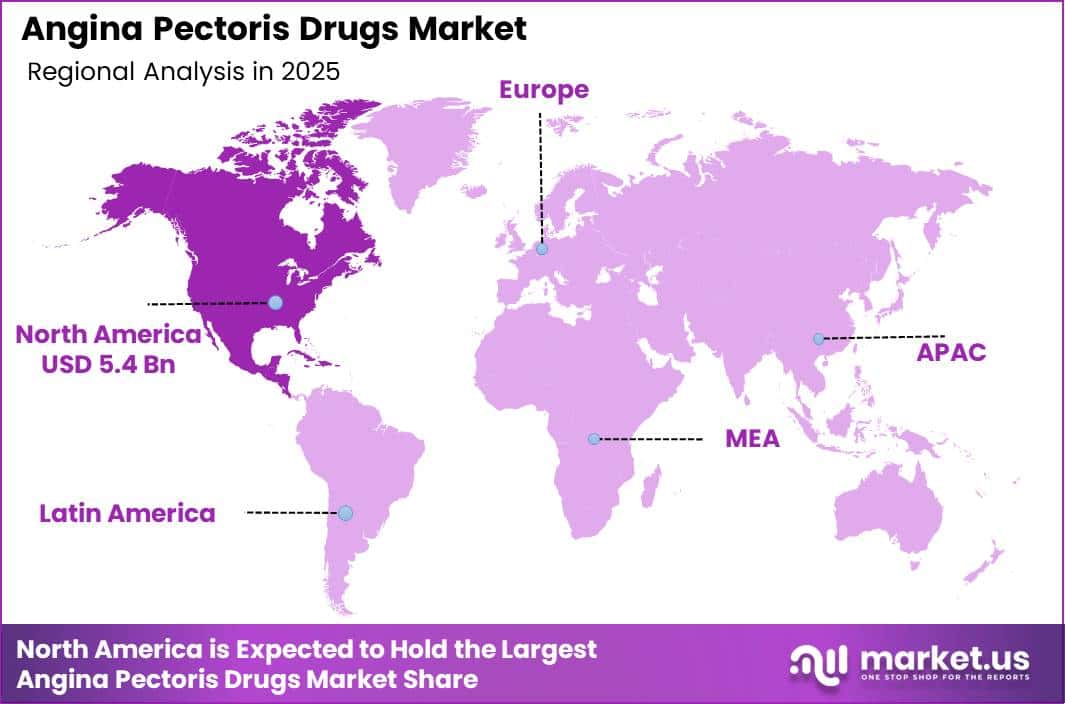
The Global Angina Pectoris Drugs Market size is expected to be worth around US$ 18.8 Billion by 2035 from US$ 12.5 Billion in 2025, growing at a CAGR of 4.2% during the forecast period from 2026 to 2035. In 2025, North America led the market, achieving over 43.2% share with a revenue of US$ 5.4 Billion.
The global Angina Pectoris Drugs Market is witnessing steady growth due to the increasing burden of cardiovascular diseases, rising aging populations, and greater awareness of early diagnosis and long-term disease management. Angina pectoris is a common symptom of coronary artery disease caused by reduced blood flow to the heart muscle, often requiring a combination of lifestyle changes and pharmacological treatment.
According to the World Health Organization (WHO), cardiovascular diseases are responsible for approximately 17.9 million deaths annually, accounting for nearly 32% of all global deaths, highlighting the significant demand for effective anti-anginal therapies.
Healthcare organizations continue to emphasize preventive cardiology and evidence-based treatment. The U.S. Centers for Disease Control and Prevention (CDC) reports that about 805,000 people experience a heart attack each year in the United States, while coronary heart disease remains one of the leading causes of mortality, reinforcing the importance of medications that reduce angina symptoms and prevent cardiovascular complications.
Common drug classes include beta-blockers, calcium channel blockers, nitrates, antiplatelet agents, and newer therapies such as ranolazine, which are recommended in clinical practice guidelines for symptom control and improved quality of life.
Market expansion is further supported by advances in cardiovascular drug development, wider access to generic medicines, and updated treatment recommendations from leading cardiology organizations. Growing investments in cardiovascular research, expanding healthcare infrastructure in emerging economies, and increasing adoption of combination therapies are expected to strengthen treatment accessibility.
In addition, the continued focus on reducing hospitalizations and improving long-term patient outcomes is encouraging pharmaceutical companies to develop safer, more effective, and patient-friendly therapeutic options for chronic angina management.
Key Takeaways
- Market Size: Angina Pectoris Drugs Market size was US$ 12.5 billion in 2025. The market is estimated to grow to US$ 18.8 billion by 2035.
- Market Share: The Compound Annual Growth Rate (CAGR) of the market from 2026 to 2035 will be 4.2%.
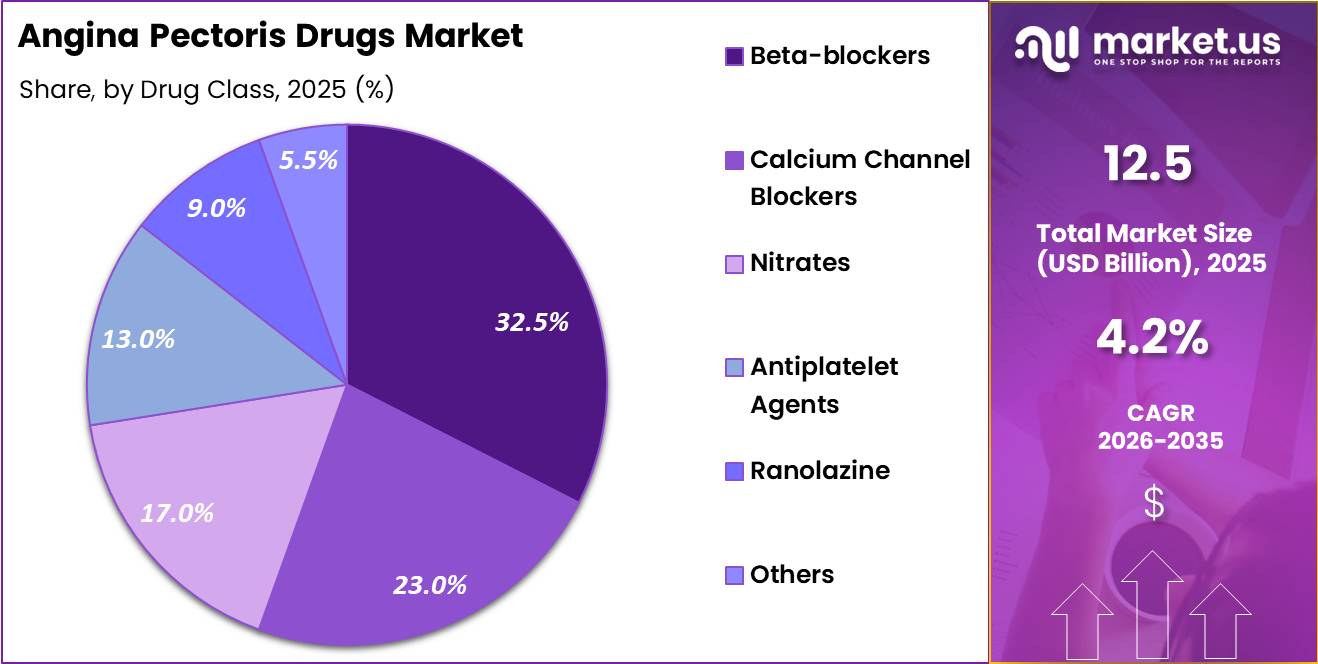
- By Drug Class:Beta-blockers have the largest market share, accounting for 32.5% of total sales.
- By Route of Administration: Oral, accounting for 78.6% of total revenue.
- By end user:hospitals lead the segment, accounting for 52.6% of total revenue.
- Regional: North America is the dominant regional market, accounting for 43.2% of global sales.
Drug Class Analysis
The Beta-blockers segment dominated the Angina Pectoris Drugs Market in 2025, accounting for 32.5% of the total market share. Their leading position is attributed to their well-established role in reducing myocardial oxygen demand by lowering heart rate and blood pressure, making them a first-line therapy for chronic stable angina.
These drugs are widely prescribed due to strong clinical evidence supporting their effectiveness in preventing angina attacks and improving long-term cardiovascular outcomes. Their inclusion in international treatment guidelines and widespread availability in generic formulations further support market leadership.
The Calcium Channel Blockers segment captured 21.3% of the market, driven by their effectiveness in patients who cannot tolerate beta-blockers or require combination therapy. Nitrates represented 17.8% of the market and remain essential for rapid symptom relief and long-term angina management, particularly among patients experiencing acute episodes.
Antiplatelet Agents accounted for 13.9%, reflecting their critical role in reducing thrombotic events and lowering cardiovascular risk in patients with coronary artery disease. The Ranolazine segment held 7.2%, supported by its unique mechanism of action and increasing use in patients with persistent symptoms despite conventional therapies.
The Others category contributed 7.3%, comprising emerging therapies and adjunctive medications that address specific patient needs and support personalized treatment strategies.
Route of Administration Analysis
The Oral segment dominated the Angina Pectoris Drugs Market in 2025, holding 78.6% of the total market share. Oral formulations remain the preferred route because they offer convenient administration, support long-term disease management, and promote better patient adherence.
Most commonly prescribed anti-anginal medications, including beta-blockers, calcium channel blockers, antiplatelet agents, and ranolazine, are available as oral tablets or capsules, making them suitable for chronic outpatient therapy. The availability of cost-effective generic products and extended-release formulations further strengthens the dominance of this segment.
The Sublingual segment accounted for 8.1% of the market, primarily driven by the widespread use of sublingual nitrates for the rapid relief of acute angina episodes. Their fast onset of action makes them indispensable for emergency symptom control.
Intravenous administration represented 6.3%, mainly utilized in hospitals for patients with unstable angina or acute coronary syndromes requiring immediate intervention and continuous monitoring. The Topical segment captured 3.4%, supported by transdermal nitrate patches that provide sustained drug delivery for long-term symptom prevention.
The Others category contributed 3.6%, including less frequently used administration methods that serve specific clinical scenarios and patient preferences, supporting comprehensive and individualized treatment approaches.
End User Analysis
The Hospitals segment dominated the Angina Pectoris Drugs Market in 2025, accounting for 52.6% of the total market share. Hospitals remain the primary treatment setting for patients presenting with acute angina, unstable coronary syndromes, and complex cardiovascular conditions requiring immediate diagnosis, continuous monitoring, and multidisciplinary care.
The availability of advanced cardiac care units, emergency services, interventional cardiology procedures, and comprehensive pharmaceutical management supports the segment’s leading position. Hospitals also manage patients requiring intravenous medications, intensive monitoring, and long-term treatment optimization before discharge.
The Specialty Clinics segment held 24.1% of the market, benefiting from the growing number of cardiology centers focused on long-term disease management, medication adjustments, follow-up consultations, and preventive cardiovascular care.
These facilities provide specialized expertise while reducing the burden on hospitals. Homecare Settings accounted for 15.8%, driven by increasing adoption of chronic oral therapies, improved patient education, telehealth services, and remote monitoring technologies that enable stable patients to manage their condition outside clinical environments.
The Others segment contributed 7.5%, including ambulatory care centers, rehabilitation facilities, and community healthcare providers that support medication management, lifestyle counseling, and ongoing cardiovascular risk reduction across diverse patient populations.
Market Segmentations
By Drug Class
- Beta-blockers
- Calcium Channel Blockers
- Nitrates
- Antiplatelet Agents
- Ranolazine
- Others
By Route of Administration
- Oral
- Sublingual
- Intravenous
- Topical
- Others
By End User
- Hospitals
- Specialty Clinics
- Homecare Settings
- Others
Driver
Rising Chronic Coronary Disease and Angina Patient Burden
Epidemiological data point to angina pectoris as a persistent and sizable clinical burden within the broader chronic coronary disease (CCD) spectrum, which structurally underpins demand for antianginal pharmacotherapy.
National survey analyses show angina prevalence clustering in older age bands and in populations with high cardiometabolic risk, with recent large datasets indicating that symptomatic angina often coexists with hypertension, diabetes, and dyslipidemia, amplifying per‑patient drug intensity across beta-blockers, calcium channel blockers, nitrates, and adjunctive agents.
In parallel, global CCD guidelines emphasize chronic symptom control and event prevention rather than episodic, acute-only interventions, which structurally embeds multi-year therapy into care pathways.
From a unit-economics perspective, even modest increases in symptomatic CCD prevalence translate into a disproportionate rise in prescription volume, as multi-drug regimens are typical: for example, guideline-directed therapy combines at least one antianginal with statins, ACE inhibitors/ARBs, and antiplatelets, lifting revenue per treated case and sustaining a long-term, 2.3 % point uplift on baseline market CAGR as more patients enter and remain on pharmacological management.
From a healthcare utilization perspective, the growing aging population is a major contributor to the expanding angina treatment pool. Older adults experience higher rates of coronary artery disease due to cumulative exposure to risk factors such as elevated blood pressure, impaired glucose metabolism, and vascular inflammation.
As life expectancy increases globally, the number of individuals living with stable ischemic heart disease and recurrent angina symptoms continues to rise, increasing reliance on chronic medication regimens rather than short-term interventions. This demographic shift supports steady volume growth for antianginal therapies, particularly in developed markets with established cardiovascular care infrastructure.
| Driver | (~) % Impact on CAGR Forecast | Geographic Relevance | Impact Timeline |
|---|---|---|---|
| Rising CCD & Angina Prevalence | +2.3% | North America, EU, APAC core | Long term (≥ 4 years) |
| Guideline-Directed Therapy Intensification | +1.9% | North America, EU, high-income APAC | Medium term (2–4 years) |
| Aging Demographics & Risk Factor Load | +1.7% | EU, Japan, China, North America | Long term (≥ 4 years) |
| Generic Penetration & Affordability | +1.4% | APAC corridors, Latin America, Africa | Medium term (2–4 years) |
| Novel Antianginals & Fixed-Dose Combos | +1.6% | North America, EU, selected APAC | Medium term (2–4 years) |
| Digital, Team-Based CCD Management | +1.1% | North America core, EU, urban APAC | Short–Medium term (≤ 4 years) |
Challenge
Generic Competition Driving Price Compression and Margin Volatility
The angina pectoris drugs market is structurally exposed to intense genericization across beta-blockers, calcium channel blockers, long-acting nitrates, and several adjunctive agents, making price compression and margin volatility a systemic challenge rather than a momentary restraint.
In key classes, generics already represent 70–90% of prescription volume in North America and Western Europe and often exceed 90% in large emerging markets, with unit prices in high-competition molecules compressing by 60–80% relative to pre-LOE branded levelsyet this does not translate linearly into volume expansion because prescriber panels are saturated and cardiovascular risk management increasingly emphasizes non-pharmacologic interventions and broader risk-factor control.
The operational friction emerges through unpredictable tender dynamics, where hospital and public system procurement cycles can force 10–20% price swings year-on-year, coupled with episodic plant inspections, quality alerts, and supply interruptions that temporarily remove low-cost producers from the market, triggering short-run price spikes of 20–40% that erode payer trust and complicate long-term contracting.
This volatility prevents the market from fully monetizing growing patient pools—especially in LMICs where budgets are rigid effectively shaving about 1 % point off achievable CAGR because manufacturers must maintain redundant capacity, quality investments, and safety stocks that raise cost-per-unit by an estimated 5–10% versus an idealized, stable generic environment.
Strategically, firms need to move from simple cost-plus pricing to multi-tier models with differentiated packaging, fixed-dose combinations, and service-linked offerings, using granular cost accounting to keep gross margins within a 18–25% band despite procurement volatility, while investing in inventory optimization and risk-diversified sourcing for critical APIs to limit margin shocks when one or more low-cost competitors exit temporarily or permanently.
| Challenge | (~) % CAGR Friction Drag | Geographic Relevance | Mitigation Horizon |
|---|---|---|---|
| Guideline-driven therapy shift | -1.2% | North America, Western Europe, Japan | Medium term (2-4 years) |
| Generic price compression volatility | -1.0% | Global, strongest in EMs | Long term (≥ 4 years) |
| Cardiovascular trial execution burden | -0.9% | US, EU, East Asia hubs | Medium term (2-4 years) |
| Multi-morbidity adherence and access gap | -0.8% | Global, high in LMICs | Long term (≥ 4 years) |
| Manufacturing and supply continuity strain | -0.7% | Global API/formulation corridors | Medium term (2-4 years) |
| Digital cardiology integration lag | -0.6% | US, EU, urban APAC | Long term (≥ 4 years) |
Restraints
Price and reimbursement squeeze on cardiovascular drugs
Across major markets, price regulation and payer cost-containment targeting cardiovascular drugs are structurally capping net price growth at or below general inflation, even though historical data show cardiovascular medication prices have increased faster than overall inflation since the 1980s, compressing manufacturer pricing power relative to legacy trends and subtracting an estimated 1.3 % points from CAGR over 2026–2030.
Analyses of prescription drug pricing in the US indicate that drug prices overall rose roughly three times as fast as general inflation since the mid‑1980s, with cardiovascular drugs among the fastest risers; however, more recent data show that from 2022 to 2023 about 46% of drug price increases exceeded inflation, drawing regulatory scrutiny and fueling policies aimed at limiting future cardiovascular price hikes.
In practical terms, this environment translates into annual list price increases for branded antianginals in key markets being constrained to roughly 2–3%, with net prices after rebates often growing less than 1% or even declining in real terms, while input costs (including labor, energy, and compliance) have risen in the mid‑single digits, eroding gross margins by an estimated 200–300 basis points over the past three to five years.
Payers leverage tools such as step‑therapy protocols, higher prior authorization thresholds, and tighter reference pricing to push volume from higher‑cost branded agents into generics, leading to 5–10% annual erosion of brand share in mature segments and limiting the ramp‑up of newer mechanisms that cannot justify substantial incremental cost per quality‑adjusted life year under budget‑impact models.
Strategically, manufacturers face a trade‑off between maintaining volume via aggressive contracting—effectively trading 3–5% price concessions for formulary security—and prioritizing margin at the expense of share, both of which cap the market’s nominal growth trajectory and push companies to seek savings via portfolio rationalization and site consolidation.
| Restraint | (~) % Impact on CAGR Forecast | Geographic Relevance | Impact Timeline |
|---|---|---|---|
| Chronic generic antianginal shortages | -1.5% | North America, EU, select APAC | Short term |
| Price and reimbursement squeeze on cardiovascular drugs | -1.3% | US, EU5, Japan | Medium term |
| Guideline-driven shift to nonpharmacologic CCD management | -1.2% | North America, Western Europe | Medium term |
| Manufacturing concentration and API supply risk | -1.0% | Global, with India–China corridors | Long term |
| Regulatory and pharmacovigilance compliance drag | -0.8% | US, EU, major APAC | Medium term |
| Erosion from competing cardiovascular innovations | -0.7% | Global tertiary care hubs | Long term |
Opportunity
Digital Ecosystems Transforming Long-Term Angina Management
Digital angina management ecosystems—combining remote monitoring, symptom tracking apps, telehealth titration, and decision‑support algorithms—offer a discrete new monetization layer for angina drugs by shifting value from episodic office‑based prescribing to continuous, data‑driven therapy optimization, in contrast to the current baseline where digital tools are only sporadically used and not tightly coupled to antianginal pharmacotherapy.
Contemporary chronic coronary disease guidelines and telehealth policy reforms since the pandemic have normalized remote follow‑up for stable patients, yet adherence to antianginal therapy remains suboptimal and a significant share of patients either under‑report symptoms or discontinue medications, contributing to recurrent angina episodes and avoidable hospitalizations.
By 2030, broadband penetration, smartphone usage, and connected device adoption in markets like the US, UK, Germany, and major urban centers in Asia are expected to reach near‑universal levels in middle‑aged and older populations, creating infrastructure for scalable digital disease management programs that could engage 20–30% of angina patients with low incremental cost per additional user once platforms are built.
A digital ecosystem anchored to antianginal regimens—featuring algorithms that flag uncontrolled symptoms, trigger dosage adjustments within guideline boundaries, and schedule teleconsultations—could increase persistence and dose‑intensity by 10–20%, translating into a 5–8% uplift in prescription volumes and more stable chronic use across regions, while also supporting payer contracts that reward reductions in emergency visits and admissions, which can account for thousands of dollars per event in high‑income health systems.
Because these platforms are not yet widely deployed at scale in angina specifically and require coordinated investments in data integration, regulatory compliance, and cross‑border privacy frameworks, they represent a long‑run strategic pivot with a plausible 1.0 % point incremental CAGR upside by 2035, especially for companies that can build platform‑agnostic digital layers overlaying both branded and generic antianginals.
| Opportunity | (~) % Potential CAGR Upside | Geographic Relevance | Execution Window |
|---|---|---|---|
| Secondary prevention intensification bundles | +1.5% | North America, Western Europe | Short–Medium term |
| Cardio-metabolic co-therapy platforms | +1.2% | US, EU5, Japan | Medium term |
| Digital angina management ecosystems | +1.0% | US, UK, Germany, Urban APAC | Medium–Long term |
| Value-based access in emerging markets | +0.8% | Latin America, Eastern Europe, India, SE Asia | Medium–Long term |
| Pipeline repositioning & niche phenotypes | +0.9% | Global tertiary centers | Short–Medium term |
| M&A roll-ups of fragmented generics | +0.6% | Global, with APAC and MEA focus | Long term |
Regional Analysis
In 2025, North America led the market, achieving over 43.2% share with a revenue of US$5.4 billion.
North America’s leadership is supported by a high prevalence of cardiovascular diseases, an aging population, and widespread access to advanced healthcare infrastructure. According to the U.S. Centers for Disease Control and Prevention (CDC), heart disease remains the leading cause of death in the United States, sustaining strong demand for anti-anginal medications and long-term cardiovascular management.
The widespread adoption of evidence-based treatment guidelines, coupled with early diagnosis and routine screening for coronary artery disease, has further strengthened market growth across the region.
The United States represents the largest contributor within North America due to high healthcare spending, extensive insurance coverage, and the availability of innovative pharmaceutical therapies.
Major pharmaceutical companies continue investing in clinical research, fixed-dose combination therapies, and improved formulations that enhance patient adherence while reducing adverse effects. Canada also contributes steadily through universal healthcare coverage and increasing awareness of cardiovascular disease prevention.
Government-backed initiatives promoting healthy lifestyles, smoking cessation, and cholesterol management have expanded the use of preventive and maintenance therapies for angina patients. Furthermore, strong regulatory oversight, robust hospital networks, and the rapid adoption of generic cardiovascular drugs support market expansion.
Continued investments in precision medicine, digital health monitoring, and personalized treatment approaches are expected to reinforce North America’s leadership in the angina pectoris drugs market throughout the forecast period.
Key Regions and Countries
North America
- The US
- Canada
Europe
- Germany
- France
- The U.K.
- Italy
- Spain
- Russia & CIS
- Rest of Europe
Asia Pacific
- China
- India
- Japan
- South Korea
- ASEAN
- Australia & New Zealand
- Rest of Asia Pacific
Middle East & Africa
- GCC
- South Africa
- Rest of Middle East & Africa
Latin America
- Brazil
- Mexico
- Rest of Latin America
Key Player Analysis
The Angina Pectoris Drugs Market is moderately consolidated, with a mix of global pharmaceutical innovators and established generic drug manufacturers competing through broad cardiovascular portfolios, extensive distribution networks, and continuous product development.
Market competition is driven by the need to improve long-term symptom management, reduce cardiovascular risks, and enhance patient adherence using optimized formulations and combination therapies.
Companies are increasingly investing in research programs focused on next-generation anti-anginal therapies, improved drug delivery technologies, and evidence-based clinical studies to strengthen product positioning.
As healthcare systems emphasize value-based care and chronic disease management, manufacturers are also integrating digital health support, patient education initiatives, and real-world evidence generation into their commercial strategies.
Leading participants include Pfizer Inc., Bayer AG, AstraZeneca plc, Novartis AG, Merck & Co., Inc., Gilead Sciences Inc., Johnson & Johnson, Bristol-Myers Squibb Company, Eli Lilly and Company, Sanofi S.A., Teva Pharmaceutical Industries Ltd., Mylan N.V. (Viatris), Sun Pharmaceutical Industries Ltd., Dr. Reddy’s Laboratories Ltd., Lupin Limited, and Others.
These companies compete through sustained R&D investments, strategic partnerships with healthcare organizations, and product innovation aimed at improving efficacy, safety, and treatment adherence.
Generic manufacturers continue expanding access to affordable cardiovascular medications, while branded pharmaceutical companies focus on differentiated therapies supported by robust clinical evidence. Workflow integration across manufacturing, regulatory compliance, supply chain management, and commercialization enables efficient product delivery.
Furthermore, ecosystem-based competition involving collaborations with hospitals, pharmacies, research institutions, and digital health platforms is strengthening market presence, accelerating innovation, and supporting comprehensive cardiovascular care worldwide.
Top Key Players
-
- Pfizer Inc.
- Bayer AG
- AstraZeneca plc
- Novartis AG
- Merck & Co., Inc.
- Gilead Sciences Inc.
- Johnson & Johnson
- Bristol-Myers Squibb Company
- Eli Lilly and Company
- Sanofi S.A.
- Teva Pharmaceutical Industries Ltd.
- Mylan N.V. (Viatris)
- Sun Pharmaceutical Industries Ltd.
- Dr. Reddy’s Laboratories Ltd.
- Lupin Limited
- Others
Recent Developments
- In July 2025, Novartis AG received U.S. FDA approval for an expanded indication of Leqvio (inclisiran), enabling first-line use for LDL cholesterol reduction in adults with hypercholesterolemia, strengthening its cardiovascular portfolio and preventive heart disease strategy.
- In January 2026, Bayer AG announced a strategic collaboration with Vanderbilt University Medical Center to accelerate the discovery and development of innovative therapies for cardiovascular and kidney diseases using advanced real-world data and translatform research.
- In January 2026, Bayer AG entered a global collaboration and licensing agreement with Soufflé Therapeutics to develop heart-targeted siRNA therapies for cardiovascular diseases, expanding its precision cardiovascular medicine pipeline.
- In May 2026, AstraZeneca plc received U.S. FDA approval for Baxfendy (baxdrostat), the first aldosterone synthase inhibitor approved for adults with uncontrolled or resistant hypertension, significantly expanding its cardiovascular franchise.
Report Scope
| Report Features | Description |
|---|---|
| Market Value (2025) | US$ 12.5 Bn |
| Forecast Revenue (2035) | US$ 18.8 Bn |
| CAGR (2026-2035) | 4.2% |
| Base Year for Estimation | 2025 |
| Historic Period | 2020-2024 |
| Forecast Period | 2026-2035 |
| Report Coverage | Revenue Forecast, Market Dynamics, Competitive Landscape, Recent Developments |
| Segments Covered | By Drug Class (Beta-blockers, Calcium Channel Blockers, Nitrates, Antiplatelet Agents, Ranolazine,Others) By Route Administration (Oral, Sublingual, Intravenous, Topical, Others) By End User (Hospitals, Specialty Clinics, Homecare Settings, Others) |
| Regional Analysis | North America – The US, Canada; Europe – Germany, France, U.K., Italy, Spain, Russia & CIS, Rest of Europe; Asia Pacific – China, India, Japan, South Korea, ASEAN, Australia & New Zealand, Rest of Asia Pacific; Middle East & Africa – GCC, South Africa, Rest of Middle East & Africa; Latin America – Brazil, Mexico, Rest of Latin America |
| Competitive Landscape | Pfizer Inc., Bayer AG, AstraZeneca plc, Novartis AG, Merck & Co., Inc., Gilead Sciences Inc., Johnson & Johnson, Bristol-Myers Squibb Company, Eli Lilly and Company, Sanofi S.A., Teva Pharmaceutical Industries Ltd., Mylan N.V. (Viatris), Sun Pharmaceutical Industries Ltd., Dr. Reddy’s Laboratories Ltd., Lupin Limited, Others |
| Customization Scope | Customization for segments, region/country-level will be provided. Moreover, additional customization can be done based on the requirements. |
| Purchase Options | We have three licenses to opt for: Single User License, Multi-User License (Up to 5 Users), Corporate Use License (Unlimited User and Printable PDF) |





































