


Global Food Waste Management Market Report By Waste Type (Food Production Waste, Agri Produce Waste, Poultry, Meat, and Seafood Waste, Dairy Waste, Food Processing Waste, Household, Food Services, Others), By Source (Residential, Industrial), By Service Type (Prevention, Collection, Transfer, Recycling, Landfill), By End-Use (Animal Feed, Fertilizer, Renewable Energy & Biofuels, Others), By Region and Companies - Industry Segment Outlook, Market Assessment, Competition Scenario, Trends and Forecast 2024-2033
- Published date: June 2024
- Report ID: 122683
- Number of Pages: 389
- Format:
-
keyboard_arrow_up
Quick Navigation
Report Overview
The Global Food Waste Management Market size is expected to be worth around USD 123.8 Billion by 2033, from USD 71.8 Billion in 2023, growing at a CAGR of 5.6% during the forecast period from 2024 to 2033.
The Food Waste Management market focuses on solutions for reducing, recycling, and managing food waste generated by households, restaurants, and food processing industries. This market is driven by the need to address environmental concerns and improve sustainability practices.
Key players include waste management companies, technology providers, and governmental organizations. Market trends show significant growth due to increasing regulatory pressures and rising awareness of the environmental impact of food waste. The focus is on innovative technologies and practices to minimize waste and recover resources.

The food waste management market is gaining traction as global awareness of food waste and its environmental impact grows. According to an April 2024 UN report, one-fifth of all food produced globally is wasted, while 783 million people suffer from hunger. This stark contrast underscores the urgent need for effective food waste management solutions.
Countries are increasingly recognizing the importance of tackling this issue. In March 2024, Brazil emerged as a leader with innovative initiatives and policies aimed at reducing food waste across the supply chain. These efforts include better storage solutions, improved distribution logistics, and public awareness campaigns. Brazil’s proactive stance serves as a model for other nations, highlighting the potential of coordinated efforts to significantly reduce food waste.
The market for food waste management encompasses various solutions, including waste reduction technologies, recycling, and waste-to-energy conversion. Companies are investing in advanced technologies to improve waste tracking and management. These innovations are essential for reducing the environmental footprint and creating sustainable business practices.
Public and private sector collaboration is crucial in this market. Governments are implementing stricter regulations and providing incentives for waste reduction, while businesses are adopting more sustainable practices. The focus on circular economy principles is also driving the market, as companies seek to minimize waste and maximize resource efficiency.
The food waste management market is poised for robust growth, driven by increasing awareness and proactive measures by countries like Brazil. The need to address food waste is critical, not only for environmental sustainability but also for global food security. As more stakeholders invest in innovative solutions, the market is expected to expand, offering significant opportunities for growth and development.
Key Takeaways
- Market Value: The Food Waste Management Market was valued at USD 71.8 billion in 2023, and is expected to reach USD 123.8 billion by 2033, with a CAGR of 5.6%.
- Waste Type Analysis: Food Production Waste dominated with 20.6%; significant for its volume and impact on waste management.
- Service Type Analysis: Collection led with 52.4%; crucial for its role in waste management logistics.
- Source Analysis: Industrial sources dominated with 63.4%; essential due to high waste generation in industrial processes.
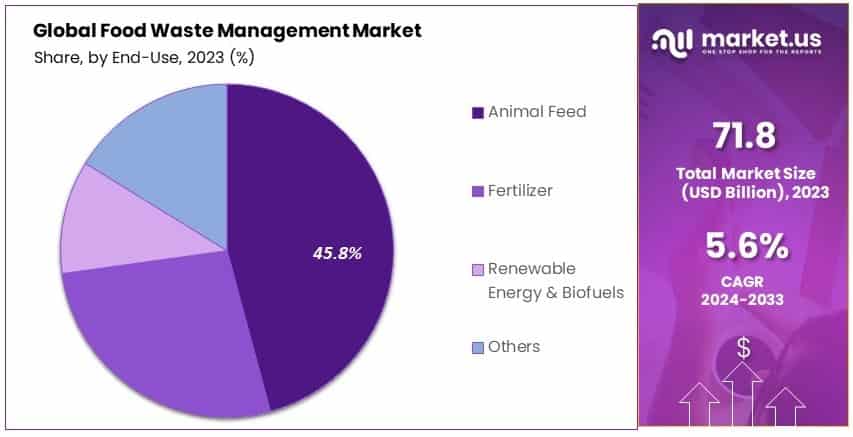
- End-Use Analysis: Animal Feed dominated with 45.8%; important for its role in sustainable waste reuse.
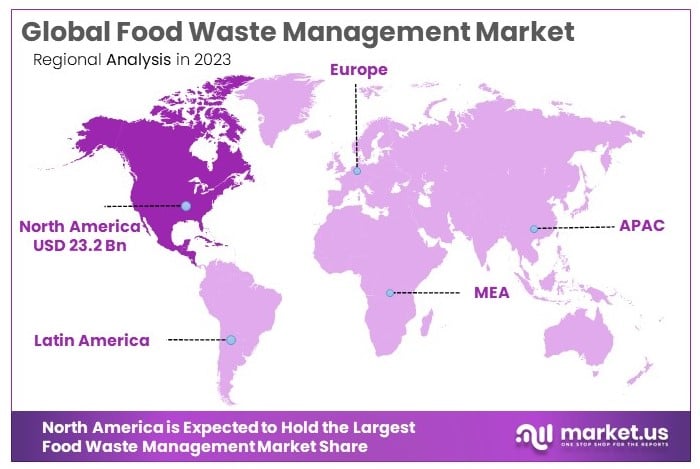
- Dominant Region: North America held 32.3%; significant due to advanced waste management infrastructure.
- Analyst Viewpoint: The food waste management market is moderately saturated with strong competition. Future trends indicate growth driven by sustainable practices and regulatory frameworks.
- Growth Opportunities: Companies can focus on innovative waste reduction technologies and expanding recycling programs to enhance market presence.
Driving Factors
Increasing Global Food Waste Drives Market Growth
The staggering amount of food waste generated globally is a primary driver for the Food Waste Management market. According to the United Nations, approximately one-third of all food produced for human consumption is wasted annually. This equates to about 1.3 billion tonnes of food, worth nearly USD 1 trillion. The environmental, social, and economic consequences of this waste are prompting governments, businesses, and consumers to seek effective waste management solutions.
The European Union has set a target to reduce food waste by 50% by 2030, creating a significant opportunity for companies offering innovative waste management technologies. This commitment has led to the adoption of advanced methods to handle food waste effectively, including composting, anaerobic digestion, and bioconversion. By addressing the issue of food waste, businesses not only comply with regulatory demands but also contribute to sustainability goals, thereby attracting environmentally conscious consumers and investors.
Stringent Regulations and Policies Drive Market Growth
Governments worldwide are implementing stricter regulations to combat food waste, driving the market growth. These policies often include penalties for non-compliance and incentives for adopting waste management practices. In the United States, California’s Senate Bill 1383 mandates a 75% reduction in organic waste disposal by 2025. This legislation has led to increased investments in anaerobic digestion facilities, such as the ZWEDC facility in San Jose, which can process up to 90,000 tons of food waste annually, converting it into biogas and compost.
These stringent regulations ensure that businesses prioritize food waste management, leading to advancements in technology and infrastructure within the sector. Moreover, compliance with these regulations often results in financial incentives and support from governments, further fueling market growth. The interplay between regulatory frameworks and industry practices fosters a robust environment for innovation and development in food waste management solutions.
Technological Advancements Drive Market Growth
The integration of AI in waste management is revolutionizing the sector. These technologies enable real-time monitoring, predictive analytics for waste generation, and transparent tracking of waste through the supply chain. Winnow Solutions, a UK-based company, uses AI-enabled smart scales to track and analyze kitchen waste in real-time. Their technology has helped clients, including IKEA and Compass Group, reduce food waste by up to 50%, demonstrating the market’s appetite for tech-driven solutions.
The application of these technologies improves efficiency, reduces costs, and enhances the accuracy of waste management processes. The synergy between technological advancements and the food waste management industry creates a dynamic market landscape, encouraging further innovation and investment. As more companies adopt these technologies, the overall effectiveness and sustainability of food waste management practices are expected to improve, driving the market forward.
Restraining Factors
High Initial Investment Costs Restrain Market Growth
The high upfront costs of establishing food waste management infrastructure can deter market growth. Technologies like anaerobic digestion, composting facilities, or advanced sorting systems require substantial capital investment. For instance, building a commercial-scale anaerobic digestion plant can cost between USD 10 million to USD 50 million.
A notable example is the city of Edmonton, Canada, which had to delay its plans for a waste-to-biofuels facility due to the high USD 42 million price tag. These significant costs can hinder the development of new facilities, particularly for municipalities and smaller businesses that may lack the necessary funds. As a result, the market’s expansion is limited by the financial barriers associated with implementing advanced waste management technologies.
Lack of Awareness and Behavioral Inertia Restrains Market Growth
Despite growing concerns about food waste, many consumers and businesses remain unaware of the scale of the problem or are resistant to changing their practices. This behavioral inertia is a significant market restraint. A study by the National Resources Defense Council found that while 75% of Americans believe they waste less food than the average household, about 40% of food in the U.S. goes uneaten.
This misconception leads to underinvestment in waste management solutions. In the commercial sector, many restaurants and retailers prioritize overproduction to avoid stockouts, inadvertently contributing to waste. This resistance to change and lack of awareness impede the adoption of effective waste management practices, slowing market growth.
Waste Type Analysis
Food Production Waste dominates with 20.6% due to large quantities generated during manufacturing.
The food waste management market is segmented by waste type into food production waste, agri produce waste, poultry, meat, and seafood waste, dairy waste, food processing waste, household waste, food services, and others. Food production waste is the dominant sub-segment, accounting for 20.6% of the market share. This dominance is driven by the significant quantities of waste generated during food manufacturing and production processes. In food production facilities, large amounts of raw materials are often discarded due to spoilage, trimming, and overproduction, leading to a high volume of waste.
The management of food production waste involves strategies to reduce waste generation, improve recycling, and enhance the efficient use of resources. Companies are increasingly adopting technologies to convert food waste into valuable by-products, such as animal feed and biofuels, to minimize environmental impact and create economic value. The focus on sustainability and resource optimization drives the demand for effective food production waste management solutions.
Other waste types, while not as dominant, play crucial roles in the market. Agri produce waste includes waste from crops and vegetables that do not meet market standards or are lost during harvesting and transportation. Poultry, meat, and seafood waste involve by-products from the processing of these items, which require specialized handling and disposal methods. Dairy waste consists of spoiled or excess milk and dairy products that need proper management to prevent environmental contamination.
Food processing waste, which arises from the conversion of raw materials into finished products, includes peels, seeds, and other by-products. Household waste, generated by consumers, is significant due to the large volume of food discarded by households. Food services waste includes leftovers and unsold food from restaurants and catering services. Each of these waste types contributes to the overall need for comprehensive food waste management strategies.
Service Type Analysis
Collection dominates with 52.4% due to the need for systematic waste handling and disposal.
The food waste management market is segmented by service type into prevention, collection, transfer, recycling, and landfill. The collection sub-segment dominates with a 52.4% market share. This dominance is driven by the need for systematic and efficient handling, transportation, and disposal of food waste. Collection services involve gathering waste from various sources, such as households, industrial facilities, and food service establishments, and transporting it to recycling or disposal sites.
Effective collection services are crucial for maintaining hygiene and preventing environmental contamination. The use of specialized vehicles and containers ensures that food waste is collected and transported safely and efficiently. The demand for collection services is further driven by regulatory requirements and the need to comply with waste management standards.
Prevention services, while not as dominant as collection, play a significant role in reducing the generation of food waste. These services involve strategies to minimize waste at the source, such as improving inventory management, optimizing production processes, and educating consumers about proper food storage and usage. Prevention is a cost-effective approach that reduces the volume of waste that needs to be managed.
Transfer services involve the movement of collected waste to processing or disposal facilities. These services ensure that waste is transported efficiently and safely, minimizing the risk of environmental contamination. Recycling services focus on converting food waste into valuable products, such as compost, animal feed, and biofuels. This approach not only reduces the volume of waste sent to landfills but also creates economic value from waste materials.
Landfill services involve the disposal of food waste in designated landfill sites. While this is a common method of waste disposal, it is the least preferred option due to its environmental impact. Efforts are being made to reduce reliance on landfills by promoting recycling and other waste management methods.
Each service type contributes to the overall effectiveness of food waste management. Prevention services aim to reduce waste generation, while collection and transfer services ensure efficient handling and transportation of waste. Recycling services focus on converting waste into valuable products, and landfill services provide a method for the final disposal of waste that cannot be recycled. Together, these services form a comprehensive approach to managing food waste.
Source Analysis
Industrial dominates with 63.4% due to large-scale waste generation in manufacturing and processing.
The food waste management market is segmented by source into residential and industrial. The industrial sub-segment dominates with a 63.4% market share. This dominance is due to the large-scale waste generation in food manufacturing and processing facilities. Industrial sources include food production plants, processing factories, and packaging facilities, where significant quantities of waste are generated during production, processing, and packaging activities.
Industrial food waste management involves strategies to minimize waste generation, enhance recycling, and improve the efficient use of resources. Companies are adopting technologies to convert industrial food waste into valuable by-products, such as animal feed additives, biofuels, and compost, to reduce environmental impact and create economic value. The focus on sustainability and resource optimization drives the demand for effective industrial food waste management solutions.
Residential sources, while not as dominant, contribute significantly to the overall volume of food waste. Residential waste includes food discarded by households due to spoilage, over-purchasing, and improper storage. Managing residential food waste involves educating consumers about proper food storage, portion control, and waste reduction practices. Community initiatives and government programs aimed at reducing household food waste also play a vital role in this segment.
The role of these other sub-segments is critical in addressing the diverse sources of food waste. Residential waste management focuses on reducing food waste at the consumer level through education and awareness programs. Industrial waste management emphasizes efficient handling and recycling of waste generated during production and processing activities.
End-Use Analysis
Animal Feed dominates with 45.8% due to the conversion of food waste into valuable livestock feed.
The food waste management market is segmented by end-use into animal feed, fertilizer, renewable energy & biofuels, and others. The animal feed sub-segment dominates with a 45.8% market share. This dominance is due to the conversion of food waste into valuable livestock feed. Converting food waste into animal feed is a sustainable solution that reduces the volume of waste sent to landfills and provides a cost-effective feed source for livestock.
The demand for animal feed derived from food waste is driven by the need to reduce feed costs and improve sustainability in the livestock industry. This approach also helps in closing the loop in the food supply chain by converting waste into a valuable resource. The use of food waste for animal feed is particularly prevalent in regions with large livestock industries and stringent waste management regulations.
Fertilizer is another significant end-use for food waste. Composting food waste to produce organic fertilizer is a sustainable solution that improves soil health and reduces the need for chemical fertilizers. The demand for organic fertilizers is growing due to the increasing focus on sustainable agriculture and the benefits of organic farming practices.
Renewable energy & biofuels represent another important end-use segment. Food waste can be converted into biogas through anaerobic digestion, providing a renewable energy source. This process not only reduces the volume of waste but also produces clean energy that can be used for power generation and heating. The demand for renewable energy and biofuels is driven by the need to reduce greenhouse gas emissions and promote sustainable energy solutions.
Each end-use segment contributes to the overall effectiveness of food waste management. Animal feed provides a valuable use for food waste, reducing waste disposal costs and supporting the livestock industry. Fertilizer production improves soil health and supports sustainable agriculture. Renewable energy & biofuels offer a clean energy source and help in reducing greenhouse gas emissions. Together, these end-uses form a comprehensive approach to managing food waste sustainably.
Key Market Segments
By Waste Type
- Food Production Waste
- Agri Produce Waste
- Poultry, Meat, and Seafood Waste
- Dairy Waste
- Food Processing Waste
- Household
- Food Services
- Others
By Source
- Residential
- Industrial
By Service Type
- Prevention
- Collection
- Transfer
- Recycling
- Landfill
By End-Use
- Animal Feed
- Fertilizer
- Renewable Energy & Biofuels
- Others
Growth Opportunities
Precision Agriculture and AI-driven Supply Chains Offer Growth Opportunity
AI and IoT are transforming waste management by preventing waste at the source. Precision farming uses sensors and AI to optimize crop growth, reducing overproduction. In the supply chain, AI predicts demand more accurately, reducing overstocking.
For instance, Walmart has reduced its food waste by USD 86 million by using AI to optimize its fresh food inventory. These preventive technologies address waste before it occurs, offering immense growth potential in the food waste management market. By minimizing waste from the outset, businesses can improve efficiency, reduce costs, and meet sustainability goals. The integration of AI and IoT in agriculture and supply chain management enhances overall productivity, creating a significant market opportunity.
Upcycling and Food Waste Valorization Offer Growth Opportunity
There is a growing trend of viewing food waste as a resource rather than a problem. Companies are upcycling food waste into new products. For example, ReGrained, a U.S. startup, uses spent grain from breweries to create nutritious flour. Similarly, UK-based Rubies in the Rubble turns surplus fruits into chutneys and relishes.
This trend extends beyond food, with fashion brands like Ananas Anam using pineapple leaves to create a leather alternative. These high-value applications of food waste represent a significant market opportunity. By transforming waste into valuable products, businesses can tap into new revenue streams and contribute to a circular economy, driving market growth.
Trending Factors
Consumer-Driven Demand for Sustainable Practices Are Trending Factors
Today’s consumers, especially millennials and Gen Z, are driving demand for sustainable practices. A Nielsen study found that 73% of global consumers would change their consumption habits to reduce environmental impact. This has led companies like Unilever to commit to halving their food waste by 2025.
Restaurants like Silo in London have adopted a zero-waste philosophy, attracting eco-conscious diners. This consumer-driven trend is pushing businesses across the food chain to invest in waste management, expanding the market. As consumer preferences shift towards sustainability, companies are increasingly adopting environmentally friendly practices to meet this demand, making it a significant trending factor in the food waste management market.
Blockchain for Waste Traceability Are Trending Factors
Blockchain technology is trending in food waste management for its ability to provide transparent, immutable records of food’s journey. This helps identify waste hotspots and ensures accountability. For example, IBM’s Food Trust uses blockchain to track food from farm to fork. In one instance, it traced the source of contaminated romaine lettuce in just 2.2 seconds, compared to the previous 7 days.
By quickly identifying and removing only the affected produce, it prevented unnecessary waste. This trend towards traceability is attracting investments from major players like Walmart and Nestlé. The adoption of blockchain technology enhances transparency and efficiency in waste management, making it a key trending factor in the industry.
Regional Analysis
North America Dominates with 32.3% Market Share
North America’s dominance in the food waste management market is driven by stringent regulations, advanced technology adoption, and significant investments in infrastructure. For instance, California’s Senate Bill 1383 mandates a 75% reduction in organic waste disposal by 2025. Major companies like Waste Management Inc. and Republic Services lead the market, enhancing efficiency through innovative solutions.
The region benefits from strong regulatory support, high consumer awareness, and robust technological infrastructure. Investments in anaerobic digestion and composting facilities are high, contributing to the market’s expansion. Additionally, North America’s focus on sustainability and reducing environmental impact drives market growth.
North America’s market presence is expected to remain strong due to continued regulatory support and technological advancements. The region’s commitment to sustainability and innovation will likely maintain its leadership position, driving further growth and development in the food waste management sector.
Regional Market Share and Growth Rates
Europe: Europe holds a 28.1% market share, valued at USD 20.142 billion. The EU’s target to reduce food waste by 50% by 2030 is a significant driver for market growth.
Asia Pacific: Asia Pacific accounts for 24.7% of the market, worth USD 17.693 billion. Rapid urbanization and increasing awareness of food waste issues are fueling market expansion in this region.
Middle East & Africa: Middle East & Africa holds an 8.5% market share, valued at USD 6.085 billion. Emerging awareness and investment in waste management infrastructure contribute to moderate growth in the region.
Latin America: Latin America represents 6.4% of the market, worth USD 4.588 billion. Regulatory measures and the gradual adoption of advanced technologies are expected to drive future market growth in this region.
Key Regions and Countries
- North America
- The US
- Canada
- Mexico
- Western Europe
- Germany
- France
- The UK
- Spain
- Italy
- Portugal
- Ireland
- Austria
- Switzerland
- Benelux
- Nordic
- Rest of Western Europe
- Eastern Europe
- Russia
- Poland
- The Czech Republic
- Greece
- Rest of Eastern Europe
- APAC
- China
- Japan
- South Korea
- India
- Australia & New Zealand
- Indonesia
- Malaysia
- Philippines
- Singapore
- Thailand
- Vietnam
- Rest of APAC
- Latin America
- Brazil
- Colombia
- Chile
- Argentina
- Costa Rica
- Rest of Latin America
- Middle East & Africa
- Algeria
- Egypt
- Israel
- Kuwait
- Nigeria
- Saudi Arabia
- South Africa
- Turkey
- United Arab Emirates
- Rest of MEA
Key Players Analysis
The Food Waste Management Market features several key players, each contributing to the industry’s growth and innovation. Companies like Veolia and Waste Management, Inc. lead the market with their extensive infrastructure and advanced technological solutions.
Veolia, known for its global reach and comprehensive waste management services, significantly impacts the market through its innovative approaches to recycling and resource recovery. Waste Management, Inc., the largest waste management company in North America, leverages its extensive network to enhance waste collection, processing, and recycling, setting industry standards.
Republic Services, Inc. and Waste Connections Inc. also play crucial roles in the market. Republic Services, with its focus on sustainability and community engagement, implements effective waste reduction programs and recycling initiatives. Waste Connections Inc. offers integrated waste services across various regions, ensuring efficient waste management solutions through strategic acquisitions and service expansions.
Advanced Disposal Services, Inc. and Clean Harbors, Inc. contribute to the market with specialized services. Advanced Disposal Services emphasizes environmentally responsible waste solutions, while Clean Harbors focuses on hazardous waste management, providing essential services for complex waste streams.
Stericycle, Inc. and FCC Environment Ltd. enhance the market with their specialized waste management services. Stericycle excels in medical and hazardous waste management, addressing critical needs in the healthcare sector. FCC Environment Ltd. is known for its comprehensive waste management solutions, including recycling and resource recovery, contributing to sustainability efforts.
CT Environmental Group Ltd. and Veolia Environnement SA, with their strong presence in the Asian and European markets respectively, drive growth through innovative waste management technologies and sustainable practices. Recology Inc. focuses on community-based waste management and recycling services, promoting local sustainability initiatives.
DeIorio’s Foods Inc., although primarily a food manufacturing company, contributes to waste reduction efforts within its operations, showcasing the importance of integrating waste management practices across various sectors.
These companies, through their strategic positioning and market influence, collectively drive the growth and development of the Food Waste Management Market, setting benchmarks for sustainability and innovation.
Market Key Players
- Veolia
- Waste Management, Inc.
- Advanced Disposal Services, Inc.
- Republic Services, Inc.
- Waste Connections Inc.
- Clean Harbors, Inc.
- Stericycle, Inc.
- FCC Environment Ltd.
- CT Environmental Group Ltd.
- Veolia Environnement SA
- Recology Inc.
- DeIorio’s Foods Inc.
Recent Developments
- June 2024: Winchester City Council will spend £1.8 million to collect food waste using trucks powered by hydrotreated vegetable oil, an exciting step forward in sustainable waste management.
- April 2024: A UN report reveals that one-fifth of all food produced globally is wasted, while 783 million people go hungry, highlighting the urgent need to address this global issue.
- March 2024: Brazil is leading the charge to end food waste, with innovative initiatives and policies aimed at reducing waste across the food supply chain.
Report Scope
Report Features Description Market Value (2023) USD 71.8 Billion Forecast Revenue (2033) USD 123.8 Billion CAGR (2024-2033) 5.6% Base Year for Estimation 2023 Historic Period 2018-2023 Forecast Period 2024-2033 Report Coverage Revenue Forecast, Market Dynamics, Competitive Landscape, Recent Developments Segments Covered By Waste Type (Food Production Waste, Agri Produce Waste, Poultry, Meat, and Seafood Waste, Dairy Waste, Food Processing Waste, Household, Food Services, Others), By Source (Residential, Industrial), By Service Type (Prevention, Collection, Transfer, Recycling, Landfill), By End-Use (Animal Feed, Fertilizer, Renewable Energy & Biofuels, Others) Regional Analysis North America – The US, Canada, & Mexico; Western Europe – Germany, France, The UK, Spain, Italy, Portugal, Ireland, Austria, Switzerland, Benelux, Nordic, & Rest of Western Europe; Eastern Europe – Russia, Poland, The Czech Republic, Greece, & Rest of Eastern Europe; APAC – China, Japan, South Korea, India, Australia & New Zealand, Indonesia, Malaysia, Philippines, Singapore, Thailand, Vietnam, & Rest of APAC; Latin America – Brazil, Colombia, Chile, Argentina, Costa Rica, & Rest of Latin America; Middle East & Africa – Algeria, Egypt, Israel, Kuwait, Nigeria, Saudi Arabia, South Africa, Turkey, United Arab Emirates, & Rest of MEA Competitive Landscape Veolia, Waste Management, Inc., Advanced Disposal Services, Inc., Republic Services, Inc., Waste Connections Inc., Clean Harbors, Inc., Stericycle, Inc., FCC Environment Ltd., CT Environmental Group Ltd., Veolia Environnement SA, Recology Inc., DeIorio’s Foods Inc. Customization Scope Customization for segments, region/country-level will be provided. Moreover, additional customization can be done based on the requirements. Purchase Options We have three licenses to opt for: Single User License, Multi-User License (Up to 5 Users), Corporate Use License (Unlimited User and Printable PDF) Frequently Asked Questions (FAQ)
What is the expected market size of the Global Food Waste Management Market by 2033?The market size is projected to reach USD 123.8 billion by 2033. The market is expected to grow at a CAGR of 5.6% from 2024 to 2033.
Which region holds the largest Food Waste Management Market share?North America holds the largest share at 32.3%.
What growth opportunities exist in the Food Waste Management Market?Precision agriculture, AI-driven supply chains, and upcycling and food waste valorization offer significant growth opportunities.
Who are the key players in the Food Waste Management Market?Key players include Veolia, Waste Management, Inc., and other major waste management companies and technology providers.
 Food Waste Management MarketPublished date: June 2024add_shopping_cartBuy Now get_appDownload Sample
 -
-
- Veolia
- Waste Management, Inc.
- Advanced Disposal Services, Inc.
- Republic Services, Inc.
- Waste Connections Inc.
- Clean Harbors, Inc.
- Stericycle, Inc.
- FCC Environment Ltd.
- CT Environmental Group Ltd.
- Veolia Environnement SA
- Recology Inc.
- DeIorio's Foods Inc.
Our Clients

- 122683
- June 2024






