


Report Overview
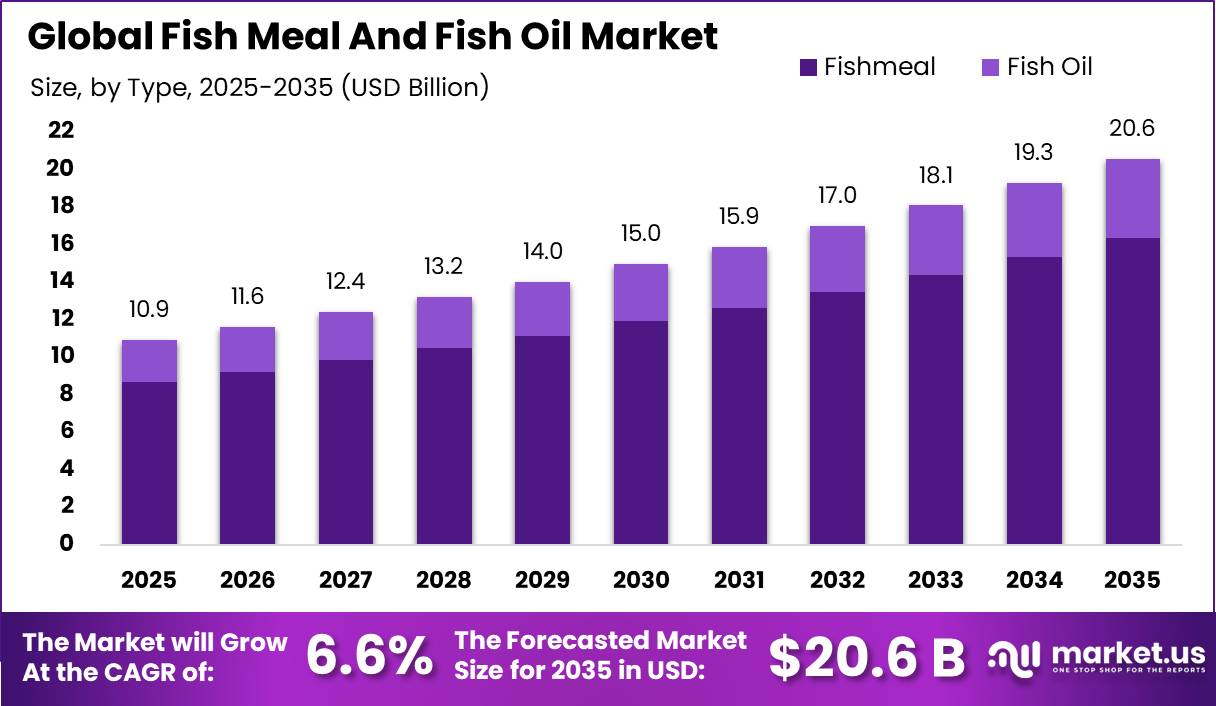
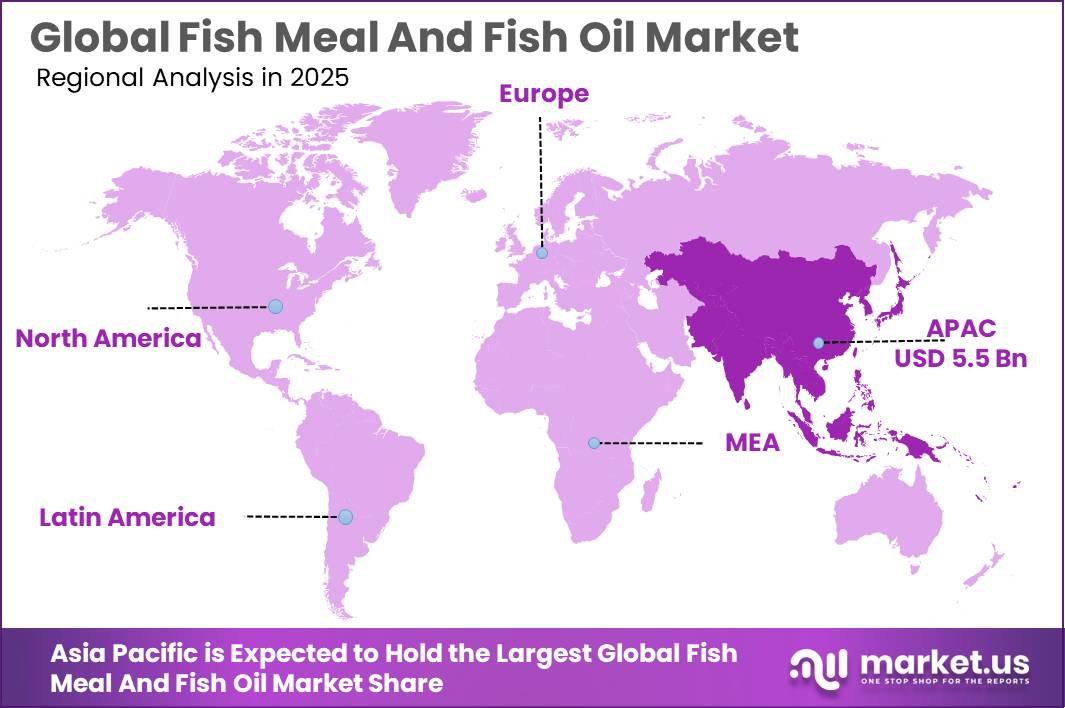
The Global Fish Meal And Fish Oil Market size is expected to be worth around USD 20.6 Billion by 2035, from USD 10.9 Billion in 2025, growing at a CAGR of 6.6% during the forecast period from 2026 to 2035. In 2025, Asia Pacific held a dominant market position, capturing more than a 51.3% share, holding USD 5.5 Billion revenue.
The fish meal and fish oil industry is a strategic marine-ingredients sector serving aquaculture feed, livestock feed, pet food, nutraceuticals and omega-3 applications. In 2022, global fisheries and aquaculture production reached 223.2 million tonnes, including 185.4 million tonnes of aquatic animals, while aquaculture output surpassed capture fisheries for the first time, strengthening demand for high-quality marine proteins and EPA/DHA-rich oils.
The industrial scenario in 2025 remains supply-sensitive but improving. IFFO reported that global fishmeal production in January 2025 increased about 75% year-on-year, supported by a 300% rise in Peruvian output; by March 2025, cumulative fishmeal production was still about 29% higher than the same period in 2024. Peru remains critical, as it accounts for roughly 20% of global fishmeal and fish oil production.
Demand is mainly driven by aquaculture expansion, feed efficiency and health nutrition. FAO/IFFO estimates show that more than 87% of fishmeal was used in aquaculture in 2021, while by-products now provide 34% of fishmeal and 53% of fish oil, improving circularity and raw-material utilization.
OECD-FAO projects aquatic food consumption to reach 21.8 kg per capita by 2034, while global fisheries and aquaculture production is projected to reach 212 million tonnes, with aquaculture contributing over 85% of additional output. EUMOFA notes that by-products supplied 39% of global fishmeal and 54% of fish oil in 2023, while fish-processing residues can represent 30–70% of whole fish weight, strengthening circular-economy positioning.
Government and institutional initiatives are shaping future growth through sustainable fisheries management, quota-based pelagic fisheries, EU circular-economy policy and energy-efficiency support. In Europe, fishmeal and fish oil output represents about 8–12% of global production, with EU production ranging from 370,000 to over 520,000 tonnes of fishmeal and 90,000–140,000 tonnes of fish oil.
Pelagia AS is positioned as a major European participant, operating across Norway, the United Kingdom, Ireland and Denmark, with feed products including protein concentrate, fishmeal and fish oil. The company reported 1,700 colleagues, 200 job types and 46 locations in 2023. Pelagia AS is positioned as a major European participant, operating across Norway, the United Kingdom, Ireland and Denmark, with feed products including protein concentrate, fishmeal and fish oil. The company reported 1,700 colleagues, 200 job types and 46 locations in 2023.
Key Takeaways
- Fish Meal And Fish Oil Market size is expected to be worth around USD 20.6 Billion by 2035, from USD 10.9 Billion in 2025, growing at a CAGR of 6.6%.
- Fishmeal held a dominant market position, capturing more than a 79.4% share in the Fish Meal and Fish Oil market.
- Marine Fish Waste held a dominant market position, capturing more than a 59.6% share in the Fish Meal and Fish Oil market.
- Aquatic Animals held a dominant market position, capturing more than a 69.2% share in the Fish Meal and Fish Oil market.
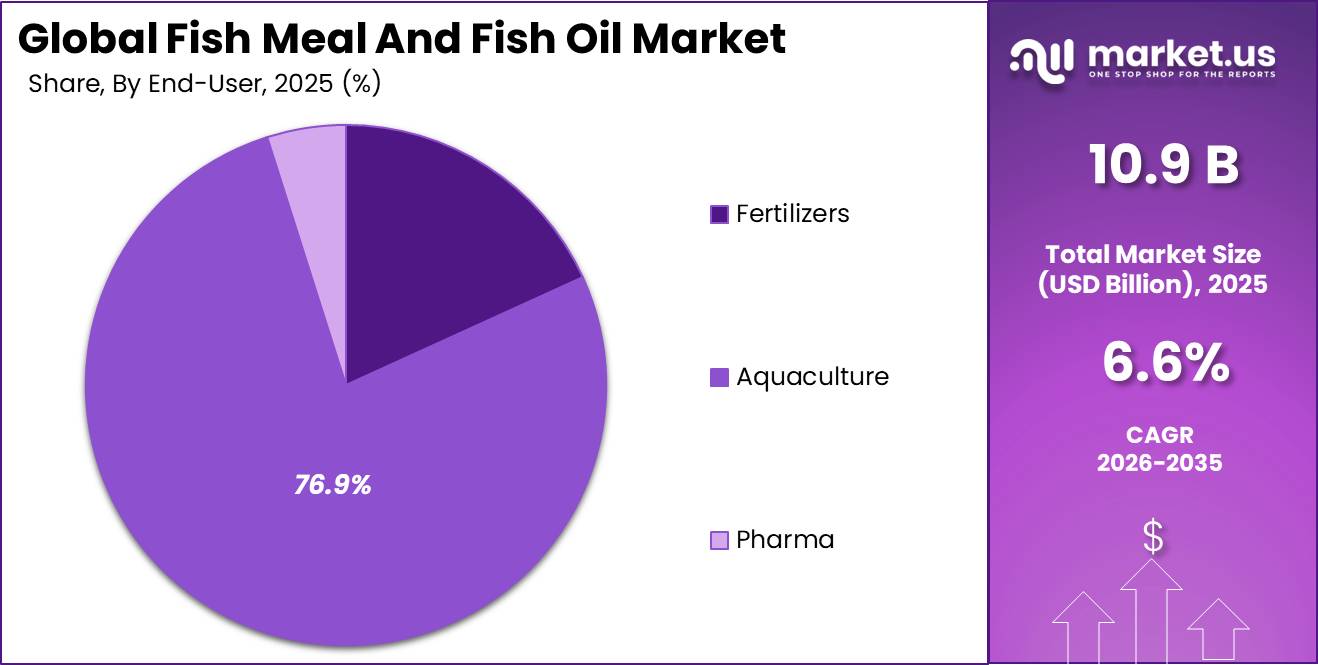
- Aquaculture held a dominant market position, capturing more than a 76.9% share in the Fish Meal and Fish Oil market.
- Asia-Pacific held a dominant position in the global Fish Meal and Fish Oil market, accounting for 51.3% of the total market share and reaching a market value of USD 5.5 Billion.
By Type Analysis
Fishmeal dominates with 79.4% share due to its strong demand in aquaculture and animal nutrition industries.
In 2025, Fishmeal held a dominant market position, capturing more than a 79.4% share in the Fish Meal and Fish Oil market. The segment continued to lead because of its wide usage in aquaculture feed, poultry feed, and livestock nutrition. Fishmeal remains highly preferred due to its rich protein content, balanced amino acid profile, and easy digestibility, making it an important ingredient for shrimp, salmon, and other farmed fish production. Increasing seafood consumption across several countries supported higher aquaculture activity, which directly pushed the demand for fishmeal during 2025. In addition, feed manufacturers continued to rely on fishmeal for improving animal growth performance and feed efficiency. The market also benefited from stable supply chains in major fish-producing regions and better fish processing technologies that improved production output.
By Source Analysis
Marine Fish Waste dominates with 59.6% share due to its easy availability and growing use in sustainable feed production.
In 2025, Marine Fish Waste held a dominant market position, capturing more than a 59.6% share in the Fish Meal and Fish Oil market by source of marine fish waste. The segment gained strong demand as manufacturers increasingly focused on utilizing fish processing leftovers such as heads, bones, skin, and trimmings for fishmeal and fish oil production. This approach helped reduce raw material waste while supporting cost-effective production processes. The availability of large volumes of marine fish waste from seafood processing industries also supported steady supply across major producing regions. Fishmeal and fish oil manufacturers preferred marine fish waste because it contains high nutritional value, including proteins and essential fatty acids required for aquaculture and animal feed applications.
By Livestock Application Analysis
Aquatic Animals dominate with 69.2% share due to rising aquaculture production and high demand for protein-rich feed.
In 2025, Aquatic Animals held a dominant market position, capturing more than a 69.2% share in the Fish Meal and Fish Oil market by livestock application. The segment remained the leading consumer of fishmeal and fish oil because these ingredients are widely used in aquaculture feed for species such as salmon, shrimp, trout, and other farmed fish. Fishmeal provides high-quality protein and essential nutrients that support faster growth and better feed conversion in aquatic animals. At the same time, fish oil is valued for its omega-3 fatty acids, which help improve fish health and overall production quality. The continued expansion of commercial aquaculture farming across several countries supported strong product demand throughout 2025.
By End-use Analysis
Aquaculture dominates with 76.9% share due to increasing global seafood demand and intensive fish farming activities.
In 2025, Aquaculture held a dominant market position, capturing more than a 76.9% share in the Fish Meal and Fish Oil market by end-use. The segment continued to lead as fishmeal and fish oil remained essential ingredients in aquaculture feed formulations. These products are widely used in farming species such as salmon, shrimp, tilapia, and trout because they provide high protein content, essential fatty acids, and nutrients required for healthy growth and improved survival rates. The rapid growth of commercial fish farming operations and rising seafood consumption across both developed and developing countries strongly supported market demand during 2025. Aquaculture producers also increased the use of nutritionally balanced feed to improve productivity and maintain fish quality standards.
Key Market Segments
By Type
- Fishmeal
- Fish Oil
By Source
- Salmon & Trout
- Marine Fish
- Crustaceans
- Tilapia
- Carps
- Other
By Livestock Application
- Aquatic Animals
- Swine
- Poultry
- Cattle
- Pets
By End-use
- Fertilizers
- Aquaculture
- Pharma
Emerging Trends
Sustainable and Alternative Omega-3 Sources are Emerging as a Key Trend in the Fish Meal and Fish Oil Market
One of the latest trends in the Fish Meal and Fish Oil market is the growing shift toward sustainable and alternative omega-3 sources. Rising pressure on marine resources and increasing demand for aquaculture feed are encouraging companies to explore algae-based omega-3 oils and fish processing by-products as additional raw material sources. According to the Food and Agriculture Organization (FAO), global fisheries and aquaculture production reached 223.2 million tonnes in 2022, while aquaculture alone produced 130.9 million tonnes.
At the same time, the industry is focusing more on circular economy practices by utilizing fish waste and seafood by-products for oil extraction. Research published in 2024 highlighted that fish by-products are increasingly being converted into high-quality omega-3 oils for food and feed applications, reducing waste and improving sustainability in the seafood sector. Governments and marine organizations are also supporting sustainable fisheries management and alternative feed ingredient development to reduce pressure on ocean ecosystems.
Algae-Based Omega-3 Oils are Gaining Attention Across Aquaculture and Nutrition Industries
Another important trend shaping the Fish Meal and Fish Oil market is the increasing adoption of algae-based omega-3 oils in aquaculture feed and human nutrition products. Industry groups such as IFFO reported in 2024 that record fish oil prices and lower crude fish oil supply pushed feed manufacturers to rely more on alternative omega-3 ingredients. This shift is encouraging investments in algae cultivation technologies and advanced omega-3 production systems.
Algae-derived omega-3 oils are becoming popular because they provide EPA and DHA fatty acids without depending directly on wild fish resources. Several aquaculture feed producers are already using algae-based DHA products to improve sustainability in salmon and shrimp farming. The trend is also expanding in dietary supplements and functional foods as consumers increasingly prefer plant-based and environmentally friendly nutrition products. In addition, government-backed sustainability initiatives and stricter fishing regulations are motivating feed manufacturers to reduce dependence on traditional marine oil sources.
Drivers
Rising Global Aquaculture Production is Increasing Demand for Fish Meal and Fish Oil
The rapid growth of aquaculture is one of the biggest factors supporting the Fish Meal and Fish Oil market. Fishmeal and fish oil are widely used in aquaculture feed because they provide high-quality protein, amino acids, and omega-3 fatty acids that help improve fish growth and health.
- According to the Food and Agriculture Organization (FAO), global aquaculture production reached 130.9 million tonnes in 2022, including 94.4 million tonnes of aquatic animals. For the first time, aquaculture contributed 51% of total aquatic animal production worldwide.
Government bodies and international food organizations are also encouraging sustainable aquaculture expansion to support food security and protein demand. The FAO further reported that global fisheries and aquaculture production touched 223.2 million tonnes in 2022, showing strong long-term growth in seafood consumption. As fish farming continues to expand in countries such as China, India, Vietnam, and Norway, the requirement for efficient feed ingredients is also rising steadily.
Growing Demand for Omega-3 Rich Seafood Supporting Market Expansion
The increasing consumer focus on healthy diets and omega-3-rich seafood is another important driver for the Fish Meal and Fish Oil market. Fish oil is considered one of the richest natural sources of EPA and DHA omega-3 fatty acids, which are important for heart and brain health. According to NOAA Fisheries, fish oil plays a major role in aquaculture feed because it provides essential fatty acids that cannot be naturally produced in sufficient amounts by fish themselves.
The FAO reported that annual global per capita seafood consumption increased from 9.1 kg in 1961 to 20.7 kg in 2022, showing how seafood has become an important part of human nutrition globally. Rising awareness about protein-rich diets and healthy eating habits continues to support seafood demand, which directly increases the consumption of fishmeal and fish oil in aquaculture feed production. Several countries are also investing in sustainable aquaculture programs and feed innovations to maintain seafood supply without putting additional pressure on wild fish stocks.
Restraints
Declining Wild Fish Stocks are Limiting Raw Material Availability for Fish Meal and Fish Oil
One of the biggest restraining factors for the Fish Meal and Fish Oil market is the declining availability of wild fish stocks used as raw materials. Fishmeal and fish oil production mainly depend on small pelagic fish species such as anchovies, sardines, and mackerel. However, overfishing, climate change, and marine ecosystem pressure have reduced fish availability in several regions.
- According to the Food and Agriculture Organization (FAO), nearly 37.7% of global fish stocks were overfished in 2021, compared to only 10% in the 1970s.
Governments and fisheries organizations are now implementing stricter fishing quotas and sustainability regulations to protect marine biodiversity. Countries including Peru and Chile, which are among the largest fishmeal producers, regularly impose seasonal catch limits to prevent overexploitation of anchovy populations. While these policies support long-term marine conservation, they also reduce the immediate availability of raw materials for fishmeal and fish oil manufacturers.
Rising Raw Material Prices and Sustainability Pressure Increasing Production Costs
The increasing cost of marine raw materials is another major challenge for the Fish Meal and Fish Oil market. Lower fish catches and stricter environmental regulations have pushed up procurement costs for manufacturers across several regions. According to the International Council for the Exploration of the Sea (ICES), many commercially important fish stocks continue to face sustainability pressure due to environmental changes and high harvesting activity.
At the same time, seafood companies and aquaculture producers are under growing pressure from governments and environmental groups to use sustainable feed ingredients. Several feed manufacturers are now shifting toward alternative proteins such as algae-based oils, insect meal, and plant-based ingredients to reduce dependence on wild-caught fish resources. Although these alternatives are still developing commercially, they are slowly changing purchasing patterns in the feed industry. Sustainability certifications and traceability requirements are also increasing operational costs for fishmeal suppliers.
Opportunity
Expansion of Sustainable Aquaculture is Creating Strong Growth Opportunities for Fish Meal and Fish Oil
The fast expansion of sustainable aquaculture is creating major growth opportunities for the Fish Meal and Fish Oil market. As global seafood demand continues to rise, fish farming industries are increasing production to meet protein needs without depending entirely on wild fisheries. Fishmeal and fish oil remain important feed ingredients because they support healthy fish growth, stronger immunity, and improved feed efficiency.
- According to the Food and Agriculture Organization (FAO), aquaculture production reached 94.4 million tonnes of aquatic animals in 2022, showing strong long-term growth in the industry.
Several governments are also supporting sustainable aquaculture development through funding programs and seafood production initiatives. Countries such as India, Norway, Indonesia, and Vietnam are investing heavily in modern fish farming infrastructure and feed technology improvements. These investments are encouraging higher use of scientifically balanced feed formulations that include fishmeal and fish oil for better production output.
Rising Demand for Omega-3 Nutrition is Supporting New Product Development
Increasing consumer awareness about nutrition and preventive healthcare is opening new growth opportunities for fish oil producers worldwide. Fish oil is widely recognized for its high omega-3 fatty acid content, especially EPA and DHA, which are linked to heart, brain, and eye health benefits. According to the National Institutes of Health (NIH), omega-3 fatty acids are considered important nutrients for reducing cardiovascular risks and supporting overall wellness. This growing awareness is increasing demand for omega-3 supplements, fortified foods, and functional nutrition products that use fish oil as a key ingredient.
In addition, food and healthcare companies are investing in advanced purification and refining technologies to produce high-quality fish oil products for human consumption. Government health agencies in several countries are also encouraging healthier dietary habits, including increased omega-3 intake, which is supporting market expansion. Demand for nutritional supplements is especially growing among aging populations and health-conscious consumers in North America, Europe, and Asia-Pacific.
Regional Insights
Asia-Pacific dominates the Fish Meal and Fish Oil market with 51.3% share valued at USD 5.5 Billion due to strong aquaculture production and seafood consumption.
In 2025, Asia-Pacific held a dominant position in the global Fish Meal and Fish Oil market, accounting for 51.3% of the total market share and reaching a market value of USD 5.5 Billion. The region continues to lead because of its large aquaculture industry, increasing seafood consumption, and strong fish farming activities across countries such as China, India, Vietnam, Indonesia, and Thailand. China remains one of the largest producers and consumers of aquaculture feed, creating significant demand for fishmeal and fish oil used in shrimp, salmon, tilapia, and carp farming.
Government support for fisheries and aquaculture development is another major factor driving regional demand. Several Asia-Pacific countries are investing in sustainable fish farming practices, modern feed technologies, and seafood export infrastructure to improve production efficiency. India’s fisheries sector, for example, has seen strong government backing through programs focused on increasing seafood exports and aquaculture productivity. Rising awareness about protein-rich diets and omega-3 nutrition is also contributing to increased fish oil consumption in both feed and dietary supplement applications.
Key Regions and Countries Insights
- North America
- US
- Canada
- Europe
- Germany
- France
- The UK
- Spain
- Italy
- Rest of Europe
- Asia Pacific
- China
- Japan
- South Korea
- India
- Australia
- Rest of APAC
- Latin America
- Brazil
- Mexico
- Rest of Latin America
- Middle East & Africa
- GCC
- South Africa
- Rest of MEA
Key Players Analysis
Pelagia AS operates as a vertically integrated marine ingredients producer focused on fishmeal, fish oil, protein concentrates and aquaculture feed solutions across Norway, the UK, Ireland and Denmark. The company reported NOK 15.0 billion in 2024 revenue, compared with NOK 13.0 billion in 2023, reflecting stronger marine ingredient demand and higher raw-material utilization. Pelagia manages 26 production facilities, supporting feed, food and omega-3 applications.
Tecnológica de Alimentos S.A. (TASA) remains one of the world’s largest fishmeal and fish oil producers, supported by Peru’s anchovy resources and export-oriented marine ingredient infrastructure. Industry sources indicate the company operates 12 fishmeal and fish oil plants, 1 refined oil facility, and a fleet of approximately 48 fishing vessels, including 14 refrigerated vessels. TASA employs around 3,100 people and supplies fishmeal, refined fish oil and omega-3 ingredients to aquaculture and nutrition industries.
Omega Protein Corporation is a major supplier of fishmeal, fish oil and specialty protein ingredients used in aquaculture, livestock feed and pet nutrition markets. The company’s business model is strongly linked to annual fish catch volumes, oil yields and marine ingredient pricing. Industry estimates place Omega Protein’s annual revenue near USD 119 million, supported by approximately 353 employees and extensive Gulf Coast harvesting operations.
Top Key Players Outlook
- Pelagia AS
- Tecnológica de Alimentos S.A.
- Omega Protein Corporation
- TripleNine Group A/S
- FF Skagen A/S
- Pesquera Diamante S.A.
- Pesquera Exalmar S.A.A.
- Pesquera Hayduk S.A.
- Oceana Group Limited
- The Scoular Company
- Croda International Plc
- OLVEA Fish Oils
- Empresas Copec S.A.
- Austral Group S.A.A.
Recent Industry Developments
In 2026, FF Skagen A/S remained a strong Denmark-based company in the Fish Meal and Fish Oil sector, mainly serving aquaculture, livestock feed, and marine nutrition buyers. The company processes around 380,000 tons of fresh fish every year into nearly 80,000 tons of fishmeal and 35,000 tons of fish oil, with exports reaching more than 60 countries. Its total annual output is about 170,000 tons of fishmeal and fish oil, and annual turnover is reported at over DKK 1.8 billion.
In 2026, Pesquera Diamante S.A. remained an important Peru-based player in the fish meal and fish oil sector, with operations built around anchovy-based marine ingredients. The company produces steam-dried fishmeal, fish oil, soluble fish, and hydrolysed products through 5 plants, and its fishmeal is exported to more than 20 destinations in 25 kg, 50 kg, and 1,250 kg bag formats. Its fish oil contains a minimum 28% Omega-3 content and is supplied for aquaculture and Omega-3 concentrate producers.
Report Scope
| Report Features | Description |
|---|---|
| Market Value (2025) | USD 10.9 Bn |
| Forecast Revenue (2035) | USD 20.6 Bn |
| CAGR (2026-2035) | 6.6% |
| Base Year for Estimation | 2025 |
| Historic Period | 2020-2024 |
| Forecast Period | 2026-2035 |
| Report Coverage | Revenue Forecast, Market Dynamics, Competitive Landscape, Recent Developments |
| Segments Covered | By Type (Fishmeal, Fish Oil), By Source (Salmon And Trout, Marine Fish, Crustaceans, Tilapia, Carps, Other), By Livestock Application (Aquatic Animals, Swine, Poultry, Cattle, Pets), By End-use (Fertilizers, Aquaculture, Pharma) |
| Regional Analysis | North America – US, Canada; Europe – Germany, France, The UK, Spain, Italy, Rest of Europe; Asia Pacific – China, Japan, South Korea, India, Australia, Singapore, Rest of APAC; Latin America – Brazil, Mexico, Rest of Latin America; Middle East & Africa – GCC, South Africa, Rest of MEA |
| Competitive Landscape | Pelagia AS, Tecnológica de Alimentos S.A., Omega Protein Corporation, TripleNine Group A/S, FF Skagen A/S, Pesquera Diamante S.A., Pesquera Exalmar S.A.A., Pesquera Hayduk S.A., Oceana Group Limited, The Scoular Company, Croda International Plc, OLVEA Fish Oils, Empresas Copec S.A., Austral Group S.A.A. |
| Customization Scope | Customization for segments, region/country-level will be provided. Moreover, additional customization can be done based on the requirements. |
| Purchase Options | We have three licenses to opt for: Single User License, Multi-User License (Up to 5 Users), Corporate Use License (Unlimited User and Printable PDF) |





































