


Market Overview
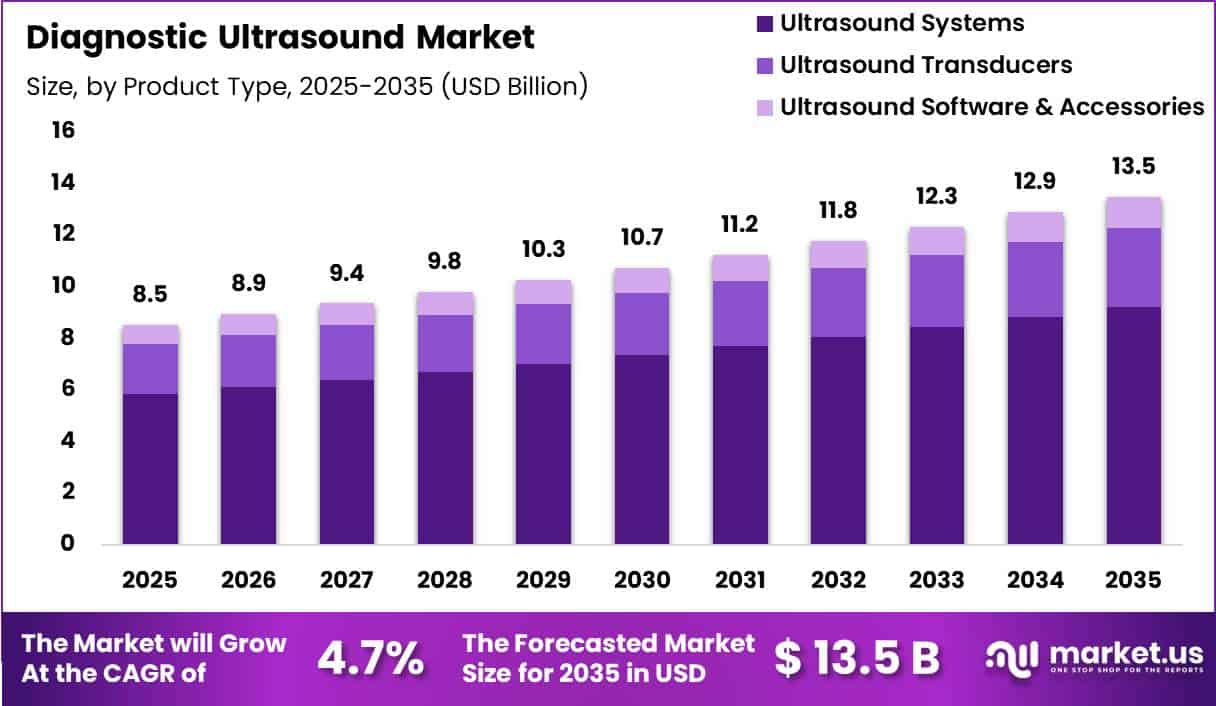
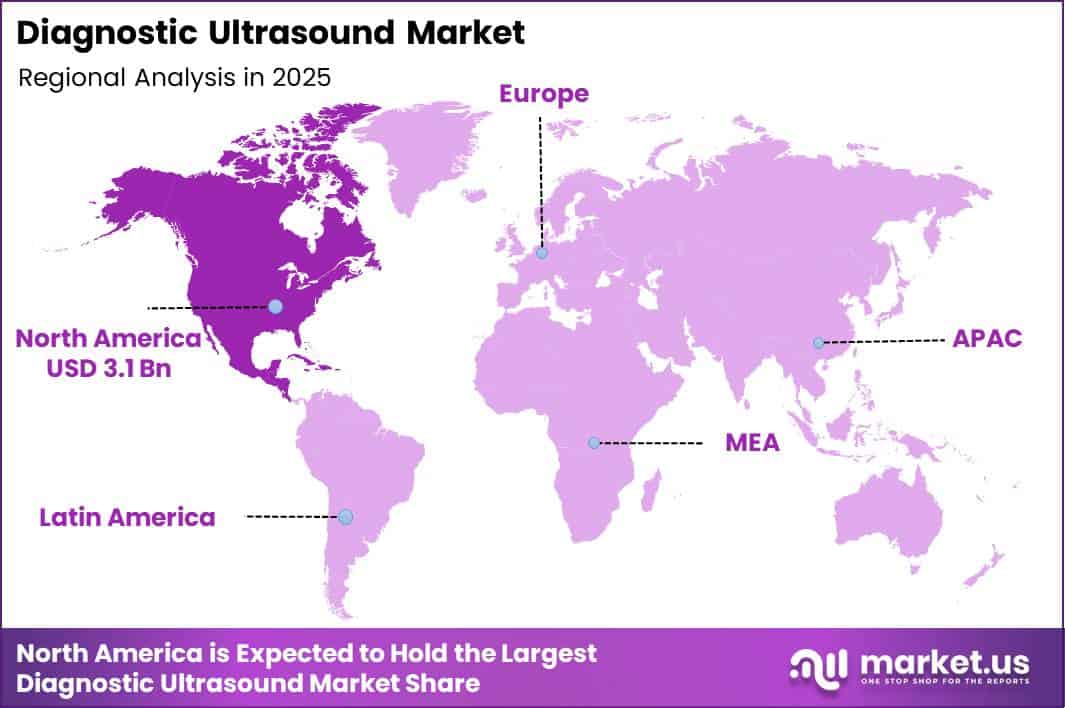
Global Diagnostic Ultrasound Market size is expected to be worth around US$ 13.5 Billion by 2035 from US$ 8.5 Billion in 2025, growing at a CAGR of 4.7% during the forecast period from 2026 to 2035. In 2025, North America led the market, achieving over 35.9% share with a revenue of US$ 3.1 Billion.
The global diagnostic ultrasound market continues to benefit from the growing demand for safe, non-invasive, and cost-effective medical imaging across hospitals, diagnostic centers, and outpatient clinics. Diagnostic ultrasound uses high-frequency sound waves to produce real-time images of internal organs, blood vessels, muscles, tendons, and developing fetuses without exposing patients to ionizing radiation.
This technology has become an essential first-line imaging modality in obstetrics and gynecology, cardiology, radiology, emergency medicine, abdominal imaging, and musculoskeletal assessments. According to the World Health Organization (WHO), medical imaging plays a critical role in diagnosing, monitoring, and treating numerous diseases, and ultrasound remains one of the most widely accessible imaging technologies worldwide due to its affordability and portability.
The U.S. Food and Drug Administration (FDA) also recognizes diagnostic ultrasound as a well-established imaging technology with an excellent safety profile when used appropriately.
The increasing prevalence of chronic diseases and cardiovascular disorders, together with rising pregnancy monitoring and aging populations, continues to support ultrasound adoption globally. The World Health Organization estimates that cardiovascular diseases account for approximately 17.9 million deaths annually, highlighting the growing need for rapid cardiac and vascular imaging.
Furthermore, WHO reports that around 295,000 women die each year from pregnancy and childbirth-related complications, emphasizing the importance of routine prenatal ultrasound examinations for maternal and fetal health.
Technological innovations—including AI-assisted image analysis, handheld wireless ultrasound systems, 3D/4D imaging, and point-of-care ultrasound (POCUS)—are improving diagnostic accuracy and expanding clinical use beyond traditional radiology departments.
Reflecting these favorable healthcare trends, the Global Diagnostic Ultrasound Market is projected to grow from US$ 8.5 billion in 2025 to approximately US$ 13.5 billion by 2035, registering a CAGR of 4.7%. In 2025, North America dominated the market with 35.9% share, generating approximately US$ 3.1 billion in revenue.
Key Takeaways
- Market Size: The Diagnostic Ultrasound Market size was US$ 8.5 Billion in 2025.The market is estimated to grow to US$ 13.5 Billion by 2035.
- Market Share: The Compound Annual Growth Rate (CAGR) of the market from 2026 to 2035 will be 4.7%.
- By Product Type: Ultrasound Systems has the largest market share, accounting for 68.4% of total sales.
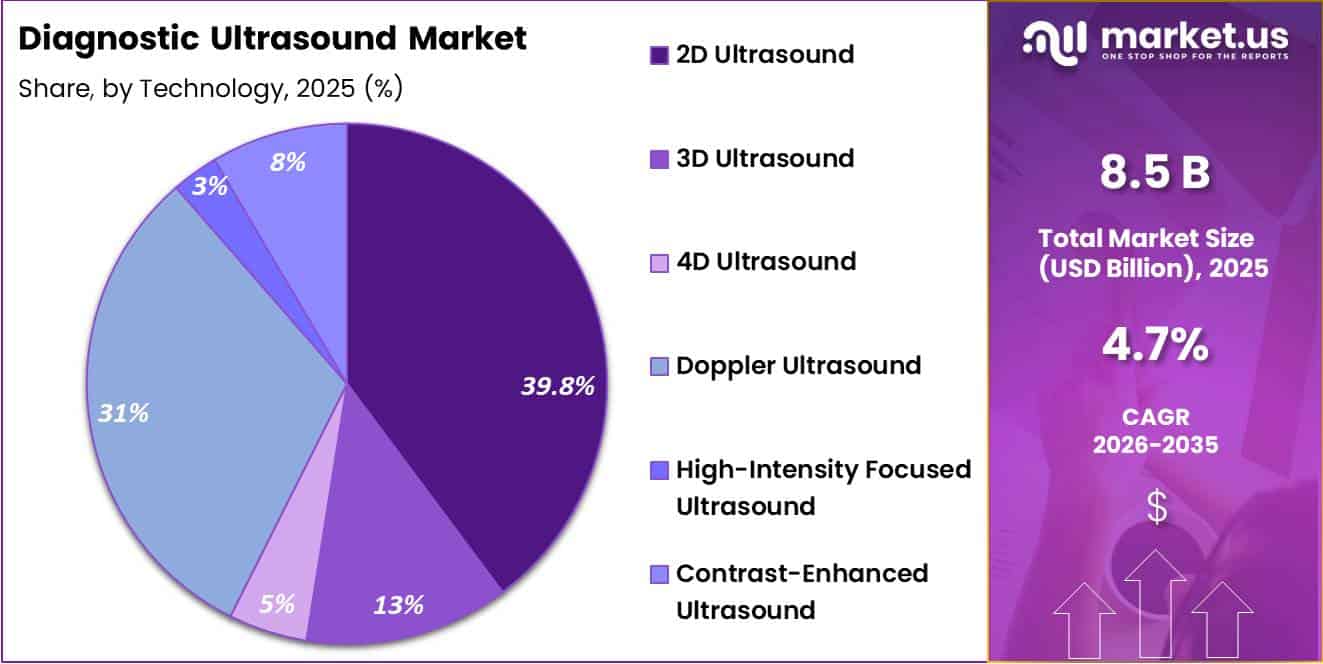
- By Technology: 2D Ultrasound dominate the segment, accounting for 39.8% of total revenue.
- By Portability: Cart/Trolley-Based Systems leads the segment, accounting for 54.6% of total revenue.
- By Display Type: Color Ultrasound Systems leads the segment, accounting for 84.7% of total revenue.
- By End User: Hospitals leads the segment, accounting for 52.8% of total revenue.
- Regional: North America is the dominant regional market,accounting for 35.9% of global sales.
Product Type Analysis
In product types analysis Ultrasound Systems dominated the diagnostic ultrasound market, accounting for 68.4% of the global market share. Their leadership is driven by widespread adoption across hospitals, diagnostic imaging centers, ambulatory surgical facilities, and specialty clinics for routine and advanced imaging procedures.
Modern ultrasound systems integrate high-resolution imaging, AI-assisted workflow optimization, automated measurements, and multi-specialty applications, making them indispensable for radiology, cardiology, obstetrics and gynecology, musculoskeletal, and emergency medicine.
Continuous technological improvements in image quality, portability, and connectivity with hospital information systems have further strengthened demand. Growing investments in replacing aging imaging equipment with premium digital platforms have also supported this segment’s dominance.
Ultrasound Transducers represented 22.7% of the market in 2025, supported by recurring replacement demand and the introduction of specialized probes designed for cardiovascular, abdominal, vascular, pediatric, and point-of-care applications. Increasing utilization of high-frequency linear and matrix-array transducers has expanded diagnostic precision across multiple clinical settings.
Meanwhile, Ultrasound Software & Accessories accounted for 8.9% of the market, benefiting from rising adoption of AI-powered image analysis, workflow management software, reporting tools, storage solutions, carts, printers, and compatible accessories. Growing digitalization of imaging departments and increasing emphasis on efficient data management continue to support steady growth within this segment.
Technology Analysis
2D Ultrasound remained the dominant technology segment, capturing 39.8% of the global diagnostic ultrasound market. Its leadership is attributed to its affordability, fast imaging capability, broad clinical acceptance, and extensive use in routine examinations.
2D ultrasound continues to serve as the primary imaging modality for abdominal, obstetric, gynecological, cardiac, vascular, and emergency diagnostics due to its proven reliability and lower operating costs. Healthcare providers continue investing in advanced 2D platforms equipped with AI-assisted image optimization and enhanced visualization features, further reinforcing market demand.
Doppler Ultrasound held the second-largest share at 31.2%, driven by increasing cardiovascular disease prevalence and growing demand for vascular blood-flow assessment. Doppler technology plays a vital role in diagnosing arterial blockages, venous disorders, fetal circulation, and cardiac abnormalities.
3D Ultrasound accounted for 12.7%, supported by rising use in prenatal imaging and complex anatomical assessments. Contrast-Enhanced Ultrasound (CEUS) represented 8.5%, gaining traction due to improved lesion characterization without ionizing radiation.
4D Ultrasound contributed 4.9%, primarily used for real-time fetal imaging and specialized clinical applications. High-Intensity Focused Ultrasound (HIFU) held 2.9%, reflecting its growing use in non-invasive therapeutic procedures and targeted tissue ablation, although adoption remains limited compared to diagnostic imaging technologies.
Portability Analysis
Cart/Trolley-Based Systems dominated the diagnostic ultrasound market with 54.6% of the global market share. These systems remain the preferred choice for hospitals and advanced diagnostic centers because they deliver superior image quality, higher computing power, larger displays, and compatibility with multiple transducers.
Their versatility enables use across radiology, cardiology, obstetrics and gynecology, vascular imaging, and surgical guidance. Premium cart-based platforms also incorporate advanced technologies such as elastography, AI-assisted diagnostics, Doppler imaging, and real-time 3D/4D capabilities, making them ideal for comprehensive clinical examinations. Continuous investments by hospitals in upgrading imaging infrastructure further support this segment’s leading position.
Portable ultrasound devices, including handheld and compact systems, continue to gain momentum due to increasing demand for point-of-care imaging in emergency departments, ambulatory care centers, intensive care units, and remote healthcare settings.
Their lightweight design, battery-powered operation, and wireless connectivity make them valuable for bedside diagnostics and rapid clinical decision-making. Improvements in miniaturization, cloud integration, and artificial intelligence have significantly enhanced portable device performance.
However, despite rapid adoption, portable systems still account for a smaller share than cart-based platforms because many advanced diagnostic procedures require higher imaging performance, broader functionality, and specialized applications available primarily in full-sized ultrasound systems.
Display Type Analysis
By display type Color Ultrasound Systems dominated the diagnostic ultrasound market, accounting for 84.7% of the total market share. Their overwhelming leadership reflects widespread clinical preference for color Doppler visualization, which significantly enhances the assessment of blood flow, tissue perfusion, and vascular abnormalities.
Color imaging has become a standard feature across modern ultrasound platforms used in cardiology, obstetrics, vascular medicine, radiology, and emergency care. These systems enable clinicians to distinguish arteries and veins more effectively, detect circulatory disorders, evaluate fetal blood flow, and improve diagnostic confidence.
Continuous advancements in display resolution, real-time imaging, AI-assisted optimization, and enhanced Doppler sensitivity have further strengthened adoption globally.
Monochrome and grayscale ultrasound systems continue to serve selected applications where basic structural imaging is sufficient and cost efficiency remains a priority. These systems are commonly utilized in smaller clinics, educational institutions, and resource-constrained healthcare facilities.
However, their market share continues to decline as healthcare providers increasingly invest in advanced color imaging technologies capable of delivering comprehensive anatomical and hemodynamic assessments.
Growing demand for precision diagnostics, expanding cardiovascular imaging procedures, and rising adoption of advanced ultrasound equipment across emerging economies continue to reinforce the dominant position of color ultrasound systems throughout the global diagnostic imaging market.
End User Analysis
In 2025, Hospitals dominated the diagnostic ultrasound market, capturing 52.8% of the global market share. Hospitals remain the largest end users due to their extensive patient volumes, availability of specialized imaging departments, and ability to perform a wide range of diagnostic and interventional procedures.
Ultrasound systems are routinely utilized across emergency medicine, radiology, cardiology, obstetrics and gynecology, oncology, critical care, and surgical departments. Growing investments in advanced imaging infrastructure, integration of AI-enabled ultrasound platforms, and increasing demand for minimally invasive image-guided procedures continue to strengthen hospital procurement.
Large healthcare institutions also benefit from comprehensive maintenance programs and access to highly trained imaging professionals, supporting sustained equipment utilization.
Diagnostic imaging centers represent another significant end-user segment, driven by increasing outpatient imaging demand and growing preference for specialized diagnostic services. Ambulatory surgical centers and specialty clinics are also expanding ultrasound adoption for point-of-care diagnostics, procedural guidance, and routine patient monitoring.
Rising healthcare decentralization, growing chronic disease burden, and increasing awareness of early disease detection continue to encourage adoption across these settings.
While outpatient facilities are experiencing steady growth due to convenience and lower procedural costs, hospitals maintain their dominant position because they offer comprehensive multidisciplinary care and perform the highest volume of complex diagnostic ultrasound examinations worldwide.
Market Segmentations
By Product Type
- Ultrasound Systems
- Cart/Trolley-Based Ultrasound Systems
- Portable Ultrasound Systems
- Handheld Ultrasound Systems
- Point-of-Care Ultrasound (POCUS) Systems
- Ultrasound Transducers
- Convex Transducers
- Linear Transducers
- Phased Array Transducers
- Endocavity Transducers
- Specialty Transducers
- Ultrasound Software & Accessories
- Imaging Software
- AI-Assisted Ultrasound Software
- Contrast Imaging Software
- Workstations
- Printers & Accessories
By Technology
- 2D Ultrasound
- 3D Ultrasound
- 4D Ultrasound
- Doppler Ultrasound
- Color Doppler
- Power Doppler
- Spectral Doppler
- High-Intensity Focused Ultrasound (HIFU)
- Contrast-Enhanced Ultrasound (CEUS)
By Portability
- Cart/Trolley-Based Systems
- Compact Portable Systems
- Handheld Systems
By Display Type
- Black & White Ultrasound Systems
- Color Ultrasound Systems
By End User
- Hospitals
- Diagnostic Imaging Centers
- Ambulatory Surgical Centers (ASCs)
- Maternity Centers
- Specialty Clinics
- Academic & Research Institutes
- Others
Driver
National HPV Vaccination Scale Up and Future Screening Cohorts
Large scale HPV vaccination programs are creating a long term structural driver for HPV testing demand, with effects that will materialize gradually as vaccinated cohorts enter screening age. The WHO elimination strategy targets 90 % HPV vaccination coverage among girls by age 15, and several countries are already operationalizing mass campaigns.
For example, India has launched a nationwide initiative to vaccinate approximately 11.5 million 14 year old girls through public health facilities beginning in 2026.While widespread vaccination is expected to reduce cervical cancer incidence over time, it does not eliminate the need for screening.
Current WHO and national guidelines still recommend that vaccinated women continue routine cervical screening, ensuring persistent demand for HPV DNA testing even in high coverage settings.In the medium term, vaccination scale up may actually increase structured screening participation.
As immunization programs mature, governments are building integrated registries and recall systems that improve tracking of vaccinated cohorts and strengthen adherence to life course screening schedules.
This shift supports broader adoption of HPV DNA testing for surveillance, reassurance, and detection of non vaccine HPV strains.Over the long term, these cohorts will generate a more organized and predictable screening population, with higher compliance rates and more systematic testing intervals.
While incidence of high grade lesions is expected to decline, improved coverage and systematization are likely to sustain testing volumes.Overall, vaccination driven infrastructure and cohort tracking are expected to add approximately 1.5 % points of long term CAGR uplift in HPV testing markets, particularly across APAC and Latin America, where large scale public vaccination programs are rapidly expanding.
| Driver | (~) % Impact on CAGR Forecast | Geographic Relevance | Impact Timeline |
|---|---|---|---|
| Chronic disease imaging load: diabetes, cardio, renal follow-up | +1.6% | North America core, EU, APAC urban systems, GCC | Medium term (2-4 years) |
| Primary-care and acute-care POCUS expansion | +2.1% | North America core, EU, APAC corridors, Latin America spill-over, Africa access markets | Short term (≤ 2 years) |
| AI-guided acquisition and workflow automation in ultrasound | +1.8% | U.S. core, EU early adopters, Japan, South Korea, China tier-1 hospitals | Short term (≤ 2 years) |
| WHO-led imaging access and health-system capacity buildout | +1.4% | LMIC-heavy APAC, Africa, South Asia, Latin America | Long term (≥ 4 years) |
| Reimbursement and site-of-care shifts favoring ambulatory use | +1.2% | U.S. core, selected EU outpatient systems | Medium term (2-4 years) |
| Portable and handheld system economics improving adoption | +1.7% | Global broad-based, especially APAC, U.S., EU, frontier public-health networks | Short term (≤ 2 years) |
Challenge
Radiology Workflow Bottlenecks in Diagnostic Ultrasound
Radiology workflow bottlenecks in ultrasound stem from a persistent imbalance between rapidly growing imaging volumes and slower expansion in radiologist and sonographer capacity. As ultrasound utilization increases across emergency, outpatient, and point of care settings, downstream interpretation and reporting pipelines become increasingly strained, creating delays in diagnosis and follow up care.
Industry studies indicate imaging demand has grown in the mid 20 % range over longer term horizons, while radiologist workforce growth has lagged behind.
This mismatch leads to 15 to 25 % of ultrasound exams exceeding target reporting turnaround times, particularly in high volume hospital networks. These delays can trigger repeat imaging in roughly 5 to 10 % of cases, further amplifying workload pressures.
Operationally, ultrasound departments are typically designed for 90 to 95 % equipment utilization with 24 to 36 hour reporting cycles, but real world performance often falls to 75 to 85 % utilization with 48 to 72 hour turnaround times.
The gap is driven by reporting backlogs, administrative burden, and inefficient scheduling coordination.From a market perspective, these inefficiencies constrain throughput and limit revenue realization, contributing to an estimated 0.9 % point drag on potential CAGR. The bottleneck is therefore not demand but workflow conversion efficiency.
Mitigation approaches include expanding teleradiology support to absorb 10 to 20 % of interpretation workload, adopting structured reporting tools, and deploying AI assisted measurement and triage systems that can reduce reading time per case by 10 to 25 %.
However, these interventions require multi year investment cycles, workflow redesign, and governance alignment before full productivity gains are achieved.
| Challenge | (~) % CAGR Friction Drag | Geographic Relevance | Mitigation Horizon |
|---|---|---|---|
| Skilled sonographer gap | -1.2% | North America, EU, select APAC | Medium term (2-4 years) |
| Radiology workflow bottlenecks | -0.9% | Hospital hubs, urban centers | Medium term (2-4 years) |
| Reimbursement pressure on imaging | -0.8% | U.S., selected OECD payers | Medium term (2-4 years) |
| Patchy PoCUS adoption capacity | -1.0% | LMICs, rural corridors | Long term (≥ 4 years) |
| AI-enabled ultrasound regulatory drag | -0.7% | U.S., EU regulatory hubs | Long term (≥ 4 years) |
| Capital and IT integration friction | -0.6% | Global tertiary facilities | Short term (≤ 2 years) |
Restraints
Tariff Escalation on Imaging Components in Diagnostic Ultrasound
Tariff escalation on imaging components creates a direct cost and procurement constraint for diagnostic ultrasound systems by increasing landed costs across electronics, structural materials, and assembled subsystems.
In 2025 to 2026, tariffs on electronics and related inputs in major markets such as the U.S. and parts of Europe range broadly from 10 to 40 % for electronics categories, while certain metals can face duties up to 50 %, depending on origin and classification.
Ultrasound systems are particularly exposed due to their reliance on globally sourced components such as printed circuit boards (PCBs), semiconductors, power supplies, and high density connectors, many of which are concentrated in Asian manufacturing hubs.
A 25 to 30 % tariff on PCB components and up to 50 % on select semiconductor inputs can translate into a 15 % increase in total system cost, adding approximately USD 2,000 to 8,000 per mid range cart based system and USD 500 to 1,500 per portable unit, including logistics and compliance overhead.
These cost increases often force OEMs to implement 5 to 12 % list price adjustments in affected markets, which can lengthen hospital procurement cycles by 3 to 6 months as capital budgets are reassessed. In some cases, buyers defer upgrades or shift toward refurbished systems to preserve constrained healthcare budgets.
Manufacturers respond by relocating assembly to lower tariff jurisdictions, redesigning systems to reduce tariff exposed components, and negotiating longer term contracts to stabilize pricing. However, these strategies typically require 18 to 24 months to fully implement and involve significant upfront capital and engineering investment.
Overall, tariff escalation is estimated to impose a 1.2 % point drag on global diagnostic ultrasound CAGR, driven by higher system costs, delayed procurement decisions, and reduced near term replacement cycles.
| Restraint | (~) % Impact on CAGR Forecast | Geographic Relevance | Impact Timeline |
|---|---|---|---|
| Semiconductor & electronics supply squeeze | -1.5% | North America core, EU, APAC corridors | Medium term (2–4 years) |
| Tariff escalation on imaging components | -1.2% | US, EU import-dependent, APAC exporters | Short to medium term (≤ 4 years) |
| Stricter device & AI regulation burden | -0.9% | EU, UK, US, selected Asia hubs | Long term (≥ 4 years) |
| Hospital CapEx deferrals & budget stress | -1.4% | OECD hospitals, emerging urban systems | Short term (≤ 2 years) |
| Skilled sonographer workforce gap | -0.8% | North America, EU, Asia urban centers | Long term (≥ 4 years) |
| Data, cybersecurity & interoperability friction | -0.7% | US, EU, Asia digitalizing providers | Medium to long term (≥ 3 years) |
Opportunity
Outcome Linked Reimbursement and Risk Sharing Models in Ultrasound
Outcome linked reimbursement and risk sharing models in ultrasound reflect a structural shift away from pure fee for service imaging toward value based care, where payment is tied to measurable clinical outcomes and downstream cost reduction.
This shift is being reinforced by payer strategies, including CMS efficiency adjustments in diagnostic imaging, which compress traditional reimbursement growth while encouraging more integrated, pathway based care delivery.
In this model, ultrasound is no longer treated as a standalone diagnostic event but as part of a broader care continuum, particularly in areas such as heart failure monitoring, obstetric care, and vascular disease management, where early detection can reduce hospital admissions and expensive downstream imaging or interventions.
Providers may negotiate bundled payments that include ultrasound services, with shared savings mechanisms if total episode costs fall below predefined benchmarks. Financially, successful implementation could yield 5 to 10 % margin expansion versus fee for service models for provider groups that achieve outcome targets through more efficient imaging utilization and reduced downstream utilization of high cost modalities such as CT or MRI.
Vendors also gain new monetization pathways through risk sharing agreements, where equipment pricing, service contracts, or software subscriptions are partially tied to verified improvements in clinical outcomes or cost savings.
This effectively transforms ultrasound from a procedural device into a performance linked platform within population health contracts. If scaled across North America and Europe by 2033, these models could generate USD 1 to 2 billion in incremental economic value, supporting an estimated 1.5 % point uplift in ultrasound market CAGR by stabilizing revenue against fee schedule compression and linking growth to longitudinal patient outcomes rather than individual scan volumes.
| Opportunity | (~) % Potential CAGR Upside | Geographic Relevance | Execution Window |
|---|---|---|---|
| POCUS-first primary care models | +2.3% | North America, EU, APAC emerging | Medium term (2–4 years) |
| Community maternal & fetal ultrasound networks | +1.9% | Sub-Saharan Africa, South Asia, LatAm | Long term (≥ 4 years) |
| Chronic disease ultrasound pathways (diabetes, liver) | +1.7% | North America core, EU, GCC, China | Medium term (2–4 years) |
| AI-enabled workflow & decision support monetization | +2.8% | Global tier-1 providers | Short term (≤ 2 years) |
| Outcome-linked reimbursement & risk-sharing models | +1.5% | North America, EU | Long term (≥ 4 years) |
| Home, retail, and virtual care ultrasound services | +2.0% | North America, EU, APAC urban | Medium term (2–4 years) |
Regional Analysis
In 2025, North America led the market, achieving over 35.9% share with a revenue of US$ 3.1 Billion.
North America region’s leadership is supported by advanced healthcare infrastructure, widespread adoption of high-resolution imaging technologies, favorable reimbursement frameworks, and a strong presence of leading medical device manufacturers.
Growing demand for point-of-care ultrasound (POCUS), increasing use of ultrasound in emergency medicine, obstetrics, cardiology, and musculoskeletal imaging, along with continuous technological innovation, further strengthens regional market growth. Rising investments in AI-enabled imaging solutions and portable ultrasound systems also contribute to sustained demand.
Europe represents the second-largest regional market, driven by an aging population, increasing prevalence of chronic diseases, and expanding government support for early disease diagnosis. Hospitals and diagnostic centers continue to modernize imaging equipment, while regulatory emphasis on radiation-free diagnostic methods encourages broader ultrasound adoption across multiple clinical specialties.
The Asia-Pacific region is expected to register the fastest growth during the forecast period. Rapid healthcare infrastructure development, expanding healthcare expenditure, growing patient awareness, and improved access to diagnostic services in countries such as China, Japan, India, and South Korea are fueling market expansion.
Rising birth rates in several developing economies and increasing demand for affordable imaging technologies further support regional growth.
Latin America, the Middle East, and Africa are witnessing steady market expansion as governments invest in healthcare modernization, improve diagnostic capabilities, and expand access to maternal, cardiovascular, and primary healthcare services.
Although these regions currently hold smaller market shares, increasing adoption of portable and cost-effective ultrasound systems is expected to create significant long-term growth opportunities.
Key Regions and Countries
North America
- The US
- Canada
Europe
- Germany
- France
- The U.K.
- Italy
- Spain
- Russia & CIS
- Rest of Europe
Asia Pacific
- China
- India
- Japan
- South Korea
- ASEAN
- Australia & New Zealand
- Rest of Asia Pacific
Middle East & Africa
- GCC
- South Africa
- Rest of Middle East & Africa
Latin America
- Brazil
- Mexico
- Rest of Latin America
Key Player Analysis
The Diagnostic Ultrasound Market is moderately consolidated, with a mix of global imaging technology leaders and specialized ultrasound manufacturers shaping competitive dynamics. The market has reached a mature stage in developed healthcare systems, while continued expansion in emerging economies is creating opportunities for new entrants and regional innovators.
Competition is increasingly centered on technological advancement, including AI-enabled image optimization, portable ultrasound platforms, workflow automation, cloud connectivity, and advanced visualization capabilities.
Companies are also investing in software integration, point-of-care imaging, and enhanced clinical decision support to improve diagnostic accuracy and operational efficiency across diverse healthcare settings.
The competitive landscape can be viewed across three strategic tiers. The first tier comprises multinational imaging leaders such as GE HealthCare, Philips Healthcare, Siemens Healthineers, Canon Medical Systems, Fujifilm Holdings, and Samsung Medison, which leverage broad product portfolios, global distribution networks, and substantial R&D investments to maintain leadership across premium and mid-range ultrasound systems.
The second tier includes established ultrasound specialists such as Mindray Medical, Hologic Inc., Esaote S.p.A., CHISON Medical Imaging, Vinno Technology, Alpinion Medical Systems, and Terason Ultrasound, focusing on cost-effective innovation, regional expansion, and application-specific imaging solutions.
The third tier is represented by innovation-driven companies including Butterfly Network and Clarius Mobile Health, which emphasize handheld ultrasound, semiconductor-based imaging technologies, cloud-enabled workflows, and mobile connectivity.
Across all tiers, competition is driven by continuous product innovation, strategic collaborations with healthcare providers, software ecosystem development, AI-assisted diagnostics, and workflow integration that enhances clinical efficiency while expanding ultrasound accessibility across hospitals, outpatient centers, and point-of-care environments.
Top Key Players
- GE HealthCare
- Philips Healthcare
- Siemens Healthineers
- Fujifilm Holdings
- Canon Medical Systems
- Samsung Medison
- Mindray Medical
- Hologic Inc.
- Esaote S.p.A.
- Butterfly Network
- Clarius Mobile Health
- CHISON Medical Imaging
- Vinno Technology
- Alpinion Medical Systems
- Terason Ultrasound
Recent Developments
- In February 2025, Philips Healthcare received FDA clearance for AI-powered enhancements to its Compact Ultrasound 5500CV platform, improving cardiac ultrasound workflow and image analysis.
- In March 2025, Siemens Healthineers expanded its ACUSON Sequoia ultrasound portfolio with advanced AI-assisted imaging features and cardiovascular applications, strengthening precision ultrasound diagnostics.
- In April 2025, Canon Medical Systems launched enhanced AI-enabled ultrasound software upgrades for the Aplio i-series, improving automation and diagnostic efficiency in general imaging and women’s health.
- In May 2025, Fujifilm Holdings introduced new AI-supported ultrasound capabilities across its ARIETTA platform, enhancing liver assessment and abdominal imaging performance
Report Scope
| Report Features | Description |
|---|---|
| Market Value (2025) | US$ 8.5 Billion |
| Forecast Revenue (2035) | US$ 13.5 Billion |
| CAGR (2026-2035) | 4.7 % |
| Base Year for Estimation | 2025 |
| Historic Period | 2020-2024 |
| Forecast Period | 2026-2035 |
| Report Coverage | Revenue Forecast, Market Dynamics, Competitive Landscape, Recent Developments |
| Segments Covered | By Product Type(Ultrasound Systems, Cart/Trolley-Based Ultrasound Systems, Portable Ultrasound Systems, Handheld Ultrasound Systems, Point-of-Care Ultrasound (POCUS) Systems, Ultrasound Transducers, Convex Transducers, Linear Transducers, Phased Array Transducers, Endocavity Transducers, Specialty Transducers, Ultrasound Software & Accessories, Imaging Software, AI-Assisted Ultrasound Software, Contrast Imaging Software, Workstations, Printers & Accessories) By Technology (2D Ultrasound, 3D Ultrasound, 4D Ultrasound, Doppler Ultrasound, Color Doppler, Power Doppler, Spectral Doppler, High-Intensity Focused Ultrasound (HIFU), Contrast-Enhanced Ultrasound (CEUS)) By Portability (Cart/Trolley-Based Systems, Compact Portable Systems, Handheld Systems) By Display Type(Black & White Ultrasound Systems, Color Ultrasound Systems) By End User (Hospitals, Diagnostic Imaging Centers, Ambulatory Surgical Centers (ASCs), Maternity Centers, Specialty Clinics, Academic & Research Institutes, Others) |
| Regional Analysis | North America – The US, Canada; Europe – Germany, France, U.K., Italy, Spain, Russia & CIS, Rest of Europe; Asia Pacific – China, India, Japan, South Korea, ASEAN, Australia & New Zealand, Rest of Asia Pacific; Middle East & Africa – GCC, South Africa, Rest of Middle East & Africa; Latin America – Brazil, Mexico, Rest of Latin America |
| Competitive Landscape | GE HealthCare, Philips Healthcare, Siemens Healthineers, Fujifilm Holdings, Canon Medical Systems, Samsung Medison, Mindray Medical, Hologic Inc., Esaote S.p.A., Butterfly Network, Clarius Mobile Health, CHISON Medical Imaging, Vinno Technology, Alpinion Medical Systems, Terason Ultrasound |
| Customization Scope | Customization for segments, region/country-level will be provided. Moreover, additional customization can be done based on the requirements. |
| Purchase Options | We have three licenses to opt for: Single User License, Multi-User License (Up to 5 Users), Corporate Use License (Unlimited User and Printable PDF) |





































