


Market Overview
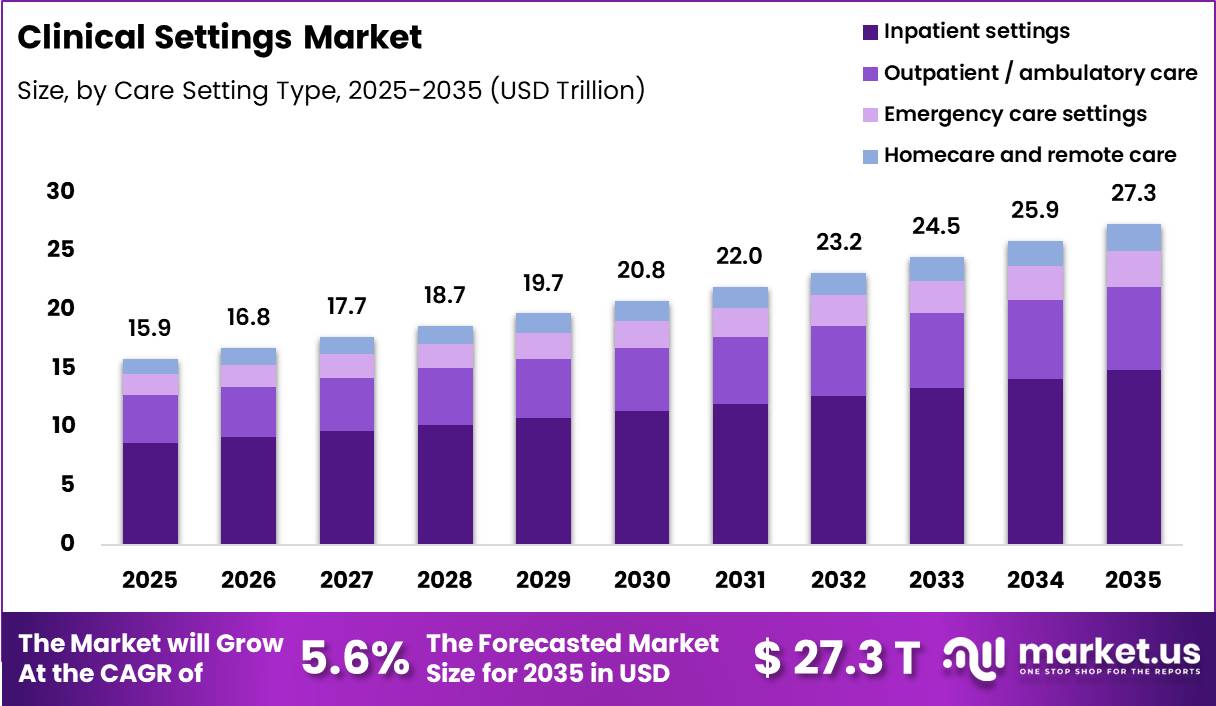
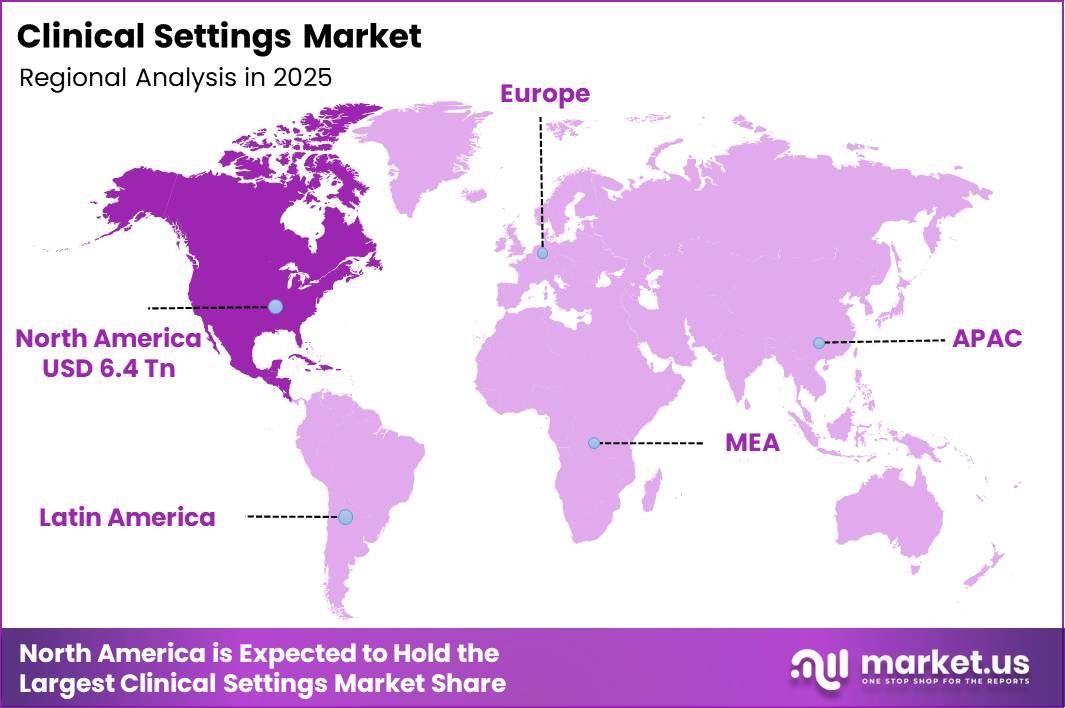
Global Clinical Settings Market size is expected to be worth around US$ 27.3 Trillion by 2035 from US$ 15.9 Trillion in 2025, growing at a CAGR of 5.6% during the forecast period from 2026 to 2035. In 2025, North America led the market, achieving over 40.1% share with a revenue of US$ 6.4 Trillion.
The global clinical settings market forms the backbone of healthcare delivery by encompassing hospitals, physician offices, ambulatory surgical centers, diagnostic laboratories, specialty clinics, and community healthcare facilities where patient diagnosis, treatment, and monitoring occur.
Rising demand for accessible healthcare, the growing burden of chronic diseases, aging populations, and the increasing adoption of digital health technologies are driving investments in modern clinical infrastructure worldwide.
Governments and healthcare providers are prioritizing integrated care models, electronic health records, advanced diagnostic capabilities, and outpatient services to improve patient outcomes and reduce healthcare costs. According to the World Health Organization (WHO), an additional 1.5 billion people are projected to benefit from improved health and well-being by 2025 compared with 2018 through global health initiatives and strengthened health systems.
Healthcare delivery is also shifting toward coordinated, patient-centered clinical settings supported by technology-enabled care. OECD data indicate that 87% of primary care users aged 45 years and older with chronic conditions rated the care they received positively, while 78% reported trust in the last healthcare professional they consulted, highlighting the importance of high-quality clinical environments.
Additionally, avoidable hospital admissions have declined in 28 of 30 OECD countries over the past decade, reflecting stronger primary care and more effective outpatient management. Hospitals continue to serve as comprehensive care centers by providing inpatient, outpatient, emergency, diagnostic, and specialized medical services, while ambulatory care providers account for approximately one-quarter of total health spending across OECD countries.
These trends are accelerating investments in connected clinical facilities, advanced medical technologies, and integrated healthcare networks that support efficient, value-based patient care worldwide.
Key Takeaways
- Market Size: Global Clinical Settings Market size is expected to be worth around US$ 27.3 Trillion by 2035 from US$ 15.9 Trillion in 2025.
- Market Share: The market is growing at a CAGR of 5.6% during the forecast period from 2026 to 2035.
- Care Setting Type: The Clinical Settings Market by outsourced Equipment Type is led by Inpatient settings, which accounted for 54.6% of the global market share in 2025.
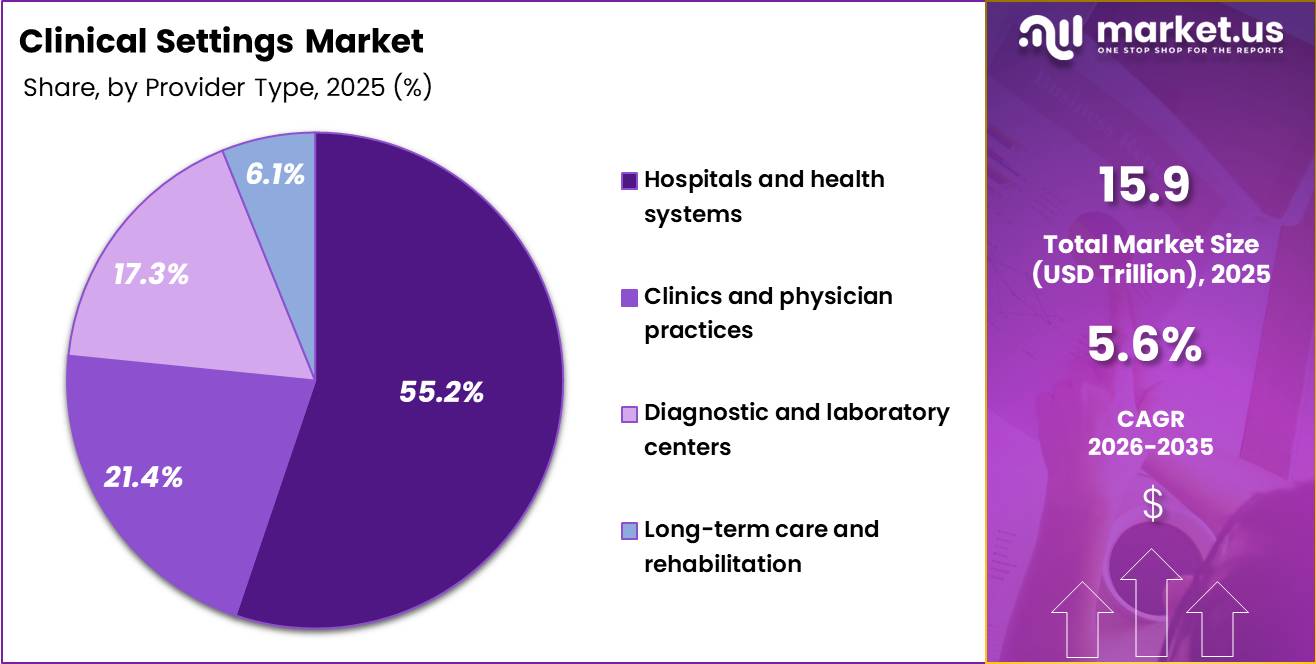
- Provider Type: The Hospitals and health systems segment held the largest share of the Clinical Settings Market, accounting for 55.2% of total revenue in 2025.
- Service Type: Inpatient services captured the largest 54.8% share of the Clinical Settings Market in 2025.
- Regional Analysis: North America dominates the global Clinical Settings Market, accounting for over 40.1% of the total market share in 2025, with a market revenue of approximately US$ 6.4 trillion.
Care Setting Type Analysis
Inpatient Settings Lead Due to High Patient Volume and Advanced Treatment Requirements.
Inpatient settings accounted for the largest 54.6% share of the Clinical Settings Market in 2025, driven by the continuous demand for specialized medical treatment, complex surgeries, intensive care, and long-term disease management. Hospitals remain the primary destination for patients requiring round-the-clock monitoring, advanced diagnostic support, and multidisciplinary clinical services.
The rising prevalence of chronic diseases, increasing surgical procedures, and expanding critical care capacity continue to strengthen the dominance of inpatient settings. In addition, investments in hospital infrastructure, digital patient management systems, and specialized treatment units have further enhanced inpatient care delivery, making this segment the largest contributor to market revenue.
Outpatient / ambulatory care represented 25.9% of the market in 2025, supported by the growing preference for minimally invasive procedures, same-day treatments, and lower healthcare costs. Emergency care settings accounted for 11.2%, reflecting their essential role in trauma care, urgent medical intervention, and disaster preparedness.
Homecare and remote care, with an 8.3% share, is expected to witness the fastest growth during the forecast period as healthcare providers increasingly adopt remote patient monitoring, virtual consultations, and home-based chronic disease management. The expansion of digital health technologies and aging populations is accelerating demand for care beyond traditional hospital environments.
Provider Type Analysis
Hospitals and Health Systems Dominate Owing to Comprehensive Clinical Capabilities.
Hospitals and health systems held the largest 55.2% share of the Clinical Settings Market in 2025, supported by their ability to deliver comprehensive healthcare services across primary, secondary, and tertiary care. These facilities manage high patient volumes while offering advanced diagnostics, surgical procedures, emergency services, intensive care, and specialized treatments under one integrated system.
Continuous investments in medical technologies, electronic health records, and multidisciplinary care models have strengthened hospital efficiency and patient outcomes. Their central role in managing complex diseases, critical illnesses, and public health emergencies continues to secure their leading market position.
Clinics and physician practices accounted for 21.4% of the market in 2025, benefiting from increasing demand for preventive healthcare, routine consultations, and chronic disease management. Diagnostic and laboratory centers represented 17.3%, supported by rising demand for early disease detection, screening programs, and precision diagnostics.
Long-term care and rehabilitation contributed 6.1% of the market and is projected to experience notable growth as aging populations and the prevalence of neurological disorders, orthopedic conditions, and post-acute recovery needs continue to increase. Expanding rehabilitation services and personalized long-term care programs are expected to support future market expansion.
Service Type Analysis
Inpatient Services Maintain Leadership Through Specialized and Critical Patient Care.
Inpatient services captured the largest 54.8% share of the Clinical Settings Market in 2025, reflecting sustained demand for hospital admissions involving surgeries, intensive care, maternity services, and complex medical treatments. These services require continuous clinical supervision, advanced medical equipment, and coordinated multidisciplinary teams, making them a cornerstone of healthcare delivery.
The increasing burden of chronic diseases, rising hospitalization rates, and growing demand for specialized procedures continue to reinforce the dominance of inpatient services. Healthcare providers are also expanding inpatient capacity through digital workflow integration and improved clinical infrastructure to enhance treatment quality and operational efficiency.
Outpatient services continue to gain significant momentum as healthcare systems prioritize same-day procedures, specialist consultations, and minimally invasive treatments that reduce hospitalization costs and improve patient convenience. Emergency services remain essential for rapid diagnosis and immediate treatment of acute illnesses, trauma, and life-threatening conditions, ensuring uninterrupted healthcare access.
Meanwhile, preventive and wellness services are expected to witness the fastest growth during the forecast period as governments, employers, and healthcare organizations increasingly invest in disease prevention, health screenings, vaccination programs, and lifestyle management initiatives. Growing awareness of preventive healthcare and population health management is reshaping service delivery across clinical settings.
Key Market Segments
By Care Setting Type
- Inpatient settings
- Outpatient / ambulatory care
- Emergency care settings
- Homecare and remote care
By Provider Type
- Hospitals and health systems
- Clinics and physician practices
- Diagnostic and laboratory centers
- Long‑term care and rehabilitation
By Service Type
- Inpatient services
- Outpatient services
- Emergency services
- Preventive and wellness
Opportunity
Acuity at home platforms.
Acuity at home is an opportunity rather than a current driver because most clinical settings revenue is still booked through physical sites, while the newly de risked reimbursement and operating framework for hospital level home care creates a separate expansion layer that can absorb moderate acuity cases now handled inside hospitals or high cost observation units.
Congress extended the U.S. CMS hospital at home waiver through 2030, and 366 programs across 139 health systems in 37 states had already been approved, showing that the model has moved beyond pilot status but remains underpenetrated relative to the addressable hospital base.
With outpatient care already representing about one third of OECD health spending, even a 1% to 2% transfer of eligible acute and post acute episodes into home based command center models can open a new service TAM in triage, monitoring, infusion, diagnostics logistics, and physician orchestration layers above baseline facility growth.
In practical economics, operators can target 15% to 25% lower 30 day episode cost, 300 to 800 basis points EBITDA improvement from lower fixed site intensity, and bed capacity release that lifts system throughput without new capex.
The AMA cited program examples showing more than 90% satisfaction, a 44% readmission reduction, a 35% length of stay decline, and 1,000 plus bed days saved indicate that scaled platform owners could create incremental CAGR upside of roughly +2.4% through software enabled care coordination, device rental, and multi payer home episode reimbursement streams rather than relying on ordinary visit volume growth.
| Opportunity | (~) % Potential CAGR Upside | Geographic Relevance | Execution Window |
|---|---|---|---|
| Acuity-at-home platforms | +2.4% | North America core, EU, developed APAC | Short term (≤ 2 years) |
| Specialty outpatient migration | +1.9% | US, Western Europe, GCC, urban APAC | Medium term (2-4 years) |
| RPM-led recurring care bundles | +1.6% | US core, EU, Japan, South Korea | Short term (≤ 2 years) |
| Value-based site optimization | +1.4% | US core, UK, Nordics, Australia | Medium term (2-4 years) |
| Emerging-market clinic roll-ups | +2.1% | India, SEA, LATAM, Africa urban hubs | Long term (≥ 4 years) |
| Digital front-door monetization | +1.2% | OECD markets, affluent urban APAC | Short term (≤ 2 years) |
Drivers
Outpatient shift and site of care optimization.
Clinical settings demand is being reallocated toward lower cost ambulatory channels because payment systems are explicitly reinforcing site of care substitution, especially in the U.S. outpatient and ASC ecosystem.
CMS indicated a 2.6% increase in CY2026 ASC payment rates for qualifying centers, while continuing to pay clinically appropriate services in hospital outpatient settings, which improves procedural throughput economics for multisite operators and device heavy specialties; the result is faster capex rotation, higher room utilization, and stronger patient volume migration away from costlier inpatient settings for selected procedures.
This matters strategically because operators increasingly redesign networks around right setting logic: hospitals retain high acuity cases, while ASCs, specialist clinics, and physician offices absorb standardized, lower complication procedures with shorter revenue cycles and leaner labor models.
In parallel, OECD analyses show outpatient specialized services are becoming a growing focus of structural investment, confirming that care delivery is no longer expanding only through legacy hospitals but through denser, procedure led ambulatory footprints.
| Driver | (~) % Impact on CAGR Forecast | Geographic Relevance | Impact Timeline |
|---|---|---|---|
| Outpatient shift & site-of-care optimization | +2.1% | North America core, EU outpatient systems, APAC urban corridors | Short term |
| Interoperability & AI transparency compliance | +1.7% | U.S. core, EU digital health adopters, Gulf smart-hospital clusters | Short term |
| Hospital-at-home and distributed acute care scale-up | +1.4% | U.S. core, Western Europe pilots, APAC premium urban spill-over | Medium term |
| Primary care and clinical workforce scarcity | +1.9% | U.S., UK, EU5, Australia, selective APAC metros | Medium term |
| UHC expansion and affordability pressure | +1.6% | South-East Asia, Africa, Latin America, public systems in EU | Long term |
| Private capital into outpatient specialty networks | +1.2% | OECD markets, North America, Western Europe, developed APAC | Medium term |
Challenges
Chronic clinical workforce gap.
Across clinical settings, the structural workforce gap is now a persistent operational drag driven by aging populations, training constraints, and burnout, with projections indicating that 31 of 35 physician specialties and most nursing categories will face shortages in the coming decade, and 47 US states alone are expected to experience primary care deficits by 2037.
This translates into vacancy rates of 10-18% for registered nurses in many hospital systems, physician vacancy rates of 7–12% in critical primary and emergency specialties, and locum tenens or agency staff substitution costs that inflate labor spend per full time equivalent FTE by 15-30% versus in house staffing, compressing achievable operating margins by 150 to 250 basis points in labor intensive settings such as inpatient wards and intensive care units.
Operationally, clinical throughput per staffed bed declines as average length of stay stretches by 0.3 0.7 days in understaffed units, elective procedure scheduling backlogs lengthen by 15-25%, and overtime hours per nurse can exceed 10-12 hours per week, raising fatigue related error risks and malpractice exposure, which in turn forces higher malpractice premiums and risk reserves.
Strategically, operators must respond with multi year workforce transformation programs expanding local nursing and residency pipeline partnerships by 20-30% seat capacity, automating 15 25% of routine documentation and order entry tasks via AI tools.
Centralizing staffing pools to rebalance shifts across sites, and systematically redesigning care teams so that physicians, advanced practitioners, nurses, and allied professionals work at the top of their license, all of which require 4-7 years of sustained investment, governance change, and culture adaptation before the drag on growth materially eases.
| Challenge | (~) % CAGR Friction Drag | Geographic Relevance | Mitigation Horizon |
|---|---|---|---|
| Chronic clinical workforce gap | -1.8% | North America, Europe, urban APAC | Long term (≥ 4 years) |
| Volatile medical supply logistics | -1.3% | North America, EU regulatory hubs, APAC logistics corridors | Medium term (2-4 years) |
| Fragmented hospital IT & data | -1.1% | North America core, Europe, advanced APAC | Long term (≥ 4 years) |
| Escalating care delivery cost base | -1.5% | North America, Europe, developed APAC | Medium term (2-4 years) |
| Regulatory, privacy & compliance drag | -0.9% | US, EU, selected APAC & GCC hubs | Long term (≥ 4 years) |
| Slow shift to decentralized care models | -0.8% | North America, Europe, high-income APAC | Medium term (2-4 years) |
Restraints
Structural workforce shortages.
Structural workforce shortages in clinical settings act as the single most persistent drag on volume growth and productivity, as global health systems face an expected shortfall of around 10-11 million healthcare workers by 2030, with low and middle income countries absorbing a disproportionate share of this gap and high income markets seeing acute shortages in critical specialties such as ICU nurses, anesthesiologists, and geriatricians.
At the operational level, hospitals that budgeted for nurse to patient ratios of 1:4 on medical surgical floors are increasingly running at 1:6-1:7 during peak shifts, forcing diversion of elective procedures, longer average length of stay by 0.3-0.6 days, and reduced throughput in day surgery units by 8-12% relative to pre 2020 baselines, with overtime premiums adding 10-15% to nursing payroll in many systems.
This chronic capacity strain leads to underutilization of installed equipment for example cath labs and imaging suites running one shift instead of b, translating to slower realization of revenue per installed base and extending payback periods on high ticket assets from 7-8 years toward 9-10 years, thereby depressing internal rates of return by 150-250 basis points and prompting boards to delay additional CapEx cycles for digital, automation, and AI enabled clinical solutions.
Strategically, workforce scarcity shifts bargaining power toward clinicians and staffing agencies, compressing EBITDA margins by an estimated 100-200 basis points in labor intensive service lines, increasing reliance on locum tenens and travel nurses whose daily rates can be 2-3x internal staff, and compelling providers to prioritize labor light.
Ambulatory, and virtual care models, which in turn slows demand for certain in hospital technologies but accelerates selective investment in workflow automation, clinical decision support, and remote monitoring that can substitute for scarce human capacity.
Over a 5 to 7 year horizon, this structural mismatch between population needs and workforce availability caps achievable procedure volumes in many markets below demographic and epidemiological demand, anchoring the Clinical Settings Market’s realized growth below its theoretical ceiling and justifying a negative 2.3% point adjustment to trend CAGR despite strong underlying demand for care.
| Restraint | (~) % Impact on CAGR Forecast | Geographic Relevance | Impact Timeline |
|---|---|---|---|
| Structural workforce shortages | -2.3% | North America, EU, LMIC urban | Long term (≥ 4 years) |
| CapEx squeeze from high rates | -1.9% | North America core, EU, selected APAC | Medium term (2-4 years) |
| Medtech supply chain frictions | -1.4% | EU, North America, APAC corridors | Short–Medium (≤ 4 years) |
| Cybersecurity and data-compliance drag | -1.1% | North America, EU, GCC, East Asia | Medium–Long (≥ 3 years) |
| Escalating operating cost inflation | -1.8% | Global, strongest in OECD | Short–Medium (≤ 4 years) |
| Regulatory and reimbursement uncertainty | -1.5% | US, EU, key emerging markets | Medium–Long (≥ 4 years) |
Regional Analysis
North America Dominates the Global Clinical Settings Market.
North America dominates the global Clinical Settings Market, accounting for over 40.1% of the total market share in 2025, with a market revenue of approximately US$ 6.4 trillion. The region’s leadership is driven by its advanced healthcare infrastructure, extensive network of hospitals and outpatient facilities, high healthcare expenditure, and rapid adoption of digital health technologies.
The United States remains the primary growth engine, supported by integrated health systems, widespread implementation of electronic health records, increasing investment in telehealth and remote patient monitoring, and strong demand for specialized clinical services. Canada further strengthens the regional market through universal healthcare coverage, expanding ambulatory care services, and continued investments in community-based healthcare delivery.
Europe holds the second-largest share of the market, supported by well-established public healthcare systems, an aging population, and increasing demand for chronic disease management across hospital, outpatient, and homecare settings. Governments throughout the region continue to invest in healthcare modernization and digital transformation initiatives.
The Asia-Pacific region is expected to witness the fastest growth during the forecast period due to expanding healthcare infrastructure, rising healthcare expenditure, growing patient populations, and increasing access to medical services across China, India, Japan, and Southeast Asia.
Meanwhile, Latin America and the Middle East & Africa are steadily expanding, driven by healthcare reforms, infrastructure development, greater insurance penetration, and ongoing investments aimed at improving healthcare accessibility and clinical service delivery.
Key Regions and Countries
North America
- The US
- Canada
Europe
- Germany
- France
- The U.K.
- Italy
- Spain
- Russia & CIS
- Rest of Europe
Asia Pacific
- China
- India
- Japan
- South Korea
- ASEAN
- Australia & New Zealand
- Rest of Asia Pacific
Middle East & Africa
- GCC
- South Africa
- Rest of Middle East & Africa
Latin America
- Brazil
- Mexico
- Rest of Latin America
Key Player Analysis
The global Clinical Settings Market is moderately fragmented, with competition driven by large integrated healthcare providers, specialty hospital networks, and regional health systems. Companies compete by expanding clinical capacity, improving patient outcomes, adopting digital technologies, and strengthening integrated care delivery models. Innovation is centered on artificial intelligence, telehealth, precision medicine, workflow automation, and data-driven clinical decision-making to enhance operational efficiency and patient experience.
Leading participants such as HCA Healthcare, Inc., Tenet Healthcare Corporation, Ascension Health, CommonSpirit Health, and Mayo Clinic continue to strengthen their market positions through investments in advanced clinical infrastructure, digital transformation, and expansion of specialized care services. These organizations are actively integrating virtual care, electronic health records, and AI-enabled clinical tools into routine healthcare delivery.
Other prominent companies, including Cleveland Clinic, Apollo Hospitals Enterprise Ltd, IHH Healthcare Berhad, Ramsay Health Care Limited, and Fresenius SE & Co. KGaA (Helios clinics), focus on expanding hospital networks, enhancing specialty care capabilities, and improving cross-border healthcare services. Strategic collaborations and technology adoption remain central to their growth strategies.
Additionally, Community Health Systems, Inc., Netcare Ltd, Mediclinic International plc, Bangkok Dusit Medical Services PCL, Aier Eye Hospital Group Co., Ltd, and Others are investing in digital health platforms, outpatient care expansion, remote patient monitoring, and integrated healthcare ecosystems.
Across the market, companies are emphasizing R&D, strategic partnerships, product and service innovation, workflow integration, and ecosystem-based competition to deliver efficient, patient-centric clinical care while strengthening long-term competitive positioning.
Top Key Players
- HCA Healthcare, Inc.
- Tenet Healthcare Corporation
- Community Health Systems, Inc.
- Ascension Health
- CommonSpirit Health
- Mayo Clinic
- Cleveland Clinic
- Apollo Hospitals Enterprise Ltd
- IHH Healthcare Berhad
- Ramsay Health Care Limited
- Fresenius SE & Co. KGaA (Helios clinics)
- Netcare Ltd
- Mediclinic International plc
- Bangkok Dusit Medical Services PCL
- Aier Eye Hospital Group Co., Ltd
- Others
Recent Developments
- In February 2026, Tenet Healthcare Corporation regained full ownership of Conifer Health Solutions through a strategic transaction with CommonSpirit Health, strengthening its healthcare services and revenue-cycle management business.
- In April 2025, Ascension Health expanded deployment of ambient AI technology across its healthcare facilities to reduce administrative burden and improve clinician productivity.
- In February 2026, CommonSpirit Health exited its Conifer Health Solutions joint venture with Tenet Healthcare and transitioned revenue-cycle operations to a new strategic operating model.
- In March 2025, Mayo Clinic Platform launched a multi-institutional real-world data and AI initiative to accelerate development and validation of clinical artificial intelligence solutions.
- In February 2025, Cleveland Clinic announced the system-wide rollout of Ambience Healthcare’s ambient AI platform to automate clinical documentation and improve physician workflow efficiency.
Report Scope
| Report Features | Description |
|---|---|
| Market Value (2025) | US$15.9 Trillion |
| Forecast Revenue (2035) | US$27.3 Trillion |
| CAGR (2026-2035) | 5.6% |
| Base Year for Estimation | 2025 |
| Historic Period | 2020-2024 |
| Forecast Period | 2026-2035 |
| Report Coverage | Revenue Forecast, Market Dynamics, Competitive Landscape, Recent Developments |
| Segments Covered | By Care Setting Type (Inpatient settings, Outpatient / ambulatory care, Emergency care settings, Homecare and remote care), By Provider Type (Hospitals and health systems, Clinics and physician practices, Diagnostic and laboratory centers, Long-term care and rehabilitation), By Service Type (Inpatient services, Outpatient services, Emergency services, Preventive and wellness) |
| Regional Analysis | North America – The US, Canada; Europe – Germany, France, U.K., Italy, Spain, Russia & CIS, Rest of Europe; Asia Pacific – China, India, Japan, South Korea, ASEAN, Australia & New Zealand, Rest of Asia Pacific; Middle East & Africa – GCC, South Africa, Rest of Middle East & Africa; Latin America – Brazil, Mexico, Rest of Latin America |
| Competitive Landscape | HCA Healthcare, Inc., Tenet Healthcare Corporation, Community Health Systems, Inc., Ascension Health, CommonSpirit Health, Mayo Clinic, Cleveland Clinic, Apollo Hospitals Enterprise Ltd, IHH Healthcare Berhad, Ramsay Health Care Limited, Fresenius SE & Co. KGaA (Helios clinics), Netcare Ltd, Mediclinic International plc, Bangkok Dusit Medical Services PCL, Aier Eye Hospital Group Co., Ltd, Others |
| Customization Scope | Customization for segments, region/country-level will be provided. Moreover, additional customization can be done based on the requirements. |
| Purchase Options | We have three licenses to opt for: Single User License, Multi-User License (Up to 5 Users), Corporate Use License (Unlimited User and Printable PDF) |





































