


Market Overview
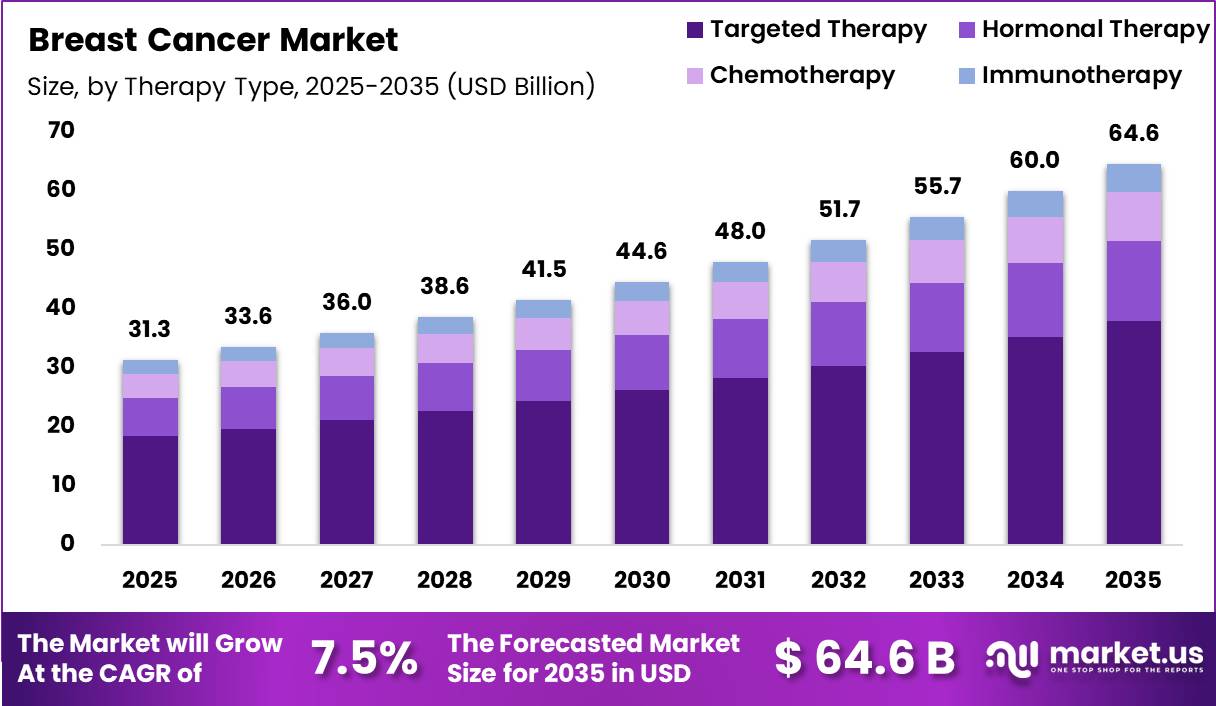
Global Breast Cancer Market size is expected to be worth around US$ 64.6 Billion by 2035 from US$ 31.3 Billion in 2025, growing at a CAGR of 7.5% during the forecast period from 2026 to 2035. In 2025, North America led the market, achieving over 37.28% share with a revenue of US$ 11.67 Billion.
Breast cancer is one of the most prevalent malignancies affecting women worldwide and represents a major public health concern across both developed and developing countries. According to the World Health Organization, breast cancer accounted for an estimated 2.3 million new cases globally in 2022, making it the most commonly diagnosed cancer among women.
In the same year, approximately 670,000 deaths were attributed to the disease, highlighting its continued clinical and socioeconomic burden. The disease originates in the breast tissue, most commonly in the ducts or lobules, and can spread to lymph nodes and distant organs if not detected early.
Risk factors include genetic mutations such as BRCA1 and BRCA2, family history, hormonal influences, obesity, alcohol consumption, and increasing age. The Centers for Disease Control and Prevention emphasizes that early detection through routine screening significantly improves survival outcomes.
Screening programs, particularly mammography, are widely recommended for women aged 40–74 in many high-income countries, while guidelines may vary depending on national health policies. The National Institutes of Health reports that when breast cancer is diagnosed at an early localized stage, the 5-year survival rate can exceed 90%, whereas late-stage detection significantly reduces survival probabilities.
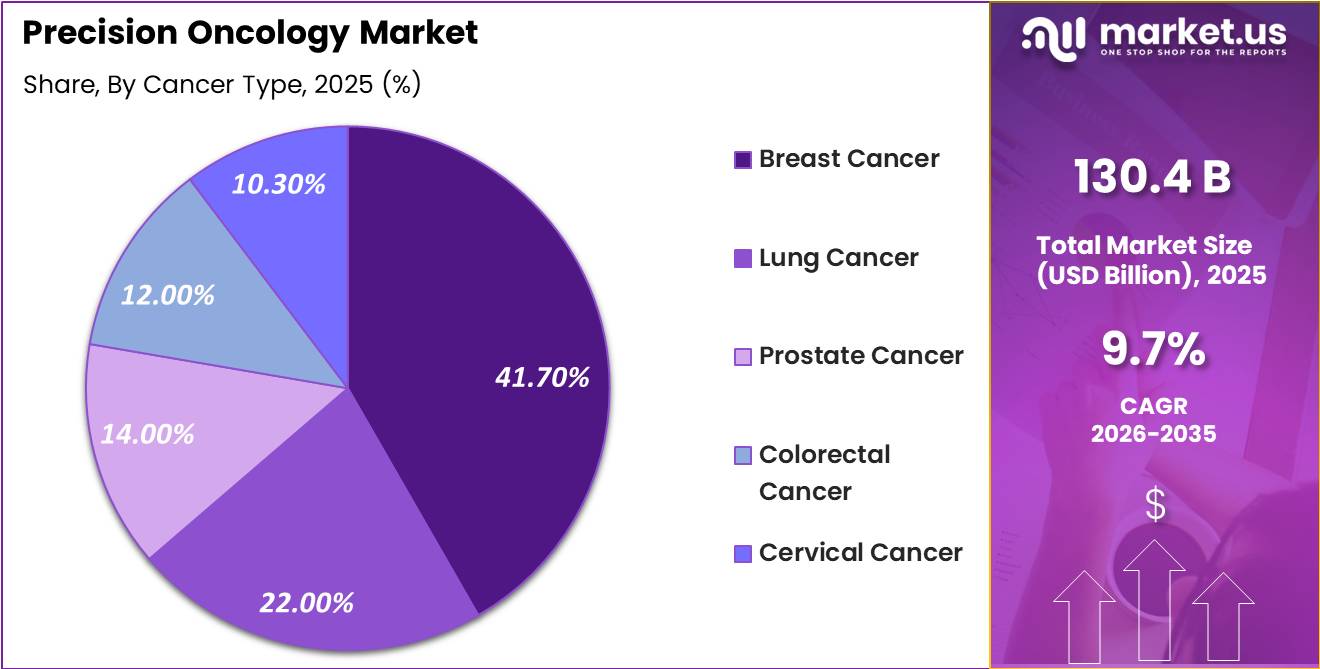
Advancements in targeted therapies, immunotherapy, and precision oncology are improving treatment outcomes. Additionally, the International Agency for Research on Cancer continues to monitor global incidence trends, supporting prevention strategies and cancer control programs worldwide. Continued awareness, early diagnosis, and equitable access to treatment remain central to reducing mortality and improving patient outcomes globally.
Key Takeaways
- Market Size: global Breast Cancer Market was valued at US$ 31.3 Billion in 2025.
- Market Share: The global Breast Cancer Market is projected to grow at a CAGR of 7.5% and is estimated to reach US$ 64.6 Billion by 2035.
- Therapy Type: Targeted Therapy dominated the market, accounting for 58.76% of the total market share in 2025.
- Cancer Type: HR+/HER2- Breast Cancer dominated the market, constituting 59.07% of the total market share.
- Distribution Channel: Hospital Pharmacies dominated the market,constituting 56.80% of the total market share.
- End User: Hospitals & Cancer Centers dominated the market,constituting 62.00% of total market share.
- Treatment Analysis: Personalized/Precision Medicine dominated the market, constituting 42.00% of the total market share
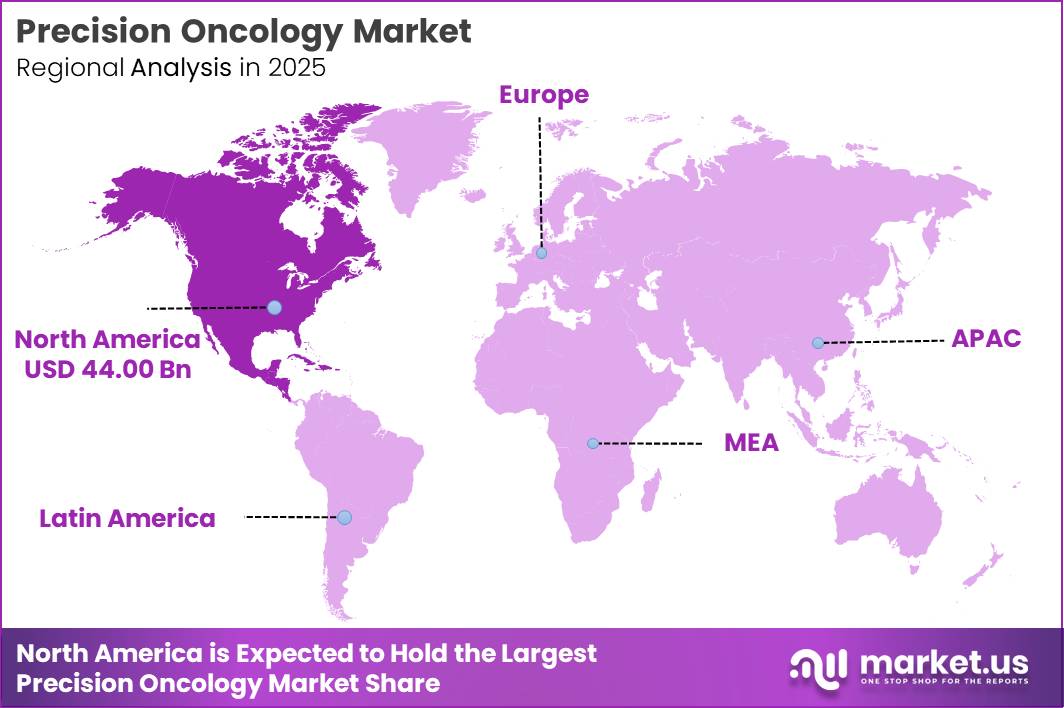
- Regional Analysis: North America emerged as the leading regional market, contributing 44.0% in 2025.
Therapy Type Analysis
Therapy type segmentation is increasingly shaped by precision medicine and biomarker-driven treatment selection. Targeted therapy dominates the segment with a 58.76% market share in 2025, reflecting strong adoption of HER2 inhibitors, CDK4/6 inhibitors, and other molecularly guided agents that improve survival outcomes while reducing systemic toxicity. This dominance is driven by rising genomic testing rates and expanding approval of novel targeted agents across early and metastatic settings.
Hormonal therapy accounts for 21.00% share, supported by widespread use in hormone receptor-positive patients, particularly in adjuvant and long-term maintenance settings. Chemotherapy holds 13.00% share, gradually declining in relative importance but still essential for aggressive and advanced-stage disease, especially in resource-limited settings or high tumor burden cases.
Immunotherapy contributes 7.24% share, reflecting its emerging but rapidly growing role in triple-negative and PD-L1 positive cancers. Overall, therapy segmentation highlights a clear transition from cytotoxic approaches toward biologically targeted and immune-modulating strategies, driven by improved diagnostics, patient stratification, and expanding clinical evidence supporting personalized treatment pathways across diverse breast cancer subtypes.
This shift is also reinforced by increasing healthcare expenditure and improved access to companion diagnostics globally.
Cancer Type Analysis
In the global Breast Cancer market, cancer type segmentation is primarily driven by molecular classification, which determines prognosis and treatment pathways. HR+/HER2- breast cancer dominates with a 59.07% market share in 2025, largely due to its high prevalence among postmenopausal and aging populations and strong responsiveness to hormonal and CDK4/6 inhibitor-based therapies.
HER2-positive breast cancer represents 18.00% share, supported by significant advances in HER2-targeted biologics such as monoclonal antibodies and antibody-drug conjugates that have significantly improved survival outcomes.
Triple-negative breast cancer (TNBC) accounts for 14.00% share and remains a critical unmet need due to its aggressive nature and limited targeted treatment options, although immunotherapy and PARP inhibitors are expanding its therapeutic landscape.
Other breast cancer types contribute 8.93% share, including rare histological subtypes with varied clinical behavior and treatment responses. Overall, the segmentation underscores a strong dominance of hormone-driven cancers, while HER2-positive and TNBC segments continue to drive innovation and pipeline development.
Increasing molecular diagnostics adoption is enabling earlier and more accurate subtype identification, thereby enhancing personalized treatment strategies and improving patient outcomes across all breast cancer categories globally. This trend is further supported by rising screening programs and awareness initiatives worldwide.
Distribution Channel Analysis
In distribution channel segmentation is strongly influenced by treatment complexity and healthcare infrastructure. Hospital pharmacies dominate with a 56.80% market share in 2025, reflecting the high dependence on institutional settings for administration of chemotherapy, targeted therapies, and immunotherapies that require specialist supervision and cold-chain handling.
These settings also ensure integrated patient monitoring, dose adjustments, and adherence to oncology treatment protocols. Retail pharmacies represent a smaller share, primarily catering to oral hormonal therapies, maintenance medications, and supportive care drugs for outpatient management.
Online pharmacies are gradually emerging as a convenience-driven channel, especially for oral anticancer drugs and adjunct therapies, although their penetration remains limited due to regulatory restrictions and the need for clinical oversight. Specialty oncology pharmacies are also gaining traction in developed markets, offering patient assistance programs and personalized medication management services.
Overall, the distribution landscape remains heavily centralized within hospital systems due to the complexity and safety requirements of cancer treatment.
However, digitalization, home-based care models, and expanding oral oncology drug pipelines are expected to gradually diversify distribution channels, improving accessibility and convenience for patients across both developed and emerging healthcare markets. Continued policy support is further enabling structured outpatient oncology delivery frameworks.
End User Analysis
By End user segmentation is predominantly led by Hospitals & Cancer Centers, which account for a 62.00% market share in 2025. This dominance is attributed to the availability of advanced diagnostic imaging, multidisciplinary oncology teams, and access to complex treatment modalities such as surgery, chemotherapy infusion, radiotherapy, and targeted biologics.
Cancer centers also play a critical role in clinical trials and early adoption of innovative therapies, further reinforcing their leadership position. Specialty clinics and ambulatory surgical centers represent a growing segment, focusing on outpatient chemotherapy administration, follow-up care, and survivorship programs, driven by the shift toward cost-efficient and decentralized care delivery models.
Homecare settings, while still emerging, are gaining attention for oral therapies and palliative care management, particularly in elderly or long-term maintenance patients. Research and academic institutes contribute a smaller but important share, primarily focused on experimental therapies, translational research, and biomarker discovery.
Overall, the end user landscape reflects a gradual shift from fully hospital-centric care toward a more distributed care continuum, although hospitals and dedicated cancer centers continue to remain the primary hub due to the complexity of breast cancer diagnosis and treatment requirements globally. Infrastructure expansion in emerging markets further strengthens hospital dominance.
Treatment Approach Analysis
Treatment approach segmentation is increasingly centered on precision-driven oncology strategies. Personalized or precision medicine dominates the segment with a 42.00% market share in 2025.
Driven by advances in genomic profiling, companion diagnostics, and biomarker-based therapy selection that enable tailored treatment regimens for individual patients. This approach significantly improves efficacy while minimizing adverse effects, particularly in targeted therapy and immunotherapy applications.
Standardized treatment protocols still remain relevant for early-stage and low-risk patients, but their relative share is gradually declining as precision approaches expand. Combination therapies, including targeted agents with chemotherapy or immunotherapy, are gaining traction due to improved clinical outcomes in aggressive and resistant cancer subtypes.
Palliative and supportive care approaches also form an important segment, focusing on symptom management, quality of life improvement, and end-stage care.
Overall, the treatment approach segmentation highlights a clear paradigm shift from one-size-fits-all oncology toward highly individualized care models supported by molecular diagnostics, real-world evidence, and AI-assisted clinical decision-making tools.
This evolution is expected to continue accelerating as precision oncology becomes more accessible across global healthcare systems, particularly with expanded sequencing infrastructure and reimbursement support frameworks.
Market Segmentations
Therapy Type
- Targeted Therapy
- Hormonal Therapy
- Chemotherapy
- Immunotherapy
Cancer Type
- HR+/HER2- Breast CancerHER2+ Breast Cancer
- Triple Negative Breast Cancer (TNBC)
- Other Breast Cancer Types
Distribution Channel
- Hospital Pharmacies
- Retail Pharmacies
- Online Pharmacies
End User
- Hospitals & Cancer Centers
- Specialty Clinics
- Ambulatory Surgical Centers
- Others
Treatment Approach
- Personalized/Precision Medicine
- Conventional Therapy
- Combination Therapy
Driver
ESR1 PIK3CA biomarker testing and endocrine sequencing upgrade
The second major driver is the conversion of metastatic HR positive disease from a relatively standardized endocrine pathway into a more segmented sequencing model anchored in actionable mutations.
FDA recognition of elacestrant for ESR1 mutated ER positive, HER2 negative advanced or metastatic breast cancer, together with 2025 phase 3 data showing imlunestrant progression free survival of 5.5 months versus 3.8 months for standard care in ESR1 mutated patients, confirms that mutation status is no longer a research variable but a treatment selection gate.
This matters commercially because every added testing gate supports companion diagnostics, earlier re biopsy or liquid biopsy use, and greater persistence of branded endocrine targeted therapy before chemotherapy, improving lifetime value per patient.
The impact is concentrated in the U.S., Europe, Japan, and premium APAC centers where molecular testing turnaround times and reimbursement pathways are sufficiently mature to support routine sequencing decisions.
| Driver | (~) % Impact on CAGR Forecast | Geographic Relevance | Impact Timeline |
|---|---|---|---|
| ADC-led line expansion in HER2-low, HER2-ultralow and HR+/HER2- disease | +2.4% | North America core, EU5, Japan, South Korea, urban China | Short term (≤ 2 years) |
| ESR1/PIK3CA biomarker testing and endocrine sequencing upgrade | +1.9% | U.S., EU, Japan, Australia, tier-1 APAC oncology centers | Short term (≤ 2 years) |
| Dense-breast notification and screening pathway intensification | +1.5% | U.S. core, Canada spill-over, Western Europe selective uptake, developed APAC | Medium term (2-4 years) |
| Earlier-stage diagnosis preserving high-value adjuvant treatment pools | +1.3% | U.S., EU, Gulf states, China tier-1 cities, Brazil private sector | Medium term (2-4 years) |
| Global incidence expansion and aging-linked treatment volume growth | +1.7% | APAC broad base, Latin America, Middle East, Africa, Eastern Europe | Long term (≥ 4 years) |
| Care-network formalization and multidisciplinary access expansion | +1.1% | Emerging Asia, Middle East, Latin America, selective Africa corridors | Medium term (2-4 years) |
Challenge
Imaging Workforce Bottleneck
The breast imaging market is increasingly constrained by throughput limitations rather than a lack of demand. This shift is driven by the expansion of screening eligibility following the 2024 USPSTF update, while annual mammography volume in the United States has already reached approximately 40 million examinations.
At the same time, workforce capacity remains limited, with only about four breast imaging radiologists available per 100,000 women aged 40 years and older, and 79% of surveyed practices reporting understaffing.
As a result, read queue times have realistically increased by an additional two to six business days, biopsy scheduling has been delayed by one to three weeks in heavily burdened regions, and modality utilization efficiency has declined by approximately 8% to 12% as MRI, digital breast tomosynthesis, and supplemental dense breast imaging compete for the same specialist workforce.
Although these constraints do not reduce the overall demand for breast cancer therapies, they slow the progression from screening to diagnosis and treatment initiation, limit the addressable uptake of premium diagnostic services, and compel healthcare providers to invest in teleradiology support, AI-enabled triage solutions, extended evening operating hours, and cross-site scheduling coordination.
Consequently, this challenge should be viewed as a medium-term growth friction affecting market expansion rather than an indicator of a current decline in breast cancer treatment demand.
| Challenge | (~) % CAGR Friction Drag | Geographic Relevance | Mitigation Horizon |
|---|---|---|---|
| Imaging Workforce Bottleneck | -1.4% | North America core, EU urban clusters, ANZ, affluent APAC | Medium term (2-4 years) |
| Oncology Talent Pipeline Gaps | -1.2% | North America, Western Europe, Japan, upper-middle-income APAC | Long term (≥ 4 years) |
| Drug Supply Volatility | -1.0% | US oncology networks, EU hospital systems, APAC import-dependent markets | Medium term (2-4 years) |
| Diagnostic Pathway Delays | -0.9% | North America mixed-density states, EU public systems, LATAM metros | Medium term (2-4 years) |
| Trial Access Fragmentation | -0.8% | US community sites, EU cross-border centers, emerging APAC | Long term (≥ 4 years) |
| Financial Navigation Burden | -0.7% | US commercial-pay markets, LATAM private-pay corridors, mixed-reimbursement Asia | Medium term (2-4 years) |
Restraints
Late diagnosis burden
Breast cancer remains the most frequently diagnosed cancer among women worldwide, and the World Health Organization (WHO) continues to emphasize that reducing mortality depends on early detection supported by timely diagnosis and access to comprehensive treatment.
Consequently, delayed or late-stage presentation acts as a significant restraint on market growth, as it limits the adoption of high-value screening programs, molecular diagnostic testing, breast-conserving surgical procedures, and long-term adjuvant therapies. Instead, patients are more likely to require complex, resource-intensive treatment pathways that are associated with lower treatment completion rates and reduced continuity of care.
From a market perspective, delayed diagnosis extends diagnostic timelines, increases the proportion of advanced-stage cases, and elevates treatment abandonment, particularly in healthcare systems with fragmented referral networks and limited clinical infrastructure.
Clinical evidence from India continues to indicate that inadequate screening coverage, delayed diagnosis, and disparities in treatment access prevent a substantial patient population from transitioning into the addressable treatment market.
These structural challenges negatively affect market growth by reducing the utilization of elective diagnostics and planned therapeutic interventions, increasing dependence on emergency and advanced care services, and lowering the efficiency and predictability of treatment delivery. The impact is particularly pronounced across South Asia, Sub-Saharan Africa, and lower-middle-income ASEAN countries, where healthcare infrastructure and referral capacity remain constrained.
| Restraint | (~) % Impact on CAGR Forecast | Geographic Relevance | Impact Timeline |
|---|---|---|---|
| Late diagnosis burden | -1.9% | LMICs, India, Africa, SEA, LatAm | Medium term |
| Reimbursement tightening | -1.6% | North America core, EU, Japan | Short term |
| HTA evidence friction | -1.2% | EU | Short term |
| Oncology drug shortages | -1.4% | U.S., EU, select APAC import markets | Short term |
| Biomarker/pathology gaps | -1.7% | LMICs, India, ASEAN, Africa, rural LatAm | Medium term |
| Treatment cost toxicity | -2.1% | LMICs, uninsured U.S., underfunded public systems | Long term |
Opportunity
Early-stage precision expansion
This represents a market opportunity rather than a current growth driver, as baseline market expansion already incorporates established treatment approaches, including surgery, endocrine therapy, chemotherapy, HER2-targeted therapies, and a limited range of adjuvant treatment intensification regimens.
The primary growth potential lies in expanding the treatable early-stage patient population through biomarker-driven treatment escalation, particularly among intermediate-risk patients who are not yet consistently included within premium precision medicine pathways.
Recent ASCO 2025 updates demonstrated longer-term clinical benefits from ribociclib-based therapy in early-stage breast cancer and strengthened evidence supporting mutation-guided endocrine therapy switching. These developments indicate that future commercial growth will be driven not only by an increase in treated patients but also by additional treatment lines, extended therapy duration, and greater adoption of biomarker testing per patient.
If approximately 8–10% of the global newly diagnosed patient population transitions into higher-value adjuvant precision treatment pathways, while average revenue per eligible patient increases by 20–30% through integrated drug and companion diagnostic offerings, the industry could unlock an incremental multibillion-dollar total addressable market (TAM).
Furthermore, integrated companies with capabilities across both therapeutics and companion diagnostics could realize gross margin expansion of approximately 300–500 basis points, with the greatest opportunity concentrated in high-income healthcare systems where early-stage diagnosis rates are already high but treatment stratification remains inconsistent across countries and healthcare institutions.
| Opportunity | (~) % Potential CAGR Upside | Geographic Relevance | Execution Window |
|---|---|---|---|
| Early-stage precision expansion | +1.9% | North America, EU, Japan, Korea, urban China | Medium term (2-4 years) |
| ADC combo pathway broadening | +2.4% | North America core, EU, Japan, China | Short term (≤ 2 years) |
| Liquid biopsy surveillance model | +1.6% | U.S., EU5, South Korea, private-pay APAC | Medium term (2-4 years) |
| Survivorship monetization platforms | +1.3% | U.S., EU, GCC, Australia | Medium term (2-4 years) |
| Emerging-market care-stack localization | +2.1% | India, SEA, LATAM, Africa, Middle East | Long term (≥ 4 years) |
| Companion diagnostics roll-up | +1.5% | U.S., EU, China | Short term (≤ 2 years) |
Regional Analysis
In 2025, North America led the market, achieving over 37.28% share with a revenue of US$ 11.67 Billion.
North America continues to represent the most mature and innovation-driven region in the breast cancer market, supported by advanced healthcare infrastructure, widespread screening programs, and strong adoption of precision oncology therapies.
High awareness levels, early diagnosis rates, and favorable reimbursement policies contribute to sustained treatment demand across both early-stage and metastatic breast cancer populations. The region benefits from robust clinical research activity, with continuous development of targeted therapies, immunotherapies, and combination regimens improving patient outcomes.
Europe follows as a highly established market, characterized by universal healthcare systems, strong regulatory frameworks, and increasing emphasis on personalized medicine. National screening initiatives and growing investments in oncology research further support market expansion.
The Asia-Pacific region is emerging rapidly due to rising incidence rates, improving healthcare access, and expanding diagnostic capabilities. Urbanization and lifestyle changes are contributing to higher disease burden, while government initiatives are enhancing oncology care delivery.
Latin America is witnessing steady growth driven by improving healthcare infrastructure and increasing awareness campaigns, though disparities in access remain.
The Middle East and Africa region is gradually advancing, supported by healthcare modernization efforts and expanding oncology centers, yet challenges in early detection and treatment accessibility persist across several countries in multiple care settings globally.
Key Regions and Countries
North America
- The US
- Canada
Europe
- Germany
- France
- The U.K.
- Italy
- Spain
- Russia & CIS
- Rest of Europe
Asia Pacific
- China
- India
- Japan
- South Korea
- ASEAN
- Australia & New Zealand
- Rest of Asia Pacific
Middle East & Africa
- GCC
- South Africa
- Rest of Middle East & Africa
Latin America
- Brazil
- Mexico
- Rest of Latin America
Key Player Analysis
The breast cancer market is moderately consolidated, characterized by a small group of global pharmaceutical leaders alongside a strong cohort of specialty and innovation-driven biotechnology firms. Competition is defined by rapid therapeutic advancement in targeted therapies, antibody–drug conjugates, immuno-oncology combinations, and biomarker-guided precision medicine.
The market is in a late growth–early maturity stage, where differentiation increasingly depends on genomic profiling, companion diagnostics, and pipeline depth rather than volume-based competition.
Tier 1 comprises large multinational pharmaceutical companies driving global oncology portfolios and establishing standard-of-care therapies across early- and late-stage breast cancer, including Roche Holding AG, AstraZeneca PLC, Pfizer Inc., Novartis AG, Eli Lilly and Company, Merck & Co., Inc., Johnson & Johnson, and Sanofi S.A., which collectively anchor market access, blockbuster biologics, and combination regimens.
Tier 2 specialty and diversified biopharma players, including Gilead Sciences, Inc., Bristol Myers Squibb, AbbVie Inc., and Amgen Inc., focus on niche oncology assets, pipeline expansion, and lifecycle optimization. Tier 3 innovation-driven biotechnology firms such as Seagen Inc., MacroGenics, Inc., and Daiichi Sankyo Company, Limited emphasize antibody–drug conjugates and biomarker-linked therapies.
Competition is shaped by high R&D intensity, neuroscience specialization, strategic collaborations, and integration of diagnostics with clinical trial workflows, reinforcing an ecosystem-based precision medicine approach.
Top Key Players
- Roche Holding AG
- AstraZeneca PLC
- Pfizer Inc.
- Novartis AG
- Eli Lilly and Company
- Merck & Co., Inc.
- Gilead Sciences, Inc.
- Bristol Myers Squibb
- Johnson & Johnson
- Amgen Inc.
- AbbVie Inc.
- Sanofi S.A.
- Seagen Inc.
- MacroGenics, Inc.
- Daiichi Sankyo Company, Limited
Recent Developments
- December 2025, AstraZeneca (with Daiichi Sankyo) FDA approved Enhertu (trastuzumab deruxtecan) in combination with pertuzumab for first-line treatment of HER2-positive metastatic breast cancer.
- March 2026, Novartis agreed to acquire SNV4818 (PI3Kα inhibitor) from Synnovation Therapeutics for up to $3 billion to strengthen its HR-positive breast cancer pipeline
- May 2026,Pfizer FDA approved vepdegestrant (Veppanu) for ER-positive, HER2-negative metastatic breast cancer with ESR1 mutation after endocrine therapy progression.
Report Scope
| Report Features | Description |
|---|---|
| Market Value (2025) | US$ 31.3 Billion |
| Forecast Revenue (2035) | US$ 64.6 Billion |
| CAGR (2026-2035) | 7.5% |
| Base Year for Estimation | 2025 |
| Historic Period | 2020-2024 |
| Forecast Period | 2026-2035 |
| Report Coverage | Revenue Forecast, Market Dynamics, Competitive Landscape, Recent Developments |
| Segments Covered | By Therapy Type (Targeted Therapy ,Hormonal Therapy ,Chemotherapy ,Immunotherapy) By Cancer Type(HR+/HER2- Breast Cancer ,HER2+ Breast Cancer ,Triple Negative Breast Cancer (TNBC) ,Other Breast Cancer Types) By Distribution Channel (Hospital Pharmacies ,Retail Pharmacies ,Online Pharmacies) By End User(Hospitals & Cancer Centers ,Specialty Clinics ,Ambulatory Surgical Centers ,Others) By Treatment Approach (Personalized/Precision Medicine ,Conventional Therapy ,Combination Therapy) |
| Regional Analysis | North America – The US, Canada; Europe – Germany, France, U.K., Italy, Spain, Russia & CIS, Rest of Europe; Asia Pacific – China, India, Japan, South Korea, ASEAN, Australia & New Zealand, Rest of Asia Pacific; Middle East & Africa – GCC, South Africa, Rest of Middle East & Africa; Latin America – Brazil, Mexico, Rest of Latin America. |
| Competitive Landscape | Roche Holding AG ,AstraZeneca PLC ,Pfizer Inc. ,Novartis AG ,Eli Lilly and Company ,Merck & Co., Inc. ,Gilead Sciences, Inc. ,Bristol Myers Squibb ,Johnson & Johnson ,Amgen Inc. ,AbbVie Inc. ,Sanofi S.A. ,Seagen Inc., MacroGenics, Inc. ,Daiichi Sankyo Company, Limited. |
| Customization Scope | Customization for segments, region/country-level will be provided. Moreover, additional customization can be done based on the requirements. |
| Purchase Options | We have three licenses to opt for: Single User License, Multi-User License (Up to 5 Users), Corporate Use License (Unlimited User and Printable PDF) |





































