


Market Overview
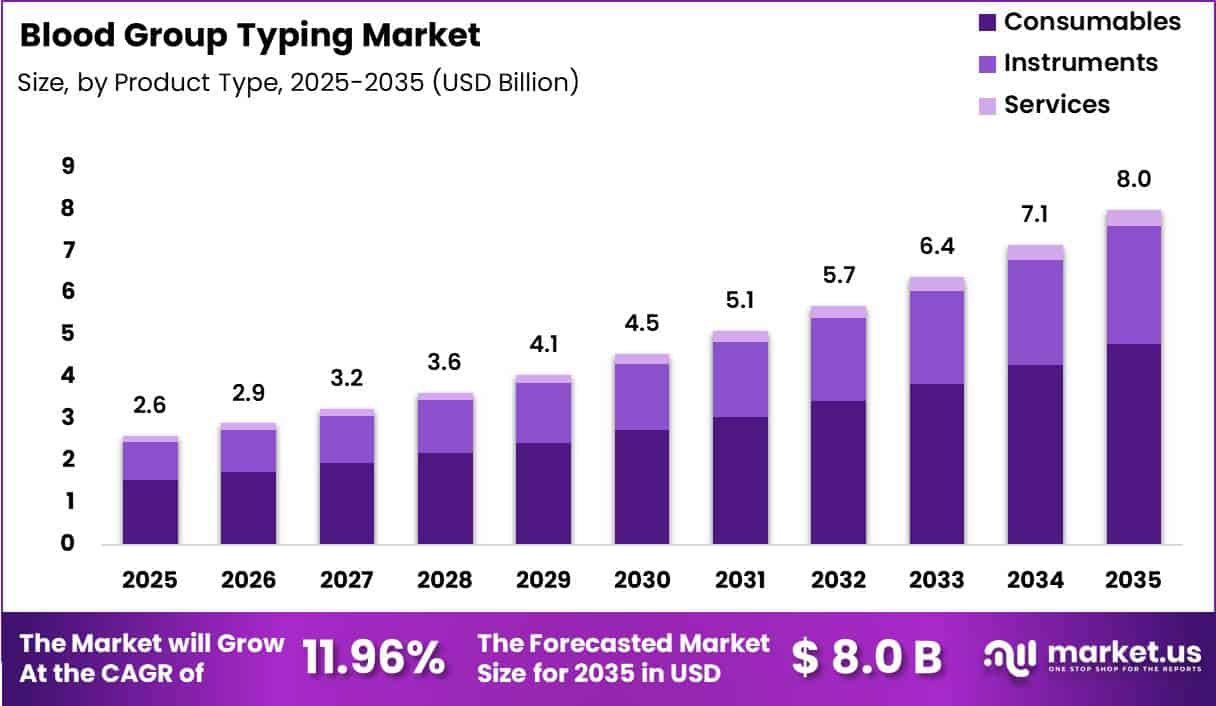
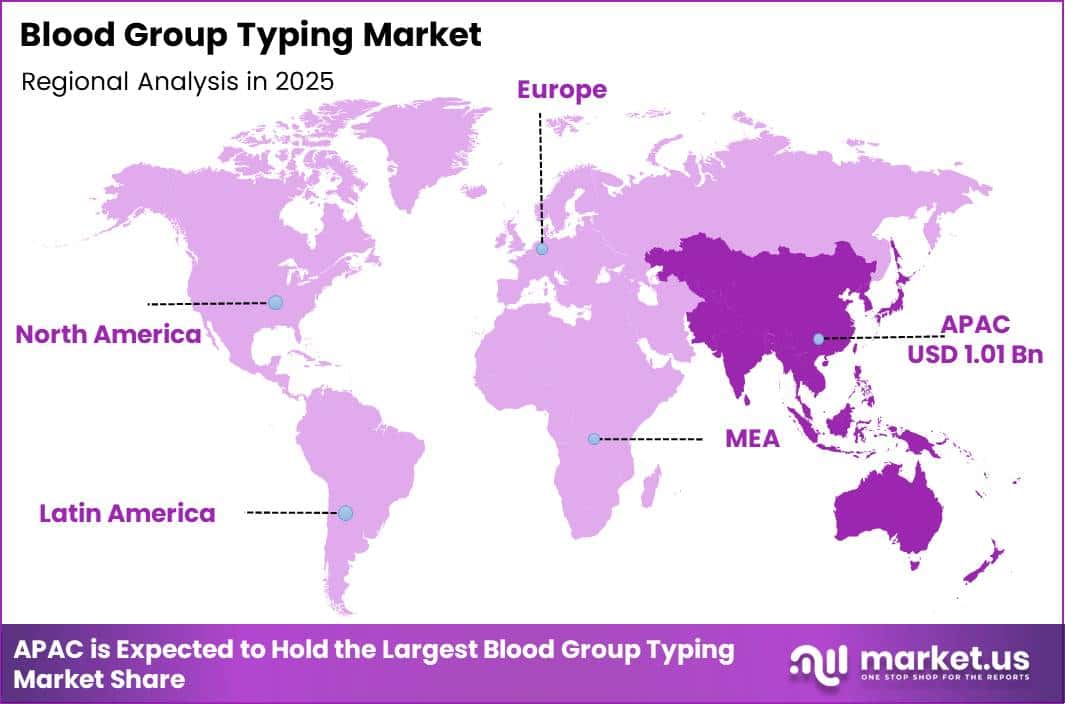
The Global Blood Group Typing Market size is expected to be worth around US$ 8.00 Billion by 2035 from US$ 2.59 Billion in 2025, growing at a CAGR of 11.96%. During the forecast period from 2026 to 2035. In 2025, Asia Pacific led the market, achieving over 39.2% share with a revenue of US$ 1.01 Billion.
Blood group typing is the laboratory process used to determine an individual’s blood group (ABO and Rh systems) to ensure safe blood transfusion, organ transplantation and maternal care. It identifies whether blood is type A, B, AB or O, and determines the Rh (positive/negative) status, which is critical for compatibility before transfusions and clinical procedures.
The global blood service ecosystem is large and growing, with an estimated 120+ million blood donations collected worldwide annually and significant increases in voluntary unpaid donations over the last decade, according to the World Health Organisation (WHO). Countries with strong national systems coordinate all collection, testing, processing and distribution to ensure safety and availability.
In India, government data shows approximately 1.46 crore (14.6 million) units of blood were collected in 2024-25, a roughly 15 % increase over the previous year, with around 70 % from voluntary donors. Despite improvements, a demand-supply gap persists, with studies estimating a shortfall of around one million units annually in meeting clinical requirements.
Blood group typing infrastructure underpins all safe transfusion services. As clinical demand rises with trauma care, surgeries and chronic disease management, accurate blood typing remains indispensable to global health systems, improving patient outcomes and preventing transfusion errors.
Key Takeaways
- Market Size: The Global Blood Group Typing Market size was US$ 2.59 billion in 2025. The market is estimated to grow to US$ 8.00 billion by 2035.
- Market Share: The Compound Annual Growth Rate (CAGR) of the market from 2026 to 2035 will be 11.96%.
- Product Type: Consumables has the largest market share, accounting for 60% of total product type revenue.
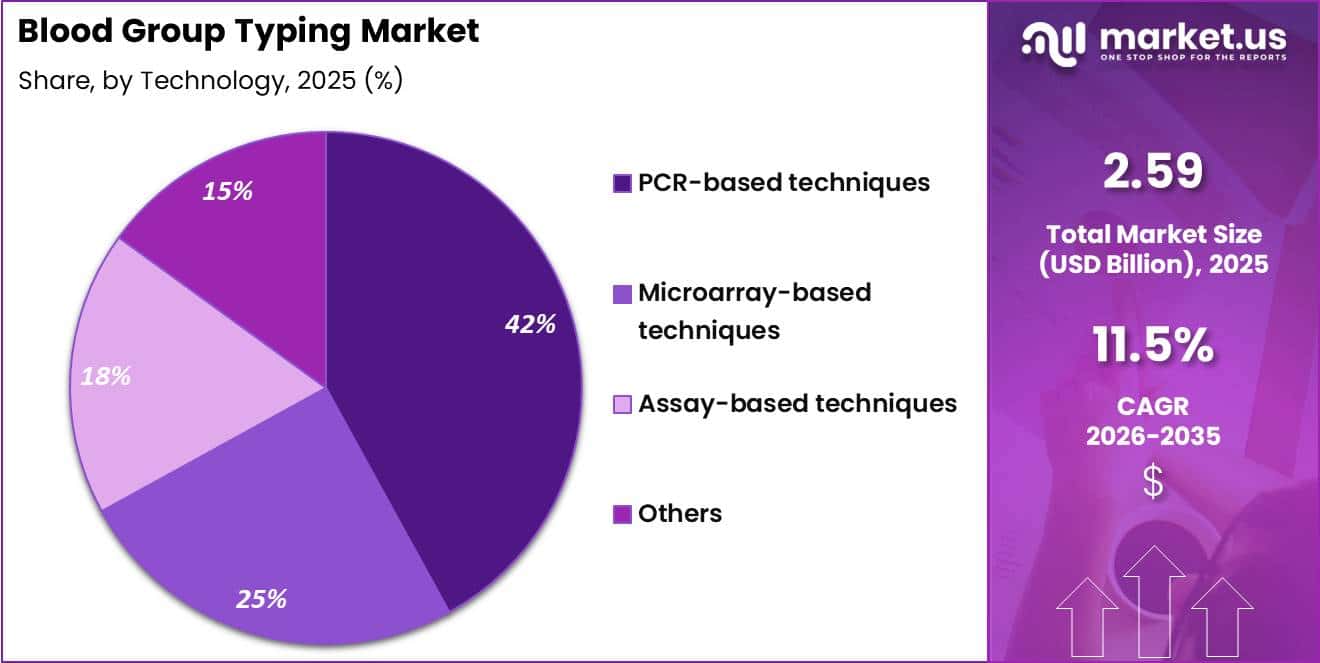
- Technology: PCR-Based Techniques leads the segment, accounting for 42% of total technology segment revenue.
- Test Type: ABO Blood Grouping Test (ABO & Rh Typing) leads the segment, accounting for 42% of total test type revenue.
- End User: Hospitals lead the segment, accounting for 41% of total end-user revenue.
- Regional: Asia Pacific is the fastest-growing regional market, accounting for 39.2% of global revenue growth contribution.
Product Type Analysis
The Blood Group Typing Market by product type is led by consumables, which account for approximately 60.0% of the market share in 2025, reflecting their indispensable and recurring role in routine blood grouping, cross-matching, antibody screening, and transfusion compatibility testing across hospitals, blood banks, and diagnostic laboratories.
Consumables such as reagents, antisera, test cards, gels, and slides are used in every test cycle, creating steady replacement demand and ensuring uninterrupted diagnostic workflows. Their high-volume utilisation, short shelf life, and strict regulatory requirements for quality and standardisation further reinforce their dominance.
Instruments represent an estimated 35.0% market share, supported by continued investments in automated and semi-automated analysers that improve throughput, accuracy, and laboratory efficiency, particularly in high-volume transfusion centres.
Services, including external testing, maintenance, calibration, and training, account for the remaining 5.0% share, largely concentrated in centralised laboratories and specialised reference centres.
Among all segments, consumables are also identified as the fastest-growing, driven by rising global blood transfusion volumes, expansion of hospital laboratory networks, and increasing emphasis on quality-assured, standardised testing protocols to reduce transfusion-related risks and ensure patient safety.
Technology Analysis
Technology-based segmentation of the Blood Group Typing Market highlights PCR-based techniques as the dominant category, capturing around 42.0% of the market share in 2025. This leadership is driven by the high sensitivity, specificity, and reproducibility of PCR methods, which enable accurate molecular blood group typing in complex clinical scenarios such as recently transfused patients, weak or variant antigens, and prenatal diagnostics.
PCR-based typing is increasingly adopted in advanced transfusion medicine to complement or resolve limitations of conventional serological testing. Microarray-based techniques hold approximately 25.0% market share, benefiting from their ability to simultaneously analyse multiple blood group antigens and genetic markers in a single assay, particularly in reference laboratories.
Traditional assay-based serological techniques account for about 18.0%, remaining widely used due to their cost-effectiveness and suitability for routine testing. Other technologies, including next-generation sequencing (NGS) and massive parallel sequencing (MPS), collectively represent 15.0%, reflecting early but growing adoption in specialised and research settings. PCR-based techniques are also the fastest-growing segment, supported by declining molecular testing costs and expanding clinical applications.
Test Type Analysis
By test type, ABO and Rh blood grouping tests constitute the largest share of the Blood Group Typing Market, accounting for approximately 42.0% of total demand in 2025.
This dominance is supported by their universal requirement across all blood transfusions, surgical procedures, emergency care, and routine diagnostic testing, making them foundational to transfusion safety protocols worldwide. These tests are performed at multiple stages, including donor screening, patient pre-transfusion testing, and cross-verification, driving consistently high testing volumes.
Antigen typing for clinically significant blood group systems such as Rh, Kell, Kidd, Duffy, and MNS represents a substantial portion of the remaining market, particularly in patients requiring repeated transfusions or with complex immunohematological profiles. Antibody screening and identification tests play a critical role in detecting unexpected antibodies that may cause adverse transfusion reactions, supporting their steady utilisation.
Cross-matching tests remain essential for final compatibility confirmation before transfusion. Among all segments, HLA typing is identified as the fastest-growing, fueled by rising organ and stem cell transplant procedures and increasing demand for advanced immunogenetic testing to improve transplant outcomes and reduce rejection risks.
End User Analysis
End-user analysis shows that hospitals dominate the Blood Group Typing Market, accounting for approximately 41.0% of market share in 2025, driven by high volumes of blood transfusions associated with surgeries, trauma care, obstetrics, oncology, and emergency medicine. Hospitals benefit from integrated in-house laboratories that enable rapid turnaround times and immediate clinical decision-making, particularly in critical care settings.
Blood banks represent another major end-user group, serving as centralised hubs for donor screening, blood processing, and compatibility testing, and supporting regional healthcare networks. Clinical and diagnostic laboratories account for a growing share, supported by outsourcing trends, rising test volumes, and investments in automation and molecular diagnostic capabilities.
Academic and research institutions contribute a smaller but important segment, focusing on advanced blood group research, method development, and training. Other end users include military and disaster-response facilities with specialised transfusion requirements.
Among all categories, clinical and diagnostic laboratories are the fastest-growing end-user segment, driven by increasing consolidation of laboratory services, expansion of private diagnostic networks, and rising demand for high-throughput, standardised blood typing services.
Key Market Segments
By Product Type
- Consumables
- Instruments
- Services
By Technology
- PCR-Based Techniques
- Microarray-Based Techniques
- Assay-Based Techniques (Serological)
- Others (NGS, MPS)
By Test Type
- ABO Blood Grouping Test (ABO & Rh Typing)
- Antigen Typing (Rh, Kell, Kidd, Duffy, MNS)
- Antibody Screening
- Cross-Matching Test
- HLA Typing
By End User
- Hospitals
- Blood Banks
- Clinical/Diagnostic Laboratories
- Academic & Research Institutions
- Others
Driver
Molecular and extended antigen typing in chronically transfused patients
The shift from basic ABO Rh testing toward extended antigen profiling and molecular typing is emerging as a key growth driver in chronically transfused patient populations, particularly those at high risk of alloimmunization. Recent evidence supports strong reliability for molecular approaches, with large-scale studies reporting greater than 99.9 % reproducibility in transfusion-relevant antigen typing across diverse populations.
FDA-approved molecular platforms can now identify dozens of red cell antigens across multiple blood group systems, offering substantially higher resolution than conventional serology. This increased precision is especially valuable in patients requiring repeated transfusions, such as those with sickle cell disease or other chronic hematologic disorders, where traditional serology may be insufficient due to prior transfusions or complex antibody profiles.
As a result, molecular typing is increasingly being incorporated into clinical guidelines and payer policies for difficult matches or long-term transfusion cases.
Commercially, this shift moves the market from episodic testing toward higher-value, repeat-use molecular workflows that include consumables, software-driven interpretation, and longitudinal donor-recipient matching databases. This creates higher revenue per patient, stronger switching costs, and more integrated lab workflows, supporting sustained adoption of premium transfusion typing solutions.
| Driver | (~) % Impact on CAGR Forecast | Geographic Relevance | Impact Timeline |
|---|---|---|---|
| Transfusion safety regulation tightening and mandatory compatibility workflows | +1.9% | North America core, EU, India, Gulf hospital systems | Short term (≤ 2 years) |
| Molecular and extended antigen typing adoption in chronically transfused patients | +2.4% | US tertiary care, Western Europe, APAC reference labs | Medium term (2-4 years) |
| Blood collection expansion and donor-screening formalisation | +1.5% | APAC, Latin America, Africa, India public systems | Medium term (2-4 years) |
| Sickle cell, thalassemia, oncology and high-risk obstetric transfusion burden | +2.1% | US, India, Middle East, Sub-Saharan Africa, EU speciality centres | Short term (≤ 2 years) |
| Automation, array platforms and high-throughput lab modernisation | +1.7% | North America, EU, Japan, South Korea, China tier-1 labs | Medium term (2-4 years) |
| Patient blood management and precision transfusion economics | +1.2% | US, EU, Australia, advanced hospital networks in APAC | Long-term (≥ 4 years) |
Challenge
Fragmented lab workflows in blood grouping and pretransfusion testing
Persistent fragmentation across manual slide tests, tube agglutination, column methods, and partially automated platforms creates a structural efficiency penalty in blood grouping workflows. This often translates into 10 to 20 % excess technician time per sample and adds roughly 15 to 25 minutes to end-to-end pretransfusion testing in many hospital settings.
The separation of cross matching, antibody screening, and antigen typing across different workstations increases specimen handoffs, typically 3 to 5 per case, raising the risk of mislabeling or identification errors by approximately 0.2 to 0.4 % points in high-volume laboratories. It also drives redundancy in quality controls, increasing consumable costs by an estimated 8 to 12 % compared with more integrated automated systems.
As transfusion demand grows, particularly in tertiary centres where volumes may rise 5 to 7 % annually, these fragmented workflows limit effective utilisation of installed analyser capacity to about 60 to 75 %, constraining throughput even when instrumentation is available.
Addressing this requires consolidation into unified pretransfusion testing workflows, improved specimen routing, and mid-range automation capable of reducing manual handling steps by at least one third and cutting turnaround times by 20 to 30 %. Achieving this typically depends on coordinated procurement, workflow redesign, and IT laboratory integration over a 2 to 4-year implementation horizon.
| Challenge | (~) % CAGR Friction Drag | Geographic Relevance | Mitigation Horizon |
|---|---|---|---|
| Fragmented lab workflows | -1.2% | North America, EU, APAC urban hubs | Medium term (2-4 years) |
| Tech–talent skill gap | -0.9% | North America core, EU reference labs, APAC metros | Long-term (≥ 4 years) |
| Quality variance in LMICs | -1.5% | Sub-Saharan Africa, South Asia, LATAM public systems | Long-term (≥ 4 years) |
| Supply chain cold-chain leaks | -0.8% | APAC logistics corridors, Africa, LATAM | Medium term (2-4 years) |
| Data integration and LIS silos | -0.7% | North America, Western Europe, GCC tertiary centres | Medium term (2-4 years) |
| Regulatory and standard heterogeneity | -0.6% | Global multi-jurisdictional networks | Long-term (≥ 4 years) |
Restraints
Workforce and lab capacity constraints in blood transfusion diagnostics
Sustained growth in blood transfusion diagnostics and safety testing has not been matched by proportional expansion in trained laboratory personnel, creating structural capacity bottlenecks. This limits throughput and slows the adoption of more advanced workflows such as extended phenotyping and molecular typing.
In high-volume centres processing hundreds of units daily, staffing constraints increase operational burden, leading to longer turnaround times for non-urgent blood grouping, reduced weekend and night coverage, and reluctance to expand testing menus.
As a result, even when instruments are available, labour availability rather than equipment often becomes the binding constraint. Regulatory and accreditation requirements further reinforce these limits by linking staffing levels and competency standards to permissible instrument utilisation, effectively capping parallel testing capacity without additional hiring. Tight labour markets and rising wages compound the issue in many regions.
Low- and middle-income countries face additional challenges, including limited training pipelines and ongoing migration of skilled technologists to higher-income markets, which constrains scaling of even basic ABO RhD and infectious disease screening.
Overall, these workforce and capacity constraints slow the rollout of advanced typing technologies, suppress potential test volumes, and are estimated to reduce global blood group typing market CAGR by approximately 0.6 % points over the medium term.
| Restraint | (~) % Impact on CAGR Forecast | Geographic Relevance | Impact Timeline |
|---|---|---|---|
| Intensifying regulatory compliance load | -0.8% | North America, EU, India | Medium term |
| High CAPEX/OPEX for advanced platforms | -0.7% | North America core, EU, APAC metros | Long term |
| Reagent and consumable supply volatility | -0.6% | EU, UK, APAC corridors | Short–Medium term |
| Workforce and lab capacity constraints | -0.6% | North America, EU, selected LMICs | Medium term |
| Donor pool fragility and blood stock stress | -0.5% | North America, EU, India, GCC | Short–Medium term |
| Data, IT integration and interoperability gaps | -0.4% | North America core, EU, APAC hubs | Medium–Long term |
Opportunity
Integrated obstetric–neonatal immunohematology programs
Integrated obstetric–neonatal immunohematology programs aim to combine maternal blood typing, Rh status determination, antibody screening, and newborn compatibility testing into standardised antenatal care pathways, particularly in emerging markets where testing remains fragmented or inconsistently applied.
Despite expanded antenatal care coverage under WHO-aligned initiatives, only about 40 to 50 % of pregnant women in many APAC and African regions receive timely Rh typing and antibody screening during early pregnancy. This creates a significant preventable care gap, contributing to avoidable cases of hemolytic disease of the newborn and severe neonatal jaundice.
Embedding structured blood typing panels into routine antenatal packages priced roughly USD 8 to 15 in lower-middle-income and USD 20 to 40 in upper-middle-income settings could address an untapped population of 30 to 50 million pregnancies annually that currently lack complete immunohematology workups. At scale, standardised protocols could support margins of approximately 18 to 24 % due to high-throughput workflows and simplified testing algorithms.
If adoption reaches 60 to 70 % coverage of pregnancies in priority regions by 2030, bundled obstetric neonatal testing could expand test volumes significantly and contribute an estimated 1.6 % incremental CAGR uplift.
This growth would be driven not by existing transfusion demand but by the institutionalisation of preventive perinatal screening pathways and the creation of dedicated reimbursement structures for integrated maternal-neonatal blood typing programs.
| Opportunity | (~) % Potential CAGR Upside | Geographic Relevance | Execution Window |
|---|---|---|---|
| Algorithmic pre-transfusion risk scoring bundles | +2.0% | North America core, EU, APAC urban | Short term (≤ 2 years) |
| Integrated obstetric–neonatal immunohematology programs | +1.6% | APAC emerging, Africa, Latin America | Medium term (2-4 years) |
| Decentralised blood typing at primary care and retail clinics | +2.3% | APAC emerging, Africa, Latin America, EU rural | Medium term (2-4 years) |
| Automated blood bank middleware and data-as-a-service | +1.9% | North America core, EU, GCC | Long-term (≥ 4 years) |
| Personalised pharmacogenomic–immunohematology panels | +1.7% | North America core, EU, APAC developed | Long-term (≥ 4 years) |
| Cross-border donor registry interoperability platforms | +1.4% | Global, with a focus on the EU, Africa, and APAC | Medium term (2-4 years) |
Regional Analysis
In 2025, Asia Pacific led the market, achieving over 39.2% share with a revenue of US$ 1.01 billion. The Blood Group Typing Market demonstrates significant regional variation due to differences in healthcare infrastructure, transfusion practices, diagnostic capabilities, and government initiatives supporting blood safety programs.
North America represents a leading market, supported by advanced healthcare systems, high adoption of automated immunohematology analysers, strong regulatory standards for transfusion safety, and increasing demand for molecular blood group testing. The presence of well-established blood service networks and continuous investments in precision diagnostics further strengthen regional growth.
Europe holds a substantial market position, driven by stringent blood safety regulations, widespread implementation of standardised transfusion protocols, and increasing adoption of advanced technologies such as PCR-based and molecular typing methods. Government-supported blood management programs and rising demand for rare blood group identification contribute to market expansion across the region.
Asia-Pacific is identified as the fastest-growing region, supported by expanding healthcare infrastructure, increasing surgical procedures, rising awareness regarding safe transfusion practices, and growing investments in diagnostic laboratory networks. Countries across the region are improving blood collection and testing capabilities through national healthcare initiatives, creating strong demand for consumables, instruments, and advanced typing solutions.
Latin America and the Middle East & Africa are experiencing steady growth due to improving healthcare access, modernisation of blood banking systems, and increasing focus on reducing transfusion-related complications.
However, challenges such as limited laboratory infrastructure and uneven access to advanced diagnostic technologies continue to influence market development. Overall, global demand for reliable blood group typing solutions is expected to increase as healthcare systems prioritise transfusion safety, precision diagnostics, and efficient blood management practices.
Key Regions and Countries
North America
- The US
- Canada
Europe
- Germany
- France
- The U.K.
- Italy
- Spain
- Russia & CIS
- Rest of Europe
Asia Pacific
- China
- India
- Japan
- South Korea
- ASEAN
- Australia & New Zealand
- Rest of Asia Pacific
Middle East & Africa
- GCC
- South Africa
- Rest of the Middle East & Africa
Latin America
- Brazil
- Mexico
- Rest of Latin America
Key Player Analysis
Suppliers in the global blood group typing market seek competitive advantage through molecular typing technology platform development encompassing PCR-based, microarray, and next-generation sequencing blood group genotyping systems that deliver extended antigen typing resolution beyond conventional serological methods, enabling safer transfusion matching for chronically transfused patient populations including sickle cell disease, thalassemia, and oncology patients requiring long-term red cell support with minimal alloimmunization risk.
Key strategic focus areas include HLA typing platform development serving the rapidly growing stem cell transplantation and solid organ transplant market, automated high-throughput genotyping instrument development enabling clinical laboratory workflow integration, and liquid biopsy-compatible blood group typing consumable development addressing growing non-invasive prenatal blood group determination demand.
Companies continue investing in FDA and CE-IVD regulatory clearance programs for molecular blood group typing platforms, blood bank laboratory automation integration capability, and national blood service institutional procurement relationship development to secure long-term reagent and instrument supply agreements with hospital transfusion medicine departments, national blood banking organisations, and clinical diagnostic laboratory networks globally.
The progressive transition from serological to molecular blood group genotyping, driven by its superior extended antigen typing resolution, pathogen safety advantage, and compatibility with automated high-throughput laboratory workflows, represents the most significant technological transition reshaping competitive positioning across the blood group typing market through the forecast period to 2035.
Top Key Players
- Bio-Rad Laboratories Inc.
- QuidelOrtho Corporation (Formerly Ortho Clinical Diagnostics)
- Grifols S.A.
- Immucor Inc.
- Beckman Coulter Inc. (Danaher Corporation)
- Thermo Fisher Scientific Inc.
- Merck KGaA
- Roche Diagnostics
- Abbott Laboratories
- Quotient Limited (Quotient Suisse SA)
- Illumina Inc.
- QIAGEN N.V.
- BAG Health Care GmbH
- Agena Bioscience Inc. (Mesa Laboratories)
- Novacyt Group
Recent Developments
- In January 2026, Bio-Rad Laboratories launched an enhanced PCR-based extended blood group antigen typing panel for high-volume hospital transfusion medicine laboratory buyers, targeting improved alloimmunization risk reduction for chronically transfused sickle cell and thalassemia patient populations.
- In February 2026, QuidelOrtho Corporation secured a multi-year blood group typing reagent supply agreement with a leading European national blood service, covering automated serological and molecular typing consumable procurement across its regional blood bank institutional laboratory network.
- In March 2026, Illumina Inc. expanded its next-generation sequencing-based HLA typing platform to North American and European transplant center institutional buyers, aiming to improve donor-recipient matching for stem cell and solid organ transplant procurement requirements.
Report Scope
| Report Features | Description |
|---|---|
| Market Value (2025) | US$ 2.59 Billion |
| Forecast Revenue (2035) | US$ 8.00 Billion |
| CAGR (2026-2035) | 11.96% |
| Base Year for Estimation | 2025 |
| Historic Period | 2020-2024 |
| Forecast Period | 2026-2035 |
| Report Coverage | Revenue Forecast, Market Dynamics, Competitive Landscape, Recent Developments |
| Segments Covered | By Product Type (Consumables, Instruments, Services), By Technology (PCR-Based Techniques, Microarray-Based Techniques, Assay-Based Techniques (Serological), Others — NGS, MPS), By Test Type (ABO Blood Grouping Test (ABO & Rh Typing), Antigen Typing (Rh, Kell, Kidd, Duffy, MNS), Antibody Screening, Cross-Matching Test, HLA Typing), By End User (Hospitals, Blood Banks, Clinical/Diagnostic Laboratories, Academic & Research Institutions, Others) |
| Regional Analysis | North America – The US, Canada; Europe – Germany, France, U.K., Italy, Spain, Russia & CIS, Rest of Europe; Asia Pacific – China, India, Japan, South Korea, ASEAN, Australia & New Zealand, Rest of Asia Pacific; Middle East & Africa – GCC, South Africa, Rest of Middle East & Africa; Latin America – Brazil, Mexico, Rest of Latin America |
| Competitive Landscape | Bio-Rad Laboratories Inc., QuidelOrtho Corporation (Formerly Ortho Clinical Diagnostics), Grifols S.A., Immucor Inc., Beckman Coulter Inc. (Danaher Corporation), Thermo Fisher Scientific Inc., Merck KGaA, Roche Diagnostics, Abbott Laboratories, Quotient Limited (Quotient Suisse SA), Illumina Inc., QIAGEN N.V., BAG Health Care GmbH, Agena Bioscience Inc. (Mesa Laboratories), Novacyt Group |
| Customization Scope | Customization for segments, region/country-level will be provided. Moreover, additional customization can be done based on the requirements. |
| Purchase Options | We have three licenses to opt for: Single User License, Multi-User License (Up to 5 Users), Corporate Use License (Unlimited User and Printable PDF) |





































