


Market Overview
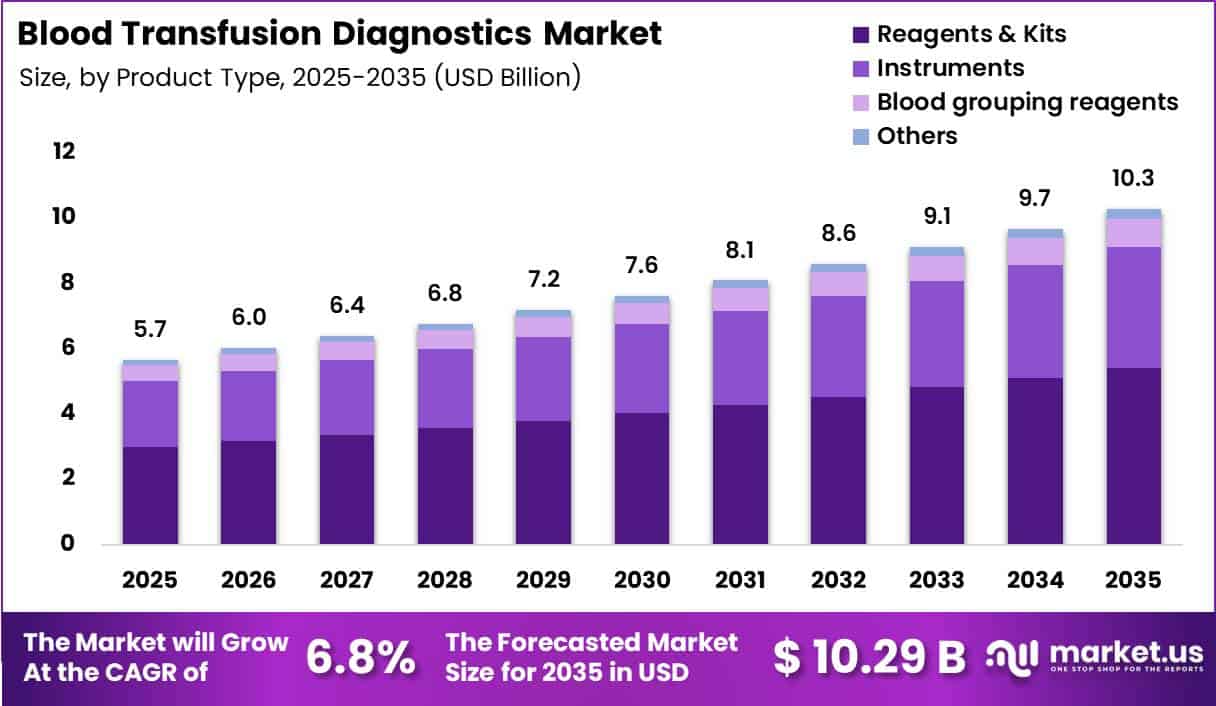
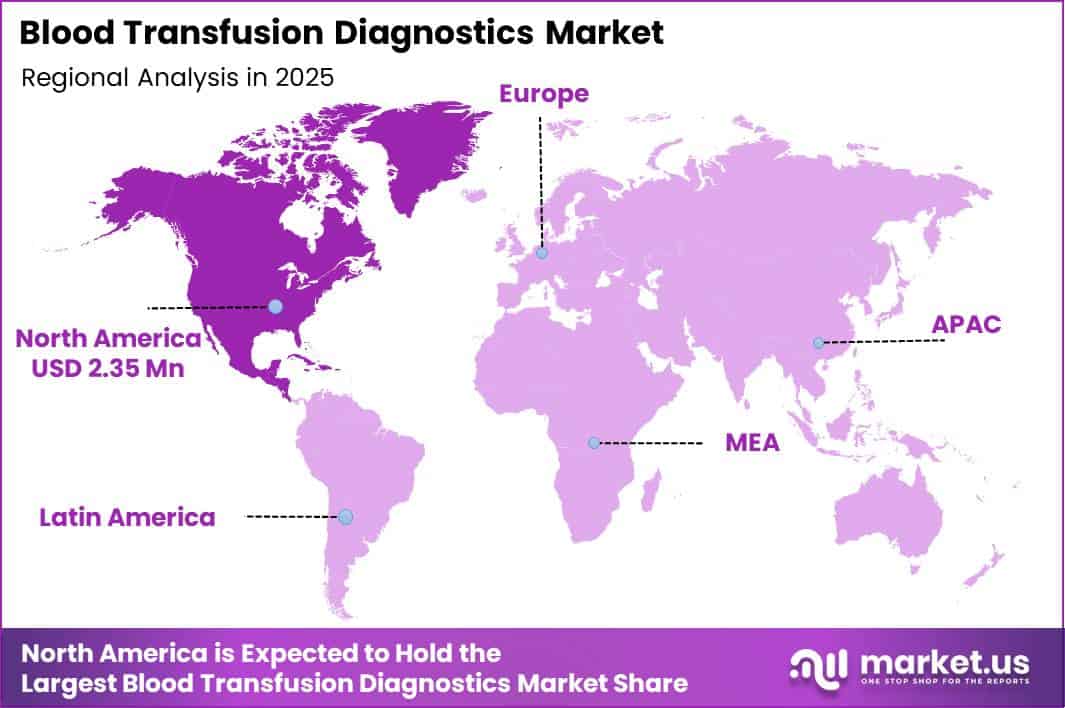
The Global Blood Transfusion Diagnostics Market size is expected to be worth around US$ 10.29 Billion by 2035 from US$ 5.68 Billion in 2025, growing at a CAGR of 6.8% during the forecast period from 2026 to 2035. In 2025, North America led the market, achieving over 41.5% share with a revenue of US$ 2.35 Billion.
Safe and accurate blood transfusion diagnostics are a cornerstone of modern healthcare systems worldwide, ensuring that donated blood is compatible and free from infectious agents before use. According to the World Health Organisation (WHO), nearly 120 million units of blood are donated globally every year, yet demand often outstrips supply in many regions.
WHO recommends that all donated blood be screened for key infections, including HIV, hepatitis B, hepatitis C, and syphilis, to ensure patient safety. However, quality screening capabilities vary, with only about 63% of blood screening laboratories worldwide participating in external quality assessment programs for transfusion-related testing.
In the United States, the Centres for Disease Control and Prevention (CDC) reports that approximately 7 million blood donors and over 14 million units of blood are transfused annually. Every unit of donated blood undergoes multiple diagnostic tests, including blood typing, antibody screening, and infectious disease assays.
Blood transfusion diagnostics encompass laboratory tests such as ABO/Rh blood grouping, nucleic acid testing (NAT) for pathogens like HIV and hepatitis viruses, and serological assays for detecting antibodies or antigens.
These diagnostics are essential to prevent transfusion-transmitted infections and adverse reactions, contributing directly to safer clinical outcomes. Governments and health agencies continue to promote expanded diagnostic capacity and standardisation of testing protocols to support safe blood supplies globally and reduce avoidable transfusion risks.
Key Takeaways
- Market Size: The Global Blood Transfusion Diagnostics Market size was US$ 5.68 billion in 2025. The market is estimated to grow to US$ 10.29 billion by 2035.
- Market Share: The Compound Annual Growth Rate (CAGR) of the market from 2026 to 2035 will be 6.8%.
- Product Type: Reagents & Kits has the largest market share, accounting for 52.8% of total product type revenue.
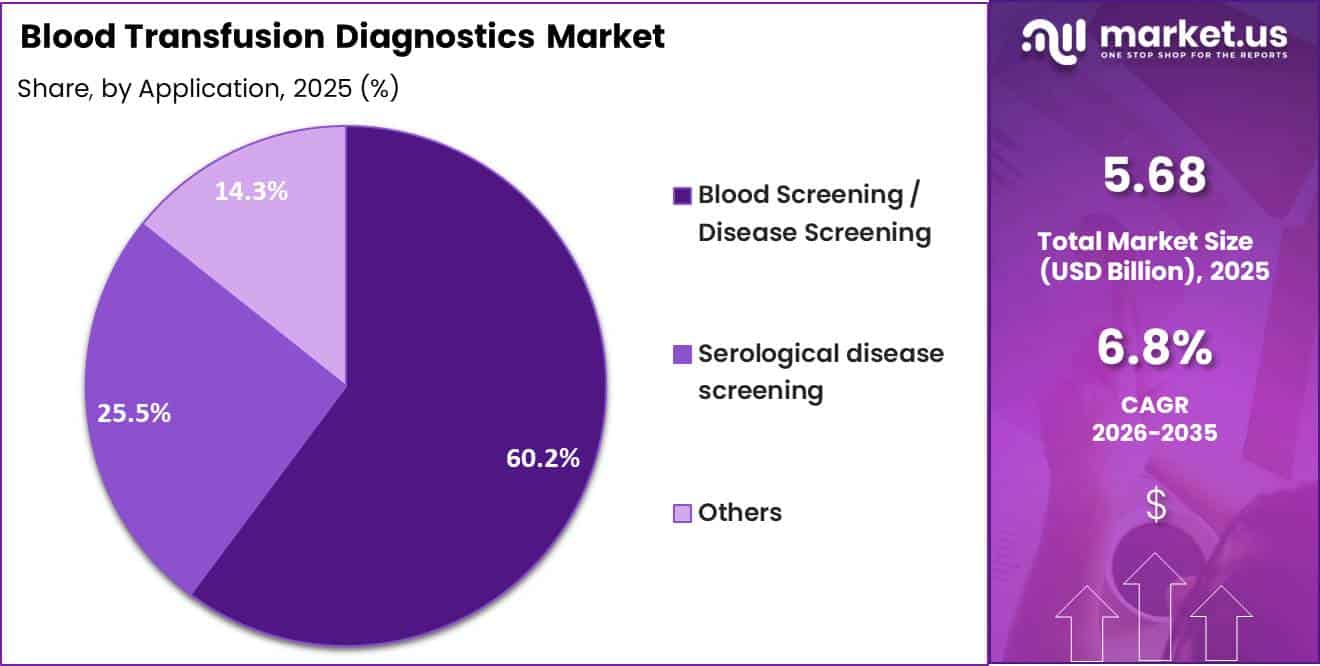
- Application: Blood Screening/Disease Screening leads the segment, accounting for 60.2% of total application revenue.
- Technology: Serological/Immunoassay-Based Testing leads the segment, accounting for 48.6% of total technology segment revenue.
- End User: Hospitals lead the segment, accounting for 34.9% of total end-user revenue.
- Regional: North America is the dominant regional market, accounting for 41.5% of global revenue.
Product Type Analysis
The product type segmentation of the Blood Transfusion Diagnostics Market highlights Reagents & Kits as the dominant and fastest-growing category, accounting for 52.8% market share in 2025. This leadership is driven by their high-volume, recurring consumption in routine blood screening, infectious disease detection, and transfusion compatibility testing across hospitals, standalone blood banks, and centralised screening laboratories.
Reagents and kits are essential consumables used in ABO/Rh typing, antibody screening, serological assays, and nucleic acid testing workflows, resulting in consistent demand aligned with blood donation and transfusion volumes. Their standardised formats, regulatory validation, and compatibility with automated analysers further reinforce adoption.
Instruments represent a significant 35.8% share, reflecting the installed base of automated immunoassay systems, molecular analysers, and blood grouping platforms used in transfusion laboratories, although their replacement cycles are longer than consumables.
Blood grouping reagents, accounting for 8.5%, remain critical for pre-transfusion compatibility testing but exhibit slower growth due to mature usage patterns and incremental innovation. The Others category, comprising ancillary controls and speciality products, contributes 2.9%, serving niche and supplemental testing requirements within transfusion diagnostics workflows.
Application Analysis
By application, Blood Screening / Disease Screening dominates the Blood Transfusion Diagnostics Market with a 60.2% market share in 2025 and represents the fastest-growing segment. This strong position is driven by mandatory screening requirements for transfusion-transmitted infections, including HIV, hepatitis B, hepatitis C, and syphilis, enforced by national health authorities and blood safety regulations worldwide.
Every donated unit of blood undergoes multiple screening assays, creating sustained and non-discretionary demand for diagnostic testing. Increasing awareness of residual transfusion risks, combined with expanded screening panels and improved detection sensitivity, further accelerates growth in this segment.
Serological disease screening accounts for 25.5%, supported by its continued use in detecting antibodies and antigens through established immunoassay methods, particularly in resource-constrained settings.
The Others segment, holding 14.3%, includes applications such as blood typing, antibody identification, and compatibility testing, which remain essential components of transfusion workflows but grow at a comparatively moderate pace due to procedural standardisation and stable testing volumes.
Technology Analysis
From a technology perspective, Serological / immunoassay-based testing holds the largest share at 48.6% in 2025, underpinned by its widespread clinical acceptance, cost efficiency, and well-established laboratory infrastructure in transfusion services. These technologies are routinely used for blood grouping, antibody screening, and detection of transfusion-transmitted infections, making them a foundational component of diagnostic workflows.
ELISA-based systems continue to support high-throughput screening needs, particularly in centralised blood banks, due to their reliability and standardised protocols. Molecular / NAT-based testing is identified as the fastest-growing segment, driven by its superior sensitivity, ability to detect pathogens during the window period, and increasing regulatory emphasis on early infection detection. Adoption is expanding as automation improves and testing costs gradually decline.
The Others category includes emerging and supplemental technologies that address specific testing requirements or support confirmatory analysis, contributing to incremental innovation while remaining a smaller portion of overall technology adoption.
End User Analysis
In terms of end users, Hospitals account for 34.9% of the Blood Transfusion Diagnostics Market in 2025, supported by high transfusion volumes associated with surgeries, trauma care, oncology, and critical care services. Hospitals benefit from integrated diagnostic facilities that enable rapid blood compatibility testing and immediate access to screened blood units, reinforcing consistent demand for transfusion diagnostics.
Hospital-based blood banks play a complementary role by managing in-house collection, storage, and testing activities, ensuring continuity of supply for acute care settings.
Diagnostic/clinical laboratories represent the fastest-growing end-user segment, driven by the centralisation of testing services, increasing outsourcing by hospitals and blood banks, and the adoption of high-throughput automated platforms. These laboratories benefit from economies of scale, standardised quality control, and expanded testing menus.
The Others segment includes regional blood centres and specialised facilities that support national blood supply networks, contributing to overall market stability while exhibiting moderate growth patterns.
Key Market Segments
By Product Type
- Reagents & Kits
- Blood Grouping Reagents
- Instruments
- Others
By Application
- Blood Screening/Disease Screening
- Serological Disease Screening
- Others
By Technology
- Serological/Immunoassay-Based Testing
- ELISA
- Molecular/NAT-Based Testing
- Others
By End User
- Hospitals
- Hospital-Based Blood Banks
- Diagnostic/Clinical Laboratories
- Others
Driver
Mandatory TTI screening expansion across national blood systems
WHO guidelines recommend universal screening of donated blood for HIV, hepatitis B, hepatitis C, and syphilis before transfusion, yet implementation remains incomplete in several countries.
Ten reporting countries still cannot screen all donations for at least one of these infections, and only about 63% of blood screening laboratories globally participate in external quality assessment programs, dropping to approximately 48% in lower middle-income settings. This compliance gap is commercially significant because diagnostics demand increases not just with blood collection volume, but with the rigour of regulatory and quality requirements.
As systems transition from partial to universal quality-assured screening, each donated unit generates recurring demand for reagents, controls, confirmatory testing, and instrument servicing, shifting revenue from one-time instrumentation toward sustained consumables usage.
Globally, with approximately 120.4 million blood donations annually and wide disparities in donation rates, growth potential is driven less by saturation in mature markets and more by formalisation and standardisation in under-screened systems.
As lower- and middle-income countries expand mandatory transfusion-transmitted infection screening and strengthen quality systems, even modest increases in coverage can significantly expand diagnostic testing volumes, creating a structurally durable demand uplift across blood grouping and infectious disease testing workflows.
| Driver | (~) % Impact on CAGR Forecast | Geographic Relevance | Impact Timeline |
|---|---|---|---|
| Mandatory TTI screening expansion across national blood systems | +2.2% | Global core: strongest in Asia, Africa, and Latin America | Medium term (2-4 years) |
| Hemovigilance and hospital quality reporting digitisation | +1.4% | North America core, EU, Gulf, upper-middle-income APAC | Short term (≤ 2 years) |
| Platelet bacterial risk control and advanced assay adoption | +1.6% | U.S. core, Canada, Western Europe, developed APAC | Short term (≤ 2 years) |
| Donor eligibility modernization increasing collection throughput | +0.9% | U.S. core, UK/EU spill-over, urban APAC blood centres | Medium term (2-4 years) |
| Plasma fractionation and componentization capacity build-out | +1.8% | China, India, Brazil, MENA, Southeast Asia | Long-term (≥ 4 years) |
| Trauma, oncology, transplant, and high-acuity care intensity | +1.3% | North America, EU, Japan, South Korea, large urban LMIC corridors | Medium term (2-4 years) |
Challenge
Fragmented blood chain IT systems in transfusion networks
Fragmented information systems across blood collection, testing, and hospital distribution remain a persistent structural inefficiency in many national blood programs. Heterogeneous or partially paper-based laboratory information systems create delays of roughly 24 to 72 hours between collection, testing, inventory updates, and hospital demand visibility.
These delays force blood banks and hospitals to maintain 10 to 20 % excess safety inventory, increasing wastage risk and raising per-unit diagnostic costs by an estimated 5 to 8 % due to repeat testing and suboptimal stock management.
Even in higher-income settings with national or regional platforms, full end-to-end traceability and unit-level hemovigilance analytics are often incomplete. The lack of real-time integration limits early detection of reagent failures, workflow bottlenecks, and transfusion-transmitted infection signals, slowing operational responses by several days during critical events.
As a result, installed diagnostic platforms typically operate at only 60 to 75 % of potential capacity instead of the 85 to 90 % achievable in highly integrated systems. Overall, this fragmentation reduces throughput efficiency and is estimated to lower attainable market CAGR by approximately 0.8 % points due to underutilization of instruments and increased operational inefficiencies.
Addressing this requires interoperable laboratory information systems and blood information systems, standardised HL7 FHIR integration, and cloud-based dashboards embedded directly into procurement and national blood program modernisation efforts.
| Challenge | (~) % CAGR Friction Drag | Geographic Relevance | Mitigation Horizon |
|---|---|---|---|
| Fragmented blood chain IT | -0.8% | North America, EU, APAC urban | Medium term (2-4 years) |
| Quality-system implementation gaps | -1.0% | LMICs, emerging APAC, Africa | Long-term (≥ 4 years) |
| Advanced NAT cost burden | -0.7% | North America, EU regulatory hubs | Medium term (2-4 years) |
| Reagent and instrument volatility | -0.6% | Global, import-dependent regions | Short term (≤ 2 years) |
| Chronic skilled-labour deficits | -0.9% | LMICs, tier-2/3 cities | Long-term (≥ 4 years) |
| Expanding pathogen and variant scope | -0.5% | Global, tropical belts | Medium term (2-4 years) |
Restraints
Skilled labour and lab capacity constraints in blood transfusion diagnostics
Blood transfusion diagnostics rely heavily on trained laboratory technologists capable of running complex immunoassays and nucleic acid testing across multiple infectious disease markers, including hepatitis B virus, hepatitis C virus, HIV, HTLV, syphilis, and others. However, persistent workforce shortages and uneven training pipelines continue to constrain operational capacity.
In several North American and European hospital systems, vacancy rates for medical technologists range from approximately 8 to 15 %, with overtime accounting for 10 to 20 % of total staffing hours. These gaps limit full shift coverage, particularly at night and on weekends, reducing the ability to run expanded test menus outside core hours.
As a result, even laboratories equipped for high-throughput automation often operate at only 60 to 70 % of theoretical capacity. This underutilization extends donor screening timelines by 12 to 24 hours and increases reliance on partially completed panels in time-sensitive transfusion decisions.
The constraint also discourages adoption of advanced assays that require additional training (often 20 to 40 hours per technologist) and reinforces reliance on core regulatory testing rather than expanded screening panels.
In some cases, it drives the use of send-out testing, adding 24 to 72 hours of turnaround time and reducing the value of in-house platforms. Overall, skilled labour shortages and capacity limits are estimated to reduce baseline CAGR in transfusion diagnostics by approximately 1.0 % point through slower adoption of advanced testing and lower effective utilisation of installed automation capacity.
| Restraint | (~) % Impact on CAGR Forecast | Geographic Relevance | Impact Timeline |
|---|---|---|---|
| High assay and instrument cost inflation | -1.4% | North America, EU, select APAC | Medium term (2–4 years) |
| Skilled labour and lab capacity constraints | -1.0% | North America core, EU, LATAM urban | Medium term (2–4 years) |
| Regulatory complexity and compliance overhead | -0.8% | North America core, EU, APAC corridors | Long-term (≥ 4 years) |
| Reagent and consumables supply chain volatility | -1.2% | Global, with APAC and LATAM stress points | Short to medium term (≤ 4 years) |
| Uneven hospital IT/interoperability for diagnostics | -0.7% | North America community, APAC, LATAM | Long-term (≥ 4 years) |
| Budget constraints in public and semi-public health systems | -0.9% | North America Medicaid segment, EU public, APAC government hospitals | Medium term (2–4 years) |
Opportunity
Integrated donor–recipient data platforms in blood diagnostics
Integrated donor–recipient data platforms link donor screening results, infection markers, and transfusion outcomes across the full lifecycle of blood products. This represents a future adjacency to current diagnostics offerings, which are typically sold as standalone assays or instruments rather than longitudinal data services.
Today, donor data, laboratory results, and patient outcomes are often stored in separate systems across blood banks, hospitals, and laboratories. This fragmentation limits traceability, weakens hemovigilance, and reduces the ability to analyse donor risk patterns or connect specific donation lots to downstream adverse events at scale.
Cloud-based platforms that assign persistent donor identifiers and connect them to anonymised recipient outcomes could enable new monetisation models based on analytics, regulatory reporting, and data access services.
Adoption in high-income, digitally mature markets could generate incremental software and data revenues while also improving operational efficiency. If such systems capture 25 to 30 % of donor and transfusion events in major markets by 2030, modest per-event fees could translate into meaningful recurring revenue streams with high margins.
Operationally, these platforms could reduce redundant testing, improve donor deferral workflows, and enhance traceability, supporting both regulatory compliance and procurement preference. Overall, this represents a forward-looking opportunity that complements rather than replaces traditional diagnostics revenue streams, with upside driven by data integration rather than test volume alone.
| Opportunity | (~) % Potential CAGR Upside | Geographic Relevance | Execution Window |
|---|---|---|---|
| Decentralised POC transfusion testing | +2.0% | APAC emerging, Sub-Saharan Africa, LATAM | Medium term (2–4 years) |
| AI-driven hemovigilance & risk scoring | +1.5% | North America, Western Europe, and advanced APAC | Short term (≤ 2 years) |
| Integrated donor–recipient data platforms | +1.8% | North America, EU, GCC | Medium term (2–4 years) |
| Pathogen reduction & multi-pathogen panels | +2.3% | North America, EU, high-income APAC | Long-term (≥ 4 years) |
| Value-based contracting & outcome-linked pricing | +1.2% | North America core, EU payers | Short term (≤ 2 years) |
| Consolidated regional blood testing hubs | +1.7% | APAC emerging, Africa, LATAM | Long-term (≥ 4 years) |
Regional Analysis
In 2025, North America led the market, achieving over 41.5% share with a revenue of US$ 2.3 billion. The regional landscape of the Blood Transfusion Diagnostics Market reflects differences in blood donation volumes, regulatory rigour, healthcare infrastructure, and access to advanced diagnostic technologies.
North America remains the leading region, supported by a highly regulated blood safety framework, high transfusion rates, and widespread adoption of automated serological and molecular testing platforms. In the United States, mandatory screening of every donated blood unit for multiple infectious agents, guided by agencies such as the Centres for Disease Control and Prevention and the Food and Drug Administration, sustains consistent demand for reagents, kits, and high-throughput analysers.
Europe represents a mature and well-established market, driven by harmonised blood safety standards across the European Union, strong public blood donation systems, and growing integration of nucleic acid testing to reduce transfusion-transmitted infection risks.
Asia Pacific is the fastest-growing regional market, supported by expanding healthcare infrastructure, rising surgical and trauma cases, and increasing government investment in blood screening capacity, particularly in China, Japan, and Southeast Asia. Improving compliance with international blood safety recommendations from the World Health Organisation further accelerates adoption.
Latin America and the Middle East & Africa show steady growth, driven by gradual modernisation of blood banks, expanding diagnostic coverage, and efforts to strengthen national blood transfusion services, although variability in access and infrastructure continues to influence regional adoption patterns.
Key Regions and Countries
North America
- The US
- Canada
Europe
- Germany
- France
- The U.K.
- Italy
- Spain
- Russia & CIS
- Rest of Europe
Asia Pacific
- China
- India
- Japan
- South Korea
- ASEAN
- Australia & New Zealand
- Rest of Asia Pacific
Middle East & Africa
- GCC
- South Africa
- Rest of the Middle East & Africa
Latin America
- Brazil
- Mexico
- Rest of Latin America
Key Player Analysis
Suppliers in the global blood transfusion diagnostics market seek competitive advantage through nucleic acid testing platform development, delivering superior sensitivity for early infectious disease window period detection, particularly for HIV, HCV, HBV, and emerging transfusion-transmitted pathogens, over conventional serological screening methods that remain vulnerable to pre-seroconversion donation window period false-negative results.
Key strategic focus areas include multiplex NAT platform development enabling simultaneous multi-pathogen screening from a single donor blood sample, automated high-throughput blood bank analyser development reducing per-sample testing cost.
While improving throughput for large national blood service procurement programs, and reagent portfolio expansion addressing newly emerging transfusion-transmitted infection risks including novel viral pathogens and emerging blood-borne parasitic diseases requiring active surveillance screening integration.
Companies continue investing in CE-IVD and FDA 510(k) regulatory clearance programs, WHO prequalification certification enabling developing nation blood safety program procurement eligibility, and national blood service institutional procurement relationship development to secure long-term reagent supply framework agreements with hospital transfusion medicine departments, national blood banking organisations, and clinical reference laboratory networks globally.
The progressive mandatory adoption of nucleic acid testing across national blood safety programs in developing economies, driven by WHO transfusion safety guidelines and international development agency blood safety program funding, represents the most significant structural demand driver expanding the addressable molecular diagnostics segment through the forecast period to 2035.
Top Key Players
- Johnson & Johnson (Janssen Global Services LLC)
- Otsuka Pharmaceutical Co., Ltd.
- Eli Lilly and Company
- AstraZeneca plc
- AbbVie Inc.
- H. Lundbeck A/S
- Pfizer Inc.
- Bristol-Myers Squibb
- Sumitomo Pharma (Sumitomo Dainippon Pharma)
- Alkermes plc
- Teva Pharmaceutical Industries Ltd.
- Dr. Reddy’s Laboratories Ltd.
- Lupin Limited
- Glenmark Pharmaceuticals Ltd.
- Intas Pharmaceuticals Ltd.
Recent Developments
- In February 2026, AstraZeneca secured a multi-year blood screening reagent supply agreement with a leading European national blood service, covering serological and NAT-based pathogen screening consumable procurement across its regional blood bank laboratory network.
- In March 2026, Pfizer Inc. launched an enhanced multiplex NAT blood screening platform targeting high-throughput hospital transfusion medicine and national blood service institutional buyers seeking simultaneous multi-pathogen detection capability from single-donor sample testing workflows.
- In May 2026, Teva Pharmaceutical Industries expanded its blood transfusion diagnostics reagent distribution across Asia Pacific clinical laboratory and hospital blood bank institutional buyers, targeting growing national blood safety program procurement demand across emerging healthcare markets.
Report Scope
| Report Features | Description |
|---|---|
| Market Value (2025) | US$ 5.68 Billion |
| Forecast Revenue (2035) | US$ 10.29 Billion |
| CAGR (2026-2035) | 6.8% |
| Base Year for Estimation | 2025 |
| Historic Period | 2020-2024 |
| Forecast Period | 2026-2035 |
| Report Coverage | Revenue Forecast, Market Dynamics, Competitive Landscape, Recent Developments |
| Segments Covered | By Product Type (Reagents & Kits — Blood Grouping Reagents; Instruments, Others), By Application (Blood Screening/Disease Screening, Serological Disease Screening, Others), By Technology (Serological/Immunoassay-Based Testing — ELISA; Molecular/NAT-Based Testing, Others), By End User (Hospitals, Hospital-Based Blood Banks, Diagnostic/Clinical Laboratories, Others) |
| Regional Analysis | North America – The US, Canada; Europe – Germany, France, U.K., Italy, Spain, Russia & CIS, Rest of Europe; Asia Pacific – China, India, Japan, South Korea, ASEAN, Australia & New Zealand, Rest of Asia Pacific; Middle East & Africa – GCC, South Africa, Rest of Middle East & Africa; Latin America – Brazil, Mexico, Rest of Latin America |
| Competitive Landscape | Johnson & Johnson (Janssen Global Services LLC), Otsuka Pharmaceutical Co., Ltd., Eli Lilly and Company, AstraZeneca plc, AbbVie Inc., H. Lundbeck A/S, Pfizer Inc., Bristol-Myers Squibb, Sumitomo Pharma (Sumitomo Dainippon Pharma), Alkermes plc, Teva Pharmaceutical Industries Ltd., Dr. Reddy’s Laboratories Ltd., Lupin Limited, Glenmark Pharmaceuticals Ltd., Intas Pharmaceuticals Ltd. |
| Customization Scope | Customization for segments, region/country-level will be provided. Moreover, additional customization can be done based on the requirements. |
| Purchase Options | We have three licenses to opt for: Single User License, Multi-User License (Up to 5 Users), Corporate Use License (Unlimited User and Printable PDF) |





































