


Market Overview
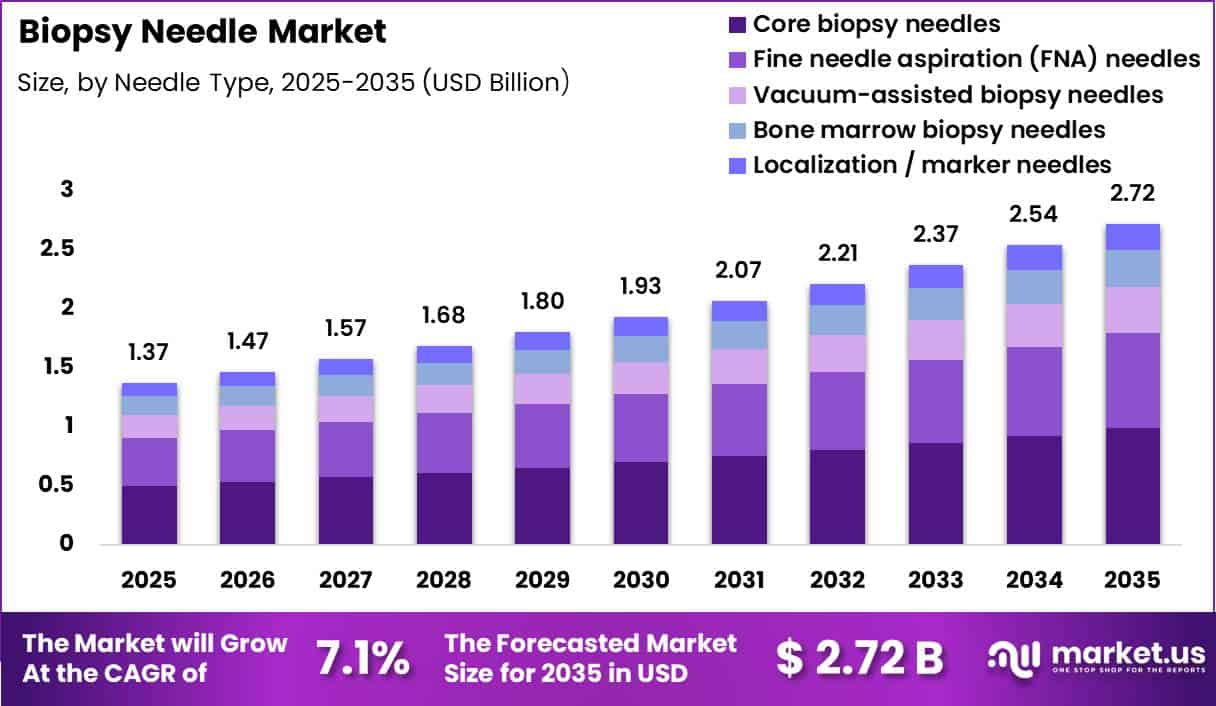
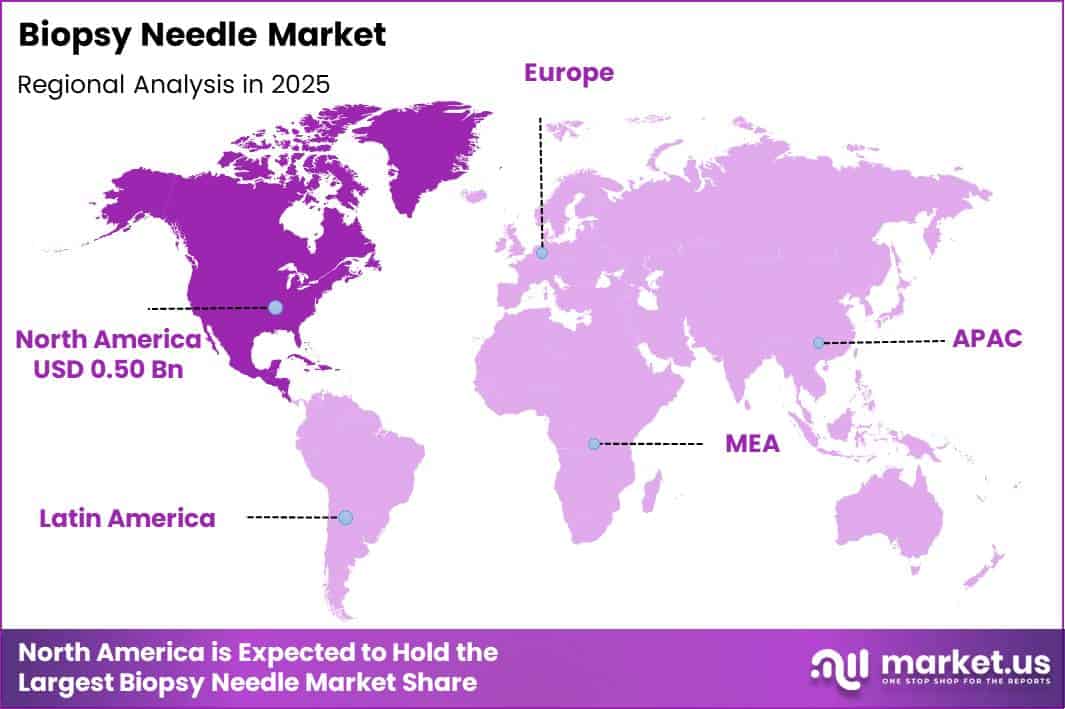
The Global Biopsy Needle Market size is expected to be worth around US$ 2.72 Billion by 2035 from US$ 1.37 Billion in 2025, growing at a CAGR of 7.1% during the forecast period from 2026 to 2035. In 2025, North America led the market, achieving over 35.7% share with a revenue of US$ 0.50 Billion.
The Global Biopsy Needle Market is witnessing steady growth as healthcare systems increasingly focus on early disease detection, precision diagnostics, and minimally invasive procedures. Biopsy needles are specialized medical devices designed to collect tissue samples from targeted areas of the body for microscopic examination, helping physicians diagnose conditions including cancer, infections, and inflammatory disorders.
Needle-based biopsy procedures are commonly performed for breast, prostate, lung, liver, thyroid, and other organ-related investigations. The rising global burden of cancer is a major factor supporting demand for biopsy needles, as accurate tissue diagnosis remains essential for treatment planning and personalized medicine.
According to the U.S. Centers for Disease Control and Prevention (CDC), cancer incidence data are collected through nationwide population-based cancer registries covering all 50 U.S. states, highlighting the continued need for advanced diagnostic capabilities.
Technological advancements are improving biopsy accuracy through imaging-guided procedures, automated biopsy systems, and improved needle designs that enable precise tissue sampling with reduced patient discomfort. Fine needle aspiration (FNA) and core needle biopsy techniques are increasingly used in outpatient settings due to their minimally invasive nature and faster recovery advantages.
Regulatory support is also shaping market development, with biopsy needles classified as medical devices requiring safety and performance evaluation. The U.S. Food and Drug Administration (FDA) categorizes certain biopsy needle systems as Class II devices under regulation 876.1075 and provides guidance for premarket notifications and performance testing requirements.
Growing adoption of precision oncology, increasing diagnostic imaging procedures, and advancements in minimally invasive biopsy technologies are expected to strengthen the global biopsy needle market landscape in the coming years.
Key Takeaways
- Market Size: The Global Biopsy Needle Market size was US$ 1.37 billion in 2025. The market is estimated to grow to US$ 2.72 billion by 2035.
- Market Share: The Compound Annual Growth Rate (CAGR) of the market from 2026 to 2035 will be 7.1%.
- Needle Type: Core Biopsy Needles have the largest market share, accounting for 36.3% of total needle type revenue.
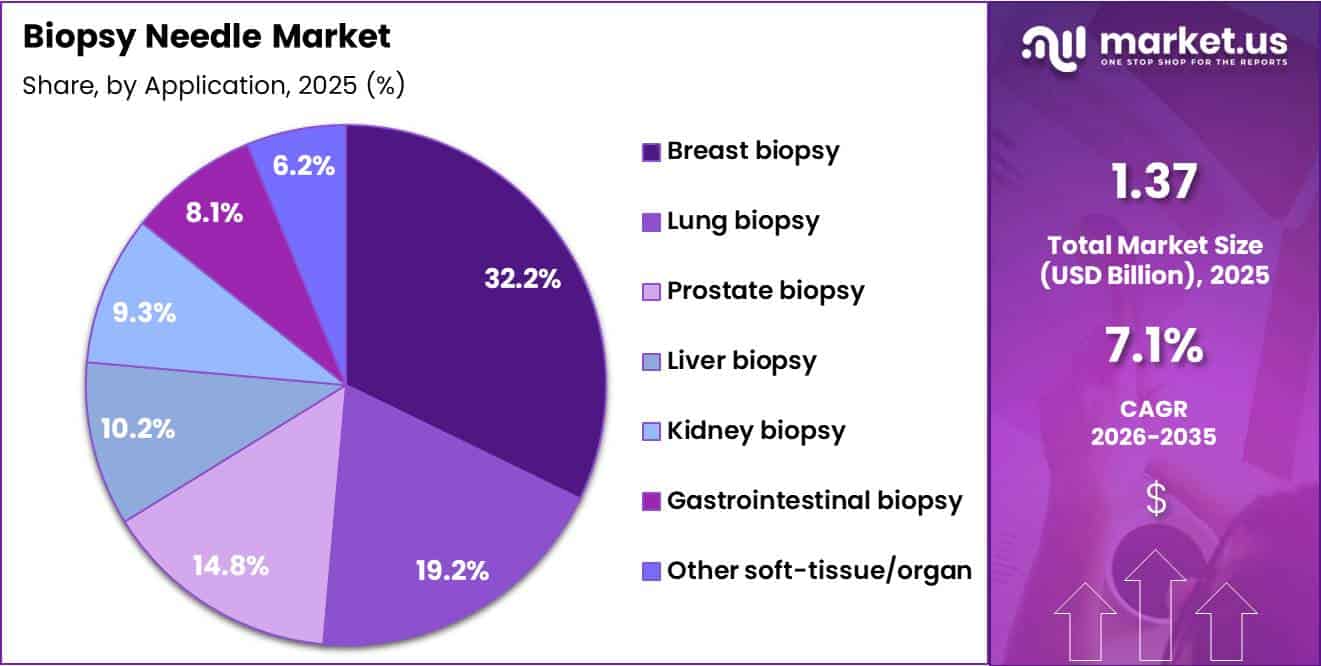
- Application: Breast Biopsy leads the segment, accounting for 32.2% of total application revenue.
- End User: Hospitals/Surgical Centres lead the segment, accounting for 56.2% of total end-user revenue.
- Regional: North America is the dominant regional market, accounting for 35.7% of global revenue, holding US$ 0.50 billion in revenue in 2025.
Needle Type Analysis
The Core Biopsy Needles segment dominated the Biopsy Needle Market in 2025, accounting for 36.3% of the global market share. The strong adoption of core biopsy needles is attributed to their ability to collect larger tissue samples, enabling accurate histopathological examination and molecular testing for cancer diagnosis.
These needles are widely used in breast, prostate, liver, and lung biopsies due to their high diagnostic reliability and compatibility with image-guided procedures such as ultrasound and CT-guided biopsies.
Fine Needle Aspiration (FNA) Needles captured 29.8% market share in 2025, supported by their minimally invasive nature, lower patient discomfort, and effectiveness in obtaining cellular samples for cytological analysis.
FNA needles are commonly preferred for thyroid, lymph node, and superficial lesion evaluations. Vacuum-Assisted Biopsy Needles accounted for a 14.3% share, driven by increasing demand for improved tissue acquisition efficiency and accurate diagnosis of complex lesions, particularly in breast imaging centers.
Bone Marrow Biopsy Needles represented 11.3% of the market, supported by rising diagnosis of haematological disorders, including leukaemia and lymphoma. Meanwhile, Localization / Marker Needles held an 8.3% share, mainly used for precise lesion marking before surgical interventions, improving treatment planning and procedural accuracy.
Application Analysis
The Breast Biopsy segment dominated the Biopsy Needle Market in 2025, representing 32.2% of the global market share. This leading position is driven by the increasing prevalence of breast cancer, growing adoption of screening programs, and rising utilisation of minimally invasive biopsy techniques for early cancer detection. Image-guided breast biopsy procedures, including ultrasound-guided and stereotactic biopsies, continue to support demand for advanced biopsy needles.
The Lung Biopsy segment accounted for 19.2% market share in 2025, supported by the growing burden of lung cancer and increased use of CT-guided needle biopsy procedures for pulmonary nodule evaluation. Prostate Biopsy held a 14.8% share, driven by increasing prostate cancer screening, ageing populations, and demand for accurate tissue diagnosis before treatment decisions.
The Liver Biopsy segment contributed 10.2% of the market, supported by rising diagnosis and monitoring of chronic liver diseases such as hepatitis, fibrosis, and cirrhosis. Kidney Biopsy accounted for a 9.3% share, with demand increasing due to the need for precise diagnosis of renal disorders.
Gastrointestinal Biopsy represented 8.1%, supported by endoscopic biopsy procedures for digestive tract diseases, while Other Soft-Tissue/Organ applications held 6.2% share, covering a broad range of diagnostic procedures.
End-Use Analysis
The Hospitals / Surgical Centres segment dominated the Biopsy Needle Market in 2025, accounting for 56.2% of the global market share. Hospitals remain the primary end-users due to their advanced diagnostic infrastructure, availability of imaging technologies, and presence of specialized medical professionals capable of performing complex biopsy procedures.
Increasing cancer diagnosis rates, rising surgical interventions, and growing adoption of minimally invasive diagnostic techniques continue to strengthen demand for biopsy needles in hospital settings.
Diagnostic Clinics & Pathology Labs represent a significant market segment, supported by the increasing shift toward outpatient diagnostic services and the growing need for rapid tissue analysis. These facilities play an important role in early disease detection, cancer screening, and pathology-based diagnosis.
Ambulatory Care Centers are witnessing rising adoption of biopsy needles due to their cost-effective services, shorter procedure times, and growing preference for minimally invasive outpatient procedures. The expansion of ambulatory surgical facilities is contributing to increased utilization of biopsy devices outside traditional hospital environments.
Academic & Research Institutes also contribute to market growth through clinical studies, medical research, and the development of advanced biopsy techniques. These institutions support innovation in precision diagnostics, tissue sampling methods, and improved biopsy technologies for disease detection and treatment planning.
Key Market Segments
By Needle Type
- Core Biopsy Needles
- Fine Needle Aspiration (FNA) Needles
- Vacuum-Assisted Biopsy Needles
- Bone Marrow Biopsy Needles
- Localization/Marker Needles
By Application
- Breast Biopsy
- Lung Biopsy
- Prostate Biopsy
- Liver Biopsy
- Kidney Biopsy
- Gastrointestinal Biopsy
- Other Soft-Tissue/Organ
By End User
- Hospitals/Surgical Centers
- Diagnostic Clinics & Pathology Labs
- Ambulatory Care Centers
- Academic & Research Institutes
Driver
Cancer Screening Expansion Accelerates Biopsy Needle Demand Growth
Cancer screening is widening the diagnostic funnel for lesions that ultimately require tissue confirmation, especially across breast, lung, and colorectal pathways. WHO reported nearly 10 million cancer deaths in 2024 and identified lung, breast, colorectal, and prostate cancers among the most common cancers globally, while CDC continues to support routine screening for breast, colorectal, cervical, and lung cancers under evidence-based recommendations.
That matters commercially because biopsy needle demand scales less with total cancer prevalence than with the number of suspicious findings generated upstream by mammography, low-dose CT screening, colonoscopic workups, and incidental imaging; even modest increases in screening participation can convert into disproportionately higher procedure volumes in core needle and fine needle biopsy workflows.
In breast cancer alone, WHO estimates 2.4 million diagnoses and 694,000 deaths globally in 2024, with screening commonly targeted to women aged 50 to 69 in stronger healthcare systems, creating a persistent procedural base for image-guided sampling and repeat sampling where initial pathology results are indeterminate.
Strategically, this driver favours vendors with broad-gauge portfolios, strong radiology channel distribution, and biopsy kits optimized for rapid turnover in ambulatory settings, as hospitals and breast centers increasingly prioritise procedural standardisation, reduced repeat biopsy rates, and compatibility with high-throughput ultrasound and stereotactic imaging workflows.
| Driver | (~) % Impact on CAGR Forecast | Geographic Relevance | Impact Timeline |
|---|---|---|---|
| Cancer screening throughput expansion | +1.4% | North America core, EU, Japan, South Korea, urban China | Short term |
| Aging-led solid tumor biopsy volume | +1.2% | North America, EU5, China, India tier-1/2 cities | Medium term |
| Image-guided outpatient biopsy shift | +1.0% | US core, Western Europe, Australia, GCC tertiary hubs | Short term |
| Reimbursement and coverage acceleration | +0.8% | US core, selective EU adoption spill-over | Medium term |
| Precision oncology tissue adequacy demand | +1.1% | US, EU, Japan, China flagship oncology centers | Medium term |
| Low-resource early diagnosis build-out | +0.7% | India, Southeast Asia, Africa, Latin America | Long term |
Challenge
Sterile Supply Disruptions Constrain Biopsy Needle Market Growth
Intermittent disruptions in sterile biopsy needle supply, illustrated by recent shortages of stereotactic breast biopsy needles in the U.S. due to supplier-specific manufacturing issues, introduce recurrent operational friction that reduces yearly procedure capacity without completely halting biopsy services.
When a key SKU experiences a 20% to 40% supply reduction over several quarters, facilities are forced to triage usage, prioritise high-risk patients, and switch to alternative techniques or devices that may add 10 to 20 minutes to procedure time, increasing per-case labour cost by 15% to 20% and reducing daily biopsy slots by 2 to 4 cases per unit.
Health systems with centralized inventory often report 5% to 10% of scheduled stereotactic procedures needing rescheduling or modality switching during shortages, creating an estimated 3% to 5% underutilization of imaging suites and slowing the adoption curve of more advanced, higher-value needle platforms.
Quantitatively, these frictions contribute around a 1.0 % point drag on potential CAGR as procurement teams spread orders across multiple vendors, accept higher average per-needle prices in the short term, and delay volume-based discount negotiations.
Strategically, manufacturers and providers must diversify sterile manufacturing footprints across at least 2 to 3 regions, maintain 3 to 6 months of critical inventory for high-acuity needles, and deploy predictive analytics on scheduled biopsy volumes to redistribute stock proactively across hospitals, thereby reducing shortage incidence by 50% to 60% and normalizing capacity by 2027.
| Challenge | (~) % CAGR Friction Drag | Geographic Relevance | Mitigation Horizon |
|---|---|---|---|
| Imaging-guided skills gap | -1.2% | North America, EU, APAC metros | Medium term (2-4 years) |
| Sterile supply disruptions | -1.0% | U.S. acute care, EU hubs | Short term (≤ 2 years) |
| Regulatory documentation load | -0.8% | U.S. FDA, EU MDR, Japan PMDA | Medium term (2-4 years) |
| Capital-intensive automation | -1.1% | Global OEM clusters, APAC | Long-term (≥ 4 years) |
| Data-integration interoperability | -0.9% | North America core, EU digital | Medium term (2-4 years) |
| Oncology path-lab bottlenecks | -1.3% | Global cancer centers, LMICs | Long-term (≥ 4 years) |
Restraints
Breast Biopsy Needle Shortages Disrupt Diagnostic Capacity Growth
The first major restraint stems from acute supply chain disruptions for stereotactic breast biopsy needles, where an FDA-flagged shortage tied to recall-related supplier issues is expected to persist through at least Q1 2027, creating a structural gap of 15% to 25% in available stereotactic needle capacity in large U.S. breast imaging centers and radiology networks during peak periods.
This shortage forces providers to triage cases, delay non-urgent biopsies by 4 to 12 weeks, and substitute alternative modalities such as ultrasound-guided or MRI-guided biopsies, effectively pushing 5% to 10% of annual biopsy volumes into later periods or competing technologies, which compresses near-term revenue capture and distorts capacity planning.
With conservation strategies such as multi-site inventory pooling and cross-gauge substitution, health systems can only recoup roughly half of lost throughput, leaving a sustained 7% to 10% utilization gap in the hardest-hit breast biopsy segments.
Strategically, OEMs face margin pressure as emergency air freight, line changeovers, and dual sourcing add 3% to 5% to the cost of goods on affected product lines, while radiology providers absorb higher scheduling overhead, overtime costs, and medico-legal risk linked to delayed cancer diagnoses in an environment where cancer incidence in many geographies is still projected to rise.
This combination of constrained volume, higher operating costs, and reputational risk justifies a modelled drag of around 2.2 % points on the global biopsy needle CAGR over the medium term, with the impact most pronounced in North America and select EU markets that rely heavily on stereotactic systems for standardized breast cancer diagnostic pathways.
| Restraint | (~) % Impact on CAGR Forecast | Geographic Relevance | Impact Timeline |
|---|---|---|---|
| Breast biopsy needle supply shortages | -2.2% | North America core, EU | Medium term (2-4 years) |
| Tightening device quality & regulatory compliance | -1.5% | North America core, EU, APAC corridors | Long-term (≥ 4 years) |
| Hospital budget pressure and price sensitivity | -1.3% | North America core, EU, selected LATAM | Medium term (2-4 years) |
| Logistics and raw material volatility | -0.9% | Global, APAC manufacturing hubs | Short–Medium term (≤ 4 years) |
| Skilled interventional workforce constraints | -0.8% | Emerging Asia, MEA, tier-2 EU | Long-term (≥ 4 years) |
Opportunity
Ambulatory Biopsy Shift Expands Needle Market Growth Opportunities
The ambulatory and office-based biopsy opportunity is a structural care delivery pivot that moves a meaningful share of low- to moderate-risk biopsy procedures from high-cost inpatient settings into ASCs and office practices, creating room for differentiated needle portfolios optimized for local anesthesia, shorter procedure times, and streamlined reimbursement bundles, rather than merely benefiting from today’s generic trend toward minimally invasive diagnostics.
U.S. and other OECD systems are facing rising oncology case loads, with over 2.1 million new cancer diagnoses projected in the United States alone in 2026, alongside payer pressure to reduce per-episode costs, but the baseline biopsy needle CAGR outlook largely assumes the current setting mix and reimbursement without aggressive substitution into lower-cost sites of care.
By 2030, if 15% to 25% of current inpatient biopsies in high income markets migrate to ambulatory and office settings, and each of those episodes adopts procedure specific needle kits with a 10% to 15% ASP premium for convenience, safety features, and bundled disposables, needle manufacturers could capture incremental revenue of USD 400 to 700 million across North America, EU, and GCC markets, while helping providers lower total episode cost by 20% to 30% versus hospital stays through shorter length of stay and lower facility fees.
Coupled with leaner distribution, higher SKU concentration, and negotiated ASC chain contracts, gross margins on this segment could expand by 300 to 500 basis points, translating into an estimated 1.5 % point CAGR uplift versus forecasts that treat site of care shift as cost pressure rather than an opportunity to design and monetise setting-specific biopsy needle solutions.
This upside remains unpriced in typical device market projections that cite minimally invasive preference as a driver without fully accounting for a broader reconfiguration of the biopsy delivery model.
| Opportunity | (~) % Potential CAGR Upside | Geographic Relevance | Execution Window |
|---|---|---|---|
| AI-guided precision biopsy ecosystems | +2.0% | North America, EU, APAC tier-1 | Medium term (2-4 years) |
| Ambulatory & office-based biopsy shift | +1.5% | North America core, EU, GCC | Short term (≤ 2 years) |
| Emerging-market oncology access platforms | +1.8% | APAC emerging, LatAm, Africa | Long-term (≥ 4 years) |
| Value-based, outcome-linked biopsy bundles | +1.2% | North America, EU, OECD Asia | Medium term (2-4 years) |
| Robotic and fusion-guided premium segment | +1.7% | North America, EU5, Japan, South Korea | Long-term (≥ 4 years) |
| Integrated biopsy-plus-omics companion services | +1.3% | North America, EU, China urban | Medium term (2-4 years) |
Regional Analysis
In 2025, North America led the market, achieving over 35.7% share with a revenue of US$ 0.50 billion. The North America region held a leading position in the Global Biopsy Needle Market in 2025, driven by the rising prevalence of cancer, advanced healthcare infrastructure, and widespread adoption of minimally invasive diagnostic procedures.
The region benefits from strong availability of image-guided biopsy technologies, well-established pathology networks, and increasing demand for early disease detection. Growing investments in cancer screening programs and advancements in precision diagnostics continue to support the adoption of core biopsy needles, fine needle aspiration needles, and vacuum-assisted biopsy systems across hospitals and diagnostic centers.
Europe represents a significant market for biopsy needles, supported by increasing cancer diagnosis rates, government-supported screening initiatives, and the presence of advanced healthcare systems. Countries across the region are focusing on improving early detection and personalized treatment approaches, which is increasing demand for accurate tissue sampling procedures. Rising adoption of breast, lung, and prostate biopsy techniques further contributes to regional market growth.
Asia-Pacific is expected to witness substantial growth in the biopsy needle market, supported by a growing patient population, increasing healthcare expenditure, and expanding access to diagnostic services. Rising awareness regarding cancer screening and improvements in healthcare infrastructure across emerging economies are driving demand for biopsy procedures.
Latin America and the Middle East & Africa regions are gradually expanding, supported by improving healthcare facilities, increasing investments in diagnostic technologies, and growing awareness of early disease diagnosis. However, limited access to advanced medical equipment and specialized healthcare professionals may influence market expansion in some developing areas.
Key Regions and Countries
North America
- The US
- Canada
Europe
- Germany
- France
- The U.K.
- Italy
- Spain
- Russia & CIS
- Rest of Europe
Asia Pacific
- China
- India
- Japan
- South Korea
- ASEAN
- Australia & New Zealand
- Rest of Asia Pacific
Middle East & Africa
- GCC
- South Africa
- Rest of Middle East & Africa
Latin America
- Brazil
- Mexico
- Rest of Latin America
Key Player Analysis
Suppliers in the global biopsy needle market seek competitive advantage through needle design innovation encompassing echogenic tip coating for improved ultrasound visualization, side-notch and end-cut core needle geometry optimization.
Maximizing tissue core quality and diagnostic yield, and vacuum-assisted biopsy system development enabling larger tissue volume sampling from a single needle insertion for superior histopathological assessment versus conventional spring-fired core needle biopsy.
Key strategic focus areas include MRI-compatible biopsy needle development enabling targeted lesion sampling under MRI guidance for breast and prostate applications.
Where MRI provides superior lesion detection over ultrasound, coaxial needle system development enabling multiple core samples through a single introducer insertion reducing patient procedure time and discomfort, and robotic-assisted biopsy needle guidance system integration enabling precision targeting of small or anatomically challenging lesions across lung, prostate, and liver biopsy applications.
Companies continue investing in FDA 510(k) clearance programs for novel needle configurations, clinical evidence generation demonstrating diagnostic yield improvement and complication rate reduction, and hospital interventional radiology, surgical oncology, and pathology department institutional procurement relationship development to secure long-term disposable needle supply agreements with hospital system and diagnostic imaging center buyers globally.
The accelerating global cancer screening program expansion particularly for breast, lung, and prostate cancer across national screening guidelines in North America, Europe, and progressively in Asia Pacific is creating structurally expanding biopsy procedure volume that drives continuous high-frequency institutional needle procurement demand through the forecast period to 2035.
Top Key Players
- Argon Medical Devices Inc.
- B. Braun SE
- Becton, Dickinson and Company (BD)
- Boston Scientific Corporation
- Cardinal Health Inc.
- Cook Group Incorporated
- Hologic Inc.
- Medtronic plc
- Merit Medical Systems Inc.
- Olympus Corporation
- Conmed Corporation
- Inrad Inc.
- IZI Medical Products
- Pajunk GmbH Medizintechnologie
- Geotek Medical
- Other Key Players
Recent Developments
- In January 2026, Becton, Dickinson and Company launched an enhanced echogenic core biopsy needle with improved ultrasound tip visualization and optimized side-notch tissue sampling geometry, targeting hospital interventional radiology and breast imaging center institutional buyers seeking improved diagnostic yield across ultrasound-guided tissue sampling procedures.
- In February 2026, Hologic Inc. expanded its Brevera vacuum-assisted breast biopsy system distribution across European breast imaging center and hospital radiology institutional buyers, targeting growing mammography screening-detected lesion biopsy procedure volume driven by national breast cancer screening program expansion.
- In March 2026, Merit Medical Systems secured a multi-year biopsy needle supply agreement with a leading North American hospital health system network covering core needle, FNA, and bone marrow biopsy needle procurement across its regional interventional radiology and oncology institutional department buyer network.
- In May 2026, Boston Scientific Corporation launched an MRI-compatible prostate biopsy needle system for targeted MRI-ultrasound fusion-guided prostate biopsy procedures, securing institutional procurement approvals from leading European and North American urology and interventional radiology department buyers.
Report Scope
| Report Features | Description |
|---|---|
| Market Value (2025) | US$ 1.37 Billion |
| Forecast Revenue (2035) | US$ 2.72 Billion |
| CAGR (2026-2035) | 7.1% |
| Base Year for Estimation | 2025 |
| Historic Period | 2020-2024 |
| Forecast Period | 2026-2035 |
| Report Coverage | Revenue Forecast, Market Dynamics, Competitive Landscape, Recent Developments |
| Segments Covered | By Needle Type (Core Biopsy Needles, Fine Needle Aspiration (FNA) Needles, Vacuum-Assisted Biopsy Needles, Bone Marrow Biopsy Needles, Localization/Marker Needles), By Application (Breast Biopsy, Lung Biopsy, Prostate Biopsy, Liver Biopsy, Kidney Biopsy, Gastrointestinal Biopsy, Other Soft-Tissue/Organ), By End User (Hospitals/Surgical Centers, Diagnostic Clinics & Pathology Labs, Ambulatory Care Centers, Academic & Research Institutes) |
| Regional Analysis | North America – The US, Canada; Europe – Germany, France, U.K., Italy, Spain, Russia & CIS, Rest of Europe; Asia Pacific – China, India, Japan, South Korea, ASEAN, Australia & New Zealand, Rest of Asia Pacific; Middle East & Africa – GCC, South Africa, Rest of Middle East & Africa; Latin America – Brazil, Mexico, Rest of Latin America |
| Competitive Landscape | Argon Medical Devices Inc., B. Braun SE, Becton, Dickinson and Company (BD), Boston Scientific Corporation, Cardinal Health Inc., Cook Group Incorporated, Hologic Inc., Medtronic plc, Merit Medical Systems Inc., Olympus Corporation, Conmed Corporation, Inrad Inc., IZI Medical Products, Pajunk GmbH Medizintechnologie, Geotek Medical, Other Key Players |
| Customization Scope | Customization for segments, region/country-level will be provided. Moreover, additional customization can be done based on the requirements. |
| Purchase Options | We have three licenses to opt for: Single User License, Multi-User License (Up to 5 Users), Corporate Use License (Unlimited User and Printable PDF) |





































