Report Overview
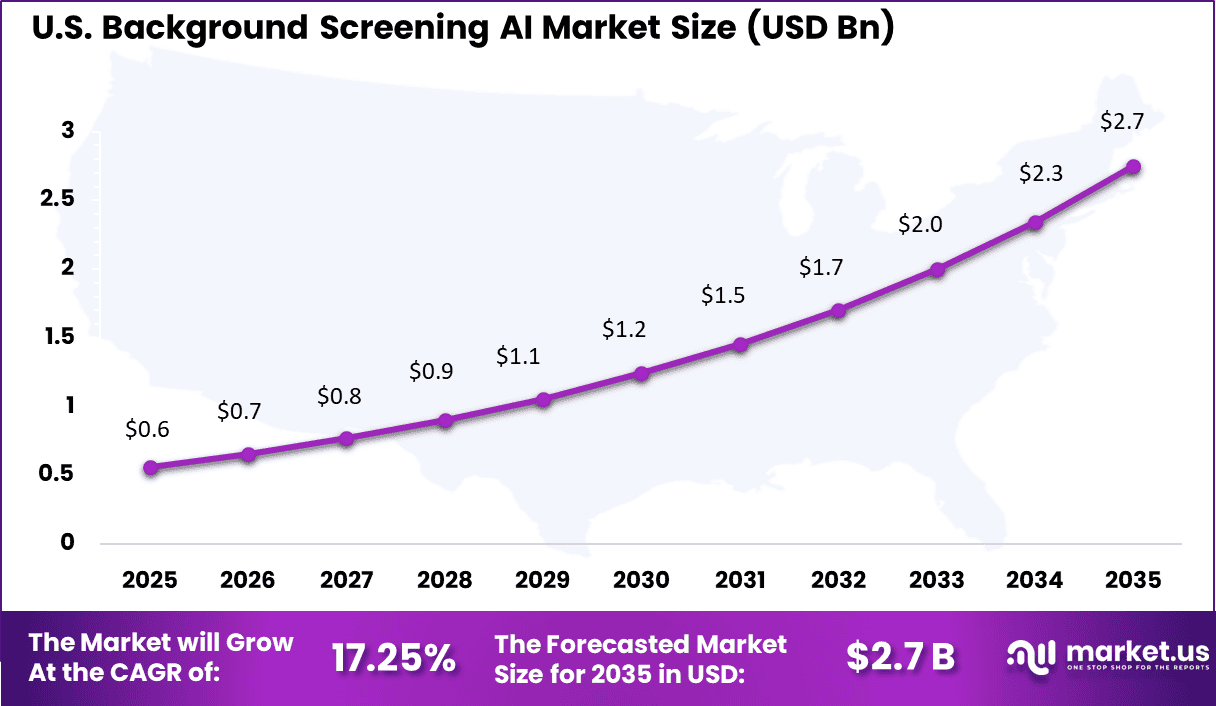
The Global Background Screening AI Market generated USD 1.6 billion in 2025 and is predicted to register growth from USD 1.9 billion in 2026 to about USD 9.7 billion by 2035, recording a CAGR of 19.6% throughout the forecast span. In 2025, North America held a dominant market position, capturing more than a 38.2% share, holding USD 0.61 billion in revenue.
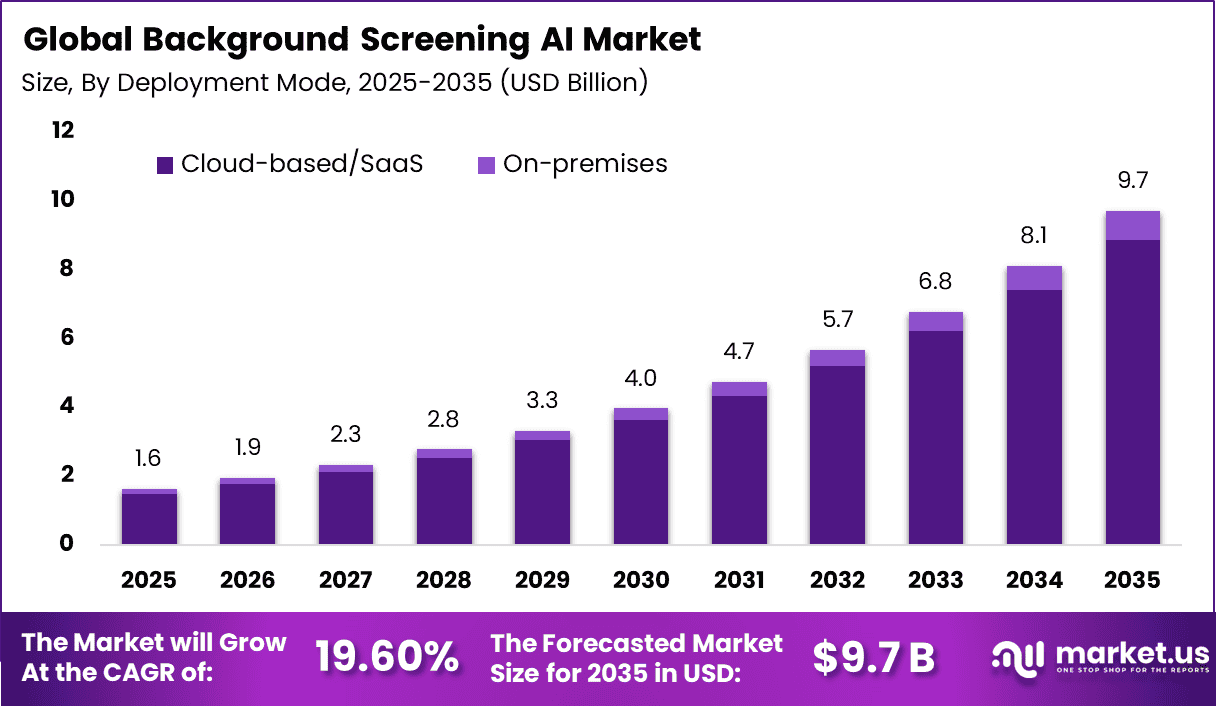
The background screening AI market focuses on smart systems that help organizations check personal and professional information more quickly and accurately. These tools are used by employers, financial institutions, and service providers to verify identity, work history, education, and other important records.
One of the main driving factors is the increase in online hiring and remote onboarding. Companies often receive a large number of applications, which makes manual background checks slow and difficult to manage. There is also strong pressure to complete hiring steps quickly without missing important warning signs. AI-based tools help automate routine checks and reduce errors, which improves efficiency and consistency.
Growth in the background screening AI market is supported by changes in how companies hire and manage workers. Remote jobs, contract roles, and cross-border hiring have made verification more complex. Digital systems that can connect with multiple databases and process information in real time are becoming more important.
Top Market Takeaways
- By component, automated record retrieval & parsing accounts for 42.8% of the market, using OCR, NLP, and ML to extract insights from court records, employment histories, and education documents.
- By deployment mode, cloud-based/SaaS represents 91.5%, enabling instant scalability, API integrations with ATS/HRIS, and global database access.
- By screening type, pre-employment screening captures 76.4%, streamlining criminal, credit, and reference checks during high-volume hiring.
- By end-user industry, banking, financial services, and insurance hold a 34.9% share, prioritizing compliance-driven screening for regulatory roles.
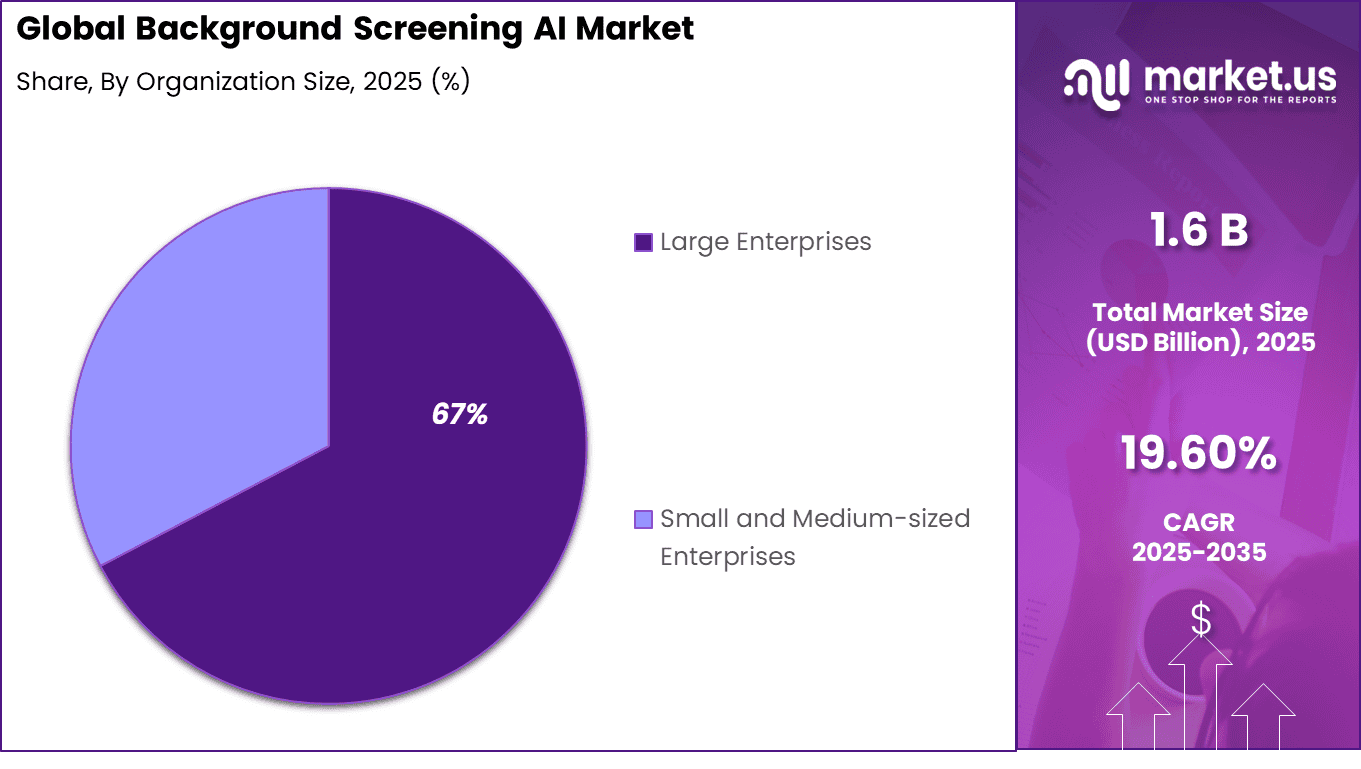
- By organization size, large enterprises command 67.3%, managing enterprise-wide screening with risk-based workflows and continuous monitoring.
- North America leads with 38.2% of the global market, where the U.S. is valued at USD 0.56 billion with a projected CAGR of 17.25%, driven by FCRA mandates and talent competition.
By Component
Automated record retrieval and parsing account for 42.8% of adoption in the background screening AI market, as organizations seek faster and more accurate verification processes. These systems collect data from multiple public and private databases and structure it into standardized reports. Automation reduces manual document review and shortens screening turnaround time.
Advanced parsing tools also improve data consistency and minimize human error. Machine learning models help extract relevant information from unstructured records. This functional efficiency continues to position automated retrieval as a leading component.
By Deployment Mode
Cloud-based and SaaS deployment holds 91.5%, reflecting the need for scalable and remotely accessible screening systems. Cloud environments allow real-time updates to compliance rules and data sources. This is critical in jurisdictions with evolving employment and privacy regulations.
SaaS platforms also simplify integration with human resource management systems. Organizations benefit from centralized dashboards and lower infrastructure overhead. These advantages reinforce strong cloud adoption.
By Screening Type
Pre-employment screening accounts for 76.4% of application focus, as employers prioritize candidate verification before hiring. AI-driven tools assess identity records, employment history, and compliance checks efficiently. This reduces hiring risk and improves workforce integrity.
Automated pre-employment screening also supports faster recruitment cycles. Structured analytics help identify inconsistencies or risk indicators early. This sustains strong demand within recruitment workflows.
By End User Industry
The BFSI sector holds 34.9% of end-user adoption, as financial institutions operate under strict regulatory oversight. Employee screening is critical to maintain compliance and protect sensitive customer data. AI-driven background checks improve accuracy and documentation.
Financial organizations also face higher reputational risk in cases of internal misconduct. Automated screening platforms strengthen governance and accountability. This continues to drive adoption within BFSI environments.
By Organization Size
Large enterprises represent 67% of adoption due to high hiring volumes and global operations. These organizations require scalable systems to manage background checks across multiple regions. AI-based platforms standardize screening practices and improve oversight.
Large firms also prioritize audit readiness and data security. Centralized screening tools enhance compliance reporting. This sustains strong uptake among enterprise-scale employers.
Key Market Segments
By Solutions
- Automated Record Retrieval & Parsing
- Risk Scoring & Adverse Media Analysis
- Identity Verification & Validation
- Continuous Monitoring Platforms
- Compliance & Audit Trail Management
- Others
By Deployment Mode
- Cloud-based/SaaS
- On-premises
By Screening Type
- Pre-employment Screening
- Criminal Records
- Employment & Education Verification
- Reference Checks
- Ongoing/Post-hire Screening
- Continuous Criminal Monitoring
- Others
By End-User Industry
- Banking, Financial Services, and Insurance (BFSI)
- Healthcare
- Retail & Gig Economy
- IT & Technology
- Others
By Organization Size
- Large Enterprises
- Small and Medium-sized Enterprises (SMEs)
Regional Analysis
North America accounts for 36.2% of the brand logo detection AI market, supported by strong digital advertising ecosystems and advanced computer vision adoption. Media agencies, retail brands, and sponsorship analysts in the region are increasingly deploying AI-based logo recognition tools to track brand visibility across social media, live broadcasts, and digital content platforms.
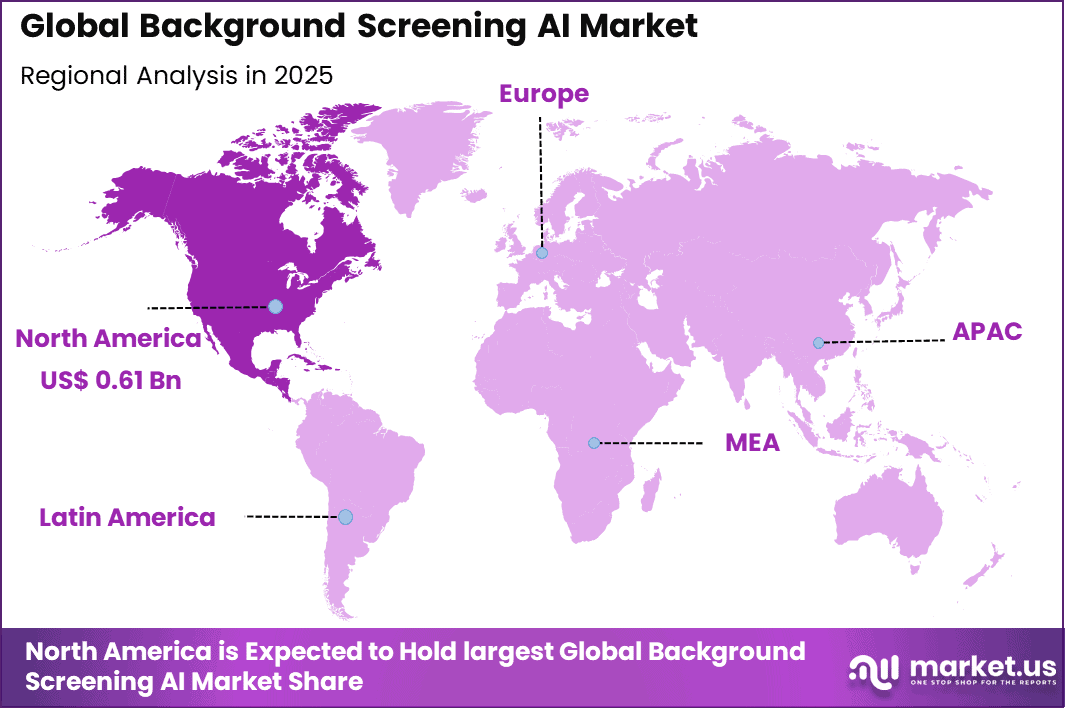
The United States market is valued at USD 0.56 Bn and is expanding at a CAGR of 17.25%, reflecting rapid growth in visual data analytics. Adoption is influenced by rising digital video consumption, influencer marketing expansion, and demand for measurable advertising returns.
Growth is further supported by integration of deep learning-based image recognition systems within marketing analytics platforms, enabling brands to enhance performance tracking and strategic decision-making.
Key Regions and Countries
- North America
- US
- Canada
- Europe
- Germany
- France
- The UK
- Spain
- Italy
- Russia
- Netherlands
- Rest of Europe
- Asia Pacific
- China
- Japan
- South Korea
- India
- Australia
- Singapore
- Thailand
- Vietnam
- Rest of APAC
- Latin America
- Brazil
- Mexico
- Rest of Latin America
- Middle East & Africa
- South Africa
- Saudi Arabia
- UAE
- Rest of MEA
Drivers Impact Analysis
| Key Driver | Impact on CAGR Forecast (~%) | Geographic Relevance | Impact Timeline |
|---|---|---|---|
| Increasing hiring volumes across digital and gig economies | +4.8% | North America, Asia Pacific | Short to medium term |
| Rising regulatory requirements for employee and contractor verification | +4.2% | Europe, North America | Medium term |
| Growing adoption of AI-driven identity and fraud detection tools | +3.9% | Global | Medium term |
| Expansion of remote workforce and cross-border employment | +3.4% | Global | Medium term |
| Demand for faster turnaround times in recruitment processes | +2.9% | Global | Medium to long term |
Restraints Impact Analysis
| Key Restraint | Impact on CAGR Forecast (~%) | Geographic Relevance | Impact Timeline |
|---|---|---|---|
| Data privacy regulations limiting access to personal records | −3.6% | Europe, North America | Short to medium term |
| Ethical concerns and bias in AI-based screening algorithms | −3.1% | Global | Medium term |
| Integration challenges with HR and applicant tracking systems | −2.7% | North America, Europe | Medium term |
| High compliance and audit costs | −2.3% | Global | Medium term |
| Limited digital record availability in emerging markets | −2.0% | Asia Pacific, Latin America | Medium to long term |
Investor Type Impact Matrix
| Investor Type | Growth Sensitivity | Risk Exposure | Geographic Focus | Investment Outlook |
|---|---|---|---|---|
| HR technology and AI screening providers | Very High | Medium | North America, Europe | Strong SaaS subscription growth |
| Identity verification and compliance vendors | High | Medium | Global | Integrated risk management expansion |
| Private equity firms | Medium | Medium | North America, Europe | Consolidation of screening platforms |
| Venture capital investors | High | High | North America | Innovation in AI-driven verification tools |
| Strategic enterprise investors | Medium | Low to Medium | Global | Workforce risk mitigation enhancement |
Technology Enablement Analysis
| Technology Enabler | Impact on CAGR Forecast (~%) | Primary Function | Geographic Relevance | Adoption Timeline |
|---|---|---|---|---|
| AI-based identity verification and document authentication | +5.2% | Automated candidate validation | Global | Short to medium term |
| Natural language processing for resume and record analysis | +4.4% | Data extraction and contextual review | North America, Europe | Medium term |
| Real-time database integration and API connectivity | +3.7% | Faster background checks | Global | Medium term |
| Biometric verification and facial recognition tools | +3.2% | Enhanced identity accuracy | North America, Asia Pacific | Medium to long term |
| Compliance reporting and audit trail automation | +2.8% | Regulatory transparency | Europe, North America | Long term |
Key Challenges
- Data privacy concerns when handling sensitive personal and employment records
- Risk of bias in AI models affecting fair candidate evaluation
- Regulatory differences across regions complicating compliance processes
- Integration challenges with HR and recruitment management systems
- Limited transparency in automated decision-making creating trust issues
Emerging Trends
In the Background Screening AI market, a clear trend is the shift toward more context-aware evaluation of individuals during screening checks. Rather than relying only on basic record matching, systems are being designed to consider patterns of behaviour, relationships between data points, and relevance to the roles being assessed.
This helps reduce false flags and makes the screening process feel fairer to candidates while still identifying areas that need attention. Another pattern emerging is the introduction of transparent feedback features that explain why certain findings were highlighted, helping both employer and applicant understand the screening outcomes in plain language.
Growth Factors
A key growth driver in this market is the increasing demand for speed and consistency in hiring and vendor onboarding. Organisations face pressure to complete background checks quickly without compromising quality, and AI-enabled screening helps streamline the process while maintaining thorough evaluation. This supports a more humane experience for applicants who otherwise face long waiting periods.
Another important factor is the growing variety of data sources that need to be reviewed during a background check, from public records to professional affiliations. As these sources grow in number and complexity, AI systems help teams manage the workload without sacrificing accuracy, ensuring that decisions are based on a clear and organised view of relevant information.
Competitive Analysis
The Background Screening AI market is led by established screening and risk assessment providers such as HireRight Holdings Corporation, First Advantage Corporation, Sterling Check Corp., Checkr, GoodHire, Kroll, TransUnion, Experian, and Equifax.
These companies compete on large data coverage, regulatory compliance support, and automated screening workflows for employment and tenant verification. Their platforms are widely adopted by large enterprises that require high-volume background checks with consistent accuracy and audit-ready reporting.
Digital identity and verification-focused providers, including Intelligo, Berkeley Bridge, Veremark, Veriff, Onfido, Jumio, and others, compete through AI-driven document verification, biometric checks, and faster turnaround times.
Competition in this segment is driven by automation, global coverage, and reduced manual review. These vendors are often selected by fast-growing companies and online platforms that seek quick onboarding with strong identity validation and fraud prevention controls.
Top Key Players in the Market
- HireRight Holdings Corporation
- First Advantage Corporation
- Sterling Check Corp.
- Checkr, Inc.
- GoodHire
- Intelligo, Ltd.
- Kroll, LLC
- TransUnion LLC
- Experian plc
- Equifax, Inc.
- Berkeley Bridge
- Veremark
- Veriff
- Onfido, Ltd.
- Jumio Corporation
- Others
Future Outlook
The future outlook for the Background Screening AI Market is positive as employers and organizations increasingly adopt artificial intelligence to improve hiring and risk assessment processes. Demand for AI-based background screening solutions is expected to grow because these tools help automate checks, reduce errors, and deliver faster results.
Adoption of machine learning, natural language processing, and real-time data integration will improve accuracy and efficiency. Growth can be attributed to rising workforce compliance needs, stronger focus on candidate quality, and the need to reduce manual screening effort. Overall, the market is expected to expand as businesses prioritize secure and efficient background screening.
Recent Developments
- In February 2025, Mercor raised a $100 million Series B round at a $2 billion valuation to expand its AI‑driven hiring platform that automates resume screening, candidate matching, and AI‑powered interviews.techcrunch+2
- In April 2025, Job&Talent closed a Series F round of about €92 million (roughly $103–104 million) to grow its AI‑powered workforce management and job‑matching platform, so “spring 2025” is accurate but “April 2025” is the exact month.techcrunch+3
- In September 2025, Crunchbase reporting showed roughly $2.3 billion invested year‑to‑date into job‑related startups, with AI screening highlighted as one of the three fastest‑growing focus areas, indicating strong investor interest in AI‑driven background and hiring screening solutions.
Report Scope
| Report Features | Description |
|---|---|
| Market Value (2025) | USD 1.6 Billion |
| Forecast Revenue (2035) | USD 9.7 Billion |
| CAGR(2025-2035) | 19.6% |
| Base Year for Estimation | 2024 |
| Historic Period | 2020-2024 |
| Forecast Period | 2025-2035 |
| Report Coverage | Revenue forecast, AI impact on Market trends, Share Insights, Company ranking, competitive landscape, Recent Developments, Market Dynamics and Emerging Trends |
| Segments Covered | By Solutions (Automated Record Retrieval & Parsing, Risk Scoring & Adverse Media Analysis, Others), By Deployment Mode (Cloud-based/SaaS, On-premises), By Screening Type (Pre-employment Screening, Criminal Records, Employment & Education Verification, Others), By End-User Industry (Banking, Financial Services, and Insurance, Healthcare, Others) |
| Regional Analysis | North America – US, Canada; Europe – Germany, France, The UK, Spain, Italy, Russia, Netherlands, Rest of Europe; Asia Pacific – China, Japan, South Korea, India, New Zealand, Singapore, Thailand, Vietnam, Rest of Latin America; Latin America – Brazil, Mexico, Rest of Latin America; Middle East & Africa – South Africa, Saudi Arabia, UAE, Rest of MEA |
| Competitive Landscape | HireRight Holdings Corporation, First Advantage Corporation, Sterling Check Corp., Checkr, Inc., GoodHire, Intelligo, Ltd., Kroll, LLC, TransUnion LLC, Experian plc, Equifax, Inc., Berkeley Bridge, Veremark, Veriff, Onfido, Ltd., Jumio Corporation, Others |
| Customization Scope | Customization for segments, region/country-level will be provided. Moreover, additional customization can be done based on the requirements. |
| Purchase Options | We have three licenses to opt for: Single User License, Multi-User License (Up to 5 Users), Corporate Use License (Unlimited Users and Printable PDF) |