


Market Overview
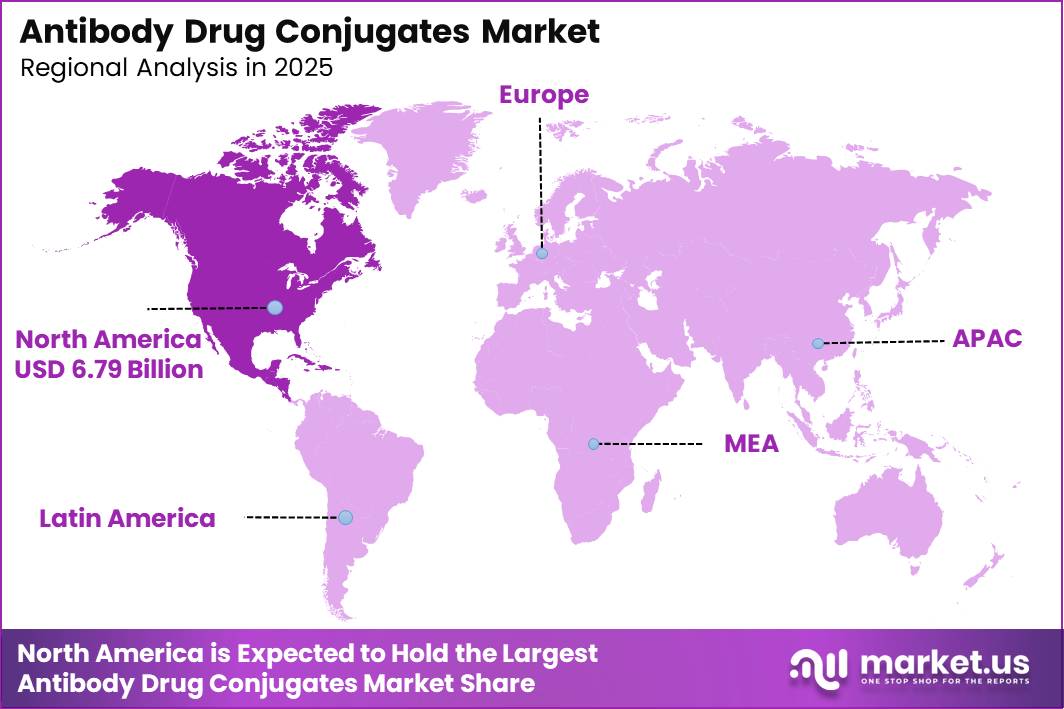
Global Antibody Drug Conjugates Market size is expected to be worth around US$ 31.3 Billion by 2035 from US$ 14.1 Billion in 2025, growing at a CAGR of 8.3% during the forecast period from 2026 to 2035. In 2025, North America led the market, achieving over 48.1% share with a revenue of US$ 6.79 Billion.
The global antibody drug conjugates (ADCs) market is experiencing strong momentum as precision oncology continues to transform cancer treatment. ADCs combine the targeting capability of monoclonal antibodies with highly potent cytotoxic agents, enabling selective destruction of cancer cells while reducing damage to healthy tissues.
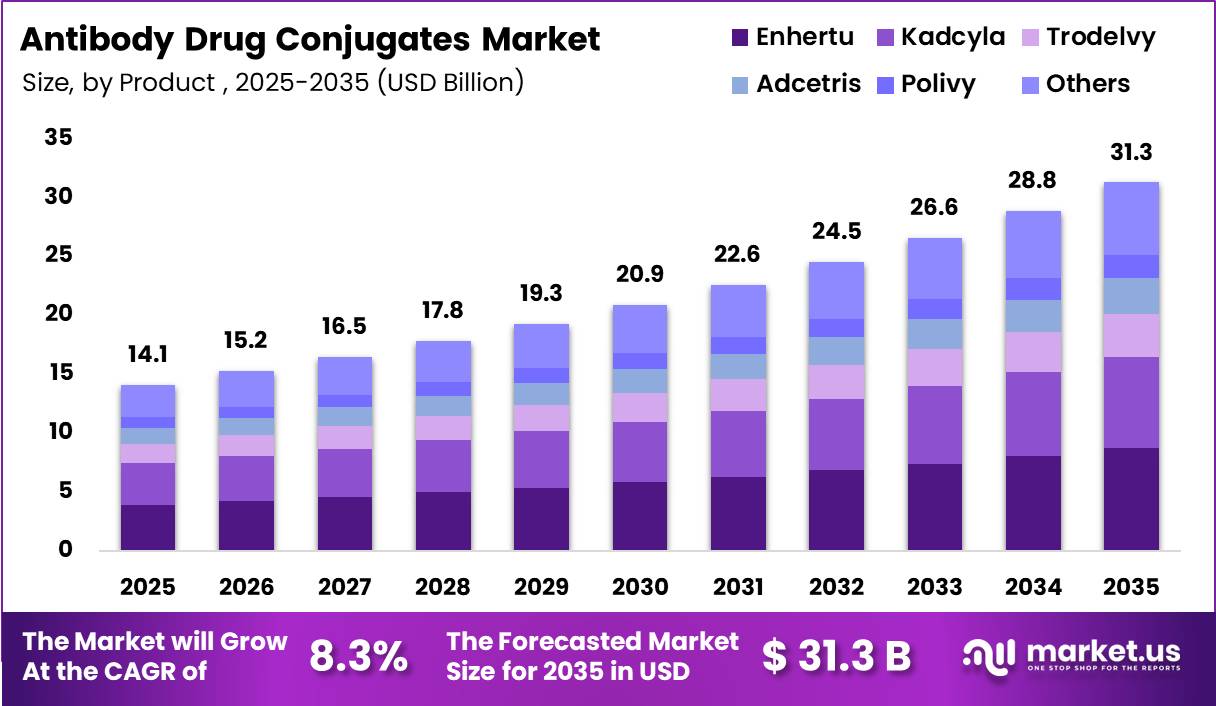
This targeted approach has accelerated clinical adoption across breast cancer, lung cancer, hematologic malignancies, and several emerging solid tumor indications. According to the U.S. Food and Drug Administration (FDA), the number of approved ADC therapies has steadily expanded, supported by continuous innovation in linker chemistry, payload design, and antibody engineering.
As of 2025, more than a dozen ADCs have received FDA approval, while hundreds of additional candidates are being evaluated in clinical studies worldwide.
Growing global cancer incidence is a major factor driving demand for advanced targeted therapies. The World Health Organization estimates that approximately 20 million new cancer cases and 9.7 million cancer deaths occurred worldwide in 2022, highlighting the urgent need for more effective and personalized treatment options.
ADCs are increasingly becoming part of standard oncology care because they improve treatment precision and have demonstrated meaningful clinical benefits in several difficult-to-treat cancers. Recent FDA approvals have expanded ADC use into additional breast and lung cancer indications, reflecting the rapid pace of therapeutic innovation.
Continued investment in clinical research, biomarker-guided treatment strategies, and next-generation conjugation technologies is expected to strengthen the long-term outlook for the antibody drug conjugates market while expanding treatment opportunities for cancer patients worldwide.
Key Takeaways
- Market Size : Antibody Drug Conjugates Market size is expected to be worth around US$ 31.3 Billion by 2035 from US$ 14.1 Billion in 2025.
- Market Share : The Market is growing at CAGR of 8.3% during the forecast period from 2026 to 2035.
- By Product Analysis : In 2025, The Enhertu segment dominated the Antibody Drug Conjugates Market accounting for 27.9% of the total market share.
- By Payload Analysis : The Monomethyl Auristatin E (MMAE) segment led the Antibody Drug Conjugates Market in 2025 with a 28.3% market share.
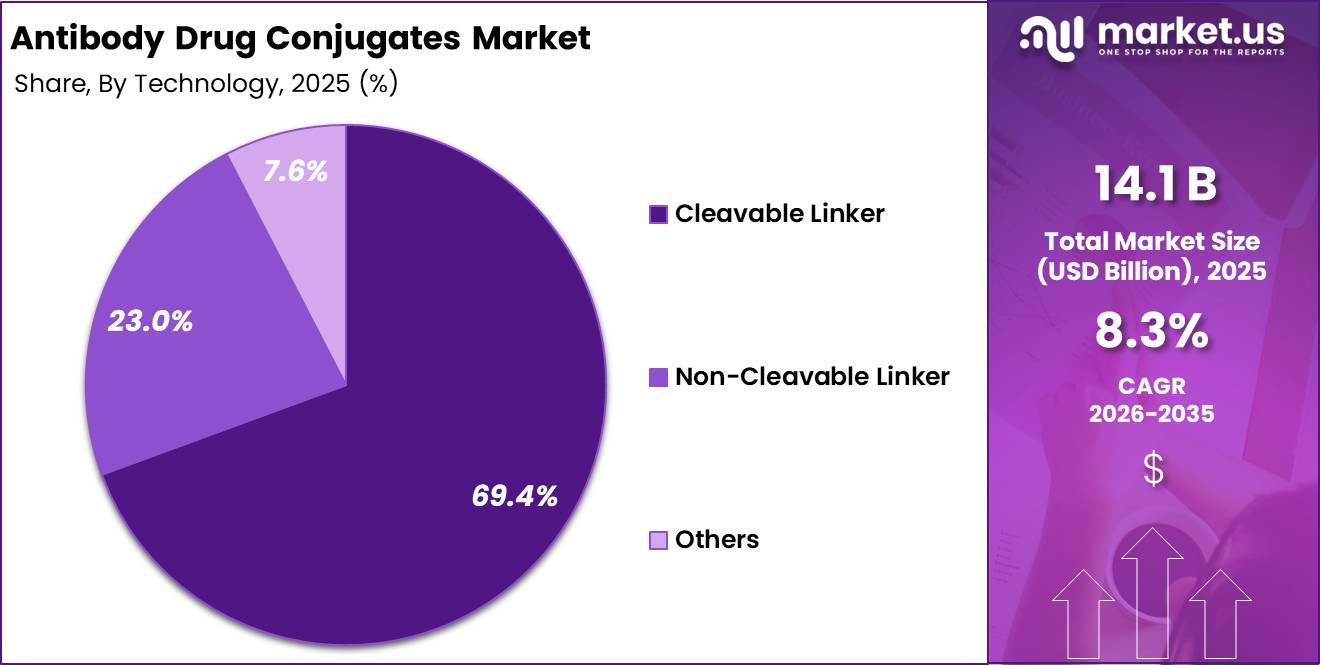
- By Technology Analysis : The Cleavable Linker segment dominated the Antibody Drug Conjugates Market capturing 69.4% of the total market share.
- By Application Analysis : The Breast Cancer segment dominated the Antibody Drug Conjugates Market accounting for 47.2% of the overall market share in 2025.
- By Distribution Channel Analysis : The Hospital Pharmacy segment dominated the Antibody Drug Conjugates Market in 2025, holding 58.4% of the total market share.
- Regional Analysis : In 2025, North America led the market, achieving over 48.1% share with a revenue of US$ 6.79 Billion.
Product Analysis
The Enhertu segment dominated the Antibody Drug Conjugates Market in 2025, accounting for 27.9% of the total market share. Its leading position is supported by strong clinical performance in HER2-positive breast cancer and expanding approvals in gastric and lung cancers.
The product has demonstrated significant improvements in patient outcomes, encouraging wider adoption among oncologists. Continuous label expansions and growing physician confidence have further strengthened its market presence. As healthcare providers increasingly prefer targeted therapies with proven efficacy, Enhertu continues to attract strong demand across developed and emerging healthcare markets.
Kadcyla held the second-largest share at 24.7%, supported by its established use in HER2-positive breast cancer treatment. Trodelvy represented 11.8%, benefiting from its growing application in triple-negative breast cancer and other solid tumors.
Adcetris accounted for 9.6%, driven by its effectiveness in lymphoma treatment, while Polivy captured 6.4% through increasing use in diffuse large B-cell lymphoma. The Others segment, with 19.6%, includes recently approved and pipeline ADC products that are gradually gaining market acceptance. Continuous product innovation, expanded indications, and ongoing clinical research are expected to strengthen competition across all product categories in the coming years.
Payload Analysis
The Monomethyl Auristatin E (MMAE) segment led the Antibody Drug Conjugates Market in 2025 with a 28.3% market share. MMAE remains the preferred payload because of its high potency in disrupting cancer cell division while maintaining targeted delivery through antibody conjugation.
Its proven success in several approved ADC therapies has encouraged continued use in new product development. Strong clinical evidence, reliable efficacy, and ongoing research into improved linker technologies continue to support the dominance of MMAE-based ADCs.
DM1 accounted for 17.1% of the market, benefiting from its established role in approved HER2-targeted therapies. SN-38/Irinotecan held 10.8%, driven by its success in treating difficult-to-manage cancers. Monomethyl Auristatin F (MMAF) represented 9.7%, while DM4 captured 8.9%, supported by ongoing clinical development.
Exatecan contributed 7.4%, reflecting increasing interest in next-generation ADCs, and Camptothecin held 6.2% as research efforts continue to optimize its use. The Other payload category accounted for 11.6%, including emerging cytotoxic agents under clinical evaluation. Growing investment in novel payload technologies is expected to improve therapeutic effectiveness and expand future treatment opportunities.
Technology Analysis
The Cleavable Linker segment dominated the Antibody Drug Conjugates Market in 2025, capturing 69.4% of the total market share. This technology is widely preferred because it enables the controlled release of the cytotoxic payload after the ADC enters cancer cells, improving treatment effectiveness while minimizing damage to healthy tissues.
Cleavable linkers also support the bystander effect, allowing the payload to destroy nearby tumor cells even when antigen expression varies. Continuous improvements in linker stability and drug delivery efficiency have strengthened the adoption of cleavable linker technologies across both approved products and pipeline candidates.
The Non-Cleavable Linker segment maintained a significant share of the market, supported by its excellent stability in the bloodstream and lower risk of premature payload release. These linkers are particularly valuable for therapies requiring highly controlled drug delivery and predictable safety profiles.
The Others segment includes emerging linker technologies and novel conjugation approaches that are being evaluated to improve ADC performance, reduce toxicity, and enhance manufacturing efficiency. As pharmaceutical companies continue investing in advanced linker platforms, both established and innovative technologies are expected to contribute to future market growth while expanding the range of treatable cancers.
Application Analysis
The Breast Cancer segment dominated the Antibody Drug Conjugates Market in 2025, accounting for 47.2% of the overall market share. This leadership is driven by the high prevalence of breast cancer worldwide and the increasing use of ADC therapies in HER2-positive and HER2-low patients.
Multiple approved ADC products have demonstrated strong clinical benefits, encouraging physicians to adopt these therapies as standard treatment options. Continued expansion of treatment indications and ongoing clinical trials are expected to further strengthen the segment’s growth over the coming years.
The Blood Cancer segment remains an important contributor, supported by the successful use of ADCs in treating hematologic malignancies. Lymphoma and Leukemia continue to experience increasing adoption due to the availability of targeted therapies that improve treatment precision.
Urothelial Carcinoma has also emerged as a growing application area as new ADC approvals expand treatment choices for advanced bladder cancer. Ovarian Cancer is witnessing rising research activity with several promising ADC candidates in clinical development.
The Others segment includes lung, gastric, cervical, and additional solid tumors where ongoing studies are expanding the future use of antibody drug conjugates across broader oncology applications.
Distribution Channel Analysis
The Hospital Pharmacy segment dominated the Antibody Drug Conjugates Market in 2025, holding 58.4% of the total market share. Hospitals remain the primary distribution channel because ADC therapies require specialized storage, preparation, and administration under the supervision of trained healthcare professionals.
Most treatments are delivered through infusion in hospital oncology departments, where patients receive comprehensive monitoring for safety and treatment response. The increasing number of cancer treatment centers and rising adoption of advanced biologic therapies continue to strengthen the position of hospital pharmacies.
The Specialty Pharmacy segment is experiencing steady growth as more healthcare systems focus on improving patient access to high-cost oncology medicines. Specialty pharmacies provide expert patient support, medication management, reimbursement assistance, and coordinated care for complex cancer therapies.
Their role is becoming increasingly important as personalized treatment approaches continue to expand. The Others segment includes retail and alternative distribution channels that serve selected patient groups depending on healthcare infrastructure and reimbursement policies.
As the use of antibody drug conjugates increases globally, distribution networks are expected to become more integrated, improving treatment accessibility while supporting efficient delivery of advanced oncology therapies.
Market Segmentations
By Product
- Kadcyla
- Enhertu
- Trodelvy
- Adcetris
- Polivy
- Others
By Payload
- Monomethyl Auristatin E (MMAE)
- Camptothecin
- Exatecan
- DM1
- Monomethyl Auristatin F (MMAF)
- SN‑38 / Irinotecan
- DM4
- Others
By Technology
- Cleavable Linker
- Non-Cleavable Linker
- Others
By Application
- Breast Cancer
- Blood Cancer
- Lymphoma
- Leukemia
- Urothelial Carcinoma
- Ovarian Cancer
- Others
By Distribution Channel
- Hospital Pharmacy
- Specialty Pharmacy
- Others
Opportunities
Ex-US access tiering
A major upside pocket sits in structured ex-US access expansion using dual-price corridors, local fill finish, and indication prioritized launches across upper-middle-income countries, because baseline ADC forecasts still skew toward the US, Western Europe, and Japan despite the global cancer burden continuing to widen.
In the US alone, 2026 cancer incidence is projected at 2,114,850 new cases, which underscores the scale of treatable oncology demand in large health systems, but the untapped volume opportunity internationally is even broader when translated into lower price, high throughput access models; a realistic scenario is that tiered pricing at 35–55% below US net price could still preserve positive contribution margins if local distribution and vial configuration lower total delivery cost by 10–15%.
This is an opportunity rather than a present driver because WHO’s 2025 Essential Medicines update expanded access attention toward cancer therapies broadly, yet ADCs are still not systemically embedded in public reimbursement channels across many emerging markets; firms that build access oriented tenders, patient assistance structures, and local packaging alliances could create $ 5–9 billion in incremental TAM by 2035 while reducing customer acquisition cost per institution by roughly 25% compared with high touch developed market commercialization models.
| Opportunity | (~) % Potential CAGR Upside | Geographic Relevance | Execution Window |
|---|---|---|---|
| Earlier-line label expansion | +1.8% | North America core, EU, Japan | Medium term |
| Ex-US access tiering | +2.2% | LATAM, MENA, India, SE Asia, Africa | Medium term |
| China-origin asset in-licensing | +2.6% | US, EU, China, APAC | Short term |
| Non-oncology ADC entry | +1.5% | US, EU, Japan | Long term |
| Theranostic ADC-radioligand bundles | +1.3% | US, EU5 | Medium term |
| ADC platform roll-up/CDMO integration | +2.0% | US, EU, South Korea, Singapore | Short term |
Drivers
New ADC approvals
A second major driver is the steady conversion of late stage ADC programs into marketed products, which broadens the class from a small set of established franchises into a multi tumor commercial platform.
FDA’s 2025 novel drug approvals list includes Datroway (datopotamab deruxtecan) approved on January 17, 2025 for unresectable or metastatic HR positive, HER2 negative breast cancer after prior endocrine based therapy and chemotherapy, while 2025 reviews of ADC approvals also identify telisotuzumab vedotin as another newly approved ADC in that year.
This expands the market in two ways: first, more approved assets increase physician comfort with ADC sequencing and class familiarity; second, approvals in new solid tumor settings shift the business model from concentration in a few premium brands toward a broader oncology portfolio architecture, where sales growth comes from multiple mid to large indications rather than a single blockbuster axis.
| Driver | (~) % Impact on CAGR Forecast | Geographic Relevance | Impact Timeline |
|---|---|---|---|
| HER2-low/ultralow label expansion widening treated population | +2.4% | North America core, EU5, Japan, developed APAC | Short term (≤ 2 years) |
| New ADC approvals extending platform beyond legacy breast/hematology niches | +2.1% | North America core, EU, Japan, South Korea, China spill-over | Short term (≤ 2 years) |
| Big-pharma capital inflow and co-development deal intensity accelerating launch density | +1.7% | US, EU, Japan, China | Medium term (2-4 years) |
| Manufacturing scale-up for linker-payload and bioconjugation reducing supply bottlenecks | +1.5% | US and EU core, Japan, China, Singapore corridors | Medium term (2-4 years) |
| Companion diagnostics and biomarker reclassification improving patient conversion | +1.3% | US core, EU, Japan | Short term (≤ 2 years) |
| Dose-optimization regulation improving tolerability and duration of therapy economics | +0.9% | US first, EU follow-through, global oncology spill-over | Medium term (2-4 years) |
Challenges
Payload linker input tightness
ADC development is expanding on a narrow industrial base of highly potent payload chemistries, linker intermediates, and specialist handling capabilities, while the commercial and clinical pipeline keeps broadening, with more than 2,000 ADCs in development and at least 15 FDA approved ADCs by 2026, increasing competition for a small pool of GMP qualified toxin and linker suppliers.
In practice, a single payload campaign disruption can push intermediate replenishment by 8 to 16 weeks, force safety stock uplifts of 20% to 35%, and raise cost per gram for high potency intermediates by roughly 10% to 18% in tight procurement windows, which does not stop current market sales but slows line utilization, launch sequencing, and indication expansion.
The resulting modeled –1.4 percentage point CAGR drag reflects delayed slot allocation, dual sourcing validation expense, and working capital inflation, requiring manufacturers to regionalize payload sourcing, qualify backup linker routes, and redesign procurement around multi node containment chemistry rather than single vendor cost optimization.
| Challenge | (~) % CAGR Friction Drag | Geographic Relevance | Mitigation Horizon |
|---|---|---|---|
| Payload-Linker Input Tightness | -1.4% | US and EU manufacturing clusters, Japan, South Korea, China specialty chemical nodes | Medium term (2-4 years) |
| Bioconjugation Scale-Up Variability | -1.2% | North America core, EU biologics hubs, APAC contract manufacturing corridors | Medium term (2-4 years) |
| Analytical Release Complexity | -0.9% | FDA-facing launches, EU regulatory hubs, ICH-aligned global programs | Medium term (2-4 years) |
| Specialist Talent Bottlenecks | -0.8% | US biopharma clusters, Western Europe, Singapore, South Korea | Long term (≥ 4 years) |
| Oncology Care Supply Interdependence | -0.7% | US hospital channels, EU oncology networks, selected emerging markets | Short term (≤ 2 years) |
| Multi-Region Tech Transfer Friction | -1.0% | US-EU launch chains, China and South Korea CDMO links, global late-stage networks | Medium term (2-4 years) |
Restraints
Payload linker capacity bottlenecks
ADC manufacturing remains unusually sensitive to choke points in high potency payload synthesis, linker chemistry, conjugation, containment infrastructure, and specialist fill finish because each lot combines biologics discipline with highly potent small molecule handling, making capacity less substitutable than in conventional antibody production.
The strategic issue is that a single weak link, whether payload availability, isolator throughput, occupational safety qualification, or release testing, can stretch end to end lead times by several months, while parallel late stage programs compete for the same narrow pool of qualified CDMO slots and high containment suites.
That translates into slower scale up, delayed validation batches, launch sequencing compromises, and higher COGS per gram; in CAGR terms, the largest drag comes from lost timing rather than lost demand, especially in US EU commercialization programs that still rely on APAC linked chemical intermediates and specialized supply corridors for payload and linker inputs.
| Restraint | (~) % Impact on CAGR Forecast | Geographic Relevance | Impact Timeline |
|---|---|---|---|
| Complex clinical-pharmacology burden | -2.1% | North America core, EU, Japan | Short term (≤ 2 years) |
| Payload-linker capacity bottlenecks | -2.8% | US-EU core, APAC supply corridors | Medium term (2-4 years) |
| Reimbursement and HTA friction | -2.4% | EU, UK, Canada, select APAC | Medium term (2-4 years) |
| Organ-impairment and DDI labeling limits | -1.6% | North America core, EU, Japan | Short term (≤ 2 years) |
| High CMC comparability and scale-up risk | -2.0% | Global, especially US-EU filings | Medium term (2-4 years) |
| Price-control and budget-pressure drag | -1.7% | EU, China, India, public systems | Long term (≥ 4 years) |
Regional Analysis
In 2025, North America dominated the global Antibody Drug Conjugates (ADC) market, accounting for more than 48.1% of total market share and generating approximately US$ 6.79 billion in revenue. The region’s leadership is driven by its advanced oncology care infrastructure, strong biopharmaceutical innovation ecosystem, and widespread adoption of precision medicine.
The United States remains the primary growth engine, supported by the presence of leading pharmaceutical and biotechnology companies actively developing next-generation ADC therapies.
Favorable reimbursement policies, high healthcare expenditure, and rapid regulatory approvals by the U.S. Food and Drug Administration (FDA) have accelerated commercialization and clinical adoption of ADCs across multiple cancer indications, including breast, lung, and hematologic malignancies.
North America also benefits from extensive investments in cancer research and one of the world’s largest clinical trial networks, enabling continuous evaluation of novel ADC candidates and combination therapies. Strong collaborations among academic research institutions, biotechnology firms, and pharmaceutical companies have further strengthened the region’s innovation pipeline.
Additionally, increasing cancer prevalence, rising demand for targeted therapeutics, and growing awareness of personalized treatment approaches continue to support market expansion. Canada complements regional growth through investments in oncology research, improved access to biologic therapies, and expanding clinical research capabilities.
With ongoing technological advancements in linker chemistry, antibody engineering, and payload development, North America is expected to maintain its leadership position while driving future innovation and commercialization in the global antibody drug conjugates market.
Key Regions and Countries
North America
- The US
- Canada
Europe
- Germany
- France
- The U.K.
- Italy
- Spain
- Russia & CIS
- Rest of Europe
Asia Pacific
- China
- India
- Japan
- South Korea
- ASEAN
- Australia & New Zealand
- Rest of Asia Pacific
Middle East & Africa
- GCC
- South Africa
- Rest of Middle East & Africa
Latin America
- Brazil
- Mexico
- Rest of Latin America
Key Player Analysis
Daiichi Sankyo Company Limited is a major player with a strong ADC portfolio and continues to expand its global presence through collaborations and new product approvals. AstraZeneca PLC has strengthened its oncology business by partnering with Daiichi Sankyo to develop and commercialize advanced ADC therapies. AbbVie Inc., Merck & Co. Inc., and Pfizer Inc. are investing in clinical trials and research programs to expand the use of ADCs across different cancer types and improve treatment outcomes.
Specialized companies such as ADC Therapeutics SA focus entirely on developing targeted ADC therapies for hematologic cancers and solid tumors, supporting innovation in the market. Astellas Pharma Inc. is also increasing investments in oncology research and next-generation ADC technologies through collaborations and acquisitions.
Overall, key players are concentrating on improving linker technology, payload design, and antibody engineering while expanding manufacturing capabilities and global regulatory approvals to gain a competitive advantage and meet the growing demand for targeted cancer therapies.
Top Key Players
- Daiichi Sankyo Company Limited
- ADC Therapeutics SA
- Astellas Pharma Inc.
- Merck & Co. Inc.
- AbbVie Inc.
- AstraZeneca PLC
- Pfizer Inc.
- Gilead Sciences Inc.
- RemeGen Co. Ltd.
- GSK plc
- F. Hoffmann-La Roche Ltd
- Jiangsu Hengrui Pharmaceuticals Co. Ltd.
- Rakuten Medical Inc.
- Kelun-Biotech Co. Ltd.
Recent Developments
- May 2026: Pfizer Inc. entered a global oncology collaboration with Innovent Biologics valued at up to USD 10.5 billion to develop 12 oncology assets, including multiple antibody-drug conjugates and multi-specific antibody programs. The agreement included an upfront payment of USD 650 million and ranks among the largest oncology licensing transactions announced in 2026.
- October 2025: GSK plc entered an exclusive licensing agreement with Syndivia for a next-generation ADC targeting metastatic castration-resistant prostate cancer. The transaction carries a potential value of up to USD 357 million, including upfront, development, regulatory, and commercial milestone payments, strengthening GSK’s ADC pipeline in solid tumors.
- October 2025: AstraZeneca PLC and Daiichi Sankyo Company Limited reported positive Phase III data for DATROWAY in triple-negative breast cancer, demonstrating median overall survival of 23.7 months compared with 18.7 months for chemotherapy. The results were presented at the European Society for Medical Oncology (ESMO) Congress and represented the first late-stage study showing DATROWAY outperforming chemotherapy in this patient population.
Report Scope
| Report Features | Description |
|---|---|
| Market Value (2025) | US$ 14.1 Billion |
| Forecast Revenue (2035) | US$ 31.3 Billion |
| CAGR (2026-2035) | 8.3 % |
| Base Year for Estimation | 2025 |
| Historic Period | 2020-2024 |
| Forecast Period | 2026-2035 |
| Report Coverage | Revenue Forecast, Market Dynamics, Competitive Landscape, Recent Developments |
| Segments Covered | By Product (Kadcyla, Enhertu, Trodelvy, Adcetris, Polivy, Others), By Payload (Monomethyl Auristatin E (MMAE), Camptothecin, Exatecan, DM1, Monomethyl Auristatin F (MMAF), SN‑38 / Irinotecan, DM4, Other0, By Technology (Cleavable Linker, Non-Cleavable Linker, Others), By Application (Breast Cancer, Blood Cancer, Lymphoma, Leukemia, Urothelial Carcinoma, Ovarian Cancer, Others), By Distribution Channel (Hospital Pharmacy, Specialty Pharmacy, Others) |
| Regional Analysis | North America – The US, Canada; Europe – Germany, France, U.K., Italy, Spain, Russia & CIS, Rest of Europe; Asia Pacific – China, India, Japan, South Korea, ASEAN, Australia & New Zealand, Rest of Asia Pacific; Middle East & Africa – GCC, South Africa, Rest of Middle East & Africa; Latin America – Brazil, Mexico, Rest of Latin America |
| Competitive Landscape | Daiichi Sankyo Company Limited, ADC Therapeutics SA, Astellas Pharma Inc., AbbVie Inc., AstraZeneca PLC, Merck & Co. Inc., Pfizer Inc., Gilead Sciences Inc., RemeGen Co. Ltd., GSK plc, F. Hoffmann-La Roche Ltd, Jiangsu Hengrui Pharmaceuticals Co. Ltd., Rakuten Medical Inc., Kelun-Biotech Co. Ltd. |
| Customization Scope | Customization for segments, region/country-level will be provided. Moreover, additional customization can be done based on the requirements. |
| Purchase Options | We have three licenses to opt for: Single User License, Multi-User License (Up to 5 Users), Corporate Use License (Unlimited User and Printable PDF) |





































