


Market Overview
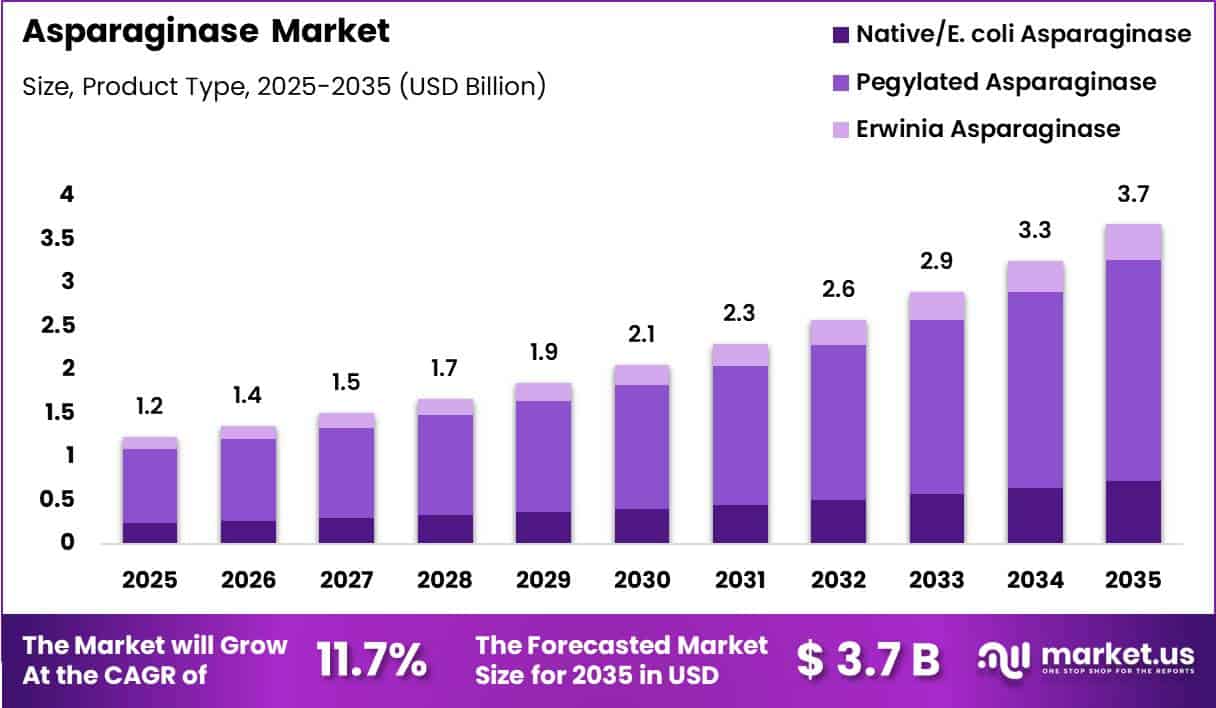
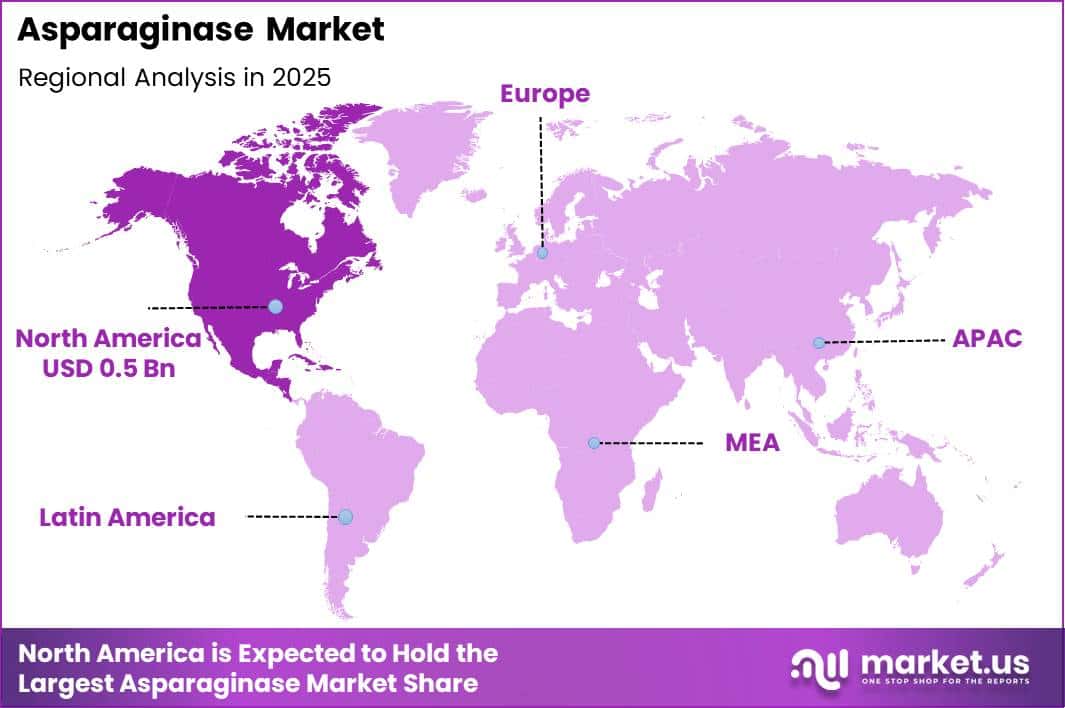
Global Asparaginase Market size is expected to be worth around US$ 3.7 Billion by 2035 from US$ 1.2 Billion in 2025, growing at a CAGR of 11.7% during the forecast period from 2026 to 2035. In 2025, North America led the market, achieving over 44.0% share with a revenue of US$ 0.5 Billion.
The global asparaginase market is supported by the continued clinical importance of asparaginase-based therapies in the treatment of acute lymphoblastic leukemia (ALL), particularly among pediatric patients. Asparaginase works by breaking down the amino acid L-asparagine, helping deprive susceptible leukemic cells of a substance needed for protein synthesis and survival.
The U.S. Food and Drug Administration (FDA) and the National Cancer Institute (NCI) recognize multiple asparaginase-based therapies as components of multi-agent chemotherapy for ALL. These include pegaspargase, calaspargase pegol, and Erwinia-derived formulations. The FDA-approved drug Rylaze is indicated for adults and pediatric patients aged 1 month and older with ALL or lymphoblastic lymphoma who have developed hypersensitivity to E. coli-derived asparaginase.
Treatment demand is also influenced by the need for alternative formulations when patients experience hypersensitivity. NCI reports that approximately 15% of children with ALL develop an allergic or other immune reaction to pegaspargase, creating a need for Erwinia-derived alternatives.
Product innovation is increasingly focused on recombinant formulations, extended dosing intervals, and improved treatment accessibility. For example, Oncaspar is administered at recommended doses of up to 2,500 IU/m² in patients aged 21 years or younger, while Asparlas is administered at 2,500 units/m² no more frequently than every 21 days.
Key Takeaways
- Market Size: Global Asparaginase Market size is expected to be worth around US$ 3.7 Billion by 2035 from US$ 1.2 Billion in 2025.
- Market Share: The market is growing at a CAGR of 11.7% during the forecast period from 2026 to 2035.
- Product: The product type segment of the Asparaginase Market is led by Pegylated Asparaginase, which accounted for a dominant 69.0% market share in 2025.
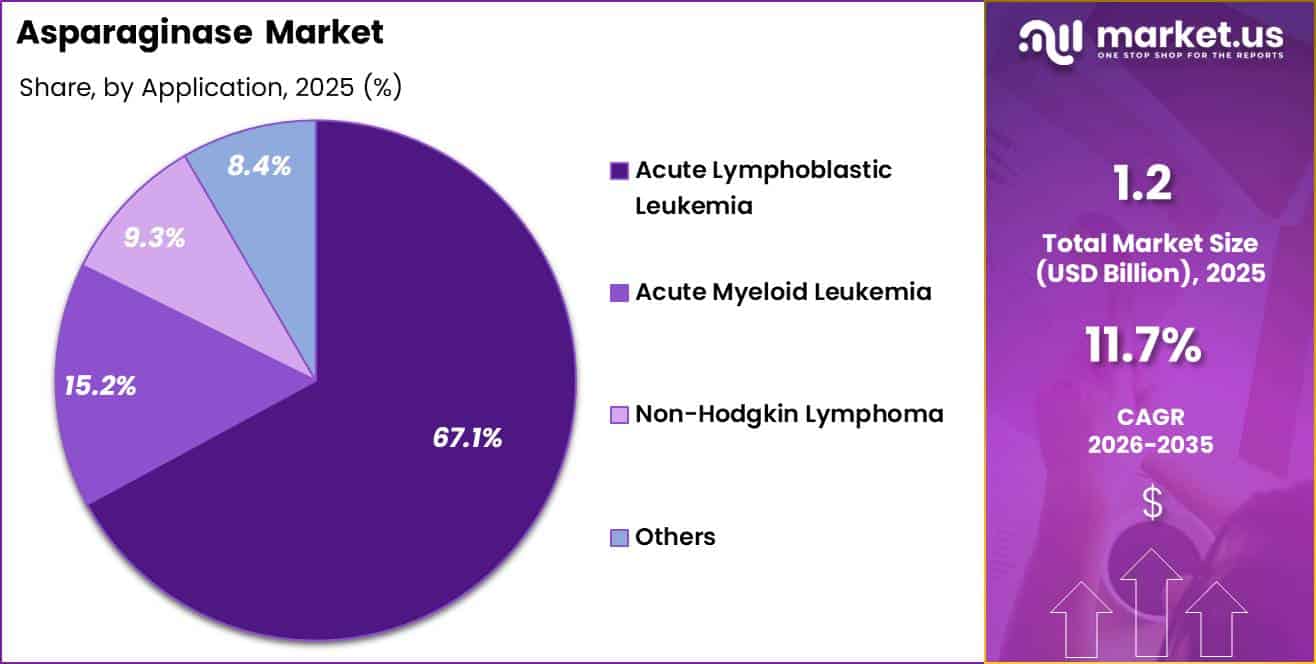
- Application: The application segment of the Asparaginase Market is dominated by Acute Lymphoblastic Leukemia (ALL), which accounted for 67.1% of the market share in 2025.
- End User: The end-user segment of the Asparaginase Market is led by Hospitals, which accounted for a dominant 50.0% market share in 2025.
- Regional Analysis: In 2025, North America led the market, achieving over 44.0% share with a revenue of US$ 0.5 Billion.
Product Type Analysis
Product type segment of the Asparaginase Market is led by Pegylated Asparaginase.
The product type segment of the Asparaginase Market is led by Pegylated Asparaginase, which accounted for a dominant 69.0% market share in 2025. Its strong position is attributed to its extended half-life, reduced dosing frequency, and improved treatment convenience compared with conventional formulations.
Pegylation helps prolong the therapeutic activity of asparaginase, supporting its continued use in leukemia treatment protocols and contributing to strong demand across healthcare systems.
Native/E. coli Asparaginase represented 19.8% of the market in 2025. This segment continues to maintain a significant presence due to its established clinical use and inclusion in multi-agent chemotherapy regimens, particularly for acute lymphoblastic leukemia.
Meanwhile, Erwinia Asparaginase accounted for 11.2% of the market. Its importance is linked to its use as an alternative for patients who develop hypersensitivity or allergic reactions to E. coli-derived formulations.
Overall, product development is increasingly focused on improving tolerability, extending therapeutic duration, and reducing treatment burden, while the established clinical role of asparaginase-based therapies continues to support demand across the product landscape.
Application Analysis
Application segment of the Asparaginase Market is dominated by Acute Lymphoblastic Leukemia (ALL).
The application segment of the Asparaginase Market is dominated by Acute Lymphoblastic Leukemia (ALL), which accounted for 67.1% of the market share in 2025. Asparaginase is a key component of multi-drug chemotherapy protocols for ALL because of its ability to deplete circulating asparagine, limiting the availability of this amino acid required by leukemia cells for protein synthesis.
The high share of this segment reflects the established role of asparaginase in pediatric and adult ALL treatment protocols and its continued integration into modern oncology care.
Acute Myeloid Leukemia (AML) represented 15.2% of the market in 2025, supported by ongoing clinical investigation and selective use of asparaginase-based approaches in specific therapeutic settings. Non-Hodgkin Lymphoma accounted for 9.3%, reflecting the use of asparaginase-containing regimens in selected lymphoma subtypes, particularly aggressive forms where treatment strategies may incorporate asparagine depletion.
The Others segment held 8.4% of the market. Overall, the application landscape remains heavily concentrated in hematological malignancies, with ongoing research aimed at expanding therapeutic applications and improving treatment outcomes.
End User Analysis
End-user segment of the Asparaginase Market is led by Hospitals.
The end-user segment of the Asparaginase Market is led by Hospitals, which accounted for a dominant 50.0% market share in 2025.
Hospitals represent the primary treatment environment for asparaginase administration because leukemia and lymphoma therapies generally require specialized oncology teams, chemotherapy infrastructure, patient monitoring, and management of potential adverse reactions.
The strong presence of hospitals is further supported by their ability to provide comprehensive diagnostic, therapeutic, and supportive care throughout intensive cancer treatment pathways.
Oncology Clinics represent another important end-user category, benefiting from the increasing availability of specialized outpatient cancer services and the expansion of dedicated oncology treatment facilities. These clinics provide targeted cancer care and can support chemotherapy administration and patient follow-up in appropriate cases.
Ambulatory Surgical Centers constitute a smaller segment, with their role influenced by the suitability of specific treatment procedures and the need for specialized monitoring. The Others category includes additional healthcare facilities and treatment settings involved in cancer care.
Overall, the end-user landscape is shaped by the specialized nature of asparaginase therapy, with hospitals maintaining the leading position while oncology-focused outpatient facilities continue to contribute to market accessibility.
Key Market Segments
By Product Type
- Native/E. coli Asparaginase
- Pegylated Asparaginase
- Erwinia Asparaginase
By Application
- Acute Lymphoblastic Leukemia
- Acute Myeloid Leukemia
- Non-Hodgkin Lymphoma
- Others
By End User
- Hospitals
- Oncology Clinics
- Ambulatory Surgical Centers
- Others
Drivers
Childhood Cancer Care Expansion and Medicine Access Growth.
A second order but structurally important driver is the expansion of childhood cancer diagnosis and treatment capacity in low and middle income countries (LMICs), where historically limited access to diagnostics and essential medicines has suppressed treatment rates.
WHO estimates around 400,000 children and adolescents develop cancer annually, yet survival outcomes remain highly unequal exceeding 80% in high income countries but falling below 30% in many LMIC settings.
A major constraint is medicine availability: while cancer treatment protocols are widely standardized, access to essential drugs remains inconsistent, with only about 29% of low income countries reporting general availability of cancer medicines compared to 96% in high income countries.
As health systems expand pediatric oncology programs, improve referral networks, and strengthen national procurement systems, more children are expected to enter structured treatment pathways rather than receiving incomplete or delayed care.
For therapies like asparaginase, this expansion does not rely on pricing changes but on increased patient identification and sustained protocol adherence. As diagnosis rates improve and treatment completion rates rise, overall utilization grows structurally, making childhood cancer system build out a key long term demand driver in LMIC oncology care.
| Driver | (~) % Impact on CAGR Forecast | Geographic Relevance | Impact Timeline |
|---|---|---|---|
| ALL/LBL treatment persistence and protocol intensity | +2.2% | North America core, EU5, Japan, urban APAC oncology centers | Medium term (2-4 years) |
| Hypersensitivity-led switch demand into Erwinia/recombinant rescue therapy | +2.8% | U.S. core, Canada, Western Europe, select Gulf and APAC tertiary centers | Short term (≤ 2 years) |
| Childhood cancer access programs and medicine availability expansion | +1.9% | LMIC corridors, South Asia, Latin America, Africa referral hubs | Medium term (2-4 years) |
| Regulatory label refinement and protocol standardization for Rylaze use | +1.4% | U.S. core, guideline-following ex-U.S. markets | Short term (≤ 2 years) |
| Toxicity monitoring burden shifting value toward specialized centers and managed administration | +1.6% | U.S., EU, Japan, large private hospitals in India and SEA | Medium term (2-4 years) |
| Supply resilience replacing legacy shortage risk with more predictable procurement | +1.3% | U.S. core, Europe spill-over, import-dependent markets | Short term (≤ 2 years) |
Challenge
Pediatric Inspired ALL Protocols Driving Asparaginase Demand Growth.
Pediatric inspired asparaginase intensive regimens for adolescents and young adults AYA with acute lymphoblastic leukemia ALL are increasingly becoming a structural demand driver in oncology care.
Updated clinical guidelines through 2024–2026 recommend multi phase treatment regimens where asparaginase is a core backbone therapy, typically administered over 20–30 weeks, contributing meaningfully to improved event free survival compared with traditional adult chemotherapy approaches.
These protocols have shifted treatment standards by embedding asparaginase as a non discretionary component of first line therapy. In AYA populations, guideline directed care now emphasizes full dose pegaspargase administration often up to 3,750 IU per dose, therapeutic drug monitoring to maintain adequate enzyme activity levels, and standardized premedication strategies to reduce hypersensitivity reactions.
As a result, patients typically receive multiple administrations across treatment cycles, increasing per patient dose intensity and stabilizing utilization even in markets with relatively flat incidence rates.
At a system level, hospitals and oncology networks are adapting workflows to support this protocolization, including centralized infusion scheduling, pharmacy managed biologics preparation, and routine TDM integration into clinical decision pathways.
These operational changes reduce treatment interruptions and improve adherence consistency, reinforcing sustained demand for asparaginase within standardized pediatric inspired ALL care models.
| Driver | (~) % Impact on CAGR Forecast | Geographic Relevance | Impact Timeline |
|---|---|---|---|
| Pediatric-inspired ALL protocols | +2.0% | North America, EU, Asia pediatric hubs | Long term (≥ 4 years) |
| Rising leukemia incidence | +1.5% | Global oncology centers | Long term (≥ 4 years) |
| Pegylated & Erwinia formulations | +1.2% | North America core, EU, Japan | Medium term (2-4 years) |
| AI-optimized drug development | +0.8% | U.S., EU regulatory hubs | Medium term (2-4 years) |
| Biologics manufacturing scale-up | +1.0% | APAC corridors, North America | Long term (≥ 4 years) |
| Value-based oncology reimbursement | +0.7% | OECD health systems | Medium term (2-4 years) |
Restraints
High Treatment Cost and Payer Budget Pressure in Asparaginase Use.
High treatment cost and increasing payer budget pressure act as a meaningful constraint on asparaginase market growth, particularly within pediatric and adolescent acute lymphoblastic leukemia (ALL) treatment pathways.
Although asparaginase is a core component of modern ALL protocols, it is administered within multi-agent regimens that collectively impose substantial financial burden on healthcare systems, especially due to repeated dosing cycles, hospital administration costs, and required therapeutic monitoring.
In high-income markets, overall oncology spending continues to rise alongside growing cancer incidence, pushing payers to tighten utilization controls. This often results in stricter prior authorization requirements, closer adherence to guideline-defined eligibility criteria, and increased scrutiny of biologic therapy costs.
As a result, reimbursement decisions increasingly depend on health technology assessments that evaluate cost-effectiveness metrics such as cost per quality-adjusted life year (QALY), which can delay or restrict access in certain settings. Healthcare systems in Europe and other budget-constrained regions face similar pressures, where fixed or slowly growing oncology budgets force trade-offs between high-cost biologics and broader population coverage.
In response, manufacturers often rely on rebates, pricing agreements, and cost-sharing mechanisms, which can compress margins and limit aggressive expansion strategies. Overall, these financial and payer constraints modestly slow adoption growth and reduce the otherwise expected expansion trajectory for asparaginase therapies.
| Restraint | (~) % Impact on CAGR Forecast | Geographic Relevance | Impact Timeline |
|---|---|---|---|
| Biologics manufacturing quality risks | -1.6% | North America, EU, Japan | Medium term (2-4 years) |
| Single-source API & fill-finish concentration | -1.2% | North America core, EU, select APAC | Medium term (2-4 years) |
| High treatment cost & payer budget pressure | -1.4% | North America, EU, LMIC clusters | Long term (≥ 4 years) |
| Access gaps in low- and middle-income countries | -0.8% | Sub-Saharan Africa, South Asia, LatAm | Long term (≥ 4 years) |
| Regulatory & compliance friction for biologics | -1.0% | North America, EU, global exporters | Short to medium term (≤ 4 years) |
Opportunity
Low-SDI Access and Affordability Expansion Models.
Baseline demand for asparaginase is mainly driven by high- and middle-SDI regions where pediatric ALL protocols are well established. In contrast, low-SDI regions still face major gaps in diagnosis, drug availability, and treatment completion, leading to persistent under-treatment despite a growing disease burden.
Survival outcomes remain uneven, with the largest unmet need in Sub-Saharan Africa and parts of South Asia.A structured access model would move beyond ad hoc donations toward scalable approaches such as tiered pricing, pooled procurement, and regional fill-and-finish or packaging hubs.
The goal is to reduce per-dose costs by 40–60% while maintaining sustainable supply through higher volumes and localized manufacturing.At present, limited affordability, weak infrastructure, and supply instability restrict full protocol-based treatment in many low-SDI settings.
Expanding access through coordinated procurement and financing could significantly increase the number of patients completing full therapy courses.Overall, these access-driven improvements represent a long-term growth opportunity for asparaginase, particularly beyond 2030, as healthcare systems and funding mechanisms continue to strengthen.
| Opportunity | (~) % Potential CAGR Upside | Geographic Relevance | Execution Window |
|---|---|---|---|
| Adult ALL expansion platforms | +2.0% | North America, EU, East Asia | Medium term (2–4 years) |
| Toxicity-optimized biobetter portfolio | +1.8% | North America core, EU, APAC emerging | Medium term (2–4 years) |
| Low-SDI access & affordability models | +2.5% | Sub-Saharan Africa, South Asia, LATAM | Long term (≥ 4 years) |
| Outpatient-centric administration & service bundles | +1.4% | North America, EU, urban APAC | Short term (≤ 2 years) |
| Biosimilar & hybrid IP strategies | +1.9% | EU, North America, selected APAC | Long term (≥ 4 years) |
| Data-driven toxicity management & risk-sharing | +1.3% | North America, EU | Medium term (2–4 years) |
Regional Analysis
In 2025,North America led the global Asparaginase Market.
North America led the global Asparaginase Market in 2025, accounting for more than 44.0% of the total market share and generating approximately US$ 0.5 Billion in revenue. The region’s leadership is supported by a well-established oncology care infrastructure, high adoption of advanced biologic therapies, and strong demand for effective treatments for hematological malignancies, particularly acute lymphoblastic leukemia (ALL).
The United States remains the primary contributor, benefiting from sophisticated healthcare facilities, specialized cancer centers, and broad access to innovative pharmaceutical products. Regulatory oversight and established treatment protocols also support the consistent use of asparaginase-based therapies in clinical practice.
Europe represents another important regional market, driven by increasing cancer treatment capacity, established pediatric oncology networks, and continued emphasis on improving therapeutic outcomes. Countries such as Germany, France, Italy, and the United Kingdom contribute significantly to regional demand.
The Asia-Pacific region is expected to witness strong growth as healthcare infrastructure expands, cancer diagnosis rates increase, and access to specialized oncology treatments improves. Growing pharmaceutical manufacturing capabilities and rising healthcare investments across China, Japan, South Korea, and other emerging economies are further supporting market development.
Meanwhile, Latin America and the Middle East & Africa are gradually expanding as oncology services and access to essential medicines improve.
Key Regions and Countries
North America
- The US
- Canada
Europe
- Germany
- France
- The U.K.
- Italy
- Spain
- Russia & CIS
- Rest of Europe
Asia Pacific
- China
- India
- Japan
- South Korea
- ASEAN
- Australia & New Zealand
- Rest of Asia Pacific
Middle East & Africa
- GCC
- South Africa
- Rest of Middle East & Africa
Latin America
- Brazil
- Mexico
- Rest of Latin America
Key Player Analysis
The Asparaginase Market is moderately consolidated, with competition driven by established pharmaceutical companies and specialized manufacturers. Jazz Pharmaceuticals plc maintains a strong position through oncology-focused R&D, product portfolio development, and product innovation, while strengthening access to specialized cancer treatments through established healthcare networks.
Servier Laboratories competes through sustained R&D investment in oncology and leukemia therapies, supported by clinical development, strategic partnerships, and broader treatment ecosystem integration. Shire (Takeda Pharmaceutical Company Limited) leverages extensive pharmaceutical capabilities and global commercial infrastructure, focusing on R&D, portfolio optimization, product innovation, and healthcare network integration.
Kyowa Kirin Co., Ltd. emphasizes specialized therapeutic development, research capabilities, and strategic collaborations, with competition centered on differentiated products and ecosystem-based healthcare solutions.
Medac GmbH strengthens its position through specialized pharmaceutical expertise, product development, manufacturing capabilities, and reliable supply, supporting integration into clinical and oncology treatment workflows.
Overall, competitive strategies across these leading players increasingly focus on innovation, partnerships, R&D, workflow integration, and ecosystem-based competition to improve product availability, treatment efficiency, and market reach.
Top Key Players
- Jazz Pharmaceuticals plc
- Servier Laboratories
- Shire (Takeda Pharmaceutical Company Limited)
- Kyowa Kirin Co., Ltd.
- Medac GmbH
- Algernon Pharmaceuticals
- Nitor Therapeutics
- Apeiron Biologics
- Porton Biopharma Ltd.
- Jiangsu Hengrui Medicine Co., Ltd.
- Beijing SL Pharmaceutical
- United Biotech Pvt. Ltd.
- Alvogen
- Fresenius Kabi
- Mylan N.V. (Viatris)
- Others
Recent Developments
- In June 2026, Jazz Pharmaceuticals plc: Jazz Pharmaceuticals announced a collaboration with AbCellera to discover next-generation T-cell-engaging multispecific antibodies. Although the program is not an asparaginase product, the agreement signals a broader move toward advanced oncology and immune-based therapeutic platforms, potentially supporting future innovation in cancer treatment.
- In April 2026, Porton Biopharma confirmed the cessation of manufacturing of Erwinase® (crisantaspase), with Clinigen subsequently reporting that limited stock had resumed in EU-licensed markets as the final batch release. This is a significant supply-side development for the asparaginase market because Erwinase is an established treatment option for ALL, particularly relevant for patients who cannot tolerate E. coli-derived asparaginase. The development could create opportunities for alternative asparaginase suppliers and recombinant formulations to strengthen their market presence.
- In March 2026, Medac GmbH / SteinCares announced the relaunch of Spectrila® in Brazil following ANVISA approval of the marketing authorization transfer. The company will manage commercialization, distribution, and regulatory oversight, supporting continued access to recombinant E. coli asparaginase for ALL treatment.
Report Scope
| Report Features | Description |
|---|---|
| Market Value (2025) | US$ 1.2 Billion |
| Forecast Revenue (2035) | US$ 3.7 Billion |
| CAGR (2026-2035) | 11.7% |
| Base Year for Estimation | 2025 |
| Historic Period | 2020-2024 |
| Forecast Period | 2026-2035 |
| Report Coverage | Revenue Forecast, Market Dynamics, Competitive Landscape, Recent Developments |
| Segments Covered | By Product Type (Native/E. coli Asparaginase, Pegylated Asparaginase, Erwinia Asparaginase), By Application (Acute Lymphoblastic Leukemia, Acute Myeloid Leukemia, Non-Hodgkin Lymphoma, Others), By End User (Hospitals, Oncology Clinics, Ambulatory Surgical Centers, Others) |
| Regional Analysis | North America – The US, Canada; Europe – Germany, France, U.K., Italy, Spain, Russia & CIS, Rest of Europe; Asia Pacific – China, India, Japan, South Korea, ASEAN, Australia & New Zealand, Rest of Asia Pacific; Middle East & Africa – GCC, South Africa, Rest of Middle East & Africa; Latin America – Brazil, Mexico, Rest of Latin America |
| Competitive Landscape | Jazz Pharmaceuticals plc, Servier Laboratories, Shire (Takeda Pharmaceutical Company Limited), Kyowa Kirin Co., Ltd., Medac GmbH, Algernon Pharmaceuticals, Nitor Therapeutics, Apeiron Biologics, Porton Biopharma Ltd., Jiangsu Hengrui Medicine Co., Ltd., Beijing SL Pharmaceutical, United Biotech Pvt. Ltd., Alvogen, Fresenius Kabi, Mylan N.V. (Viatris), Others |
| Customization Scope | Customization for segments, region/country-level will be provided. Moreover, additional customization can be done based on the requirements. |
| Purchase Options | We have three licenses to opt for: Single User License, Multi-User License (Up to 5 Users), Corporate Use License (Unlimited User and Printable PDF) |





































