


Market Overview
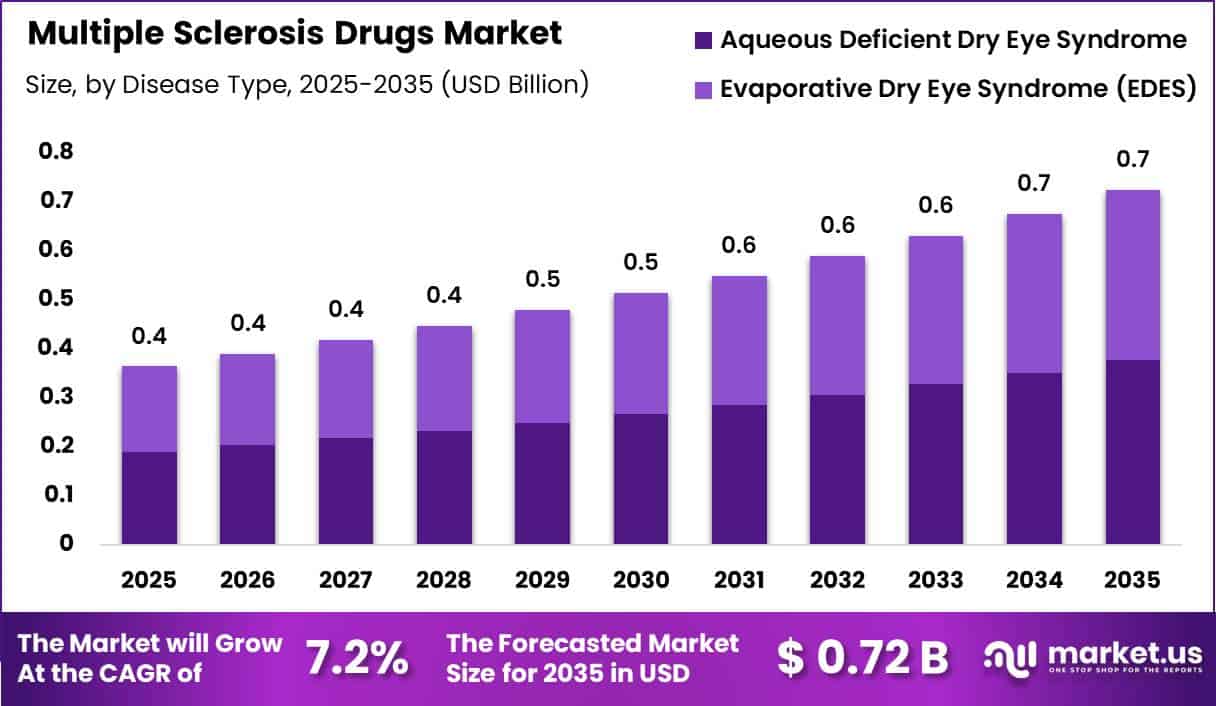
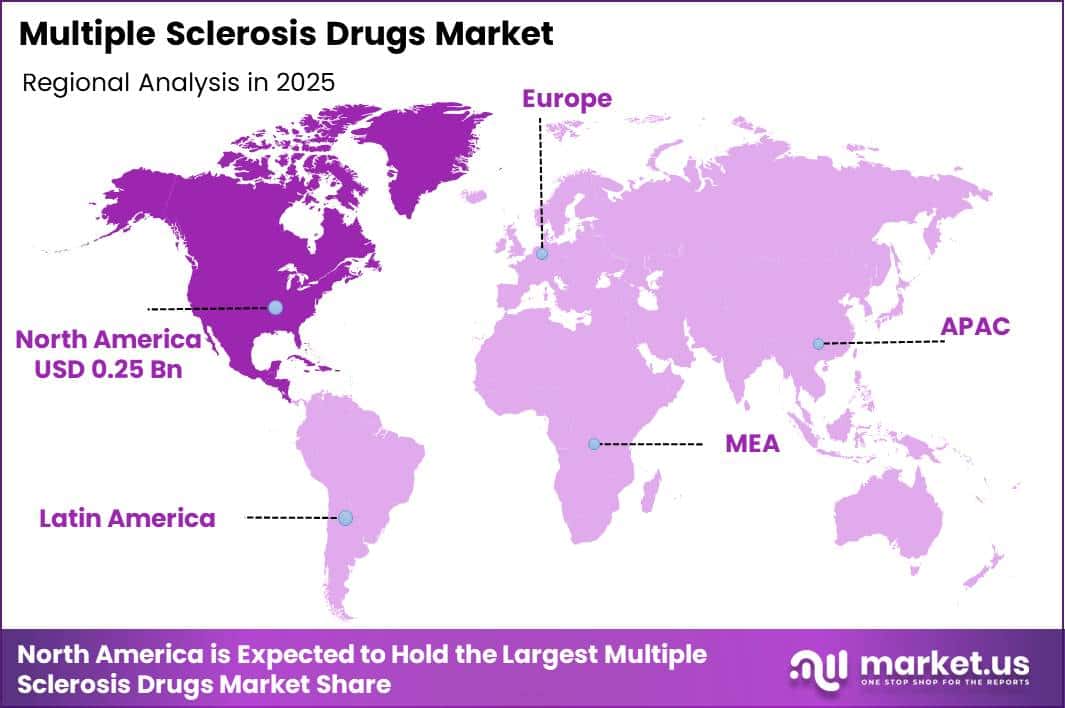
The Global Multiple Sclerosis Drugs Market size is expected to be worth around US$ 0.36 Billion by 2035 from US$ 0.72 Billion in 2025, growing at a CAGR of 7.2% during the forecast period from 2026 to 2035. In 2025, North America led the market, achieving over 70.3% share with a revenue of US$ 0.25 Billion.
Multiple sclerosis (MS) is a chronic autoimmune neurological disorder in which the immune system attacks the protective covering of nerve fibres, disrupting communication between the brain, spinal cord, and other parts of the body.
The disease can cause symptoms such as vision problems, fatigue, muscle weakness, mobility difficulties, and cognitive impairment. According to the National Multiple Sclerosis Society, nearly 1 million people are living with multiple sclerosis in the United States, highlighting the significant need for effective disease-modifying therapies and symptom management solutions.
The global treatment landscape for multiple sclerosis is evolving with the increasing adoption of disease-modifying therapies (DMTs), including injectable therapies, oral medications, and infusion-based treatments.
These therapies aim to reduce relapse frequency, slow disability progression, and limit new lesion formation in patients with relapsing and progressive forms of MS. The National Institute of Neurological Disorders and Stroke reports that most people with MS experience a relapsing-remitting disease course initially, although some patients may develop progressive disability over time.
Advancements in immunomodulatory treatments, improved diagnostic capabilities, and growing awareness of early intervention are supporting improvements in MS care. The World Health Organization recognizes multiple sclerosis as one of the most common disabling neurological conditions among young adults, with symptoms often beginning between the ages of 20 and 40 years.
Ongoing research is focused on developing therapies with improved efficacy, better safety profiles, and potential neuroprotective benefits. Emerging approaches, including targeted immune therapies and personalised treatment strategies, are expected to further transform multiple sclerosis management and address unmet clinical needs worldwide.
Key Takeaways
- Market Size: The Global Multiple Sclerosis Drugs Market size was US$ 0.36 billion in 2025. The market is estimated to grow to US$ 0.72 billion by 2035.
- Market Share: The Compound Annual Growth Rate (CAGR) of the market from 2026 to 2035 will be 7.2%.
- Disease Type: Aqueous Deficient Dry Eye Syndrome has the largest market share, accounting for 52% of total disease type revenue.
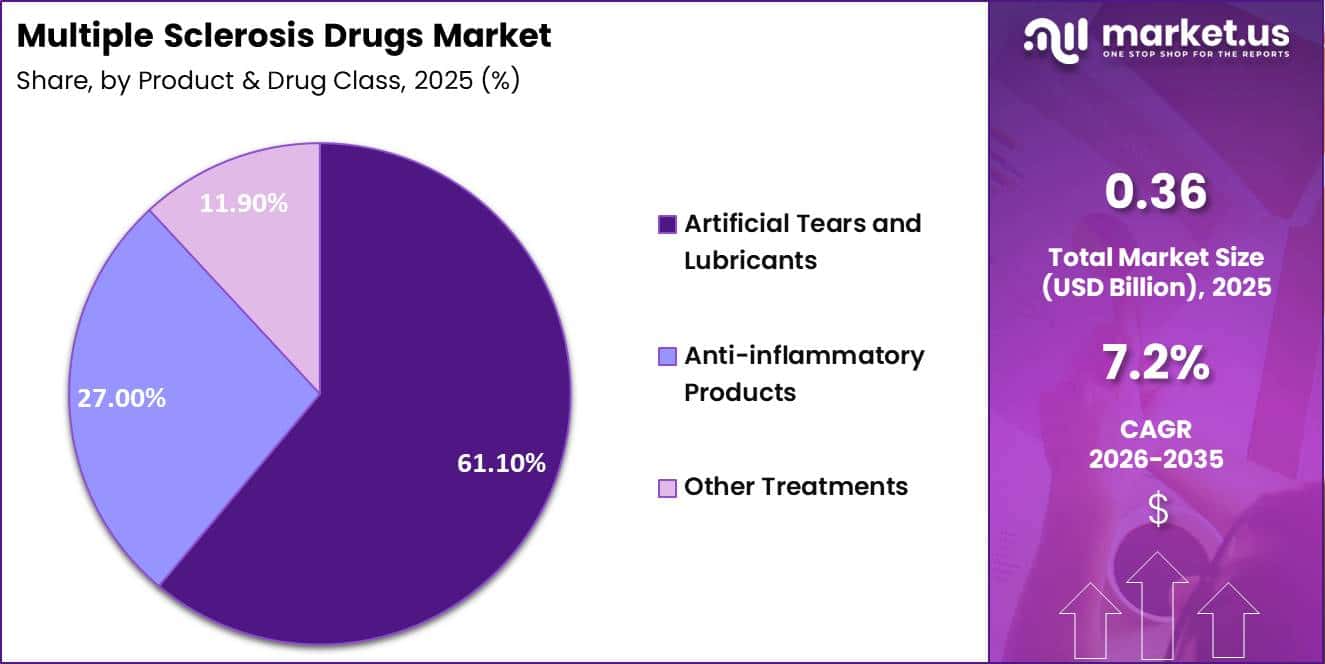
- Product & Drug Class: Artificial Tears and Lubricants leads the segment, accounting for 61.1% of total product & drug class revenue.
- Dosage Form: Eye Drops/Solutions leads the segment, accounting for 58.3% of total dosage form revenue.
- Distribution Channel: Hospital Pharmacies lead the segment, accounting for 28.65% of total distribution channel revenue.
- Regional: North America is the dominant regional market, accounting for 70.3% of global revenue.
Disease Type Analysis
The disease type segment of the Multiple Sclerosis Drugs Market is primarily categorised into Aqueous Deficient Dry Eye Syndrome and Evaporative Dry Eye Syndrome (EDES). Aqueous Deficient Dry Eye Syndrome dominates the segment, accounting for 52.0% market share in 2025, driven by the higher prevalence of reduced tear production associated with autoimmune conditions, including multiple sclerosis-related ocular complications.
The segment’s leading position is supported by increasing diagnoses of tear-film abnormalities, growing ophthalmic evaluations among neurological patients, and rising demand for therapies that restore ocular surface moisture and reduce discomfort.
Evaporative Dry Eye Syndrome (EDES), representing 48.0% of the market in 2025, is the fastest-growing segment, supported by increasing recognition of meibomian gland dysfunction and tear-film instability among patients receiving long-term neurological treatments.
Growing adoption of advanced diagnostic technologies, improved understanding of ocular surface inflammation, and rising utilisation of targeted lubricating and anti-inflammatory therapies are contributing to segment expansion.
Pharmaceutical companies are increasingly focusing on therapies addressing both tear deficiency and excessive evaporation mechanisms, supporting broader treatment options across multiple sclerosis-associated dry eye conditions. The balanced contribution of both segments highlights the increasing clinical focus on managing ocular symptoms linked with chronic neurological disorders.
Product & Drug Class Analysis
The product and drug class segment of the Multiple Sclerosis Drugs Market includes Artificial Tears and Lubricants, Anti-inflammatory Products, and Other Treatments. Artificial Tears and Lubricants dominate the segment, accounting for 61.1% market share in 2025, due to their widespread use as first-line supportive therapies for relieving dryness, irritation, and discomfort associated with ocular surface complications.
Their accessibility, favourable safety profile, over-the-counter availability, and suitability for long-term symptom management contribute significantly to their leading position.
Anti-inflammatory Products represent 27.0% of the market in 2025 and are the fastest-growing segment, driven by increasing awareness of inflammation-related mechanisms in dry eye conditions associated with autoimmune disorders. The rising use of therapies targeting ocular inflammation, including advanced formulations designed to improve tear stability and reduce chronic symptoms, is accelerating segment growth.
Other Treatments account for 11.9% of the market, including specialised therapies and supportive approaches used for patients with persistent or complex symptoms. Increasing research into personalised treatment strategies and combination therapies is creating new opportunities within this segment.
Overall, the market is shifting from basic symptom relief toward targeted therapeutic approaches that address underlying inflammatory and tear-film abnormalities in multiple sclerosis-associated ocular complications.
Dosage Form Analysis
The dosage form segment of the Multiple Sclerosis Drugs Market is divided into Eye Drops / Solutions, Ointments and Gels, and Capsules & Tablets. Eye Drops / Solutions dominate the segment with a 58.3% market share in 2025, owing to their rapid action, ease of administration, and direct delivery to the ocular surface. These formulations remain highly preferred for managing dryness, irritation, and inflammation-related symptoms due to their convenience and compatibility with routine patient care.
Ophthalmic liquid formulations continue to benefit from technological advancements such as preservative-free solutions, enhanced drug delivery systems, and improved patient-friendly packaging. The growing emphasis on maintaining ocular surface health among individuals with chronic neurological conditions further supports demand for eye drop-based therapies.
Ointments and Gels represent another important segment, offering longer retention time on the ocular surface and improved nighttime symptom control for patients experiencing severe dryness. Their use is increasing among individuals requiring extended lubrication and enhanced moisture protection.
Capsules & Tablets contribute to the market through systemic treatment approaches and supportive therapies, particularly where broader neurological management is required. Although less dominant compared with topical formulations, advancements in combination therapies and personalised treatment strategies may support future adoption. Overall, topical dosage forms continue to lead due to their targeted efficacy and patient convenience.
Distribution Channel Analysis
The distribution channel segment of the Multiple Sclerosis Drugs Market includes Hospital Pharmacies, Online Pharmacies, and Retail Pharmacies. Hospital Pharmacies dominate the segment with a 28.65% market share in 2025
Supported by their critical role in dispensing prescription therapies, providing specialist guidance, and ensuring medication availability for patients receiving neurological and ophthalmic care. Hospitals remain a major access point due to regular consultations, monitoring requirements, and coordinated treatment management for chronic conditions.
Online Pharmacies represent the fastest-growing distribution channel, driven by increasing digital healthcare adoption, improved access to prescription medications, home delivery services, and growing patient preference for convenient purchasing options. The expansion of telemedicine and digital healthcare platforms is further encouraging patients to obtain long-term medications through online channels.
Retail Pharmacies continue to hold a significant position due to their widespread presence, easy accessibility, and role in providing commonly used supportive therapies such as lubricants and over-the-counter eye care products.
Community pharmacies remain important for patients requiring frequent refills and immediate access to symptom-relief medications. The distribution landscape is gradually evolving toward a hybrid model combining hospital-based specialist care with digital and retail accessibility, improving treatment availability and medication adherence among multiple sclerosis patients.
Key Market Segments
By Disease Type
- Aqueous Deficient Dry Eye Syndrome
- Evaporative Dry Eye Syndrome (EDES)
By Product & Drug Class
- Artificial Tears and Lubricants
- Anti-Inflammatory Products
- Cyclosporines (e.g., Restasis, Cequa)
- Corticosteroids
- LFA-1 Antagonists (e.g., Xiidra)
- Nicotinic Receptor Agonists (e.g., Tyrvaya)
- Other Treatments
By Dosage Form
- Eye Drops/Solutions
- Ointments and Gels
- Capsules & Tablets
By Distribution Channel
- Hospital Pharmacies
- Retail Pharmacies
- Online Pharmacies
Driver
Progressive MS pipeline broadening beyond relapse control
Multiple sclerosis market growth is increasingly constrained by limited treatment options for progressive disease, making any meaningful expansion into this segment a key structural growth driver. Recent late-stage pipeline activity highlights growing momentum in mechanisms such as Bruton’s tyrosine kinase inhibition, with agents including tolebrutinib and fenebrutinib advancing in both relapsing and progressive MS settings.
Additional Phase 3 candidates such as remibrutinib and vidofludimus calcium are also progressing, with key readouts expected around 2026. Even before approval, late-stage pipeline progress shifts clinical and payer behaviour.
Physicians become more willing to sequence existing therapies more actively, while payers begin preparing for class-level reimbursement and formulary restructuring. This supports early expansion of treatment pathways beyond relapse-only management.
If these therapies achieve successful progression into progressive MS indications, the market would shift toward a broader neuroimmunology franchise with higher value capture in a historically underserved population where disease-modifying impact is strongly valued.
Overall, expansion into progressive MS has the potential to unlock incremental market growth beyond relapse-focused therapies by addressing a major unmet need in disability progression control.
| Driver | (~) % Impact on CAGR Forecast | Geographic Relevance | Impact Timeline |
|---|---|---|---|
| Part D redesign expanding DMT affordability and fill-through | +1.4% | U.S. core, Medicare-heavy channels | Short term (≤ 2 years) |
| Rapid shift to lower-friction administration formats | +1.0% | North America core, EU5, developed APAC | Short term (≤ 2 years) |
| Progressive MS pipeline broadening beyond relapse control | +1.3% | U.S., EU, Japan, Australia | Medium term (2–4 years) |
| Generic and formulary realignment reshaping therapy mix | +0.8% | U.S. core, selective EU spill-over | Short term (≤ 2 years) |
| Rising diagnosed pool and long-duration treatment retention | +0.9% | North America, Europe, urban APAC corridors | Medium term (2–4 years) |
| High-efficacy immune targeting sustaining premium revenue pools | +1.1% | U.S., EU5, Canada, Australia | Medium term (2–4 years) |
Challenge
Formulary access volatility in MS disease-modifying therapies
The key challenge in multiple sclerosis markets is not outright lack of coverage, but rapid payer re-optimisation of speciality drug formularies, which increases switching friction and delays therapy initiation even when clinical need is established.
In Medicare Part D 2025, coverage for several brand-only oral disease-modifying therapies has sharply declined as generics gain preference, with many branded self-administered DMTs covered by fewer than 25 % of plans. This reflects a structurally tighter access environment for differentiated therapies without clear exclusivity protection.
For 2026 planning, this translates into slower patient onboarding, more prior authorisation steps per prescription, and longer reimbursement cycles, collectively delaying effective revenue realisation by 30 to 45 days and reducing eligible patient initiation by approximately 6 to 9 %. These access frictions are sufficient to reduce category CAGR by an estimated 1.2 % points, even though underlying demand for MS treatment remains stable.
Strategically, success increasingly depends on payer engagement tools such as HEOR evidence packages, line of therapy positioning, bridge programs, and targeted contracting, as growth is now constrained more by access execution than by clinical demand.
| Challenge | (~) % CAGR Friction Drag | Geographic Relevance | Mitigation Horizon |
|---|---|---|---|
| Formulary Access Volatility | -1.2% | North America core, EU payer markets | Medium term (2-4 years) |
| Biologic Supply Concentration | -0.9% | U.S. infusible channel, EU biologics hubs, APAC API corridors | Medium term (2-4 years) |
| Diagnosis-to-Treatment Delays | -1.0% | Emerging markets, non-urban EU, Latin America, APAC tier-2 systems | Long-term (≥ 4 years) |
| High Persistence Erosion | -1.1% | U.S. speciality pharmacy channel, EU adherence-sensitive markets | Medium term (2-4 years) |
| Escalating Evidence Burden | -0.8% | U.S. FDA/CMS interface, EU HTA jurisdictions, UK access pathways | Long-term (≥ 4 years) |
| Specialist Workforce Bottlenecks | -0.7% | U.S. regional deserts, Central/Eastern Europe, middle-income APAC | Long-term (≥ 4 years) |
Restraints
Safety-driven regulatory tightening on high-risk immunotherapies in MS
Regulatory scrutiny of multiple sclerosis therapies is intensifying due to safety risks associated with immunologic suppression, malignancy signals, and cardiovascular adverse events. This has increased development complexity, slowed approvals, and limited label expansion for high-risk disease-modifying therapies.
Over time, agencies such as the FDA and EMA have imposed stricter post-marketing requirements following real-world signals like progressive multifocal leukoencephalopathy, malignancy clusters, and cardiac events, particularly with monoclonal antibodies and S1P receptor modulators.
As a result, prescribing labels for drugs such as ozanimod include broad contraindications such as recent myocardial infarction, stroke, unstable angina, and severe heart failure, reducing the eligible patient pool in neurology practice by several % points. Additionally, baseline ECGs, lymphocyte monitoring, and MRI surveillance add 2,000 to 5,000 dollars in annual monitoring costs per patient and delay treatment initiation by 4 to 8 weeks.
From a development standpoint, regulatory expectations for larger, longer trials of 1,500 to 2,500 patients with more than 96 weeks follow-up increase trial costs by 20 to 30 % and extend timelines by 12 to 18 months versus lower risk indications.
Overall, these safety-driven constraints slow innovation throughput and limit rapid label expansion into progressive MS, contributing to an estimated 1.5 % point reduction in baseline CAGR due to higher development burden, delayed launches, and narrower effective treatment eligibility.
| Restraint | (~) % Impact on CAGR Forecast | Geographic Relevance | Impact Timeline |
|---|---|---|---|
| Escalating biologic therapy cost vs payer budgets | -2.0% | North America, EU5, Japan core | Medium term (2-4 years) |
| Safety-driven regulatory tightening on high-risk immunotherapies | -1.5% | North America, EU, UK, selected APAC | Medium term (2-4 years) |
| Manufacturing & cold-chain cost inflation for advanced injectables | -1.2% | North America, EU, APAC corridors, LATAM urban | Short to medium term (≤4 years) |
| Limited diagnosis & treatment access in emerging markets | -1.0% | APAC emerging, LATAM, CEE, MENA | Long-term (≥4 years) |
| Competitive erosion from generics & class cannibalisation | -0.8% | North America core, EU, Brazil, China | Medium term (2-4 years) |
| Policy pressure on speciality drug pricing & rebates | -1.0% | North America, EU, UK, Australia | Short to medium term (≤4 years) |
Opportunity
Value-based MS care and outcome-linked pricing
MS therapies are still primarily reimbursed through traditional fee-for-service models and list-minus discount contracting, with limited direct linkage between payment and long-term outcomes such as relapse reduction, disability progression, or healthcare utilisation.
However, in markets like the U.S., UK, Nordics, and Germany, where value-based frameworks are already used in oncology and rare diseases, MS is gradually emerging as a candidate for outcomes-based contracting due to its high chronic cost burden and measurable long-term endpoints.
Under such models, manufacturers could tie pricing to clinical outcomes such as 30 to 50 % relapse reduction, 20 to 30 % slower disability progression, and reduced hospital utilisation. This could justify 5 to 10 % pricing premiums and improve formulary positioning through shared risk agreements and improved real-world evidence generation.
If value-based contracts reach 25 to 30 % of MS drug spend in key markets by 2030, they could increase net realised revenue per patient through improved persistence and reduced rebate leakage, adding an estimated 2 to 3 billion dollars in market value and approximately 1.2 % points of CAGR uplift.
Overall, this represents a structural upside opportunity driven by evolving reimbursement architecture rather than new patient volume, shifting MS commercialisation toward outcomes-linked, data-enabled care models.
| Opportunity | (~) % Potential CAGR Upside | Geographic Relevance | Execution Window |
|---|---|---|---|
| Neuroprotective / remyelination-first platforms | +2.0% | North America, Western Europe, Japan | Medium term (2–4 years) |
| Progressive MS & late-line care monetisation | +1.5% | North America core, EU5, Australia | Short–medium term (≤ 3 years) |
| Value-based MS care & outcome-linked pricing | +1.2% | U.S., UK, Nordics, Germany | Medium term (2–4 years) |
| Digital-therapeutic and real-world data layers | +1.0% | North America, EU, urban APAC | Short term (≤ 2 years) |
| Access expansion in underdiagnosed emerging markets | +1.3% | Latin America, Eastern Europe, Middle East, APAC emerging | Long-term (≥ 4 years) |
| Combination and sequencing strategies across mechanisms | +1.0% | Global tertiary centres, key MS referral networks | Medium–long term (3–5 years) |
Regional Analysis
In 2025, North America led the market, achieving over 70.3% share with a revenue of US$ 0.25 billion. The Multiple Sclerosis Drugs Market demonstrates significant regional variation due to differences in disease prevalence, healthcare infrastructure, treatment accessibility, and adoption of advanced therapies.
North America holds a leading position in the market, supported by the high prevalence of multiple sclerosis, strong diagnostic capabilities, advanced neurological care infrastructure, and widespread availability of disease-modifying therapies. The region benefits from continuous research activities, favourable reimbursement systems, and increasing adoption of innovative treatment approaches for managing chronic neurological conditions.
Europe represents another major market, driven by a well-established healthcare system, increasing multiple sclerosis awareness, and strong government and institutional support for neurological disease management.
Countries across the region are focusing on early diagnosis, improved patient monitoring, and broader access to advanced therapeutic options. Growing clinical research activities and rising demand for personalised treatment strategies are further supporting market growth.
Asia-Pacific is expected to witness the fastest growth during the forecast period, supported by improving healthcare infrastructure, increasing neurological disease recognition, rising healthcare expenditure, and expanding access to speciality medications. Growing investments in healthcare modernisation and increasing availability of advanced diagnostic technologies are contributing to market expansion.
Latin America and the Middle East & Africa are emerging markets, with growth driven by improving healthcare access, increasing physician awareness, and gradual adoption of advanced multiple sclerosis therapies.
However, limited specialist availability and treatment affordability challenges continue to influence market penetration in these regions. Overall, regional growth is shaped by healthcare development, disease burden, and accessibility to effective therapies.
Key Regions and Countries
North America
- The US
- Canada
Europe
- Germany
- France
- The U.K.
- Italy
- Spain
- Russia & CIS
- Rest of Europe
Asia Pacific
- China
- India
- Japan
- South Korea
- ASEAN
- Australia & New Zealand
- Rest of Asia Pacific
Middle East & Africa
- GCC
- South Africa
- Rest of Middle East & Africa
Latin America
- Brazil
- Mexico
- Rest of Latin America
Key Player Analysis
The global multiple sclerosis drugs market is evolving as suppliers focus on gaining a competitive edge through innovative strategies. Key developments include novel anti-inflammatory mechanisms targeting the underlying disease and improved formulation technologies designed to enhance tolerability for patients requiring chronic treatment. A significant emphasis is placed on sustained drug delivery systems that allow for consistent therapeutic exposure while minimising dosing frequency.
Strategically, companies are investing in advanced drug delivery platforms such as punctal plugs, biodegradable implants, and nanotechnology for ocular applications to ensure sustained therapeutic release. There’s also an expansion of prescription anti-inflammatory portfolios to address unmet treatment needs for patients who do not respond to first-line therapies.
Additionally, robust negotiation programs with pharmacy benefit managers are vital for securing reimbursement and enhancing patient access across both commercial and government payers. Ongoing investments in FDA approvals and medical education initiatives are aimed at building strong prescriber relationships and generating real-world evidence to support long-term safety and efficacy.
The rise of telemedicine has transformed treatment access, allowing patients to initiate and maintain therapy without needing in-person pharmacy visits, thus creating new distribution opportunities that extend beyond traditional settings. This trend is expected to continue through 2035.
Top Key Players
- Thermo Fisher Scientific Inc.
- Sartorius AG
- bioMérieux SA
- Merck KGaA (MilliporeSigma)
- Particle Measuring Systems
- Lighthouse Worldwide Solutions
- MBV AG
- IUL Instruments
- Bio-Rad Laboratories Inc.
- PerkinElmer Inc.
- SKC Inc.
- Restek Corporation
- TSI Incorporated
- Cherwell Laboratories
- Casella (Ideal Vacuum Products)
- Other Key Players
Recent Developments
- In February 2026, Merck KGaA expanded its anti-inflammatory speciality drug portfolio distribution across Asian retail and online pharmacy channels, targeting growing patient demand for advanced therapeutic formulations through digital health procurement platforms across emerging healthcare markets.
- In March 2026, Bio-Rad Laboratories secured a multi-year institutional supply agreement with a leading North American hospital network covering speciality pharmaceutical procurement programs across its regional hospital pharmacy institutional buyer base serving chronic disease patient populations.
- In May 2026, PerkinElmer Inc. expanded its therapeutic product distribution across Asia Pacific online pharmacy channels, targeting growing patient access demand for speciality chronic disease treatments through digital health platform procurement programs serving health-conscious consumer demographics.
Report Scope
| Report Features | Description |
|---|---|
| Market Value (2025) | US$ 0.36 Billion |
| Forecast Revenue (2035) | US$ 0.72 Billion |
| CAGR (2026-2035) | 7.2% |
| Base Year for Estimation | 2025 |
| Historic Period | 2020-2024 |
| Forecast Period | 2026-2035 |
| Report Coverage | Revenue Forecast, Market Dynamics, Competitive Landscape, Recent Developments |
| Segments Covered | By Disease Type (Aqueous Deficient Dry Eye Syndrome, Evaporative Dry Eye Syndrome (EDES)), By Product & Drug Class (Artificial Tears and Lubricants, Anti-Inflammatory Products, Other Treatments), By Dosage Form (Eye Drops/Solutions, Ointments and Gels, Capsules & Tablets), By Distribution Channel (Hospital Pharmacies, Retail Pharmacies, Online Pharmacies) |
| Regional Analysis | North America – The US, Canada; Europe – Germany, France, U.K., Italy, Spain, Russia & CIS, Rest of Europe; Asia Pacific – China, India, Japan, South Korea, ASEAN, Australia & New Zealand, Rest of Asia Pacific; Middle East & Africa – GCC, South Africa, Rest of Middle East & Africa; Latin America – Brazil, Mexico, Rest of Latin America |
| Competitive Landscape | Thermo Fisher Scientific Inc., Sartorius AG, bioMérieux SA, Merck KGaA (MilliporeSigma), Particle Measuring Systems, Lighthouse Worldwide Solutions, MBV AG, IUL Instruments, Bio-Rad Laboratories Inc., PerkinElmer Inc., SKC Inc., Restek Corporation, TSI Incorporated, Cherwell Laboratories, Casella (Ideal Vacuum Products), Other Key Players |
| Customization Scope | Customization for segments, region/country-level will be provided. Moreover, additional customization can be done based on the requirements. |
| Purchase Options | We have three licenses to opt for: Single User License, Multi-User License (Up to 5 Users), Corporate Use License (Unlimited User and Printable PDF) |





































