


Market Overview
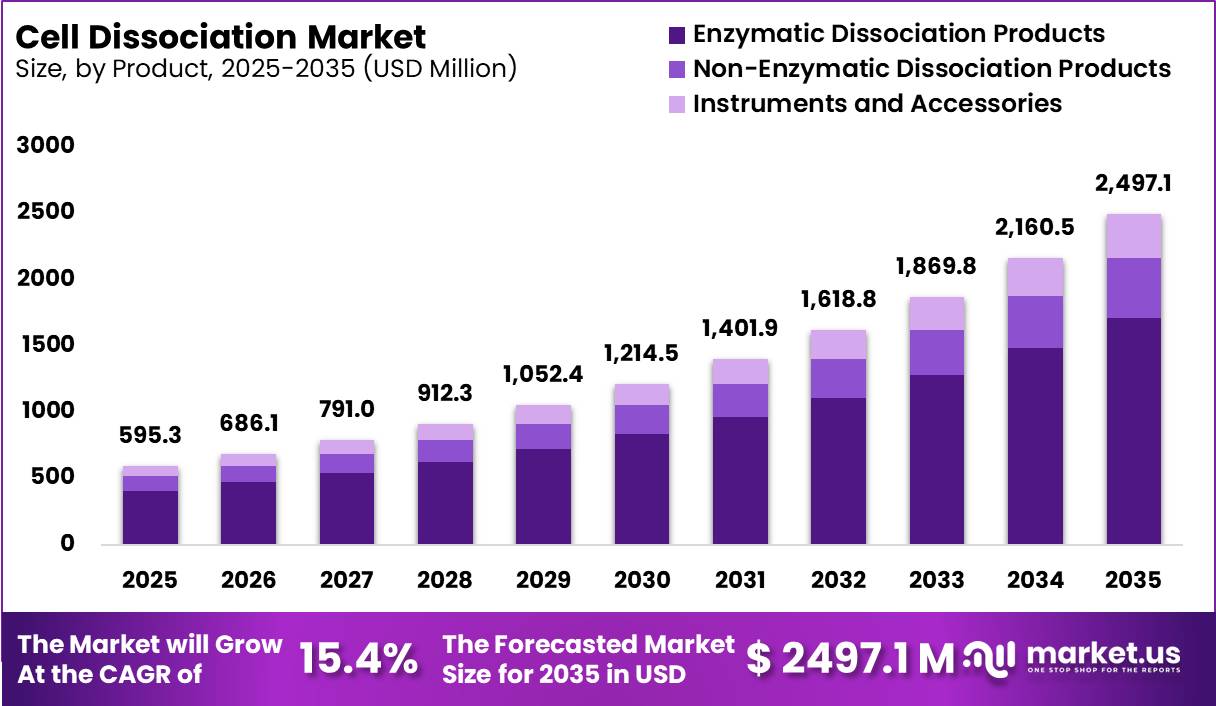
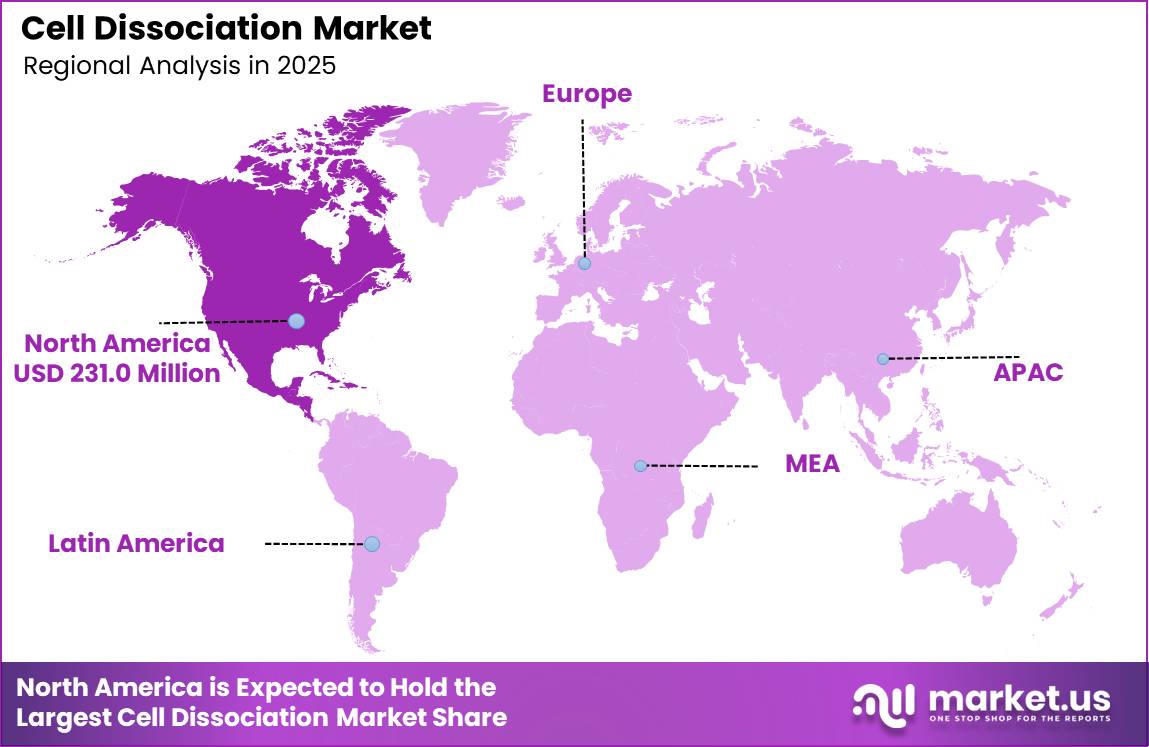
Global Cell Dissociation Market size is expected to be worth around US$ 2497.1 Million by 2035 from US$ 595.3 Million in 2025, growing at a CAGR of 15.4% during the forecast period from 2026 to 2035. In 2025, North America led the market, achieving over 38.8% share with a revenue of US$ 231.0 Million.
Cell dissociation technologies play a vital role in modern biomedical research, regenerative medicine, and cell-based therapy development. These techniques enable scientists to isolate viable cells from tissues while maintaining cellular integrity, supporting advancements in stem cell studies, immunology, oncology, and biopharmaceutical production.
According to the U.S. National Institutes of Health (NIH), more than 1,000 active clinical studies globally are investigating cell and gene therapies, highlighting the growing need for efficient cell isolation and preparation methods.
The increasing burden of chronic diseases is also driving demand for advanced cell processing solutions. The World Health Organization (WHO) reports that noncommunicable diseases account for approximately 43 million deaths annually worldwide, emphasizing the importance of research focused on developing innovative treatment approaches. Additionally, the U.S. Food and Drug Administration (FDA) has approved dozens of cellular and gene therapy products in recent years, reflecting the rapid expansion of the regenerative medicine sector.
Growing investments in biotechnology research continue to support market development. Data from the NIH indicate that the agency allocates more than US$ 47 billion annually toward medical research programs, creating opportunities for the adoption of advanced laboratory technologies, including cell dissociation reagents, enzymes, and automated processing systems.
Key Takeaways
- Market Size : Cell Dissociation Market size is expected to be worth around US$ 2497.1 Million by 2035 from US$ 595.3 Million in 2025.
- Market Share : The Market is growing at a CAGR of 15.4% during the forecast period from 2026 to 2035.
- Product Analysis : Enzymatic Dissociation Products dominated the Cell Dissociation Market in 2025, accounting for 68.5% of the total market share.
- Tissue Type Analysis : Epithelial Tissue dominated the Cell Dissociation Market in 2025, representing 52% of the overall market share.
- Type Analysis : Tissue Dissociation emerged as the dominant segment in the Cell Dissociation Market, accounting for 72% of the market share in 2025.
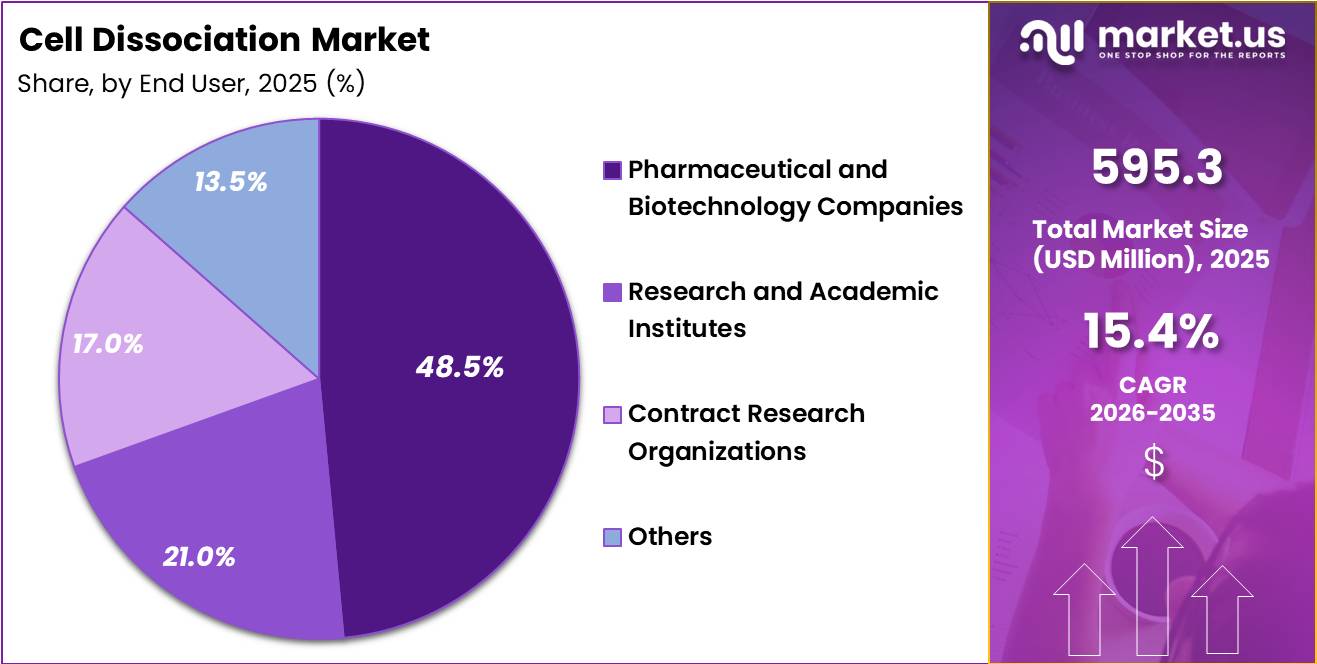
- End User Analysis : Pharmaceutical and Biotechnology Companies dominated the Cell Dissociation Market in 2025, holding 48.5% of the total market share.
- Regional Analysis : In 2025, North America led the market, achieving over 38.8% share with a revenue of US$ 231.0 Million.
Product Analysis
Enzymatic Dissociation Products dominated the Cell Dissociation Market in 2025, accounting for 68.5% of the total market share. Their leading position is attributed to their ability to efficiently separate cells from tissues while preserving cell viability and functionality.
Enzymes such as collagenase, trypsin, dispase, and papain are extensively used in stem cell research, regenerative medicine, immunology, and biopharmaceutical production. These products provide higher cell yield, faster processing, and improved reproducibility, making them highly preferred in research and clinical settings.
Non-Enzymatic Dissociation Products captured 18.2% of the market share in 2025. These products are increasingly utilized because they offer gentle dissociation methods that reduce cellular damage and maintain important surface markers. They are particularly suitable for sensitive cell populations and applications requiring high-quality cells for downstream analysis.
Instruments and Accessories accounted for 13.3% of the market. This segment includes automated dissociation systems, filters, and supporting laboratory tools that enhance workflow efficiency and standardization. Increasing laboratory automation and demand for scalable cell processing technologies continue to support segment growth.
Tissue Type Analysis
Epithelial Tissue dominated the Cell Dissociation Market in 2025, representing 52% of the overall market share. The segment benefits from its broad application in cancer research, stem cell studies, regenerative medicine, and tissue engineering.
Epithelial cells are widely studied to understand disease mechanisms, drug responses, and cellular functions, creating substantial demand for advanced dissociation technologies. Researchers increasingly require efficient methods to isolate viable epithelial cells for cell culture and therapeutic applications.
Connective Tissue accounted for 38% of the market share in 2025. Connective tissues possess complex extracellular matrix structures that often require specialized enzymatic formulations for effective dissociation. Growing research activities related to musculoskeletal disorders, fibrosis, and tissue regeneration are supporting demand for connective tissue dissociation products.
The Others segment held 10% of the market and includes nervous tissue, muscle tissue, and organ-specific tissues. Increasing investments in neuroscience, personalized medicine, and advanced cell therapies are expected to drive future growth within this segment.
Type Analysis
Tissue Dissociation emerged as the dominant segment in the Cell Dissociation Market, accounting for 72% of the market share in 2025. This segment plays a critical role in isolating viable cells from tissues for research, diagnostics, and therapeutic applications.
Tissue dissociation technologies are widely used in oncology, stem cell biology, immunology, and regenerative medicine. Growing demand for single-cell analysis, cell therapy production, and precision medicine is contributing significantly to segment expansion. Advances in enzyme formulations and automated processing systems are also improving dissociation efficiency and reproducibility.
Cell Detachment represents the remaining market share and continues to experience steady growth. These products are primarily used to harvest adherent cells from culture vessels while maintaining their viability and biological activity. Cell detachment technologies are increasingly adopted in research laboratories, pharmaceutical companies, and biomanufacturing facilities, supporting expanding applications in cell culture and biologics production.
End User Analysis
Pharmaceutical and Biotechnology Companies dominated the Cell Dissociation Market in 2025, holding 48.5% of the total market share. The segment’s leadership is driven by growing investments in drug discovery, regenerative medicine, biologics development, and cell therapy manufacturing.
These organizations require efficient cell dissociation solutions to optimize cell culture workflows, improve research outcomes, and support therapeutic production processes. Rising demand for personalized medicine further strengthens market growth.
Research and Academic Institutes represent another important end-user segment, supported by increasing studies in stem cell biology, disease modeling, tissue engineering, and cancer research. Government funding initiatives and scientific collaborations continue to encourage adoption of advanced dissociation technologies.
Contract Research Organizations (CROs) are witnessing increasing demand for cell dissociation products due to the growing trend toward outsourcing research activities. The Others segment includes hospitals, diagnostic laboratories, and clinical research centers that utilize these technologies for translational research and emerging cell-based therapeutic applications.
Market Segmentations
By Product
- Enzymatic Dissociation Products
- Non-Enzymatic Dissociation Products
- Instruments and Accessories
By Tissue Type
- Epithelial Tissue
- Connective Tissue
- Others
- By Type
- Tissue Dissociation
- Cell Detachment
By End User
- Pharmaceutical and Biotechnology Companies
- Research and Academic Institutes
- Contract Research Organizations
- Others
Driver
Single-cell omics throughput expands tissue-to-cell preparation volumes
Single-cell omics serves as a significant demand driver for tissue dissociation products, as every sequencing workflow depends on the preparation of a high-quality single-cell suspension. The quality of the dissociation process is directly linked to sequencing performance, influencing cell viability, capture efficiency, and the preservation of native cellular states.
Standardized protocols associated with 10x Genomics workflows specify stringent suspension requirements, including cell concentrations of approximately 1,000 cells per microliter and viability exceeding 95% for organoid applications. These requirements highlight the critical role of tissue dissociation in ensuring reliable and reproducible single-cell data.
The continued expansion of single-cell sequencing is expected to increase demand not only for sequencing platforms but also for upstream sample preparation solutions, including tissue dissociation reagents, standardized dissociation kits, and debris removal products. As laboratories adopt standardized workflows around established sequencing platforms, these upstream consumables become integral components of routine protocols, creating a strong attach-rate effect.
With 10x Genomics reporting revenue of approximately USD 642.8 million in 2025 and projecting revenue between USD 600 million and USD 625 million for 2026, the sustained activity of its installed base is expected to support recurring demand for tissue dissociation consumables and contribute to near-term market growth.
| Driver | (~) % Impact on CAGR Forecast | Geographic Relevance | Impact Timeline |
|---|---|---|---|
| Cell therapy scale-up lifts GMP dissociation demand | +2.6% | North America core, EU, Japan, South Korea, China | Medium term (2-4 years) |
| Organoid and iPSC workflows raise need for gentler, higher-yield reagents | +2.1% | North America core, EU, China, Japan | Medium term (2-4 years) |
| Single-cell omics throughput expands tissue-to-cell preparation volumes | +1.8% | North America core, EU hubs, China, Singapore | Short term (≤ 2 years) |
| Regulatory shift toward qualified ancillary materials upgrades product mix | +1.6% | U.S. core, EU, UK, Japan | Short term (≤ 2 years) |
| Enzyme-free and xeno-free transition improves reproducibility economics | +1.4% | U.S., EU, advanced APAC labs | Medium term (2-4 years) |
| Lab automation and closed processing increase premium kit adoption | +1.9% | U.S. core, EU, South Korea, Singapore | Medium term (2-4 years) |
Challenges
Complex Transition Toward Non-Enzymatic Dissociation Protocols
The shift to non-enzymatic protocols creates operational friction because while these methods improve preservation of cell surface markers and reduce variability, they often show 5 to 20% differences in yield or viability versus enzymatic methods, requiring SOP reoptimisation and QC adjustments. Adoption is uneven, with labs maintaining dual workflows that increase complexity in training, inventory, and operations.
Switching also requires 3 to 6 months of validation, including 50 to 200 paired runs and supporting assays, which slows rollout of new products. Non-enzymatic reagents may also cost 10 to 30 percent more initially, limiting adoption in cost sensitive labs.
Vendors are addressing this with drop in solutions and expanded validation datasets, but near term workflow disruption and revalidation requirements still create a modest drag of about 0.7 percentage points on CAGR during the transition period.
| Challenge | (~) % CAGR Friction Drag | Geographic Relevance | Mitigation Horizon |
|---|---|---|---|
| GMP-grade enzyme volatility | -1.4% | North America, EU, Japan | Medium term |
| Cold-chain & lead-time risk | -1.2% | EU, APAC, LATAM | Medium term |
| Lab automation integration gap | -1.0% | North America core, EU hubs | Long term |
| Skilled bioprocess talent deficit | -0.9% | North America, EU, APAC | Long term |
| Regulatory variability in upstream | -0.8% | EU, China, emerging APAC | Medium term |
| Shift to non-enzymatic protocols | -0.7% | Cell therapy clusters globally | Long term |
Restraints
Volatile enzyme and reagent pricing disrupting procurement strategies
Volatile pricing of biological inputs such as collagenases, dispases, proteases, nucleases, and dissociation buffers creates a material headwind, with 10 to 25% swings in upstream raw material and reagent costs and double digit fluctuations in some composite laboratory inputs.
These changes typically flow through to dissociation kit pricing with a 3 to 6 month lag, resulting in average annual price increases of 5 to 8% for premium products since the post pandemic period, while research budgets often grow only in low single digits, reducing real purchasing power.
Because cell dissociation can account for 10 to 20% of consumables costs in single cell workflows, even a 10% increase in reagent pricing can raise total project costs by 1 to 2 percent, prompting labs to dilute enzymes, extend protocols, or switch to lower cost alternatives, which can reduce consistency and data quality.
For suppliers, this volatility complicates margin stability and pricing strategy, leading to more frequent repricing and shorter contract cycles. Overall, pricing instability slows adoption of higher performance platforms, particularly in cost sensitive regions, and contributes an estimated 1.7 percentage point drag on global CAGR over 2026 to 2028.
| Restraint | (~) % Impact on CAGR Forecast | Geographic Relevance | Impact Timeline |
|---|---|---|---|
| GMP & ATMP compliance cost overhang | -2.3% | North America, EU, UK, Japan | Medium term (2-4 years) |
| Volatile enzyme & reagent input pricing | -1.7% | North America, EU, APAC corridors | Short term (≤ 2 years) |
| Skilled bioprocess labor and QC bottlenecks | -1.5% | North America, EU, East Asia | Medium term (2-4 years) |
| Capital intensity of advanced single-cell workflows | -1.9% | North America core, EU, China, South Korea | Long term (≥ 4 years) |
| Regulatory and ethical constraints on primary tissue sourcing | -1.1% | EU, UK, North America, selected APAC | Long term (≥ 4 years) |
| Fragmented purchasing and protocol heterogeneity in academia | -0.9% | Global academic & research hubs | Short–Medium term (≤ 4 years) |
Opportunity
Organoid-tailored dissociation kits for standardized translational workflows
This is an opportunity rather than a current driver because baseline cell dissociation demand is still anchored in conventional 2D culture, tissue prep, and academic workflows, whereas organoid specific dissociation remains under penetrated, fragmented by tissue type, and poorly standardized across cerebral, intestinal, hepatic, and tumor organoid models.
The upside comes from converting dissociation from a low value reagent sale into a higher ASP workflow kit combining enzyme chemistry, viability preserving buffers, strainers, protocol software, and QC metrics for downstream scRNA seq or imaging, which can raise realized revenue per experiment by an estimated 1.8x to 2.5x versus standalone enzyme sales and lift gross margin by roughly 8 to 12 points through bundling.
The commercial white space is strengthened by rising integration between organoids and single cell sequencing and by policy momentum toward organoid based testing as animal alternatives, creating an adjacent TAM where vendors can move from supplying research consumables to owning a protocol defined sample prep layer for translational screening in advanced research markets across North America, Western Europe, Japan, South Korea, and top tier China institutes.
| Opportunity | (~) % Potential CAGR Upside | Geographic Relevance | Execution Window |
|---|---|---|---|
| Organoid workflow kits | +2.4% | North America core, EU, Japan, South Korea, China tier-1 | Short term (≤ 2 years) |
| CGT closed-system dissociation | +2.1% | US, EU, UK, Japan, Singapore | Medium term (2-4 years) |
| Single-cell multiomics bundles | +1.9% | North America core, EU, China urban clusters | Short term (≤ 2 years) |
| GMP-grade premiumization | +1.6% | US, EU, South Korea, Australia | Medium term (2-4 years) |
| CDMO and CRO co-selling | +1.4% | US, EU, India, China | Short term (≤ 2 years) |
| AI-optimized protocol platforms | +1.2% | North America core, EU, APAC advanced labs | Long term (≥ 4 years) |
Regional Analysis
North America dominated the Cell Dissociation Market in 2025, accounting for over 38.8% of the global market and generating revenue of US$ 231.0 million. The region’s leadership is supported by a strong biotechnology and pharmaceutical industry, extensive research activities, and growing investments in regenerative medicine and cell therapy development. The presence of advanced laboratory infrastructure, increasing adoption of stem cell research, and rising demand for personalized medicine continue to drive market expansion across the region.
The United States remains the largest contributor to regional growth due to substantial funding for biomedical research, a well-established healthcare ecosystem, and the increasing number of clinical studies involving cell-based therapies. Canada is also witnessing steady growth supported by academic research initiatives and expanding biotechnology capabilities.
Europe represents another significant market, benefiting from ongoing advancements in life science research, favorable research funding programs, and increasing focus on biopharmaceutical manufacturing.
Meanwhile, the Asia-Pacific region is expected to experience the fastest growth during the forecast period, driven by expanding healthcare infrastructure, rising investments in biotechnology, growing contract research activities, and increasing awareness of regenerative medicine applications. Latin America and the Middle East & Africa are gradually emerging markets, supported by improving research facilities and healthcare modernization efforts.
Key Regions and Countries
North America
- The US
- Canada
Europe
- Germany
- France
- The U.K.
- Italy
- Spain
- Russia & CIS
- Rest of Europe
Asia Pacific
- China
- India
- Japan
- South Korea
- ASEAN
- Australia & New Zealand
- Rest of Asia Pacific
Middle East & Africa
- GCC
- South Africa
- Rest of Middle East & Africa
Latin America
- Brazil
- Mexico
- Rest of Latin America
Key Player Analysis
The Cell Dissociation Market is highly competitive, with leading companies focusing on product innovation, advanced reagent development, and expansion of cell processing capabilities to strengthen their market positions. Major players are investing in research activities to improve cell viability, recovery rates, and reproducibility, which are essential for applications in regenerative medicine, cell therapy, and biopharmaceutical manufacturing.
Thermo Fisher Scientific Inc., Merck KGaA, and Danaher Corporation (Cytiva) maintain strong market presence through broad portfolios of enzymes, reagents, and cell culture solutions. Becton Dickinson and Company supports market growth by offering products designed for efficient sample preparation and laboratory workflows.
STEMCELL Technologies Inc. continues to expand its specialized cell isolation and dissociation product offerings for research and clinical applications. Corning Incorporated focuses on innovative cell culture technologies that enhance laboratory efficiency.
Miltenyi Biotec GmbH strengthens its position through integrated cell processing platforms, while Sartorius AG emphasizes scalable solutions that support growing demand for cell-based research and manufacturing activities worldwide.
Top Key Players
- Thermo Fisher Scientific Inc.
- Merck KGaA
- Danaher Corporation (Cytiva)
- Becton Dickinson and Company
- STEMCELL Technologies Inc.
- Corning Incorporated
- Miltenyi Biotec GmbH
- Sartorius AG
- F. Hoffmann-La Roche Ltd
- Lonza Group AG
- Bio-Rad Laboratories Inc.
- Takara Bio Inc.
- ATCC (American Type Culture Collection)
- PromoCell GmbH
- HiMedia Laboratories Pvt. Ltd
- Worthington Biochemical Corporation
- PAN-Biotech GmbH
- AMSBIO
- CellSystems GmbH
- VitaCyte LLC
- Others
Recent Developments
- In September 2025, Miltenyi Biotec expanded its partnership with Verismo Therapeutics to provide lentiviral vector manufacturing support for the STAR-101 cell therapy program, supporting clinical and future commercial-scale manufacturing.
- In August 2025, Sartorius Stedim Biotech partnered with Nanotein Technologies and committed up to US$ 3 million for a minority investment to advance NanoSpark® immune-cell activation technologies used in T-cell and NK-cell manufacturing workflows.
- In July 2025, Thermo Fisher Scientific acquired Sanofi’s sterile fill-finish and packaging manufacturing facility in Ridgefield, New Jersey, expanding U.S. biopharmaceutical manufacturing capacity supporting advanced therapeutic production.
Report Scope
| Report Features | Description |
|---|---|
| Market Value (2025) | US$ 595.3 Million |
| Forecast Revenue (2035) | US$ 2497.1 Million |
| CAGR (2026-2035) | 15.4 % |
| Base Year for Estimation | 2025 |
| Historic Period | 2020-2024 |
| Forecast Period | 2026-2035 |
| Report Coverage | Revenue Forecast, Market Dynamics, Competitive Landscape, Recent Developments |
| Segments Covered | By Product (Enzymatic Dissociation Products, Non-Enzymatic Dissociation Products, Instruments and Accessories), By Tissue (Type Epithelial Tissue, Connective Tissue, Others), By Type(Tissue Dissociation, Cell Detachment), By End User (Pharmaceutical and Biotechnology Companies, Research and Academic Institutes, Contract Research Organizations, Others) |
| Regional Analysis | North America – The US, Canada; Europe – Germany, France, U.K., Italy, Spain, Russia & CIS, Rest of Europe; Asia Pacific – China, India, Japan, South Korea, ASEAN, Australia & New Zealand, Rest of Asia Pacific; Middle East & Africa – GCC, South Africa, Rest of Middle East & Africa; Latin America – Brazil, Mexico, Rest of Latin America |
| Competitive Landscape | Thermo Fisher Scientific Inc., Merck KGaA, Danaher Corporation (Cytiva), Becton Dickinson and Company, STEMCELL Technologies Inc., Corning Incorporated, Miltenyi Biotec GmbH, Sartorius AG, F. Hoffmann-La Roche Ltd, Lonza Group AG, Bio-Rad Laboratories Inc., Takara Bio Inc., ATCC (American Type Culture Collection), PromoCell GmbH, HiMedia Laboratories Pvt. Ltd, Worthington Biochemical Corporation, PAN-Biotech GmbH, AMSBIO, CellSystems GmbH, VitaCyte LLC, Others |
| Customization Scope | Customization for segments, region/country-level will be provided. Moreover, additional customization can be done based on the requirements. |
| Purchase Options | We have three licenses to opt for: Single User License, Multi-User License (Up to 5 Users), Corporate Use License (Unlimited User and Printable PDF) |





































