


Market Overview
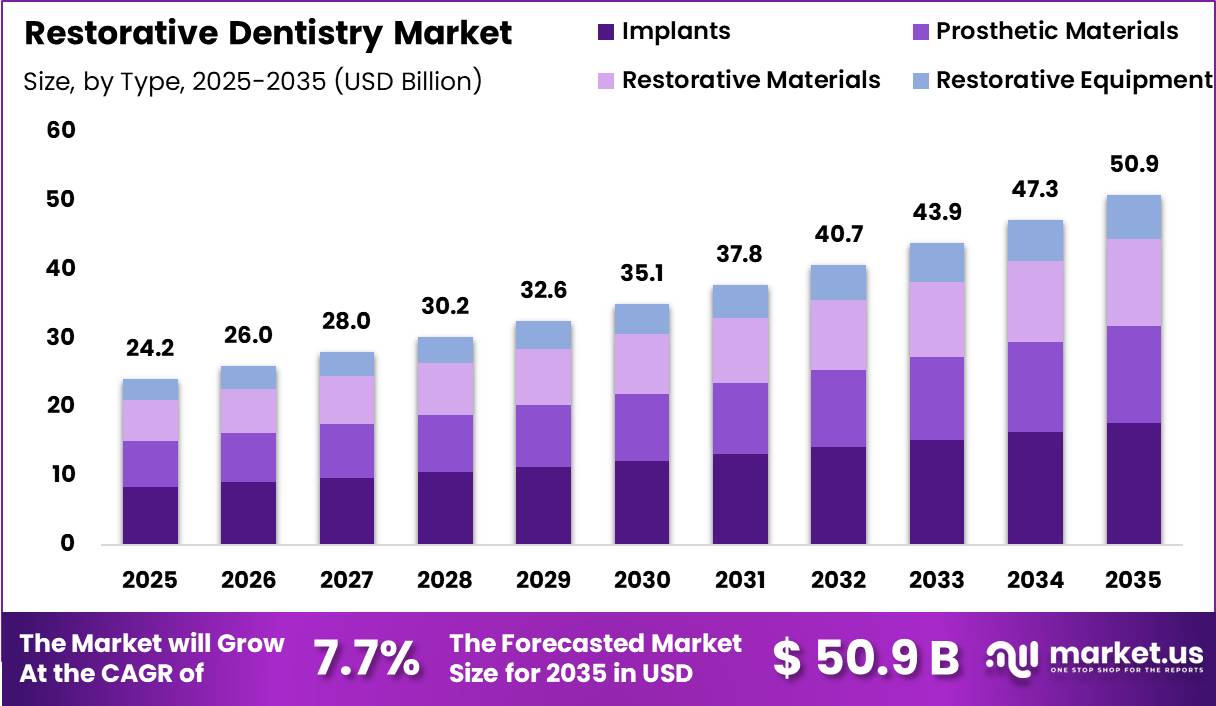
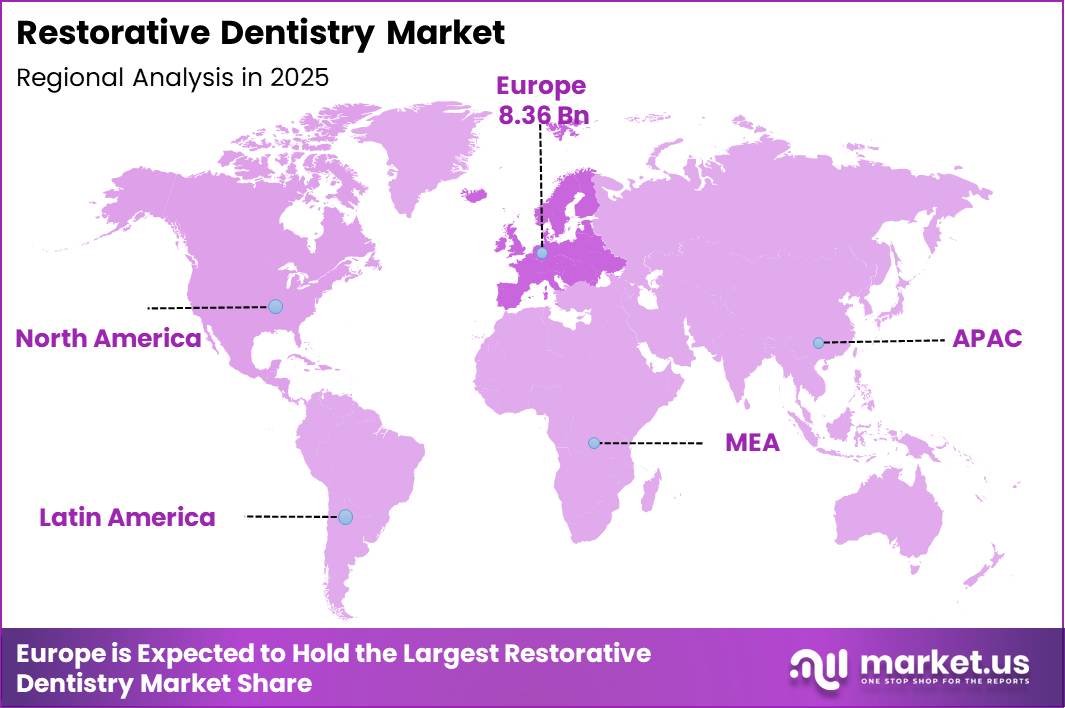
Global Restorative Dentistry Market size is expected to be worth around US$ 50.9 Billion by 2035 from US$ 24.2 Billion in 2025, growing at a CAGR of 7.7% during the forecast period from 2026 to 2035. In 2025, Europe led the market, achieving over 34.6% share with a revenue of US$ 8.4 Billion.
The global restorative dentistry market is expanding steadily due to the growing burden of dental caries, tooth loss, and aging populations that require long-term tooth repair and replacement. Restorative dentistry includes procedures such as dental fillings, crowns, bridges, inlays, onlays, dentures, and dental implants, all aimed at restoring oral function and aesthetics.
According to the World Health Organization (WHO), oral diseases affect nearly 3.7 billion people worldwide, making them among the most common non-communicable diseases. Dental caries in permanent teeth alone impacts around 2.5 billion people, creating sustained demand for restorative treatments.
The increasing adoption of preventive dental care, digital dentistry, and minimally invasive restorative procedures is supporting market growth. The U.S. Centers for Disease Control and Prevention (CDC) reports that more than 1 in 4 adults aged 20–64 years have untreated dental caries, highlighting the continued need for restorative interventions.
Furthermore, the National Institute of Dental and Craniofacial Research (NIDCR) notes that nearly 26% of adults aged 65 years and older have lost all of their natural teeth, increasing demand for dentures, implants, and prosthetic restorations.
Technological advancements such as CAD/CAM systems, intraoral scanners, 3D printing, and improved ceramic and composite restorative materials are enhancing treatment accuracy, durability, and patient comfort.
Growing awareness of oral health, expanding dental insurance coverage in several developed economies, and increasing investments in public oral healthcare programs are further strengthening market prospects. Healthcare organizations continue to emphasize that maintaining functional dentition improves nutrition, speech, and overall quality of life, positioning restorative dentistry as a critical component of comprehensive oral healthcare worldwide.
Key Takeaways
- Market Size: The Restorative Dentistry Market size was US$ 24.2 Billion in 2025.The market is estimated to grow to US$ 50.9 Billion by 2035.
- Market Share: The Compound Annual Growth Rate (CAGR) of the market from 2026 to 2035 will be 7.7%.
- By Type: Implants has the largest market share, accounting for 34.8% of total sales.
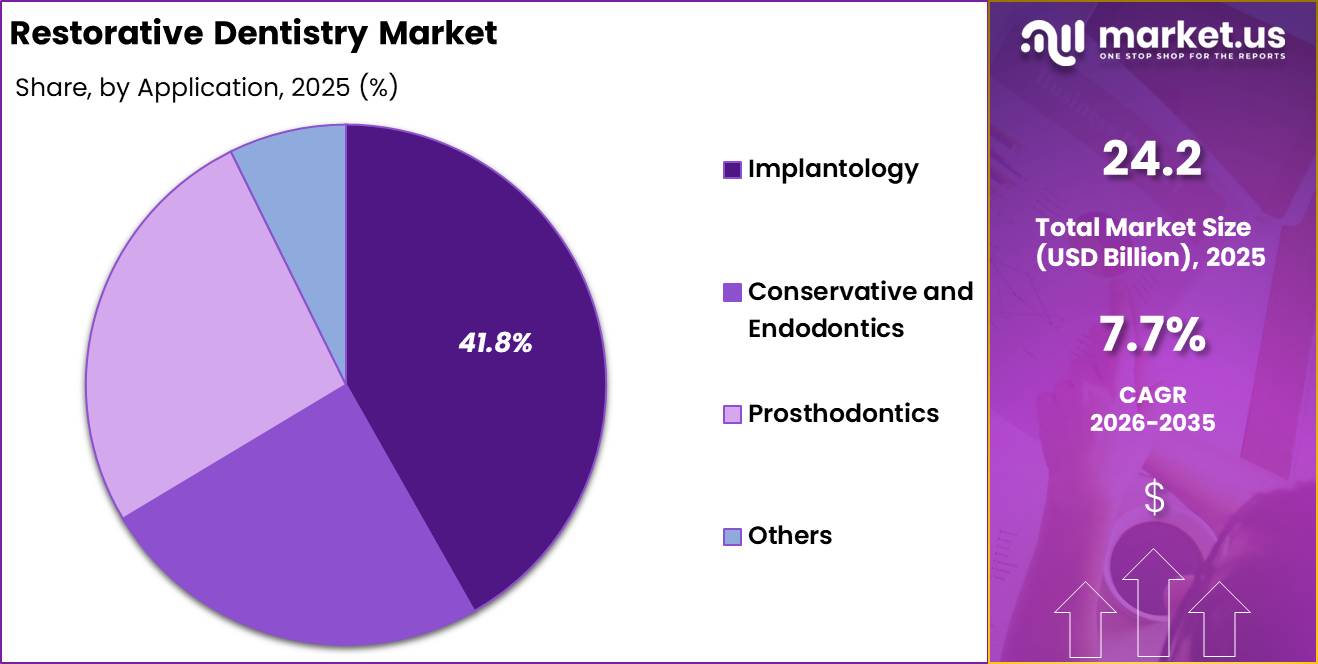
- By Application: Implantology, accounting for 41.8% of total revenue.
- By End User: Dental Clinics and Hospitals leads the segment, accounting for 56.2% of total revenue.
- Regional: Europe is the dominant regional market,accounting for 34.6% of global sales.
Type Analysis
The Implants segment dominated the restorative dentistry market in 2025, accounting for 34.8% of the total market share. This leadership is driven by the growing preference for permanent tooth replacement solutions that offer superior functionality, aesthetics, and long-term durability.
Rising incidences of tooth loss due to aging, periodontal diseases, and trauma have significantly increased the demand for dental implants across developed and emerging healthcare markets.
Continuous advancements in implant materials, surface technologies, and digital-guided implant placement have improved treatment success rates while reducing recovery time. The increasing adoption of CAD/CAM systems and 3D imaging has further strengthened the use of implant-based restorative procedures.
The Prosthetic Materials segment captured 27.6% of the market, supported by the widespread use of crowns, bridges, veneers, and dentures manufactured from ceramics, zirconia, and composite materials. Restorative Materials accounted for 24.9%, reflecting strong demand for dental composites, glass ionomer cements, adhesives, and amalgam alternatives used in cavity restoration and tooth repair.
Meanwhile, Restorative Equipment represented 12.7% of the market, driven by investments in modern dental chairs, CAD/CAM milling systems, intraoral scanners, curing lights, and digital diagnostic equipment that improve procedural efficiency and clinical outcomes in restorative dentistry.
Application Analysis
The Implantology segment led the restorative dentistry market in 2025, holding 41.8% of the global market share. The segment’s dominance is attributed to the increasing number of dental implant procedures performed for replacing missing teeth and restoring oral function.
Growing awareness of implant-supported restorations, rising disposable incomes, and improved accessibility to advanced dental care have encouraged patients to choose implants over conventional removable prostheses. Technological innovations such as computer-guided implant surgery, digital impressions, and immediate loading techniques have further enhanced procedural accuracy, patient comfort, and treatment success, strengthening demand for implantology services worldwide.
The Prosthodontics segment accounted for 26.3% of the market, driven by continuous demand for crowns, bridges, dentures, and full-mouth rehabilitation procedures among aging populations. Conservative and Endodontics represented 24.6%, supported by increasing restorative treatments for dental caries, root canal therapy, and tooth preservation using advanced filling materials and minimally invasive techniques.
The Others segment contributed 7.3%, covering cosmetic restorations, pediatric restorative procedures, and specialized dental rehabilitation services. Together, these application areas demonstrate the expanding scope of restorative dentistry as patients increasingly seek durable, aesthetic, and functionally effective oral healthcare solutions.
End User Analysis
The Dental Clinics and Hospitals segment dominated the restorative dentistry market in 2025, capturing 56.2% of the total market share. This leadership is supported by the availability of comprehensive dental services, experienced professionals, and advanced diagnostic and restorative technologies within clinical settings.
Most restorative procedures, including dental implants, crowns, bridges, root canal treatments, and full-mouth rehabilitation, are performed in specialized dental clinics and hospital-based dental departments due to their access to sophisticated equipment such as CAD/CAM systems, digital radiography, and intraoral scanners.
Increasing patient preference for professional treatment, expanding dental insurance coverage in several countries, and the growing number of multi-specialty dental centers continue to reinforce the dominance of this segment.
Academic and research institutes also contribute significantly by supporting clinical training, dental innovation, and the evaluation of new restorative materials and technologies. These institutions play a vital role in advancing evidence-based restorative practices and educating future dental professionals.
Other end users, including mobile dental units, community oral health centers, and specialized dental laboratories, support restorative care through outreach services, customized prosthetic manufacturing, and preventive treatment programs.
Collectively, these end users strengthen the overall restorative dentistry ecosystem by improving access to quality dental care and supporting continuous technological advancement.
Market Segmentations
By Type
- Implants
- Prosthetic Materials
- Restorative Materials
- Direct Restorative Materials
- Amalgam
- Composites
- Glass lonomer
- Others
- Indirect Restorative Materials
- All-ceramic
- Metal Ceramic
- Metal Alloys
- Others
- Biomaterials
- Bonding Agents/ Adhesives
- Impression Materials
- Direct Restorative Materials
- Restorative Equipment
-
- CAD/CAM Systems
- Handpieces
- Rotary Instruments
- Light Curing Equipment
- Casting Equipment
- Mixing Equipment
- Articulating Equipment
- Others
By Application
- Implantology
- Conservative and Endodontics
- Prosthodontics
- Others
By End User
- Research and Training Institutions
- Dental Laboratories
- Dental Clinics and Hospitals
- Others
Driver
Caries Burden Drives Restorative Dental Market Expansion
The most immediate demand driver remains the sheer volume of untreated oral disease. WHO states oral diseases affect nearly 3.7 billion people globally and identifies untreated caries in permanent teeth as the most common condition in the Global Burden of Disease 2021 dataset, which creates a structurally large funnel for fillings, inlays/onlays, crowns, endodontic build-ups, and replacement cycles rather than a one-time treatment event.
WHO also links rising prevalence to urbanization, sugar exposure, poor access to care, and inadequate fluoride exposure, while JAMA-linked material cited in search results notes dental caries affect more than 90% of U.S. adults and about 26% have untreated disease, indicating that even mature markets still hold substantial untreated or undertreated volume.
For market forecasting, this supports a roughly 2.1% point lift to baseline CAGR because the installed disease pool converts into recurring restorative revenue through multi-visit treatment pathways, retreatment after secondary caries, and downstream prosthetic work when delayed intervention escalates lesion severity.
A second major driver is not just aging itself, but aging with retained dentition, which raises the procedural mix toward higher-value restorative and prosthodontic interventions. WHO estimates complete tooth loss averages almost 7% among adults aged 20 but rises to 23% among people aged 60, while NIH-linked literature highlights that older adults with systemic health issues and weak social support face faster oral-health deterioration, increasing restorative complexity and recall intensity.
At the same time, modern care pathways are preserving more natural teeth for longer, which shifts spending from full edentulism management alone toward crowns, bridges, implant-supported restorations, root-canal-related restorations, and xerostomia-associated caries management in medically complex cohorts.
That mix effect matters commercially because older patients usually generate higher revenue per case, more diagnostics, and more follow-up visits, justifying an estimated 1.7% point CAGR contribution concentrated in North America, Europe, Japan, South Korea, and urban China where demographic aging and dental service formalization are both advanced.
| Driver | (~) % Impact on CAGR Forecast | Geographic Relevance | Impact Timeline |
|---|---|---|---|
| Caries burden and untreated disease treatment pull | +2.1% | North America core, EU, APAC urban, LATAM catch-up | Short term (≤ 2 years) |
| Older-adult tooth retention and complex rehabilitation mix-up | +1.7% | North America, EU, Japan, South Korea, urban China | Medium term (2-4 years) |
| Digital workflow adoption in CAD/CAM, optical impressions, and chairside restoration | +1.9% | North America core, EU, advanced APAC corridors, Gulf hubs | Short term (≤ 2 years) |
| Coverage integration and medically linked dental reimbursement expansion | +1.2% | U.S. core, selective EU public systems, upper-middle-income APAC | Medium term (2-4 years) |
| Preventive-to-conservative care shift still preserving restorative conversion | +0.9% | North America, EU, Australia, guideline-led APAC | Short term (≤ 2 years) |
| Mercury-free and material-transition cycle in restoratives | +0.8% | EU core, North America, high-compliance APAC markets | Long term (≥ 4 years) |
Challenge
Chronic Oral Disease Burden Restricts Restorative Dentistry Growth
Persistent high prevalence of dental caries and other oral diseases creates a paradoxical challenge for restorative dentistry it guarantees a large long-run treatment pool while structurally overloading systems and constraining throughput, shaving an estimated 1.2 % points off potential CAGR by converting demand into waitlists rather than completed procedures.
With WHO estimating around 2 billion people with caries in permanent teeth and 3.7 billion people affected by oral diseases overall, many health systems face chronic backlogs; in typical middle-income countries, restorative caseloads per dentist can exceed 1,500–2,000 active cases annually against realistic capacity of 900–1,200 complex restorations, filling schedules with high-need patients and leaving limited room for profitable elective aesthetic work.
In the United States, CDC data show nearly 21% of adults 20–64 with untreated decay, and FastStats indicate about 25.9% of adults 20–44 with untreated caries, implying tens of millions of individuals with deferred restorative needs competing for finite chair time.
Operationally, this translates into 10–20% longer appointment cycles, increased emergency visits, and higher clinical complexity, including multi-surface lesions and root involvement, adding 15–30 minutes per procedure and driving up per-unit clinician labor costs by 10–15% compared with early-stage, minimally invasive interventions.
Over the long term, industry actors must respond with standardized risk stratification protocols, streamlined care pathways, and expanded delegation to hygienists and mid-level providers so that complex restorative work is reserved for the 20–30% of cases that truly require specialist skill, while large-scale prevention and early intervention programs, aligned with WHO recommendations on sugar intake and fluoride exposure, gradually reduce the intensity of restorative workloads over a 5–10 year horizon.
| Challenge | (~) % CAGR Friction Drag | Geographic Relevance | Mitigation Horizon |
|---|---|---|---|
| Chronic oral disease load | -1.2% | Global, high-burden regions | Long term (≥ 4 years) |
| Skilled clinician shortages | -1.0% | North America, EU, UK | Medium term (2-4 years) |
| Chair-time and workflow limits | -0.8% | Urban clinics, hospital hubs | Medium term (2-4 years) |
| Technology adoption lag | -0.7% | Emerging markets, SME practices | Long term (≥ 4 years) |
| Reimbursement and access frictions | -0.9% | U.S., mixed public–private systems | Long term (≥ 4 years) |
| Preventive policy impact uncertainty | -0.6% | Global, especially SSB-tax regions | Long term (≥ 4 years) |
Restraints
Cross-Border Tariffs Increase Restorative Dentistry Cost Pressures
Cross-border tariffs on dental equipment, consumables, and key restorative inputs such as ceramics, composites, and implant systems are amplifying landed cost inflation, with recent U.S. tariff actions adding 10–25% ad valorem on selected medical and dental imports and triggering reciprocal duties of 10–15% on outbound U.S. shipments that reprice global catalogues within one to two quarterly cycles.
These trade frictions layer onto existing FX volatility where several emerging market currencies have depreciated by 8–15% against the U.S. dollar since 2023, effectively lifting local procurement costs for imported restorative kits, CAD/CAM blocks, and high-end handpieces by 20–30% in local currency terms, even when nominal dollar prices remain flat.
For multi-site dental chains operating on EBITDA margins of 14–18%, a sustained 6–8% increase in material costs without immediate fee adjustment compresses margins by 200–300 basis points, forcing deferral of planned capital programs such as digital impression systems and in-house milling units and slowing geographic expansion into tariff-exposed corridors.
At the same time, distributors react with shorter contract tenors, often moving from three-year to 12–18-month pricing agreements, and more frequent surcharge clauses tied to FX and freight indices, which increases revenue forecasting uncertainty and leads manufacturers to trim restorative product launch pipelines or prioritize tariff-neutral routes, dragging baseline global restorative dentistry CAGR by an estimated 1.2 % points over the 2026–2030 horizon.
Strategically, practices mitigate by forward-buying 2–3 months of critical supplies ahead of tariff steps, rationalizing SKUs to 60–70% of prior breadth, and shifting part of the mix toward regionally produced substitutes, but these measures only partially offset the earnings drag and leave structurally higher input volatility baked into long-term unit economics.
| Restraint | (~) % Impact on CAGR Forecast | Geographic Relevance | Impact Timeline |
|---|---|---|---|
| Cross-border dental tariffs & FX volatility | -1.2% | North America core, EU, APAC corridors | Short–Medium term |
| Supply chain fragility in dental materials & equipment | -1.4% | North America, EU, Asia manufacturing hubs, selective LATAM | Short term |
| Reimbursement gaps & out-of-pocket burden | -1.0% | North America, EU periphery, large EMs (India, ASEAN, LATAM) | Medium–Long term |
| Regulatory upgrade pressure & compliance overhead | -0.8% | EU, North America, selected APAC | Medium term |
| Clinical workforce shortages & practice capacity constraints | -0.9% | OECD markets, EM urban clusters | Medium–Long term |
| Demand inequality from broader oral health undercoverage | -0.7% | LMICs, EM rural corridors, public systems | Long term |
Opportunity
Integrated Chronic Care Pathways Expand Restorative Dentistry Growth
This opportunity centers on embedding restorative dentistry into longitudinal care pathways for chronic systemic diseases such as diabetes and cardiovascular conditions, leveraging the growing recognition of oral–systemic links in major clinical and public-health guidance rather than current episodic dental treatment paradigms.
It remains a white space because most payer and provider systems reimburse oral care separately from chronic disease management, despite mounting evidence that periodontal and caries control can reduce systemic complications and healthcare utilization over multi-year horizons.
Quantitatively, in markets where diabetes prevalence exceeds 10–12% of adults and cardiovascular disease remains among the top causes of morbidity, integrated programs that include scheduled restorative interventions, such as stabilization of high-risk teeth and early crown/bridge work to prevent infection, could attach restorative packages to perhaps 20–30% of newly enrolled chronic care patients, creating incremental annual restorative procedure volumes in the low- to mid-teens % above the baseline trajectory.
If average restorative case values are in the several-hundred-dollar range and chronic patients typically require 1.5–2.0 times more chairside time over a decade than healthy adults due to treatment complexity, integrated pathways can improve chair utilization by 10–15% and raise practice-level margins by 3–5 % points through higher case density.
Lower marketing cost per acquired patient, translating into roughly a 2.0 % point upside on global restorative CAGR when scaled across North America, the EU, and advanced APAC health systems that are actively piloting integrated oral–medical programs through hospital networks and accountable care models.
This is not a baseline driver today because chronic disease programs, even when they reference oral health, rarely include explicit restorative benefits or bundled payment models, leaving most of this cross-condition TAM structurally uncaptured despite policy rhetoric around comprehensive care.
| Opportunity | (~) % Potential CAGR Upside | Geographic Relevance | Execution Window |
|---|---|---|---|
| Integrated chronic care–dental pathways | +2.0% | North America, EU, developed APAC | Medium term (2-4 years) |
| Geriatric restorative platforms & home-care | +1.8% | North America, EU, East Asia | Short–Medium term (≤ 4 years) |
| AI/robotics-enabled chairside productivity | +2.5% | Global urban centers | Medium–Long term (2-≥4 years) |
| Value-based & bundled restorative contracts | +1.5% | U.S., Western Europe | Medium term (2-4 years) |
| Emerging-markets mid-tier restorative ecosystem | +2.2% | APAC, Latin America, Middle East | Long term (≥ 4 years) |
| Digital therapeutics & remote restorative triage | +1.0% | Global, especially rural regions | Short–Medium term (≤ 4 years) |
Regional Analysis
In 2025, Europe led the market, achieving over 34.6% share with a revenue of US$ 8.4 Billion. Europe region benefits from well-established dental healthcare systems, widespread availability of advanced restorative procedures, and strong public awareness regarding oral health.
Countries such as Germany, France, Italy, and the United Kingdom continue to witness high demand for dental implants, crowns, bridges, and aesthetic restorative treatments. Aging populations, increasing tooth loss among older adults, and favorable reimbursement policies in several European countries further support market growth.
North America represented the second-largest regional market, driven by high dental expenditure, rapid adoption of digital dentistry technologies such as CAD/CAM systems and 3D printing, and the presence of leading dental product manufacturers. The United States remains the primary contributor owing to growing cosmetic dentistry procedures and a large base of private dental clinics.
The Asia-Pacific region is expected to register the fastest growth during the forecast period. Rising disposable incomes, expanding access to dental care, increasing dental tourism in countries such as India, Thailand, and South Korea, and growing awareness of preventive and restorative oral healthcare are accelerating market expansion. Government initiatives to improve oral healthcare infrastructure also contribute to regional development.
Latin America and the Middle East & Africa are gradually expanding markets, supported by improving healthcare infrastructure, increasing urbanization, rising investments in dental clinics, and greater adoption of modern restorative materials and technologies, although access to advanced dental services remains comparatively limited in several countries.
Key Regions and Countries
North America
- The US
- Canada
Europe
- Germany
- France
- The U.K.
- Italy
- Spain
- Russia & CIS
- Rest of Europe
Asia Pacific
- China
- India
- Japan
- South Korea
- ASEAN
- Australia & New Zealand
- Rest of Asia Pacific
Middle East & Africa
- GCC
- South Africa
- Rest of Middle East & Africa
Latin America
- Brazil
- Mexico
- Rest of Latin America
Key Player Analysis
The Restorative Dentistry Market is moderately consolidated, with a mix of global dental technology leaders and specialized manufacturers shaping competitive dynamics. The market has reached a mature stage in developed economies while continuing to expand in emerging regions through increasing dental care awareness and access to advanced restorative solutions.
Competition is centered on continuous product innovation, digital dentistry integration, biocompatible materials, CAD/CAM workflows, and minimally invasive restorative techniques. Companies are investing in advanced ceramics, resin composites, implant systems, digital impressions, and chairside manufacturing technologies to improve clinical outcomes, procedural efficiency, and patient satisfaction.
The competitive landscape can be categorized into three strategic tiers. The first tier comprises multinational dental technology companies with diversified portfolios, extensive distribution networks, and significant investments in digital workflows and implant solutions.
Dentsply Sirona, Institut Straumann AG, Envista Holdings Corporation, Zimmer Biomet Holdings, Henry Schein, Inc., and 3M Company strengthen their positions through broad product portfolios, clinician education programs, and global commercialization capabilities.
The second tier includes specialized restorative material and equipment manufacturers such as Ivoclar Vivadent, GC Corporation, COLTENE Group, Septodont Holdings, VOCO GmbH, and Mitsui Chemicals, which compete through material science innovation, high-performance restorative products, and clinical reliability.
The third tier consists of focused niche manufacturers including Keystone Dental Inc., DiaDent, and Ultradent Products, emphasizing targeted restorative systems, endodontic solutions, and practitioner-focused product development.
Competitive differentiation is driven by sustained R&D investment, strategic collaborations with dental laboratories and academic institutions, expansion of digital dentistry ecosystems, workflow integration across diagnosis and restoration, and continuous enhancement of biomaterials, implant technologies, and CAD/CAM-compatible restorative solutions.
These strategies enable companies to strengthen clinical adoption while addressing evolving practitioner and patient requirements across global dental care markets.
Top Key Players
- Envista Holdings Corporation
- Zimmer Biomet Holdings
- Dentsply Sirona
- Institut Straumann AG
- COLTENE Group
- Keystone Dental Inc.
- 3M Company
- Mitsui Chemicals
- GC Corporation
- Henry Schein, Inc.
- Ivoclar Vivadent
- Septodont Holdings
- VOCO GmbH
- DiaDent
- Ultradent Products
Recent Developments
- In April 2025, Zimmer Biomet Holdings completed the acquisition of Paragon 28, enhancing its extremities, foot and ankle reconstruction portfolio with advanced implant technologies.
- In July 2025, Zimmer Biomet Holdings announced a definitive agreement to acquire Monogram Technologies, an AI-driven orthopedic robotics company, strengthening its digital surgery and robotic technology portfolio.
- In October 2025, Zimmer Biomet Holdings completed the acquisition of Monogram Technologies, expanding its autonomous robotic surgery capabilities and AI-enabled surgical platform.
- In March 2025, Dentsply Sirona introduced an expanded AI-powered CEREC workflow together with new CEREC Primemill milling solutions, improving chairside restorative dentistry and same-day restoration capabilities.
- In May 2026, Envista Holdings Corporation reported continued commercialization of new dental products across its major businesses, supporting growth in restorative and digital dentistry solutions.
Report Scope
| Report Features | Description |
|---|---|
| Market Value (2025) | US$ 24.2 Billion |
| Forecast Revenue (2035) | US$ 50.9 Billion |
| CAGR (2026-2035) | 7.7 % |
| Base Year for Estimation | 2025 |
| Historic Period | 2020-2024 |
| Forecast Period | 2026-2035 |
| Report Coverage | Revenue Forecast, Market Dynamics, Competitive Landscape, Recent Developments |
| Segments Covered | By Type(Implants,Prosthetic Materials,Restorative Materials(Direct Restorative Materials,Amalgam,Composites,Glass lonomer,Others) Indirect Restorative Materials(All-ceramic,Metal Ceramic,Metal Alloys,Others,Biomaterials,Bonding Agents/ Adhesives,Impression Materials) Restorative Equipment(CAD/CAM Systems,Handpieces,Rotary Instruments,Light Curing Equipment,Casting Equipment,Mixing Equipment,Articulating Equipment,Others))) By Application (Implantology,Conservative and Endodontics,Prosthodontics,Others) By End User (Research and Training Institutions,Dental Laboratories,Dental Clinics and Hospitals,Others) |
| Regional Analysis | North America – The US, Canada; Europe – Germany, France, U.K., Italy, Spain, Russia & CIS, Rest of Europe; Asia Pacific – China, India, Japan, South Korea, ASEAN, Australia & New Zealand, Rest of Asia Pacific; Middle East & Africa – GCC, South Africa, Rest of Middle East & Africa; Latin America – Brazil, Mexico, Rest of Latin America |
| Competitive Landscape | Envista Holdings Corporation ,Zimmer Biomet Holdings ,Dentsply Sirona ,Institut Straumann AG ,COLTENE Group ,Keystone Dental Inc. ,3M Company ,Mitsui Chemicals ,GC Corporation ,Henry Schein, Inc. ,Ivoclar Vivadent ,Septodont Holdings, VOCO GmbH ,DiaDent ,Ultradent Products |
| Customization Scope | Envista Holdings Corporation ,Zimmer Biomet Holdings ,Dentsply Sirona ,Institut Straumann AG ,COLTENE Group ,Keystone Dental Inc. ,3M Company ,Mitsui Chemicals ,GC Corporation ,Henry Schein, Inc. ,Ivoclar Vivadent ,Septodont Holdings, VOCO GmbH ,DiaDent ,Ultradent Products |
| Purchase Options | We have three licenses to opt for: Single User License, Multi-User License (Up to 5 Users), Corporate Use License (Unlimited User and Printable PDF) |





































