


Report Overview
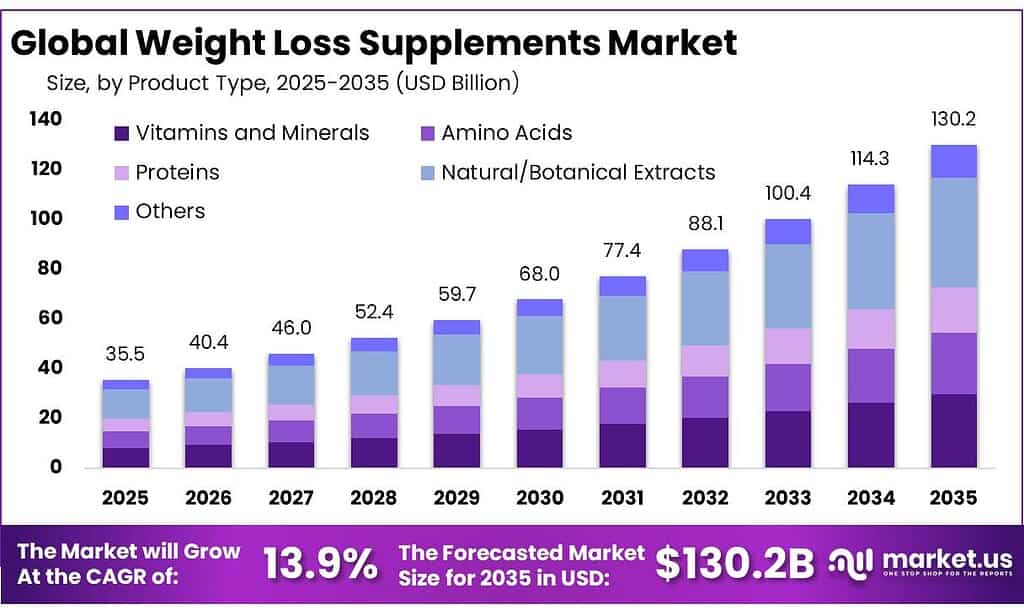
The Global Weight Loss Supplements Market size is expected to be worth around USD 130.2 Billion by 2035, from USD 35.5 Billion in 2025, growing at a CAGR of 13.9% during the forecast period from 2026 to 2035. In 2025, North America held a dominant market position, capturing more than a 39.2% share, holding USD 13.9 Billion revenue.
Weight loss supplements industry sits at the intersection of preventive nutrition, lifestyle management, and consumer self-care. Its relevance continues to rise because the addressable population is expanding at a structural pace. The World Health Organization reported that in 2022, 2.5 billion adults were overweight, including 890 million adults with obesity; this equaled 43% of adults being overweight and 16% living with obesity, while 35 million children under age 5 were overweight in 2024. These figures create a large and recurring consumer base for products positioned around fat metabolism, appetite management, satiety, meal replacement, and metabolic wellness.
From an industry scenario perspective, the category remains commercially relevant because consumers continue to spend on self-directed solutions before moving to prescription therapies. The U.S. NIH Office of Dietary Supplements reported that 15% of U.S. adults have used a weight-loss dietary supplement at some point, with usage at 21% among women and 10% among men. The same NIH source estimated consumer spending of about $2.1 billion per year on weight-loss dietary supplements in pill form alone. That indicates a meaningful residual market even as anti-obesity drugs gain visibility.
The main demand driver is the persistence of obesity at population level. In the United States, the CDC reported adult obesity prevalence of 40.3% during August 2021–August 2023, while 72.4% of adults aged 20 and older were overweight, including obesity. NIH also states that 45% of Americans who are overweight and 67% of those with obesity are trying to lose weight. In market terms, that means the addressable consumer base remains broad, recurring, and highly motivated by convenience, affordability, and preventive health positioning.
Government and regulatory initiatives are also tightening the commercial framework. FDA announced a final rule on December 19, 2024 updating the voluntary “healthy” claim for food labeling, with the agency stating the rule is aligned with current nutrition science and federal dietary guidance. In Europe, EFSA states that over 260 health claims have been approved by the European Commission, while more than 70% of evaluated claims have been rejected for insufficient scientific evidence. For weight loss supplements, that means future growth will depend less on aggressive marketing and more on formulation science, substantiated communication, and cleaner label architecture.
Glanbia plc remains one of the more relevant nutrition players. In its 2025 results, Glanbia reported $3.9 billion in group revenue, with $1.8 billion from Performance Nutrition, and noted that the acquisition of Scicore announced in November 2025 completed post year-end for about $16 million. It also completed the disposal of SlimFast and Body & Fit in 2025, signaling a sharper focus on scalable nutrition platforms rather than legacy weight-management brands.
Key Takeaways
- Weight Loss Supplements Market size is expected to be worth around USD 130.2 Billion by 2035, from USD 35.5 Billion in 2025, growing at a CAGR of 13.9%.
- Natural/Botanical Extracts held a dominant market position, capturing more than a 34.7% share.
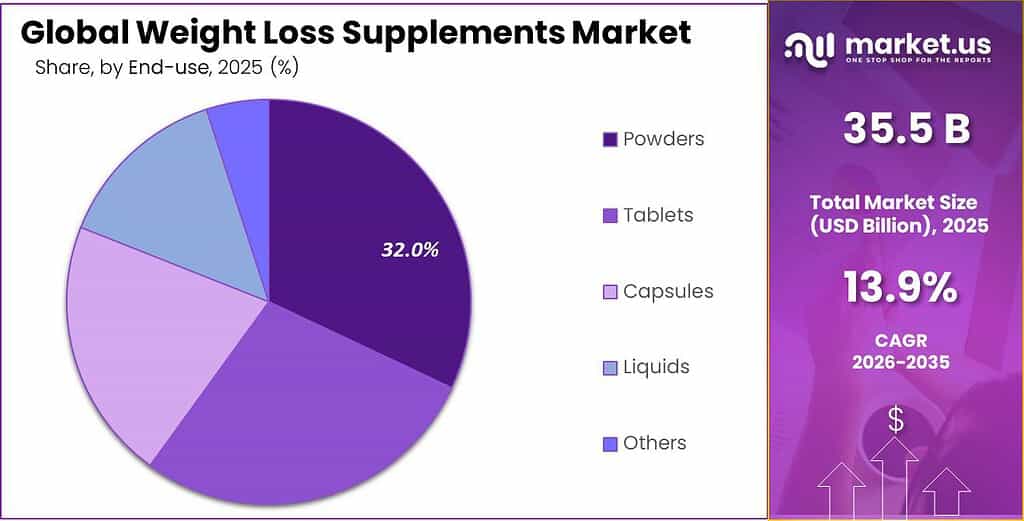
- Powders held a dominant market position, capturing more than a 32.6% share in the weight loss supplements market.
- Women held a dominant market position, capturing more than a 65.3% share in the weight loss supplements market.
- Online Retail Stores held a dominant market position, capturing more than a 37.5% share.
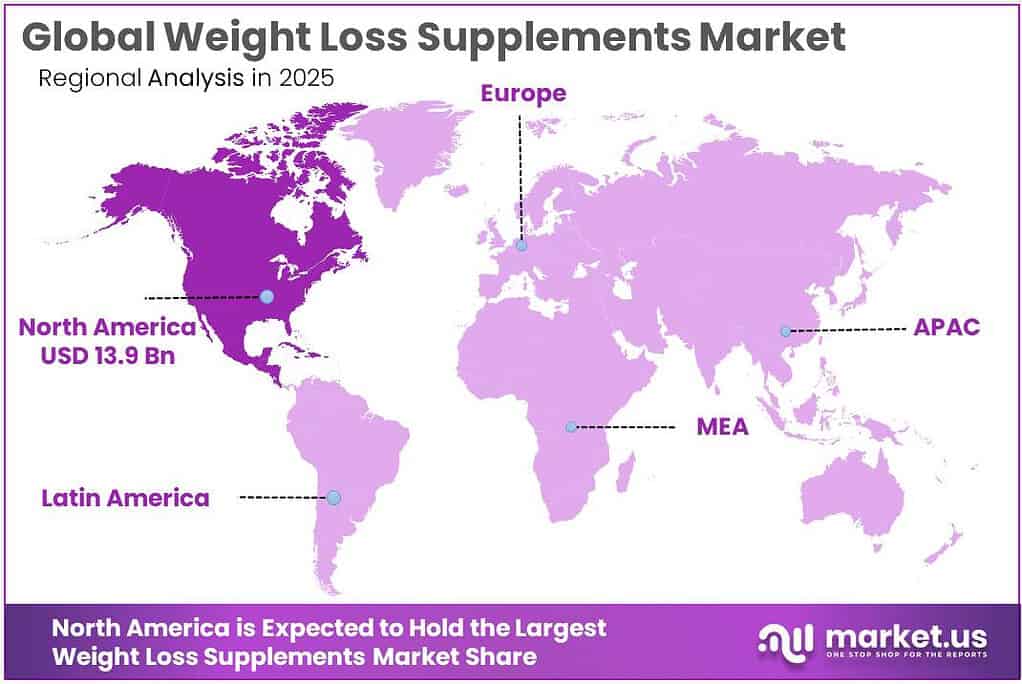
- North America held the dominating position in the global weight loss supplements market, accounting for 39.2% share and reaching USD 13.9 Bn.
By Product Type Analysis
Natural/Botanical Extracts leads the weight loss supplements market with 34.7% share in 2025, supported by strong consumer trust in plant-based wellness
In 2025, Natural/Botanical Extracts held a dominant market position, capturing more than a 34.7% share in the weight loss supplements market by product type. This segment remained ahead because consumers continued to prefer ingredients sourced from plants, herbs, green tea, garcinia, coffee bean, and other naturally derived compounds that are widely associated with everyday wellness. The growing shift toward clean-label products, simple ingredient lists, and supplements perceived as safer than synthetic alternatives strongly supported demand across both developed and emerging markets.
By Form Analysis
Powders dominate the weight loss supplements market with 32.6% share in 2025, driven by convenience and flexible daily use
In 2025, Powders held a dominant market position, capturing more than a 32.6% share in the weight loss supplements market by form. This segment continued to lead as consumers increasingly preferred supplement formats that are easy to mix into shakes, smoothies, meal replacements, and fitness drinks. Powders remained especially popular among gym-going consumers, weight management users, and people following structured diet plans because they offer better portion flexibility and can be easily adjusted based on personal fitness goals. The format also fits well into protein blends, fiber mixes, metabolism boosters, and meal-replacement products, which are commonly used as part of weight control routines.
By End User Analysis
Women lead the weight loss supplements market with 65.3% share in 2025, fueled by strong focus on fitness, wellness, and body management goals
In 2025, Women held a dominant market position, capturing more than a 65.3% share in the weight loss supplements market by end user. This segment remained the largest as women continued to represent the most active consumer group in weight management, wellness nutrition, and lifestyle-focused supplement usage. Demand stayed strong due to increasing awareness around fitness, healthy body composition, metabolism support, and routine nutritional supplementation as part of daily self-care habits. Many women preferred weight loss supplements that align with broader goals such as energy balance, appetite control, digestive wellness, and support for active lifestyles, making these products a regular part of meal planning and fitness routines.
By Distribution Channel Analysis
Online retail stores dominate the weight loss supplements market with 37.5% share in 2025, driven by convenience and wider product access
In 2025, Online Retail Stores held a dominant market position, capturing more than a 37.5% share in the weight loss supplements market by distribution channel. This segment continued to lead as consumers increasingly preferred the ease of buying supplements through e-commerce platforms, brand websites, and digital health marketplaces. Online channels made it simple for buyers to compare ingredients, read user reviews, check product formats, and choose options that match their weight management goals without visiting physical stores. The availability of subscription models, doorstep delivery, discounted bundles, and personalized recommendations further strengthened consumer preference for this channel.
Key Market Segments
By Product Type
- Vitamins and Minerals
- Amino Acids
- Proteins
- Natural/Botanical Extracts
- Others
By Form
- Powders
- Tablets
- Capsules
- Liquids
- Others
By End User
- Men
- Women
By Distribution Channel
- Supermarkets/Hypermarkets
- Health and Wellness Stores
- Online Retail Stores
- Others
Emerging Trends
Shift Toward Oral GLP-1 and Easy-to-Use Daily Formats Is the Latest Trend
One major latest trend in the weight loss supplements and support category is the strong shift toward easy daily formats, especially oral appetite and metabolism support solutions. People now prefer products that fit naturally into daily life instead of complicated routines. This trend is clearly visible in the wider weight-management space, where even trusted healthcare systems are moving toward oral solutions. A major recent example is the FDA approval of Eli Lilly’s once-daily oral GLP-1 pill, which showed around 12% average body weight reduction in trials.
This trend matters for supplements too. Consumers are now actively choosing capsules, gummies, powders, drink mixes, and once-daily satiety blends that feel simple and sustainable. The emotional side is very real—people want support that does not interrupt work, travel, or family routines. Government-backed obesity policies are also helping this shift. The WHO released its first global obesity medicine guidance in late 2025, formally recognizing long-term weight management as part of chronic care.
Clean Label, Gut Health, and Fiber-Based Formulas Are Becoming Mainstream
Another latest trend is the rise of clean-label, gut-health, and fiber-focused weight loss supplements. Instead of aggressive “fat burner” positioning, brands are now moving toward digestive wellness, appetite fullness, and metabolic balance. This trend connects strongly with trusted food and health recommendations. The American Heart Association’s 2026 dietary update strongly emphasized plant-based foods, fiber, and minimally processed nutrition as better long-term health choices.
This is directly influencing supplement innovation. Consumers now prefer prebiotic fiber powders, probiotic blends, apple cider vinegar gummies, green tea capsules, and plant protein meal support because these feel safer and closer to everyday nutrition. The trend feels more humane because people are no longer only chasing rapid weight loss—they want better digestion, reduced cravings, and balanced energy throughout the day.
Drivers
Rising Obesity Levels Are Pushing Demand for Weight Loss Supplements
One major driving factor behind the growth of weight loss supplements is the sharp rise in global obesity and overweight cases. When more people struggle with weight gain, they naturally start looking for easier and faster support options alongside diet and exercise. According to the World Health Organization (WHO), 2.5 billion adults were overweight in 2022, and 890 million of them were living with obesity. This means 43% of the world’s adults were overweight, while 16% were obese.
From a human point of view, many people today are dealing with long work hours, stress, poor sleep, and less physical activity. Because of this, they often turn to supplements like fat burners, appetite support products, green tea extract, or fiber-based products as an extra helping hand. The rising fear of diabetes, heart disease, and low confidence due to weight issues also adds emotional motivation.
Government and Public Health Initiatives Are Supporting Preventive Weight Management
Another major growth driver is the rise in government and public health initiatives focused on obesity prevention. Trusted organizations like WHO and FAO are actively encouraging healthier diets, lower sugar intake, and better food labeling systems. WHO reports that obesity has more than doubled worldwide since 1990, while obesity among children and adolescents has become a major concern.
These efforts indirectly support the weight loss supplement industry because they increase public awareness about body weight, calorie balance, and healthy habits. When governments educate people about obesity risks, consumers become more open to preventive solutions, including supplements that support metabolism, meal replacement, or portion control. In simple words, when people are constantly hearing trusted health bodies talk about weight-related diseases, they become more serious about taking action early.
Restraints
Safety Concerns and Low Consumer Trust Are Major Restraining Factors
One major restraining factor for the weight loss supplements market is growing safety concerns and lack of trust in product claims. Many people are now more careful before using fat burners, appetite suppressants, or herbal slimming capsules because trusted health authorities keep warning about hidden ingredients and side effects. The U.S. FDA clearly states that dietary supplements are not approved for safety or effectiveness before they are sold, unlike medicines.
A strong number that shows this concern comes from the National Institutes of Health (NIH) and public health reporting cited by trusted medical sources: Americans spent more than $2 billion on over-the-counter weight loss supplements in 2019, yet many of these products still lacked strong clinical evidence.
Stronger Government Monitoring and Misleading Product Claims Limit Market Growth
Another important restraining factor is the rise in government monitoring, warning letters, and stricter rules on misleading weight-loss claims. Public health agencies have become more active in protecting consumers from unsafe slimming products. The FDA and WHO both warn that excessive intake of certain vitamins, stimulants, and minerals can create harmful health effects, especially when supplements are taken without medical guidance.
This stronger oversight affects market growth because many brands are forced to remove products, change labels, or reduce aggressive marketing promises. For example, the FDA’s adverse event reporting framework was created to make manufacturers record and report serious health incidents linked to supplements.
Opportunity
Growing Demand for Preventive Health and Healthy Diet Support Creates Big Opportunity
One major growth opportunity for weight loss supplements is the rising shift toward preventive health and better daily nutrition habits. People are no longer waiting for serious health problems before taking action. Many now want simple support products that fit into busy lifestyles, such as fiber supplements, protein blends, meal support powders, probiotics, and plant-based metabolism products. The numbers strongly support this shift. According to the World Health Organization (WHO), more than 1 billion people worldwide are living with obesity, and 43% of adults were overweight in 2022.
A strong opportunity also comes from trusted healthy diet recommendations. WHO states that keeping total fat intake below 30% of daily energy helps prevent unhealthy weight gain. As more governments and public health bodies promote balanced diets, people are becoming more aware of calorie intake, gut health, and portion control. This naturally opens space for supplements that support healthier eating habits rather than promising “quick fixes.”
Government Obesity Programs and Public Nutrition Campaigns Open New Market Space
Another major opportunity lies in government-led obesity prevention programs and trusted nutrition campaigns. Many countries are investing in public health actions such as sugar reduction drives, food labeling laws, school nutrition plans, and healthy lifestyle awareness programs. WHO’s global nutrition targets aim to halt the rise of obesity and diabetes through 2030, creating long-term public attention around weight management.
This opportunity becomes even stronger because consumers today are more educated. They are moving away from unsafe slimming pills and looking for products linked to daily nutrition goals like protein intake, satiety support, digestive balance, and blood sugar wellness. When governments encourage healthier food environments, it indirectly supports supplement categories that align with these goals.
Regional Insights
North America dominates the weight loss supplements market with 39.2% share, reaching USD 13.9 Bn
North America held the dominating position in the global weight loss supplements market, accounting for 39.2% share and reaching USD 13.9 Bn. The region’s leadership is strongly supported by its large health-conscious consumer base, high spending power, and strong penetration of dietary supplements across the United States and Canada.
A major factor behind this dominance is the region’s high obesity burden, which continues to drive steady demand for metabolism boosters, meal replacement powders, appetite suppressants, herbal fat burners, and protein-based weight management products. According to the U.S. CDC, 40.3% of adults in the United States were living with obesity during 2021–2023, highlighting a substantial target population for weight control solutions.
Key Regions and Countries Insights
- North America
- US
- Canada
- Europe
- Germany
- France
- The UK
- Spain
- Italy
- Rest of Europe
- Asia Pacific
- China
- Japan
- South Korea
- India
- Australia
- Rest of APAC
- Latin America
- Brazil
- Mexico
- Rest of Latin America
- Middle East & Africa
- GCC
- South Africa
- Rest of MEA
Key Players Analysis
Glanbia PLC remains a strong player in the weight loss supplements market through brands such as Optimum Nutrition and SlimFast, both widely used in meal replacement and weight management routines. In 2025, the company reported revenue of USD 3.9 billion, showing solid momentum in performance nutrition and online powder formats. Its strong presence in protein shakes, RTD beverages, and fat-management products supports category growth.
GSK holds an important position through its consumer wellness and nutrition-linked healthcare portfolio, especially digestive and lifestyle health brands that overlap with weight management support. In 2025, GSK reported group turnover of GBP 32.7 billion. While its core strength is broader healthcare, its trusted consumer health ecosystem, pharmacy presence, and strong brand credibility support participation in wellness and body management categories.
Nestlé continues to hold a strong position through its nutrition and health science portfolio, with growing relevance in protein nutrition, meal support, and wellness beverages. In 2025, Nestlé reported total sales of CHF 89,490 million, while Nestlé Health Science contributed CHF 6,551 million. This strong numerical base reflects the company’s scale in functional nutrition and lifestyle wellness.
Top Key Players Outlook
- Glanbia PLC
- GlaxoSmithKline PLC
- Herbalife Nutrition Ltd.
- Abbott
- Nestle
- Amway Corp.
- Ajinomoto Co. Inc.
- NutriSport Pharmacal, Inc.
- GNC Holdings, LLC
- LifeVantage Corporation
Recent Industry Developments
In 2025, Nestlé reported total group sales of CHF 89.49 billion, while its Nutrition and Health Science business contributed nearly 16.0% of total sales, highlighting the strategic importance of this division in wellness-led categories.
In 2025, Abbott reported total company sales of USD 44.3 billion, while its nutrition business showed consistent momentum across the year.
Report Scope
| Report Features | Description |
|---|---|
| Market Value (2025) | USD 35.5 Bn |
| Forecast Revenue (2035) | USD 130.2 Bn |
| CAGR (2026-2035) | 13.9% |
| Base Year for Estimation | 2025 |
| Historic Period | 2020-2024 |
| Forecast Period | 2026-2035 |
| Report Coverage | Revenue Forecast, Market Dynamics, Competitive Landscape, Recent Developments |
| Segments Covered | By Product Type (Vitamins and Minerals, Amino Acids, Proteins, Natural/Botanical Extracts, Others), By Form (Powders, Tablets, Capsules, Liquids, Others), By End User (Men, Women), By Distribution Channel (Supermarkets/Hypermarkets, Health and Wellness Stores, Online Retail Stores, Others) |
| Regional Analysis | North America – US, Canada; Europe – Germany, France, The UK, Spain, Italy, Rest of Europe; Asia Pacific – China, Japan, South Korea, India, Australia, Singapore, Rest of APAC; Latin America – Brazil, Mexico, Rest of Latin America; Middle East & Africa – GCC, South Africa, Rest of MEA |
| Competitive Landscape | Glanbia PLC, GlaxoSmithKline PLC, Herbalife Nutrition Ltd., Abbott, Nestle, Amway Corp., Ajinomoto Co. Inc., NutriSport Pharmacal, Inc., GNC Holdings, LLC, LifeVantage Corporation |
| Customization Scope | Customization for segments, region/country-level will be provided. Moreover, additional customization can be done based on the requirements. |
| Purchase Options | We have three licenses to opt for: Single User License, Multi-User License (Up to 5 Users), Corporate Use License (Unlimited User and Printable PDF) |





































