


Report Overview
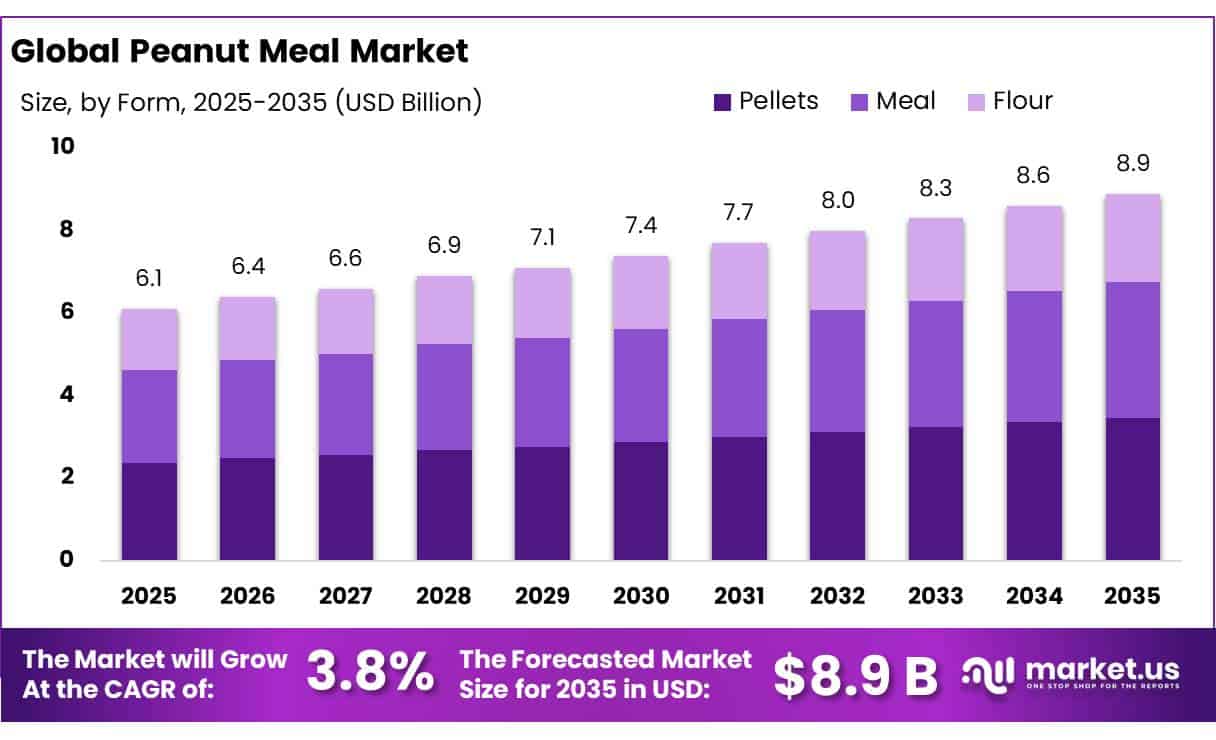
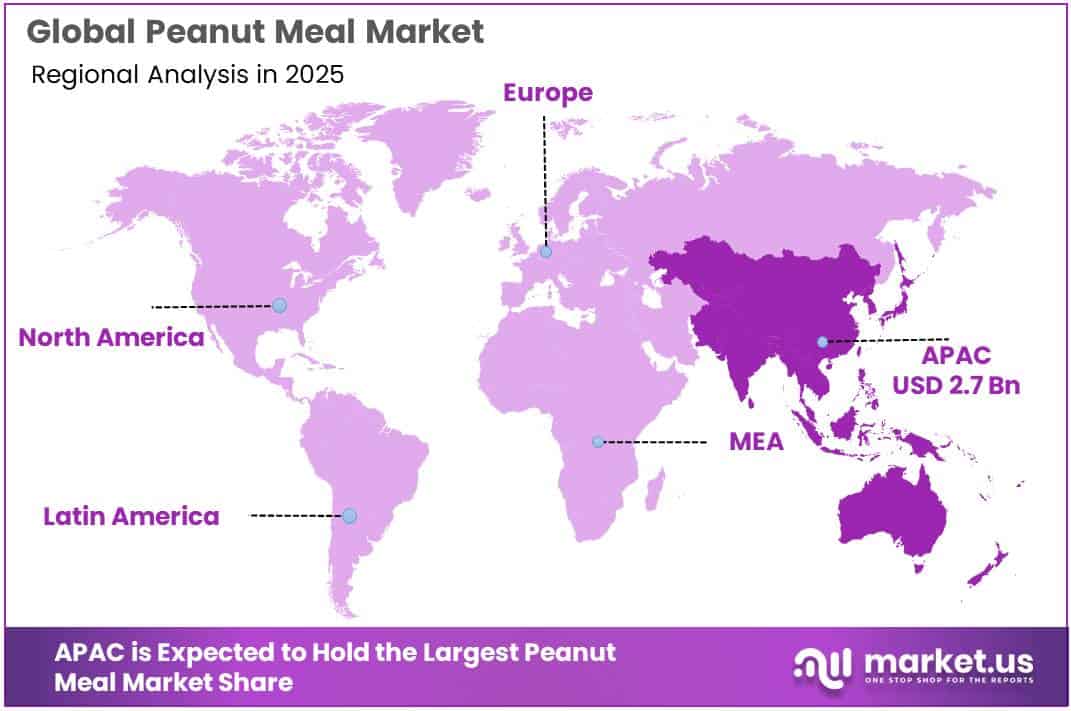
The Global Peanut Meal Market size is expected to be worth around USD 8.9 Billion by 2035, from USD 6.1 Billion in 2025, growing at a CAGR of 3.8% during the forecast period from 2026 to 2035. In 2025, Asia Pacific held a dominant market position, capturing more than a 44.7% share, holding USD 2.7 billion revenue.
The peanut meal industry represents a significant segment within the global oilseed processing and animal feed value chain. Peanut meal, also referred to as groundnut cake or peanut oilcake, is a protein-rich by-product generated after the extraction of oil from peanut kernels. It is widely utilized as a livestock and poultry feed ingredient due to its high protein concentration and favorable nutritional profile. Peanut meal typically contains approximately 48–50% vegetable protein, making it a valuable feed supplement in cattle, poultry, and aquaculture diets where cost-effective plant protein sources are required.
From an industrial perspective, the peanut meal market is fundamentally driven by the scale of peanut cultivation and oil extraction activities. The peanut crop is considered the fourth-largest oilseed crop globally, cultivated across more than 30.5 million hectares and producing around 54.24 million tonnes annually according to FAO agricultural statistics. A significant portion of harvested peanuts is processed into peanut oil, which results in large volumes of peanut meal as a co-product used primarily in animal nutrition and feed manufacturing industries.
- For instance, China produces over 18.3 million tonnes of peanuts annually, while India produces more than 10 million tonnes, highlighting the strong raw material base supporting peanut processing and feed industries in Asia and Africa.
Government initiatives and agricultural development programs are also supporting the growth of the peanut value chain and its by-products. According to the Agricultural and Processed Food Products Export Development Authority (APEDA), India produced about 8.675 million tonnes of groundnuts in 2023–2024, reinforcing its position as the second-largest global producer and a key supplier of raw materials for peanut oil and meal processing industries. Furthermore, India exported approximately 680,698 metric tonnes of groundnuts in 2023–2024, valued at USD 860.68 million, highlighting the international trade potential of the peanut value chain and its derivative products.
Key Takeaways
- Peanut Meal Market size is expected to be worth around USD 8.9 Billion by 2035, from USD 6.1 Billion in 2025, growing at a CAGR of 3.8%.
- Pellets held a dominant market position, capturing more than a 39.9% share of the global peanut meal market.
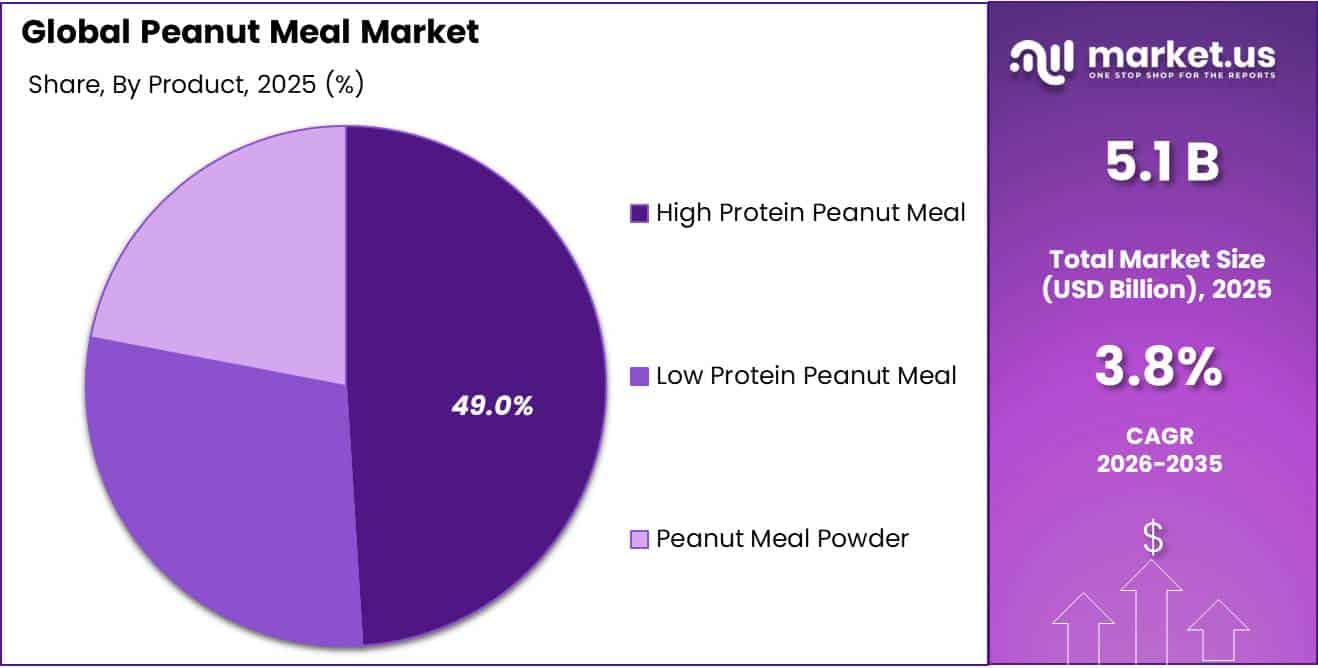
- High Protein Peanut Meal held a dominant market position, capturing more than a 49.1% share of the global peanut meal market.
- Animal Feed held a dominant market position, capturing more than a 56.3% share of the peanut meal market.
- Asia Pacific holds the leading position in the peanut meal market, accounting for 44.7% of the global share with a market value of around USD 2.7 billion.
By Form Analysis
Pellets dominate with 39.9% share due to ease of handling and feed efficiency
In 2024, Pellets held a dominant market position, capturing more than a 39.9% share of the global peanut meal market by form. This strong position is largely linked to the practical advantages pellets offer within the animal feed industry. Pelleted peanut meal is easier to transport, store, and handle compared to loose meal forms, which makes it a preferred option for feed manufacturers and livestock producers. The pelletized format also reduces dust formation during handling and feeding, helping maintain feed quality and minimizing material loss during transportation and storage.
By Product Analysis
High Protein Peanut Meal leads with 49.1% share driven by strong demand for concentrated feed protein
In 2024, High Protein Peanut Meal held a dominant market position, capturing more than a 49.1% share of the global peanut meal market by product type. This segment maintained its leadership mainly because of its high nutritional value and wide use in livestock and poultry feed. High protein peanut meal contains a greater concentration of plant-based protein compared to conventional peanut meal, making it highly valuable for feed formulations where protein balance is critical. Feed manufacturers prefer this variant as it helps meet the nutritional needs of poultry, dairy cattle, and aquaculture species while maintaining cost efficiency in feed production.
By Application Analysis
Animal Feed leads with 56.3% share as peanut meal remains a key livestock protein source
In 2024, Animal Feed held a dominant market position, capturing more than a 56.3% share of the peanut meal market by application. This strong presence is mainly linked to the widespread use of peanut meal as a protein-rich ingredient in livestock nutrition. After peanut oil extraction, the remaining meal contains valuable protein and nutrients that make it suitable for feed formulations used in poultry, cattle, and aquaculture farming. Because feed manufacturers constantly look for affordable plant-based protein sources, peanut meal continues to play an important role in maintaining balanced feed rations.
Key Market Segments
By Form
- Pellets
- Meal
- Flour
By Product
- High Protein Peanut Meal
- Low Protein Peanut Meal
- Peanut Meal Powder
By Application
- Animal Feed
- Food Products
- Oil Extraction
- Nutritional Supplements
- Others
Emerging Trends
Drivers
Rising Livestock Production and Feed Demand Driving Peanut Meal Consumption
One of the major factors driving the peanut meal market is the rapid growth of global livestock production and the increasing demand for high-protein animal feed. Peanut meal is widely used as a protein ingredient in feed formulations for poultry, cattle, and aquaculture because it contains valuable plant protein and nutrients. As livestock production expands worldwide, feed manufacturers are actively looking for reliable and cost-effective protein sources, and oilseed meals such as peanut meal have become an important part of this supply chain.
- According to the Food and Agriculture Organization (FAO), global meat production reached around 374 million tonnes in 2024, increasing from the previous year as poultry, pig, and cattle production continued to rise across many regions. This growth in meat output directly increases the demand for feed ingredients that can support animal growth and productivity.
The increasing consumption of animal products is another important factor supporting feed demand. The FAO projects that the need for food will rise significantly as the global population grows, with overall food demand expected to increase by about 60% by 2050. As a result, the production of animal protein is also expected to expand strongly. Estimates suggest that meat production could rise by nearly 70%, dairy output by about 55%, and aquaculture production by around 90% between 2010 and 2050.
Another important aspect is land use in agriculture. Research from global agricultural datasets indicates that about 38% of global cropland is used to produce feed for livestock, demonstrating the scale of feed production within the agricultural system. As livestock farming becomes more intensive and commercialized, feed efficiency and nutritional quality become key priorities. Protein-rich feed ingredients like peanut meal help livestock producers maintain balanced diets while managing production costs.
Restraints
Risk of Aflatoxin Contamination Limiting the Use of Peanut Meal in Feed and Food Chains
One of the major restraining factors affecting the peanut meal market is the risk of aflatoxin contamination, which can occur during peanut cultivation, harvesting, or storage. Aflatoxins are toxic compounds produced by certain molds, particularly Aspergillus flavus and Aspergillus parasiticus. These toxins can develop when peanuts are exposed to warm and humid conditions, which are common in many peanut-growing regions. Since peanut meal is produced after oil extraction from peanuts, any contamination present in the raw peanuts can also appear in the resulting meal.
Food safety organizations across the world closely monitor aflatoxin levels in oilseed products, including peanut meal. According to the Food and Agriculture Organization (FAO), about 25% of the world’s food crops are affected by mycotoxins each year, with aflatoxins being among the most common and dangerous types. This widespread occurrence means that crops like peanuts are particularly vulnerable, especially in tropical and subtropical climates where moisture and temperature conditions favor fungal growth.
The presence of aflatoxins in feed ingredients has serious consequences for livestock productivity. Even small amounts can affect animal health, reducing growth rates and weakening immune systems. Because of these risks, many countries enforce strict regulatory limits on aflatoxin levels in feed and food products. For example, the European Union has set a maximum limit of 20 micrograms per kilogram for aflatoxins in feed materials such as groundnut meal, ensuring that contaminated products do not enter the feed supply chain.
Opportunity
Expanding Aquaculture Industry Creating New Demand for Plant-Based Feed Ingredients
One of the most promising growth opportunities for the peanut meal market comes from the rapid expansion of the global aquaculture industry. Aquaculture, which includes the farming of fish, shrimp, and other aquatic species, has been growing quickly as countries try to meet the rising demand for protein-rich food. This growth directly increases the need for high-protein feed ingredients, and plant-based meals such as peanut meal are increasingly used in feed formulations for aquaculture species. As fish farming becomes more commercialized and large-scale, the demand for affordable and reliable feed ingredients is creating new opportunities for oilseed by-products like peanut meal.
According to the Food and Agriculture Organization (FAO), global aquaculture production reached about 130.9 million tonnes, making it one of the fastest-growing food production sectors in the world. Of this total, about 94.4 million tonnes were aquatic animals, which include farmed fish and shellfish raised for human consumption. The industry has grown to the point where aquaculture now produces around 51% of the world’s aquatic animal supply, surpassing capture fisheries for the first time in history.
The overall seafood sector is also expanding. FAO data shows that total global fisheries and aquaculture production reached about 223.2 million tonnes, reflecting continued growth in aquatic food production worldwide. As aquaculture output increases, the demand for nutritionally balanced feed becomes even more critical, since feed costs account for a significant portion of fish farming expenses. Feed manufacturers are therefore exploring alternative plant-based protein sources that can replace or complement traditional fishmeal.
The supply of raw peanuts provides a strong base for producing peanut meal. Global peanut production reached about 54 million tonnes in 2023, with major contributions from countries such as China and India. China alone accounts for roughly 36% of global production, while India contributes about 19%, making these regions key suppliers for peanut processing industries. Since peanut meal is produced as a by-product of peanut oil extraction, the large and stable supply of peanuts helps ensure the availability of this protein-rich feed ingredient for livestock and aquaculture markets.
Regional Insights
Asia Pacific dominates the Peanut Meal Market with 44.7% share valued at USD 2.7 Billion
Asia Pacific holds the leading position in the peanut meal market, accounting for 44.7% of the global share with a market value of around USD 2.7 billion. The region’s dominance is largely supported by its strong agricultural base, large peanut production capacity, and the widespread use of peanut meal in animal feed and oilseed processing industries. Countries such as China, India, Myanmar, and Indonesia play a central role in peanut cultivation and processing, which directly supports the supply of peanut meal used across feed and livestock sectors.
According to FAO-based statistics, global peanut production reached about 54 million tonnes in 2023, with China and India leading the market. China alone accounts for roughly 36% of the world’s peanut production, while India contributes about 19%, making the Asia Pacific region the core hub for peanut processing and by-products such as peanut meal. These large production volumes provide a strong raw material supply for peanut oil extraction industries, where peanut meal is produced as a high-protein by-product.
Key Regions and Countries Insights
- North America
- US
- Canada
- Europe
- Germany
- France
- The UK
- Spain
- Italy
- Rest of Europe
- Asia Pacific
- China
- Japan
- South Korea
- India
- Australia
- Rest of APAC
- Latin America
- Brazil
- Mexico
- Rest of Latin America
- Middle East & Africa
- GCC
- South Africa
- Rest of MEA
Key Players Analysis
Wilmar International is one of the largest global agribusiness groups involved in oilseed crushing, edible oils refining, and feed ingredient production, including peanut meal. The company operates over 500 manufacturing plants across more than 50 countries and employs around 100,000 people globally. In 2022, Wilmar generated about US$73.4 billion in revenue, reflecting its strong position in the global oilseed and agricultural commodities sector. Its Feed and Industrial Products division alone recorded US$42.3 billion in revenue in 2024, highlighting the scale of its feed and oilseed processing operations.
Khedut Solvexp Pvt Ltd is an India-based oilseed processing company specializing in peanut oil extraction and peanut meal production. The company operates crushing and solvent extraction units that process large volumes of groundnuts into edible oil and high-protein meal used in animal feed. India is among the world’s largest peanut producers, generating around 10 million tonnes of peanuts annually, which supports the availability of raw materials for processors like Khedut Solvexp. The company supplies peanut meal to livestock feed manufacturers across domestic and export markets, particularly in Asia and the Middle East.
Ipasai Group is a Thailand-based agribusiness company involved in peanut processing, edible oil production, and animal feed ingredients such as peanut meal. The company operates integrated processing facilities that convert peanuts into oil and high-protein meal used in feed manufacturing. Through export-oriented operations, Ipasai supplies peanut products to multiple Asian markets where livestock and poultry production are expanding. Thailand remains an important agricultural exporter, with the country producing over 0.4 million tonnes of peanuts annually, supporting domestic processing industries such as peanut oil and meal manufacturing.
Top Key Players Outlook
- Wilmar International
- Ipasai Group
- Khedut Solvexp Pvt Ltd
- Louis Dreyfus Company
- Golden Peanut Company
- Cargill
- Archer Daniels Midland ADM
- Bunge
- Olam International
Recent Industry Developments
In 2025, Wilmar International continued to strengthen its crushing operations, reporting US$70.4 billion in revenue and US$1.28 billion core net profit, with improved crushing margins supporting the supply of oilseed meals including peanut meal.
In 2025, Louis Dreyfus Company continued expanding its oilseed operations and reported US$26.2 billion revenue for the first half of the year, with US$987 million EBITDA and US$418 million net income, reflecting steady activity in agricultural processing and feed ingredient supply chains.
Report Scope
| Report Features | Description |
|---|---|
| Market Value (2025) | USD 6.1 Bn |
| Forecast Revenue (2035) | USD 8.9 Bn |
| CAGR (2026-2035) | 3.8% |
| Base Year for Estimation | 2025 |
| Historic Period | 2020-2024 |
| Forecast Period | 2026-2035 |
| Report Coverage | Revenue Forecast, Market Dynamics, Competitive Landscape, Recent Developments |
| Segments Covered | By Form (Pellets, Meal, Flour), By Product (High Protein Peanut Meal, Low Protein Peanut Meal, Peanut Meal Powder), By Application (Animal Feed, Food Products, Oil Extraction, Nutritional Supplements, Others) |
| Regional Analysis | North America – US, Canada; Europe – Germany, France, The UK, Spain, Italy, Rest of Europe; Asia Pacific – China, Japan, South Korea, India, Australia, Singapore, Rest of APAC; Latin America – Brazil, Mexico, Rest of Latin America; Middle East & Africa – GCC, South Africa, Rest of MEA |
| Competitive Landscape | Wilmar International, Ipasai Group, Khedut Solvexp Pvt Ltd, Louis Dreyfus Company, Golden Peanut Company, Cargill, Archer Daniels Midland ADM, Bunge, Olam International |
| Customization Scope | Customization for segments, region/country-level will be provided. Moreover, additional customization can be done based on the requirements. |
| Purchase Options | We have three licenses to opt for: Single User License, Multi-User License (Up to 5 Users), Corporate Use License (Unlimited User and Printable PDF) |





































