


Market Overview
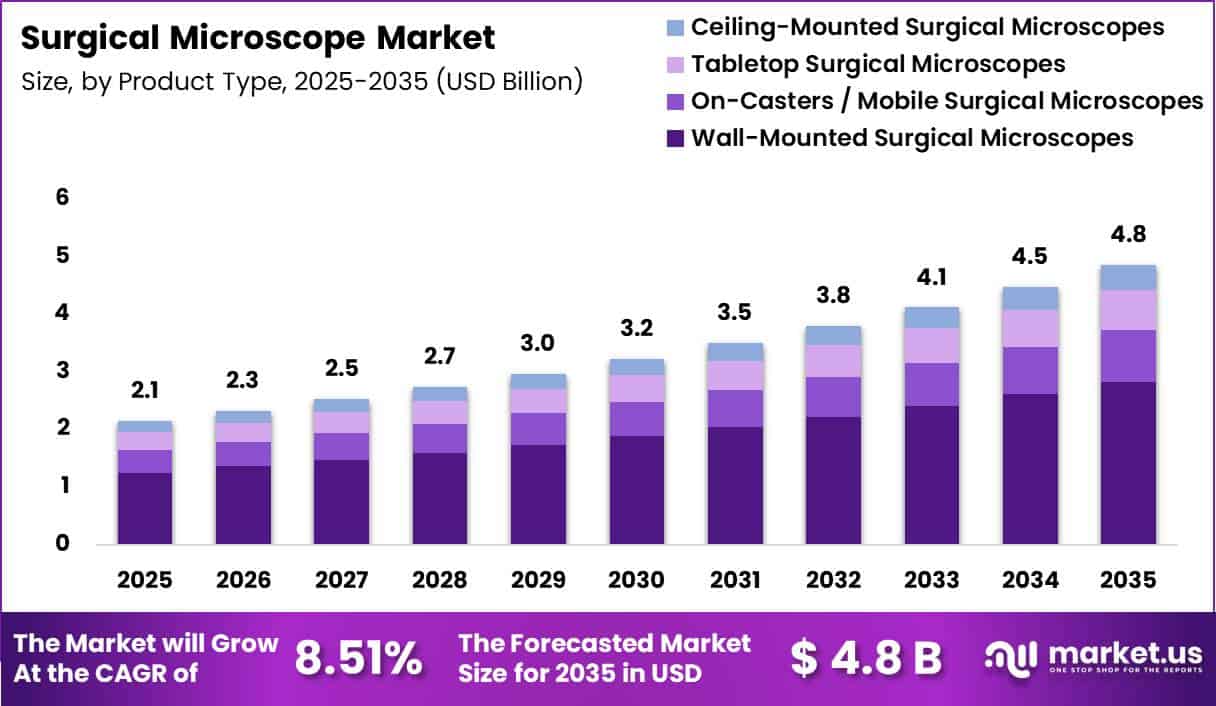
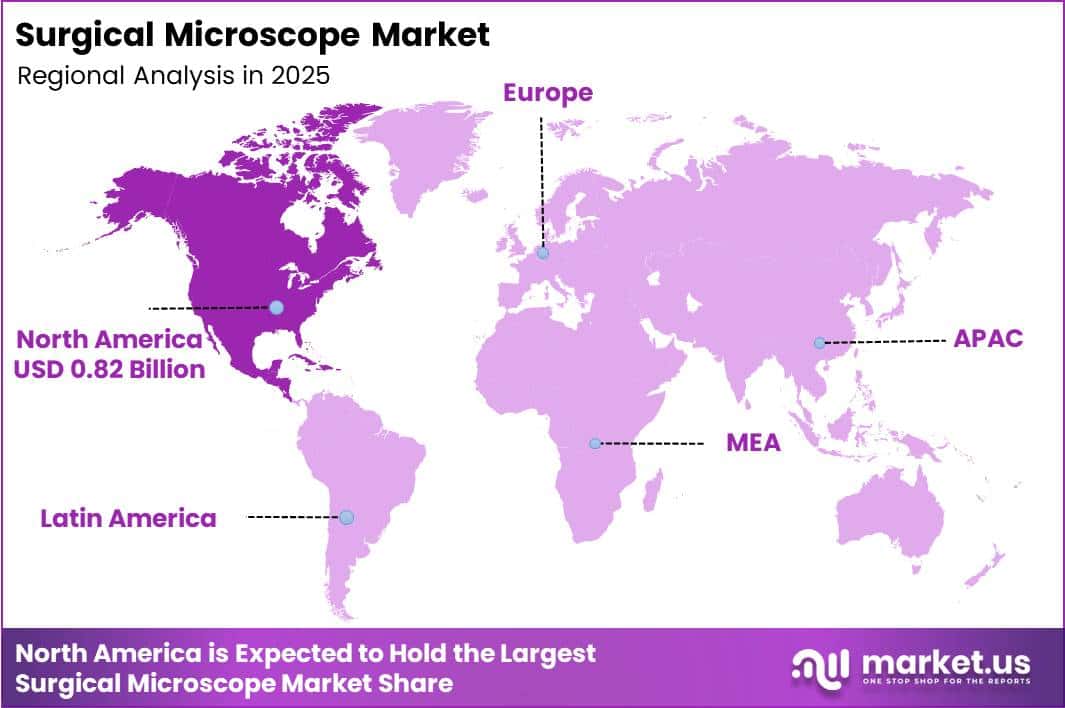
Global Surgical Microscope Market size is expected to be worth around US$ 4.85 Billion by 2035 from US$ 2.14 Billion in 2025, growing at a CAGR of 8.51% during the forecast period from 2026 to 2035. In 2025, North America led the market, achieving over 38.50% share with a revenue of US$ 0.82 Billion.
The Surgical Microscope Market is gaining momentum as healthcare systems increasingly adopt precision-guided technologies for complex surgical procedures. Growing demand for minimally invasive surgery, advances in microsurgical techniques, and rising investments in hospital infrastructure are supporting the adoption of surgical microscopes across neurosurgery, ophthalmology, ENT, dentistry, plastic surgery, and spinal surgery.
Modern systems now offer high-definition digital imaging, fluorescence-guided visualization, robotic compatibility, and AI-assisted workflow features, enabling surgeons to achieve greater precision while improving patient outcomes.
The increasing burden of vision disorders is one of the strongest long-term growth drivers. According to the World Health Organization (WHO), at least 2.2 billion people worldwide live with near or distance vision impairment, while more than 94 million people are affected by cataracts.
WHO also estimates that one in every two people who require cataract surgery still lacks access to this sight-restoring procedure, highlighting the need for advanced ophthalmic surgical equipment, including operating microscopes.
Demand is also supported by broader improvements in surgical care worldwide. WHO states that surgical conditions account for approximately 13% of the global burden of disease, while an estimated 5 billion people still do not have access to safe, timely, and affordable surgical services.
In addition, around 143 million additional surgical procedures are required each year to meet global healthcare needs, encouraging governments and healthcare providers to strengthen operating room capabilities with advanced visualization technologies.
Government initiatives to expand universal health coverage, improve patient safety, and modernize surgical infrastructure are expected to further support the adoption of surgical microscopes in both developed and emerging healthcare markets.
Key Takeaways
- Market Size : Surgical Microscope Market size is expected to be worth around US$ 4.85 Billion by 2035 from US$ 2.14 Billion in 2025.
- Market Share : The market is growing at a CAGR of 8.51% during the forecast period from 2026 to 2035.
- Product Type Analysis : In 2025, On-Casters / Mobile Surgical Microscopes accounted for the largest share of the Surgical Microscope Market, capturing 58.40% of total revenue.
- Application Analysis : In 2025, Neurosurgery & Spine Surgery held the largest share of the Surgical Microscope Market at 29.60%.
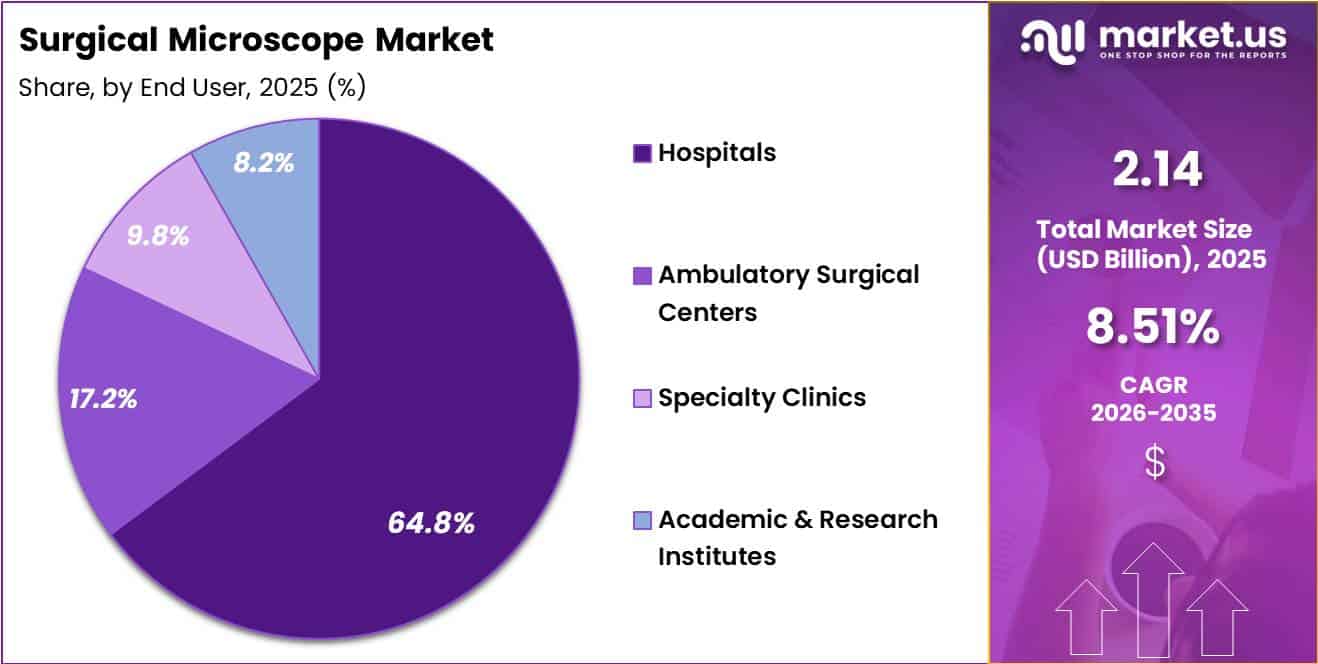
- End User Analysis : In 2025, Hospitals dominated the Surgical Microscope Market, accounting for 64.80% of total revenue.
- Light Source Analysis : In 2025, LED Surgical Microscopes accounted for the largest market share of 46.70%.
- Regional Analysis : In 2025, North America led the market, achieving over 38.50% share with a revenue of US$ 0.82 Billion.
Product Type Analysis
In 2025, On-Casters / Mobile Surgical Microscopes accounted for the largest share of the Surgical Microscope Market, capturing 58.40% of total revenue. Their dominance is driven by excellent mobility, flexible positioning, and compatibility with multiple operating rooms, making them suitable for hospitals that perform a wide range of microsurgical procedures.
Mobile systems can be quickly moved between neurosurgery, ophthalmology, ENT, dentistry, and plastic surgery departments, helping healthcare providers maximize equipment utilization while reducing infrastructure costs.
Their ergonomic design, integrated imaging systems, and digital workflow capabilities further support widespread adoption. FDA classifies surgical microscopes as medical devices intended to provide magnified visualization during surgery, reinforcing their importance across multiple specialties.
Wall-Mounted Surgical Microscopes are widely used where floor space is limited and stable positioning is required. Tabletop Surgical Microscopes remain popular in dental clinics, outpatient facilities, and teaching laboratories because of their compact size and lower installation costs.
Ceiling-Mounted Surgical Microscopes continue to gain acceptance in advanced operating rooms due to their unrestricted floor access, improved ergonomics, and seamless integration with surgical navigation systems.
Increasing adoption of digital imaging, fluorescence-guided surgery, and robotic-assisted procedures is encouraging hospitals to invest across all product categories, although mobile systems continue to lead due to their operational flexibility and cost efficiency.
Application Analysis
In 2025, Neurosurgery & Spine Surgery held the largest share of the Surgical Microscope Market at 29.60%. These procedures require exceptional magnification, illumination, and depth perception to safely operate around delicate neural structures.
Surgical microscopes enhance visualization during tumor removal, vascular surgery, spinal decompression, and nerve repair, reducing procedural risks and improving clinical outcomes. Growing cases of neurological disorders, spinal degeneration, and brain tumors continue to support demand for advanced visualization technologies. FDA also recognizes neurosurgical microscope accessories designed to enhance tissue visualization during complex brain and spinal procedures.
Ophthalmology represents another major application, driven by cataract, retinal, and corneal surgeries that require high optical precision. ENT Surgery increasingly utilizes microscopes for middle-ear and skull-base procedures requiring enhanced visibility.
Dentistry benefits from magnification during endodontic, periodontal, and implant surgeries, improving treatment accuracy. Plastic & Reconstructive Surgery uses surgical microscopes for microsurgical tissue transfer and vascular reconstruction, while Gynecology & Urology employ them in delicate reconstructive procedures.
Oncology Surgery is also adopting advanced surgical microscopes, particularly for fluorescence-guided tumor resection. Continued technological improvements in digital visualization and intraoperative imaging are supporting growth across all application areas.
End User Analysis
In 2025, Hospitals dominated the Surgical Microscope Market, accounting for 64.80% of total revenue. Hospitals perform the highest volume of complex surgical procedures requiring advanced optical visualization, including neurosurgery, ophthalmology, ENT, spinal surgery, and reconstructive surgery.
Large healthcare institutions also possess the financial capacity to invest in premium surgical microscopes integrated with digital imaging, fluorescence visualization, and navigation technologies. Growing investments in operating room modernization and minimally invasive surgery further strengthen hospital demand. FDA regulations recognize surgical microscopes as essential medical devices used across multiple surgical specialties.
Ambulatory Surgical Centers (ASCs) are steadily expanding their adoption of surgical microscopes due to the increasing shift toward same-day surgical procedures. Their focus on cost-effective, high-quality care encourages investment in compact and mobile microscope systems.
Specialty Clinics, particularly ophthalmology, dental, and ENT clinics, continue to invest in advanced microscopes to improve diagnostic precision and treatment quality. Meanwhile, Academic & Research Institutes utilize surgical microscopes for physician training, surgical simulation, and clinical research.
Increasing collaboration between healthcare providers, universities, and medical technology manufacturers is expected to support innovation and expand microscope adoption beyond traditional hospital environments throughout the forecast period.
Light Source Analysis
In 2025, LED Surgical Microscopes accounted for the largest market share of 46.70%. Their leadership is supported by long operating life, low power consumption, reduced heat generation, and stable illumination during lengthy surgical procedures.
LED systems provide consistent brightness and excellent color rendering while minimizing maintenance requirements, making them particularly attractive for ophthalmology, ENT, and dental surgeries.
Their energy efficiency and durability have encouraged healthcare facilities to replace conventional lighting technologies with LED-based systems. Technical reviews of surgical microscope technologies also identify LED illumination as the preferred option for many modern surgical applications.
Xenon Surgical Microscopes continue to play an important role in neurosurgery because their broad-spectrum illumination supports fluorescence-guided procedures, including intraoperative visualization techniques.
Halogen Surgical Microscopes remain in use due to their reliable performance, lower acquisition costs, and widespread familiarity among healthcare providers, although their adoption is gradually declining as hospitals upgrade to newer technologies.
Ongoing innovations in optical engineering, digital imaging, and surgical navigation are expected to further accelerate the transition toward LED-based microscope platforms while maintaining demand for xenon systems in specialized microsurgical procedures.
Market Segmentations
By Product Type
- On-Casters / Mobile Surgical Microscopes
- Wall-Mounted Surgical Microscopes
- Tabletop Surgical Microscopes
- Ceiling-Mounted Surgical Microscopes
By Application
- Neurosurgery & Spine Surgery
- Ophthalmology
- ENT Surgery
- Dentistry
- Plastic & Reconstructive Surgery
- Gynecology & Urology
- Oncology Surgery
By End User
- Hospitals
- Ambulatory Surgical Centers
- Specialty Clinics
- Academic & Research Institutes
By Light Source
- LED Surgical Microscopes
- Xenon Surgical Microscopes
- Halogen Surgical Microscopes
Drivers
Cataract backlog and aging-led ophthalmic case growth
WHO states that at least 2.2 billion people live with near or distance vision impairment, cataract remains a leading cause, and 1 in 2 people globally who need cataract surgery still do not have access to it, which implies a very large untreated procedural reservoir rather than a mature end market.
This matters directly for surgical microscopes because cataract, glaucoma, corneal, and retina procedures depend on stable magnification and illumination infrastructure, so every expansion in ophthalmic throughput tends to pull microscope utilization, replacement, or additional installed units.
The age mix also supports durable demand because WHO notes most vision impairment is concentrated in people over 50, while U.S. and other high-income systems continue to process rising senior case loads.
Strategically, the driver is strongest in India, China, and other high-volume eye-care corridors where unmet cataract demand is still structural, while North America, the EU, and Japan benefit more from replacement demand and premiumization of existing microscope fleets.
In CAGR terms, this is the most powerful near-term driver because it combines backlog release, aging demographics, and productivity expansion in hospital and ambulatory settings, supporting an estimated +2.2 %-point uplift to growth expectations.
| Driver | (~) % Impact on CAGR Forecast | Geographic Relevance | Impact Timeline |
|---|---|---|---|
| Cataract backlog and aging-led ophthalmic case growth | +2.2% | North America core, EU, Japan, China urban tiers, India high-volume corridors, LATAM spill-over | Short term |
| ASC economics and reimbursement shift favoring microscope-intensive outpatient surgery | +1.6% | U.S. core, Western Europe selective, developed APAC | Short term |
| Digital visualization, heads-up ergonomics, and workflow modernization | +1.9% | U.S., Germany, Japan, South Korea, China tertiary hospitals, GCC premium centers | Medium term |
| Diabetes and retinal disease expansion lifting posterior-segment intervention volumes | +1.3% | India, China, Southeast Asia, Middle East, U.S. high-diabetes states | Medium term |
| Regulatory clearances expanding premium replacement cycles and product mix | +1.1% | U.S. core, EU, Japan, export-oriented APAC manufacturing hubs | Medium term |
| Supply-chain resilience and OR capital refresh after disruption-era underinvestment | +0.9% | U.S., EU, China, Singapore, South Korea | Long term |
Challenge
Fragmented Intellectual Property and Talent Limit SSB Market Growth
The race toward solid-state battery commercialisation is creating a significant talent bottleneck across the industry. Critical expertise is concentrated among electrochemists, ceramic processing specialists, precision equipment engineers, and battery systems architects.
It is estimated that only a few thousand professionals worldwide possess practical experience spanning both solid-electrolyte materials and large-scale cell manufacturing. As battery manufacturing employment expands from its current base of hundreds of thousands, the limited supply of specialised talent could constrain knowledge transfer, increase employee turnover risks, and delay manufacturing scale-up during the late 2020s.
Intellectual property (IP) fragmentation represents an additional barrier. Core innovations in electrolyte compositions, interface treatments, and cell-stack architectures are distributed among startups, universities, and established automotive manufacturers.
Overlapping patent portfolios can extend cross-licensing and commercialisation negotiations by 6–18 months while increasing royalty costs. Consequently, pure-play solid-state startups may sustain R&D spending of 15–25% of revenue, compared with high-single-digit levels among mature cell manufacturers.
These constraints could reduce the pace of process improvement and potentially lower achievable market CAGR by approximately 0.7 percentage points through 2033. Governments and industry consortia should therefore establish specialised training centres, while major companies should pursue cross-licensing, strategic equity investments, and university co-development agreements to strengthen talent and technology access.
| Challenge | (~) % CAGR Friction Drag | Geographic Relevance | Mitigation Horizon |
|---|---|---|---|
| Solid electrolyte scale-up risk | -1.8% | North America, EU, East Asia | Long term (≥ 4 years) |
| Critical materials sourcing strain | -1.5% | East Asia, EU, US, resource hubs | Long term (≥ 4 years) |
| Yield loss in giga-manufacturing | -1.3% | China, Japan, Korea, EU pilot hubs | Medium term (2–4 years) |
| Safety, standards, and liability fog | -0.9% | EU regulatory hubs, US, Japan | Medium term (2–4 years) |
| Auto OEM integration complexity | -1.1% | North America core, EU, China OEMs | Medium term (2–4 years) |
| Talent and IP fragmentation | -0.7% | US, EU, Japan, Korea, China | Long term (≥ 4 years) |
Restraints
Hospital Capital Budget Constraints Slow Surgical Microscope Market Growth
Capital budget tightening in hospitals is a structural restraint driven by post‑pandemic margin compression and rising operating cost ratios, with many U.S. health systems reporting operating margins oscillating between 0–3% from 2023 onwards, which forces deferral of non‑mandatory imaging and microsurgical equipment purchases into later budget cycles.
As labor costs rose 8–12% cumulatively between 2022 and 2025 in many OECD systems, and energy and facilities overheads added another 2–4 % points to cost bases, capital expenditure envelopes for high‑ticket devices such as surgical microscopes shrank by an estimated 10–15% versus pre‑2020 levels, translating into a realistic 2.3 %‑point drag on the market’s otherwise double‑digit CAGR trajectory for 2026–2030.
This manifests operationally as elongated purchase approval cycles CapEx committees stretching evaluation and tender processes from 6–9 months historically to 12–18 months and stricter payback period requirements where systems now demand <5–7‑year ROI rather than simply matching asset life.
Strategically, vendors face a slower installed‑base refresh, reduced multi‑room standardization deals, and a higher share of refurbished and mid‑tier platforms in tenders, compressing gross margins by an estimated 150–250 basis points for premium product lines and pushing players to offer financing, managed service models, and outcome‑linked contracts to unlock stalled demand while protecting price integrity.
| Restraint | (~) % Impact on CAGR Forecast | Geographic Relevance | Impact Timeline |
|---|---|---|---|
| Capital budget tightening in hospitals | -2.3% | North America, EU-5, Japan core | Short–Medium term |
| High-spec device price inflation | -1.9% | North America, EU, Advanced APAC | Medium term |
| Regulatory and accreditation compliance drag | -1.5% | U.S., EU, OECD health systems | Medium–Long term |
| Optical and electronic component supply risk | -1.7% | EU, APAC manufacturing hubs | Short term |
| Workforce and training constraints | -1.2% | Global tertiary hospitals | Medium term |
| Slow adoption in resource-limited settings | -1.4% | Latin America, MEA, Emerging APAC | Long term |
Opportunity
Connected Data Platforms Drive Future Surgical Microscope Market Growth
A third opportunity is to build data, analytics, and remote mentoring services around microscope usage, which are currently underdeveloped despite the microscope’s central role in high‑complexity surgeries and the increasing adoption of digital health tools and SaaS‑based services in hospital reimbursement frameworks.
Baseline market growth primarily reflects physical unit sales and incremental optical features, underestimating the economic value of capturing structured data such as procedure type, duration, complication markers, and ergonomic parameters from microscope‑connected systems, and using them to support training, quality improvement, and tele‑mentoring.
Vendors could embed secure data capture and streaming capabilities into microscopes and monetize them via tiered subscriptions to analytics dashboards, surgical video libraries, and real‑time remote guidance, charging hospitals per OR or per surgeon and achieving software gross margins of 60–70% compared with 30–40% on hardware.
If 15–20% of hospitals in North America, the EU, and selected APAC hubs adopt such services by 2030, average annual revenue per installed microscope could rise by 20–30% while reducing per‑procedure training costs by an estimated 10–15% and improving OR utilization through data‑driven scheduling.
These economics could realistically add around 1.5 % points to CAGR upside by 2035 as data products, rather than hardware refresh alone, drive incremental growth beyond the current forecast curves.
| Restraint | (~) % Impact on CAGR Forecast | Geographic Relevance | Impact Timeline |
|---|---|---|---|
| Capital budget tightening in hospitals | -2.3% | North America, EU-5, Japan core | Short–Medium term |
| High-spec device price inflation | -1.9% | North America, EU, Advanced APAC | Medium term |
| Regulatory and accreditation compliance drag | -1.5% | U.S., EU, OECD health systems | Medium–Long term |
| Optical and electronic component supply risk | -1.7% | EU, APAC manufacturing hubs | Short term |
| Workforce and training constraints | -1.2% | Global tertiary hospitals | Medium term |
| Slow adoption in resource-limited settings | -1.4% | Latin America, MEA, Emerging APAC | Long term |
Regional Analysis
In 2025, North America held the leading position in the Surgical Microscope Market, accounting for over 38.50% of global revenue and generating US$ 0.82 billion. The region’s dominance is driven by its advanced healthcare infrastructure, high adoption of minimally invasive procedures, and strong availability of specialized surgeons and tertiary care hospitals.
The United States performs a high volume of ophthalmic, neurosurgical, spinal, and ENT procedures that rely on surgical microscopes for enhanced precision. In addition, continuous investments in operating room modernization and digital surgical technologies support the widespread adoption of advanced visualization systems.
The World Health Organization (WHO) also emphasizes that strengthening surgical infrastructure and expanding access to high-quality cataract surgery remain global healthcare priorities, with high-income regions such as North America already possessing well-developed surgical capacity.
Europe represents another significant regional market due to its mature healthcare systems, aging population, and established ophthalmology and neurosurgery services. Countries including Germany, France, Italy, and the United Kingdom continue investing in advanced surgical equipment to improve procedural accuracy and patient outcomes.
Meanwhile, Asia-Pacific is expected to witness the fastest growth, supported by expanding healthcare infrastructure, rising surgical volumes, increasing healthcare expenditure, and government initiatives to improve access to eye care and specialized surgeries. WHO’s global eye care monitoring highlights the need for greater cataract surgery coverage across many Asian countries, encouraging investments in modern surgical technologies.
Latin America and the Middle East & Africa are gradually expanding their surgical capabilities through healthcare modernization, improved access to specialized care, and government-supported investments in hospital infrastructure. WHO continues to identify these regions as priorities for expanding access to safe surgery and quality eye care, creating long-term opportunities for surgical microscope adoption.
Key Regions and Countries
North America
- The US
- Canada
Europe
- Germany
- France
- The U.K.
- Italy
- Spain
- Russia & CIS
- Rest of Europe
Asia Pacific
- China
- India
- Japan
- South Korea
- ASEAN
- Australia & New Zealand
- Rest of Asia Pacific
Middle East & Africa
- GCC
- South Africa
- Rest of Middle East & Africa
Latin America
- Brazil
- Mexico
- Rest of Latin America
Key Player Analysis
The Surgical Microscope Market is highly competitive, with leading companies focusing on innovation, digital imaging, ergonomic design, and workflow integration to improve surgical precision across neurosurgery, ophthalmology, ENT, dentistry, and reconstructive surgery.
Manufacturers are expanding their product portfolios by integrating fluorescence imaging, 3D visualization, artificial intelligence, and digital connectivity to support complex microsurgical procedures.
At the same time, companies are strengthening their global presence through strategic partnerships, product enhancements, and investments in research and development to meet the growing demand for advanced surgical visualization systems.
Carl Zeiss Meditec AG remains one of the market leaders with a comprehensive portfolio of surgical visualization systems for ophthalmology and microsurgery, supported by continuous investments in digital workflows and minimally invasive surgical solutions.
Leica Microsystems (Danaher) leverages more than 175 years of microscopy expertise to provide advanced surgical microscopes for ophthalmology, neurosurgery, ENT, plastic surgery, and dentistry. Olympus Corporation continues to strengthen its surgical imaging capabilities through optical technologies for minimally invasive procedures.
Haag-Streit Group focuses on premium ophthalmic diagnostic and surgical solutions, while Topcon Corporation expands its ophthalmic imaging and microscope offerings. Alcon Inc. strengthens its ophthalmic surgery portfolio through integrated cataract surgery technologies.
Seiler Instrument & Manufacturing provides cost-effective surgical microscopes for hospitals and specialty clinics, whereas Karl Kaps GmbH & Co. KG is recognized for precision-engineered operating microscopes used in ENT, ophthalmology, and microsurgery. Together, these companies continue to drive technological advancements and improve surgical outcomes worldwide.
Top Key Players
- Carl Zeiss Meditec AG
- Leica Microsystems (Danaher)
- Olympus Corporation
- Haag-Streit Group (Metall Zug AG)
- Topcon Corporation
- Alcon Inc.
- Seiler Instrument & Manufacturing
- Karl Kaps GmbH & Co. KG
- Möller-Wedel GmbH
- TAKAGI SEIKO Co. Ltd.
- Global Surgical Corporation
- Inami & Co. Ltd.
Recent Developments
- In May 2026 – ZEISS unveiled a strategic transformation program that includes investments of up to €150 million through fiscal 2028/29. The program is expected to generate more than €200 million in annual earnings improvements while supporting innovation across its surgical visualization and microsurgery portfolio.
- In December 2025 – ZEISS confirmed the optimization of its global manufacturing network by strengthening production capacity in China while expanding cost-efficient manufacturing outside the country to support long-term growth in microsurgery and ophthalmic technologies.
- In April 2025 – Leica Microsystems launched the Proveo 8x 3D digital ophthalmic microscope during the ASCRS Annual Meeting in California, U.S. The microscope delivers real-time 3D visualization and advanced digital imaging designed to improve surgical precision and ergonomics during ophthalmic procedures.
Report Scope
| Report Features | Description |
|---|---|
| Market Value (2025) | US$ 2.14 Billion |
| Forecast Revenue (2035) | US$ 4.85 Billion |
| CAGR (2026-2035) | 8.51% |
| Base Year for Estimation | 2025 |
| Historic Period | 2020-2024 |
| Forecast Period | 2026-2035 |
| Report Coverage | Revenue Forecast, Market Dynamics, Competitive Landscape, Recent Developments |
| Segments Covered | By Product Type (On-Casters / Mobile Surgical Microscopes, Wall-Mounted Surgical Microscopes, Tabletop Surgical Microscopes, Ceiling-Mounted Surgical Microscopes), By Application (Neurosurgery & Spine Surgery, Ophthalmology, ENT Surgery, Dentistry, Plastic & Reconstructive Surgery, Gynecology & Urology, Oncology Surgery), By End User (Hospitals, Ambulatory Surgical Centers, Specialty Clinics, Academic & Research Institutes), By Light Source (LED Surgical Microscopes, Xenon Surgical Microscopes, Halogen Surgical Microscopes) |
| Regional Analysis | North America – The US, Canada; Europe – Germany, France, U.K., Italy, Spain, Russia & CIS, Rest of Europe; Asia Pacific – China, India, Japan, South Korea, ASEAN, Australia & New Zealand, Rest of Asia Pacific; Middle East & Africa – GCC, South Africa, Rest of Middle East & Africa; Latin America – Brazil, Mexico, Rest of Latin America |
| Competitive Landscape | Carl Zeiss Meditec AG, Leica Microsystems (Danaher), Olympus Corporation, Haag-Streit Group (Metall Zug AG), Topcon Corporation, Alcon Inc., Seiler Instrument & Manufacturing, Karl Kaps GmbH & Co. KG, Möller-Wedel GmbH, TAKAGI SEIKO Co. Ltd., Global Surgical Corporation, Inami & Co. Ltd. |
| Customization Scope | Customization for segments, region/country-level will be provided. Moreover, additional customization can be done based on the requirements. |
| Purchase Options | We have three licenses to opt for: Single User License, Multi-User License (Up to 5 Users), Corporate Use License (Unlimited User and Printable PDF) |





































