


Market Overview
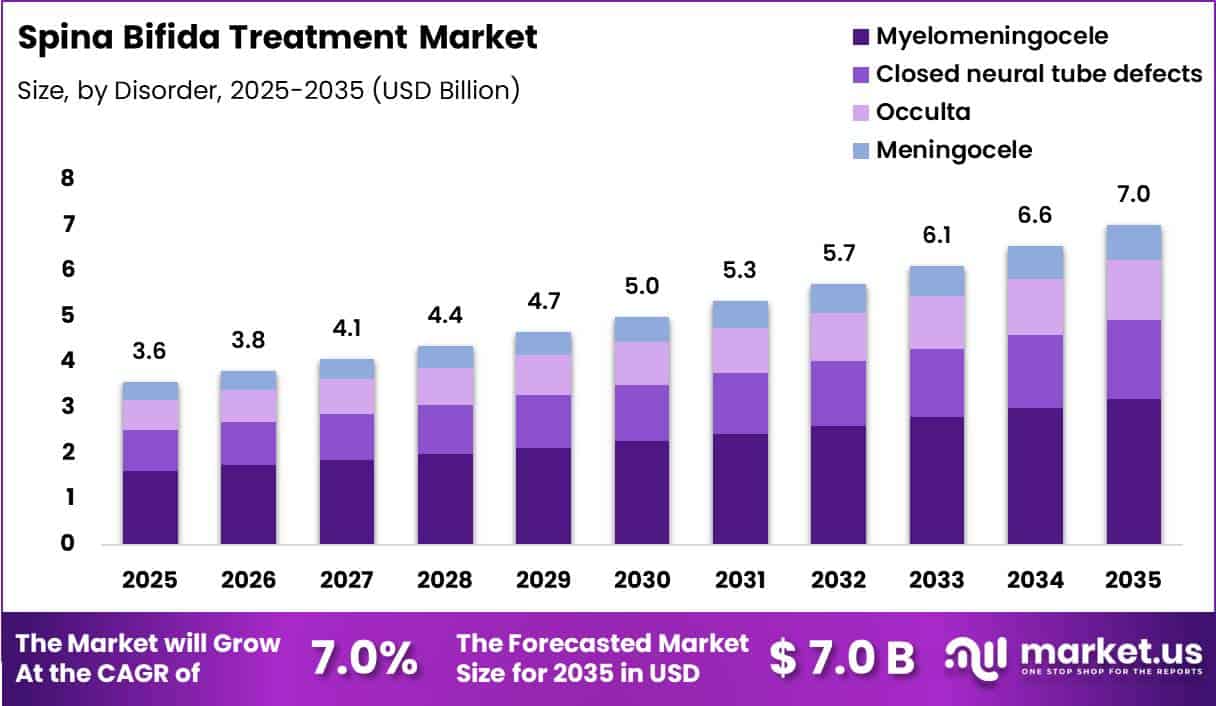
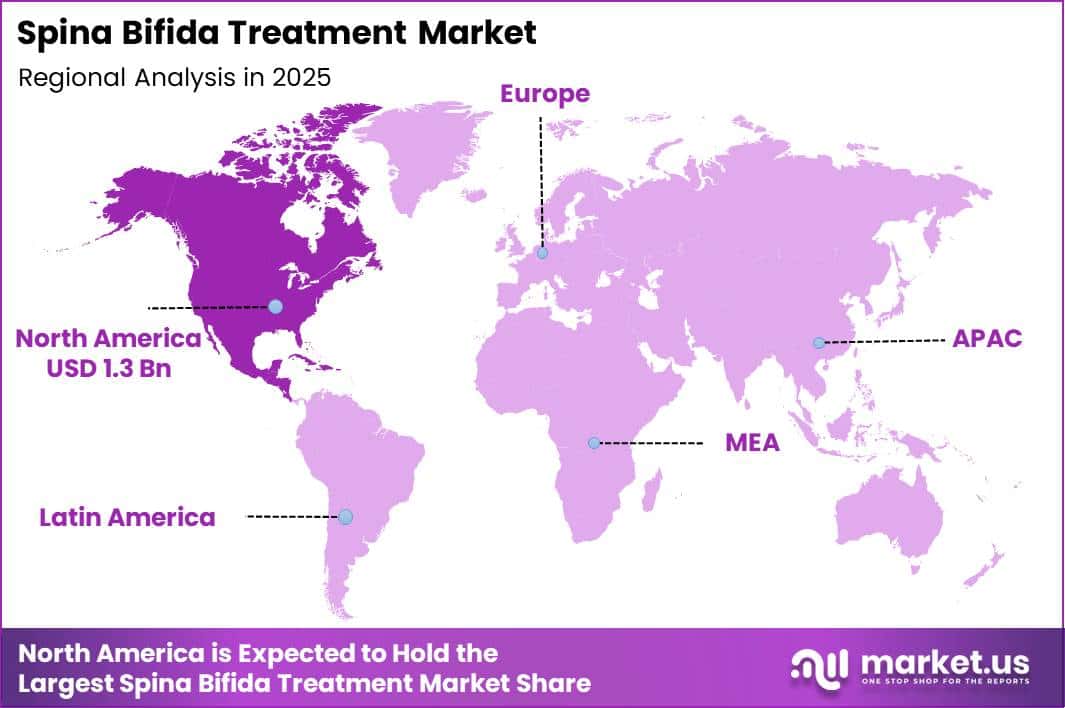
Global Spina Bifida Treatment Market size is expected to be worth around US$ 7.0 Billion by 2035 from US$ 3.6 Billion in 2025, growing at a CAGR of 7.0% during the forecast period from 2026 to 2035. In 2025, North America led the market, achieving over 36.4% share with a revenue of US$ 1.3 Billion.
The Spina Bifida Treatment Market is witnessing increasing attention due to advancements in prenatal diagnosis, surgical interventions, rehabilitation therapies, and long-term supportive care for patients affected by this congenital spinal disorder.
Spina bifida occurs when the neural tube fails to close properly during early pregnancy, affecting the development of the spinal cord and backbone. According to the U.S. Centers for Disease Control and Prevention (CDC), spina bifida affects approximately 1 in every 2,857 births in the United States, with around 1,251 babies born annually with the condition.
Treatment approaches depend on disease severity and may include prenatal fetal surgery, post-birth corrective surgery, hydrocephalus management, mobility support, physical therapy, and bladder and bowel care solutions. The National Institute of Neurological Disorders and Stroke (NINDS) states that infants with severe forms such as myelomeningocele often require surgery shortly after birth to close the spinal opening and prevent complications.
Growing adoption of advanced fetal surgery techniques is supporting market development, as prenatal repair can help reduce spinal cord damage before birth. NIH-supported research has shown that children undergoing fetal surgery for myelomeningocele demonstrated improved outcomes, including higher chances of independent walking and fewer follow-up procedures compared with traditional postnatal repair in eligible cases.
Preventive healthcare initiatives are also influencing disease management strategies. The CDC recommends 400 micrograms of folic acid daily before and during early pregnancy to reduce the risk of neural tube defects, including spina bifida. Folic acid fortification programs have contributed to a 28% reduction in neural tube defect prevalence in monitored populations.
With rising focus on minimally invasive procedures, pediatric neurosurgery, rehabilitation technologies, and multidisciplinary care models, the Spina Bifida Treatment Market is expected to expand as healthcare systems improve diagnosis and lifelong patient support.
Key Takeaways
- Market Size: Global Spina Bifida Treatment Market size is expected to be worth around US$ 7.0 Billion by 2035 from US$ 3.6 Billion in 2025.
- Market Share: The market is growing at a CAGR of 7.0% during the forecast period from 2026 to 2035.
- Disorder: Myelomeningocele dominates the market with a 45.6% share in 2025.
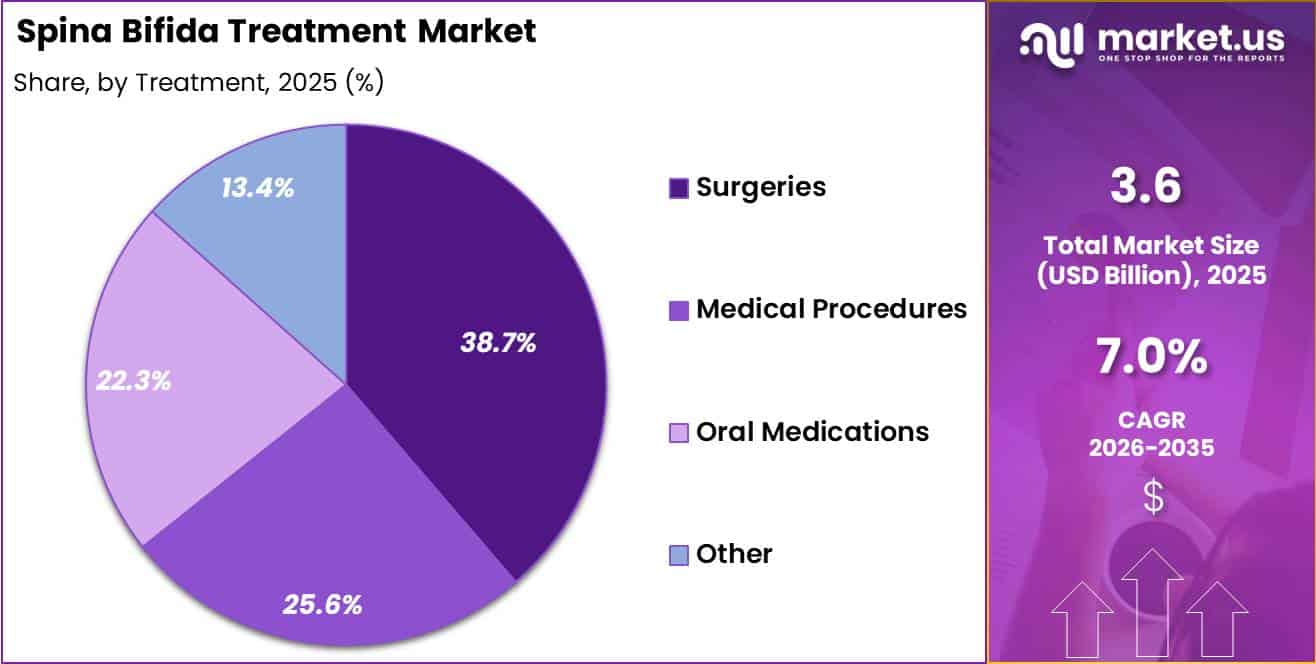
- Treatment: Surgeries dominate the segment with a 38.7% market share in 2025.
- Age Group: Pediatric patients dominate the market with a 72.3% share in 2025.
- End User: Hospitals dominate the market with a 57.8% share in 2025.
- Regional Analysis: In 2025, North America led the market, achieving over 36.4% share with a revenue of US$ 1.3 Billion.
Disorder Analysis
Myelomeningocele dominates the Spina Bifida Treatment Market.
The Disorder segment of the Spina Bifida Treatment Market is categorized into Myelomeningocele, Closed neural tube defects, Occulta, and Meningocele. Among these, Myelomeningocele dominates the market with a 45.6% share in 2025, owing to its severe clinical impact and the requirement for continuous surgical, neurological, and rehabilitation management.
Myelomeningocele is the most complex form of spina bifida, often associated with mobility impairment, bladder and bowel dysfunction, and hydrocephalus, increasing the demand for advanced treatment approaches.
Closed neural tube defects account for 24.7% of the market, supported by growing diagnosis through prenatal imaging and improved clinical monitoring. Occulta represents 18.7% share, as many cases remain mild but require medical supervision when symptoms such as spinal abnormalities or nerve-related complications develop.
Meningocele contributes 11.0% share, driven by surgical intervention requirements to prevent neurological complications. Increasing awareness about early diagnosis, advancements in prenatal screening, and improvements in multidisciplinary care programs are expected to support growth across all disorder categories during the forecast period.
Treatment Analysis
Surgeries dominates the Spina Bifida Treatment Market.
The Treatment segment of the Spina Bifida Treatment Market includes Surgeries, Medical Procedures, Oral Medications, and Other treatments. Surgeries dominate the segment with a 38.7% market share in 2025, as surgical intervention remains the primary treatment approach for managing structural spinal defects and preventing complications.
The surgery category includes prenatal (in-utero) repair, shunt placement and revisions, postnatal spinal closure, and other surgical procedures. Advances in fetal surgery techniques and minimally invasive approaches have improved treatment outcomes for selected patients.
Medical Procedures account for 25.6% share, supported by rehabilitation therapies, physical therapy, and management of associated complications such as bladder and mobility disorders. Oral Medications hold 22.3% share, mainly used for managing symptoms and related conditions, including infections, pain, and neurological complications.
Other treatments contribute 13.4% share, including supportive therapies and assistive care solutions. Growing adoption of multidisciplinary treatment models combining surgery, medication, and rehabilitation is expected to strengthen overall market growth.
Age Group Analysis
Pediatric patients dominates the Spina Bifida Treatment Market.
The Age Group segment of the Spina Bifida Treatment Market is divided into Pediatric and Adults. Pediatric patients dominate the market with a 72.3% share in 2025, primarily due to the congenital nature of spina bifida and the need for early diagnosis, surgical correction, and long-term developmental care.
Most cases are identified during pregnancy or shortly after birth, requiring immediate medical intervention to prevent neurological damage and improve quality of life. Pediatric patients often require continuous monitoring, including neurosurgical procedures, mobility support, bladder management, and rehabilitation services throughout childhood.
The Adults segment represents the remaining market share, supported by increasing survival rates among individuals born with spina bifida and the growing need for lifelong management. Adults with spina bifida require ongoing care for mobility challenges, orthopedic complications, pain management, and transition care services.
Rising healthcare accessibility, improved neonatal care, and advancements in supportive therapies are contributing to better long-term outcomes, increasing demand for treatment solutions across both pediatric and adult populations.
End User Analysis
Hospitals dominates the Spina Bifida Treatment Market.
The End User segment of the Spina Bifida Treatment Market includes Hospitals, Rehabilitation centers, Clinics, and Home care settings. Hospitals dominate the market with a 57.8% share in 2025, driven by their role in diagnosis, surgical procedures, neonatal care, and management of complex spina bifida cases.
Hospitals provide access to specialized departments such as neurosurgery, pediatrics, urology, and rehabilitation, making them the primary treatment centers for patients requiring comprehensive care.
Rehabilitation centers contribute significantly as long-term physical therapy, mobility training, and functional improvement programs are essential for individuals with spina bifida. Clinics support market growth through routine monitoring, follow-up consultations, and management of associated complications.
Home care settings are gaining importance due to increasing demand for continuous patient support, especially for individuals requiring mobility assistance, medication management, and daily care services. The growing adoption of integrated healthcare models, remote monitoring technologies, and patient-centered care approaches is expected to expand the role of non-hospital settings in spina bifida treatment management.
Key Market Segments
By Disorder
- Myelomeningocele
- Closed neural tube defects
- Occulta
- Meningocele
By Treatment
- Surgeries
- Prenatal (in‑utero) repair
- Shunt placement and revisions
- Postnatal spinal closure
- Others
- Medical Procedures
- Oral Medications
- Other
By Age Group
- Pediatric
- Adults
By End User
- Hospitals
- Rehabilitation centers
- Clinics
- Home care settings
Drivers
Screening and early diagnosis programs increasing paraffin section workload.
Organized screening expands pathology intake by shifting more asymptomatic patients into biopsy and tissue confirmation pathways. CDC supports screening for breast, cervical, colorectal, and lung cancers based on USPSTF aligned recommendations, while WHO’s cervical cancer strategy targets 70% screening coverage by ages 35 and 45, particularly in low and middle income countries.
This increase in screening raises routine laboratory caseloads, especially small biopsies and follow up confirmations, which increases the number of paraffin blocks processed per pathologist.
As a result, demand rises for histology tools such as rotary microtomes, disposable blades, and cryostat systems used in intraoperative diagnostics.The impact is gradual, but once screening programs scale, it creates sustained equipment and consumables demand driven by higher throughput requirements and recurring laboratory workflows.
| Driver | (~) % Impact on CAGR Forecast | Geographic Relevance | Impact Timeline |
|---|---|---|---|
| Oncology biopsy volume expansion driving routine histology throughput | +1.6% | North America core, EU, East Asia, urban APAC hospitals | Short term |
| Screening and early-diagnosis programs increasing paraffin section workload | +1.2% | North America, EU, South-East Asia, Latin America public systems | Medium term |
| Digital pathology rollout requiring higher section consistency and repeatability | +1.0% | North America core, Western Europe, Japan, South Korea, Gulf reference labs | Medium term |
| Translational research and spatial biology programs lifting premium microtome demand | +0.9% | U.S. academic clusters, EU research hubs, China, Japan | Medium term |
| Regulatory and quality-accreditation tightening supporting equipment refresh cycles | +0.8% | U.S., EU, export-oriented APAC manufacturers, private hospital chains | Short term |
| Reimbursement pressure favoring automation, labor savings, and cryostat replacement | +0.7% | U.S. independent labs, EU consolidated pathology networks, developed APAC | Short term |
Challenges
Structural input cost volatility in global microtome manufacturing.
Microtome manufacturers remain exposed to volatile input costs and geopolitical trade dynamics, as precision components such as steel blades, bearings, optical encoders, motors, and control electronics are sourced through multi tier global supply chains.
A significant share of the bill of materials is imported and sensitive to tariffs, logistics costs, and currency fluctuations.Recent tariff changes and elevated freight rates have increased landed costs for laboratory instruments and consumables, while also extending lead times for critical components. Items that previously shipped in a few weeks can now take significantly longer, forcing manufacturers to hold higher safety stock to avoid production delays.
This volatility contributes to higher equipment prices, longer procurement cycles, and delayed replacement decisions in hospitals and laboratories. Overall, it creates a moderate friction on market growth by increasing costs and slowing purchasing decisions, even though underlying demand remains intact.
| Challenge | (~) % CAGR Friction Drag | Geographic Relevance | Mitigation Horizon |
|---|---|---|---|
| Volatile lab equipment inputs | -1.0% | North America, EU, East Asia | Medium term (2-4 years) |
| Diagnostic lab supply fragility | -0.8% | Global hospital hubs, reference labs | Medium term (2-4 years) |
| Pathology workforce bottlenecks | -0.7% | US, EU, Japan, GCC | Long term (≥ 4 years) |
| Capital budget cyclicality | -0.6% | Public health systems, EM hospitals | Medium term (2-4 years) |
| Workflow–digitization mismatch | -0.5% | High-income digital pathology hubs | Long term (≥ 4 years) |
| Quality, uptime, and compliance drag | -0.4% | Global accredited labs | Short term (≤ 2 years) |
Restraints
Structural pathology workforce shortages limiting microtome utilization globally.
A key constraint on microtome demand is the growing mismatch between rising histopathology workload and limited specialist workforce capacity. With global cancer cases reaching about 20 million in 2022 and projected to rise toward 35 million by 2050, biopsy volumes and tissue processing requirements are increasing steadily.
However, pathology and histotechnology workforces in the US and Europe are under pressure due to aging staff, limited training pipeline capacity, and rising burnout. Many hospital labs already operate with noticeable vacancy rates, which forces them to cap daily processing volumes and prioritize urgent cases.
As a result, existing microtome fleets are often run near capacity, but additional equipment purchases are delayed because there is insufficient trained staff to operate new units effectively. This leads to slower replacement cycles and restrained unit growth despite rising clinical demand.
Overall, workforce shortages reduce effective utilization expansion and modestly limit market growth, as laboratories increasingly focus on workflow efficiency, automation, and digital pathology rather than expanding mechanical sectioning capacity.
| Restraint | (~) % Impact on CAGR Forecast | Geographic Relevance | Impact Timeline |
|---|---|---|---|
| 1. Pathology workforce shortages & underutilization | -1.6% | North America, Western Europe, high-income APAC | Long term (≥ 4 years) |
| 2. Capital budget pressure in hospitals & labs | -1.4% | North America core, EU, LatAm tier-2, MEA public | Medium term (2–4 years) |
| 3. Supply chain & precision component volatility | -1.2% | EU, North America, APAC corridors | Short–Medium term (≤ 4 years) |
| 4. Regulatory compliance & quality systems drag | -0.9% | U.S., EU, Japan, China | Medium–Long term (≥ 2 years) |
| 5. Slow digital pathology & automation adoption | -1.0% | North America core, EU, advanced APAC | Long term (≥ 4 years) |
| 6. Competitive commoditization & price erosion | -0.8% | APAC volume markets, LatAm, MEA | Medium term (2–4 years) |
Opportunity
Automation led microtomy platforms for labor constrained pathology.
This is a major upside opportunity driven by the shift from manual microtomy toward semi and fully automated sectioning systems that reduce operator dependence and improve workflow efficiency in high volume pathology labs.
Unlike baseline demand, which is driven by routine replacement, this opportunity comes from upgrading installed base systems to automation enabled platforms.These systems can improve section consistency, reduce trimming waste, and lower labor intensity by around 20 to 35 percent in workforce constrained settings, while increasing throughput per shift and standardizing output across multi site laboratory networks.
This makes them particularly relevant in regions facing persistent pathology staffing shortages and rising quality requirements.Commercially, automation shifts capital spending toward higher value systems with stronger ROI justification, supporting faster adoption in North America, Europe, and Japan.
Overall, this transition could add meaningful upside to growth by accelerating replacement cycles and increasing equipment value per installation.
| Opportunity | (~) % Potential CAGR Upside | Geographic Relevance | Execution Window |
|---|---|---|---|
| Automated microtomy | +1.8% | North America, EU, Japan | Short term (≤ 2 years) |
| Digital-pathology bundles | +1.2% | North America, EU, APAC advanced | Short term (≤ 2 years) |
| Premium blades | +0.9% | Global, especially EU and APAC | Medium term (2-4 years) |
| Specialty sectioning | +0.8% | North America, EU, China | Medium term (2-4 years) |
| Service and uptime | +0.7% | North America, EU | Short term (≤ 2 years) |
| Emerging lab buildouts | +1.4% | APAC emerging, Middle East, Latin America | Long term (≥ 4 years) |
Regional Analysis
North America dominated the Spina Bifida Treatment Market in 2025.
In 2025, North America dominated the Spina Bifida Treatment Market, accounting for more than 36.4% of the global market share, with revenue reaching approximately US$ 1.3 Billion. The region’s leading position is supported by advanced healthcare infrastructure, high availability of specialized pediatric neurosurgery centers, and strong adoption of prenatal diagnostic and fetal surgery techniques.
The presence of established healthcare systems, improved access to neurological care, and increasing awareness regarding early detection of neural tube defects continue to drive demand for spina bifida treatment solutions. Additionally, government-supported newborn screening programs and initiatives focused on maternal health have improved early diagnosis and long-term disease management.
Europe represents another significant market, driven by well-developed healthcare networks, increasing investments in congenital disorder management, and widespread access to prenatal screening technologies. Countries across the region are focusing on improving multidisciplinary care involving neurosurgeons, urologists, orthopedic specialists, and rehabilitation experts to enhance patient outcomes.
The Asia-Pacific region is expected to witness notable growth due to rising healthcare expenditure, expanding access to advanced medical facilities, and increasing awareness about congenital disorders. Improvements in prenatal care services and diagnostic capabilities are supporting early identification and treatment of spina bifida cases.
Latin America and the Middle East & Africa are emerging markets, where improving healthcare infrastructure, government healthcare initiatives, and growing availability of specialized treatment centers are gradually increasing access to spina bifida management and surgical interventions.
Key Regions and Countries
North America
- The US
- Canada
Europe
- Germany
- France
- The U.K.
- Italy
- Spain
- Russia & CIS
- Rest of Europe
Asia Pacific
- China
- India
- Japan
- South Korea
- ASEAN
- Australia & New Zealand
- Rest of Asia Pacific
Middle East & Africa
- GCC
- South Africa
- Rest of Middle East & Africa
Latin America
- Brazil
- Mexico
- Rest of Latin America
Key Player Analysis
The Spina Bifida Treatment Market is moderately consolidated, with major healthcare companies competing through advanced surgical technologies, diagnostic solutions, medical devices, and integrated patient care approaches.
Competitive dynamics are driven by continuous R&D investments, strategic collaborations, product innovation, and the development of comprehensive treatment ecosystems. Companies are focusing on improving prenatal diagnosis, surgical precision, post-operative care, and long-term patient management through technology-enabled healthcare solutions.
Leading players such as Medtronic plc, GE HealthCare Technologies Inc., Stryker Corporation, Boston Scientific Corporation, and Siemens Healthineers AG are strengthening their market presence through innovation-driven strategies.
Medtronic plc focuses on neurosurgical devices, implantable technologies, and advanced treatment solutions supporting spina bifida procedures. GE HealthCare Technologies Inc. and Siemens Healthineers AG emphasize advanced imaging technologies and workflow integration solutions that enhance prenatal screening and clinical decision-making.
Stryker Corporation develops surgical equipment and healthcare technologies aimed at improving procedural efficiency and patient outcomes, while Boston Scientific Corporation contributes through minimally invasive medical device innovations.
These companies are adopting ecosystem-based competition by integrating diagnostics, surgical tools, digital healthcare platforms, and clinical support networks. Partnerships with hospitals, research organizations, and healthcare professionals are helping companies accelerate innovation and expand specialized care capabilities.
The focus on personalized treatment approaches, improved surgical outcomes, and efficient healthcare workflows continues to shape competition in the global Spina Bifida Treatment Market.
Top Key Players
- Abbott Laboratories
- AstraZeneca plc
- Baxter International Inc.
- Boston Scientific Corporation
- GE HealthCare Technologies Inc.
- GlaxoSmithKline plc
- Johnson & Johnson Services, Inc.
- Medtronic plc
- Merck & Co., Inc.
- Novartis AG
- Pfizer Inc.
- Sanofi S.A.
- Siemens Healthineers AG
- Stryker Corporation
- Takeda Pharmaceutical Company Limited
Recent Developments
- In June 2026, Medtronic completed the acquisition of Scientia Vascular, strengthening its neurovascular treatment portfolio. The acquisition enhances Medtronic’s ability to provide integrated solutions across vascular access and therapeutic procedures, supporting growth in advanced neurological intervention markets.
- In November 2025, GE HealthCare entered a strategic collaboration with RadNet’s DeepHealth division to accelerate AI adoption in medical imaging. The agreement aims to integrate AI-powered decision support and remote scanning technologies with ultrasound platforms, improving workflow efficiency and expanding access to advanced diagnostic capabilities.
- In January 2025, Stryker announced a definitive agreement to acquire Inari Medical for approximately $4.9 billion, expanding its advanced medical technology portfolio. Although focused on vascular intervention, the acquisition reflects Stryker’s broader strategy of strengthening minimally invasive technologies and procedural solutions that align with the company’s long-term neurosurgical and surgical innovation roadmap.
Report Scope
| Report Features | Description |
|---|---|
| Market Value (2025) | US$ 3.6 Billion |
| Forecast Revenue (2035) | US$ 7.0 Billion |
| CAGR (2026-2035) | 7.0% |
| Base Year for Estimation | 2025 |
| Historic Period | 2020-2024 |
| Forecast Period | 2026-2035 |
| Report Coverage | Revenue Forecast, Market Dynamics, Competitive Landscape, Recent Developments |
| Segments Covered | By Disorder (Myelomeningocele, Closed neural tube defects, Occulta, Meningocele), By Treatment (Surgeries (Prenatal (in-utero) repair, Shunt placement and revisions, Postnatal spinal closure), Others, Medical Procedures, Oral Medications, Other), By Age Group (Pediatric, Adults), By End User (Hospitals, Rehabilitation centers, Clinics, Home care settings) |
| Regional Analysis | North America – The US, Canada; Europe – Germany, France, U.K., Italy, Spain, Russia & CIS, Rest of Europe; Asia Pacific – China, India, Japan, South Korea, ASEAN, Australia & New Zealand, Rest of Asia Pacific; Middle East & Africa – GCC, South Africa, Rest of Middle East & Africa; Latin America – Brazil, Mexico, Rest of Latin America |
| Competitive Landscape | Abbott Laboratories, AstraZeneca plc, Baxter International Inc., Boston Scientific Corporation, GE HealthCare Technologies Inc., GlaxoSmithKline plc, Johnson & Johnson Services, Inc., Medtronic plc, Merck & Co., Inc., Novartis AG, Pfizer Inc., Sanofi S.A., Siemens Healthineers AG, Stryker Corporation, Takeda Pharmaceutical Company Limited |
| Customization Scope | Customization for segments, region/country-level will be provided. Moreover, additional customization can be done based on the requirements. |
| Purchase Options | We have three licenses to opt for: Single User License, Multi-User License (Up to 5 Users), Corporate Use License (Unlimited User and Printable PDF) |





































