


Market Overview
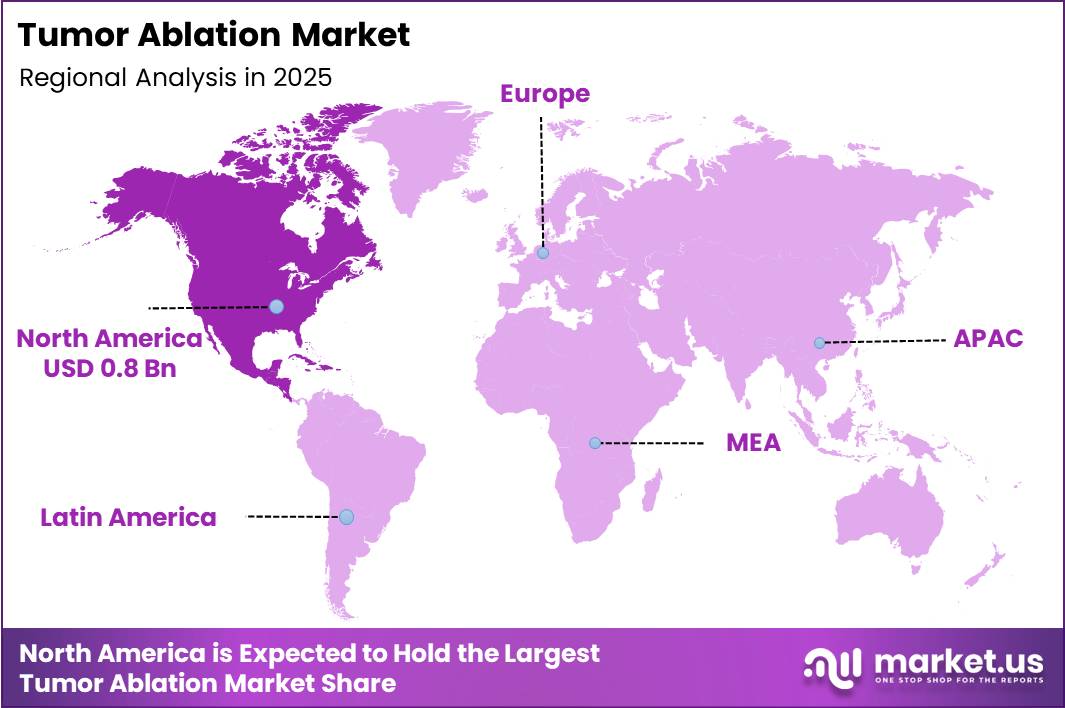
Global Tumor Ablation Market size is expected to be worth around US$ 5.7 Billion by 2035 from US$ 2.1 Billion in 2025, growing at a CAGR of 10.6% during the forecast period from 2026 to 2035. In 2025, North America led the market, achieving over 40.0% share with a revenue of US$ 0.8 Billion.
Tumor ablation is a minimally invasive treatment approach that destroys cancerous tissue using thermal or non-thermal energy while preserving surrounding healthy structures. It has become an important component of interventional oncology for patients with primary or metastatic tumors who are not suitable candidates for surgery or who require localized treatment.
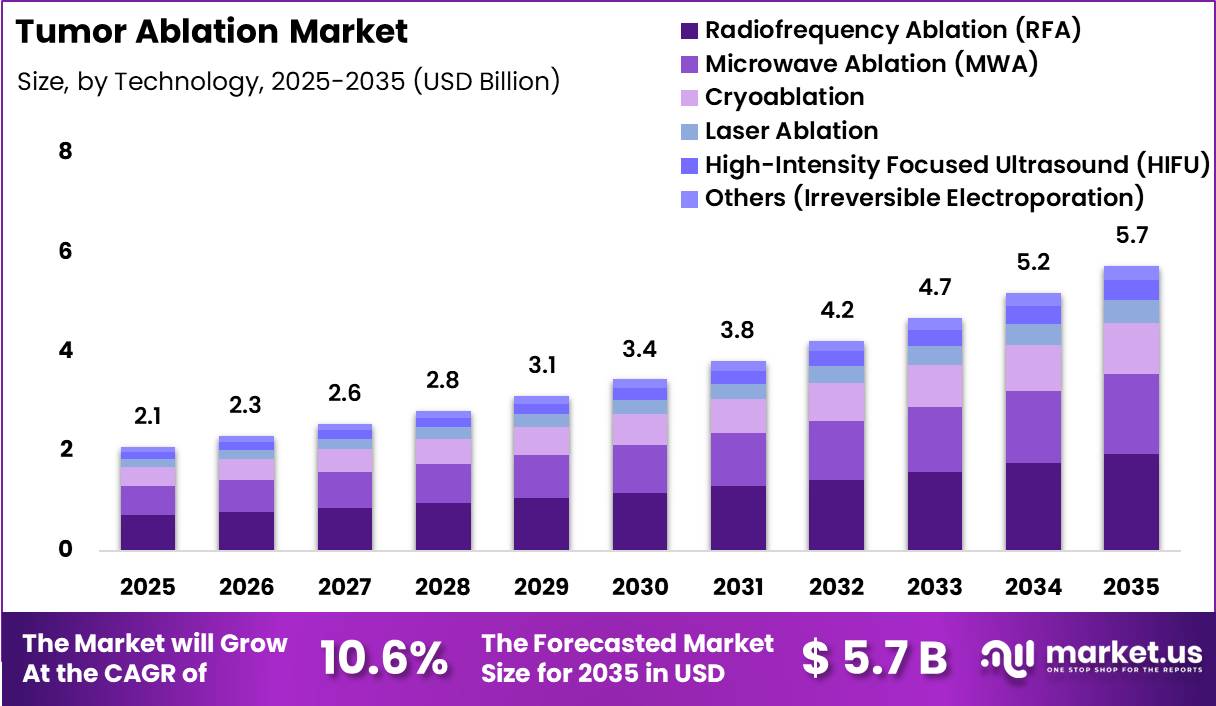
Common technologies include radiofrequency ablation (RFA), microwave ablation (MWA), cryoablation, irreversible electroporation (IRE), and high-intensity focused ultrasound (HIFU). These procedures are typically performed under image guidance using computed tomography (CT), magnetic resonance imaging (MRI), ultrasound, or PET/CT to improve targeting accuracy and treatment outcomes.
The U.S. National Institutes of Health (NIH) notes that radiofrequency ablation generally destroys a 2.5 to 5 cm sphere of tumor tissue during a treatment session, with energy delivery lasting approximately 10 to 30 minutes, enabling effective local tumor control with reduced recovery time compared with conventional surgery.
Growing cancer incidence, increasing demand for organ-preserving therapies, and advances in image-guided intervention continue to support the adoption of tumor ablation across liver, kidney, lung, bone, thyroid, and prostate cancers.
Recent clinical evidence also highlights expanding use of PET/CT-guided tumor ablation, which enables real-time assessment of treatment completeness and detection of residual tumor during the same procedure, improving procedural precision and potentially reducing repeat interventions.
The NIH further emphasizes that modern interventional oncology programs integrate advanced technologies including CT, ultrasound, robotic navigation, microwave ablation, cryoablation, pulsed electrical field therapy, and HIFU to enhance procedural accuracy and clinical outcomes.
As healthcare systems increasingly prioritize minimally invasive cancer care with shorter hospital stays and faster patient recovery, tumor ablation is expected to remain a critical therapeutic option in precision oncology.
Key Takeaways
- Market Size: Global Tumor Ablation Market size is expected to be worth around US$ 5.7 Billion by 2035 from US$ 2.1 Billion in 2025.
- Market Share: The market is growing at a CAGR of 10.6% during the forecast period from 2026 to 2035.
- Technology: Radiofrequency Ablation (RFA) dominated the Tumor Ablation Market with a 34.0% market share in 2025.
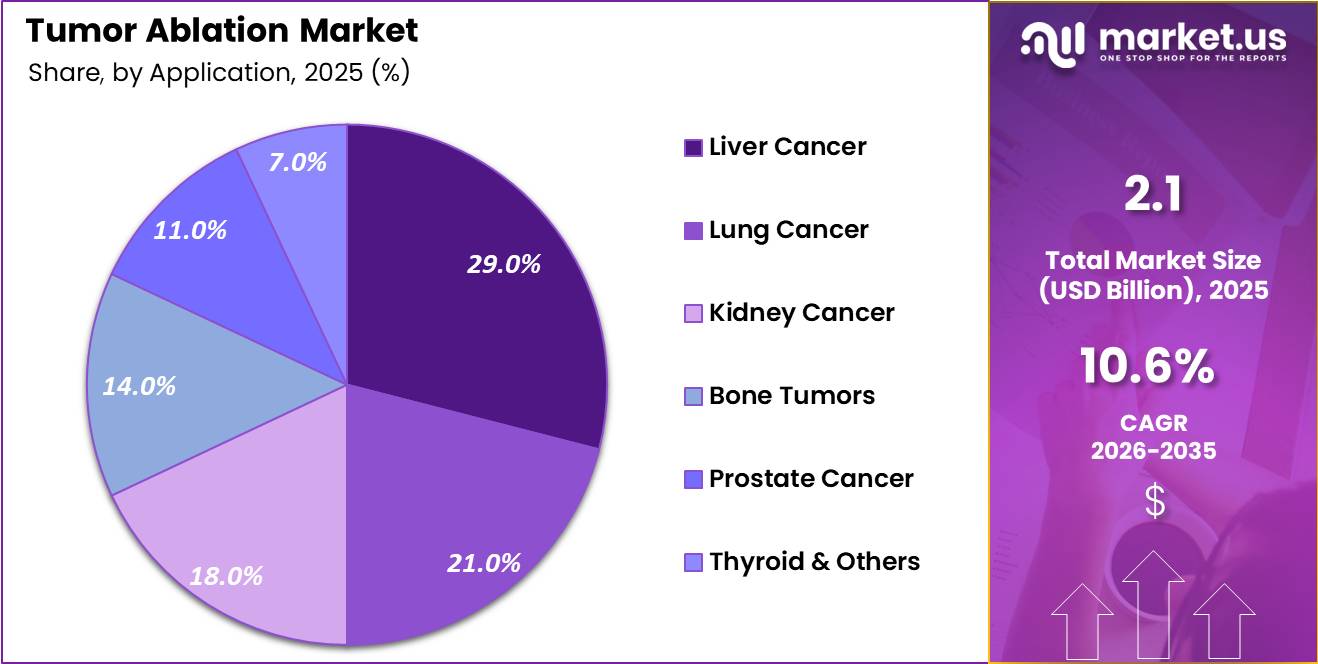
- Application: Liver Cancer accounted for the largest share of the Tumor Ablation Market, representing 29.0% in 2025.
- Guidance Technique Analysis: CT-Guided Ablation dominated the Tumor Ablation Market with a 38.0% market share in 2025.
- End User: Hospitals held the largest share of the Tumor Ablation Market, accounting for 58.0% in 2025.
- Procedure Type: Percutaneous Ablation dominated the Tumor Ablation Market with a 66.0% market share in 2025.
- Regional Analysis: In 2025, North America led the market, achieving over 40.0% share with a revenue of US$ 0.8 Billion.
Technology Analysis
Radiofrequency Ablation (RFA) dominated the Tumor Ablation Market.
Radiofrequency Ablation (RFA) dominated the Tumor Ablation Market with a 34.0% market share in 2025, owing to its extensive clinical validation, cost-effectiveness, and broad applicability in treating liver, kidney, lung, and bone tumors.
The technology enables precise thermal destruction of cancerous tissue while minimizing damage to adjacent healthy structures. Its compatibility with image-guided procedures, widespread physician familiarity, and strong long-term clinical outcomes have made RFA the preferred technology across hospitals and specialty cancer centers.
Growing demand for minimally invasive oncology procedures and improvements in ablation systems continue to reinforce the segment’s leadership.
Microwave Ablation (MWA) accounted for 28.0% of the market, supported by its ability to achieve higher temperatures, larger ablation zones, and shorter procedure times, making it suitable for larger tumors. Cryoablation represented 18.0%, benefiting from real-time visualization and reduced procedural discomfort.
Laser Ablation held 8.0%, primarily serving precision-focused applications in sensitive anatomical regions. High-Intensity Focused Ultrasound (HIFU) captured 7.0%, driven by increasing interest in completely non-invasive treatment approaches.
The remaining 5.0% comprised Others (Irreversible Electroporation), which are increasingly utilized for tumors located near major blood vessels and other critical structures where thermal techniques may be less suitable.
Application Analysis
Liver Cancer accounted for the largest share of the Tumor Ablation Market.
Liver Cancer accounted for the largest share of the Tumor Ablation Market, representing 29.0% in 2025. The segment leads because tumor ablation has become a well-established treatment option for early-stage liver cancer and patients who are ineligible for surgical resection.
Image-guided ablation offers effective local tumor control, shorter hospitalization, and faster recovery, making it an important component of liver cancer management. Rising incidence of hepatocellular carcinoma and increasing adoption of minimally invasive treatment techniques continue to support market growth.
Lung Cancer represented 21.0% of the market, reflecting greater use of ablation for early-stage disease and metastatic lesions. Kidney Cancer accounted for 18.0%, driven by the growing preference for nephron-sparing treatments that preserve kidney function. Bone Tumors contributed 14.0%, supported by increasing use of ablation for pain management and local tumor control.
Prostate Cancer held 11.0%, benefiting from the adoption of focal therapies that minimize treatment-related complications. Thyroid & Others represented the remaining 7.0%, with expanding clinical evidence and technological advancements encouraging broader use across multiple oncology applications.
Guidance Technique Analysis
CT-Guided Ablation dominated the Tumor Ablation Market.
CT-Guided Ablation dominated the Tumor Ablation Market with a 38.0% market share in 2025, supported by its excellent anatomical visualization, high procedural accuracy, and ability to precisely guide ablation probes to deep-seated tumors.
CT guidance is widely used for treating liver, lung, kidney, and bone tumors because it enables accurate needle placement while minimizing injury to surrounding tissues. Continuous improvements in imaging quality and navigation systems have further strengthened the adoption of CT-guided procedures in advanced oncology care.
Ultrasound-Guided Ablation remains widely utilized due to its real-time imaging capability, portability, and absence of radiation exposure, particularly for liver and thyroid procedures. MRI-Guided Ablation continues to gain acceptance because of its superior soft-tissue contrast and precise thermal monitoring during treatment.
Fluoroscopy-Guided Ablation maintains an important role in selected orthopedic and interventional oncology procedures where continuous instrument visualization is beneficial. The integration of multimodal imaging and navigation technologies is improving procedural precision and expanding the use of image-guided tumor ablation.
End User Analysis
Hospitals held the largest share of the Tumor Ablation Market.
Hospitals held the largest share of the Tumor Ablation Market, accounting for 58.0% in 2025, due to their comprehensive oncology infrastructure, advanced imaging capabilities, and availability of multidisciplinary cancer care teams.
Hospitals perform a high volume of minimally invasive tumor ablation procedures using CT, MRI, and ultrasound guidance while providing access to specialized physicians and post-procedural care. Increasing investments in advanced interventional oncology technologies continue to strengthen the dominance of this segment.
Ambulatory Surgical Centers (ASCs) are witnessing steady growth as more minimally invasive ablation procedures shift to outpatient settings, supported by shorter recovery times and lower treatment costs. Specialty Cancer Centers continue to expand through their focus on advanced oncology expertise, personalized treatment plans, and access to innovative ablation technologies.
Academic & Research Institutes contribute by conducting clinical research, evaluating emerging ablation techniques, and supporting physician training. Collectively, these end users are expanding patient access to advanced tumor ablation therapies while improving procedural efficiency and clinical outcomes.
Procedure Type Analysis
Percutaneous Ablation dominated the Tumor Ablation Market.
Percutaneous Ablation dominated the Tumor Ablation Market with a 66.0% market share in 2025, driven by its minimally invasive approach, reduced complications, shorter hospital stays, and faster patient recovery.
Performed under CT, ultrasound, or MRI guidance, percutaneous ablation enables highly accurate tumor targeting while preserving surrounding healthy tissue. The procedure has become the preferred option for treating small and localized tumors in the liver, kidney, lung, and bone, particularly among patients who are unsuitable for conventional surgery.
Laparoscopic Ablation has gained wider acceptance by providing minimally invasive surgical access to tumors that are difficult to reach through percutaneous techniques while offering improved visualization and procedural control.
Open Surgical Ablation represents the smallest segment and is primarily reserved for complex tumors, large lesions, or cases requiring simultaneous surgical resection. Ongoing advancements in image-guided technologies, navigation systems, and minimally invasive techniques continue to shift clinical preference toward percutaneous and laparoscopic approaches, improving treatment efficiency and patient outcomes.
Key Market Segments
Technology
- Radiofrequency Ablation (RFA)
- Microwave Ablation (MWA)
- Cryoablation
- Laser Ablation
- High-Intensity Focused Ultrasound (HIFU)
- Others (Irreversible Electroporation)
Application
- Liver Cancer
- Lung Cancer
- Kidney Cancer
- Bone Tumors
- Prostate Cancer
- Thyroid & Others
Guidance Technique
- CT-Guided Ablation
- Ultrasound-Guided Ablation
- MRI-Guided Ablation
- Fluoroscopy-Guided Ablation
End User
- Hospitals
- Ambulatory Surgical Centers (ASCs)
- Specialty Cancer Centers
- Academic & Research Institutes
Procedure Type
- Percutaneous Ablation
- Laparoscopic Ablation
- Open Surgical Ablation
Drivers
Early stage liver tumor shift to curative ablation pathways.
Liver cancer remains one of the world’s deadliest tumor burdens, with about 760,000 deaths in 2022 globally, and hepatitis linked disease continues to concentrate case volume in Asia and lower middle income settings where resection capacity is uneven.
That epidemiology matters because contemporary hepatocellular carcinoma treatment pathways continue to preserve a strong role for ablation in small intrahepatic tumors, especially when lesions are under 5 cm or when there are up to three nodules with each at 3 cm or less, aligning ablation with transplant bridging, non surgical candidacy, and liver reserve preservation strategies.
For market growth, this shifts demand from single use procedural disposables alone toward integrated capital platforms, planning software, imaging compatible probes, and multidisciplinary liver tumor workflows; the commercial effect is strongest in China, Japan, South Korea, and transplant active US and EU centers because those regions combine higher HCC burden, mature interventional radiology capacity, and better referral capture from surveillance detected early lesions.
| Driver | (~) % Impact on CAGR Forecast | Geographic Relevance | Impact Timeline |
|---|---|---|---|
| Early-stage liver tumor shift to curative ablation pathways | +2.2% | Asia-Pacific core, North America core, EU core, Middle East high-incidence pockets | Medium term (2-4 years) |
| Lung and oligometastatic lesion expansion under image-guided minimally invasive care | +1.8% | North America core, EU core, Japan, South Korea, China tier-1 centers | Short term (≤ 2 years) |
| Microwave and multi-probe platform upgrade cycle improving local control and throughput | +1.5% | North America core, EU, China, Gulf tertiary hospitals | Short term (≤ 2 years) |
| Outpatient economics and shorter length-of-stay favoring ablation over surgery | +1.4% | U.S. core, Western Europe, developed APAC corridors | Medium term (2-4 years) |
| Bone metastasis pain palliation and spine oncology adoption | +1.1% | U.S. core, EU, Japan, urban China | Short term (≤ 2 years) |
| Combination therapy use in 3–5 cm tumors and downstaging algorithms | +1.0% | North America core, EU liver centers, East Asia transplant corridors | Medium term (2-4 years) |
Challenges
Fragmented Imaging Workflows Constraining Ablation Procedure Scalability.
Ablation depends on precise pre procedure planning, intraprocedural targeting, and post ablation surveillance, yet imaging environments remain operationally fragmented across CT, MRI, ultrasound, navigation software, PACS, and oncology information systems, creating friction that does not stop procedures outright but repeatedly degrades utilization, margin precision, and confidence in follow up interpretation.
Accepted follow up protocols for liver and other solid tumor ablations require a baseline study within the first week, then imaging every 3 months for a year and every 6 months thereafter, while clinical interpretation often hinges on detecting subtle non circumferential nodular enhancement and maintaining 5 to 10 mm ablation margins in appropriate settings.
In practical terms, centers with poor interoperability face repeated image transfers, manual contour reconciliation, duplicate scans, and longer report finalization windows, which can add 20 to 45 minutes of staff coordination per case, 0.3 to 0.7 extra follow up scans per patient episode in equivocal cases, and recurrence assessment ambiguity that suppresses referral confidence for tumors above 3 cm or for multifocal disease programs.
This supports a 1.1 percent CAGR friction drag because enterprise buyers must keep funding software integration, multimodality training, and structured imaging pathways before they can safely expand case volumes, and because the payoff cycle is operational rather than immediate, typically requiring 24 to 36 months of workflow redesign to stabilize.
| Challenge | (~) % CAGR Friction Drag | Geographic Relevance | Mitigation Horizon |
|---|---|---|---|
| Specialist Capacity Bottleneck | -1.4% | North America core, EU public systems, APAC tier-1 metros | Medium term (2-4 years) |
| Imaging Workflow Fragmentation | -1.1% | EU regulatory hubs, U.S. IDNs, Japan/Korea tertiary centers | Medium term (2-4 years) |
| Component Supply Chain Volatility | -1.3% | APAC manufacturing corridors, U.S. import channels, EU device assemblers | Medium term (2-4 years) |
| Reimbursement Site-Shift Misalignment | -0.9% | U.S. outpatient migration zones, Western Europe public payers, LATAM private hospitals | Short term (≤ 2 years) |
| Evidence Standardization Gap | -1.0% | Global oncology centers, guideline-led markets, transplant-linked programs | Long term (≥ 4 years) |
| Regulatory Recertification Burden | -1.2% | EU MDR markets, UK transition pathways, export-dependent manufacturers | Long term (≥ 4 years) |
Restraints
Supply chain fragility in RF and microwave components.
Tumor ablation devices depend on stable supply of high frequency generators, specialized coaxial cables, high temperature probe tips, and advanced polymers, many of which are sourced from concentrated supplier bases in APAC and Europe, leaving OEMs vulnerable to disruptions similar to those seen in broader medtech and electronics supply chains since 2020.
Lead times for critical components that were 8 to 10 weeks pre pandemic have periodically stretched to 20 to 30 weeks during spikes in logistics congestion or raw material shortages, forcing manufacturers to carry higher safety stocks or to prioritize deliveries to high margin markets, leaving smaller distributors and emerging market hospitals with intermittent stockouts or delayed installations.
Freight rates for air shipped medical components have at times more than doubled compared with 2019 baselines, and even as spot prices normalize, contract renegotiations keep logistics costs structurally 20 to 30 % higher than pre crisis levels, pressuring gross margins or pushing list prices up by mid single digit percentages annually.
For single use ablation probes, which already represent a high share of per procedure cost, any further 5 to 10 % increase due to input inflation or currency swings in key manufacturing countries can prompt hospitals to ration cases, delay elective ablations, or switch back to competing modalities with more predictable consumable costs.
Over a 1 to 2 year horizon, these supply pressures may not collapse demand, but they do slow conversion of backlogs into installed base and constrain how aggressively vendors can discount to open new accounts, thereby trimming near term CAGR and creating greater volatility in quarterly revenue trajectories.
| Restraint | (~) % Impact on CAGR Forecast | Geographic Relevance | Impact Timeline |
|---|---|---|---|
| High device capex and opex burden | -2.4% | North America, EU, China Tier-2/3 | Medium term (2-4 years) |
| Oncology and imaging workforce shortages | -1.9% | North America, UK & Western EU, Japan | Short–Medium term (≤ 4 years) |
| Procedure reimbursement gaps and tariff friction | -1.7% | US, Southern/Eastern EU, LATAM, MEA | Medium term (2-4 years) |
| Regulatory and evidence hurdles for new indications | -1.5% | US, EU, China, Japan | Long term (≥ 4 years) |
| Supply chain fragility in RF/microwave components | -1.3% | North America, EU, APAC export corridors | Short term (≤ 2 years) |
| Hospital capital spending cyclicality and macro stress | -1.1% | Global tertiary care, especially EMs | Medium–Long term (≥ 3 years) |
Opportunity
Integrated ablation–navigation platforms for image-guided precision.
This opportunity centers on migrating from stand alone tumor ablation generators and probes to fully integrated ablation–navigation–imaging platforms that bundle real time 3D guidance, automated probe placement optimization, and intra procedural margin assessment, which remains underpenetrated outside a handful of tertiary centers and is not fully priced into today’s baseline modality driven growth.
While hospitals already purchase ablation systems, most are configured as equipment islands with limited interoperability with CT, MR, ultrasound and no unified software layer; creating integrated platforms could lift per procedure ASPs by 20 to 30 %.
For example, from roughly 4 to 6 thousand dollars per case for disposable probes and generator time today to 5 to 8 thousand dollars by layering software licenses and disposable navigation consumables) while simultaneously improving room utilization and shortening procedure time by 15 to 25 %, enabling higher throughput per installed base unit.
If even 25 to 30 % of the estimated several hundred thousand annual ablation procedures globally by the early 2030s migrated to bundled platform contracts with recurring software fees of 40 to 80 thousand dollars per site annually and embedded service SLAs.The addressable revenue pool could expand by 1.5 to 2.0 billion dollars beyond hardware only forecasts by 2035, driving roughly 2 % points of incremental CAGR upside on top of baseline device growth.
Strategically, this is an opportunity rather than a driver because it requires OEMs to re architect portfolios around software and interoperability, redesign commercial models from capital sales to multi year platform contracts, and form co development alliances with imaging vendors, moves that have barely started in the ablation segment compared with radiation oncology or robotic surgery, leaving a sizable white space in integrated procedure centric solutions through at least the medium term.
| Opportunity | (~) % Potential CAGR Upside | Geographic Relevance | Execution Window |
|---|---|---|---|
| Integrated ablation–navigation platforms | +2.0% | North America, Western Europe, China | Short–Medium term |
| Outpatient and ASC ablation networks | +1.8% | North America, EU, GCC, East Asia | Short–Medium term |
| AI-guided planning and follow-up SaaS | +1.5% | North America, Europe, APAC tier-1 | Medium term |
| Expansion into early-stage & oligometastatic use | +1.7% | North America, Europe, Japan | Medium–Long term |
| Emerging-market liver and lung ablation franchises | +2.2% | APAC emerging, LatAm, MENA | Medium–Long term |
| Ablation-plus-therapeutics combination bundles | +1.3% | North America, Europe, China | Long term |
Regional Analysis
North America Dominated the Tumor Ablation Market.
In 2025, North America led the global Tumor Ablation Market, accounting for over 40.0% of the total market share and generating approximately US$ 0.8 billion in revenue. The region’s leadership is supported by its advanced healthcare infrastructure, widespread adoption of minimally invasive cancer treatment technologies, and a high incidence of liver, lung, kidney, bone, and prostate cancers that are suitable for image-guided ablation procedures.
The United States and Canada continue to invest significantly in oncology care, while hospitals and specialty cancer centers increasingly incorporate radiofrequency, microwave, cryoablation, and high-intensity focused ultrasound systems into routine clinical practice.
Strong reimbursement frameworks, favorable regulatory pathways, and continuous investment in interventional radiology further strengthen regional market growth. The presence of leading medical device manufacturers, extensive clinical research activities, and rapid adoption of technologically advanced ablation platforms reinforce North America’s dominant position.
Growing awareness of early cancer diagnosis through national screening programs has increased the number of patients eligible for localized tumor ablation, particularly those seeking alternatives to conventional surgery.
Academic medical centers and cancer institutes are also expanding the use of image-guided and robotic-assisted ablation procedures to improve precision and patient outcomes. Furthermore, increasing healthcare expenditure, ongoing innovation in real-time imaging integration, and a strong pipeline of next-generation ablation technologies are expected to sustain North America’s leadership throughout the forecast period while supporting broader adoption across multiple oncology applications.
Key Regions and Countries
North America
- The US
- Canada
Europe
- Germany
- France
- The U.K.
- Italy
- Spain
- Russia & CIS
- Rest of Europe
Asia Pacific
- China
- India
- Japan
- South Korea
- ASEAN
- Australia & New Zealand
- Rest of Asia Pacific
Middle East & Africa
- GCC
- South Africa
- Rest of Middle East & Africa
Latin America
- Brazil
- Mexico
- Rest of Latin America
Key Player Analysis
The Tumor Ablation Market is moderately consolidated, with competition led by a group of global medical technology companies investing heavily in minimally invasive oncology solutions. Medtronic plc, Boston Scientific Corporation, Johnson & Johnson MedTech, Siemens Healthineers AG, and GE HealthCare are among the leading participants shaping the competitive landscape through advanced ablation technologies, image-guided intervention systems, and strong global distribution networks.
Competition is driven by continuous innovation, clinical validation, and the ability to provide comprehensive solutions that improve treatment precision, procedural efficiency, and patient outcomes. Companies also differentiate themselves by expanding their product portfolios and strengthening their presence across hospitals, ambulatory surgical centers, and specialized cancer treatment facilities.
Leading players emphasize research and development to enhance radiofrequency, microwave, cryoablation, and focused ultrasound technologies while improving energy delivery, imaging compatibility, and procedural accuracy. Strategic partnerships with healthcare providers, research institutions, and technology developers accelerate innovation and support wider clinical adoption of tumor ablation procedures.
Product development focuses on next-generation ablation systems, advanced probes, and integrated navigation capabilities that simplify workflows and increase physician confidence. Workflow integration has become a key competitive strategy, with companies connecting ablation platforms to CT, MRI, and ultrasound imaging systems for seamless treatment planning and execution.
Ecosystem-based competition is further strengthened through comprehensive offerings that combine capital equipment, consumables, software, service support, and physician training, enabling healthcare providers to deliver efficient and precise minimally invasive cancer care.
Top Key Players
- Medtronic plc
- Boston Scientific Corporation
- Johnson & Johnson MedTech
- AngioDynamics Inc.
- Abbott Laboratories
- Siemens Healthineers AG
- GE HealthCare
- Olympus Corporation
- Merit Medical Systems Inc.
- Hologic Inc.
- StarMedTec GmbH
- EDAP TMS S.A.
- HealthTronics Inc.
- Merit Medical Systems
- IceCure Medical Ltd.
Recent Developments
- In June 2026, Medtronic plc announced strategic investments in intracardiac echocardiography (ICE) technology companies to strengthen its Affera™ cardiac ablation platform. The expansion is aimed at improving real-time imaging during electrophysiology procedures and reinforcing the company’s long-term leadership in the ablation ecosystem.
- In April 2026, Johnson & Johnson MedTech completed the acquisition of Atraverse Medical, adding the HOTWIRE™ Transseptal Access System to its electrophysiology portfolio. The deal strengthens the company’s radiofrequency ablation capabilities by improving left-heart access during cardiac ablation procedures.
- In January 2026, IceCure Medical Ltd. continued commercial expansion of its ProSense® cryoablation system through new hospital installations and physician adoption initiatives, supporting broader use of minimally invasive tumor ablation for breast and other solid tumors.
Report Scope
| Report Features | Description |
|---|---|
| Market Value (2025) | US$ 2.10 Billion |
| Forecast Revenue (2035) | US$ 5.74 Billion |
| CAGR (2026-2035) | 10.6% |
| Base Year for Estimation | 2025 |
| Historic Period | 2020-2024 |
| Forecast Period | 2026-2035 |
| Report Coverage | Revenue Forecast, Market Dynamics, Competitive Landscape, Recent Developments |
| Segments Covered | By Technology (Radiofrequency Ablation (RFA), Microwave Ablation (MWA), Cryoablation, Laser Ablation, High-Intensity Focused Ultrasound (HIFU), Others (Irreversible Electroporation)), By Application (Liver Cancer, Lung Cancer, Kidney Cancer, Bone Tumors, Prostate Cancer, Thyroid & Others), By Guidance Technique (CT-Guided Ablation, Ultrasound-Guided Ablation, MRI-Guided Ablation, Fluoroscopy-Guided Ablation), By End User (Hospitals, Ambulatory Surgical Centers (ASCs), Specialty Cancer Centers, Academic & Research Institutes), By Procedure Type (Percutaneous Ablation, Laparoscopic Ablation, Open Surgical Ablation) |
| Regional Analysis | North America – The US, Canada; Europe – Germany, France, U.K., Italy, Spain, Russia & CIS, Rest of Europe; Asia Pacific – China, India, Japan, South Korea, ASEAN, Australia & New Zealand, Rest of Asia Pacific; Middle East & Africa – GCC, South Africa, Rest of Middle East & Africa; Latin America – Brazil, Mexico, Rest of Latin America |
| Competitive Landscape | Medtronic plc, Boston Scientific Corporation, Johnson & Johnson MedTech, AngioDynamics Inc., Abbott Laboratories, Siemens Healthineers AG, GE HealthCare, Olympus Corporation, Merit Medical Systems Inc., Hologic Inc., StarMedTec GmbH, EDAP TMS S.A., HealthTronics Inc., Merit Medical Systems, IceCure Medical Ltd. |
| Customization Scope | Customization for segments, region/country-level will be provided. Moreover, additional customization can be done based on the requirements. |
| Purchase Options | We have three licenses to opt for: Single User License, Multi-User License (Up to 5 Users), Corporate Use License (Unlimited User and Printable PDF) |





































