


Market Overview
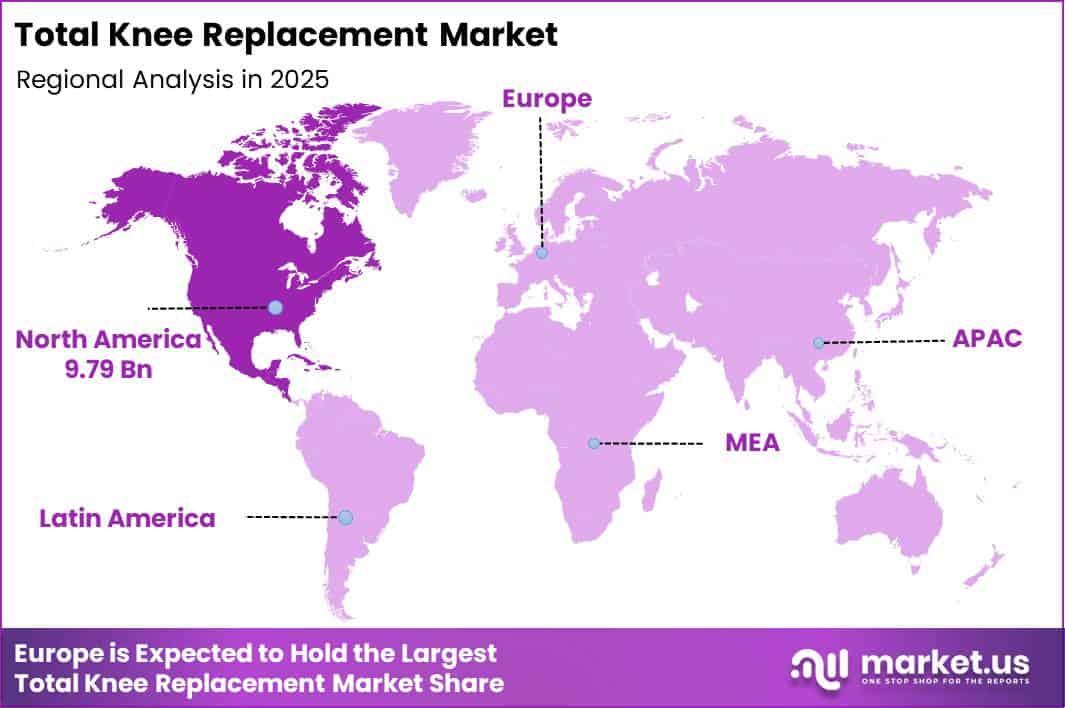
Global Total Knee Replacement Market size is expected to be worth around US$ 38.6 Billion by 2035 from US$ 25.4 Billion in 2025, growing at a CAGR of 4.3% during the forecast period from 2026 to 2035. In 2025, North America led the market, achieving over 38.6% share with a revenue of US$ 9.8 Billion.
Growing demand for total knee replacement procedures is being driven by the increasing prevalence of osteoarthritis, aging demographics, and rising obesity rates worldwide. According to the U.S. Centers for Disease Control and Prevention (CDC), approximately 58.5 million adults in the United States are living with arthritis, while 25.7 million experience arthritis-attributable activity limitations, highlighting the substantial burden of joint disorders on healthcare systems.
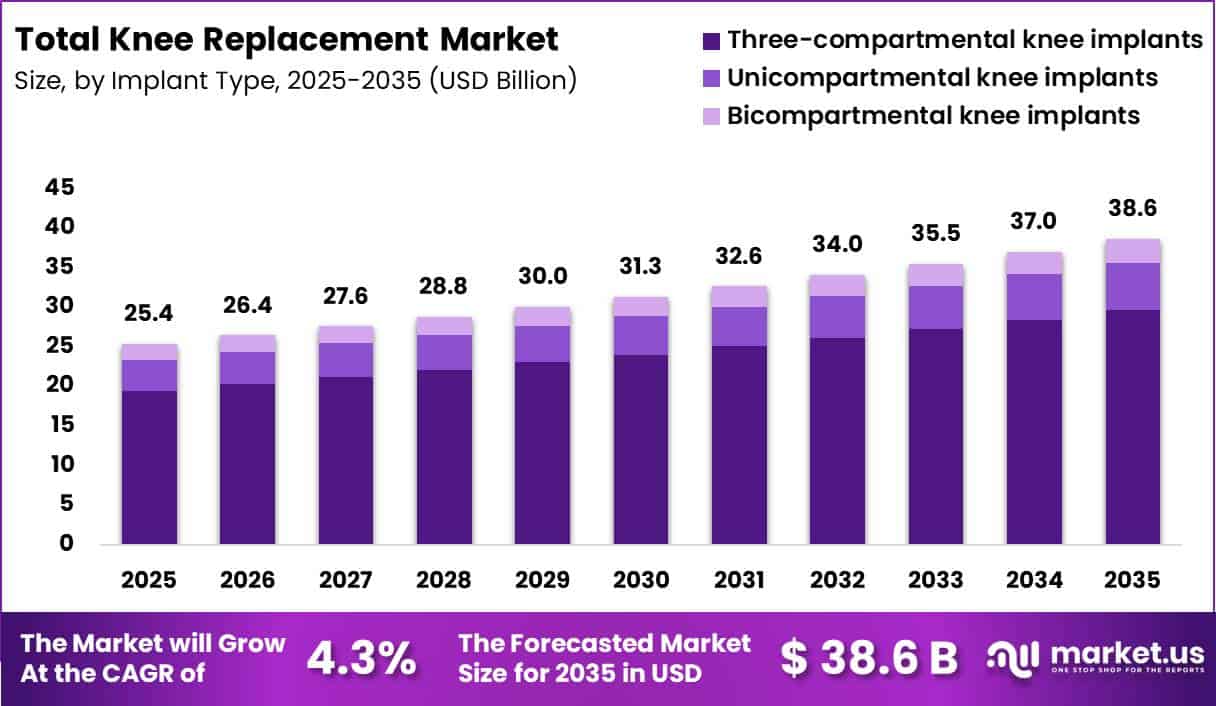
Projections indicate that by 2040, nearly 34.6 million adults in the U.S. will have activity limitations associated with arthritis. Osteoarthritis remains the leading indication for total knee replacement surgeries, particularly among adults aged 65 years and older. Increasing life expectancy and improved access to orthopedic care are contributing to a steady rise in surgical volumes across developed and emerging economies.
Advances in implant materials, robotic-assisted surgical systems, computer navigation technologies, and patient-specific instrumentation are enhancing procedural precision, reducing recovery times, and improving long-term clinical outcomes.
Healthcare providers are also emphasizing value-based care models and outpatient joint replacement programs to optimize hospital resources and lower treatment costs. The growing adoption of minimally invasive surgical techniques and enhanced rehabilitation protocols is further supporting procedure uptake.
In addition, government-backed initiatives aimed at improving musculoskeletal health management and expanding access to orthopedic services continue to create favorable conditions for sustained market expansion over the coming decade.
Key Takeaways
- Market Size : Total Knee Replacement Market size is expected to be worth around US$ 38.6 Billion by 2035 from US$ 25.4 Billion in 2025.
- Market Share : The market is growing at a CAGR of 4.3% during the forecast period from 2026 to 2035.
- Implant Type Analysis : The three-compartmental knee implants segment dominates the Total Knee Replacement Market, accounting for 76.8% of the market share in 2025.
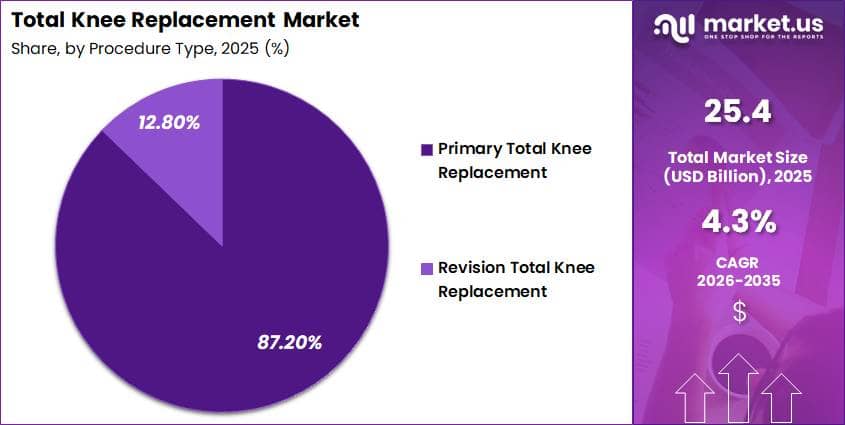
- Procedure Type Analysis : Primary Total Knee Replacement dominates the Total Knee Replacement Market with an 87.2% market share in 2025.
- Fixation Type Analysis : Cemented implants hold the largest share of the Total Knee Replacement Market, representing 63.5% of the market in 2025.
- Material Analysis : Cobalt-chromium alloys dominate the Total Knee Replacement Market, accounting for 39.4% of the market share in 2025.
- Surgical Technique Analysis : Conventional Total Knee Replacement dominates the Total Knee Replacement Market with a 51.6% share in 2025.
- Indication Analysis : Osteoarthritis dominates the Total Knee Replacement Market, accounting for 72.4% of the market share in 2025.
- End User Analysis: Hospitals dominate the Total Knee Replacement Market, capturing 68.7% of the market share in 2025.
- Regional Analysis: In 2025, North America led the market, achieving over 38.6% share with a revenue of US$ 9.8 Billion.
Implant Type Analysis
The three-compartmental knee implants segment dominates the Total Knee Replacement Market, accounting for 76.8% of the market share in 2025. This segment maintains its leading position due to its ability to replace all three compartments of the knee, including the medial, lateral, and patellofemoral regions.
These implants are widely used in patients suffering from advanced degenerative joint diseases, particularly osteoarthritis, where extensive joint damage requires complete reconstruction. Growing adoption of technologically advanced implant designs, improved wear resistance, and enhanced long-term clinical outcomes continue to support segment expansion. Increasing procedure volumes among the aging population further contribute to demand growth.
Unicompartmental knee implants represent 15.4% of the market in 2025 and are gaining attention because they preserve healthy bone and ligaments while enabling faster recovery and reduced postoperative pain.
Bicompartmental knee implants account for 7.8% of the market and are primarily utilized in patients with damage limited to two knee compartments. Advancements in personalized implants, minimally invasive surgical approaches, and improved patient selection criteria are expected to enhance adoption of both unicompartmental and bicompartmental implant systems over the forecast period.
Procedure Type Analysis
Primary Total Knee Replacement dominates the Total Knee Replacement Market with an 87.2% market share in 2025. The segment’s leadership is driven by the increasing prevalence of osteoarthritis, obesity-related joint disorders, and rising demand for mobility restoration among elderly populations.
Primary procedures are generally associated with higher success rates, improved implant longevity, and lower complication risks compared with revision surgeries. Continuous improvements in implant materials, surgical planning technologies, and postoperative rehabilitation protocols further support the growth of this segment. Expanding healthcare access and growing awareness regarding early intervention for severe knee degeneration also contribute to increasing procedure volumes.
Revision Total Knee Replacement accounts for 12.8% of the market in 2025. Demand for revision procedures is increasing due to implant wear, loosening, infection, instability, and the rising number of previously implanted patients reaching the end of implant lifespan.
Advances in revision implant systems, better fixation technologies, and enhanced surgical techniques are improving clinical outcomes. As the installed base of knee implants continues to expand globally, revision procedures are expected to witness steady growth, supported by increasing surgeon expertise and improvements in complex reconstructive procedures.
Fixation Type Analysis
Cemented implants hold the largest share of the Total Knee Replacement Market, representing 63.5% of the market in 2025. Their dominance is attributed to reliable fixation strength, proven long-term performance, and immediate implant stability following surgery.
Cemented fixation remains the preferred choice for elderly patients and individuals with lower bone density because it ensures predictable outcomes and reduced risk of implant loosening. Decades of clinical evidence supporting durability and survivorship have reinforced the widespread adoption of cemented systems across healthcare facilities worldwide.
Cementless implants are witnessing growing adoption owing to advancements in porous surface technologies and enhanced biological fixation capabilities that encourage natural bone integration. These implants are increasingly favored for younger and more active patients seeking longer implant durability.
Hybrid implants, which combine cemented and cementless fixation techniques, are also gaining traction as they provide surgeons with greater flexibility in addressing varying bone conditions. Ongoing innovation in implant coatings, biomaterials, and fixation methods is expected to further diversify treatment options and strengthen overall market development.
Material Analysis
Cobalt-chromium alloys dominate the Total Knee Replacement Market, accounting for 39.4% of the market share in 2025. The segment benefits from excellent wear resistance, high mechanical strength, and long-term durability, making these materials suitable for demanding orthopedic applications.
Their extensive clinical history and ability to withstand repetitive stress have contributed to widespread acceptance among surgeons and healthcare providers. Increasing demand for implants with improved longevity continues to support market growth.
Titanium alloys represent a significant segment due to their lightweight properties, corrosion resistance, and excellent biocompatibility. Oxidized zirconium materials are gaining popularity because they offer reduced wear rates and improved compatibility with polyethylene components.
Polyethylene components remain essential for providing smooth articulation and minimizing friction within joint systems. Ceramic components are increasingly being explored for their superior wear characteristics and reduced particle generation.
Other advanced biomaterials are also being developed to enhance implant lifespan, improve patient outcomes, and address the growing demand for highly durable and customized knee replacement solutions.
Surgical Technique Analysis
Conventional Total Knee Replacement dominates the Total Knee Replacement Market with a 51.6% share in 2025. The segment remains the standard treatment approach due to its established clinical effectiveness, broad surgeon familiarity, and cost efficiency.
Conventional techniques continue to be widely practiced across healthcare facilities because they provide reliable outcomes and require less technological investment compared with advanced surgical methods. Continuous refinement of surgical protocols and implant alignment techniques further supports their sustained adoption.
Computer-Assisted Surgery (CAS) is gaining momentum by improving surgical precision and enabling better implant positioning. Robotic-assisted Total Knee Replacement is witnessing substantial growth due to enhanced accuracy, personalized surgical planning, and improved soft tissue balancing capabilities.
Patient-Specific Instrumentation (PSI) is also expanding as it facilitates customized procedures based on patient anatomy, potentially reducing operation times and improving postoperative recovery. Increasing investments in digital orthopedic technologies, combined with growing demand for personalized treatment solutions, are expected to accelerate the adoption of advanced surgical techniques in the coming years.
Indication Analysis
Osteoarthritis dominates the Total Knee Replacement Market, accounting for 72.4% of the market share in 2025. The segment’s leading position is primarily driven by the growing elderly population, increasing obesity prevalence, and rising incidence of degenerative joint disorders worldwide.
Progressive cartilage deterioration associated with osteoarthritis often leads to severe pain, limited mobility, and reduced quality of life, making total knee replacement a highly effective treatment option. Improved patient awareness and earlier diagnosis continue to contribute to increasing procedure volumes.
Rheumatoid arthritis represents an important segment due to chronic inflammatory damage that can significantly impair knee function. Post-traumatic arthritis develops following injuries that accelerate joint degeneration and frequently necessitate surgical intervention.
Knee deformities account for another portion of demand, particularly among patients experiencing structural abnormalities that affect mobility and alignment. Avascular necrosis and other less common conditions also contribute to market expansion.
Advancements in surgical techniques and implant technologies continue to improve outcomes for patients undergoing knee replacement across diverse clinical indications.
End User Analysis
Hospitals dominate the Total Knee Replacement Market, capturing 68.7% of the market share in 2025. Their strong market position is supported by comprehensive surgical infrastructure, access to advanced imaging systems, specialized orthopedic departments, and multidisciplinary care teams.
Hospitals are often preferred for complex procedures due to their ability to manage postoperative complications and provide extensive rehabilitation services. Growing patient volumes, increasing healthcare investments, and rising adoption of advanced orthopedic technologies further reinforce their leadership.
Orthopedic specialty clinics are gaining prominence because they offer focused musculoskeletal care, shorter waiting times, and personalized treatment approaches. Ambulatory Surgical Centers (ASCs) are experiencing increasing adoption owing to cost-effective procedures, reduced hospital stays, and faster patient recovery.
Academic and research institutes contribute to market growth through clinical studies, surgeon training programs, and technological advancements in implant design. Other healthcare facilities also support procedure expansion by improving accessibility to orthopedic services, particularly in emerging regions where demand for joint replacement interventions continues to rise steadily.
Market Segmentations
Implant Type
- Three-compartmental knee implants
- Bicompartmental knee implants
- Unicompartmental knee implants
Procedure Type
- Primary Total Knee Replacement
- Revision Total Knee Replacement
Fixation Type
- Cemented Implants
- Cementless Implants
- Hybrid Implants
Material
- Cobalt-Chromium Alloys
- Titanium Alloys
- Oxidized Zirconium
- Polyethylene Components
- Ceramic Components
- Others
Surgical Technique
- Conventional Total Knee Replacement
- Computer-Assisted Surgery (CAS)
- Robotic-Assisted Total Knee Replacement
- Patient-Specific Instrumentation (PSI)
Indication
- Osteoarthritis
- Rheumatoid Arthritis
- Post-Traumatic Arthritis
- Knee Deformities
- Avascular Necrosis
- Others
End User
- Hospitals
- Orthopedic Specialty Clinics
- Ambulatory Surgical Centers (ASCs)
- Academic & Research Institutes
- Others
Drivers
Obesity and Metabolic Comorbidity Accelerating Earlier Surgical Conversion
High BMI is increasingly acting not just as a risk factor but as a demand accelerator in osteoarthritis care, particularly for knee replacement pathways. Excess body weight increases joint loading, accelerates cartilage degeneration, and leads to earlier failure of conservative therapies, effectively shifting patients toward surgical intervention at younger ages.
Epidemiological evidence highlights the scale of the underlying burden: symptomatic knee OA affects approximately 13 % of women and 10 % of men aged 60 and older, and both WHO and NIH linked literature identify obesity as a major modifiable driver of disease progression.
As obesity prevalence rises globally, the pool of patients reaching surgical thresholds earlier is expanding. Metabolic comorbidities further intensify complexity. A 2025 nationwide analysis shows that diabetic patients undergoing total knee arthroplasty (TKA) experience higher complication rates, increased hospital charges, and greater revision burden, prompting health systems to adopt more structured prehabilitation and risk stratified surgical pathways rather than volume based approaches.
At the same time, emerging evidence from JAMA Network Open (2025) indicates that weight loss following anti obesity pharmacotherapy is associated with lower 5 and 10 year revision risk, reinforcing the value of integrating metabolic management with orthopedic care.
This dual effect, earlier surgical eligibility combined with improved long term implant outcomes, supports growth not only in primary arthroplasty volumes but also in adjacent services such as pre operative optimization, chronic disease management, and post operative monitoring.
| Driver | (~) % Impact on CAGR Forecast | Geographic Relevance | Impact Timeline |
|---|---|---|---|
| Aging + OA disability load lifting knee replacement demand | +2.3% | North America core, EU, Japan, urban China, mature APAC | Medium term (2-4 years) |
| Obesity and metabolic comorbidity accelerating earlier surgical conversion | +1.7% | U.S. core, Gulf, UK, Australia, urban Latin America | Medium term (2-4 years) |
| CMS episode-based reimbursement expanding hospital throughput discipline | +1.4% | U.S. core, later spill-over to value-based systems in EU and APAC | Short term (≤ 2 years) |
| Outpatient and short-stay TKA improving capacity and procedural economics | +1.6% | U.S. core, Canada selective, Western Europe selective, developed APAC | Short term (≤ 2 years) |
| Robotic, navigation, and implant precision tools widening premium mix | +1.3% | U.S., Germany, UK private channels, Japan, South Korea, Australia | Medium term (2-4 years) |
| New knee-preservation and partial-knee options sharpening patient funnel into arthroplasty | +0.9% | U.S. first, EU selective, developed APAC selective | Long term (≥ 4 years) |
Challenges
Rising Complication and Revision Burden in Total Knee Replacement
The growing complication and revision burden in total knee replacement creates a structural drag on market expansion, even though primary TKR remains highly successful. While serious complications such as infection, deep vein thrombosis, or implant failure occur in roughly 2 to 5 % of patients, broader cohort analyses show that when all postoperative events are included, complication rates can exceed 50 % within six months of surgery. Long term projections highlight the scale of this challenge.
Primary TKR demand is expected to rise by more than 600 % between 2005 and 2030, while revision TKR incidence is projected to increase by 78 to 182 % over the same period (2016 to 2030). In some healthcare systems, this implies that 1 in 5 to 6 knee arthroplasty procedures may become a revision surgery by 2030, significantly increasing operating room time, cost, and resource intensity.
Revision procedures are substantially more complex, often requiring 150 to 180 minutes of operative time compared with 90 to 120 minutes for primary TKR, along with longer hospital stays and higher implant costs. Systemic complication rates of around 7 % further elevate clinical risk, and infection related revisions are associated with higher long term mortality.
This rising burden is prompting payers to tighten indications and promote preventive strategies, potentially reducing primary surgery growth in borderline cases and trimming market CAGR by an estimated 0.7 to 0.9 % points. In response, manufacturers and providers are focusing on infection prevention bundles, better patient selection, and registry driven implant design improvements to reduce long term revision rates.
| Challenge | (~) % CAGR Friction Drag | Geographic Relevance | Mitigation Horizon |
|---|---|---|---|
| Implant supply volatility | -1.2% | North America, EU, APAC hubs | Medium term (2-4 years) |
| Perioperative staffing gaps | -1.0% | North America core, EU public systems | Medium term (2-4 years) |
| Rising complication & revision burden | -0.9% | US, EU, high-volume Asia | Long term (≥ 4 years) |
| Device recall & quality risk | -0.7% | US, EU, selected LATAM | Long term (≥ 4 years) |
| Reimbursement & cost-pressure misalignment | -1.1% | US, EU, developed APAC | Long term (≥ 4 years) |
| Digital integration & data fragmentation | -0.8% | US, EU, APAC urban corridors | Medium term (2-4 years) |
Restraints
Input Cost Inflation and Supply Chain Frictions in Total Knee Replacement
Post pandemic orthopedic supply chains remain structurally tighter than pre 2020 conditions, contributing to sustained input cost inflation across total knee replacement systems. OECD and industry analyses highlight persistent bottlenecks in raw materials, metals, and electronic components used in implant manufacturing and surgical tooling.
Key inputs such as cobalt chrome alloys, titanium, high performance polymers, and sterilization consumables experienced high single digit annual price increases between 2021 and 2023, with episodic spikes exceeding 15 % in certain metals and logistics routes.
Although some normalization has occurred, cost baselines remain elevated. Lead times have also extended, with delays of 4 to 8 weeks versus pre pandemic norms, forcing hospitals to maintain higher inventory buffers.
A mid to large orthopedic center performing 800 to 1,200 TKAs annually may now carry an additional USD 0.5 to 1.0 million in working capital tied to inventory, increasing system wide financial pressure.
Freight, warehousing, and sterilization costs have added another 5 to 10 % per case increase, while manufacturers face higher capital expenditure requirements to upgrade packaging and quality assurance systems. These costs are only partially passed through to buyers due to competitive procurement environments.
As a result, OEM margins are compressed by an estimated 100 to 200 basis points, limiting pricing flexibility and slowing expansion into cost sensitive markets. Combined, these pressures reduce achievable volume growth and constrain global adoption rates, contributing approximately 0.9 % points of drag on TKR CAGR in the near to medium term.
| Restraint | (~) % Impact on CAGR Forecast | Geographic Relevance | Impact Timeline |
|---|---|---|---|
| Inflation-adjusted reimbursement erosion | -1.8% | U.S. core, selected OECD | Medium term (2–4 years) |
| Device recalls & safety overhang | -1.2% | North America, EU, selected APAC | Short–Medium term (≤ 4 years) |
| Input cost inflation & supply chain frictions | -0.9% | Global orthopedic corridors | Short–Medium term (≤ 4 years) |
| Regulatory & quality reporting burden | -0.7% | U.S., EU, high-regulation hubs | Medium–Long term (≥ 3–5 years) |
| Shift to outpatient & ASC pricing pressure | -0.8% | U.S. core, emerging private markets | Medium term (2–4 years) |
| Post-operative outcomes and revision risk | -0.6% | Global, more acute in aging markets | Long term (≥ 4 years) |
Opportunity
Expansion into Younger, Obesity Linked Osteoarthritis Cohorts
Expanding total knee replacement into younger, obesity driven osteoarthritis populations represents a structural long term opportunity rather than an immediate growth driver. Despite rising OA prevalence and worsening metabolic health trends, current surgical guidelines and reimbursement frameworks still primarily prioritize older, late stage patients.Globally, over 595 million people lived with osteoarthritis in 2020, with prevalence increasing by more than 130 % since 1990.
Knee OA is strongly linked to obesity and metabolic syndrome, yet patients under 60 still represent a relatively small share of total knee replacement volumes due to concerns around implant longevity and future revision burden.
Advances in implant materials, fixation techniques, and long term monitoring are gradually enabling expansion into younger cohorts, particularly the 45 to 60 age group, where conservative management often fails earlier due to higher mechanical joint stress. Capturing even 5% of this segment in developed markets by 2035 could translate into several million additional primary TKR procedures.
From a value perspective, younger patients generate 20 to 30 % higher lifetime economic value, driven by longer post operative engagement, higher likelihood of revision surgeries, and increased use of digital follow up and rehabilitation services.
However, adoption depends heavily on payer acceptance and risk sharing models that incorporate obesity management, diabetes control, and structured recovery pathways. Employer backed health plans in North America and APAC are beginning to recognize the productivity benefits of earlier intervention, but policy alignment remains incomplete.
Overall, this remains an underpenetrated growth lever with meaningful upside potential once clinical, reimbursement, and workplace health frameworks converge.
| Opportunity | (~) % Potential CAGR Upside | Geographic Relevance | Execution Window |
|---|---|---|---|
| Value-based bundled TKR pathways in ASC settings | +2.3% | North America, EU, selective APAC | Short term (≤ 2 years) |
| AI-driven prehab and rehab ecosystems tied to implants | +1.9% | North America, EU, APAC urban | Medium term (2-4 years) |
| Expansion into younger, obesity-linked OA cohorts | +1.7% | North America, Latin America, APAC | Medium term (2-4 years) |
| Revision TKR optimization and warranty-style programs | +2.1% | North America core, EU | Long term (≥ 4 years) |
| Emerging-market tiered knee solutions and financing | +1.8% | APAC emerging, Africa, Latin America | Long term (≥ 4 years) |
| Hospital-at-home and hybrid TKR care models | +1.6% | North America, EU, APAC mature | Medium term (2-4 years) |
Regional Analysis
North America dominated the total knee replacement market in 2025, accounting for over 38.6% of global revenue and generating approximately US$ 9.8 billion. The region benefits from a high prevalence of osteoarthritis, advanced orthopedic care infrastructure, widespread availability of robotic-assisted procedures, and favorable reimbursement systems.
The United States remains the largest contributor, supported by strong adoption of innovative implants and increasing surgical volumes. According to the American Academy of Orthopaedic Surgeons (AAOS), more than 700,000 total knee replacement procedures are performed annually in the U.S., underscoring the region’s established orthopedic ecosystem.
Europe represented the second-largest regional market, driven by aging populations and well-developed healthcare systems. Data from the OECD indicate that knee replacement surgeries remain among the most common elective procedures across Europe, with nearly 680,000 knee replacements performed in European Union countries in 2022, reflecting a 30% increase compared with 2012. Germany, Switzerland, Finland, and Denmark report some of the highest knee replacement rates globally.
Meanwhile, the Asia-Pacific region is expected to witness the fastest growth during the forecast period due to expanding healthcare infrastructure, rising healthcare expenditure, growing awareness of joint replacement therapies, and increasing incidence of osteoarthritis.
Latin America and the Middle East & Africa continue to experience gradual market expansion supported by improving access to orthopedic services and ongoing healthcare investments.
Key Regions and Countries
North America
- The US
- Canada
Europe
- Germany
- France
- The U.K.
- Italy
- Spain
- Russia & CIS
- Rest of Europe
Asia Pacific
- China
- India
- Japan
- South Korea
- ASEAN
- Australia & New Zealand
- Rest of Asia Pacific
Middle East & Africa
- GCC
- South Africa
- Rest of Middle East & Africa
Latin America
- Brazil
- Mexico
- Rest of Latin America
Key Player Analysis
Zimmer Biomet, Stryker Corporation, DePuy Synthes (J&J), and Smith & Nephew are among the leading participants in the total knee replacement market, supported by their extensive implant portfolios, strong distribution networks, and continued investments in robotic-assisted surgery technologies.
These companies focus on improving surgical precision, implant longevity, and patient outcomes through advanced knee systems and digital solutions. Their established presence across North America, Europe, and Asia-Pacific enables them to maintain a competitive position in both developed and emerging healthcare markets.
Companies such as Exactech, Conformis, Medtronic, and B. Braun Melsungen also contribute to market growth through product innovation and specialized orthopedic offerings. Conformis is known for its patient-specific knee implant technologies, while Exactech continues to emphasize implant design advancements and surgical planning capabilities.
B. Braun Melsungen, through its orthopedic business, supports healthcare providers with a broad range of reconstructive solutions. Increasing investments in personalized implants, minimally invasive procedures, digital navigation systems, and surgeon education programs are expected to remain key strategies adopted by market participants to strengthen their market presence and address the growing demand for total knee replacement procedures globally.
Top Key Players
- Zimmer Biomet
- Stryker Corporation
- DePuy Synthes (J&J)
- Smith & Nephew
- Exactech
- Conformis
- Medtronic
- B. Braun Melsungen
- MicroPort Orthopedics
- DJO Global
- Arthrex Inc.
- Waldemar Link GmbH
- Aesculap Implant Systems
- Corin Group
- Intellijoint Surgical
- Other Key Players
Recent Developments
- In January 2026 – Smith&Nephew announced the acquisition of Integrity Orthopaedics in a transaction valued at up to US$ 450 million, including an upfront payment of US$ 225 million. Although focused on sports medicine, the deal reflects the company’s broader orthopedic expansion strategy and continued investment in musculoskeletal technologies.
- In July 2025 – Zimmer Biomet announced an agreement to acquire Monogram Technologies for approximately US$ 177 million. Monogram’s FDA-cleared semi-autonomous knee replacement technology is expected to complement the ROSA® Knee platform and enhance Zimmer Biomet’s robotics capabilities.
- In March 2025 – Stryker showcased the next generation of Mako SmartRobotics™ at the AAOS 2025 Annual Meeting, highlighting Mako 4 capabilities and expanded applications designed to support greater precision in knee arthroplasty procedures.
Report Scope
| Report Features | Description |
|---|---|
| Market Value (2025) | US$ 25.4 Billion |
| Forecast Revenue (2035) | US$ 38.6 Billion |
| CAGR (2026-2035) | 4.3% |
| Base Year for Estimation | 2025 |
| Historic Period | 2020-2024 |
| Forecast Period | 2026-2035 |
| Report Coverage | Revenue Forecast, Market Dynamics, Competitive Landscape, Recent Developments |
| Segments Covered | Implant Type (Three-compartmental knee implants, Bicompartmental knee implants, Uni-compartmental knee implants), Procedure Type (Primary Total Knee Replacement, Revision Total Knee Replacement), Fixation Type (Cemented Implants, Cement-less Implants, Hybrid Implants), Material (Cobalt-Chromium Alloys, Titanium Alloys, Oxidized Zirconium, Polyethylene Components, Ceramic Components, Others), Surgical Technique (Conventional Total Knee Replacement, Computer-Assisted Surgery (CAS), Robotic-Assisted Total Knee Replacement, Patient-Specific Instrumentation (PSI)), Indication (Osteoarthritis, Rheumatoid Arthritis, Post-Traumatic Arthritis, Knee Deformities, Avascular Necrosis, Others), End User (Hospitals, Orthopedic Specialty Clinics, Ambulatory Surgical Centers (ASCs), Academic & Research Institutes, Others) |
| Regional Analysis | North America – The US, Canada; Europe – Germany, France, U.K., Italy, Spain, Russia & CIS, Rest of Europe; Asia Pacific – China, India, Japan, South Korea, ASEAN, Australia & New Zealand, Rest of Asia Pacific; Middle East & Africa – GCC, South Africa, Rest of Middle East & Africa; Latin America – Brazil, Mexico, Rest of Latin America |
| Competitive Landscape | Zimmer Biomet, Stryker Corporation, DePuy Synthes (J&J), Smith & Nephew, Exactech, Conformis, Medtronic, B. Braun Melsungen, MicroPort Orthopedics, DJO Global, Arthrex Inc., Waldemar Link GmbH, Aesculap Implant Systems, Corin Group, Intellijoint Surgical, Other Key Players |
| Customization Scope | Customization for segments, region/country-level will be provided. Moreover, additional customization can be done based on the requirements. |
| Purchase Options | We have three licenses to opt for: Single User License, Multi-User License (Up to 5 Users), Corporate Use License (Unlimited User and Printable PDF) |





































