Report Overview
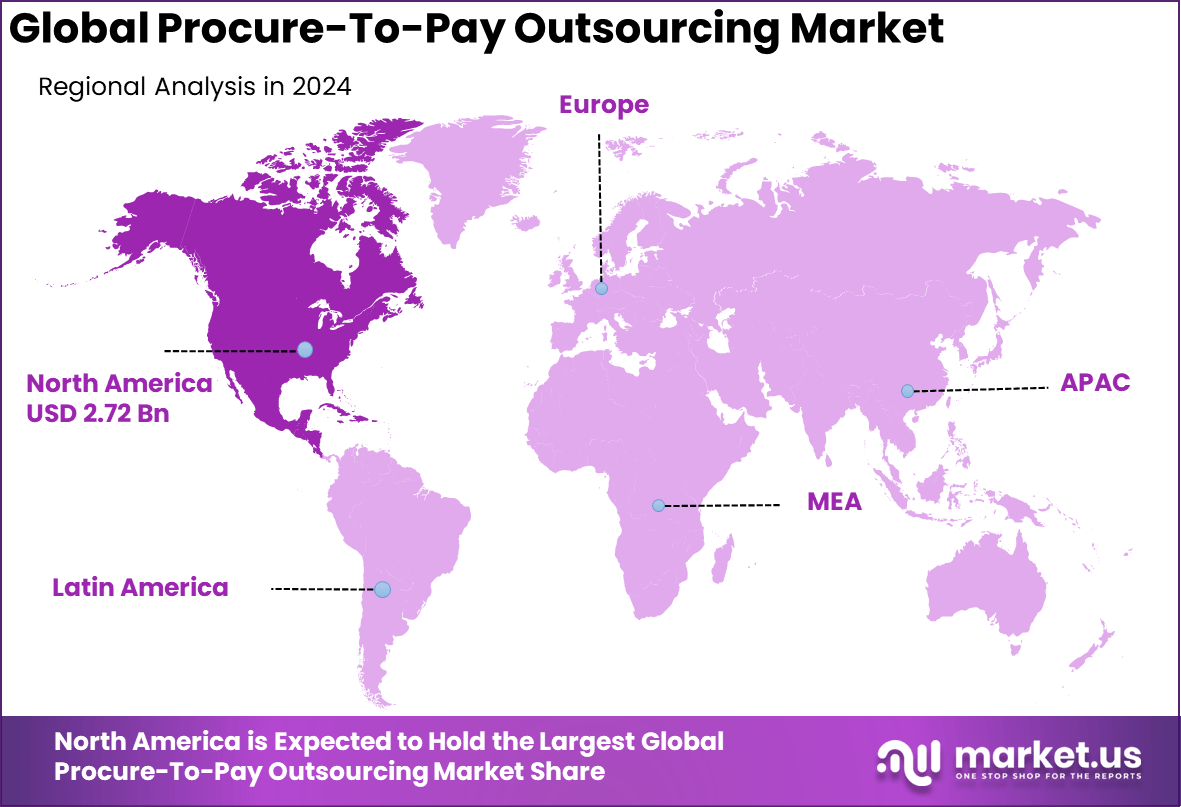
The Global Procure-To-Pay Outsourcing Market size is expected to be worth around USD 13.76 billion by 2034, from USD 7.54 billion in 2024, growing at a CAGR of 6.2% during the forecast period from 2025 to 2034. In 2024, North America held a dominant market position, capturing more than a 36.2% share, holding USD 2.72 billion in revenue.
The procure-to-pay (P2P) outsourcing market refers to the contracting of external specialists to handle end-to-end procurement and payment operations, including sourcing, invoice management, order matching, vendor coordination, and payment processing. It replaces manual, fragmented processes with automated, streamlined workflows that enhance operational accuracy and compliance.
Across sectors such as IT, BFSI, healthcare, and manufacturing, more organizations are turning to third-party providers to improve cash flow visibility and ensure compliance across global operations. Around 70% of large enterprises now use at least one P2P outsourcing service to optimize their supply chain efficiency.
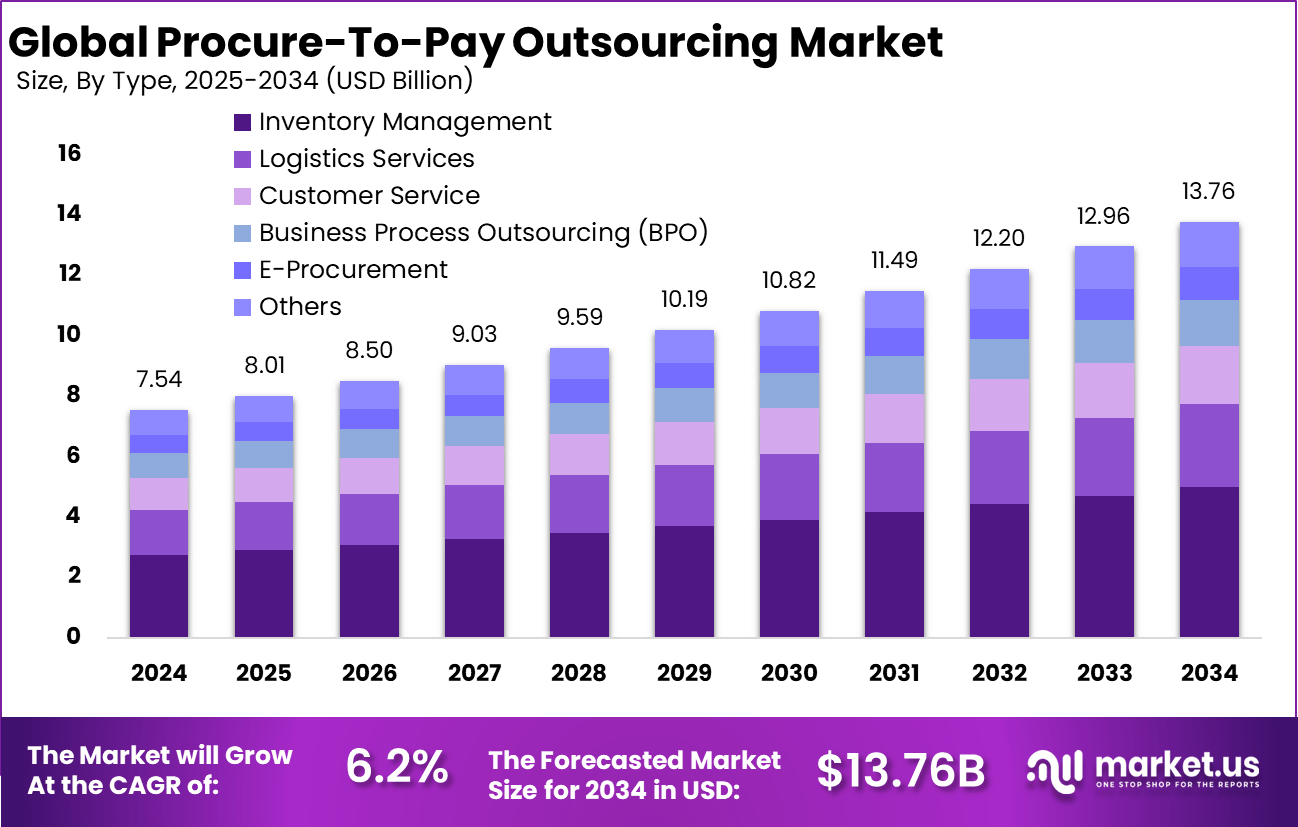
The market’s main drivers include cost optimization, regulatory complexity, and automation-led process improvements. Companies face growing pressure to standardize supplier management systems and comply with data protection frameworks like GDPR and SOX. Automation tools reduce human error by nearly 60% in invoice processing and shorten the payment cycle by up to 30%.
Emerging trends in P2P outsourcing show that more than 80% of companies use cloud-based platforms and AI automation to improve transparency and communication with suppliers. Sustainability is becoming a key focus, with procurement teams increasingly integrating ethical sourcing and environmental responsibility into their operations. These shifts are enhancing efficiency and reshaping procurement strategies toward more purpose-driven approaches.
Growth in P2P outsourcing is mainly driven by the need to cut operational costs and manage complex supply chains effectively. Automation has helped businesses reduce invoice processing time by almost 50%. Additionally, compliance requirements push firms to outsource to experts who can ensure regulatory adherence smoothly, increasing the preference for outsourcing to raise productivity and enable internal teams to focus on strategic work.
Top Market Takeaway
- Inventory Management services captured 36.2% of total market share, showing strong demand for streamlined procurement visibility.
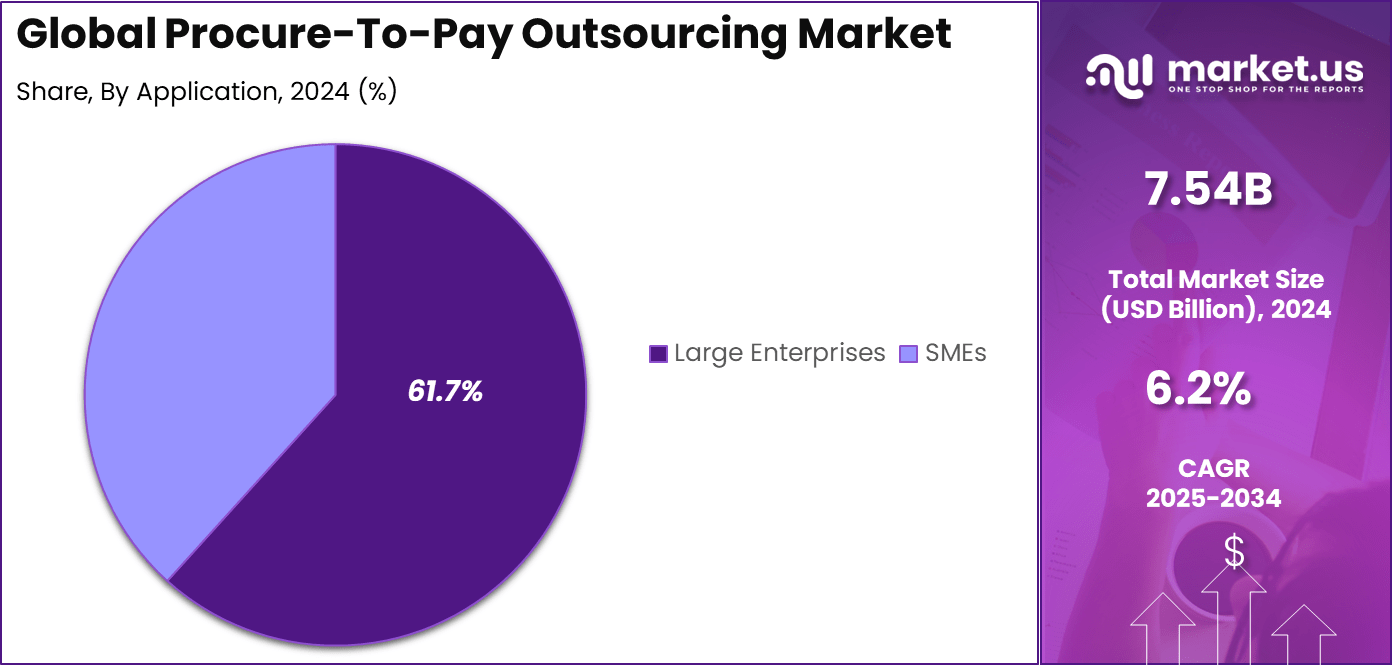
- Large enterprises accounted for 61.7%, reflecting their focus on automation, compliance, and cost optimization in purchasing operations.
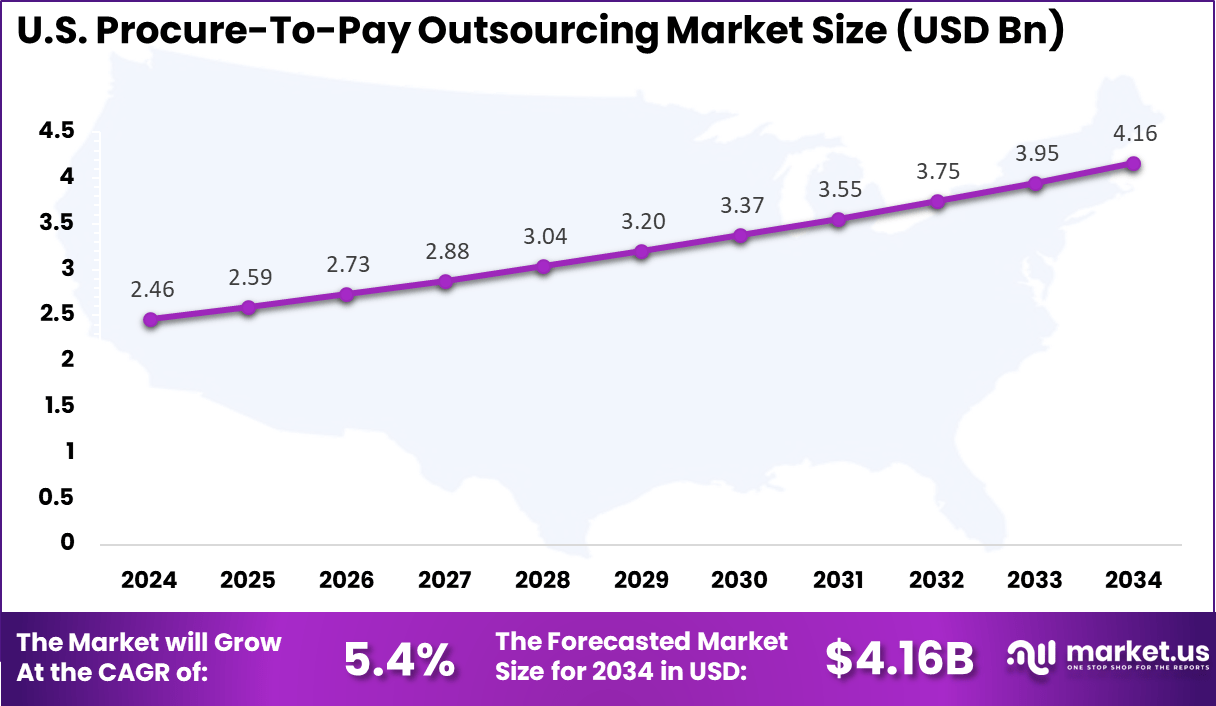
- The US market reached USD 2.46 Billion in 2024 with a steady 5.4% CAGR, supported by advanced digital procurement platforms and vendor consolidation.
- North America maintained dominance with 36.2% of global share, driven by early technology adoption and strong corporate outsourcing activity.
Analyst Viewpoint
Demand analysis shows a strong shift toward integrating advanced technologies like robotic process automation (RPA), AI, and advanced analytics in procure-to-pay (P2P) outsourcing solutions. Around 35% of recent digital adopters have selected P2P suites to manage their spending, with an additional 21% opting for broader Source-to-Pay solutions.
Investments are particularly directed toward supplier risk management software, which improves communication, tracks supplier performance, and enhances regulatory compliance. These technologies help reduce invoice processing costs by as much as 80% and operational costs by around 70% in high-volume settings, making these tools essential for efficiency in the ever-growing procurement landscape.
The adoption of AI, machine learning, blockchain, and cloud platforms is transforming P2P outsourcing from a simple cost-cutting tool into a strategic asset. AI enhances visibility into procurement cycles, enables proactive supplier risk management, and speeds up decision-making. Blockchain ensures greater transparency and transaction security, addressing compliance challenges.
Adoption Rates
By 2025, procure-to-pay (P2P) outsourcing has become a mainstream business strategy, with about 78% of enterprises globally outsourcing at least part of their P2P functions to specialized providers. This surge is driven by the need to cut costs, improve process accuracy, and leverage automation and AI for procurement efficiency.
Companies across sectors such as BFSI, IT, and energy are increasingly using third-party P2P platforms for invoice processing, supplier management, and procurement optimization. At the same time, more than 50% of organizations now use cloud-based P2P suites to digitize procurement and payment operations. Cloud migration is accelerating because of scalability, integration flexibility, and low upfront costs compared to on-premises systems.
Leading providers such as SAP Ariba, Coupa, and Oracle have expanded SaaS-based P2P offerings, and many firms are adopting these tools for real-time visibility, predictive analytics, and compliance management. As a result, both outsourcing and cloud-based adoption are converging to form the backbone of digital procurement transformation in 2025.
Role of Generative AI
Generative AI is revolutionizing procure-to-pay (P2P) outsourcing by automating repetitive tasks like invoice processing and vendor management. This automation can reduce costs by up to 70% and accelerate processing times, helping organizations improve accuracy and decrease errors.
The technology also provides real-time insights and predictive analytics, enabling stronger compliance and risk management, which makes P2P systems more efficient and reliable. Government spending on public procurement is substantial, accounting for about 12.7% of GDP in OECD countries, with nearly 30% of total government expenditures directed toward procurement activities.
Governments are investing heavily in digitizing procurement systems and outsourcing backend functions to reduce fraud, increase transparency, and improve value for taxpayers. These investments set strong benchmarks for the private sector, accelerating market growth and adoption of outsourced P2P solutions.
Investment and Business Benefits
Investment opportunities largely focus on developing intelligent automation tools, AI-powered analytics, and integrated platforms that combine procurement with contract and supplier management. There is a visible trend away from fragmented systems toward comprehensive, user-friendly Source-to-Pay suites, which present attractive prospects for providers emphasizing innovation and usability.
Additionally, scalable and flexible service models that can adjust to fluctuating business demands are gaining prominence, especially in sectors with complex and global supply chains. These factors make the market ripe for growth and innovation. Outsourcing P2P processes offers multiple business benefits, including significant cost savings by reducing the need for internal staff and infrastructure.
Access to specialized expertise improves procurement quality, compliance, and operational efficiency through automation. Companies benefit from enhanced scalability to manage seasonal or unexpected demand surges without compromising delivery. Supplier relationships improve due to faster payments and transparent communication, which strengthens partnerships.
U.S. Market Size
The market for Procure-To-Pay Outsourcing within the U.S. is growing tremendously and is currently valued at USD 2.46 billion, the market has a projected CAGR of 5.4%. The market is growing tremendously due to increasing demand for operational efficiency, rising labor costs, and the need for digital procurement solutions.
U.S. enterprises are prioritizing automation, compliance, and supplier transparency, prompting greater adoption of outsourcing models. Additionally, the availability of advanced cloud platforms and AI-driven tools supports seamless integration and real-time data visibility. As companies navigate economic pressures and workforce constraints, outsourcing P2P functions offers a strategic path to agility and cost savings.
For instance, in October 2025, GEP, a U.S.-based provider, secured the top ranking in the Spend Matters Fall 2025 SolutionMap. This achievement exemplifies American leadership in advanced AI-powered procure-to-pay solutions widely adopted by global enterprises, reinforcing the U.S. dominance in the Procure-To-Pay Outsourcing market.
In 2024, North America held a dominant market position in the Global Procure-To-Pay Outsourcing Market, capturing more than a 36.2% share, holding USD 2.72 billion in revenue. This dominance is due to its advanced digital infrastructure, high adoption of cloud-based solutions, and strong presence of leading outsourcing providers.
Enterprises across the region prioritized automation, compliance, and cost efficiency, driving demand for end-to-end P2P services. Additionally, regulatory rigor and evolving procurement strategies encouraged organizations to streamline processes through outsourcing. This mature business environment positioned North America as a key hub for innovation and growth in the P2P outsourcing space.
For instance, in April 2025, Accenture, headquartered in the U.S., expanded its AI-driven procurement and automation services globally through strategic acquisitions like Aidemy. This expansion strengthened its leadership in the procure-to-pay outsourcing market, reflecting North America’s dominance in this sector.
Type Analysis
In 2024, The Inventory Management segment held a dominant market position, capturing a 36.2% share of the Global Procure-To-Pay Outsourcing Market. This dominance is due to its role in managing procurement, storage, and optimal stock levels. This segment supports accurate inventory tracking, vendor performance management, and efficient purchase order processing.
The integration of advanced technologies such as AI and IoT helps optimize replenishment and reduce operational costs. Its ability to enhance data accuracy, prevent stockouts, and streamline procurement makes it indispensable across industries, driving its market dominance.
For Instance, In March 2025, GEP achieved top rankings in several source-to-pay categories on Spend Matters’ SolutionMap. The recognition highlighted its AI-driven inventory management innovation, which integrates seamlessly into procurement and supplier workflows. This advancement demonstrates GEP’s focus on data-driven inventory control within outsourced procurement operations.
Application Analysis
In 2024, the Large Enterprises segment held a dominant market position, capturing a 61.7% share of the Global Procure-To-Pay Outsourcing Market. This dominance is due to large enterprises’ extensive procurement needs and complex supply chains that require efficient and scalable outsourcing solutions.
These organizations prioritize cost reduction, compliance, and process automation to enhance operational efficiency. Their higher budgets allow investment in advanced technologies and robust outsourcing partnerships. The demand for integrated, end-to-end procurement solutions further drives large enterprises to lead the market.
Key Trends in 2025
The procurement and outsourcing landscape in 2025 is marked by rapid adoption of advanced technologies and strategic business models.
- Increased use of AI and automation: Service providers are applying AI, machine learning, and robotic process automation (RPA) to streamline repetitive tasks such as invoice processing. This adoption has improved accuracy and enhanced data analysis across procurement cycles.
- Shift to cloud-based solutions: By 2025, more than 50% of organizations are expected to rely on cloud-based procure-to-pay (P2P) platforms. These solutions enable seamless integration with enterprise systems and provide scalability to support global operations.
- Emphasis on strategic partnerships: Outsourcing is evolving from a transactional model to long-term strategic partnerships. This shift allows businesses to derive insights, strengthen supplier collaboration, and optimize procurement functions.
- Data analytics for insights: Advanced analytics are increasingly used to understand spending patterns, track supplier performance, and identify cost-saving opportunities, enabling businesses to make evidence-based decisions.
- Focus on compliance and transparency: Regulatory frameworks such as GDPR are prompting greater attention to compliance, data privacy, and security. Providers are embedding these requirements into their service delivery models.
Benefits of Outsourcing
Organizations outsourcing procurement and related functions are realizing tangible business benefits in 2025.
- Cost savings: Outsourcing delivers substantial reductions in operational costs by removing the need for large in-house teams, manual interventions, and infrastructure investments.
- Improved efficiency and accuracy: Automation has minimized errors, shortened procurement cycles, and enhanced workflow efficiency, enabling faster processing of purchase orders and invoices.
- Access to expertise: Companies gain access to specialized procurement knowledge and advanced technological capabilities that are otherwise difficult to maintain internally.
- Enhanced scalability: Outsourced services are flexible and can scale operations in line with fluctuating business demands, supporting growth without proportionate cost increases.
- Improved vendor management: Providers with robust supplier networks help negotiate favorable contract terms and strengthen long-term vendor relationships, improving overall supply chain resilience.
Key Market Segments
By Type
- Inventory Management
- Logistics Services
- Customer Service
- Business Process Outsourcing (BPO)
- E-Procurement
- Others
By Application
- SMEs
- Large Enterprises
Regional Analysis and Coverage
- North America
- US
- Canada
- Europe
- Germany
- France
- The UK
- Spain
- Italy
- Russia
- Netherlands
- Rest of Europe
- Asia Pacific
- China
- Japan
- South Korea
- India
- Australia
- Singapore
- Thailand
- Vietnam
- Rest of Latin America
- Latin America
- Brazil
- Mexico
- Rest of Latin America
- Middle East & Africa
- South Africa
- Saudi Arabia
- UAE
- Rest of MEA
Drivers
Rising Demand for Cost Optimization and Process Efficiency
Enterprises are increasingly outsourcing procure-to-pay processes to drive cost reduction and enhance operational efficiency. Outsourcing enables access to specialized providers that leverage automation, standardization, and scalable infrastructures. These efficiencies streamline procurement cycles, reduce error rates, and improve cash flow management.
As businesses seek leaner operations and better resource allocation, demand for P2P outsourcing grows, positioning it as a strategic lever for sustainable cost containment and agility in procurement operations across sectors and geographies.
For instance, in October 2025, Accenture announced its ongoing investments and acquisitions aimed at enhancing AI-driven automation and talent development. This strategy underscores the rising demand among key players to optimize costs and streamline processes through advanced technologies, enabling clients to achieve operational efficiency and cost reduction in their procurement and supply chain functions.
Restraint
High Cost of Implementation
While P2P outsourcing promises long-term value, the upfront implementation costs remain a significant barrier. Transitioning to an outsourced model entails substantial investment in technology integration, change management, and vendor onboarding.
Additionally, aligning legacy systems with modern platforms can incur high customization and compliance costs. For mid-sized enterprises, these expenses often outweigh short-term gains, making return on investment (ROI) less predictable and slowing broader market adoption despite clear operational advantages over time.
For instance, In September 2025, Coupa Software emphasized the substantial investments needed to integrate AI-native platforms and advanced risk management tools into its procurement systems. These elevated implementation costs, covering technology development, integration, and organizational change, reflect the broader challenges companies encounter when deploying complex enterprise-wide procurement and supply chain platforms.
Opportunities
Integration of AI and Automation in Procurement Workflows
The accelerating adoption of artificial intelligence, robotic process automation, and data analytics is reshaping P2P outsourcing. These technologies enable dynamic spend analytics, automated invoice handling, and predictive sourcing decisions, transforming procurement from a transactional function into a strategic asset.
Service providers that embed these innovations into their offerings can deliver greater transparency, compliance, and efficiency. This technological shift opens substantial opportunities to redefine procurement value chains, positioning vendors as strategic partners in digital transformation.
For instance, In March 2025, Jaggaer, Inc. upgraded its source-to-pay platform with AI-powered analytics and supplier collaboration tools. The update automates contract management, enhances risk mitigation, and improves requisition approvals, resulting in greater efficiency, transparency, and strategic focus for procurement teams.
Challenges
Complexity of Process Standardization Across Geographies
Standardizing procure-to-pay processes across diverse global operations presents a formidable challenge. Multinational organizations must navigate varying regulatory environments, cultural practices, tax systems, and legacy IT infrastructures.
Aligning these disparate elements into a unified, compliant, and scalable outsourcing model demands significant effort and coordination. Failure to achieve this integration often results in fragmented workflows, increased risk exposure, and diminished outsourcing returns, undermining the strategic objectives of global P2P transformation initiatives.
For instance, in July 2025, Capgemini’s $3.3 billion acquisition of WNS aimed to address the complexity of process standardization across diverse geographies. This move reflects the challenge key players face in harmonizing procurement and supply chain processes globally while managing regional regulatory variations, cultural differences, and varying technology adoption levels to maintain consistent service quality.
Key Players Analysis
The Procure-To-Pay Outsourcing Market is led by global consulting and technology firms such as Accenture Public Limited Company, IBM Corporation, and Capgemini SE. These companies offer end-to-end procurement outsourcing services integrating automation, analytics, and supplier collaboration. Their platforms help enterprises optimize spend visibility, enhance compliance, and streamline procurement-to-invoice workflows across industries.
Prominent software and platform providers including Ariba, Inc., Coupa Software Inc., Basware Oyj, Jaggaer, Inc., and Oracle Corporation deliver cloud-based P2P solutions that automate sourcing, contract management, and payments. Their systems integrate AI-driven insights and real-time spend tracking, enabling businesses to reduce costs and improve procurement agility in global supply chains.
Specialized outsourcing and service firms such as GEP, Inc., Infosys BPM Ltd., Genpact Limited, and Wipro Limited, along with other key players, focus on process optimization, digital transformation, and managed procurement services. Their expertise in analytics, supplier risk management, and robotic process automation (RPA) supports enterprises seeking efficiency, transparency, and scalability in procurement operations.
Top Key Players in the Market
- Accenture Public Limited Company
- Ariba, Inc.
- GEP, Inc.
- Infosys BPM Ltd.
- Coupa Software Inc.
- Capgemini SE
- IBM Corporation
- Wipro Limited
- Basware Oyj
- Jaggaer, Inc.
- Oracle Corporation
- Genpact Limited
- Others
Recent Developments
- In October 2025, GEP was recognized as the leader in Spend Matters Fall 2025 SolutionMap for source-to-pay (S2P) solutions. GEP excelled in providing AI-powered procurement software designed for global enterprises, offering comprehensive capabilities in source-to-contract, supplier risk management, contract lifecycle management, and intake & orchestration. This recognition highlights GEP’s market leadership and innovation in delivering integrated, AI-driven procurement platforms worldwide.
- In September 2025, Coupa Software was named a leader in the Spend Matters Fall 2025 SolutionMap for AI-enabled source-to-pay, specifically for its excellence in intake and orchestration. Coupa’s platform offers intelligent AI-driven workflow orchestration, simplified user experience, enhanced compliance, and superior supplier risk management capabilities, which give it a competitive edge in managing procurement requests and supplier oversight.
Report Scope
| Report Features | Description |
|---|---|
| Market Value (2024) | USD 7.5 Bn |
| Forecast Revenue (2034) | USD 13.7 Bn |
| CAGR(2025-2034) | 6.2% |
| Base Year for Estimation | 2024 |
| Historic Period | 2020-2023 |
| Forecast Period | 2025-2034 |
| Report Coverage | Revenue forecast, AI impact on Market trends, Share Insights, Company ranking, competitive landscape, Recent Developments, Market Dynamics and Emerging Trends |
| Segments Covered | By Type (Inventory Management, Logistics Services, Customer Service, Business Process Outsourcing (BPO), E-Procurement, Others), By Application (SMEs, Large Enterprises) |
| Regional Analysis | North America – US, Canada; Europe – Germany, France, The UK, Spain, Italy, Russia, Netherlands, Rest of Europe; Asia Pacific – China, Japan, South Korea, India, New Zealand, Singapore, Thailand, Vietnam, Rest of Latin America; Latin America – Brazil, Mexico, Rest of Latin America; Middle East & Africa – South Africa, Saudi Arabia, UAE, Rest of MEA |
| Competitive Landscape | Accenture Public Limited Company, Ariba, Inc., GEP, Inc., Infosys BPM Ltd., Coupa Software Inc., Capgemini SE, IBM Corporation, Wipro Limited, Basware Oyj, Jaggaer, Inc., Oracle Corporation, Genpact Limited, Others |
| Customization Scope | Customization for segments, region/country-level will be provided. Moreover, additional customization can be done based on the requirements. |
| Purchase Options | We have three license to opt for: Single User License, Multi-User License (Up to 5 Users), Corporate Use License (Unlimited User and Printable PDF) |