


Market Overview
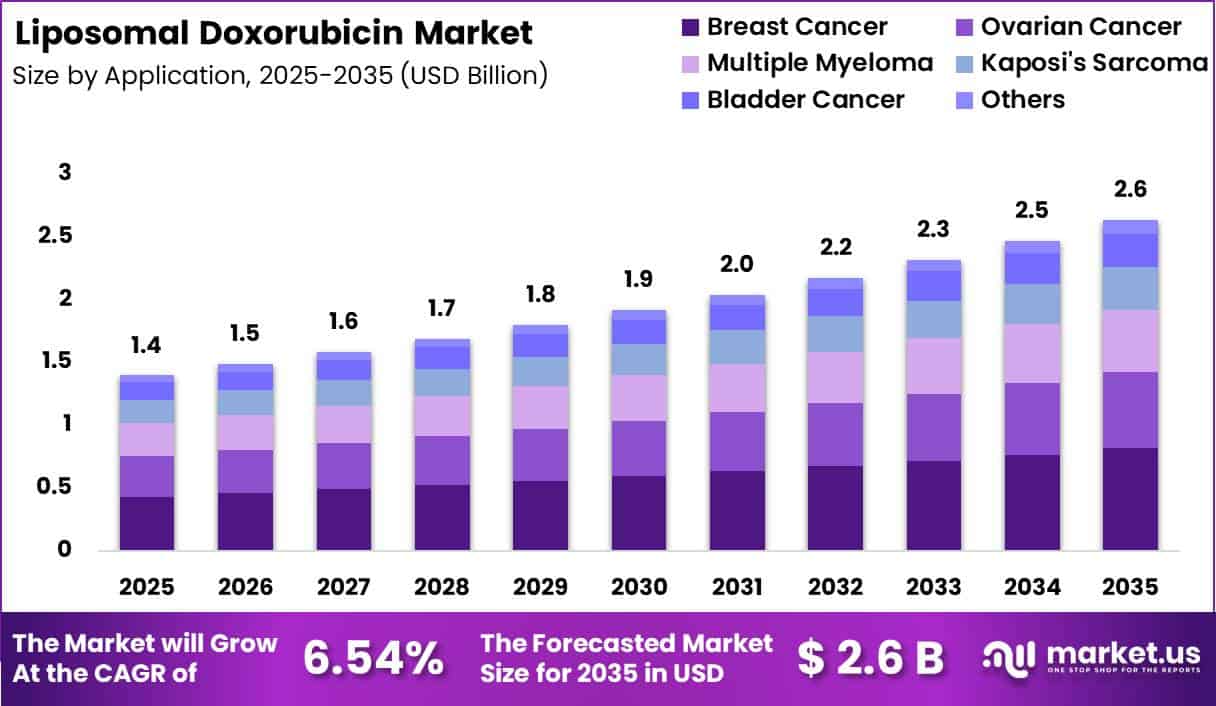
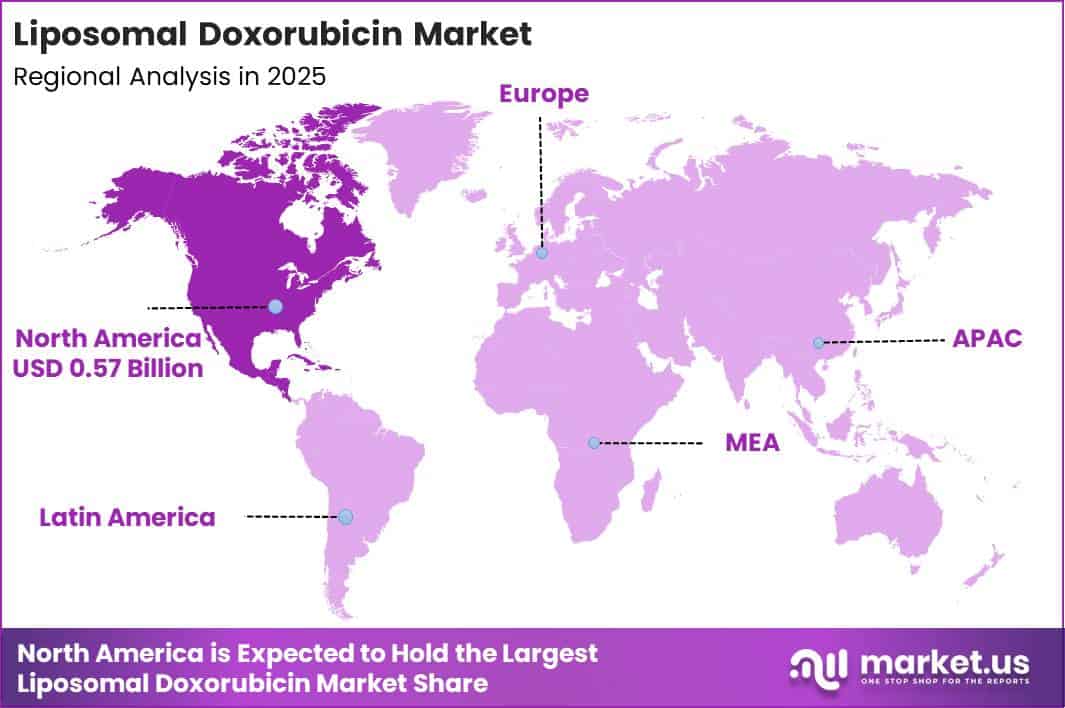
Global Liposomal Doxorubicin Market size is expected to be worth around US$ 2.63 Billion by 2035 from US$ 1.40 Billion in 2025, growing at a CAGR of 6.54% during the forecast period from 2026 to 2035. In 2025, North America led the market, achieving over 41.10% share with a revenue of US$ 0.57 Billion.
Liposomal doxorubicin represents one of the most established nanomedicine therapies used in cancer treatment. Introduced as the first U.S. FDA-approved nanodrug in 1995, the therapy was developed to improve drug delivery efficiency while reducing the cardiotoxic effects commonly associated with conventional doxorubicin chemotherapy.
According to the U.S. National Cancer Institute (NCI), liposomal doxorubicin is approved for the treatment of ovarian cancer, AIDS-related Kaposi sarcoma, and multiple myeloma in combination with other therapies. The formulation allows the drug to remain in circulation for longer periods, enabling enhanced accumulation within tumor tissues while lowering exposure to healthy organs.
Clinical evidence continues to support its therapeutic value. The European Medicines Agency reported that studies involving 2,512 patients across seven major clinical trials demonstrated the effectiveness of pegylated liposomal doxorubicin in several malignancies.
In metastatic breast cancer, a study of 509 women showed disease progression times of approximately 7.5 months while exhibiting a lower incidence of cardiac complications compared with conventional doxorubicin. In advanced ovarian cancer, trials involving 474 patients confirmed comparable efficacy to alternative chemotherapy agents.
Additionally, around 70% of patients with AIDS-related Kaposi sarcoma achieved complete or partial responses in clinical studies. Ongoing research and advancements in lipid-based drug delivery technologies are expected to further expand the clinical applications of liposomal doxorubicin in oncology.
Key Takeaways
- Market Size : Liposomal Doxorubicin Market size is expected to be worth around US$ 2.63 Billion by 2035 from US$ 1.40 Billion in 2025.
- Market Share : The Market is growing at a CAGR of 6.54% during the forecast period from 2026 to 2035.
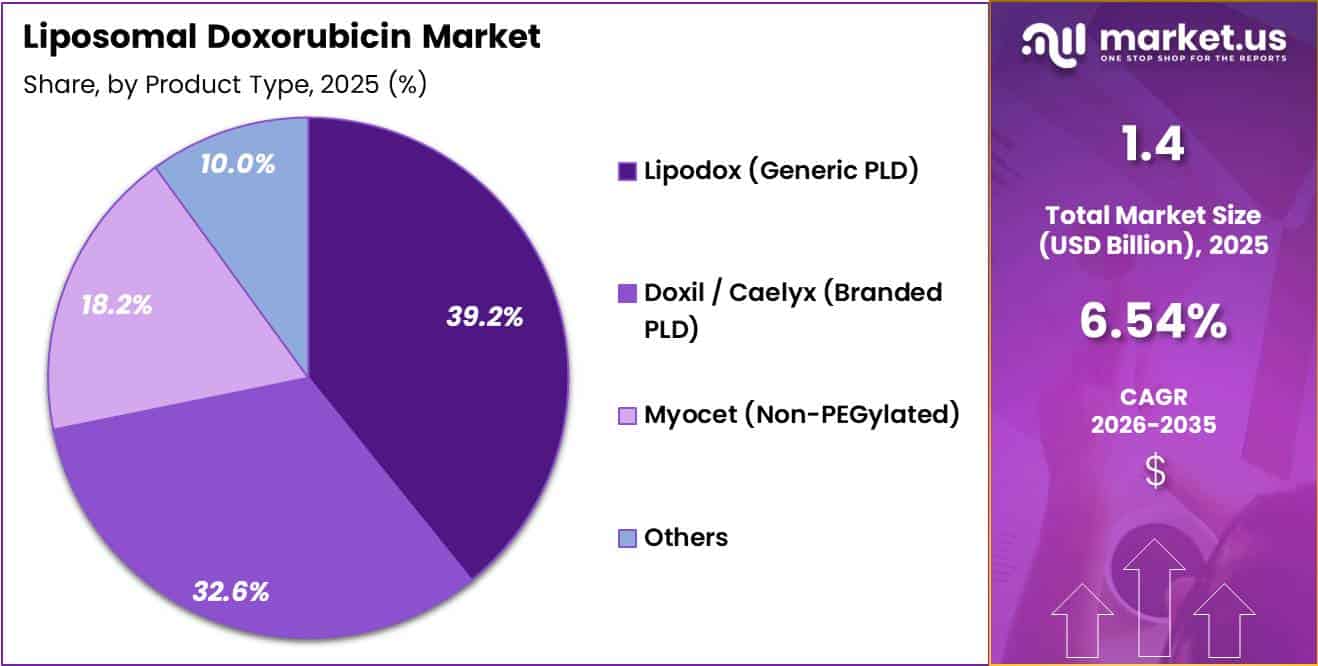
- Product Type Analysis : The Lipodox (Generic PLD) segment dominated the liposomal doxorubicin market, accounting for 39.20% of the total market share.
- Drug Formulation Analysis : Doxorubicin Injection (Liquid) held the largest share of the liposomal doxorubicin market in 2025, accounting for 62.10% of overall revenue.
- Application Analysis : Breast cancer emerged as the leading application segment in the liposomal doxorubicin market in 2025, capturing 31.00% of total market revenue.
- Distribution Channel Analysis : Hospital Pharmacies dominated the liposomal doxorubicin market accounting for 62.00% of the global market share in 2025.
- End User Analysis : Hospitals accounted for the largest share of the liposomal doxorubicin market in 2025, representing 57.10% of total revenue.
- Regional Analysis : In 2025, North America led the market, achieving over 41.10% share with a revenue of US$ 0.57 Billion.
Product Type Analysis
The Lipodox (Generic PLD) segment dominated the liposomal doxorubicin market in 2025, accounting for 39.20% of the total market share. The segment benefits from increasing adoption of cost-effective generic therapies, particularly in emerging economies where healthcare systems focus on reducing oncology treatment costs.
Generic pegylated liposomal doxorubicin products offer therapeutic efficacy comparable to branded alternatives while improving patient access. Growing approvals of generic formulations and expanding manufacturing capabilities continue to support segment growth.
Doxil/Caelyx (Branded PLD) represents another significant segment, supported by its long-established clinical use in ovarian cancer, multiple myeloma, and Kaposi’s sarcoma treatment. Branded formulations maintain strong demand owing to physician confidence, extensive clinical evidence, and established regulatory approvals.
Myocet, the non-PEGylated liposomal formulation, also maintains a niche position, particularly in breast cancer management where reduced cardiotoxicity remains an important advantage. The Others category includes newer regional formulations and biosimilar products entering selected markets.
Continuous innovation in liposomal technologies and increasing demand for advanced chemotherapy options are expected to support growth across all product categories.
Drug Formulation Analysis
Doxorubicin Injection (Liquid) held the largest share of the liposomal doxorubicin market in 2025, accounting for 62.10% of overall revenue. The dominance of this segment is mainly attributed to its ready-to-use nature, reduced preparation requirements, and convenience in hospital oncology settings.
Liquid formulations allow healthcare professionals to administer therapy more efficiently while minimizing preparation errors and contamination risks. In addition, liquid injections provide consistent dosing accuracy and are widely utilized in cancer treatment centers treating ovarian cancer, multiple myeloma, Kaposi’s sarcoma, and breast cancer patients.
Increasing demand for streamlined chemotherapy administration processes further strengthens the segment’s position. Meanwhile, the lyophilized powder segment continues to gain attention because of its longer shelf life, improved product stability, and ease of transportation.
These formulations are particularly beneficial in regions with limited cold-chain infrastructure and are increasingly adopted by manufacturers seeking extended product storage capabilities. Advances in formulation science and improved packaging technologies are expected to support demand for both liquid and lyophilized liposomal doxorubicin products over the forecast period.
Application Analysis
Breast cancer emerged as the leading application segment in the liposomal doxorubicin market in 2025, capturing 31.00% of total market revenue. The segment’s growth is driven by the increasing use of liposomal formulations to reduce cardiotoxicity associated with conventional anthracycline therapies. Pegylated liposomal doxorubicin has demonstrated effectiveness in metastatic breast cancer management, supporting its adoption among oncologists.
Ovarian cancer constitutes another major application area, as liposomal doxorubicin is approved for patients whose disease has progressed following platinum-based chemotherapy. Multiple myeloma also represents an important segment, particularly when liposomal doxorubicin is administered alongside bortezomib-based regimens.
Kaposi’s sarcoma remains a well-established indication due to the drug’s proven clinical benefits and regulatory approvals. Bladder cancer and other malignancies are emerging applications, supported by ongoing clinical studies evaluating expanded therapeutic potential.
Increasing cancer prevalence, growing acceptance of targeted drug delivery technologies, and efforts to improve patient quality of life are expected to drive demand across all application segments in the coming years.
Distribution Channel Analysis
Hospital Pharmacies dominated the liposomal doxorubicin market in 2025, accounting for 62.00% of the global market share. The segment benefits from the specialized nature of oncology treatments, which typically require administration under medical supervision within hospital settings.
Liposomal doxorubicin products are commonly dispensed through hospital pharmacies because they require controlled handling, infusion management, and continuous patient monitoring. The availability of multidisciplinary oncology teams and supportive care services further strengthens hospital pharmacy demand.
Specialty oncology pharmacies represent another important segment, supported by increasing adoption of personalized cancer treatment approaches and specialized distribution networks. These facilities provide comprehensive medication management, patient counseling, and treatment coordination services, particularly for complex chemotherapy regimens.
Retail pharmacies account for a comparatively smaller market share due to limited direct dispensing of intravenous oncology products. However, expansion of oncology-focused pharmacy services and growing healthcare accessibility may contribute to gradual segment growth. Increasing cancer incidence and rising demand for advanced chemotherapy therapies are expected to sustain market expansion across distribution channels.
End User Analysis
Hospitals accounted for the largest share of the liposomal doxorubicin market in 2025, representing 57.10% of total revenue. Hospitals remain the preferred treatment setting because liposomal chemotherapy requires specialized administration procedures, infusion facilities, and close patient monitoring.
Advanced oncology departments, availability of experienced healthcare professionals, and integrated supportive care services contribute significantly to hospital dominance. Growing investments in cancer treatment infrastructure and increasing patient admissions for chemotherapy continue to support segment expansion.
Specialty cancer centers constitute another key end-user category, benefiting from rising demand for focused oncology services, access to innovative treatment protocols, and participation in clinical research programs. These centers often provide multidisciplinary care, improving treatment outcomes and patient experience.
Homecare settings are gradually emerging as an alternative segment, supported by advancements in infusion technologies, patient-centered healthcare models, and efforts to reduce hospital stays. However, due to the complexity of administering liposomal doxorubicin and the need for clinical supervision, hospital-based treatment remains the primary mode of care globally.
Market Segmentations
By Product Type
- Lipodox (Generic PLD)
- Doxil / Caelyx (Branded PLD)
- Myocet (Non-PEGylated)
- Others
By Drug Formulation
- Doxorubicin Injection (Liquid)
- Lyophilized Powder
By Application
- Breast Cancer
- Ovarian Cancer
- Multiple Myeloma
- Kaposi’s Sarcoma
- Bladder Cancer
- Others
By Distribution Channel
- Hospital Pharmacies
- Specialty Oncology Pharmacies
- Retail Pharmacies
By End User
- Hospitals
- Specialty Cancer Centers
- Homecare Settings
Driver
Oncology Demand Expansion in Ovarian Myeloma and Breast Adjacent Pathways
The first structural growth driver is the durability of treatable oncology disease pools that continue to support liposomal anthracycline demand beyond its narrow FDA labeled indications. FDA labeling anchors use in ovarian cancer after platinum failure, AIDS related Kaposi’s sarcoma, and multiple myeloma in combination with bortezomib, preserving a stable, reimbursable base in late line settings where clinicians are familiar with toxicity management and infusion workflows.
Beyond these labeled indications, demand is reinforced through broader guideline supported and compendia backed use in anthracycline sensitive cancers, particularly in breast cancer adjacent pathways, where cumulative cardiotoxicity limits conventional doxorubicin dosing and creates substitution opportunities for liposomal formulations.
This expands usage into institutional protocols where treatment sequencing depends on prior anthracycline exposure rather than tumor type alone. The underlying epidemiology further strengthens demand depth.
WHO reported 2.3 million new breast cancer cases and 670,000 deaths in 2022, while global cancer incidence continues to rise, expanding the population eligible for anthracycline based regimens across multiple lines of therapy.
In ovarian cancer and multiple myeloma, prolonged treatment courses and relapse driven care cycles also increase repeat exposure to chemotherapy regimens, reinforcing multi cycle utilization patterns. From a commercial perspective, this driver enhances treatment continuity rather than just first line initiation, with repeat dosing typically aligned to 21 day or 28 day cycles in ovarian and hematologic malignancies.
As a result, it supports more stable revenue density across treatment lines and settings. Overall, this sustained multi indication utilization base contributes approximately +2.1 % points to baseline CAGR, driven by expanded patient pools, longer treatment sequences, and substitution effects within anthracycline constrained regimens.
| Driver | (~) % Impact on CAGR Forecast | Geographic Relevance | Impact Timeline |
|---|---|---|---|
| Oncology demand depth in ovarian, myeloma, breast-adjacent use pathways | +2.1% | North America core, EU5, Japan, urban China, Gulf oncology hubs | Medium term |
| Cardiac-sparing value vs conventional anthracyclines in longer-treatment cohorts | +1.7% | North America core, EU, advanced APAC centers | Medium term |
| Generic-complex liposome manufacturing expansion under FDA equivalence pathway | +1.9% | U.S. core, India manufacturing base, EU generics corridors | Medium term |
| Reimbursement resilience from hospital oncology payment updates | +1.1% | U.S. core, spill-over to reference-pricing markets | Short term |
| Combination-regimen persistence in relapsed hematology and salvage oncology | +1.3% | U.S., EU, Japan, selected APAC tertiary centers | Short term |
| Supply-risk normalization after shortage and recall volatility | +0.9% | U.S. core, import-dependent LATAM, MENA, Southeast Asia | Short term |
Challenge
Sterile Lipid Nano Formulation Manufacturing Complexity and Capacity Constraints
Manufacturing pegylated liposomal doxorubicin at commercial scale is a high friction, capital intensive process because the drug to lipid encapsulation system must consistently meet tight physicochemical specifications, including liposome size distribution, lamellarity, surface charge, and drug leakage stability under physiological conditions.
Regulatory expectations also reinforce this complexity, with FDA requirements typically including equivalence across at least three full scale batches and particle size testing on no fewer than 30 vials per batch, increasing validation intensity.
Production systems must reliably maintain liposome particle sizes in the 70 to 100 nm range, with standard deviation often kept under 10 nm, while ensuring drug to lipid ratios remain within approximately ±5 % tolerance.
In addition, stability of ammonium sulfate gradients and bilayer phase transition behavior must be preserved to ensure consistent pharmacokinetics and tumor delivery performance. Even minor deviations can trigger batch failure investigations and multi week production delays, effectively reducing usable annual capacity by an estimated 5 to 10 % in smaller or less mature facilities.
At industrial scale, these requirements translate into significantly higher manufacturing economics compared with conventional small molecule oncology injectables. Sterile lipid nanoparticle production lines typically require 15 to 20 % higher CAPEX, alongside 8 to 12 % higher per unit operating costs driven by intensive in process characterization, sterile controls, and batch release testing.
Early stage or newly scaled facilities may also experience 3 to 5 % batch rejection rates, particularly during ramp up phases when process optimization is ongoing. Collectively, these constraints limit supply flexibility and slow capacity expansion, contributing to an estimated 1.2 % point drag on potential CAGR, as manufacturing bottlenecks and high production complexity restrict rapid scaling even in the presence of strong clinical demand for liposomal formulation.
| Challenge | (~) % CAGR Friction Drag | Geographic Relevance | Mitigation Horizon |
|---|---|---|---|
| Sterile lipid nano-formulation complexity | -1.2% | North America, EU, APAC manufacturing hubs | Long term (≥ 4 years) |
| Cold-chain oncology logistics strain | -0.9% | North America core, EU, APAC corridors, LATAM | Medium term (2-4 years) |
| Cardiotoxicity and safety monitoring burden | -0.8% | Global oncology centers | Medium term (2-4 years) |
| Oncology talent and infusion capacity gaps | -0.7% | Emerging Asia, Africa, LATAM urban clusters | Long term (≥ 4 years) |
| Regulatory bioequivalence and CMC hurdles | -0.6% | US, EU, select Asia regulators | Long term (≥ 4 years) |
| Payer pricing and formulary friction | -0.8% | US, EU, middle-income APAC, LATAM | Medium term (2-4 years) |
Restraints
Nano Regulatory Complexity and Extended Review Cycles in Liposomal Doxorubicin
The first restraint arises from the classification of liposomal doxorubicin within nanomedicine regulatory frameworks, which require highly granular particle level characterization and nano specific safety evaluation before approval or major chemistry manufacturing and controls (CMC) changes.
Regulators expect detailed physicochemical profiling of liposomes, including full particle size distribution (D10 D50 D90), SPAN values, surface charge (zeta potential), morphology, encapsulation efficiency, and stability behavior, alongside nano specific toxicology assessments.
In addition, sponsors must often generate comparative pharmacokinetic datasets distinguishing encapsulated versus free drug exposure, including metrics such as AUC0–48h and AUC48–tlast, while demonstrating tight bioequivalence thresholds typically within the 80 to 125 % confidence interval range for follow on formulations.
These requirements significantly increase analytical burden and validation complexity across development programs. Practically, this regulatory depth can extend US and EU review timelines by an estimated 6 to 12 months compared with conventional small molecule injectables, while increasing CMC and analytical development costs by approximately 10 to 15 %.
It also forces manufacturers to adopt staggered, region specific submission strategies rather than synchronized global filings, delaying revenue realization and extending time to peak sales.
From a market impact perspective, these delays and added compliance requirements contribute to an estimated 1.2 % point reduction in baseline CAGR, driven by slower launches, delayed label expansions, and increased regulatory resubmission cycles for manufacturing changes or site additions.
Strategically, this complexity favors larger pharmaceutical companies with established regulatory infrastructure, while discouraging smaller players from expanding geographically particularly in Japan and advanced APAC markets despite strong underlying oncology demand.
| Restraint | (~) % Impact on CAGR Forecast | Geographic Relevance | Impact Timeline |
|---|---|---|---|
| Nano-regulatory complexity & extended review cycles | -1.2% | US, EU, Japan, advanced APAC | Medium term (2–4 years) |
| High-precision lipid & liposome manufacturing cost overhang | -1.0% | US, EU, China, India | Long term (≥ 4 years) |
| Oncology injectable drug shortages & supplier exit risk | -0.9% | North America core, EU, selective LATAM | Short–Medium (≤ 3 years) |
| Safety-driven risk controls (cardiotoxicity, infusion reactions) | -0.7% | Global tertiary care hubs | Medium term (2–4 years) |
| Competitive substitution by targeted biologics & ADCs | -0.8% | US, EU, high-income APAC | Long term (≥ 4 years) |
| Hospital budget stress and reimbursement pressure | -0.6% | US, EU, emerging APAC payers | Short–Medium (≤ 3 years) |
Opportunity
LMIC Oncology Access and Tender Based Penetration for Liposomal Doxorubicin
In low and middle income countries LMICs, baseline demand for liposomal doxorubicin remains structurally constrained by budget limitations, limited cardiotoxicity monitoring infrastructure, and continued reliance on older, lower cost anthracycline regimens.
However, the underlying oncology burden in regions such as APAC emerging markets, Latin America, and Africa is rising rapidly, with projected double digit growth in incident breast, ovarian, and hematologic malignancies through 2035, expanding the latent addressable population for safer anthracycline formulations.
Current utilization of liposomal anthracyclines in LMICs is largely restricted to urban tertiary centers and a relatively small fraction often below 10 % of eligible high risk patients, leaving a substantial unmet need linked to cardiotoxicity risk, premature treatment discontinuation, and avoidable mortality. This gap is driven less by clinical preference and more by procurement structures that prioritize lowest upfront drug cost over long term toxicity reduction.
A structured LMIC access strategy could materially expand penetration. This would combine tender based pricing reductions of 25 to 40 %, volume committed procurement agreements, regional manufacturing or fill finish partnerships to reduce logistics costs, and simplified cardiotoxicity monitoring protocols suitable for resource limited settings. Under such a framework, liposomal doxorubicin penetration could rise to 30 to 40 % of eligible anthracycline based regimens by 2035 in priority LMIC markets.
From a financial perspective, this would unlock an incremental revenue opportunity of approximately USD 800 million to 1.2 billion above baseline forecasts, despite lower per unit margins, primarily driven by volume expansion and broader geographic coverage.
The resulting increase in emerging market utilization could contribute approximately 4 % points of CAGR upside, as LMIC oncology demand grows faster than high income markets and remains significantly underpenetrated by advanced formulations.
This opportunity is not yet a primary market driver because most manufacturers still operate LMIC strategies as opportunistic export channels rather than structured access programs, and procurement systems often default to conventional anthracyclines.
Realizing the upside would require restructured tender models that explicitly value reduced cardiotoxicity, improved treatment completion rates, and longer term healthcare cost offsets.
| Opportunity | (~) % Potential CAGR Upside | Geographic Relevance | Execution Window |
|---|---|---|---|
| Cardio-oncology risk-sharing treatment bundles | +3.0% | North America core, EU | Medium term (2-4 years) |
| Label expansion into cardio-constrained solid tumors | +2.5% | EU, APAC mature, North America | Medium term (2-4 years) |
| LMIC oncology access & tender-based penetration | +4.0% | APAC emerging, Latin America, Africa | Long term (≥ 4 years) |
| Hospital-embedded liposomal oncology centers of excellence | +2.0% | North America, EU, GCC | Short term (≤ 2 years) |
| Platform partnerships for next-gen liposomal combos | +3.5% | Global innovation hubs (US, EU, Japan) | Long term (≥ 4 years) |
| Digital toxicity monitoring & outcomes-linked contracting | +2.2% | North America, EU, select APAC | Medium term (2-4 years) |
Regional Analysis
North America dominated the liposomal doxorubicin market in 2025, accounting for over 41.10% of global revenue and generating approximately US$ 0.57 billion. The region’s leadership is supported by a strong oncology treatment infrastructure, high adoption of advanced drug delivery technologies, and extensive research activities in cancer therapeutics.
The United States remains the largest contributor due to the widespread availability of specialized cancer centers, favorable reimbursement systems, and continued investment in nanomedicine-based therapies. Pegylated liposomal doxorubicin has been approved in the U.S. for nearly 30 years, reinforcing physician familiarity and long-term clinical utilization.
Europe represents the second-largest regional market, driven by increasing demand for targeted chemotherapy and growing use of liposomal formulations in ovarian cancer, breast cancer, and multiple myeloma treatment. Countries such as Germany, France, Italy, and the United Kingdom are benefiting from established healthcare systems and supportive regulatory pathways for innovative oncology medicines.
Meanwhile, Asia-Pacific is projected to witness the fastest growth during the forecast period owing to rising cancer incidence, improving healthcare infrastructure, and expanding access to advanced chemotherapy drugs.
China, Japan, India, and South Korea are investing significantly in oncology research and treatment capabilities. Latin America and the Middle East & Africa are expected to experience steady expansion, supported by improving healthcare access, increasing awareness of cancer management, and gradual adoption of novel therapeutic formulations.
Key Regions and Countries
North America
- The US
- Canada
Europe
- Germany
- France
- The U.K.
- Italy
- Spain
- Russia & CIS
- Rest of Europe
Asia Pacific
- China
- India
- Japan
- South Korea
- ASEAN
- Australia & New Zealand
- Rest of Asia Pacific
Middle East & Africa
- GCC
- South Africa
- Rest of Middle East & Africa
Latin America
- Brazil
- Mexico
- Rest of Latin America
Key Player Analysis
The liposomal doxorubicin market is characterized by the presence of established pharmaceutical companies with strong oncology portfolios, global distribution capabilities, and expertise in complex injectable formulations. Sun Pharmaceutical Industries Ltd. remains a significant participant through its Lipodox portfolio and broad oncology presence across international markets.
Lupin Limited has strengthened its position with the U.S. launch of Doxorubicin Hydrochloride Liposome Injection through its partnership with ForDoz Pharma, expanding access to generic liposomal therapies in North America.
Johnson & Johnson Services Inc. (Janssen), Merck & Co. Inc., Pfizer Inc., and GSK plc leverage extensive oncology research capabilities, established hospital networks, and experience in specialty medicines to maintain a competitive presence in the cancer therapeutics sector.
Cipla Limited continues to benefit from its strong footprint in emerging markets and affordable oncology products, while CHEPLAPHARM Arzneimittel GmbH has expanded its oncology portfolio through the acquisition of Myocet®, enhancing its presence in the European liposomal doxorubicin segment.
Competition among key players is driven by product availability, manufacturing expertise, regulatory approvals, strategic collaborations, and investments in advanced drug delivery technologies aimed at improving treatment outcomes and reducing chemotherapy-associated toxicity.
Top Key Players
- Sun Pharmaceutical Industries Ltd.
- Johnson & Johnson Services Inc. (Janssen)
- Merck & Co. Inc.
- Cipla Limited
- CHEPLAPHARM Arzneimittel GmbH
- Lupin Limited
- Pfizer Inc.
- GSK plc
- Sanofi S.A.
- Baxter International Inc.
- RPG Life Sciences Limited
- Getwell Oncology
Recent Developments
- In May 2026, Sun Pharmaceutical Industries Ltd. initiated a voluntary U.S. nationwide recall of one batch of DOXOrubicin Hydrochloride Liposome Injection 50 mg/25 mL (Lot HAG2581B; 675 vials) because of the potential presence of glass particles, reflecting ongoing quality assurance measures in the liposomal oncology segment.
- In August 2024, Lupin Limited launched Doxorubicin Hydrochloride Liposome Injection 20 mg/10 mL and 50 mg/25 mL in the United States after its alliance partner ForDoz Pharma received U.S. FDA approval for the abbreviated new drug application (ANDA), strengthening Lupin’s oncology injectable portfolio in North America.
- In January 2024, CHEPLAPHARM Arzneimittel GmbH acquired the European commercial rights for Myocet®, a non-pegylated liposomal doxorubicin therapy used in metastatic breast cancer, from Teva, expanding its oncology portfolio across Europe.
Report Scope
| Report Features | Description |
|---|---|
| Market Value (2025) | US$ 1.40 Billion |
| Forecast Revenue (2035) | US$ 2.63 Billion |
| CAGR (2026-2035) | 6.54% |
| Base Year for Estimation | 2025 |
| Historic Period | 2020-2024 |
| Forecast Period | 2026-2035 |
| Report Coverage | Revenue Forecast, Market Dynamics, Competitive Landscape, Recent Developments |
| Segments Covered | By Product Type (Lipodox (Generic PLD), Doxil / Caelyx (Branded PLD), Myocet (Non-PEGylated), Others), By Drug Formulation (Doxorubicin Injection (Liquid), Lyophilized Powder), By Application (Breast Cancer, Ovarian Cancer, Multiple Myeloma, Kaposi’s Sarcoma, Bladder Cancer, Others), By Distribution Channel (Hospital Pharmacies, Specialty Oncology Pharmacies, Retail Pharmacies), By End User (Hospitals, Specialty Cancer Centers, Homecare Settings) |
| Regional Analysis | North America – The US, Canada; Europe – Germany, France, U.K., Italy, Spain, Russia & CIS, Rest of Europe; Asia Pacific – China, India, Japan, South Korea, ASEAN, Australia & New Zealand, Rest of Asia Pacific; Middle East & Africa – GCC, South Africa, Rest of Middle East & Africa; Latin America – Brazil, Mexico, Rest of Latin America |
| Competitive Landscape | Sun Pharmaceutical Industries Ltd., Johnson & Johnson Services Inc. (Janssen), Merck & Co. Inc., Cipla Limited, CHEPLAPHARM Arzneimittel GmbH, Lupin Limited, Pfizer Inc., GSK plc, Sanofi S.A., Baxter International Inc., RPG Life Sciences Limited, Getwell Oncology |
| Customization Scope | Customization for segments, region/country-level will be provided. Moreover, additional customization can be done based on the requirements. |
| Purchase Options | We have three licenses to opt for: Single User License, Multi-User License (Up to 5 Users), Corporate Use License (Unlimited User and Printable PDF) |





































