


Report Overview
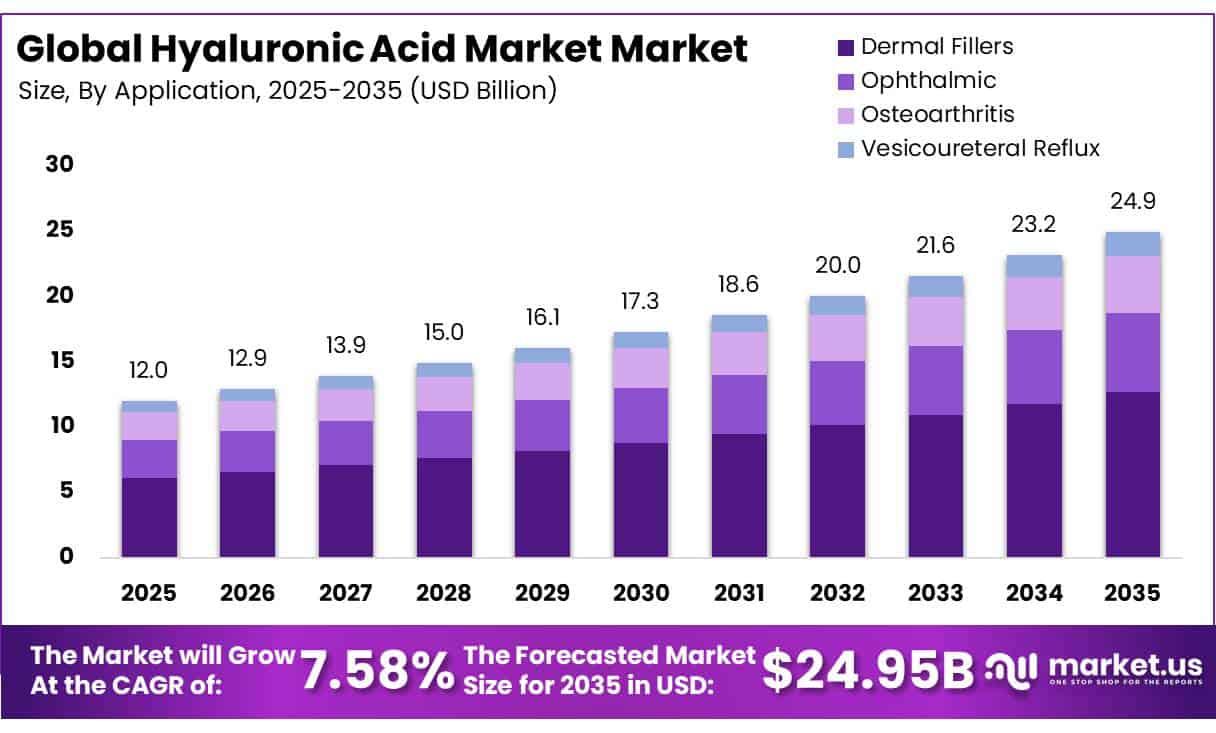
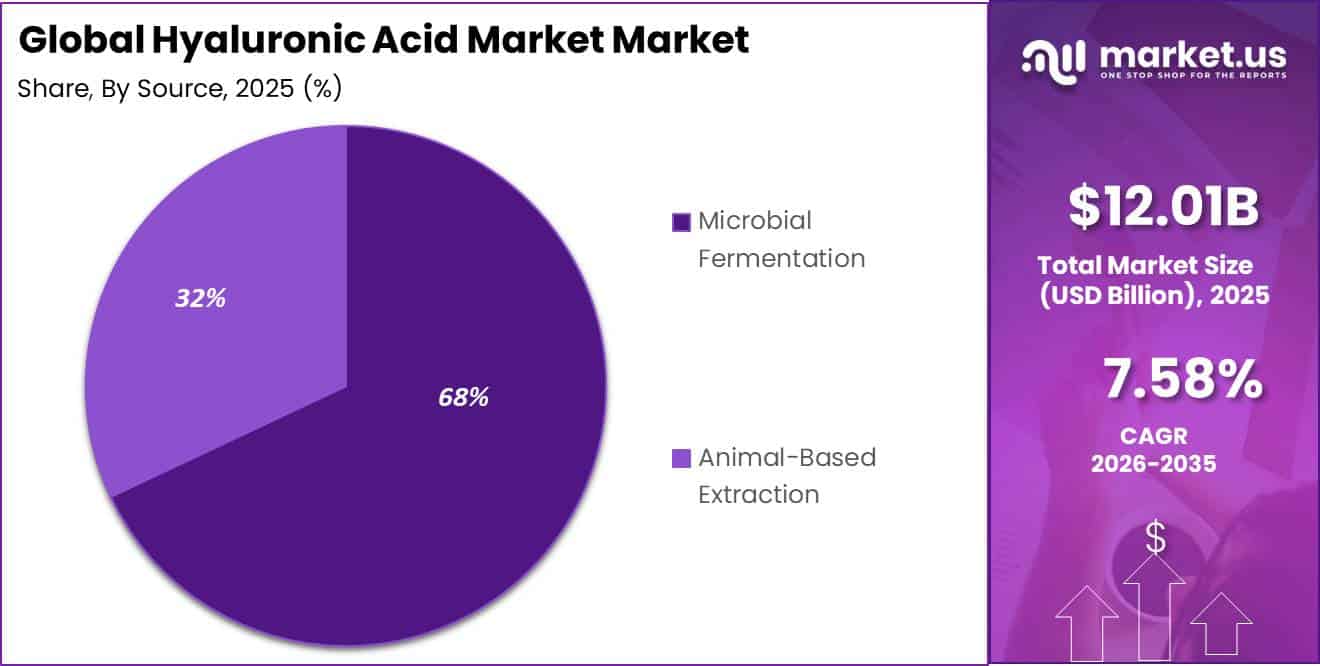
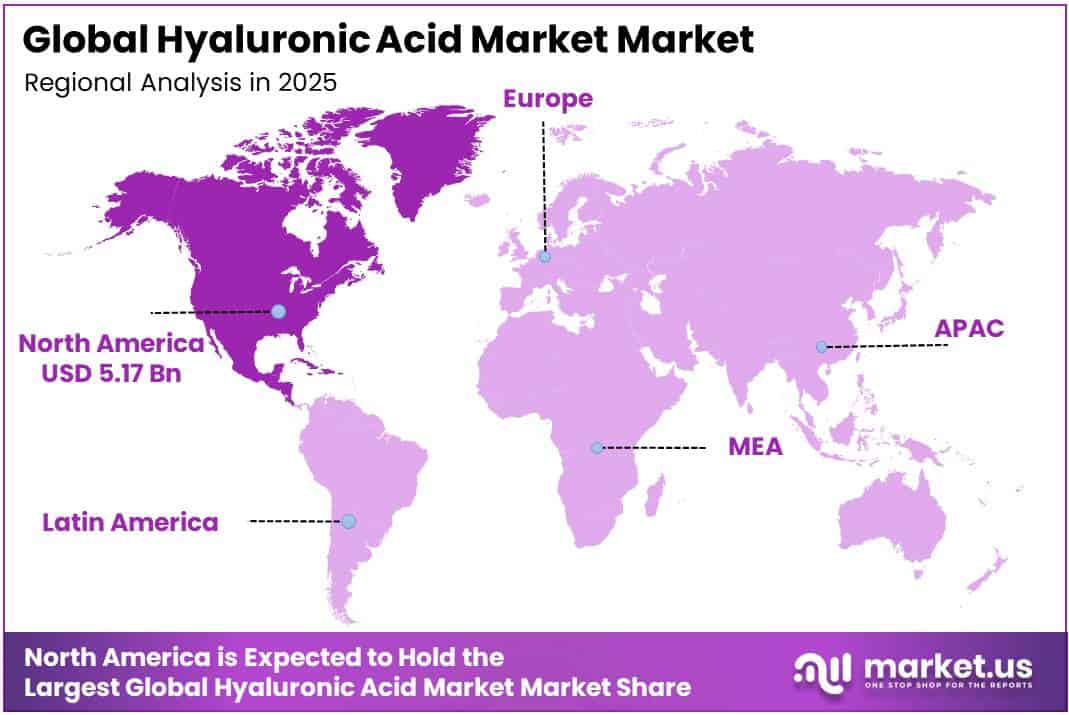
In 2025, the Hyaluronic Acid Market was valued at USD 12.01 Billion, and between 2026 and 2035, this market is estimated to register a CAGR of 7.58%, reaching about USD 24.95 Billion by 2035. North America held a dominant market position, capturing more than a 43% share, holding USD 5.17 Billion in revenue.
Hyaluronic acid (HA) is a naturally occurring glycosaminoglycan valued for water retention and lubrication, used across pharmaceutical, medical device, cosmetic, and food sectors. In the United States, HA based dermal fillers are regulated by the Food and Drug Administration (FDA) as Class III medical devices requiring Premarket Approval (PMA), reflecting a therapeutic grade classification rather than a simple cosmetic ingredient. Applications span injectable aesthetics, ophthalmic surgery, osteoarthritis treatment, wound care, and functional food formulation.
- The FDA reports an estimated 6,264,287 total dermal filler procedures, covering HA based and non-HA formulations, were performed in the United States in 2024. Between the FDA’s 2021 General Issues Panel and May 28, 2025, the agency approved 13 new dermal filler PMAs or indication expansions, several involving crosslinked hyaluronic acid for infraorbital hollowing, jawline, and temple augmentation. In the European Union, HA based fillers fall under Annex XVI of Medical Device Regulation (MDR) 2017/745, governed by Regulation (EU) 2022/2346, effective June 2023.
Key Takeaways
- The Global Hyaluronic Acid Market was valued at US$12.01 billion in 2025.
- The global hyaluronic acid market is projected to grow at a CAGR of 58% and is estimated to reach US$24.95 billion by 2035.
- On the basis of application, Dermal Fillers dominated the market, constituting 9% of the total market share.
- Based on the grade, Pharmaceutical Grade dominated the market, accounting for 0% of the total market share.
- Based on the source, Microbial Fermentation dominated the market, accounting for 0% of the total market share.
- In 2025, North America was the most dominant region in the hyaluronic acid market, accounting for 0% of the global market.
Growth is driven by rising demand for minimally invasive aesthetic procedures. Per the American Society of Plastic Surgeons (ASPS), HA filler procedures reached 5,331,426 in 2024, a 1% rise over the prior year, while injectable lip augmentation totaled 1,449,565 procedures. The FDA’s Medical Device Reporting (MDR) system recorded 17,768 all time Serious Injury reports for dermal filler codes LMH and PKY, including 1,478 reports in 2023 and 1,179 in 2024.
Regulatory bodies continue expanding permissible HA applications. The FDA’s Center for Food Safety and Applied Nutrition has evaluated Generally Recognized as Safe (GRAS) notices, including GRN 000976, for sodium hyaluronate in fruit drinks, carbonated soft drinks, candy, milk drinks, yogurt, and cereals at 40 to 60 mg per serving, signaling functional food potential. The FDA’s ongoing evaluation of new indications, such as the décolletage area, alongside evolving European Union Annex XVI requirements, points toward continued regulatory driven diversification.
By Application
Dermal Fillers dominates with 50.90% share due to strong clinical acceptance and broad cosmetic applications.
In 2025, Dermal Fillers held a dominant market position, capturing more than a 50.90% share. This leadership was supported by the widespread use of hyaluronic acid based fillers in non surgical facial enhancement procedures, including facial contouring, wrinkle correction, and lip augmentation. The segment continued to benefit from growing patient preference for minimally invasive aesthetic treatments that offer temporary yet natural looking results with limited recovery time.
Healthcare professionals also favored hyaluronic acid fillers because of their biocompatibility, reversibility, and well established safety profile when used appropriately. Continuous product improvements, expanding treatment availability through specialized aesthetic clinics, and rising consumer awareness further strengthened the segment’s leading position. The broad range of approved clinical indications and consistent demand across developed healthcare markets also contributed to its dominance during the year.
Ophthalmic is expected to register the fastest growth during the forecast period. The segment is gaining momentum as hyaluronic acid is increasingly used in ophthalmic formulations for dry eye management, ocular lubrication, and as a viscoelastic agent in eye surgeries. Rising awareness of eye health, increasing demand for advanced ophthalmic treatments, and the growing adoption of minimally invasive eye care procedures are supporting the expansion of this application.
By Grade
Pharmaceutical Grade dominates with 45.00% share driven by its extensive use in regulated medical and therapeutic applications.
In 2025, Pharmaceutical Grade held a dominant market position, capturing more than a 45.00% share. Its leading position was supported by the extensive use of pharmaceutical grade hyaluronic acid in prescription medicines, injectable therapies, ophthalmic products, osteoarthritis treatments, and other regulated healthcare applications. The segment maintained strong demand because of its high purity standards, strict quality requirements, and suitability for medical use.
Pharmaceutical manufacturers continued to prioritize this grade to meet regulatory expectations and ensure consistent product performance across clinical applications. The growing use of hyaluronic acid in advanced drug formulations and injectable therapies further reinforced the segment’s leadership, while its proven safety and reliability in healthcare settings supported steady adoption throughout 2025.
Cosmetic Grade is expected to register the fastest growth during the forecast period. The segment is expanding as hyaluronic acid becomes increasingly popular in skincare, facial serums, moisturizers, creams, and other personal care products focused on hydration and anti-aging benefits.
By Source
Microbial Fermentation dominates with 68.00% share owing to its high purity, scalable production, and consistent quality.
In 2025, Microbial Fermentation held a dominant market position, capturing more than a 68.00% share. The segment led the market because it offers a reliable and efficient method for producing high purity hyaluronic acid suitable for pharmaceutical, cosmetic, and medical applications. Manufacturers increasingly preferred microbial fermentation as it provides consistent product quality, supports large scale production, and reduces dependence on animal derived raw materials.
Animal Based Extraction is expected to witness steady growth during the forecast period. The segment continues to serve selected applications where traditionally sourced hyaluronic acid remains in use, particularly in established manufacturing processes and specific product formulations. Demand is supported by existing production capabilities and long standing commercial use in certain markets.
Key Market Segments
By Application
- Dermal Fillers
- Facial Fillers
- Lip Fillers
- Osteoarthritis
- Ophthalmic
- Dry Eye Treatment
- Intravitreal Injections
- Vesicoureteral Reflux
By Grade
- Pharmaceutical Grade
- Cosmetic Grade
- Food Grade
By Source
- Microbial Fermentation
- Animal-Based Extraction
- Rooster Comb Extraction
Driver Analysis
Aging Population and Aesthetic Procedures Drive Hyaluronic Acid
The growing use of minimally invasive aesthetic treatments is a major driving factor for hyaluronic acid demand. Hyaluronic acid fillers are widely used to restore facial volume, soften wrinkles and enhance areas such as the lips and cheeks. The International Society of Aesthetic Plastic Surgery (ISAPS) recorded 6.34 million hyaluronic acid filler procedures worldwide in 2024, an increase of 5.2% from the previous year.
Compared with 2020, the number of HA procedures increased 56.4%, showing that injectable treatments are becoming a regular part of the global aesthetics industry. Hyaluronic acid ranked as the second-most-popular non-surgical cosmetic procedure worldwide.
Demand is also supported by the expanding older population. The World Health Organization (WHO) reports that the global population aged 60 years and above reached about 1.1 billion in 2023. This population is expected to increase to 1.4 billion by 2030 and approximately 2.1 billion by 2050.
Strong procedure volumes in the United States further demonstrate commercial demand. The American Society of Plastic Surgeons (ASPS) recorded 5,331,426 HA filler procedures in 2024, compared with 5,294,603 procedures in 2023. Around 1,589,502 procedures involved HA fillers specifically for lip augmentation.
Restraint Analysis
Safety Concerns And Regulatory Scrutiny Limit Hyaluronic Acid
Safety concerns around injectable hyaluronic acid products are an important restraining factor for the industry, particularly in cosmetic applications. The U.S. Food and Drug Administration (FDA) states that dermal fillers can cause common reactions such as swelling, bruising, pain and redness, while rare complications can include tissue death, vision impairment, blindness and stroke when filler is accidentally injected into a blood vessel.
An FDA safety assessment of hyaluronic acid found that delayed inflammatory reactions occurred in about 1% of patients. The review examined 1,401 scientific citations, from which 58 studies were selected for detailed assessment. These risks can make patients more cautious and increase the need for trained healthcare professionals, follow-up care and stronger product-safety monitoring.
The issue becomes more significant because hyaluronic acid procedures are already performed at a very large scale. ISAPS recorded 6,338,184 HA filler procedures worldwide in 2024, representing a 5.2% increase from 2023 and a 56.4% rise compared with 2020. With millions of procedures performed annually, even relatively uncommon complications can attract regulatory and public attention.
Opportunity Analysis
Expanding Ophthalmic Surgeries Create New Hyaluronic Acid Opportunities
The expansion of cataract and other ophthalmic surgeries creates an important growth opportunity for hyaluronic acid producers. Sodium hyaluronate is widely used in ophthalmic viscosurgical devices because it helps maintain space inside the eye and protects delicate tissues during surgery. The U.S. Food and Drug Administration (FDA) confirms that ClearVisc, an approved ophthalmic viscosurgical device made with sodium hyaluronate, is used during eye surgery, including cataract procedures.
The opportunity could expand further because a large share of cataract patients still lack treatment. The World Health Organization (WHO) reports that at least 2.2 billion people worldwide have near or distance vision impairment, with at least 1 billion cases either preventable or still unaddressed. Cataracts alone account for approximately 94 million people with distance vision impairment or blindness.
Government and public-health initiatives strengthen this opportunity. WHO Member States have adopted a global target to increase effective cataract-surgery coverage by 30 percentage points by 2030. Cataract surgery itself can take approximately 15 minutes, making it a scalable intervention as healthcare infrastructure improves. Demand is also supported by ageing, since most people with vision impairment are aged over 50 years. ESCRS notes that cataract prevalence rises from about 3.9% among people aged 55–64 to as much as 92.6% among those aged 80 and above.
Challenges Analysis
Strict Regulatory Approval Requirements Slow Hyaluronic Acid Innovation
Complex regulatory approval requirements remain a major challenge for companies developing medical-grade hyaluronic acid products, particularly injectable dermal fillers. In the United States, the FDA requires high-risk medical devices to pass the Premarket Approval process, which it describes as its most stringent device review pathway.
Commercial HA fillers such as RHA 3 and SKINVIVE by JUVÉDERM have entered the market through PMA approvals. Under the FDA’s MDUFA V goals, an original PMA has a target review time of 180 days, while the combined FDA-and-industry total-time-to-decision goal for FY2025-FY2027 is 285 calendar days. Longer development and review cycles can delay product launches and increase financing requirements for smaller HA manufacturers.
Regulatory costs add another barrier. For FY2026, the FDA charges a standard PMA application fee of USD 579,272, compared with USD 144,818 for qualifying small businesses. A Class III device subject to periodic reporting can also carry an annual fee of USD 20,275, while most medical-device establishments face an annual registration fee of USD 11,423.
Geopolitical Impact Analysis
Geopolitical tensions and supply chain uncertainty reshape the Hyaluronic Acid Market.
The current geopolitical environment, including the Russia Ukraine conflict and the continuing instability in the Middle East, has created new challenges for the Hyaluronic Acid Market. Although hyaluronic acid is mainly produced through microbial fermentation and is not directly dependent on conflict regions for raw materials, the industry continues to experience indirect effects from global trade disruptions.
Shipping delays, higher freight charges, and longer delivery timelines have increased operational costs for manufacturers supplying pharmaceutical, cosmetic, and medical grade hyaluronic acid. These disruptions have also affected the timely movement of fermentation inputs, packaging materials, and finished products across international markets.
At the same time, premium cosmetic applications have experienced temporary fluctuations in some regions because of changing consumer spending patterns. Despite these short term challenges, continued investment in biotechnology, local manufacturing capabilities, and supply chain resilience is expected to strengthen the market and support steady long term growth as global trade conditions gradually stabilize.
Regional Analysis
Regional Analysis: North America.
North America leads the global Hyaluronic Acid (HA) market, commanding a 43.00% share valued at 5.17 billion dollars, underpinned by a mature regulatory framework and high consumption of HA in aesthetic medicine, ophthalmology, and orthopedics. Within the region, the United States accounts for the bulk of demand, driven by widespread use of HA based dermal fillers, classified as Class III medical devices requiring Premarket Approval (PMA) by the United States Food and Drug Administration (FDA).
- According to the FDA, an estimated 6,264,287 total dermal filler procedures, spanning HA based and non-HA formulations, were performed in the United States in 2024. Data from the American Society of Plastic Surgeons (ASPS) shows HA filler procedures alone reached 5,331,426 in 2024, a 1% increase over the prior year, while injectable lip augmentation totaled 1,449,565 procedures, reflecting sustained clinical demand.
Regulatory activity has also expanded the region’s addressable applications, as the FDA approved 13 new dermal filler Premarket Approvals or indication expansions between its 2021 General Issues Panel and May 28, 2025, including approvals for infraorbital hollowing, jawline, and temple augmentation using crosslinked hyaluronic acid. Beyond aesthetics, the FDA’s Center for Food Safety and Applied Nutrition has reviewed Generally Recognized as Safe (GRAS) notices for sodium hyaluronate in food applications such as fruit drinks, carbonated soft drinks, candy, milk drinks, yogurt, and cereals, at levels of 40 to 60 mg per serving, indicating diversification of HA use across North American end markets.
Key Regions and Countries
- North America
- The US
- Canada
- Europe
- Germany
- France
- The UK
- Spain
- Italy
- Russia & CIS
- Rest of Europe
- APAC
- China
- Japan
- South Korea
- India
- ASEAN
- Rest of APAC
- Latin America
- Brazil
- Mexico
- Rest of Latin America
- Middle East & Africa
- GCC
- South Africa
- Rest of MEA
Key Players Analysis
Manufacturers in the Hyaluronic Acid Market focus on strengthening their competitive position through advanced fermentation technologies, high purity production, and compliance with strict pharmaceutical and cosmetic quality standards. A major priority is improving microbial fermentation processes that deliver consistent molecular weight, enhanced product purity, and better production efficiency while reducing dependence on animal derived sources.
Companies continue to invest in biotechnology research, process optimization, and quality assurance systems to meet the growing requirements of pharmaceutical, ophthalmic, dermal filler, and personal care manufacturers. Product differentiation is also achieved by developing customized hyaluronic acid grades with specific viscosity and molecular weight profiles suited for diverse medical and cosmetic applications.
Leading producers also emphasize production capacity expansion, regional manufacturing, and long term partnerships with pharmaceutical, medical device, and cosmetics companies to strengthen their market presence. Supply chain resilience has become a key business strategy, with manufacturers diversifying raw material sourcing, investing in modern fermentation facilities, and improving inventory management to reduce operational risks.
The Major Players in The Industry
- Bloomage Biotech Co., Ltd.
- HTL Biotechnology
- Anika Therapeutics, Inc.
- Allergan (AbbVie Inc.)
- Sanofi S.A.
- Galderma Laboratories, L.P.
- Seikagaku Corporation
- Fidia Farmaceutici S.p.A.
- Contipro a.s.
- Zimmer Biomet Holdings, Inc
Key Development
- In February 2026, Galderma (SIX: GALD) announced that regulatory authorities in the European Union (EU), the United States, and Canada approved a new state-of-the-art syringe for use with its NASHA lidocaine range of Restylane hyaluronic acid injectables, covering multiple facial indications including the cheeks, nose, chin, jawline, tear troughs, nasolabial folds, marionette lines, and the hands.
- In April 2026, Anika Therapeutics, Inc. (NASDAQ: ANIK) reported first quarter 2026 financial results, with total revenue of 6 million dollars, representing 13% growth over the prior year period, driven by its Commercial Channel, including a 20% year over year increase in Regenerative Solutions revenue and 35% United States procedure growth from its Integrity hyaluronic acid based implant system.
- In April 2026, Fidia Farmaceutici announced that its revenues reached 538 million euros in 2025, up 5% year over year, reaffirming its position as a leading integrated hyaluronic acid company across joint care, specialty care, and skin care.
Report Scope
| Report Features | Description |
|---|---|
| Market Value (2025) | US$12.01 Bn |
| Forecast Revenue (2035) | US$24.95 Bn |
| CAGR (2026 2035) | 7.58% |
| Base Year for Estimation | 2025 |
| Historic Period | 2020-2024 |
| Forecast Period | 2026-2035 |
| Report Coverage | Revenue Forecast, Market Dynamics, Competitive Landscape, Recent Developments |
| Segments Covered | By Application (Dermal Fillers (Facial Fillers, Lip Fillers), Osteoarthritis, Ophthalmic (Dry Eye Treatment, Intravitreal Injections), Vesicoureteral Reflux), By Grade (Pharmaceutical Grade, Cosmetic Grade, Food Grade), By Source (Microbial Fermentation, Animal-Based Extraction (Rooster Comb Extraction)) |
| Regional Analysis | North America The US & Canada; Europe Germany, France, The UK, Spain, Italy, Russia & CIS, Rest of Europe; APAC China, Japan, South Korea, India, ASEAN & Rest of APAC; Latin America Brazil, Mexico & Rest of Latin America; Middle East & Africa GCC, South Africa, & Rest of MEA |
| Competitive Landscape | Bloomage Biotech Co., Ltd., HTL Biotechnology, Anika Therapeutics, Inc., Allergan (AbbVie Inc.), Sanofi S.A., Galderma Laboratories, L.P., Seikagaku Corporation, Fidia Farmaceutici S.p.A., Contipro a.s., and Zimmer Biomet Holdings, Inc. |
| Customization Scope | Customization for segments, region/country level will be provided. Moreover, additional customization can be done based on the requirements. |
| Purchase Options | We have three licenses to opt for: Single User License, Multi User License (Up to 5 Users), Corporate Use License (Unlimited Users and Printable PDF) |





































