


Global Home Rehabilitation Products and Services Market Analysis By Type [Devices (Mobility Aids, Heat and Cold Therapy Equipment, Medical Beds and Mattresses, Pressure Relief Products, Wheelchairs, Positioning Devices, Body Support Devices, Other), Services (Physical Therapy, Speech Therapy, Occupational Therapy, Nursing Services, Telerehabilitation Services, Other)], By Patient Type (Adult, Geriatric), By Application (Post-Surgical Rehabilitation, Neurological, Musculoskeletal, Palliative and Long-Term Care, Cardiac, Others) By Region and Companies - Industry Segment Outlook, Market Assessment, Competition Scenario, Trends and Forecast 2025-2034
- Published date: April 2025
- Report ID: 130902
- Number of Pages: 255
- Format:
-
keyboard_arrow_up
Quick Navigation
Report Overview
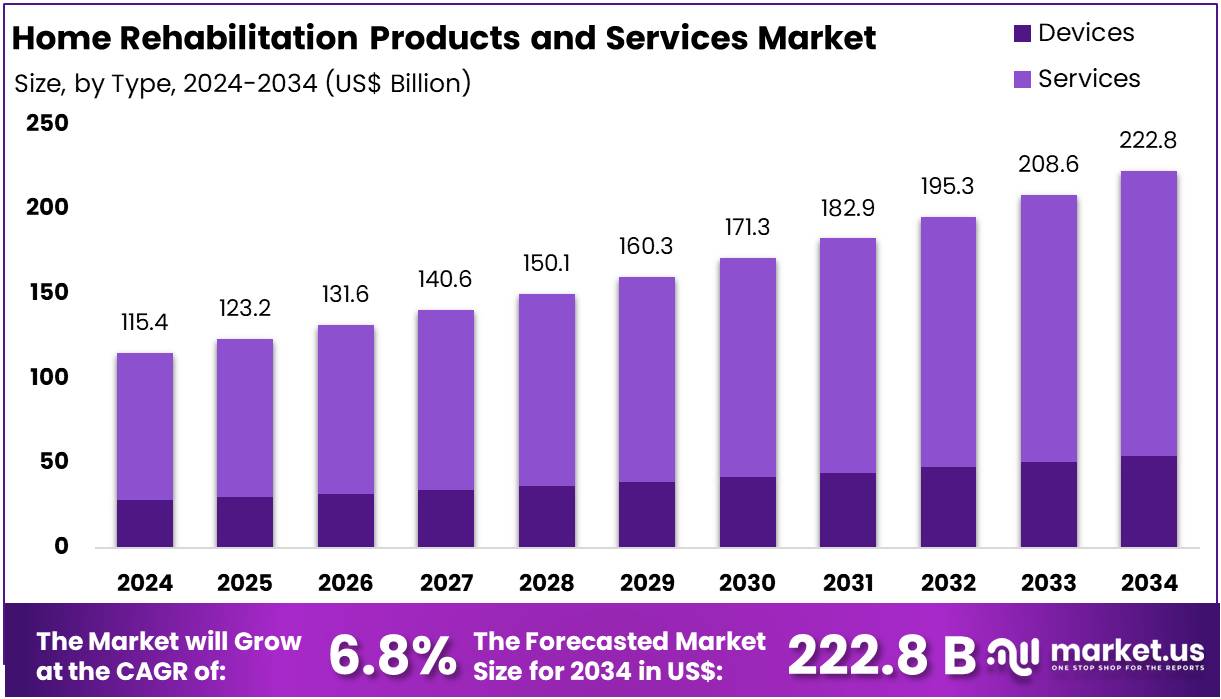
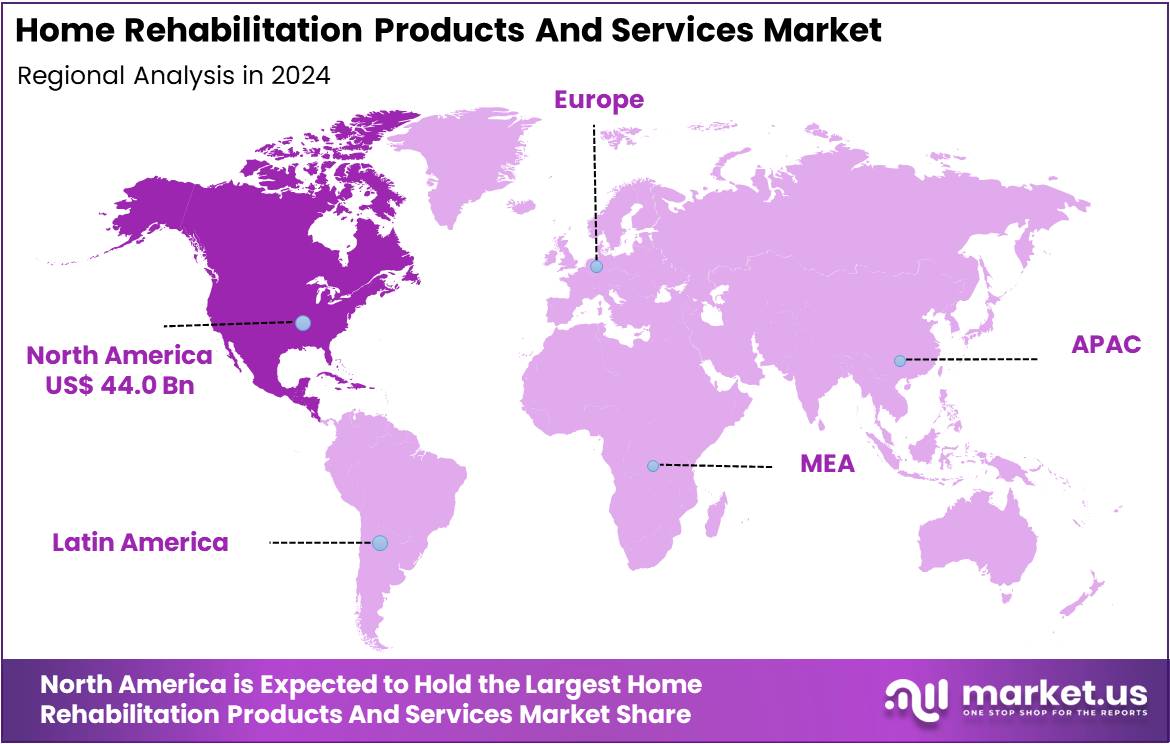
The Global Home Rehabilitation Products and Services Market size is expected to be worth around US$ 222.8 Billion by 2034, from US$ 115.4 Billion in 2024, growing at a CAGR of 6.8% during the forecast period from 2025 to 2034. North America held a dominant market position, capturing more than a 37.2% share and holds US$ 44 billion market value for the year.
The home rehabilitation products and services market is witnessing substantial growth. This expansion is driven by rising demand for assistive technology, demographic shifts, healthcare cost concerns, and technological advancements. According to the World Health Organization (WHO), around 2.41 billion people globally could benefit from rehabilitation services—a 63% increase since 1990. This growing demand is shaping the landscape for home-based care, where accessibility and affordability are becoming key priorities.
Aging populations and chronic diseases play a central role in this market’s development. As life expectancy increases worldwide, more individuals require continuous care for non-communicable conditions. WHO highlights the importance of assistive technologies in enabling participation and inclusion for older adults. For example, musculoskeletal disorders affect about 1.71 billion people globally. These include fractures, sprains, and ligament injuries, which are among the leading causes of rehabilitation needs today.
Technological advancements have further accelerated market growth. Digital rehabilitation (DR) tools now support patients transitioning from clinical care to home-based recovery. A study published by PubMed Central found that home-based physiotherapy led to a 52% reduction in pain and a 43% decline in disability scores over a treatment duration of 31.5 days for knee osteoarthritis patients. The COVID-19 pandemic also boosted adoption of these technologies, emphasizing their role in enhancing outcomes while reducing healthcare burdens.
The economic burden of musculoskeletal injuries is significant. In the U.S., about 17 million ligamentous injuries occur each year, accounting for 50% of all musculoskeletal cases. These injuries cost more than $40 billion annually. Ankle sprains, for example, have an incidence rate of 429.4 per 100,000 person-years, while distal radius fractures occur at a rate of 212.0 per 100,000 person-years. These figures highlight the ongoing demand for effective and affordable rehabilitation solutions at home.
Joint replacement surgeries also drive demand for home rehabilitation. According to Medbridge, over 600,000 total knee arthroplasties (TKA) are performed annually in the United States. This number is expected to exceed 3 million by 2030. In 2018, 85% of knee and 88% of hip replacement patients were discharged directly to their homes. These trends underscore the growing preference for in-home recovery supported by professional rehabilitation services and equipment.
Global policy support further boosts this market. The World Health Assembly passed a resolution to improve access to rehabilitation services, integrating them into all levels of healthcare. This includes strengthening financing and delivery mechanisms. According to WHO, only 3% of people in low-income countries have access to the assistive products they need, compared to 90% in high-income nations. This disparity presents a massive opportunity for expansion in underserved regions.
Healthcare expenditure trends also influence market strategies. The Centers for Medicare & Medicaid Services (CMS) reported that U.S. health spending reached $4.9 trillion in 2023, comprising 17.6% of the GDP. Home rehabilitation is increasingly seen as a cost-effective option to reduce hospital readmissions and promote quicker recovery. By investing in home-based solutions, healthcare systems can manage growing expenditures while improving patient outcomes across diverse demographics.
Key Takeaways
- The global home rehabilitation products and services market is projected to reach US$ 222.8 billion by 2034, growing at a 6.8% CAGR.
- In 2024, the market is valued at US$ 115.4 billion, indicating strong baseline demand for home-based rehabilitation solutions.
- Services lead the type segment in 2024, accounting for over 75.7% of the market due to increasing demand for professional in-home care.
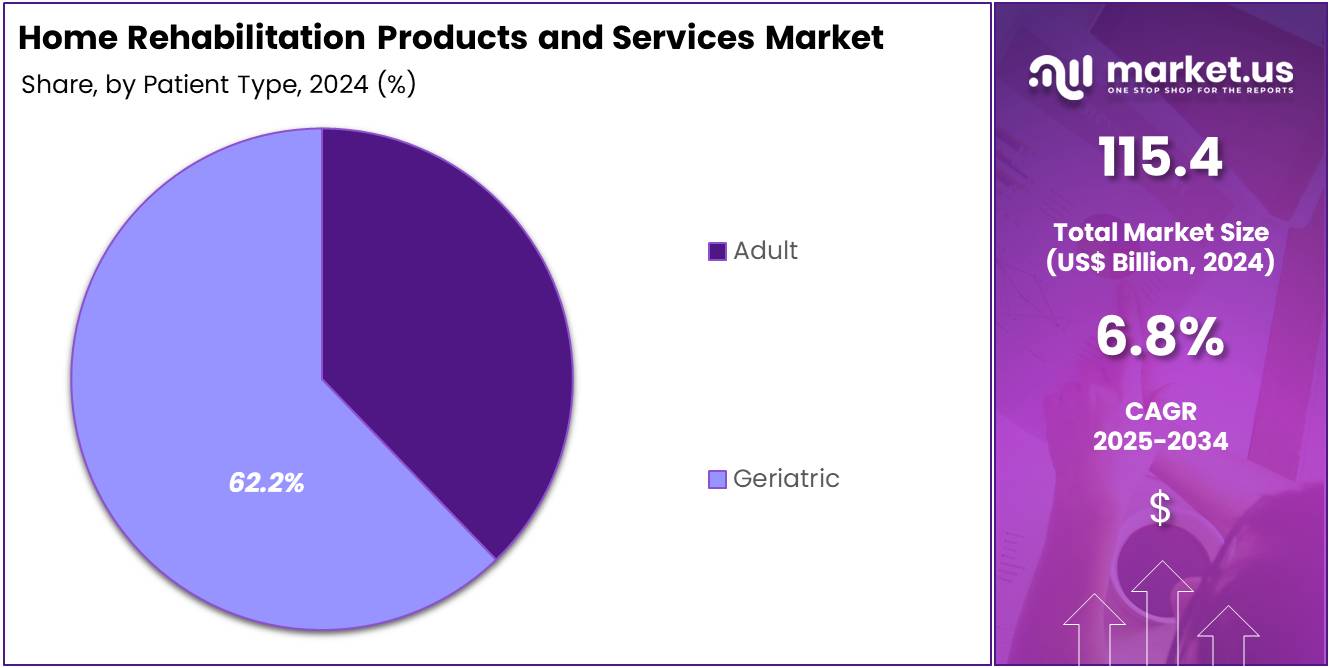
- Geriatric patients form the largest consumer group, capturing a 62.2% market share in 2024, driven by rising aging population and chronic conditions.
- Post-surgical rehabilitation emerges as the top application, holding a 30.6% share in 2024, reflecting increased recovery support needs at home.
- North America dominates geographically with a 37.2% market share in 2024, equating to approximately US$ 44 billion in market value.
Type Analysis
In 2024, Services held a dominant market position in the Type Segment of Home Rehabilitation Products and Services, capturing more than a 75.7% share. This dominance was linked to rising demand for in-home therapies and recovery solutions. Market observers noted strong growth in physical therapy, driven by musculoskeletal conditions and post-surgery needs. Occupational therapy also expanded. It helped patients regain daily skills at home. Speech therapy demand rose steadily, especially among stroke survivors and children with speech impairments.
Analysts reported that nursing services gained popularity, particularly for chronic care management at home. The emergence of telerehabilitation services also contributed to segment growth. These virtual services allowed patients to access therapy remotely. The convenience and cost-effectiveness of digital care attracted more users. Advancements in telehealth platforms supported this trend. Overall, service-based rehabilitation remained preferred for its personalized approach and flexibility. It also helped reduce hospital visits and long-term healthcare costs.
In comparison, devices occupied a smaller market share. However, they remained essential for physical assistance and mobility support. Experts highlighted mobility aids, such as canes and walkers, as the most used products. Medical beds and mattresses helped prevent pressure ulcers in bedridden patients. Heat and cold therapy tools were widely used for pain management. Other devices included wheelchairs, positioning systems, and body support tools. These products enhanced comfort and safety in home settings. Innovation in product design is expected to support future growth.
Patient Type Analysis
In 2024, Geriatric held a dominant market position in the Patient Type Segment of Home Rehabilitation Products and Services, capturing more than a 62.2% share. This leadership is mainly due to the rising number of elderly people worldwide. Older adults often face chronic illnesses and mobility challenges. These issues increase their need for home-based rehabilitation care. Seniors also prefer recovering at home instead of hospitals. This shift in preference continues to support the segment’s growing demand for specialized home care.
Healthcare experts have noted that aging-related issues such as arthritis, strokes, and surgeries often require long-term rehabilitation. Home rehabilitation services offer equipment and support that suit the needs of older patients. Many healthcare systems promote aging-in-place, which further boosts market growth in the geriatric segment. Rising medical expenses have also pushed families to choose home-based care. These factors combined have helped the geriatric group maintain its leading position in this market.
Meanwhile, the adult segment holds a smaller market share. Despite this, steady growth is expected due to lifestyle-related diseases and injury recovery needs. Adults increasingly choose home rehabilitation after surgeries or accidents. This trend is more visible among working individuals seeking convenient care. Demand is also growing due to better awareness and access to services. However, the geriatric segment is expected to remain ahead. This is driven by ongoing demographic changes and rising demand for long-term, personalized care at home.
Application Analysis
In 2024, Post-Surgical Rehabilitation held a dominant market position in the Application Segment of Home Rehabilitation Products and Services, capturing more than a 30.6% share. This dominance has been linked to a rising number of surgeries, particularly in aging populations. Increased orthopedic and cardiac procedures have further supported growth. Experts observed a shift toward early discharge and home-based recovery. This trend has been encouraged by cost-saving benefits and patient comfort. Technology in rehabilitation tools also played a key role.
Industry analysts noted that the Adult segment held a significant share in 2024. This was largely driven by a surge in sports injuries and musculoskeletal disorders in the working-age group. A growing interest in early-stage recovery and self-managed treatment options has supported this trend. Rehabilitation products tailored for home use have become more accessible. The need for flexible recovery solutions outside clinical settings continues to grow. These factors have strengthened demand among adults for home rehabilitation services.
The Geriatric segment, according to recent findings, is expected to register notable growth over the forecast period. An aging global population has led to a higher incidence of chronic diseases such as arthritis and stroke. As a result, long-term rehabilitation at home has become more important. Analysts highlight the growing use of mobility aids and home modification equipment. Customized care plans are also more widely adopted. This segment benefits from increased awareness of aging-in-place solutions and improved home care support systems.
Key Market Segments
By Type
- Devices
- Mobility Aids
- Heat and Cold Therapy Equipment
- Medical Beds and Mattresses
- Pressure Relief Products
- Wheelchairs
- Positioning Devices
- Body Support Devices
- Other
- Services
- Physical Therapy
- Speech Therapy
- Occupational Therapy
- Nursing Services
- Telerehabilitation Services
- Other
By Patient Type
- Adult
- Geriatric
By Application
- Post-Surgical Rehabilitation
- Neurological
- Musculoskeletal
- Palliative and Long-Term Care
- Cardiac
- Others
Drivers
Rising Geriatric Population Worldwide
The global market is witnessing growth due to a rapid increase in the aging population. Older adults are more susceptible to health issues such as chronic diseases, joint problems, and mobility limitations. These conditions often require long-term care and rehabilitation. As a result, the demand for home-based rehabilitation services is rising steadily. This trend is supported by the convenience and comfort such solutions offer. Moreover, families are increasingly opting for home care over institutional settings for elderly members.
According to the World Health Organization, the global population aged 60 and above is projected to reach 2.1 billion by 2050. This significant demographic shift is expected to place pressure on healthcare systems worldwide. With healthcare infrastructure strained, home-based rehabilitation is emerging as a practical alternative. It allows continuous care without occupying hospital space. This shift aligns with the broader trend toward decentralized healthcare services. As a result, providers of home rehabilitation technologies are likely to benefit from rising demand.
The increasing need for post-surgical recovery and musculoskeletal support among the elderly further drives market growth. Older individuals often undergo surgeries like joint replacements or spinal procedures. These interventions require guided physical therapy afterward. Home rehabilitation devices and services enable safer, more affordable recovery. The growing acceptance of digital health tools also supports this transition. In addition, government initiatives promoting elder care at home are reinforcing the market. This creates strong growth potential for players in the home rehabilitation industry.
Restraints
Lack of Reimbursement Policies for Home-Based Rehabilitation
The lack of proper reimbursement policies is a key factor restraining market growth in home-based rehabilitation. In many countries, healthcare systems do not fully support these services. Public and private insurers often exclude home rehabilitation from their standard coverage. This leads to out-of-pocket expenses for patients. As a result, many individuals cannot afford consistent care. Financial limitations reduce access to necessary treatments. This situation hinders the adoption of home-based rehabilitation, particularly among low- and middle-income households.
The absence of adequate financial support discourages patients from choosing home-based services. When reimbursement is not available, patients prefer traditional hospital-based rehabilitation. These services are more likely to be covered under existing insurance plans. In contrast, home-based care remains less integrated into reimbursement structures. This gap creates a disparity in healthcare delivery. It also restricts the flexibility of care options for patients. The lack of incentives also reduces provider participation, affecting service availability and quality.
Efforts to expand home-based rehabilitation are limited by current insurance frameworks. Without proper policies, healthcare providers face financial uncertainty. This prevents them from investing in infrastructure or training for home-based models. Additionally, policymakers have been slow to update reimbursement systems to match evolving care preferences. The result is a fragmented support structure. Patients face administrative and financial hurdles. Until insurance policies are reformed, the growth of the home-based rehabilitation market will remain constrained across many regions.
Opportunities
Tele-rehabilitation Offers Wider Access
Tele-rehabilitation is transforming patient care. It allows therapists to deliver sessions remotely, reducing the need for physical visits. This is particularly helpful in rural or underserved areas where access to healthcare is limited. Patients receive timely support without traveling long distances. As a result, the continuity of care improves. It also reduces overall treatment costs. The growing internet and smartphone use support this model. Healthcare providers are increasingly adopting tele-rehabilitation. This shift is creating new growth avenues in the rehabilitation services market.
Remote Patient Monitoring Enhances Care Quality
Remote patient monitoring (RPM) plays a key role in personalized therapy. It helps track patients’ health in real time. Devices collect vital data like heart rate, mobility, and oxygen levels. This information is shared with healthcare professionals instantly. Early interventions are made possible through constant monitoring. It ensures better patient outcomes and lowers hospital readmissions. RPM is especially effective for post-surgical or chronic condition patients. Its usage is expected to rise with increased awareness. Thus, it presents a strong market opportunity.
Mobile Health Apps Improve Patient Engagement
Mobile health (mHealth) applications support continuous therapy and self-management. These apps offer customized exercise plans, reminders, and progress tracking. Patients stay engaged in their recovery outside clinical settings. This boosts adherence to rehabilitation programs. It also promotes health education and independence. Mobile apps are easy to use and widely accessible. They bridge the gap between patients and therapists. With growing smartphone penetration, the demand for mHealth tools is rising. This trend is driving innovation and expanding market potential.
Trends
Shift Toward Personalized and Patient-Centric Care Models
A notable trend in the rehabilitation market is the shift from standardized programs to personalized, patient-centric care. This approach focuses on the unique needs of each patient. It replaces one-size-fits-all treatments with tailored plans. The growing demand for better health outcomes supports this trend. Personalized care improves both recovery rates and patient satisfaction. It also helps reduce readmission rates. Healthcare providers now aim to deliver care that suits individual conditions. This transition marks a major step forward in modern rehabilitation practices.
Technology plays a key role in enabling personalized care. Wearable devices are widely used to track patient activity and monitor vital signs. These tools provide real-time health data to caregivers and doctors. Such continuous monitoring allows adjustments to treatment plans. Data analytics further supports this trend. It helps identify patterns in patient behavior and treatment responses. These insights guide more accurate, patient-specific decisions. As a result, rehabilitation programs have become more dynamic and responsive to changing patient needs.
Customized treatment plans now form the core of patient-centric rehabilitation. These plans consider factors like age, injury type, and lifestyle. Therapists and doctors collaborate closely to create these individual strategies. This shift enhances patient engagement in the recovery process. Patients feel more involved and motivated. Increased satisfaction is also reported when care is tailored. The move toward patient-centric care reflects a broader healthcare trend. It emphasizes quality, efficiency, and personal well-being. This approach is expected to grow stronger in the coming years.
Regional Analysis
In 2024, North America held a dominant market position, capturing more than a 37.2% share and holds US$ 44 billion market value for the year. The region’s leadership is driven by a high number of chronic conditions. These include stroke, arthritis, and post-surgical mobility issues. An aging population also contributes significantly to this demand. Older adults often need long-term care at home. This shift is also supported by growing awareness of home-based care and its convenience over hospital rehabilitation.
The adoption of advanced technologies further strengthens market growth. Devices like smart therapy tools and wearable rehabilitation sensors are gaining popularity. Their use is widespread across the United States and Canada. These innovations improve care quality and make in-home therapy more effective. At the same time, favorable reimbursement policies support the use of such products. Both government and private payers promote home healthcare. These policies ease the financial burden on patients and encourage faster adoption.
Healthcare spending in North America remains high. This investment supports a robust healthcare infrastructure. As a result, the region can offer efficient home rehabilitation services. Patients benefit from faster access and personalized care plans. The presence of trained professionals also ensures quality service delivery. In addition, the preference for in-home recovery has grown. People now seek comfort and independence during rehabilitation. All these factors together have helped North America maintain its lead in the global home rehabilitation products and services market.
Key Regions and Countries
- North America
- US
- Canada
- Europe
- Germany
- France
- The UK
- Spain
- Italy
- Russia
- Netherland
- Rest of Europe
- Asia Pacific
- China
- Japan
- South Korea
- India
- New Zealand
- Singapore
- Thailand
- Vietnam
- Rest of APAC
- Latin America
- Brazil
- Mexico
- Rest of Latin America
- Middle East & Africa
- South Africa
- Saudi Arabia
- UAE
- Rest of MEA
Key Players Analysis
The home rehabilitation products and services market includes key players such as Medline Industries and Stryker Corporation. Medline focuses on a wide range of durable medical equipment and home care supplies. It benefits from strong distribution channels and private-label strategies. Stryker offers advanced rehabilitation and orthopedic solutions. It leverages continuous innovation and strategic acquisitions. These companies are enhancing accessibility through digital platforms and ergonomic designs. Their strong global presence and product reliability help them maintain leadership in the competitive and growing home rehabilitation space.
Other major players include Prism Medical Ltd. and DJO Global. Prism specializes in patient mobility and handling systems, especially ceiling lifts and transfer aids. It emphasizes customized home solutions and caregiver support services. DJO Global offers orthopedic rehabilitation devices like braces and passive motion machines. The company integrates digital health tools for better patient outcomes. DJO’s acquisition by Enovis has expanded its reach and technological capabilities. Both companies play a key role in improving independence and recovery within home environments.
Invacare Corporation and other notable players contribute to market diversity. Invacare focuses on mobility aids, respiratory care, and pressure relief products. Its restructuring efforts and focus on high-margin segments drive profitability. Other participants such as Drive DeVilbiss Healthcare, Sunrise Medical, and GF Health Products also influence market dynamics. They pursue strategies like regional expansion, service enhancement, and product innovation. These companies aim to address the rising demand for cost-effective and high-quality home rehabilitation solutions, especially for aging populations and chronic care patients worldwide.
Market Key Players
- Medline Industries
- Stryker Corporation
- Prism Medical Ltd.
- DJO Global
- Invacare Corporation
- Hocoma AG
- Ekso Bionics Holdings Inc.
- RehabCare Group
- Performance Health LLC.
- Active Medical & Rehabilitation Services Pvt. Ltd.
- AliMed
- Drive DeVilbiss Healthcare
- Arjo Inc.
- LHC Group Inc.
- Amedisys Inc.
- Maxim Healthcare Services
- AccentCare
- Bayada Home Health Care
Recent Developments
- July 2024: Medline entered into an agreement to acquire the global surgical solutions business of Ecolab Inc., including its Microtek product lines. This acquisition enhances Medline’s portfolio with innovative sterile drape solutions and fluid temperature management systems, strengthening its OEM capabilities. The transaction closed successfully in August 2024, marking a significant milestone in Medline’s growth strategy and commitment to delivering innovative healthcare solutions.
- October 2024: Prism Healthcare acquired Joerns Healthcare’s UK business, including the renowned “Oxford” range of products specializing in clinical hoisting equipment, slings, and bathing solutions. This acquisition strengthens Prism’s position in the patient handling and rehabilitation product markets. The integration of Joerns UK’s offerings, such as the “Professional” and “Classic” ranges, enhances Prism’s portfolio in homecare, acute care, and long-term care settings. Chris Morgan, Managing Director of Joerns UK, joined Prism’s leadership team to oversee the expanded UK operations.
Report Scope
Report Features Description Market Value (2024) US$ 115.4 Billion Forecast Revenue (2034) US$ 222.8 Billion CAGR (2025-2034) 6.8% Base Year for Estimation 2024 Historic Period 2020-2023 Forecast Period 2025-2034 Report Coverage Revenue Forecast, Market Dynamics, COVID-19 Impact, Competitive Landscape, Recent Developments Segments Covered By Type [Devices (Mobility Aids, Heat and Cold Therapy Equipment, Medical Beds and Mattresses, Pressure Relief Products, Wheelchairs, Positioning Devices, Body Support Devices, Other), Services (Physical Therapy, Speech Therapy, Occupational Therapy, Nursing Services, Telerehabilitation Services, Other)], By Patient Type (Adult, Geriatric), By Application (Post-Surgical Rehabilitation, Neurological, Musculoskeletal, Palliative and Long-Term Care, Cardiac, Others) Regional Analysis North America – The US, Canada, & Mexico; Western Europe – Germany, France, The UK, Spain, Italy, Portugal, Ireland, Austria, Switzerland, Benelux, Nordic, & Rest of Western Europe; Eastern Europe – Russia, Poland, The Czech Republic, Greece, & Rest of Eastern Europe; APAC – China, Japan, South Korea, India, Australia & New Zealand, Indonesia, Malaysia, Philippines, Singapore, Thailand, Vietnam, & Rest of APAC; Latin America – Brazil, Colombia, Chile, Argentina, Costa Rica, & Rest of Latin America; Middle East & Africa – Algeria, Egypt, Israel, Kuwait, Nigeria, Saudi Arabia, South Africa, Turkey, United Arab Emirates, & Rest of MEA Competitive Landscape Medline Industries, Stryker Corporation, Prism Medical Ltd., DJO Global, Invacare Corporation, Hocoma AG, Ekso Bionics Holdings Inc., RehabCare Group, Performance Health LLC., Active Medical & Rehabilitation Services Pvt. Ltd., AliMed, Drive DeVilbiss Healthcare, Arjo Inc., LHC Group Inc., Amedisys Inc., Maxim Healthcare Services, AccentCare, Bayada Home Health Care, and Other Key Playes Customization Scope Customization for segments, region/country-level will be provided. Moreover, additional customization can be done based on the requirements. Purchase Options We have three licenses to opt for: Single User License, Multi-User License (Up to 5 Users), Corporate Use License (Unlimited User and Printable PDF)  Home Rehabilitation Products and Services MarketPublished date: April 2025add_shopping_cartBuy Now get_appDownload Sample
 -
-
- Medline Industries
- Stryker Corporation
- Prism Medical Ltd.
- DJO Global
- Invacare Corporation
- Hocoma AG
- Ekso Bionics Holdings Inc.
- RehabCare Group
- Performance Health LLC.
- Active Medical & Rehabilitation Services Pvt. Ltd.
- AliMed
- Drive DeVilbiss Healthcare
- Arjo Inc.
- LHC Group Inc.
- Amedisys Inc.
- Maxim Healthcare Services
- AccentCare
- Bayada Home Health Care
Our Clients

- 130902
- April 2025






