


Global Gynecomastia Procedures Market By Procedure Type (Surgical Procedures (Liposuction-Assisted Mastectomy, Excision Surgery (Glandular Removal), Laser-Assisted Liposuction, Ultrasound-Assisted Liposuction (UAL/VASER) and Others (Power-Assisted, RF-Assisted)) and Non-Surgical Procedures (Hormonal Therapy, Radiation Therapy, Medication-Based Treatment and Others)), By Grade Type (Grade I, Grade II, Grade III and Grade IV), By End User (Hospitals, Specialty Clinics, Ambulatory Surgical Centers (ASCs), Cosmetic Surgery Centers and Others), Region and Companies – Industry Segment Outlook, Market Assessment, Competition Scenario, Trends and Forecast 2026-2035
- Published date: March 2026
- Report ID: 182329
- Number of Pages: 391
- Format:
-
keyboard_arrow_up
Quick Navigation
Report Overview
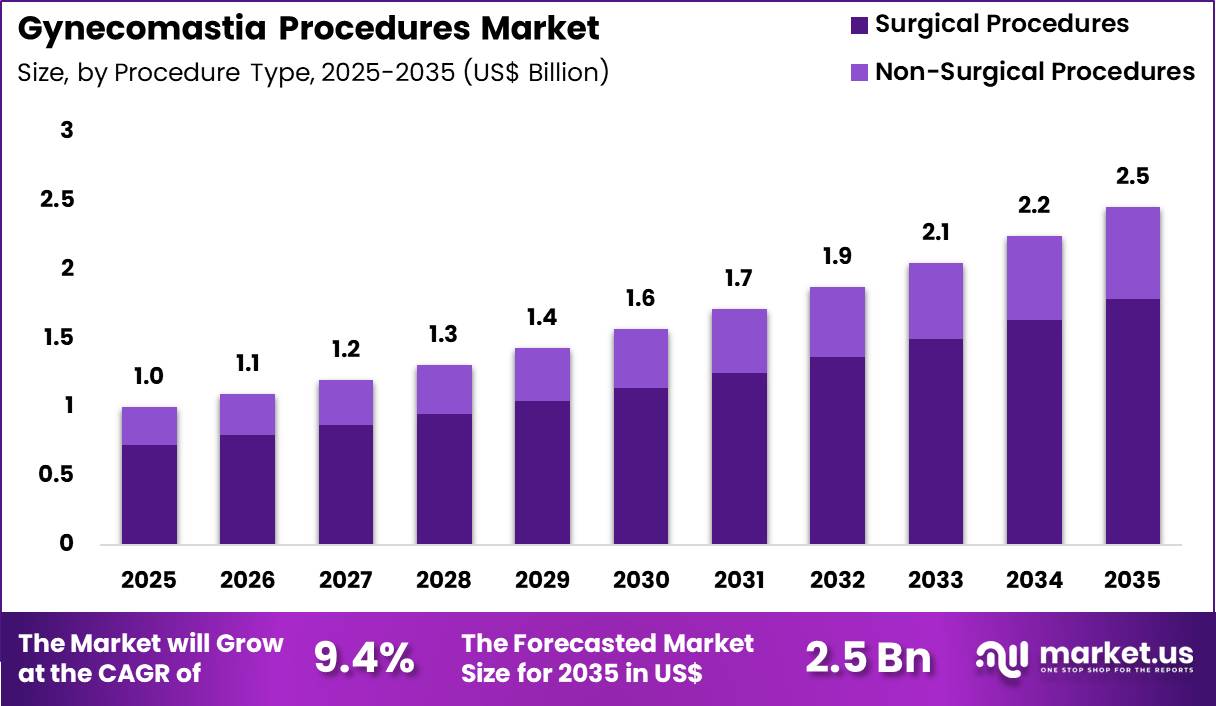
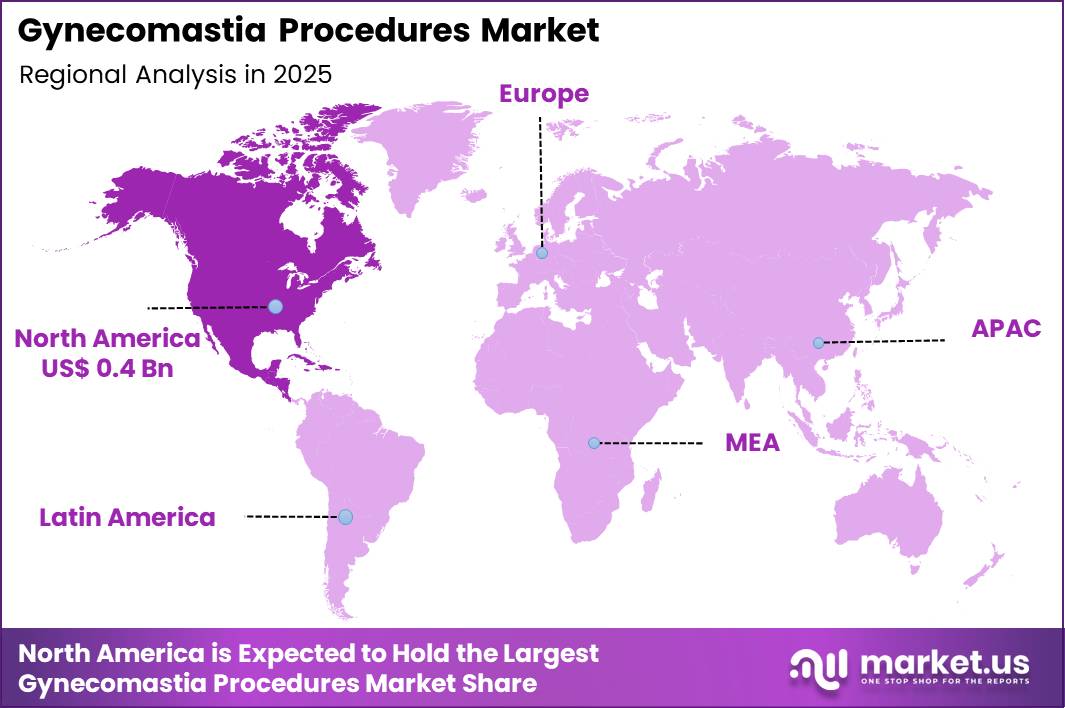
The Global Gynecomastia Procedures Market size is expected to be worth around US$ 2.5 Billion by 2035 from US$ 1.0 Billion in 2025, growing at a CAGR of 9.4% during the forecast period 2026-2035. In 2025, North America led the market, achieving over 41.6% share with a revenue of US$ 0.4 Billion.
Increasing awareness of body image concerns and the growing acceptance of male aesthetic procedures propel the Gynecomastia Procedures market as men seek effective surgical solutions to address enlarged breast tissue that causes physical discomfort and psychological distress.
Plastic surgeons increasingly perform liposuction-assisted gynecomastia correction for patients with predominantly fatty pseudogynecomastia, using small incisions to remove excess adipose tissue and achieve a flatter, more masculine chest contour. These techniques support glandular excision in true gynecomastia cases, where surgeons remove dense glandular tissue through periareolar or inframammary approaches to eliminate firm masses and restore natural pectoral definition.
Combination procedures combining VASER ultrasound-assisted liposuction with direct excision enable precise sculpting in mixed cases, emulsifying fat while preserving surrounding structures for improved skin retraction and contour refinement.
Surgeons also apply skin excision techniques in severe cases with significant skin excess or ptosis, performing periareolar mastopexy or concentric circle reductions to tighten the chest and reposition the nipple-areola complex. These interventions provide long-term aesthetic and functional improvement for adolescents and adult men with persistent gynecomastia caused by hormonal imbalances, anabolic steroid use, or medication side effects.
Manufacturers pursue opportunities to advance ultrasound-assisted and laser-assisted liposuction technologies that enhance precision and minimize tissue trauma, expanding applications in high-definition body contouring and revision procedures for suboptimal outcomes.
These innovations support minimally invasive approaches with smaller incisions, faster recovery, and reduced postoperative swelling, appealing to patients prioritizing discretion and rapid return to activity. Opportunities emerge in combination therapies that integrate liposuction with skin-tightening modalities, optimizing results in patients with moderate skin laxity.
Companies invest in refined instrumentation and energy delivery systems that improve safety and reproducibility across diverse body types. Entering 2026, Solta Medical’s VASER ultrasound-assisted liposuction technology remained widely used for advanced body contouring procedures.
The system enables selective fat emulsification while preserving surrounding structures, allowing clinicians to perform more precise sculpting techniques in aesthetic treatments. Recent trends emphasize patient-specific planning, hybrid energy-based techniques, and minimally invasive approaches, positioning the market for growth in personalized, high-satisfaction male chest contouring solutions focused on natural results and minimal downtime.
Key Takeaways
- In 2025, the market generated a revenue of US$ 1.0 Billion, with a CAGR of 9.4%, and is expected to reach US$ 2.5 Billion by the year 2035.
- The procedure type segment is divided into surgical procedures and non-surgical procedures, with surgical procedures taking the lead with a market share of 72.8%.
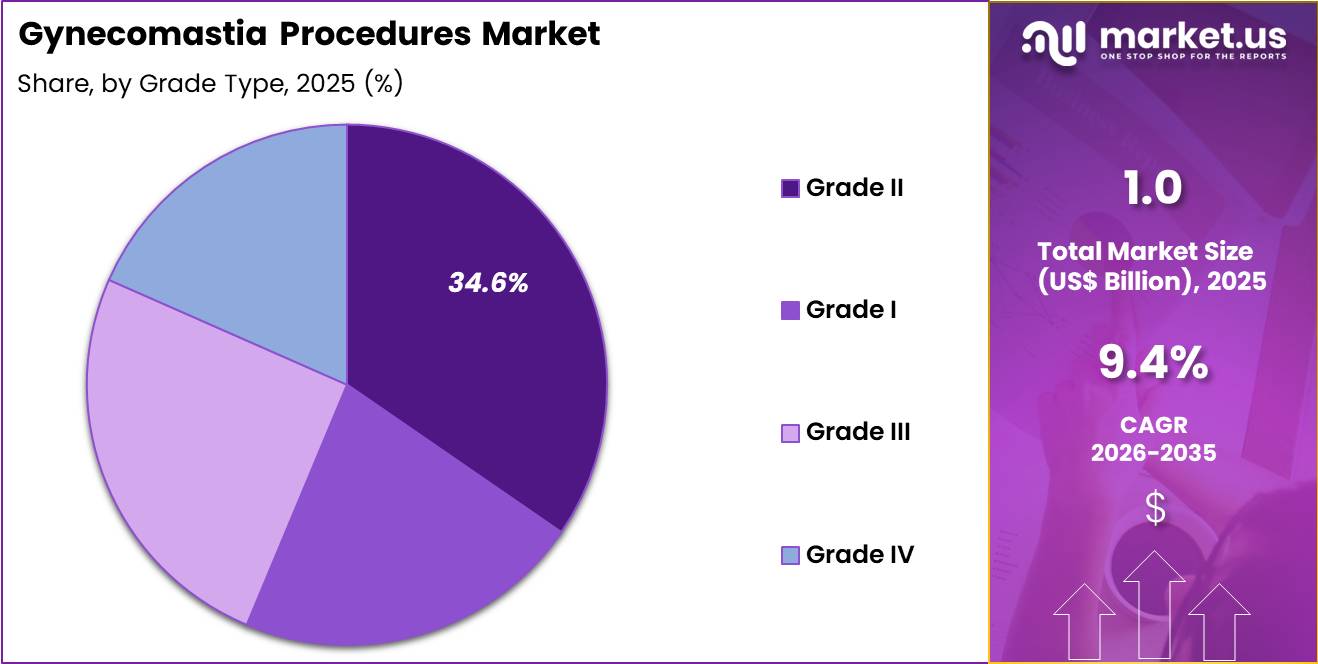
- Considering grade type, the market is divided into grade I, grade II, grade III and grade IV. Among these, grade ii held a significant share of 34.6%.
- Furthermore, concerning the end user segment, the market is segregated into hospitals, specialty clinics, ambulatory surgical centers (ASCs), cosmetic surgery centers and others. The hospitals sector stands out as the dominant player, holding the largest revenue share of 43.5% in the market.
- North America led the market by securing a market share of 41.6%.
Procedure Type Analysis
Surgical procedures accounted for 72.8% of growth within procedure type and dominate the gynecomastia procedures market due to their ability to provide permanent and visibly effective correction of excess male breast tissue. Surgeons perform liposuction-assisted excision and glandular removal to address both fat accumulation and fibrous tissue, which ensures long-lasting results compared to temporary non-surgical approaches.
Clinical observations indicate that gynecomastia affects a significant proportion of males at different life stages, with prevalence estimates ranging from 30% to 60% depending on age and hormonal factors. Patients often seek definitive solutions when lifestyle changes and medical therapies do not resolve the condition, which strengthens demand for surgical intervention.
Surgical procedures are expected to maintain dominance as they deliver predictable contouring outcomes and improved chest aesthetics. Increasing awareness of body image and self-confidence among male patients is likely to drive higher procedural volumes.
Surgeons also continue to refine techniques that minimize scarring and reduce recovery time, which improves patient acceptance. The segment benefits from growing availability of experienced plastic surgeons and specialized surgical centers.
Rising disposable income and willingness to invest in aesthetic procedures are projected to support growth further. As patients prioritize permanent correction and reliable outcomes, surgical procedures are anticipated to remain the leading segment in this market.
Grade Type Analysis
Grade II accounted for 34.6% of growth within grade type and dominates the gynecomastia procedures market due to its moderate severity, which represents a large portion of clinically treated cases. This grade typically involves noticeable breast enlargement without significant skin excess, which makes it highly suitable for surgical correction using established techniques.
Patients with grade II gynecomastia often experience visible chest contour changes that affect confidence and clothing choices, which increases the likelihood of seeking treatment. Medical literature suggests that mild to moderate gynecomastia cases are more frequently reported and diagnosed compared to severe grades, which expands the addressable patient pool for grade II procedures.
The segment is expected to grow as awareness of treatment options improves and early-stage intervention becomes more common. Surgeons find grade II cases technically manageable with consistent outcomes, which supports higher procedural adoption. The recovery period is often shorter compared to advanced grades, which encourages patients to proceed with surgery.
Increasing social acceptance of male aesthetic procedures is likely to further support demand. The segment also benefits from strong patient satisfaction rates due to visible improvement with relatively less invasive correction. As more individuals seek timely intervention for moderate gynecomastia, grade II is anticipated to maintain its dominant position in the market.
End-User Analysis
Hospitals accounted for 43.5% of growth within end user and dominate the gynecomastia procedures market due to their access to advanced surgical infrastructure and comprehensive patient care capabilities. Hospitals provide operating theaters, anesthesia support, and post-operative monitoring, which ensures safety and efficiency during surgical procedures.
Patients often prefer hospital settings for procedures that involve anesthesia and require professional supervision, which strengthens this segment’s position. Hospitals are expected to remain dominant as they handle a wide range of cases, including complex or high-risk patients who require additional medical evaluation.
The segment benefits from the presence of experienced plastic surgeons and multidisciplinary care teams within hospital systems. Increasing availability of cosmetic and reconstructive services in hospitals is projected to support higher patient inflow. Hospitals also maintain strict regulatory compliance and quality standards, which builds trust among patients.
The segment is likely to grow as healthcare infrastructure expands in emerging regions and access to surgical care improves. Patients often choose hospitals for their reliability, emergency readiness, and comprehensive care pathways. As demand for safe and professional surgical environments increases, hospitals are anticipated to retain their leading role in the gynecomastia procedures market.
Key Market Segments
By Procedure Type
- Surgical Procedures
- Liposuction-Assisted Mastectomy
- Excision Surgery (Glandular Removal)
- Laser-Assisted Liposuction
- Ultrasound-Assisted Liposuction (UAL/VASER)
- Others (Power-Assisted, RF-Assisted)
- Non-Surgical Procedures
- Hormonal Therapy
- Radiation Therapy
- Medication-Based Treatment
- Others
By Grade Type
- Grade I
- Grade II
- Grade III
- Grade IV
By End User
- Hospitals
- Specialty Clinics
- Ambulatory Surgical Centers (ASCs)
- Cosmetic Surgery Centers
- Others
Drivers
Increasing surgical volume in male breast reduction procedures is driving the market.
Specialized plastic surgery centers have documented consistent growth in the number of gynecomastia correction surgeries performed annually. Surgeons report higher patient presentation rates for glandular excision combined with liposuction techniques. The driver aligns with greater male awareness of body contouring options through social media and clinical education.
Practices achieve predictable outcomes with minimal scarring using periareolar and inframammary approaches. The expansion reflects broader acceptance of cosmetic procedures among men seeking improved chest aesthetics. Facilities benefit from shorter operative times and reduced complication profiles in properly selected candidates.
The trend supports integration of preoperative imaging for precise glandular mapping. Patients demonstrate improved satisfaction scores following contour restoration. Sustained procedural demand maintains procurement of specialized liposuction cannulas and excision instruments. This factor reinforces market stability through reliable clinical demand in aesthetic surgery.
Restraints
High out-of-pocket expense for elective gynecomastia correction is restraining the market.
Most gynecomastia procedures remain classified as cosmetic interventions with limited or no insurance coverage in standard plans. Patients typically bear full surgical fees ranging from several thousand dollars depending on technique complexity. The restraint discourages younger men and those with moderate severity from pursuing operative management.
Practices observe deferred procedures when financial constraints outweigh perceived benefits. The factor contributes to selective patient populations limited to those with disposable income. Providers encounter challenges justifying investment in advanced instrumentation without broader reimbursement support.
The dynamic moderates case volume growth in private aesthetic clinics. This constraint tempers expansion of dedicated gynecomastia programs in certain geographic regions. The limitation persists in influencing accessibility and procedural equity across socioeconomic groups. Economic barriers continue to shape market penetration patterns.
Opportunities
Development of minimally invasive energy-based gynecomastia treatments is creating growth opportunities.
Emerging radiofrequency-assisted and ultrasound-assisted platforms enable glandular tissue reduction with smaller incisions and reduced recovery periods. These modalities offer improved skin contraction alongside liposuction in mild-to-moderate cases. Opportunities arise for outpatient procedures performed under local anesthesia with rapid return to activity.
The framework supports combination approaches that enhance contouring precision in fibrous cases. Developers can pursue regulatory clearances for expanded indications in male breast tissue. The development facilitates integration with existing liposuction systems for hybrid techniques.
Such advancements attract younger patients seeking less invasive options. The opportunity fosters differentiation through superior postoperative comfort and scar minimization. Stakeholders anticipate increased adoption in aesthetic-focused practices. This progression positions providers for innovation in less traumatic correction methods.
Impact of Macroeconomic / Geopolitical Factors
Macroeconomic conditions and geopolitical developments are directly influencing demand patterns and cost dynamics in the gynecomastia procedures market. Rising disposable income and increasing acceptance of male aesthetic procedures support steady procedural volumes, while inflation and high interest rates raise treatment costs and limit affordability for price-sensitive patients.
Geopolitical tensions disrupt global supply chains for surgical devices and aesthetic equipment, creating procurement delays for clinics that depend on international suppliers. At the same time, cross-border medical tourism fluctuates with visa policies and regional stability, which affects patient inflows in key treatment hubs.
Current US tariffs on imported medical devices, including liposuction systems and surgical tools, increase capital and operating expenses for cosmetic surgery centers. These higher costs often translate into pricing adjustments, which can slow elective procedure adoption in some markets.
However, tariffs are also encouraging local manufacturing and regional supplier development, which strengthens long-term supply resilience and cost control. Overall, while economic pressure and trade barriers create short-term constraints, rising awareness and localized production strategies are expected to support sustained market growth.
Latest Trends
Increased utilization of VASER-assisted liposuction for gynecomastia correction is driving the market.
Multiple plastic surgery centers expanded adoption of VASER (Vibration Amplification of Sound Energy at Resonance) technology for gynecomastia procedures during 2024-2025. This ultrasound-assisted system facilitates selective emulsification of glandular and fatty tissue with enhanced preservation of vascular structures.
The 2024-2025 trend reflects surgeon preference for improved contouring in fibrous and dense breast tissue. Patients benefit from reduced postoperative bruising and faster resolution of swelling. The development aligns with demand for refined chest wall definition in athletic individuals.
Facilities integrate VASER probes with specialized cannulas for precise tissue sculpting. The increased deployment supports shorter operative durations compared to traditional methods. Early clinical feedback demonstrates consistent aesthetic outcomes with low revision rates.
The advancement stimulates training programs focused on energy-assisted techniques. Overall, this technological shift elevates precision and patient experience standards in male breast reduction surgery.
Regional Analysis
North America is leading the Gynecomastia Procedures Market
North America accounted for 41.6% of the gynecomastia procedures market in 2025 as demand increased for male breast reduction treatments driven by rising awareness, lifestyle changes, and growing acceptance of aesthetic procedures among men. Plastic surgery clinics across the United States and Canada have expanded service offerings to include minimally invasive techniques and advanced surgical approaches that improve cosmetic outcomes and recovery time.
As per the American Society of Plastic Surgeons, more than 18,000 male breast reduction procedures were executed in the United States in 2023, reflecting consistent clinical demand for corrective surgery. Increasing prevalence of obesity, hormonal imbalances, and medication-related side effects has contributed to a higher incidence of male breast enlargement, encouraging individuals to seek medical or surgical intervention. Surgeons are adopting advanced liposuction-assisted and glandular excision techniques that deliver more precise contouring results.
Growing availability of outpatient surgical centers has improved access to procedures and reduced overall treatment costs. Social acceptance and awareness campaigns are also encouraging men to pursue treatment without stigma.
Medical training programs are enhancing expertise in aesthetic and reconstructive procedures tailored for male patients. These developments collectively supported steady expansion of male breast reduction procedures across North America in 2025.
The Asia Pacific region is expected to experience the highest CAGR during the forecast period
Asia Pacific is expected to experience strong growth during the forecast period as aesthetic awareness and access to cosmetic procedures expand across urban populations. Countries such as South Korea, Japan, China, and India are witnessing increasing demand for male aesthetic treatments driven by changing social perceptions and rising disposable incomes.
The International Society of Aesthetic Plastic Surgery reported in recent years that Asia accounts for a significant share of global cosmetic procedures, reflecting strong regional demand for aesthetic treatments. Clinics across the region are expanding services to include male-specific procedures that address body contouring and hormonal conditions.
Increasing awareness of lifestyle-related health conditions, including obesity and endocrine disorders, is contributing to higher diagnosis rates of male breast enlargement. Private healthcare providers are investing in advanced surgical technologies and minimally invasive techniques that improve patient outcomes and reduce recovery time.
Medical tourism is also supporting growth, with patients traveling to countries known for cost-effective cosmetic procedures. Training programs and international collaborations are improving surgical expertise across the region. These developments are expected to accelerate adoption of corrective and aesthetic procedures across Asia Pacific in the coming years.
Key Regions and Countries
North America
- The US
- Canada
Europe
- Germany
- France
- The U.K.
- Italy
- Spain
- Russia & CIS
- Rest of Europe
Asia Pacific
- China
- India
- Japan
- South Korea
- ASEAN
- Australia & New Zealand
- Rest of Asia Pacific
Middle East & Africa
- GCC
- South Africa
- Rest of Middle East & Africa
Latin America
- Brazil
- Mexico
- Rest of Latin America
Key Players Analysis
Key participants in the Gynecomastia Procedures Market expand their reach by advancing minimally invasive surgical techniques, strengthening collaborations with cosmetic surgery clinics, and enhancing patient-centric treatment offerings that improve aesthetic outcomes.
Companies invest in laser-assisted liposuction, ultrasound-based fat reduction, and refined glandular excision methods that reduce recovery time and improve precision. They also focus on awareness campaigns and digital consultation platforms that help increase patient engagement and procedure adoption.
AbbVie Inc., through its Allergan Aesthetics division, represents a notable participant in the Gynecomastia Procedures Market and operates as a global pharmaceutical and aesthetics company headquartered in the United States that develops aesthetic products and surgical solutions for body contouring and cosmetic enhancement.
The company emphasizes innovation in aesthetic technologies and physician training programs to support clinical excellence. Industry competitors continue to expand service offerings, strengthen surgeon networks, and adopt advanced technologies to enhance procedural efficiency and drive sustained market growth.
Top Key Players
- MicroAire Surgical Instruments
- Lumenis (Lumenis Be)
- Aesthetic Group
- Candela Corporation
- Cutera
- Cynosure (Cynosure Lutronic)
- Solta Medical (Bausch Health)
- Sientra
Recent Developments
- In May 2025, Apyx Medical received US FDA 510(k) clearance for its AYON Body Contouring System. The platform combines helium plasma energy with ultrasound-assisted liposuction to enable simultaneous fat removal and skin contraction, offering an advanced approach for procedures such as male breast reduction.
- Following its merger in 2025, Cynosure Lutronic streamlined its portfolio to strengthen its position in laser-assisted liposuction technologies. By 2026, the company is emphasizing systems such as Smartlipo, which are increasingly used alongside non-invasive skin tightening methods to address moderate to advanced cases with reduced need for extensive surgical excision.
- In early 2026, MicroAire continued to see strong adoption of its power-assisted liposuction systems. These devices use a reciprocating cannula mechanism that helps break down dense tissue more efficiently, making them particularly suitable for procedures involving fibrous areas and supporting shorter procedure times.
Report Scope
Report Features Description Market Value (2025) US$ 1.0 Billion Forecast Revenue (2035) US$ 2.5 Billion CAGR (2026-2035) Base Year for Estimation 2025 Historic Period 2020-2024 Forecast Period 2026-2035 Report Coverage Revenue Forecast, Market Dynamics, COVID-19 Impact, Competitive Landscape, Recent Developments Segments Covered By Procedure Type (Surgical Procedures (Liposuction-Assisted Mastectomy, Excision Surgery (Glandular Removal), Laser-Assisted Liposuction, Ultrasound-Assisted Liposuction (UAL/VASER) and Others (Power-Assisted, RF-Assisted)) and Non-Surgical Procedures (Hormonal Therapy, Radiation Therapy, Medication-Based Treatment and Others)), By Grade Type (Grade I, Grade II, Grade III and Grade IV), By End User (Hospitals, Specialty Clinics, Ambulatory Surgical Centers (ASCs), Cosmetic Surgery Centers and Others) Regional Analysis North America – The US, Canada; Europe – Germany, France, The U.K., Italy, Spain, Russia & CIS, Rest of Europe; Asia Pacific – China, India, Japan, South Korea, ASEAN, Australia & New Zealand, Rest of Asia Pacific; Middle East & Africa – GCC, South Africa, Rest of Middle East & Africa; Latin America – Brazil, Mexico, Rest of Latin America Competitive Landscape MicroAire Surgical Instruments, Lumenis, Aesthetic Group, Candela Corporation, Cutera, Cynosure, Solta Medical, Sientra. Customization Scope Customization for segments, region/country-level will be provided. Moreover, additional customization can be done based on the requirements. Purchase Options We have three licenses to opt for: Single User License, Multi-User License (Up to 5 Users), Corporate Use License (Unlimited User and Printable PDF)  Gynecomastia Procedures MarketPublished date: March 2026add_shopping_cartBuy Now get_appDownload Sample
 -
-
- MicroAire Surgical Instruments
- Lumenis (Lumenis Be)
- Aesthetic Group
- Candela Corporation
- Cutera
- Cynosure (Cynosure Lutronic)
- Solta Medical (Bausch Health)
- Sientra
Our Clients

- 182329
- March 2026






