


Global Infant Formula Ingredients Market Size, Share Analysis Report By Form (Powder, Liquid, Semi-Liquid), By Source (Cow Milk, Soy, Protein Hydrolysates, Others), By Application (Growing-Up Milk, Standard Infant Formula, Follow-On Formula, Specialty Formula), By Region and Companies - Industry Segment Outlook, Market Assessment, Competition Scenario, Trends and Forecast 2026-2035
- Published date: Mar 2026
- Report ID: 182506
- Number of Pages: 368
- Format:
-
keyboard_arrow_up
Quick Navigation
Report Overview
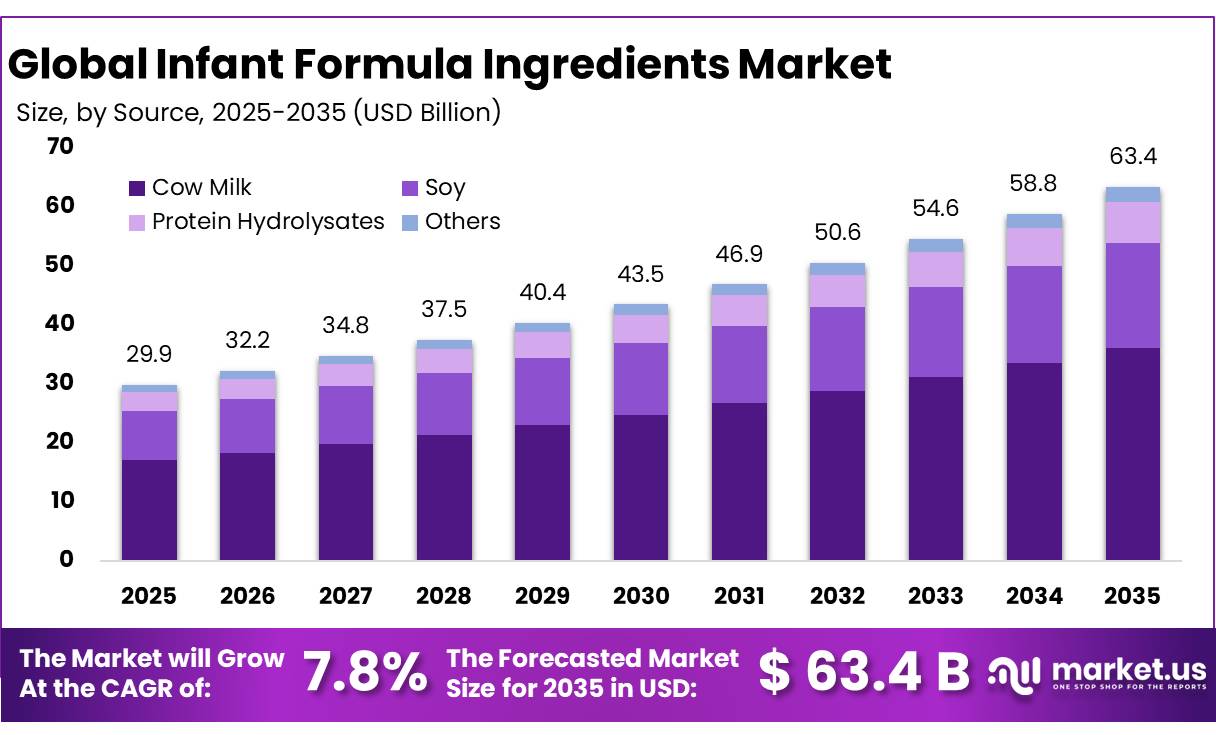
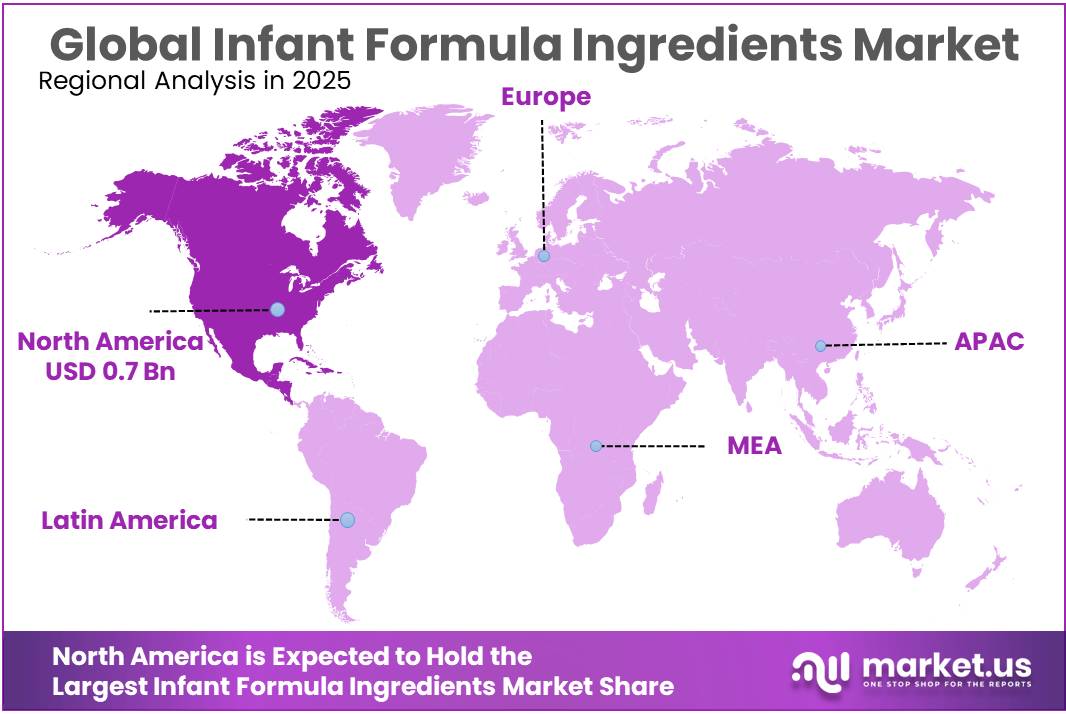
The Global Infant Formula Ingredients Market size is expected to be worth around USD 63.4 Billion by 2035, from USD 29.9 Billion in 2025, growing at a CAGR of 7.8% during the forecast period from 2026 to 2035. In 2025, Asia Pacific held a dominant market position, capturing more than a 45.8% share, holding USD 13.6 Billion revenue.
The infant formula ingredients industry is a highly regulated, science-led segment of early-life nutrition built around dairy proteins, lactose, vegetable oils, vitamins, minerals, and specialty bioactives designed to meet infant nutritional needs when breastfeeding is not possible or sufficient. In regulatory terms, the category is tightly controlled: the U.S. FDA specifies 30 required nutrients for infant formula, while Codex standards require reconstituted formula to provide 60–70 kcal per 100 ml, reinforcing the importance of precision ingredient systems rather than commodity blending.
From an industrial scenario perspective, the market is moving away from basic fortification toward clinically supported, regulation-ready ingredients that better mimic human milk functionality. Codex Alimentarius sets a protein range of 1.8–3.0 g per 100 kcal for infant formula, showing how tightly the sector is governed by nutritional science and compositional limits. In parallel, regulators are opening space for next-generation ingredients.
In 2025, Food Standards Australia New Zealand approved the use of milk fat globule membrane in infant formula, with an application framework that included a maximum use level of 7 g/L for MFGM-WPC in prepared or ready-to-feed infant formula. This regulatory progression is commercially important because it supports premiumization around phospholipids, gangliosides, and cognitive-development positioning.
The principal growth drivers are safety, nutritional sophistication, and public program demand. In the U.S., USDA reports that WIC served about 6.7 million participants each month in fiscal 2024, including an estimated 41% of all infants in the country, while federal program costs totaled $7.2 billion. That scale keeps ingredient suppliers focused on affordability, supply resilience, and compliance.
In policy terms, March 18, 2025 marked a notable inflection point when HHS and FDA launched Operation Stork Speed, including a nutrient review process and increased testing for heavy metals and other contaminants. These actions are likely to favor suppliers with stronger traceability, contaminant-control systems, and clinically differentiated lipid and protein portfolios.
Government and regulatory initiatives are also expanding the opportunity set for premium ingredients. In Australia and New Zealand, FSANZ approved the use of MFGM as a nutritive substance in infant formula on April 30, 2025; the approval became effective after ministerial acceptance, and the assessed use level reached 7 g/L for MFGM-WPC in ready-to-feed or prepared formula. Such approvals support the commercialization of more human-milk-inspired formulations and create headroom for differentiated ingredient suppliers.
Plum PBC, through Plum Organics, reflects another important industry direction: transparency-led trust building in infant and baby nutrition. In 2025, California’s AB 899 took effect on January 1, 2025, requiring baby food brands to publish heavy metal test results, and Plum was publicly recognized for transparency in this area during 2025.
Key Takeaways
- Infant Formula Ingredients Market size is expected to be worth around USD 63.4 Billion by 2035, from USD 29.9 Billion in 2025, growing at a CAGR of 7.8%.
- Powder held a dominant market position, capturing more than a 72.5% share.
- Cow Milk held a dominant market position, capturing more than a 57.3% share.
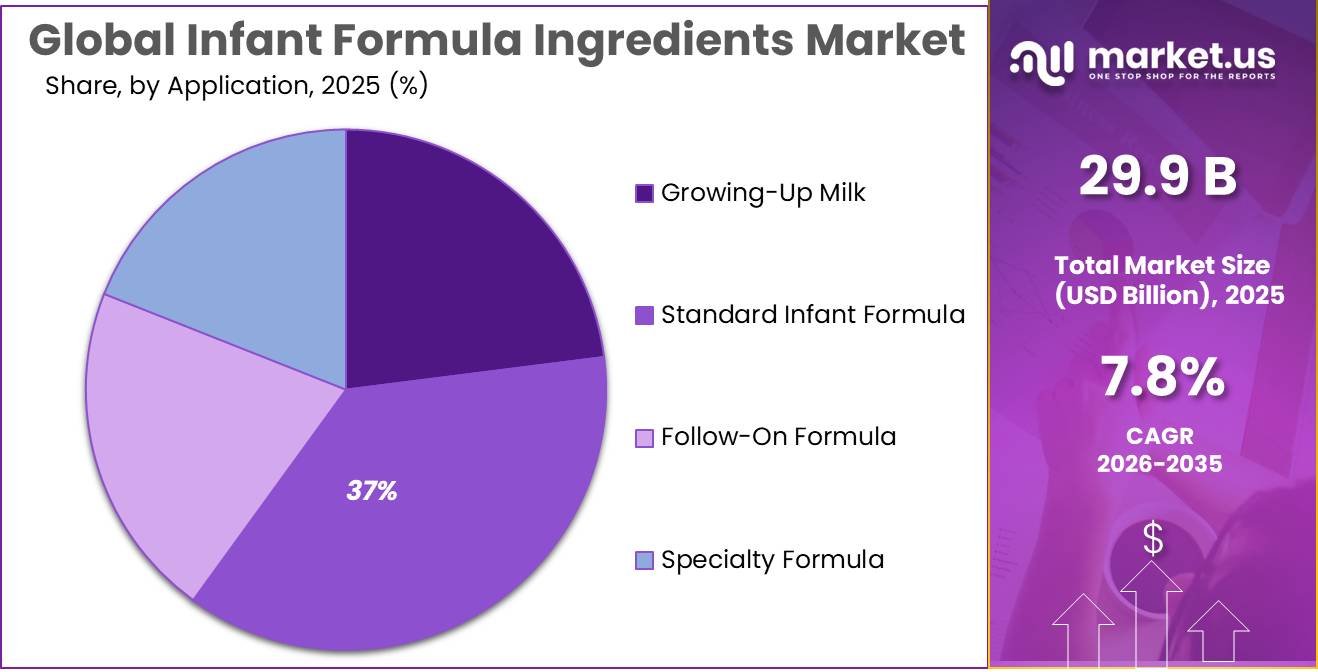
- Standard Infant Formula held a dominant market position, capturing more than a 37.1% share.
- Asia Pacific emerged as the dominating region in the infant formula ingredients market, accounting for 45.8% share valued at around USD 13.6 billion.
By Form Analysis
Powder infant formula leads strongly with 72.5% share driven by convenience and longer shelf life
In 2025, Powder held a dominant market position, capturing more than a 72.5% share in the infant formula ingredients market by form. This strong lead is mainly linked to its ease of storage, longer shelf life, and lower transportation cost compared to liquid alternatives. Powder-based ingredients are widely preferred by manufacturers as they allow better flexibility in formulation and bulk handling, making production more efficient.
By Source Analysis
Cow milk leads with 57.3% share as it remains the most trusted and widely used source
In 2025, Cow Milk held a dominant market position, capturing more than a 57.3% share in the infant formula ingredients market by source. This dominance is largely due to its strong nutritional profile, including essential proteins, calcium, and vitamins that closely match infant dietary needs. Manufacturers continue to rely heavily on cow milk as it is easily available, cost-effective, and well-supported by established supply chains across major regions. It also has high acceptance among parents, making it a preferred base for most standard infant formulas.
By Application Analysis
Standard infant formula stays ahead with 37.1% share as it meets everyday feeding needs
In 2025, Standard Infant Formula held a dominant market position, capturing more than a 37.1% share in the infant formula ingredients market by application. This segment continues to lead because it is the most commonly used option for daily infant nutrition, especially for babies who are not exclusively breastfed. It is widely available, affordable, and designed to provide balanced nutrition that suits a broad range of infants without specific dietary needs. Manufacturers focus heavily on this category as it drives consistent volume demand across both urban and rural markets.
Key Market Segments
By Form
- Powder
- Liquid
- Semi-Liquid
By Source
- Cow Milk
- Soy
- Protein Hydrolysates
- Others
By Application
- Growing-Up Milk
- Standard Infant Formula
- Follow-On Formula
- Specialty Formula
Emerging Trends
Growing focus on gut health ingredients like prebiotics and probiotics
One of the most noticeable trends in the infant formula ingredients market is the increasing use of gut-friendly ingredients such as prebiotics and probiotics. Parents today are more aware of how early nutrition affects digestion, immunity, and overall development. Because of this, manufacturers are trying to make formula closer to breast milk by adding these functional ingredients. Studies show that prebiotics in infant formula help improve gut bacteria balance and support better digestion in infants.
Healthcare bodies and nutrition experts are also supporting this trend by encouraging better infant nutrition standards. While they continue to promote breastfeeding, they also recognize the need for improved formula quality when it is used. This has pushed companies to innovate and include more science-backed ingredients.
Shift toward advanced and bioactive ingredients to match breast milk
Another important trend is the move toward more advanced and bioactive ingredients that try to closely match the composition of breast milk. Manufacturers are now adding components like human milk oligosaccharides (HMOs), lactoferrin, and essential fatty acids to improve the nutritional value of infant formula. These ingredients are gaining attention because they support brain development, immunity, and overall growth in infants.
This trend is driven by both science and consumer demand. Parents are asking for products that feel safer, more natural, and closer to what babies would get from breastfeeding. At the same time, governments and food safety authorities are setting stricter quality standards to ensure that infant formulas are nutritionally complete and safe. Recent regulatory discussions and reviews around infant formula composition also show that authorities are paying more attention to ingredient quality and safety.
Drivers
Rising demand for infant nutrition due to increasing working mothers and urban lifestyles
One of the biggest drivers for the infant formula ingredients market is the growing need for convenient nutrition, especially as more women join the workforce. In many countries, dual-income households are becoming the norm, and this directly affects feeding choices. According to a joint study by UNICEF and WHO, research covering over 8,500 mothers across multiple countries showed that modern lifestyles and exposure to formula options are strongly influencing infant feeding decisions.
Governments and health organizations are also playing a role by setting safety and quality standards, which builds trust among consumers. While breastfeeding is still recommended, the reality of modern life continues to support steady demand for formula-based nutrition, making it a strong growth driver for the ingredients market.
Strong global focus on infant health and nutrition awareness
Globally, the infant formula market itself reflects this growing awareness. It was valued at around USD 87.75 billion in 2025 and is expected to rise further in 2026, showing how demand is increasing alongside knowledge about nutrition. This growth is not just about quantity but also about quality. Parents today are more informed and prefer formulas enriched with essential nutrients that support immunity, brain development, and digestion.
Government initiatives and global guidelines are also pushing manufacturers to improve product quality. Standards such as those developed under Codex Alimentarius ensure that infant formula meets strict nutritional and safety requirements. This builds confidence among consumers and encourages wider adoption.
Restraints
Strong promotion of breastfeeding by global health organizations
One of the biggest restraining factors for the infant formula ingredients market is the strong and continuous push for breastfeeding by global health bodies. Organizations like World Health Organization and UNICEF clearly recommend exclusive breastfeeding for the first six months of life, followed by continued breastfeeding for up to two years or beyond.
This is not just a suggestion—it is backed by strong data. Globally, about 44% of infants aged 0–6 months are exclusively breastfed, and health agencies are actively working to increase this number to at least 50% by 2025. Governments across many countries support these goals through maternity leave policies, hospital programs, and awareness campaigns that encourage mothers to rely more on natural feeding.
Health benefits and cost advantages of breastfeeding reduce formula adoption
Another key factor slowing down the growth of infant formula ingredients is the clear health and economic advantage of breastfeeding. Breast milk is naturally designed for infants and provides all essential nutrients in the early months, along with antibodies that protect against infections. According to global health data, optimal breastfeeding could help save over 820,000 children’s lives every year worldwide.
In addition to health benefits, breastfeeding is also cost-free, which makes it more attractive, especially in low- and middle-income families. Infant formula, on the other hand, involves recurring expenses for purchase, preparation, and storage. This price difference becomes a major deciding factor for many households.
Opportunity
Rising number of premature births and nutritional needs create strong growth scope
One of the key growth opportunities for the infant formula ingredients market comes from the increasing number of premature and low-birth-weight babies worldwide. According to global health data, around 15 million premature infants are born every year, and many of these babies require specialized nutrition support beyond breastfeeding alone.
Government-backed health programs and hospital nutrition guidelines are also encouraging the use of medically approved infant nutrition solutions when breastfeeding is not sufficient. This is especially important in regions where access to maternal nutrition or healthcare support is limited. As awareness around infant health improves, more parents are willing to use scientifically developed formulas when needed.
Expanding urban population and changing feeding patterns support future demand
Another strong growth opportunity comes from changing feeding patterns linked to urbanization and rising incomes. Studies show that in many regions, especially urban areas, formula feeding is becoming more common due to lifestyle changes. In one study, about 53.3% of mothers reported using formula feeding, with even higher rates in urban populations.
As more families move to cities and adopt fast-paced lifestyles, feeding habits are shifting. Parents are looking for convenient, reliable, and nutritionally balanced options, especially when both parents are working. This trend is expected to continue into 2026, supporting the steady growth of infant formula consumption and, in turn, the demand for ingredients.
Regional Insights
Asia Pacific dominates with 45.8% share, reaching around USD 13.6 Bn driven by high birth rates and rising urban demand
Asia Pacific emerged as the dominating region in the infant formula ingredients market, accounting for 45.8% share valued at around USD 13.6 billion, and continues to lead strongly into 2025 and 2026. The region’s dominance is mainly supported by its large infant population, especially in countries like China and India, where birth rates remain comparatively higher than in developed regions. In addition, rapid urbanization and the growing number of working mothers have significantly increased the demand for convenient and nutritionally balanced infant feeding solutions.
Key Regions and Countries Insights
- North America
- US
- Canada
- Europe
- Germany
- France
- The UK
- Spain
- Italy
- Rest of Europe
- Asia Pacific
- China
- Japan
- South Korea
- India
- Australia
- Rest of APAC
- Latin America
- Brazil
- Mexico
- Rest of Latin America
- Middle East & Africa
- GCC
- South Africa
- Rest of MEA
Key Players Analysis
Plum PBC focuses on organic and clean-label infant nutrition, offering products that align with modern parenting trends. The company emphasizes transparency, non-GMO ingredients, and sustainability, which are gaining importance in infant food markets. With increasing awareness, more than 50% of parents in urban areas prefer organic or natural baby food options, reflecting strong demand trends. Plum’s approach supports premium ingredient sourcing and clean formulations.
AAK AB is a key supplier of specialty fats used in infant formula, particularly lipid ingredients that support brain and physical development. The company brings over 150 years of experience in oil processing, offering customized fat solutions that closely mimic human milk fat composition. Its INFAT and Akonino product lines are widely used in infant nutrition formulations. AAK’s focus on quality sourcing and certified production ensures consistency and safety, which is critical in infant food.
Top Key Players Outlook
- Arla Foods Ingredients Group P/S
- Plum PBC
- The Honest Company, Inc
- AAK AB
- Abbott
- Carbery Food Ingredients Limited
- BASF SE
- DSM
- Glanbia PLC.
- Vitablend Nederland B.V.
- Co-operative Group Limited
- FrieslandCampina
- Lactalis Ingredients
- Kerry Group plc
Recent Industry Developments
Arla Foods Ingredients Group P/S continues to expand its early life nutrition portfolio with clinically tested ingredients such as Lacprodan® IF-3070, which showed growth differences of only 0.4 g/day compared to breastfed infants over a 6-month study period involving 251 newborns, highlighting its effectiveness in supporting healthy infant development.
The Honest Company reported revenue of USD 378.3 million, up 9.9% from USD 344.4 million in 2023, while research and development spending reached USD 6.9 million, reflecting continued product innovation across its broader portfolio rather than a major push into formula ingredients.
Report Scope
Report Features Description Market Value (2025) USD 29.9 Bn Forecast Revenue (2035) USD 63.4 Bn CAGR (2026-2035) 7.8% Base Year for Estimation 2025 Historic Period 2020-2024 Forecast Period 2026-2035 Report Coverage Revenue Forecast, Market Dynamics, Competitive Landscape, Recent Developments Segments Covered By Form (Powder, Liquid, Semi-Liquid), By Source (Cow Milk, Soy, Protein Hydrolysates, Others), By Application (Growing-Up Milk, Standard Infant Formula, Follow-On Formula, Specialty Formula) Regional Analysis North America – US, Canada; Europe – Germany, France, The UK, Spain, Italy, Rest of Europe; Asia Pacific – China, Japan, South Korea, India, Australia, Singapore, Rest of APAC; Latin America – Brazil, Mexico, Rest of Latin America; Middle East & Africa – GCC, South Africa, Rest of MEA Competitive Landscape Arla Foods Ingredients Group P/S, Plum PBC, The Honest Company, Inc, AAK AB, Abbott, Carbery Food Ingredients Limited, BASF SE, DSM, Glanbia PLC., Vitablend Nederland B.V., Co-operative Group Limited, FrieslandCampina, Lactalis Ingredients, Kerry Group plc Customization Scope Customization for segments, region/country-level will be provided. Moreover, additional customization can be done based on the requirements. Purchase Options We have three licenses to opt for: Single User License, Multi-User License (Up to 5 Users), Corporate Use License (Unlimited User and Printable PDF)  Infant Formula Ingredients MarketPublished date: Mar 2026add_shopping_cartBuy Now get_appDownload Sample
 -
-
- Arla Foods Ingredients Group P/S
- Plum PBC
- The Honest Company, Inc
- AAK AB
- Abbott
- Carbery Food Ingredients Limited
- BASF SE
- DSM
- Glanbia PLC.
- Vitablend Nederland B.V.
- Co-operative Group Limited
- FrieslandCampina
- Lactalis Ingredients
- Kerry Group plc
Our Clients

- 182506
- Mar 2026






