


Market Overview
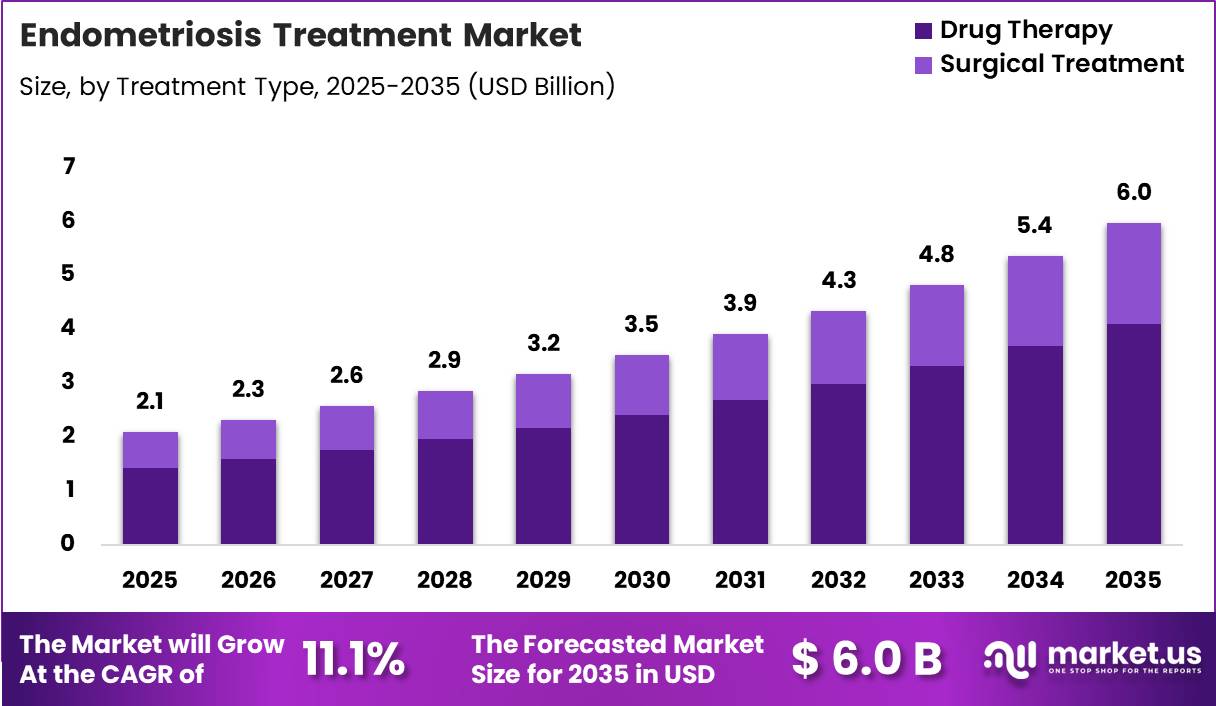
Global Endometriosis Treatment Market size is expected to be worth around US$ 6.0 Billion by 2035 from US$ 2.1 Billion in 2025, growing at a CAGR of 11.1% during the forecast period from 2026 to 2035. In 2025, North America led the market, achieving over 40.5% share with a revenue of US$ 0.85 Billion.
Endometriosis is a chronic gynecological condition in which tissue similar to the uterine lining grows outside the uterus, causing pain, heavy bleeding, infertility and other debilitating symptoms. According to the World Health Organization (WHO), an estimated 190 million women of reproductive age about 10% globally are affected by endometriosis. This condition significantly impacts quality of life and often leads to chronic pelvic pain and infertility.
Currently, there is no known cure for endometriosis, and treatment focuses on symptom management and improving reproductive outcomes. Treatment options documented by trusted health authorities like the WHO, U.S. National Institutes of Health (NIH), and Mayo Clinic include non-steroidal anti-inflammatory drugs (NSAIDs) for pain relief, hormone therapy (such as oral contraceptives, progestins, and gonadotropin-releasing hormone agents), and surgical interventions including laparoscopy to remove endometrial lesions.
Hormonal treatments may help reduce pain and slow lesion growth, but symptoms frequently recur after treatment cessation, and invasive surgery remains necessary in severe cases. Gonadotropin-releasing hormone medicines such as elagolix are among the pharmacologic options recognized by official treatment summaries.
Healthcare systems increasingly emphasize early diagnosis and individualized treatment plans to address both pain and fertility challenges. WHO notes that delays in diagnosis can range from 4 to 12 years, underscoring unmet needs in care delivery worldwide.
In summary, the endometriosis treatment landscape is defined by medical and surgical symptom management, a substantial global patient base, and continued emphasis on improving care access and outcomes through evidence-based practice.
Key Takeaways
- Market Size: Global Endometriosis Treatment Market size is expected to be worth around US$ 6.0 Billion by 2035 from US$ 2.1 Billion in 2025.
- Market Share: The market is growing at a CAGR of 11.1% during the forecast period from 2026 to 2035.
- Treatment Type Analysis: In 2025, drug therapy dominated the market with a 68.7% share, driven by its role as the first-line treatment for pain control and hormonal regulation.
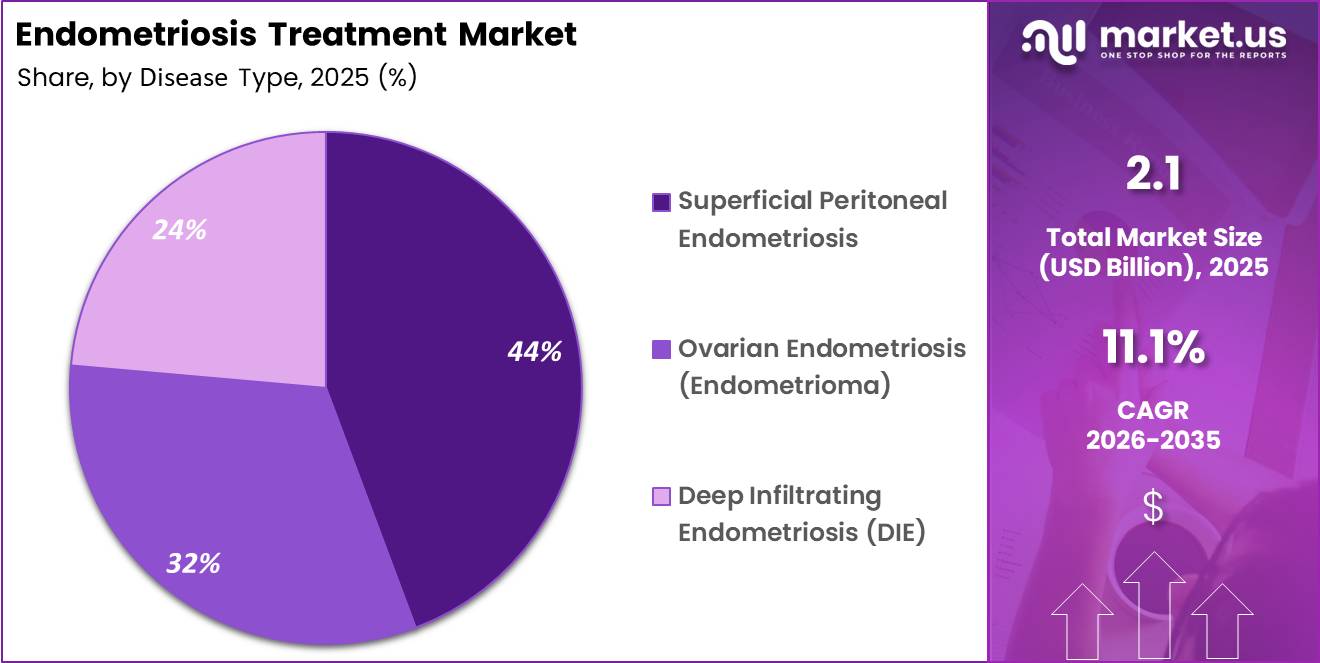
- Disease Type Analysis: In 2025, superficial peritoneal endometriosis led the market with a 44.3%.
- Route of Administration Analysis: In 2025, oral administration dominated with a 74.2% market share, reflecting strong physician and patient preference for convenience, adherence, and long-term usability.
- Distribution Channel Analysis: In 2025, retail pharmacies led the market with a 48.9% share, driven by the high volume of outpatient prescriptions for oral hormonal therapies and pain management drugs.
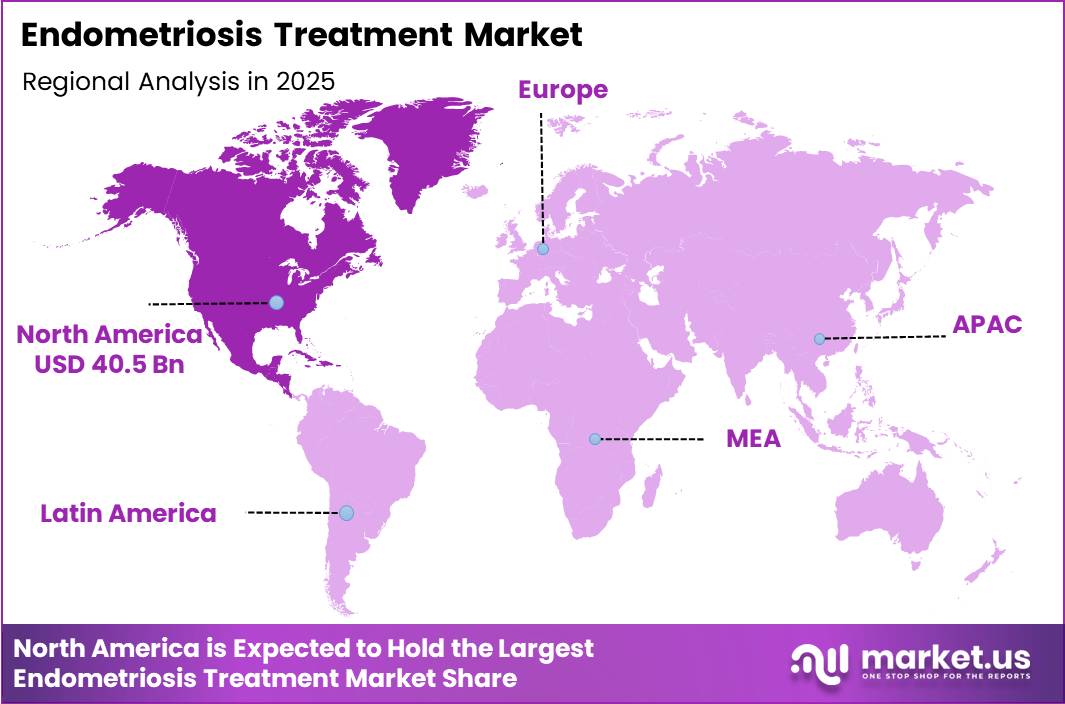
- Regional Analysis: In 2025, North America led the market, achieving over 40.5% share with a revenue of US$ 0.85 Billion.
Treatment Type Analysis
The Endometriosis Treatment Market is segmented into Drug Therapy and Surgical Treatment, reflecting the clinical pathway of symptom management and disease severity. In 2025, drug therapy dominated the market with a 68.7% share, driven by its role as the first-line treatment for pain control and hormonal regulation.
Common drug classes include non-steroidal anti-inflammatory drugs (NSAIDs), oral contraceptives, progestins, and gonadotropin-releasing hormone (GnRH) agents, which are widely prescribed to suppress estrogen production and reduce lesion progression. The dominance of drug therapy is further supported by its non-invasive nature, lower upfront costs, and suitability for long-term disease management, particularly in early and moderate cases.
Surgical treatment accounted for 31.3% of the market and remains essential for patients with severe symptoms, infertility, or treatment-resistant disease. Procedures such as laparoscopic excision or ablation of endometrial lesions are clinically effective in reducing pain and improving reproductive outcomes.
However, surgery is typically reserved for advanced cases due to higher costs, recurrence risks, and the need for specialized surgical expertise. Overall, the segmentation reflects a treatment paradigm favoring pharmacological management, with surgery playing a critical but secondary role.
Disease Type Analysis
By disease type, the market is categorized into Superficial Peritoneal Endometriosis, Ovarian Endometriosis (Endometrioma), and Deep Infiltrating Endometriosis (DIE). In 2025, superficial peritoneal endometriosis led the market with a 44.3% share, largely due to its higher prevalence and earlier diagnosis. This form typically involves lesions on the peritoneal surface and is commonly associated with chronic pelvic pain, making it a primary target for medical therapy and outpatient management.
Ovarian endometriosis (endometrioma) accounted for 32.1% of the market, reflecting its significant clinical burden, particularly in women facing infertility. Endometriomas often require a combination of hormonal therapy and surgical intervention, increasing treatment intensity and healthcare utilization.
Meanwhile, deep infiltrating endometriosis (DIE) represented 23.6%, despite being the most severe and complex form. DIE involves deep tissue invasion affecting organs such as the bowel or bladder and often necessitates advanced imaging, multidisciplinary care, and specialized surgery. Although lower in prevalence, DIE contributes disproportionately to treatment costs and unmet medical needs, underscoring its clinical importance within the overall disease segmentation.
Route of Administration Analysis
The market is segmented by route of administration into oral, injectable, and other localized delivery methods. In 2025, oral administration dominated with a 74.2% market share, reflecting strong physician and patient preference for convenience, adherence, and long-term usability.
Oral therapies include NSAIDs, oral contraceptives, progestins, and oral GnRH antagonists, which are widely prescribed for continuous symptom control and hormonal suppression. The high share of oral drugs is supported by established prescribing practices, ease of dose adjustment, and suitability for outpatient management.
Injectable therapies, such as depot GnRH agonists, represent a smaller but clinically significant segment. These treatments are often used in moderate to severe cases where stronger hormonal suppression is required.
However, concerns related to side effects, bone density loss, and the need for clinical administration limit broader adoption. Other routes, including intrauterine or localized hormonal delivery systems, remain niche but are gaining attention for targeted therapy with reduced systemic exposure. Overall, the dominance of oral administration highlights the market’s emphasis on patient-friendly, scalable treatment options that align with chronic disease management.
Distribution Channel Analysis
Based on distribution channel, the market is segmented into retail pharmacies, hospital pharmacies, and online pharmacies. In 2025, retail pharmacies led the market with a 48.9% share, driven by the high volume of outpatient prescriptions for oral hormonal therapies and pain management drugs.
Retail pharmacies benefit from widespread geographic presence, accessibility, and integration with routine gynecological care, making them the primary dispensing point for long-term endometriosis treatments.
Hospital pharmacies account for a substantial portion of the market, particularly for injectable therapies and post-surgical medications prescribed during inpatient or specialized care. Their role is closely linked to advanced diagnostics, surgical intervention, and severe disease management.
Online pharmacies represent a growing segment, supported by increasing digital health adoption and demand for home delivery of chronic medications. However, regulatory oversight and prescription requirements moderate rapid expansion in some regions.
Overall, the dominance of retail pharmacies reflects the outpatient-centric nature of endometriosis management and the sustained demand for long-term pharmacological treatment through easily accessible channels.
Market Segmentations
Treatment Type
- Drug Therapy
- Hormonal Therapy
- Gonadotropin-Releasing Hormone (GnRH) Agonists
- Gonadotropin-Releasing Hormone (GnRH) Antagonists
- Oral Contraceptives
- Progestins
- Aromatase Inhibitors
- Non-Hormonal Therapy
- Nonsteroidal Anti-Inflammatory Drugs (NSAIDs)
- Analgesics
- Others
- Hormonal Therapy
Surgical Treatment
- Laparoscopic Surgery
- Laparotomy
- Hysterectomy
- Others
Disease Type
- Superficial Peritoneal Endometriosis
- Ovarian Endometriosis (Endometrioma)
- Deep Infiltrating Endometriosis (DIE)
Route of Administration
- Oral
- Injectable
- Intranasal
- Others
Distribution Channel
- Hospital Pharmacies
- Retail Pharmacies
- Online Pharmacies
Opportunity
Non-hormonal novel therapies represent a significant future opportunity because current endometriosis treatment is still largely dependent on hormonal management, pain relief, and surgical intervention, while no curative treatment is currently available. Many patients face limitations related to side effects, long-term safety concerns, fertility considerations, and disease recurrence.
This creates a substantial unmet need for non-hormonal and disease-modifying therapies that can provide effective symptom control without endocrine suppression. Such innovations could expand treatment options for patients who are unable to tolerate or do not respond adequately to existing therapies. The opportunity is particularly strong in markets with established specialist care networks and greater acceptance of women’s health innovation.
Advanced therapies may also improve long-term treatment persistence and patient outcomes compared with conventional approaches. As a result, non-hormonal treatments have the potential to become an important future growth segment within endometriosis care.
| Opportunity | (~) % Potential CAGR Upside | Geographic Relevance | Execution Window |
|---|---|---|---|
| Non-hormonal novel therapies | +2.4% | North America, EU, Japan | Medium term |
| Earlier diagnosis pathways | +1.9% | North America, EU, UK, urban Asia | Short term |
| Fertility-integrated treatment models | +1.6% | North America, EU, India metros, Gulf | Medium term |
| Oral long-term therapy expansion | +1.3% | UK, EU, North America | Short term |
| Emerging-market access redesign | +2.1% | India, SEA, LATAM, MENA | Medium term |
| Specialty clinic and digital roll-ups | +1.5% | US, UK, EU, Australia | Long term |
Drivers
Expansion of multidisciplinary pain management pathways is becoming an important market driver as endometriosis is increasingly managed as a chronic condition rather than a procedure-focused disease. Clinical guidance now recognizes physiotherapy and cognitive behavioral therapy alongside medications and surgery for long-term symptom management.
This broader care model increases patient engagement across multiple services, including pain clinics, pelvic-floor rehabilitation, behavioral health support, diagnostic monitoring, and ongoing treatment optimization. Endometriosis affects approximately 190 million women globally, and many patients experience persistent or recurrent symptoms requiring long-term management.
The shift toward coordinated multidisciplinary care increases treatment continuity, follow-up frequency, and overall care intensity. It also supports integrated healthcare delivery models that generate value across several years of patient management rather than a single intervention. As a result, the market benefits from longer patient retention and expanded service utilization throughout the treatment journey.
| Driver | (~) % Impact on CAGR Forecast | Geographic Relevance | Impact Timeline |
|---|---|---|---|
| Earlier clinical diagnosis and imaging-led triage | +2.2% | North America, EU, UK, urban APAC | Short term |
| Broader use of long-term oral GnRH antagonist therapy | +1.8% | UK, EU, North America | Short term |
| Large untreated prevalence and infertility-linked care demand | +2.0% | Global, strongest in North America, EU, India, Japan | Medium term |
| Guideline-led shift away from diagnostic laparoscopy | +1.4% | EU, UK, North America, developed APAC | Short term |
| Expansion of multidisciplinary pain management pathways | +1.1% | North America, EU, Australia | Medium term |
| Improving recognition in adolescents and younger adults | +1.3% | North America, EU, UK, Japan | Long term |
Challenges
Fragmented multimodal care remains a key challenge because endometriosis management often requires a combination of medications, surgery, physiotherapy, behavioral support, fertility services, and diagnostic monitoring, yet these services are frequently delivered through separate and poorly coordinated care pathways.
Patients often navigate multiple providers without unified treatment planning or case management, leading to gaps in care, reduced adherence, and higher out-of-pocket costs. This lack of integration can delay treatment decisions, increase patient drop-off, and limit long-term treatment continuity.
As a result, healthcare systems may struggle to deliver consistent outcomes despite strong underlying demand. Until more coordinated women’s health care models are established, fragmented care will continue to reduce efficiency and hinder optimal patient management.
| Challenge | (~) % CAGR Friction Drag | Geographic Relevance | Mitigation Horizon |
|---|---|---|---|
| Diagnostic delay persistence | -1.8% | UK, EU, North America, urban APAC | Medium term |
| Recurrence and retreatment burden | -1.4% | Global | Long term |
| Fertility-treatment trade-offs | -1.1% | North America, EU, Japan, India metros | Medium term |
| Specialist capacity bottlenecks | -1.3% | UK, EU public systems, Canada, Australia | Medium term |
| Long-term safety monitoring load | -0.9% | North America, EU, UK, Japan | Long term |
| Fragmented multimodal care | -1.0% | Global, strongest in mixed public-private systems | Medium term |
Restraints
No curative therapy remains the most significant market restraint because endometriosis treatment is focused on symptom management rather than permanent disease elimination. Current care approaches rely on pain relief, hormonal therapies, surgery, and fertility-related interventions, but many patients experience symptom recurrence and require ongoing treatment.
The absence of a definitive cure often leads to repeated therapy changes, retreatment cycles, and variable long-term outcomes. This can reduce treatment persistence and create uncertainty around sustained patient engagement. Healthcare providers and payers also maintain close scrutiny over long-term treatment value due to the chronic nature of the disease.
As a result, companies must invest heavily in patient support, follow-up care, and treatment optimization. Until disease-modifying or curative therapies become available, the market will continue to face limitations in achieving long-term treatment efficiency and continuity.
| Restraint | (~) % Impact on CAGR Forecast | Geographic Relevance | Impact Timeline |
|---|---|---|---|
| No curative therapy | -2.1% | Global | Long term |
| Limited treatment access | -1.8% | LMICs, public systems in EU/UK, underserved North America | Medium term |
| Long gynecology backlogs | -1.5% | UK, Canada, EU public systems | Short term |
| Hormonal side-effect limits | -1.2% | North America, EU, Japan | Medium term |
| Fertility-linked therapy limits | -1.0% | Global, strongest in reproductive-age core markets | Medium term |
| High care fragmentation | -0.9% | Global, mixed public-private systems | Medium term |
Regional Analysis
In 2025, North America dominated the endometriosis treatment market, accounting for over 40.5% of global revenue, valued at approximately US$ 40.5 billion. This leadership position is primarily driven by high disease awareness, early diagnosis rates, and broad access to advanced therapeutic options across the United States and Canada.
Strong healthcare infrastructure, favorable reimbursement frameworks, and the widespread availability of hormonal therapies, pain management drugs, and minimally invasive surgical interventions continue to support market growth in the region. In addition, ongoing clinical research, rapid adoption of novel drug formulations, and active patient advocacy initiatives contribute to sustained demand.
Europe represents the second-largest regional market, supported by increasing public awareness, structured gynecological care pathways, and expanding access to specialist services. Countries such as Germany, the UK, and France benefit from government-supported women’s health programs and growing utilization of long-term hormonal treatments.
The Asia-Pacific region is expected to witness the fastest growth over the forecast period, fueled by rising diagnosis rates, improving healthcare access, and increasing healthcare expenditure in countries such as China, India, and Japan.
Meanwhile, Latin America and the Middle East & Africa remain emerging markets, where gradual improvements in diagnostic capabilities, expanding urban healthcare networks, and growing awareness of endometriosis are expected to create steady long-term growth opportunities.
Key Regions and Countries
North America
- The US
- Canada
Europe
- Germany
- France
- The U.K.
- Italy
- Spain
- Russia & CIS
- Rest of Europe
Asia Pacific
- China
- India
- Japan
- South Korea
- ASEAN
- Australia & New Zealand
- Rest of Asia Pacific
Middle East & Africa
- GCC
- South Africa
- Rest of Middle East & Africa
Latin America
- Brazil
- Mexico
- Rest of Latin America
Key Player Analysis
The Endometriosis Treatment Market is supported by a mix of global pharmaceutical leaders and specialized drug developers focused on hormonal and non-hormonal therapies. Major companies such as Bayer AG, Pfizer, Inc., AbbVie, Inc., and AstraZeneca play a strong role through well-established hormone-based treatments and wide global distribution networks. Their focus remains on improving symptom control, long-term safety, and patient adherence.
Mid-sized and specialty players such as ObsEva SA, Gedeon Richter Plc., Debiopharm, and Kissei Pharmaceutical are actively developing next-generation therapies, including oral GnRH antagonists, aimed at reducing side effects.
Generic and regional manufacturers such as Teva Pharmaceutical Industries Ltd., Zydus Healthcare Limited, Takeda Pharmaceutical Company Limited, Astellas Pharma, Inc., and Sanofi strengthen market access by offering affordable therapies and expanding presence in emerging markets. Together, these players drive steady innovation and broader treatment availability.
Top Key Players
- Bayer AG
- Pfizer, Inc.
- AbbVie, Inc
- AstraZeneca
- ObsEva SA
- Teva Pharmaceutical Industries Ltd.
- Zydus Healthcare Limited
- Astellas Pharma, Inc.
- Gedeon Richter Plc.
- Takeda Pharmaceutical Company Limited
- Debiopharm
- Kissei Pharmaceutical
- Sanofi
Recent Developments
- In 2025, Bayer advanced its women’s health pipeline with continued clinical development of hormonal therapies aimed at long-term suppression of endometriosis-associated pelvic pain, focusing on extended-release and low-dose estrogen modulation approaches.
- In 2025, AstraZeneca expanded early-stage gynecological and inflammation-targeting research programs, including pathway-based approaches relevant to chronic pelvic pain and endometriosis-related inflammation mechanisms.
Report Scope
| Report Features | Description |
|---|---|
| Market Value (2025) | US$ 2.1 Billion |
| Forecast Revenue (2035) | US$ 6.0 Billion |
| CAGR (2026-2035) | 11.1% |
| Base Year for Estimation | 2025 |
| Historic Period | 2020-2024 |
| Forecast Period | 2026-2035 |
| Report Coverage | Revenue Forecast, Market Dynamics, Competitive Landscape, Recent Developments |
| Segments Covered | By Treatment Type (Drug Therapy ,Hormonal Therapy ,Gonadotropin-Releasing Hormone (GnRH) Agonists ,Gonadotropin-Releasing Hormone (GnRH) Antagonists ,Oral Contraceptives ,Progestins ,Aromatase Inhibitors ,Non-Hormonal Therapy ,Nonsteroidal Anti-Inflammatory Drugs (NSAIDs) ,Analgesics ,Others ,Surgical Treatment ,Laparoscopic Surgery ,Laparotomy ,Hysterectomy ,Others) By Disease Type (Superficial Peritoneal Endometriosis ,Ovarian Endometriosis (Endometrioma) ,Deep Infiltrating Endometriosis (DIE)) By Route of Administration (Oral ,Injectable ,Intranasal ,Others) By Distribution Channel (Hospital Pharmacies ,Retail Pharmacies ,Online Pharmacies) |
| Regional Analysis | North America – The US, Canada; Europe – Germany, France, U.K., Italy, Spain, Russia & CIS, Rest of Europe; Asia Pacific – China, India, Japan, South Korea, ASEAN, Australia & New Zealand, Rest of Asia Pacific; Middle East & Africa – GCC, South Africa, Rest of Middle East & Africa; Latin America – Brazil, Mexico, Rest of Latin America |
| Competitive Landscape | Bayer AG ,Pfizer, Inc. ,AbbVie, Inc ,AstraZeneca ,ObsEva SA ,Teva Pharmaceutical Industries Ltd. ,Zydus Healthcare Limited ,Astellas Pharma, Inc. ,Gedeon Richter Plc. ,Takeda Pharmaceutical Company Limited,Debiopharm ,Kissei Pharmaceutical ,Sanofi. |
| Customization Scope | Customization for segments, region/country-level will be provided. Moreover, additional customization can be done based on the requirements. |
| Purchase Options | We have three licenses to opt for: Single User License, Multi-User License (Up to 5 Users), Corporate Use License (Unlimited User and Printable PDF) |





































