


Global Ginseng Market Size, Share, And Industry Analysis Report By Source (Wild, Cultivated), By Form (Extract, Raw, Powder), By Variety (Oriental Ginseng, American Ginseng, Siberian Ginseng), By End Use (Dietary Supplements, Personal Care Products, Food and Beverage Processing, Pharmaceutical Products), By Region and Companies - Industry Segment Outlook, Market Assessment, Competition Scenario, Trends, and Forecast 2025-2034
- Published date: January 2026
- Report ID: 176059
- Number of Pages: 325
- Format:
-
keyboard_arrow_up
Quick Navigation
Report Overview
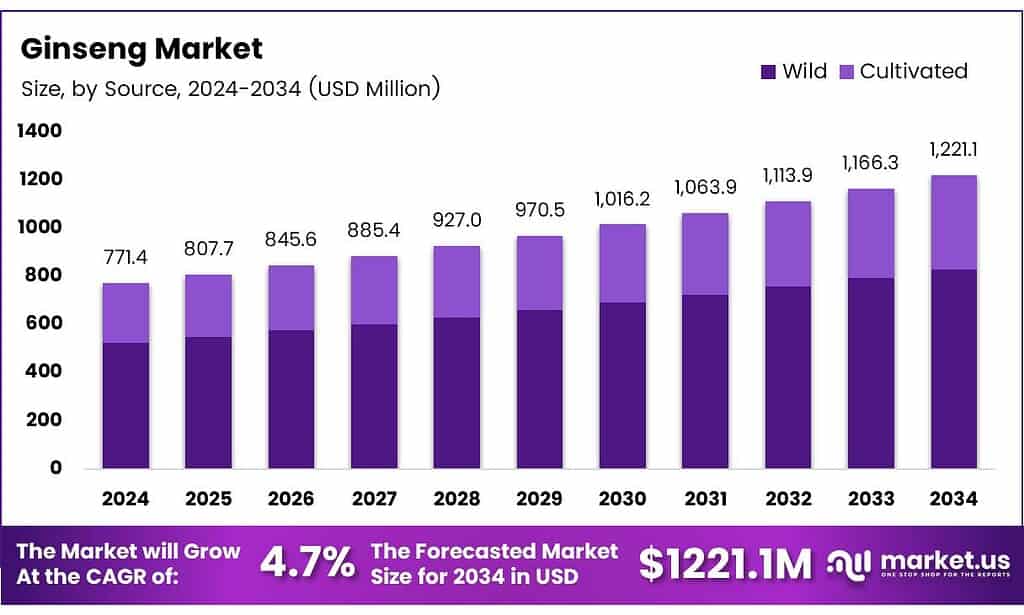
The Global Ginseng Market size is expected to be worth around USD 1221.1 million by 2034, from USD 771.4 million in 2024, growing at a CAGR of 4.7% during the forecast period from 2025 to 2034.
The Ginseng Market represents the commercial ecosystem for cultivating, processing, and distributing ginseng across nutraceuticals, functional foods, traditional medicine, and dietary supplements. It includes supply chains focused on Panax ginseng, American ginseng, and related extracts consumed for energy enhancement, metabolic health, and preventive wellness across global consumer segments.
Ginseng continues gaining relevance as consumers prioritize natural ingredients supporting vitality, immunity, and cognitive balance. Its adaptogenic value attracts rising interest from wellness buyers seeking botanical solutions with long-term safety. Consequently, demand strengthens across capsules, powders, beverages, and clinical nutrition categories, especially in aging populations experiencing lifestyle-related chronic health challenges.
- Moreover, rising consumer awareness regarding preventive health stimulates demand for stable and traceable ginseng supply chains. However, quality variations challenge market consistency because standard doses remain unestablished. Ginseng supplements range from 100–600 milligrams daily, while dry roots range from 0.5–2 grams, highlighting the need for stronger regulatory harmonization.
Ginseng is increasingly valued for its metabolic benefits, especially as diabetes affects 3.5% of the global population, with 90% being type 2 cases. Panax ginseng aids glucose balance and is suitable for long-term use, enhancing its nutraceutical appeal. Korean studies showing a 60–70% drop in gastric cancer risk among ginseng users, along with Mayo Clinic guidance of about 200 mg daily, reinforce its credibility.
Key Takeaways
- The Global Ginseng Market is valued at USD 771.4 million by 2024 and is projected to reach USD 1221.1 million by 2034 at a CAGR of 4.7%.
- Wild ginseng leads the market by source with a 72.4% share in 2025.
- Extract form dominates the market with a 53.1% share in 2025 due to high potency and absorption.
- Oriental ginseng holds the largest share of 48.1% in the variety segment in 2025.
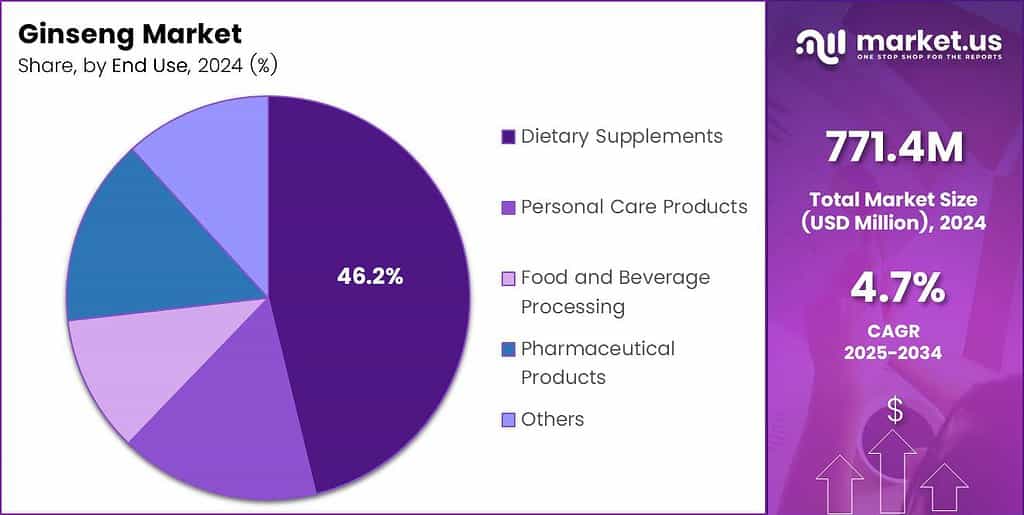
- Dietary supplements remain the top end-use segment with a 46.2% share in 2025.
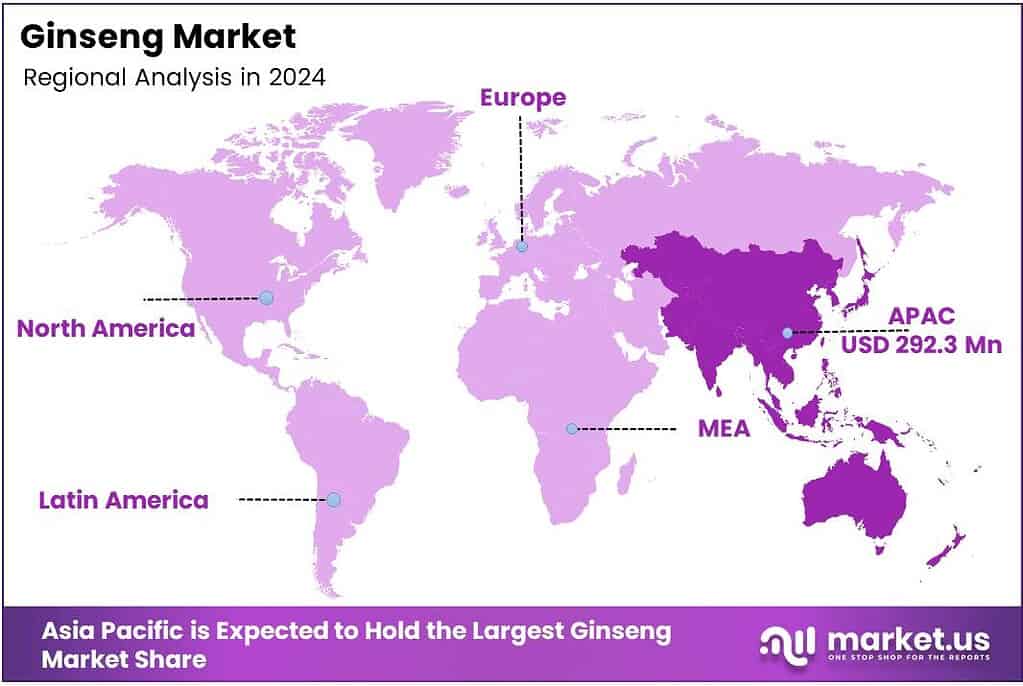
- Asia Pacific leads regionally with a 37.9% market share valued at USD 292.3 million
By Source Analysis
Wild dominates with 72.4% owing to its rarity and higher medicinal value.
In 2025, Wild held a dominant market position in the By Source segment of the Ginseng Market, with a 72.4% share. This segment benefits from increasing consumer trust in naturally grown herbs. Moreover, wild ginseng continues gaining traction as wellness users seek premium-quality roots collected from natural forest environments.
The Cultivated segment expands steadily as controlled farming practices ensure a consistent supply and standardized quality. Additionally, rising investments in ginseng farming encourage growers to adopt improved cultivation techniques. This segment also benefits from rising global demand as industries look for scalable and reliable ginseng sources.
By Form Analysis
Extract dominates with 53.1% due to its high concentration and quick absorption.
In 2025, Extract held a dominant market position in the By Form segment of the Ginseng Market, with a 53.1% share. This form grows due to its potency and convenience. Furthermore, supplement manufacturers prefer extracts because they deliver standardized active compounds suitable for capsules, tonics, and functional health formulations.
The Raw segment witnesses stable adoption as consumers continue valuing traditional consumption methods. It also appeals to buyers who prefer minimally processed products. Additionally, the raw form supports cultural practices where whole ginseng roots remain integral in herbal preparations.
The Powder segment increases gradually as food and beverage brands incorporate ginseng powder into drink mixes, snacks, and nutritional blends. This form offers versatility, extended shelf life, and easier dosing, making it popular in modern health-focused product development.
By Variety Analysis
Oriental Ginseng dominates with 48.1%, supported by strong traditional medicine usage.
In 2025, Oriental Ginseng held a dominant market position in the By Variety segment of the Ginseng Market, with a 48.1% share. Its long-established role in Asian herbal medicine drives strong demand. Additionally, consumers prefer it for vitality, stress relief, and immunity-boosting benefits backed by centuries of traditional use.
The American Ginseng segment expands as global consumers seek products with cooling and restorative properties. Moreover, U.S. and Canadian producers continue strengthening their export capabilities. This variety is widely used in wellness supplements focused on anti-inflammatory and cognitive-support benefits.
The Siberian Ginseng segment grows gradually with rising awareness of adaptogenic herbs. Although botanically different, it remains valued for its energy-enhancing properties. Furthermore, its affordability compared to other varieties supports increasing demand across developing markets.
By End Use Analysis
Dietary Supplements dominate with 46.2%, driven by rising health and immunity trends.
In 2025, Dietary Supplements held a dominant market position in the By End Use segment of the Ginseng Market, with a 46.2% share. This segment expands rapidly as consumers increasingly adopt herbal supplements for energy, immunity, and stress relief. Additionally, the global shift toward preventive healthcare further accelerates supplement-based demand.
The Personal Care Products segment rises steadily as ginseng becomes a preferred ingredient in skincare and haircare formulations. Its antioxidant and anti-aging benefits enhance product appeal. Moreover, beauty brands increasingly highlight herbal ingredients to attract wellness-focused customers.
The Food and Beverage Processing segment observes growing adoption as brands incorporate ginseng into teas, health drinks, snacks, and fortified foods. This movement supports clean-label development as consumers actively look for natural functional ingredients in daily consumption products.
The Pharmaceutical Products segment maintains relevance due to ginseng’s role in therapeutic formulations, traditional medicines, and immunity-boosting tonics. It is frequently used in regulated herbal preparations addressing fatigue, cognitive health, and metabolic balance.
Key Market Segments
By Source
- Wild
- Cultivated
By Form
- Extract
- Raw
- Powder
By Variety
- Oriental Ginseng
- American Ginseng
- Siberian Ginseng
- Others
By End Use
- Dietary Supplements
- Personal Care Products
- Food and Beverage Processing
- Pharmaceutical Products
- Others
Emerging Trends
Growing Popularity of Herbal Supplements Trends in the Ginseng Market
One of the strongest trends influencing the ginseng market is the rising popularity of herbal supplements. Consumers are shifting toward plant-based remedies as they seek safer, natural solutions for daily health concerns. This trend is especially strong in North America and Europe, where herbal supplement sales continue to rise each year.
- South Korea reported overseas shipments of ginseng products at USD 152.8 million, an increase of 1.2% year over year—showing that processed ginseng goods are finding steady demand beyond raw roots. South Korea exported USD 82.4 million of ginseng roots, signaling that origin-labelled roots still matter for gift-giving and traditional uses, even as extracts grow faster in convenience categories.
The increasing use of ginseng in ready-to-drink beverages. Energy shots, herbal teas, and wellness drinks made with ginseng are gaining traction, as they fit well with busy lifestyles. Brands offering clean-label, caffeine-free formulations are seeing strong customer interest.
Drivers
Growing Use of Ginseng in Health and Wellness Products Drives Market Growth
The ginseng market is expanding largely because people around the world are becoming more health-conscious. Ginseng is well-known for boosting energy, improving immunity, and reducing stress, making it a popular choice in herbal supplements. As more consumers prefer natural and plant-based remedies, the demand for ginseng continues to rise.
Food and beverage companies are also adding ginseng to drinks, teas, and functional foods, helping the ingredient reach a wider audience. This rising adoption across multiple industries is strengthening overall market growth. In addition, pharmaceutical manufacturers use ginseng in formulations targeting fatigue, inflammation, and cognitive support, which further pushes demand upward.
Growing awareness campaigns by health organizations about the benefits of herbal ingredients are making ginseng more recognizable. Governments in major producing countries like South Korea and China also support cultivation through farming programs, ensuring a stable supply. With the global focus on preventive healthcare increasing, ginseng continues to establish itself as a key natural ingredient.
Restraints
Limited Supply of High-Quality Ginseng Restrains Market Growth
One of the major restraints for the ginseng market is the limited availability of premium-grade roots. Growing high-quality ginseng requires specific soil, climate, and several years of cultivation, making the process slow and expensive. This leads to supply shortages, especially for wild and organically grown varieties.
- Price volatility is another challenge, as fluctuations in demand and seasonal variations affect production costs. Small farmers often face difficulties maintaining consistent output, creating instability in the supply chain. Nearly 24.9% of adults aged 60+ reported taking four or more supplements, which increases the chance that a specific ingredient like ginseng gets added as part of a routine rather than as a single purchase.
Regulatory issues also slow down market expansion. Different countries follow strict rules for herbal ingredients, requiring extensive testing and documentation. This increases the time and cost involved before launching new ginseng-based products. In addition, counterfeit or low-quality ginseng products in the market reduce consumer trust, affecting brand credibility.
Growth Factors
Rising Use of Ginseng in Functional Foods Creates Strong Growth Opportunities
The growing demand for functional foods and beverages presents a major opportunity for the ginseng market. As consumers look for convenient ways to improve energy, immunity, and overall wellness, manufacturers are adding ginseng to smoothies, health drinks, snacks, and fortified teas. This trend is creating new product categories and attracting younger consumers.
Opportunities are also emerging in the beauty and skincare segment. Ginseng is increasingly used in creams, serums, and anti-aging products due to its antioxidant properties. Cosmetic brands are launching premium lines with ginseng extracts, opening new revenue streams in the personal care sector.
E-commerce is another key opportunity, giving small and medium producers access to global customers. Online wellness platforms and direct-to-consumer brands are helping expand the reach of ginseng-based products. In addition, countries investing in modern farming technologies, such as controlled-environment agriculture and improved cultivation systems, can significantly increase output.
Regional Analysis
Asia Pacific Dominates the Ginseng Market with a Market Share of 37.9%, Valued at USD 292.3 Million
The Asia Pacific region stands as the leading market for ginseng, holding a significant 37.9% share and generating USD 292.3 million in market value. This dominance is driven by strong traditional medicine usage, rising nutraceutical consumption, and large-scale cultivation across countries like China, South Korea, and Japan. The region’s expanding middle-class population and growing preference for herbal wellness products further support long-term market expansion.
North America continues to witness steady demand for ginseng, supported by increasing consumer interest in natural supplements for energy, immunity, and stress management. The region benefits from strong retail penetration, expanding herbal supplement brands, and rising adoption of preventive healthcare. U.S. consumers especially show a growing inclination toward Asian herbal products, supporting consistent market growth.
Europe’s ginseng market is fueled by the rising preference for plant-based remedies and functional supplements. The demand for premium-quality ginseng products is increasing, particularly in countries like Germany, France, and the U.K., where wellness and immunity-enhancing supplements see strong adoption. Regulatory support for herbal products and expanding distribution networks strengthen the region’s market outlook.
The Middle East and Africa region is experiencing gradual growth, largely influenced by increasing health awareness and rising interest in herbal and traditional wellness products. While consumer penetration remains moderate, premium retail channels and growing nutraceutical imports are gradually boosting market visibility. Urbanization and shifting lifestyle patterns are further enhancing product uptake.
Key Regions and Countries
North America
- US
- Canada
Europe
- Germany
- France
- The UK
- Spain
- Italy
- Rest of Europe
Asia Pacific
- China
- Japan
- South Korea
- India
- Australia
- Rest of APAC
Latin America
- Brazil
- Mexico
- Rest of Latin America
Middle East & Africa
- GCC
- South Africa
- Rest of MEA
Key Players Analysis
In 2025, the global ginseng market continues to strengthen as demand accelerates across nutraceuticals, functional foods, and traditional herbal wellness. Leading companies are strategically expanding product portfolios, improving supply-chain transparency, and investing in standardized extracts to meet rising consumer expectations for quality and efficacy.
Korean Ginseng Export Corporation remains a pivotal force due to its strong control over the premium cultivation of Korean red ginseng. The company’s reputation for high-grade roots and its established distribution networks in Asia and North America support its competitive edge, enabling it to serve the premium wellness segment.
Organika Health Products Inc. continues to enhance its market standing by integrating ginseng into a broader line of evidence-backed natural health supplements. With a focus on clean-label formulations and sustainable ingredient sourcing, Organika is attracting younger health-conscious consumers seeking scientifically aligned herbal solutions.
Ilhwa Co. Ltd strengthens its leadership with advanced processing technologies, particularly in enzymatically fermented ginseng, which improves absorption and potency. The company’s investment in research-driven product development positions it well within the expanding functional food sector as demand grows for high-bioavailability ginseng formats.
Korean Ginseng Corp. remains synonymous with heritage-driven quality, backed by proprietary cultivation practices and long-term brand trust. Its premium CheongKwanJang offerings continue to dominate specialty retail channels, while the company expands into ready-to-drink tonics and youth-focused wellness products to diversify appeal.
Top Key Players in the Market
- Korean Ginseng Export Corporation
- Organika Health Products Inc.
- Ilhwa Co. Ltd
- Korean Ginseng Corp.
- RFI Ingredients, Inc.
- Daedong Korea Ginseng Co.
- Ningbo Gianon Biotech Co., Ltd.
- Shanghai FanPharma Co., Ltd.
- Nature’s Way
Recent Developments
- In 2025, K-Red Ginseng will have been integrated into daily American consumer routines, highlighting increased accessibility and adoption in the U.S. market through retail partnerships. Launched the premium ingredient brand “G1899” targeted at the global B2B health ingredient market, emphasizing high-quality Korean red ginseng extracts for use in supplements and functional foods.
- In 2025, Organika Health Products Inc., a Canadian company specializing in natural health supplements, including ginseng-based products. Launched new products, including electrolyte powder, keto-friendly cookies, and a kids’ supplements line.
Report Scope
Report Features Description Market Value (2024) USD 771.4 Million Forecast Revenue (2034) USD 1221.1 Million CAGR (2025-2034) 4.7% Base Year for Estimation 2024 Historic Period 2020-2023 Forecast Period 2025-2034 Report Coverage Revenue Forecast, Market Dynamics, Competitive Landscape, Recent Developments Segments Covered By Source (Wild, Cultivated), By Form (Extract, Raw, Powder), By Variety (Oriental Ginseng, American Ginseng, Siberian Ginseng, Others), By End Use (Dietary Supplements, Personal Care Products, Food and Beverage Processing, Pharmaceutical Products, Others) Regional Analysis North America (US and Canada), Europe (Germany, France, The UK, Spain, Italy, and Rest of Europe), Asia Pacific (China, Japan, South Korea, India, Australia, and Rest of APAC), Latin America (Brazil, Mexico, and Rest of Latin America), Middle East & Africa (GCC, South Africa, and Rest of MEA) Competitive Landscape Korean Ginseng Export Corporation, Organika Health Products Inc., Ilhwa Co., Ltd., Korean Ginseng Corp., RFI Ingredients, Inc., Daedong Korea Ginseng Co., Ningbo Gianon Biotech Co., Ltd., Shanghai FanPharma Co., Ltd., Nature’s Way Customization Scope Customisation for segments, region/country-level will be provided. Moreover, additional customisation can be done based on the requirements. Purchase Options We have three licenses to opt for: Single User License, Multi-User License (Up to 5 Users), Corporate Use License (Unlimited Users and Printable PDF) 
-
-
- Korean Ginseng Export Corporation
- Organika Health Products Inc.
- Ilhwa Co. Ltd
- Korean Ginseng Corp.
- RFI Ingredients, Inc.
- Daedong Korea Ginseng Co.
- Ningbo Gianon Biotech Co., Ltd.
- Shanghai FanPharma Co., Ltd.
- Nature's Way
Our Clients

- 176059
- January 2026






