


Global Exfoliators Market Size, Share, Growth Analysis By Type (Physical, Chemical), By Product (Scrub, Mask, Lotions and Creams, Pads & Wipes, Others), By Skin Type (Dry Skin, Oily Skin, Sensitive Skin, Combination Skin), By End Use (Men, Women), By Distribution Channel (Offline, Online), By Region and Companies - Industry Segment Outlook, Market Assessment, Competition Scenario, Statistics, Trends and Forecast 2026-2035
- Published date: March 2026
- Report ID: 182887
- Number of Pages: 229
- Format:
-
keyboard_arrow_up
Quick Navigation
Report Overview
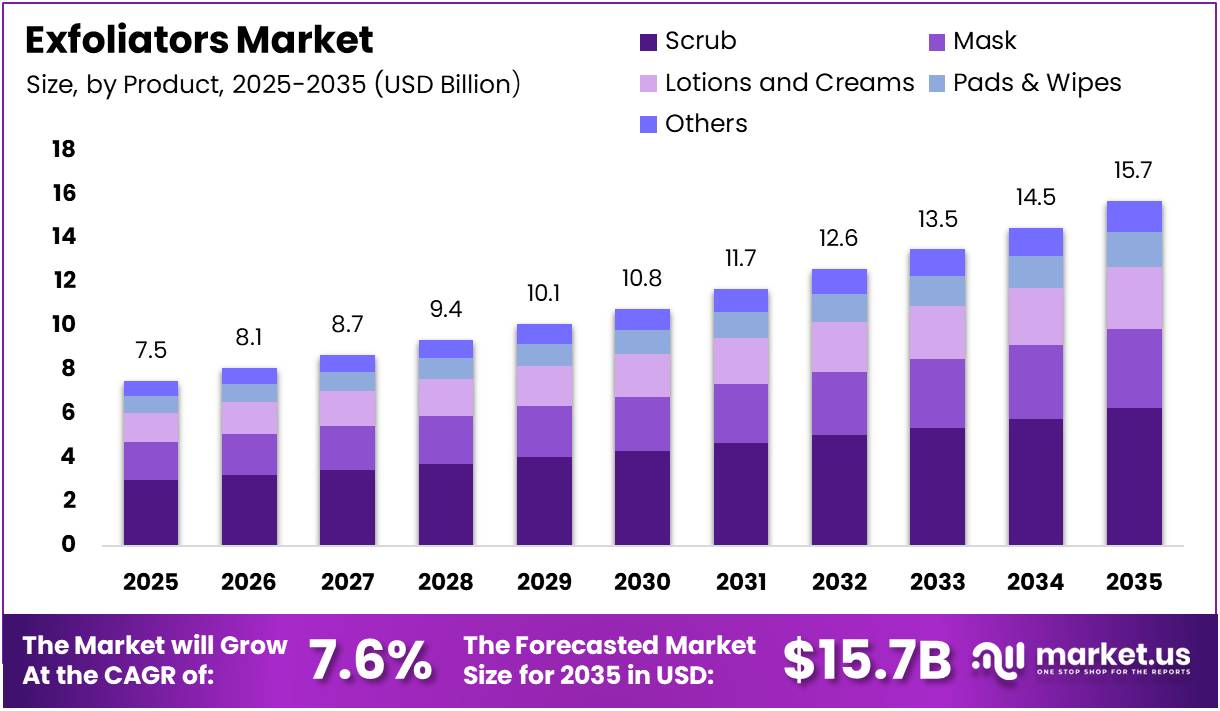
The Global Exfoliators Market size is expected to be worth around USD 15.7 Billion by 2035 from USD 7.5 Billion in 2025, growing at a CAGR of 7.6% during the forecast period 2026 to 2035.
The exfoliators market includes a wide range of skincare products used to remove dead skin cells from the surface of the skin. These products improve texture, tone, and overall skin health. They are available in multiple forms such as scrubs, masks, chemical formulations, pads, and lotions for different skin types.
Exfoliation works through two primary methods i.e physical and chemical. Physical exfoliators use abrasive particles to scrub the skin, while chemical exfoliators use acids such as AHAs and BHAs to dissolve dead skin cells. Consequently, brands are developing products that suit a wide variety of skin concerns and consumer lifestyles.
The market is growing steadily due to rising consumer focus on skin renewal and texture improvement. Additionally, increasing adoption of multi-step skincare regimens across age groups continues to drive demand. The growing influence of dermatologist-backed skincare recommendations also plays a key role in expanding the exfoliators market globally.
Government bodies across major markets are strengthening cosmetic safety regulations, encouraging brands to invest in safer and clinically tested exfoliating formulations. Therefore, the regulatory environment is creating significant opportunities for product innovation. Additionally, rising disposable income and consumer spending on personal care products are further accelerating overall market expansion.
According to kipi.com, approximately 63% of consumers use exfoliating products at least once weekly, reflecting strong and consistent product engagement. According to cosmoderma.org, 88.7% of dermatologists identify oily and acne-prone skin as the primary use case for exfoliation, while 63.2% support daily gentle exfoliation for sensitive skin.
According to cosmoderma.org, 46.2% of dermatologists prefer dual-product exfoliation regimens combining a cleanser and lotion. Additionally, according to realsimple.com, skincare experts recommend exfoliating 1 to 3 times per week depending on individual skin type and sensitivity levels.
According to dermobrain.com, glycolic acid (AHA) increases skin desquamation by up to 48% within 2 weeks, while AHA 10% formulations improve skin texture by approximately 28 to 31% depending on usage frequency. Furthermore, salicylic acid (BHA) delivers approximately 45% improvement in exfoliation outcomes, and BHA 2% formulations improve comedones by approximately 42 to 48%.
Key Takeaways
- The Global Exfoliators Market was valued at USD 7.5 Billion in 2025 and is projected to reach USD 15.7 Billion by 2035.
- The market is expected to grow at a CAGR of 7.6% during the forecast period 2026 to 2035.
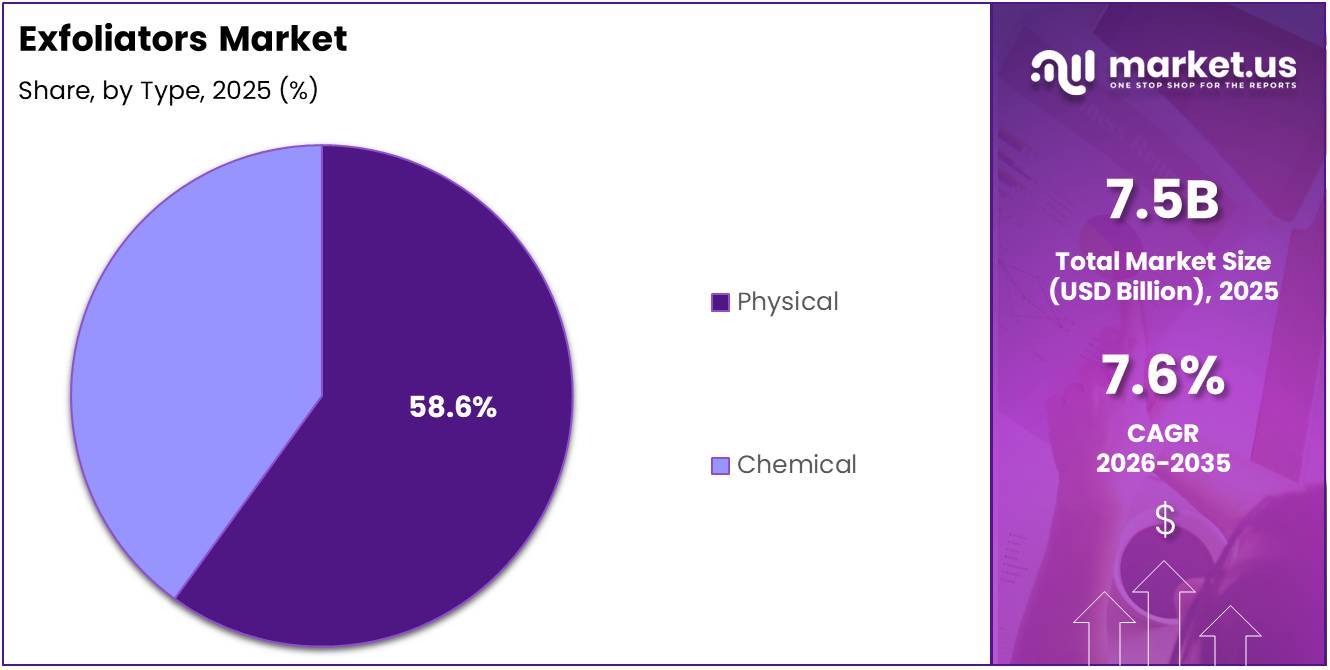
- By Type, the Physical segment holds the dominant position with a market share of 58.6%.
- By Product, the Scrub segment leads with a market share of 37.4%.
- By Skin Type, the Oily Skin segment accounts for a 34.1% share of the market.
- By End Use, the Women segment dominates with a 72.5% market share.
- By Distribution Channel, the Offline segment leads with a 69.2% share.
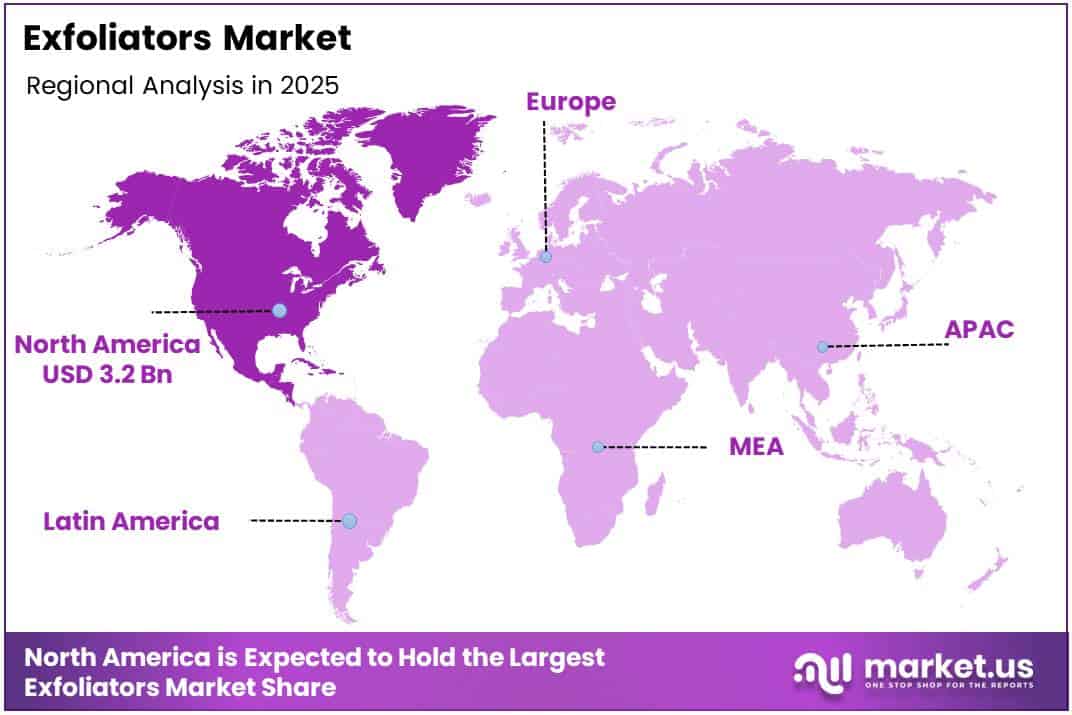
- North America dominates the regional landscape with a 43.60% market share, valued at USD 3.2 Billion.
By Type Analysis
Physical exfoliators dominate with 58.6% due to widespread consumer familiarity, ease of use, and immediate visible results.
In 2025, Physical held a dominant market position in the By Type segment of the Exfoliators Market, with a 58.6% share. Physical exfoliators use abrasive particles, beads, or textured tools to manually remove dead skin cells. Moreover, their ease of use, immediate results, and wide availability across price points make them highly popular among everyday skincare consumers globally.
Chemical exfoliators utilize active acids such as AHAs and BHAs to gently dissolve the bonds between dead skin cells without physical friction. However, they have gained strong traction due to their ability to address concerns such as acne, hyperpigmentation, and dullness. Additionally, increasing dermatologist recommendations are further driving the adoption of chemical exfoliating solutions across diverse consumer segments.
By Product Analysis
Scrub dominates with 37.4% due to its broad consumer familiarity, accessibility, and effectiveness across skin types.
In 2025, Scrub held a dominant market position in the By Product segment of the Exfoliators Market, with a 37.4% share. Scrubs are among the most widely used physical exfoliating products, formulated with abrasive particles to cleanse and resurface the skin. Moreover, their wide availability across price points makes them accessible to a broad consumer base.
Mask-based exfoliating products are gaining popularity as consumers seek deeper skin cleansing and targeted treatment solutions. These products combine exfoliation with additional skincare benefits such as hydration, pore cleansing, and brightening. Consequently, exfoliating masks are increasingly being positioned as premium skincare products suitable for weekly use across various skin types.
Lotions and Creams represent a growing sub-segment in the exfoliators market, offering gentle chemical exfoliation through leave-on formulations. These products are preferred by consumers with sensitive skin who require a milder approach to exfoliation. Moreover, their dual functionality as moisturizers and exfoliants adds to their appeal among daily skincare users.
Pads and Wipes are a convenient exfoliating format seeing increased demand among busy consumers seeking quick skincare routines. Pre-soaked with active exfoliating ingredients, these single-use products offer a simple, no-mess application. Additionally, their travel-friendly format and consistent dosage make them particularly popular within the premium skincare segment.
Others sub-segment includes a range of emerging exfoliating product formats such as gels, serums, and enzyme-based treatments. These products are gaining attention due to their innovative formulations and targeted skin benefits. Therefore, this segment is expected to see steady growth as consumer preferences continue to evolve.
By Skin Type Analysis
Oily Skin dominates with 34.1% due to the high prevalence of acne-prone skin and frequent exfoliation requirements among this consumer group.
In 2025, Oily Skin held a dominant market position in the By Skin Type segment of the Exfoliators Market, with a 34.1% share. Oily skin types require frequent exfoliation to manage excess sebum and prevent clogged pores. Moreover, the high prevalence of acne-prone skin among consumers has significantly contributed to strong demand for products specifically targeting oily skin concerns.
Dry Skin is a significant segment in the exfoliators market, as consumers with this skin type often experience flakiness and dull texture. Exfoliating products for dry skin typically include moisturizing agents to prevent further moisture loss. Therefore, brands are offering gentle, hydrating exfoliators that address dryness while improving overall skin smoothness and radiance.
Sensitive Skin consumers represent a growing category requiring mild, fragrance-free, and non-irritating exfoliating formulations. This segment has driven significant product innovation, with brands developing enzyme-based and low-acid solutions suitable for frequent use. Moreover, growing clinical support for gentle daily exfoliation is expanding the product range available for sensitive skin type consumers.
Combination Skin users face unique challenges as different areas of their face have varying skincare needs. Exfoliating products for this segment must address both oily zones such as the T-zone and drier areas simultaneously. Consequently, brands are innovating with zone-specific and balanced formulations to effectively cater to combination skin type consumers.
By End Use Analysis
Women dominate with 72.5% due to higher engagement in multi-step skincare routines and broader product availability targeting female consumers.
In 2025, Women held a dominant market position in the By End Use segment of the Exfoliators Market, with a 72.5% share. Women represent the largest consumer group for exfoliating products, driven by higher participation in multi-step skincare routines. Moreover, strong brand marketing and a wide product range designed for women continue to reinforce this segment’s market dominance.
The Men segment is growing steadily as male grooming and skincare awareness continues to rise globally. Men are increasingly incorporating exfoliating products into their daily grooming routines, particularly for managing rough skin texture and ingrown hairs. Additionally, brands are launching gender-specific exfoliating products with formulations suited to distinct male skin concerns and preferences.
By Distribution Channel Analysis
Offline dominates with 69.2% due to established retail infrastructure, in-store trials, and strong consumer preference for physical purchase experiences.
In 2025, Offline held a dominant market position in the By Distribution Channel segment of the Exfoliators Market, with a 69.2% share. Offline retail channels such as supermarkets, pharmacies, and specialty beauty stores remain the primary point of purchase for exfoliating products. Moreover, in-store product trials and trained beauty advisors continue to significantly influence consumer buying decisions.
Online distribution channel is the fastest-growing segment, driven by the rapid expansion of e-commerce and direct-to-consumer skincare brands. Consumers are increasingly turning to online platforms for product research, reviews, and convenient home delivery. Additionally, personalized digital shopping experiences and subscription services are helping online channels capture a growing share of global exfoliator sales.
Key Market Segments
By Type
- Physical
- Chemical
By Product
- Scrub
- Mask
- Lotions and Creams
- Pads & Wipes
- Others
By Skin Type
- Dry Skin
- Oily Skin
- Sensitive Skin
- Combination Skin
By End Use
- Men
- Women
By Distribution Channel
- Offline
- Online
Drivers
Rising Consumer Focus on Skin Renewal and Dermatologist-Backed Recommendations Drive Exfoliators Market Growth
Rising consumer focus on skin renewal and texture improvement has become a primary driver in the exfoliators market. More consumers are adopting comprehensive skincare regimens that include regular exfoliation as a key step. Consequently, demand for both physical and chemical exfoliating products is growing steadily across all age groups and consumer demographics worldwide.
The increasing adoption of multi-step skincare regimens across different age groups is another significant growth driver. Consumers are now better educated about the role of exfoliation in maintaining healthy and radiant skin. Moreover, the availability of skincare information through social media and digital beauty platforms is accelerating adoption rates among younger consumers globally.
The growing influence of dermatologist-backed skincare recommendations is significantly shaping consumer purchasing behavior in the exfoliators market. Dermatologists increasingly advocate for routine exfoliation as part of evidence-based skincare practice. Additionally, the rise of clinically validated and professionally endorsed exfoliating products is building consumer trust and encouraging more consistent long-term product use.
Restraints
Concerns Over Skin Barrier Damage and Limited Awareness in Emerging Markets Restrain Growth
A key restraint in the exfoliators market is the growing consumer concern about skin barrier damage caused by over-exfoliation practices. Many users apply exfoliating products too frequently or with excessive pressure, leading to irritation, redness, and heightened skin sensitivity. Therefore, these negative experiences often result in reduced product trust and lower long-term consumer retention.
Brands and healthcare professionals are working to educate consumers about safe exfoliation practices, including proper usage frequency and product selection. However, misconceptions about exfoliation continue to create hesitation among first-time users. Consequently, the absence of clear usage guidance on product packaging remains a barrier to wider adoption across certain consumer segments.
Limited awareness regarding proper exfoliation practices in emerging markets presents another significant restraint for the global exfoliators market. In these regions, consumers may not fully understand the benefits or risks associated with regular exfoliation routines. Therefore, market players must invest in targeted consumer education initiatives to unlock untapped growth potential in these underpenetrated markets.
Growth Factors
Innovation in Hybrid Formulations and Personalized Exfoliation Solutions Accelerates Exfoliators Market Expansion
The development of hybrid exfoliators that combine chemical and physical technologies is a significant growth opportunity in the market. These innovative products deliver more comprehensive exfoliation by targeting multiple skin concerns within a single formulation. Moreover, hybrid products appeal strongly to consumers who seek efficiency and multifunctionality in their everyday skincare routines.
Increasing demand for personalized and skin-type-specific exfoliation solutions is further fueling market expansion. Consumers are moving away from one-size-fits-all products toward customized formulations tailored to their unique skin concerns. Consequently, brands that invest in personalization technology and ingredient transparency are well-positioned to capture a larger share of the growing exfoliators market.
The rising popularity of at-home spa and professional-grade skincare treatment products is also a notable growth factor. Consumers are increasingly seeking salon-quality results from the comfort of their homes. Additionally, the availability of affordable professional-grade exfoliating products through mainstream retail channels is making premium skincare more accessible to a wider global consumer base.
Emerging Trends
Surge in Mild Daily-Use Formulations, Clean Beauty, and Leave-On Exfoliants Reshapes the Exfoliators Market
A significant trend in the exfoliators market is the surge in demand for mild, daily-use exfoliating formulations. Consumers are increasingly seeking gentle products suitable for frequent application without causing skin irritation. Moreover, this shift is encouraging brands to reformulate existing products with lower acid concentrations and skin-soothing ingredients designed for everyday exfoliation routines.
Growing consumer preference for clean label, vegan, and cruelty-free exfoliating products is reshaping brand strategies across the market. Consumers are actively seeking products free from harmful chemicals, synthetic fragrances, and animal-derived ingredients. Consequently, brands are prioritizing natural and sustainably sourced exfoliating agents to align with evolving consumer values and growing environmental expectations.
The increasing popularity of leave-on exfoliants over traditional rinse-off scrubs is another notable trend gaining strong market momentum. Leave-on products such as toners and serums with AHA or BHA offer extended skin contact for more effective outcomes. Additionally, their gentle nature and ease of use are making them a preferred choice among skincare-conscious consumers globally.
Regional Analysis
North America Dominates the Exfoliators Market with a Market Share of 43.60%, Valued at USD 3.2 Billion
North America holds a dominant position in the global exfoliators market, accounting for a market share of 43.60% and valued at USD 3.2 Billion. The region benefits from high consumer awareness, a strong retail infrastructure, and a well-established personal care industry. Moreover, the growing trend of professional-grade skincare in the United States continues to drive robust demand for premium exfoliating products.
Europe Exfoliators Market Trends
Europe holds a significant share in the global exfoliators market, supported by a long-standing beauty and skincare culture. Countries such as Germany, France, and the United Kingdom are key contributors to regional market growth. Additionally, strict cosmetic safety regulations across Europe are encouraging innovation in safe and clinically effective exfoliating product formulations.
Asia Pacific Exfoliators Market Trends
Asia Pacific is one of the fastest-growing regions in the global exfoliators market. Rising disposable incomes, growing beauty consciousness, and the influence of K-beauty products and J-beauty products trends are fueling strong demand across the region. Moreover, a large young population across China, India, Japan, and South Korea is actively adopting multi-step skincare routines that include regular exfoliation.
Middle East and Africa Exfoliators Market Trends
The Middle East and Africa region presents emerging growth potential for the exfoliators market. Increasing urbanization, rising personal care spending, and growing awareness of skincare routines are driving product demand. Consequently, global and regional skincare brands are expanding their presence in key markets such as the Gulf Cooperation Council countries and South Africa.
Latin America Exfoliators Market Trends
Latin America is a developing market for exfoliating products, with Brazil and Mexico representing key growth contributors. Rising beauty consciousness and increasing access to international skincare brands are supporting market development across the region. Moreover, growing e-commerce penetration is making premium exfoliating products more accessible to consumers across urban Latin American markets.
Key Regions and Countries
North America
- US
- Canada
Europe
- Germany
- France
- The UK
- Spain
- Italy
- Rest of Europe
Asia Pacific
- China
- Japan
- South Korea
- India
- Australia
- Rest of APAC
Latin America
- Brazil
- Mexico
- Rest of Latin America
Middle East & Africa
- GCC
- South Africa
- Rest of MEA
Key Company Insights
The Estée Lauder Companies Inc. is a leading global player in the exfoliators market, recognized for its premium skincare portfolio that includes high-performance exfoliating solutions across multiple brands. The company consistently invests in research-driven innovation to meet diverse consumer skincare needs. Moreover, its expansive distribution network across specialty retailers, department stores, and e-commerce platforms supports its strong global market position.
Johnson & Johnson Services, Inc. is a globally recognized healthcare and consumer products company with a strong presence in the exfoliators market. The company uses its deep scientific expertise and trusted brand reputation to offer clinically supported exfoliating products for diverse skin types. Additionally, its extensive global distribution network enables it to serve consumers across both developed and emerging markets effectively.
L’Oréal S.A. is one of the world’s largest cosmetics and personal care companies, offering an extensive range of exfoliating products spanning mass-market, professional, and luxury categories. The company invests heavily in dermatological research and ingredient innovation to improve exfoliating product performance. Moreover, its strategic acquisitions of science-backed skincare brands have significantly strengthened its competitive position in the global exfoliators market.
Unilever is a global consumer goods leader with a diverse personal care portfolio that includes a wide range of exfoliating skincare products sold across more than 190 countries. The company emphasizes sustainable product development and responsible ingredient sourcing, reflecting growing consumer demand for eco-conscious skincare. Additionally, its strong brand recognition and extensive retail distribution drive consistent consumer engagement across global markets.
Key Players
- The Estée Lauder Companies Inc.
- Johnson & Johnson Services, Inc.
- L’Oréal S.A.
- Unilever
- Beiersdorf AG
- Shiseido Co., Ltd.
- LVMH
- Kao Corporation
- Dermalogica
- Galderma Laboratories, L.P.
Recent Developments
- March 2026 – Alix Earle launched Reale Actives, a new acne-inspired skin-care line designed to address breakout-prone skin concerns. The brand entered the market with a focused range of products targeting younger, skincare-conscious consumers seeking effective and accessible solutions.
- January 2026 – French Farmacie released the Elixir Exfoliant, a new exfoliating product formulated for daily gentle use. The launch reflects growing consumer demand for mild, leave-on exfoliating formulations suitable for sensitive skin types.
- January 2026 – Timeline Skincare launched the Mito-Biotic Resurfacing Exfoliator, a product combining innovative biotech ingredients with exfoliation science. The launch positions the brand within the growing segment of science-backed, professional-grade at-home skincare treatments.
- June 2025 – L’Oréal S.A. acquired Medik8, a UK-based clinical skincare brand known for its science-driven approach to exfoliation and anti-aging. The acquisition strengthens L’Oréal’s portfolio in the premium and dermatologist-recommended skincare segment globally.
- May 2025 – Actichem showcased RESVERATROX® WS, a new active ingredient designed to enhance exfoliation and skin renewal performance in cosmetic formulations. The innovation highlights growing interest in plant-derived actives within the professional skincare ingredient supply chain.
Report Scope
Report Features Description Market Value (2025) USD 7.5 Billion Forecast Revenue (2035) USD 15.7 Billion CAGR (2026-2035) 7.6% Base Year for Estimation 2025 Historic Period 2020-2024 Forecast Period 2026-2035 Report Coverage Revenue Forecast, Market Dynamics, Competitive Landscape, Recent Developments Segments Covered By Type (Physical, Chemical), By Product (Scrub, Mask, Lotions and Creams, Pads & Wipes, Others), By Skin Type (Dry Skin, Oily Skin, Sensitive Skin, Combination Skin), By End Use (Men, Women), By Distribution Channel (Offline, Online) Regional Analysis North America (US and Canada), Europe (Germany, France, The UK, Spain, Italy, and Rest of Europe), Asia Pacific (China, Japan, South Korea, India, Australia, and Rest of APAC), Latin America (Brazil, Mexico, and Rest of Latin America), Middle East & Africa (GCC, South Africa, and Rest of MEA) Competitive Landscape The Estée Lauder Companies Inc., Johnson & Johnson Services, Inc., L’Oréal S.A., Unilever, Beiersdorf AG, Shiseido Co., Ltd., LVMH, Kao Corporation, Dermalogica, Galderma Laboratories, L.P. Customization Scope Customization for segments, region/country-level will be provided. Moreover, additional customization can be done based on the requirements. Purchase Options We have three licenses to opt for: Single User License, Multi-User License (Up to 5 Users), Corporate Use License (Unlimited User and Printable PDF) 
-
-
- The Estée Lauder Companies Inc.
- Johnson & Johnson Services, Inc.
- L'Oréal S.A.
- Unilever
- Beiersdorf AG
- Shiseido Co., Ltd.
- LVMH
- Kao Corporation
- Dermalogica
- Galderma Laboratories, L.P.
Our Clients

- 182887
- March 2026






