


Market Overview
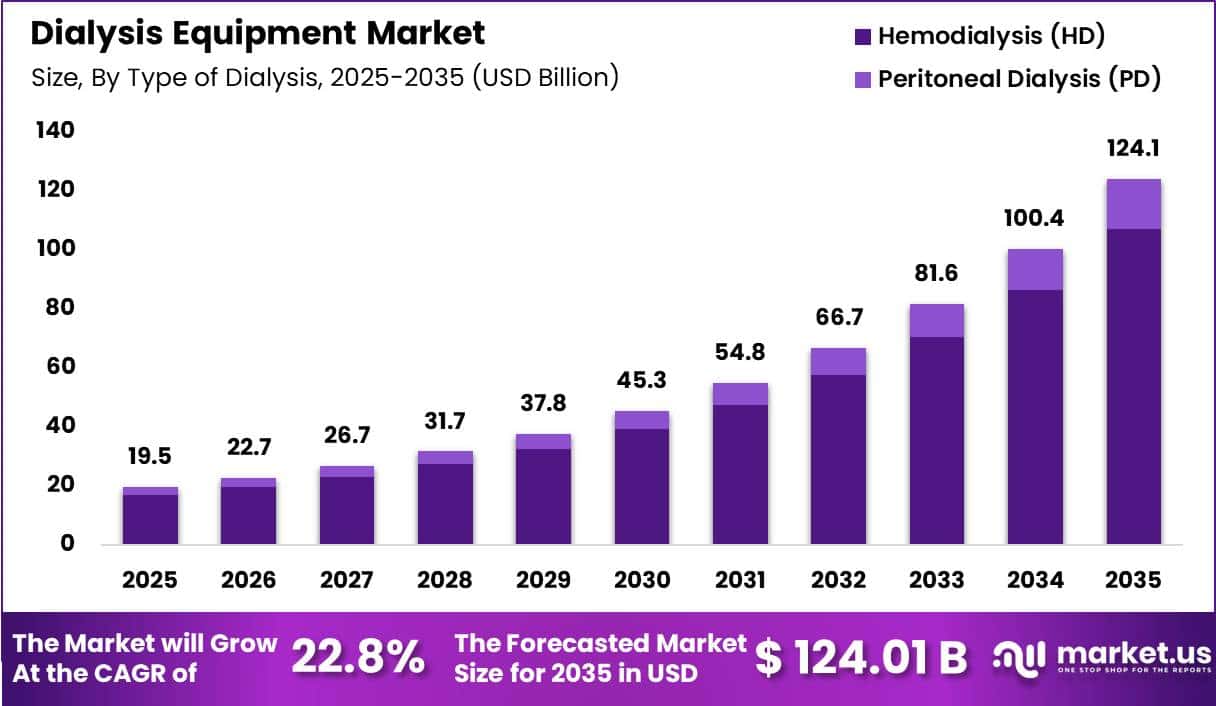
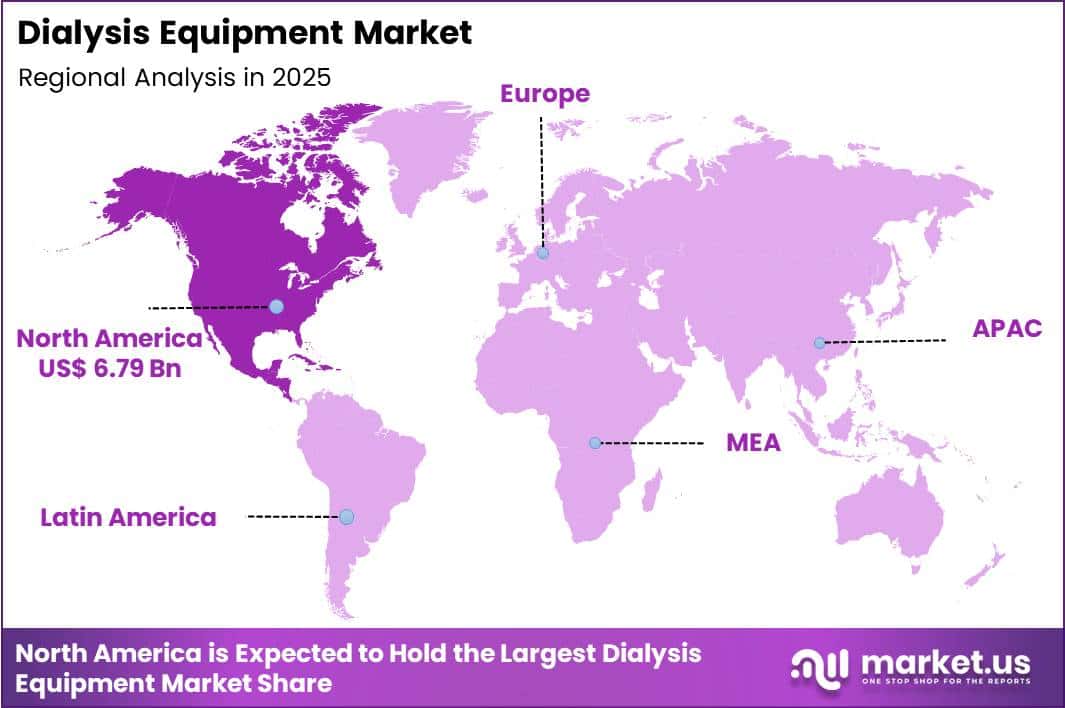
The Global Dialysis Equipment Market size is expected to be worth around US$ 124.01 Billion by 2035 from US$ 19.05 Billion in 2025, growing at a CAGR of 22.8% during the forecast period from 2026 to 2035. In 2025, North America led the market, achieving over 40.41% share with a revenue of US$ 6.79 Billion.
The global dialysis equipment market is driven by the increasing prevalence of chronic kidney disease (CKD), end-stage renal disease (ESRD), diabetes, hypertension, and the growing aging population, all of which contribute to a rising need for renal replacement therapies.
Dialysis equipment comprises hemodialysis machines, peritoneal dialysis systems, dialyzers, water purification units, blood tubing sets, and monitoring devices designed to support patients whose kidneys can no longer effectively remove waste products and excess fluids from the body.
According to the World Health Organization (WHO), chronic kidney disease is a major global public health challenge, with an estimated 674 million people affected worldwide, while millions require dialysis or kidney transplantation to survive advanced kidney failure.
Healthcare systems across developed and emerging economies are expanding dialysis infrastructure to improve access to life-sustaining treatment. At the same time, manufacturers are introducing technologically advanced equipment featuring remote patient monitoring, automated treatment controls, portable dialysis systems, and improved membrane technologies to enhance treatment efficiency and patient comfort.
Growing adoption of home dialysis therapies is also reshaping the market by reducing hospital dependence and supporting personalized patient care.
The U.S. Centers for Disease Control and Prevention (CDC) reports that more than 37 million U.S. adults are estimated to have chronic kidney disease, and approximately 90% of affected individuals are unaware they have the condition during its early stages.
Rising awareness initiatives, government-supported screening programs, and improvements in nephrology care are expected to strengthen demand for dialysis equipment globally. Increasing investments in healthcare infrastructure, coupled with ongoing innovation in renal care technologies, continue to support the long-term expansion of the dialysis equipment industry.
Key Takeaways
- Market Size: Dialysis Equipment Market size was US$19.05 billion in 2025.The market is estimated to grow to US$124.01 billion by 2035.
- Market Share: The Compound Annual Growth Rate (CAGR) of the market from 2026 to 2035 will be 22.8%.
- By Type of Dialysis: Hemodialysis has the largest market share, accounting for 86.30% of total sales.
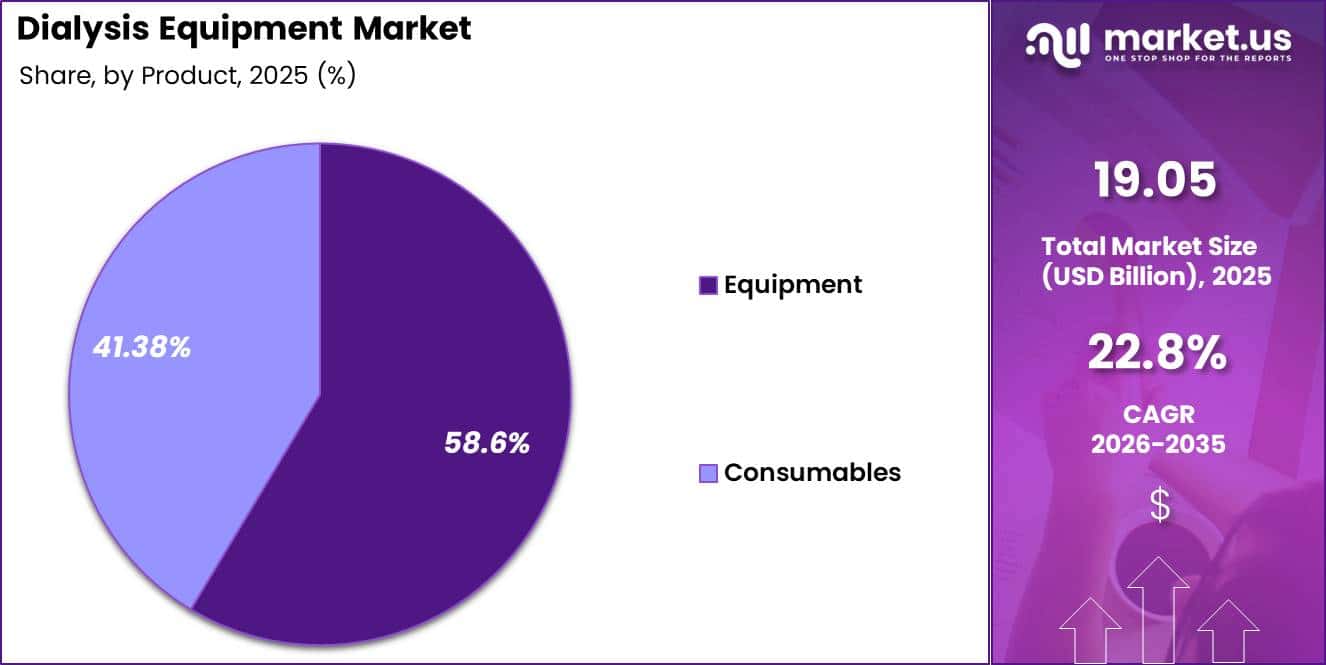
- By Product: Equipment, accounting for 58.62% of total revenue.
- By End User: Hospitals and Dialysis Centers lead the segment, accounting for 82.65% of total revenue.
- Regional: North America is the dominant regional market, accounting for 40.41% of global sales.
Type of Dialysis Analysis
The Hemodialysis segment dominated the global Dialysis Equipment Market in 2025, accounting for 86.30% of the total market share. This leadership is attributed to the widespread adoption of hemodialysis as the standard treatment for patients with end-stage renal disease (ESRD) and advanced chronic kidney disease.
Hemodialysis is extensively performed in hospitals, dedicated dialysis centers, and increasingly in home settings using advanced dialysis systems. The availability of well-established clinical infrastructure, trained healthcare professionals, and continuous improvements in dialysis machines, water treatment systems, and monitoring technologies have reinforced the segment’s dominance.
Growing patient awareness, favorable reimbursement policies in several countries, and the rising prevalence of diabetes and hypertension further support demand for hemodialysis equipment and related products. In addition, innovations focused on portable and user-friendly systems are expanding access to treatment while improving patient outcomes and operational efficiency.
The Peritoneal Dialysis (PD) segment represented 13.70% of the market in 2025. Although smaller in comparison, the segment is witnessing steady growth due to increasing preference for home-based renal replacement therapy. Peritoneal dialysis offers greater flexibility, reduced hospital visits, and improved quality of life for suitable patients.
Rising healthcare initiatives promoting home dialysis, coupled with technological advancements in automated peritoneal dialysis systems and dialysis solutions, are expected to support the segment’s continued expansion over the forecast period.
Product Analysis
The Equipment segment held the largest share of the global Dialysis Equipment Market in 2025, capturing 58.62% of total revenue. The segment includes dialysis machines, water purification systems, dialyzers, and related monitoring devices that form the backbone of renal replacement therapy.
Strong demand is driven by the increasing number of dialysis procedures performed globally, continuous replacement of aging equipment, and healthcare investments aimed at expanding dialysis infrastructure. Technological advancements such as automated monitoring, digital connectivity, compact designs, and energy-efficient systems have enhanced treatment safety and operational efficiency, encouraging healthcare providers to upgrade existing equipment.
The expansion of dialysis centers in emerging economies and the growing adoption of home hemodialysis systems have also contributed to sustained equipment demand.
The Consumables segment accounted for 41.38% of the market in 2025. This category includes dialysis tubing, bloodlines, catheters, concentrates, dialysate solutions, needles, and other single-use accessories that require frequent replacement during every dialysis session.
The recurring nature of these products creates a stable and continuous revenue stream for manufacturers. Rising dialysis patient volumes, increasing treatment frequency, and heightened focus on infection prevention continue to support demand for high-quality consumables.
Manufacturers are also introducing biocompatible materials and improved disposable products to enhance patient safety and treatment effectiveness, strengthening the long-term growth prospects of this segment.
End-User Analysis
The Hospitals and Dialysis Centers segment dominated the global Dialysis Equipment Market in 2025, accounting for 82.65% of the total market share. These facilities remain the primary providers of dialysis treatment due to their specialized infrastructure, experienced nephrology teams, and ability to manage complex renal conditions requiring continuous medical supervision.
Hospitals and dedicated dialysis centers are equipped with advanced dialysis machines, water treatment systems, and emergency care capabilities, making them the preferred choice for patients requiring regular hemodialysis.
Rising chronic kidney disease prevalence, increasing patient admissions, and expanding dialysis networks in both developed and emerging markets continue to strengthen demand from this segment. Government investments, reimbursement support, and partnerships between healthcare providers and equipment manufacturers further contribute to the segment’s leadership.
The remaining market comprises home care settings and other healthcare facilities, where adoption is gradually increasing as home-based dialysis gains wider acceptance. Improvements in portable dialysis equipment, patient training programs, remote monitoring technologies, and simplified treatment systems are enabling more patients to receive therapy outside conventional clinical settings.
Although this segment currently represents a smaller share, growing emphasis on patient convenience, reduced healthcare costs, and personalized treatment models is expected to accelerate its growth throughout the forecast period.
Market Segmentations
By Type of Dialysis
- Hemodialysis (HD)
- In-Center Hemodialysis
- Home Hemodialysis (HHD)
- Peritoneal Dialysis (PD)
- Continuous Ambulatory Peritoneal Dialysis (CAPD)
- Automated Peritoneal Dialysis (APD)
By Product
- Equipment
- Standard dialysis machines
- wearable artificial kidneys
- portable devices
- Consumables
- Dialyzers
- Catheters
- Bloodlines
- Concentrates
- fistula needles
By End-User
- Hospitals and Dialysis Centers
- Home Healthcare Settings
Driver
Home Dialysis Adoption Shifting Equipment Mix Toward Portable Platforms
Home dialysis is commercially important because it changes product mix from center-based fixed assets toward portable cyclers, remote-monitoring-enabled systems, training kits, and recurring disposables, which usually improves lifetime revenue visibility per patient even when initial machine ASPs are moderate.
NIDDK reports that 14.1% of U.S. dialysis patients were dialyzing at home by the end of 2021 and that home dialysis share increased from 11.7% in 2020, while the historical U.S. policy target under Advancing American Kidney Health aimed for 80% of new kidney-failure patients in 2025 to receive home dialysis or transplantation, showing how strongly policy has framed the modality shift even if real-world execution has been slower.
The moderation matters strategically: a 2026 JAMA Health Forum study found home dialysis utilization in ETC regions increased from 12.8% to 16.7% of attributed patient-months but did not meaningfully outperform controls, and a 2024 analysis still described ETC incentives as having little impact on uptake.
However, this does not eliminate the driver; it means vendors must win through workflow simplification, caregiver training, and reliability rather than assuming policy alone will convert patients.
Clinical data still support modality interest, with a large 2024 observational study of more than 68,000 home-dialysis starters showing home hemodialysis was associated with 22% lower cardiovascular death risk and 8% lower all-cause death risk versus peritoneal dialysis, reinforcing why providers continue investing in home-capable platforms and monitoring ecosystems even without a dramatic policy-led spike.
| Driver | (~) % Impact on CAGR Forecast | Geographic Relevance | Impact Timeline |
|---|---|---|---|
| CKD and diabetes case-load expansion lifting dialysis starts | +2.4% | North America core, EU, APAC high-density corridors, Middle East urban systems | Medium term (2-4 years) |
| Home dialysis adoption shifting equipment mix to portable and consumable-heavy platforms | +1.9% | U.S. core, Western Europe selective, Japan, Australia, urban China spill-over | Short term (≤ 2 years) |
| ESRD reimbursement and care-model updates sustaining provider capex and replacement cycles | +1.4% | U.S. core, selected OECD reimbursement-led markets | Short term (≤ 2 years) |
| Infection control and treatment quality pressure accelerating disposables and water-system upgrades | +1.3% | North America, EU, Gulf hospitals, large APAC chains | Medium term (2-4 years) |
| Cybersecurity and connected-device regulation driving software refresh and premium system procurement | +0.9% | U.S. core, EU digital-health markets, advanced APAC providers | Short term (≤ 2 years) |
| Screening, earlier referral, and integrated kidney-diabetes pathways widening pre-dialysis conversion funnel | +1.1% | U.S., UK, EU, India urban centers, Latin America tier-1 cities | Long term (≥ 4 years) |
Challenge
Materials Interface Reliability Challenges Limiting Solid State Battery Scaling
Interface instability between solid electrolytes, especially sulfide and oxide systems, and high-nickel or lithium-rich cathodes remains a central technical bottleneck, with measured interfacial resistance often 2–5× higher than liquid electrolyte systems and degradation rates that can drive >10–20% capacity loss after 500–700 cycles in early prototypes versus OEM targets of <20% loss after 1,000–1,500 cycles for EV programs.
Ceramic and glassy electrolytes typically require sintering or densification steps above 700–900°C, amplifying microcrack formation and mechanical mismatch with composite cathodes, while sulfide systems face moisture sensitivity that can raise hydrogen sulfide emissions to occupational exposure thresholds if handling controls are inadequate, forcing stricter EHS protocols that slow throughput and raise opex per MWh.
The need for complex interlayers, such as thin-film coatings and gradient compositions, adds several nanometers to micrometers of non-active material per interface, cutting effective energy density by 5–10% relative to theoretical values and increasing material cost by an estimated 10–15% at current 2026 prices for high-purity precursors.
Strategically, cell makers must expand in-house electrochemical modeling teams, scale high-throughput combinatorial screening of interfacial chemistries, allocate 20–30% of R&D budgets specifically to interface lifetime testing under abuse profiles, and maintain dual-route portfolios, including sulfide and oxide systems, to hedge against late-stage failure modes.
OEMs must also adapt product roadmaps with buffer margins on warranty terms, pack-level derating, and conservative charging strategies to avoid field reliability shocks.
| Challenge | (~) % CAGR Friction Drag | Geographic Relevance | Mitigation Horizon |
|---|---|---|---|
| Scale-up manufacturing complexity | -1.8% | East Asia hubs, NA/EU auto clusters | Long term (≥ 4 years) |
| Materials interface reliability | -1.4% | Japan/Korea R&D belts, EU labs | Long term (≥ 4 years) |
| Supply chain precursor volatility | -1.2% | Global lithium/sulfide corridors | Medium term (2-4 years) |
| Standards & safety validation load | -0.9% | NA/EU regulatory hubs, OEM programs | Medium term (2-4 years) |
| Talent & know-how concentration | -0.8% | Japan, Germany, US coastal clusters | Long term (≥ 4 years) |
| Competing battery tech adoption | -0.7% | Global EV and ESS platforms | Medium term (2-4 years) |
Restraints
Supply Chain Fragility Disrupts Critical Dialysis Equipment Components
Medical device supply chains remain structurally vulnerable, with multiple 2024–2026 alerts emphasizing shortages and vulnerabilities for critical components such as hemodialysis catheters, tubing sets, pump segments, filters, and electronics, as well as broader medtech parts, and these pressures directly translate into longer lead times and higher input costs for dialysis equipment.
Many OEMs report lead-time extensions from 8–10 weeks to 16–24 weeks on selected electronics and fluid-system components, and risk assessments show defect-per-unit (DPU) and perfect supplier delivery rates deteriorating by 2–3 % points, which forces higher safety stock and expediting fees that can raise cost of goods sold by 4–6% on key platforms.
Geopolitical tensions and logistics disruptions add volatility: freight surcharges on critical components and finished devices can spike 10–15% during acute events, while cyberattacks and ransomware incidents on medtech suppliers periodically disrupt production, causing 2–4 week outages that ripple through dialysis machine assembly schedules and delay customer deliveries.
Strategically, OEMs respond by diversifying suppliers, reshoring more of their supply chains, and investing in better analytics, but these mitigation strategies typically require 2–3 years of capital and organizational effort, with near-term impacts including higher inventory carrying costs, duplicated tooling, and a 50–100 basis point reduction in gross margin as redundant sourcing and contingency contracts are built out.
As facilities experience intermittent shortages in consumables and delays in machine deliveries, they postpone non-critical upgrades and scale back expansion projects, producing an estimated 1.2 % point deduction from the global dialysis equipment CAGR in the 2026–2030 window as volatility constrains both manufacturers’ shipment volumes and providers’ willingness to assume delivery risk on major refresh programs.
| Restraint | (~) % Impact on CAGR Forecast | Geographic Relevance | Impact Timeline |
|---|---|---|---|
| Escalating regulatory burden and compliance costs | -1.6% | North America core, EU, Japan | Medium term (2–4 years) |
| Reimbursement pressure and ESRD payment rate constraints | -1.4% | North America core, EU | Medium term (2–4 years) |
| Supply chain fragility for critical components | -1.2% | North America, EU, APAC corridors | Short to medium term (≤ 4 years) |
| Capital intensity and delayed CapEx by providers | -1.0% | Global, especially emerging markets | Medium to long term (≥ 3–5 years) |
| Workforce shortages and operational capacity limits | -0.9% | North America core, EU, selected APAC | Short to medium term (≤ 4 years) |
| Slow adoption of home and advanced modalities | -0.8% | Global, strongest in Latin America, Africa, parts of APAC | Long term (≥ 4 years) |
Opportunity
Value-Based Dialysis Care Bundles: Creating Outcome-Driven Growth Opportunities
Value-based dialysis care bundles are a future opportunity rather than a present driver because most reimbursement regimes still pay per session or via composite rate structures that largely ignore longitudinal outcome guarantees, despite growing policy interest in risk-sharing models for chronic disease management.
CKD prevalence among adults over 30 years is projected to rise toward roughly 16–17% by 2030 in some large economies, while ESRD incidence and prevalence continue to expand, stretching payer budgets and intensifying pressure to improve cost-effectiveness of dialysis pathways.
Economic evaluations indicate that more frequent or optimized home hemodialysis can reduce cardiovascular hospitalization and infection-related admissions, meaning that an integrated bundle of equipment, consumables, monitoring, and algorithm-guided care protocols has room to capture 5–10% of total dialysis spend in savings for payers while reserving 2–3% as outcome-linked upside for vendors.
If manufacturers reposition from hardware sellers to risk-sharing solution providers, offering, for example, five-year outcome-based contracts that guarantee reductions in hospital days per patient year, lower catheter-related complication rates, and improved treatment adherence via connected equipment, they can justify premium pricing for devices optimized for value-based pathways and unlock 4–6 billion dollars of additional equipment and software revenues by 2032 across North America and core EU markets.
Because baseline dialysis equipment forecasts rarely assume large-scale payment reform or vendor participation in risk pools, proactive investment over the next 2–4 years in clinical data assets, predictive algorithms, and contracting capabilities could plausibly add about 0.8 % points to CAGR versus the status quo by monetizing reduced total cost of care through differentiated equipment and service bundles.
| Opportunity | (~) % Potential CAGR Upside | Geographic Relevance | Execution Window |
|---|---|---|---|
| Home-first dialysis platformization | +1.0% | North America, EU, APAC urban | Short term |
| Value-based dialysis care bundles | +0.8% | North America core, EU | Medium term |
| Emerging-market micro-center networks | +0.9% | APAC, LATAM, Africa | Medium term |
| AI-enabled predictive maintenance & triage | +0.6% | Global tertiary hubs | Short term |
| Integrated diabetes–kidney tech ecosystems | +0.7% | North America, EU, GCC, East Asia | Long term |
| Wearable and compact home HD devices | +1.1% | High-income, selected middle-income | Long term |
Regional Analysis
In 2025, North America led the market, achieving over 40.41% share with a revenue of US$6.79 billion.
North America dominated the global dialysis equipment market in 2025, leadership is supported by the high prevalence of chronic kidney disease (CKD), end-stage renal disease (ESRD), diabetes, and hypertension, all of which significantly increase the demand for dialysis treatment. An aging population and growing incidence of lifestyle-related disorders continue to expand the patient pool requiring long-term renal replacement therapy.
The United States represents the largest contributor to regional revenue due to its well-established healthcare infrastructure, extensive network of dialysis centers, and favorable reimbursement policies that improve patient access to treatment. Canada also contributes steadily through universal healthcare coverage and increasing investments in nephrology services.
North America is at the forefront of technological innovation, with widespread adoption of advanced hemodialysis systems, portable dialysis devices, digital patient monitoring solutions, and home-based dialysis therapies.
Strong research and development activities, along with continuous product launches by leading medical device manufacturers, further strengthen the regional market.
Additionally, growing awareness regarding early kidney disease diagnosis, government initiatives supporting chronic disease management, and increasing preference for home dialysis solutions are expected to sustain North America’s leadership position while driving continued market expansion throughout the forecast period.
Key Regions and Countries
North America
- The US
- Canada
Europe
- Germany
- France
- The U.K.
- Italy
- Spain
- Russia & CIS
- Rest of Europe
Asia Pacific
- China
- India
- Japan
- South Korea
- ASEAN
- Australia & New Zealand
- Rest of Asia Pacific
Middle East & Africa
- GCC
- South Africa
- Rest of Middle East & Africa
Latin America
- Brazil
- Mexico
- Rest of Latin America
Key Player Analysis
The global dialysis equipment market is moderately consolidated, with a mix of multinational medical technology companies, dialysis service providers, and specialized renal care manufacturers competing across equipment, consumables, and integrated treatment solutions.
Competition is driven by technological innovation, expanding home dialysis capabilities, digital patient monitoring, and the development of efficient dialysis systems that improve clinical outcomes while reducing operational costs. Market participants are increasingly investing in connected healthcare platforms, automation, and sustainable manufacturing to strengthen their long-term competitive positions.
Leading participants include Fresenius Medical Care AG & Co. KGaA, DaVita Inc., Baxter International Inc., B. Braun SE (Avitum Division), Nipro Corporation, Nikkiso Co., Ltd., Asahi Kasei Corporation, Medtronic Plc, Becton, Dickinson and Company (BD), Terumo Corporation, Teleflex Incorporated, Diaverum, Rockwell Medical, Inc., AngioDynamics Inc., and NxStage Medical (Fresenius subsidiary).
These companies emphasize continuous R&D to develop advanced hemodialysis machines, high-performance dialyzers, vascular access technologies, and remote patient management solutions. Strategic partnerships with hospitals, nephrology centers, and healthcare providers enable broader technology adoption and improved treatment accessibility.
Product innovation focuses on enhancing user-friendly interfaces, portable and home-based dialysis systems, biocompatible materials, infection prevention, and treatment precision. Workflow integration through digital platforms, predictive maintenance, electronic health record connectivity, and data analytics supports greater operational efficiency for providers.
As competition evolves, ecosystem-based strategies combining equipment, consumables, clinical services, digital health solutions, and long-term patient support are becoming increasingly important, enabling companies to deliver comprehensive renal care while strengthening customer loyalty and expanding their global market presence.
Top Key Players
- Fresenius Medical Care AG & Co. KGaA
- DaVita Inc.
- Baxter International Inc.
- B. Braun SE (Avitum Division)
- Nipro Corporation
- Nikkiso Co., Ltd.
- Asahi Kasei Corporation
- Medtronic Plc
- Becton, Dickinson and Company (BD)
- Terumo Corporation
- Teleflex Incorporated
- Diaverum
- Rockwell Medical, Inc.
- AngioDynamics Inc.
- NxStage Medical (Fresenius subsidiary)
Recent Developments
- In June 2025, Fresenius Medical began broader U.S. commercialization of its 5008X CAREsystem after receiving FDA clearance, enabling expansion of high-volume hemodiafiltration (HVHDF) therapy across the United States.
- In June 2025, Nipro Corporation launched the LiniXia Reverse Osmosis (RO) Water Treatment System and LiniXia PRO at the ERA 2025 Congress. The new platform expands Nipro’s dialysis infrastructure portfolio with next-generation water purification technology for dialysis clinics.
- In June 2026, Fresenius Medical Care globally launched Kinexus, a unified digital platform that integrates remote monitoring and workflow management for both peritoneal dialysis and home hemodialysis programs, strengthening connected home dialysis care.
Report Scope
| Report Features | Description |
|---|---|
| Market Value (2025) | US$ 19.05 Billion |
| Forecast Revenue (2035) | US$ 124.01 Billion |
| CAGR (2026-2035) | 22.8% |
| Base Year for Estimation | 2025 |
| Historic Period | 2020-2024 |
| Forecast Period | 2026-2035 |
| Report Coverage | Revenue Forecast, Market Dynamics, Competitive Landscape, Recent Developments |
| Segments Covered | By Type of Dialysis (Hemodialysis (HD)(In-Center Hemodialysis, Home Hemodialysis (HHD))Peritoneal Dialysis (PD)(Continuous Ambulatory Peritoneal Dialysis (CAPD), Automated Peritoneal Dialysis (APD)) By Product (Equipment(Standard dialysis machines, wearable artificial kidneys, portable devices)Consumables(Dialyzers, Catheters, Bloodlines, Concentrates, fistula needles)))By End-User(Hospitals and Dialysis Centers, Home Healthcare Settings ) |
| Regional Analysis | North America – The US, Canada; Europe – Germany, France, U.K., Italy, Spain, Russia & CIS, Rest of Europe; Asia Pacific – China, India, Japan, South Korea, ASEAN, Australia & New Zealand, Rest of Asia Pacific; Middle East & Africa – GCC, South Africa, Rest of Middle East & Africa; Latin America – Brazil, Mexico, Rest of Latin America |
| Competitive Landscape | Fresenius Medical Care AG & Co. KGaA, DaVita Inc., Baxter International Inc.,B. Braun SE (Avitum Division) , Nipro Corporation, Nikkiso Co., Ltd., Asahi Kasei Corporation, Medtronic Plc, Becton, Dickinson and Company (BD) , Terumo Corporation, Teleflex Incorporated, Diaverum, Rockwell Medical, Inc., AngioDynamics Inc., NxStage Medical (Fresenius subsidiary) |
| Customization Scope | Customization for segments, region/country-level will be provided. Moreover, additional customization can be done based on the requirements. |
| Purchase Options | We have three licenses to opt for: Single User License, Multi-User License (Up to 5 Users), Corporate Use License (Unlimited User and Printable PDF) |





































