


Market Overview
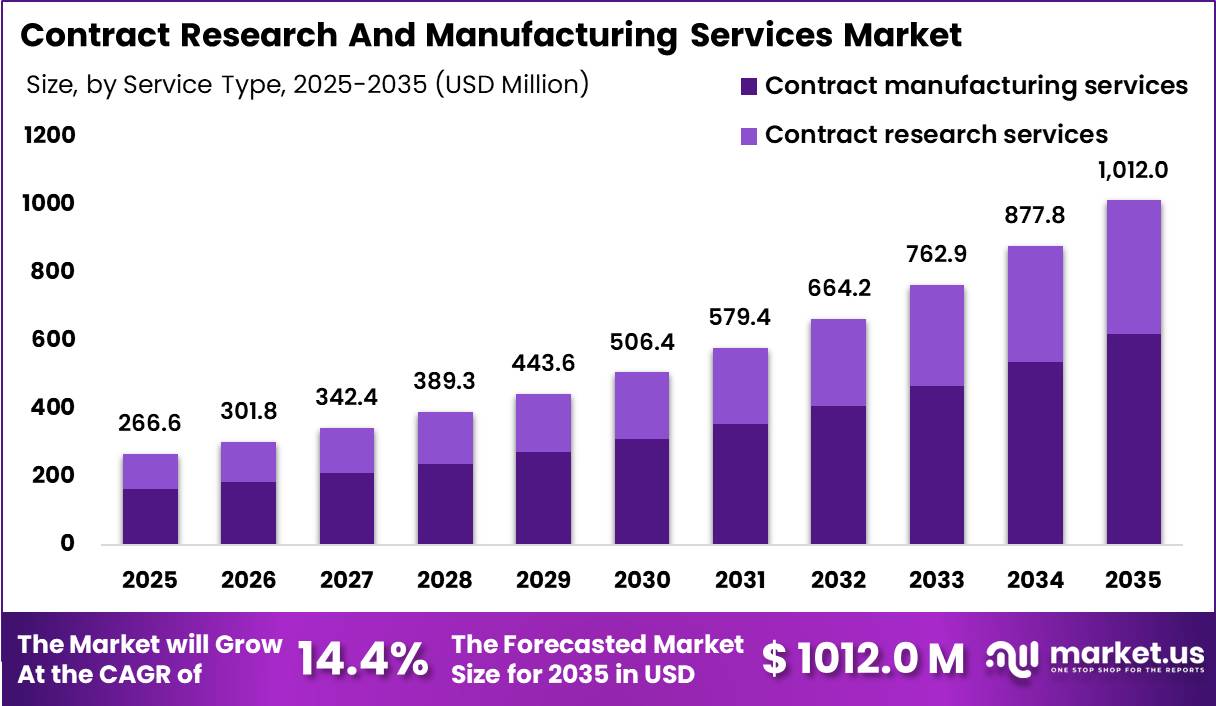
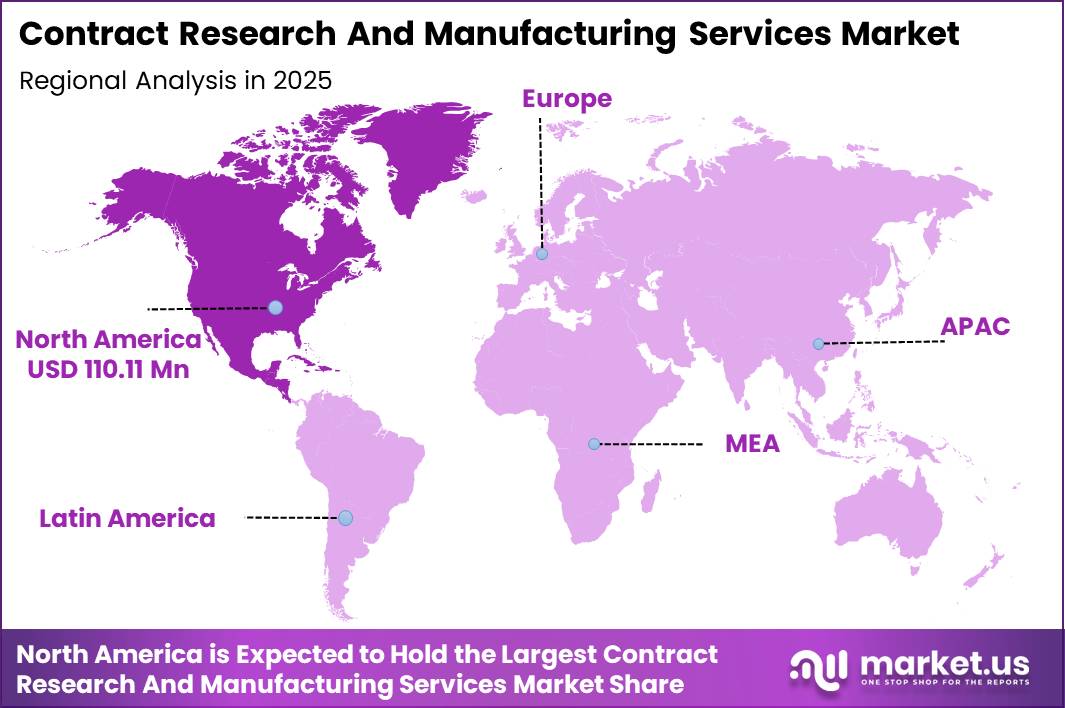
Global Contract Research and Manufacturing Services Market size is expected to be worth around US$ 1,012.0 Million by 2035 from US$ 266.6 Million in 2025, growing at a CAGR of 14.4% during the forecast period from 2026 to 2035. In 2025, North America led the market, achieving over 41.3% share with a revenue of US$ 110.11 Million.
The global Contract Research and Manufacturing Services (CRAMS) Market is becoming an essential part of the pharmaceutical and biotechnology industry as companies increasingly outsource drug discovery, development, clinical research, and commercial manufacturing to specialized service providers. CRAMS enables pharmaceutical firms to reduce development costs, shorten timelines, and access advanced technologies without investing heavily in in-house infrastructure.
Growing pipelines of biologics, cell and gene therapies, biosimilars, and personalized medicines are further increasing demand for integrated research and manufacturing partners. Regulatory agencies such as the U.S. Food and Drug Administration (FDA) continue to emphasize compliance with current Good Manufacturing Practices (cGMP), data integrity, and product quality, encouraging pharmaceutical companies to collaborate with experienced contract manufacturers that meet global quality standards.
The market is also supported by rising pharmaceutical innovation and increasing clinical development activity. According to the FDA, 2024 witnessed dozens of novel drug therapy approvals, reflecting continued investment in innovative medicines that require specialized research, analytical testing, process development, and manufacturing capabilities.
The FDA also publishes annual Investigational New Drug (IND) activity reports, highlighting a steady flow of drug candidates entering clinical development, which creates sustained demand for CRAMS providers throughout the product lifecycle.
Furthermore, the FDA’s FY2024 State of Pharmaceutical Quality Report identified 4,619 drug manufacturing sites globally, with 41% located in the United States, and reported 989 drug quality inspections during the fiscal year, underscoring the importance of robust manufacturing networks and regulatory compliance.
As pharmaceutical outsourcing expands across small molecules, biologics, and advanced therapies, CRAMS providers are expected to remain critical partners in accelerating innovation, improving supply chain resilience, and supporting global commercialization.
Key Takeaways
- Market Size: The Global Contract Research and Manufacturing Services Market size was US$ 266.6 Million in 2025. The market is estimated to grow to US$ 1,012.0 Million by 2035.
- Market Share: The Compound Annual Growth Rate (CAGR) of the market from 2026 to 2035 will be 14.4%.
- Service Type: Contract Manufacturing Services has the largest market share, accounting for 61.2% of total sales.
- Product: API/Bulk-Drug Services dominates the segment, accounting for 41.2% of total revenue.
- End User: Pharmaceutical & Biotech Companies dominate the segment, accounting for 61.2% of total revenue.
- Application: Monoclonal Antibodies (mAbs) lead the segment, accounting for 40.1% of total revenue.
- Regional: North America is the dominant regional market, accounting for 41.3% of global sales.
Service Type Analysis
The contract manufacturing services segment dominated the Contract Research and Manufacturing Services (CRAMS) market in 2025, accounting for 61.2% of the total market share. The segment’s leadership is driven by the increasing outsourcing of commercial-scale production, active pharmaceutical ingredient (API) manufacturing, formulation development, fill-finish operations, and packaging for pharmaceutical and biotechnology companies.
Growing demand for biologics, biosimilars, and high-potency drugs has encouraged manufacturers to partner with specialized contract manufacturing organizations (CMOs) that offer regulatory compliance, advanced production technologies, and global supply capabilities. Rising investments in flexible manufacturing facilities and continuous manufacturing technologies have further strengthened this segment.
Pharmaceutical companies also rely on CMOs to reduce capital expenditure, accelerate product launches, and improve production scalability. The contract research services segment captured 38.8% of the market in 2025. Growth is supported by increasing outsourcing of preclinical studies, clinical trials, bioanalytical testing, regulatory consulting, and laboratory services.
Small and mid-sized biotechnology companies particularly depend on contract research organizations (CROs) to access scientific expertise, reduce research costs, and shorten development timelines. Increasing clinical trial activity and expanding drug pipelines continue to create steady demand for specialized research services worldwide.
Product Analysis
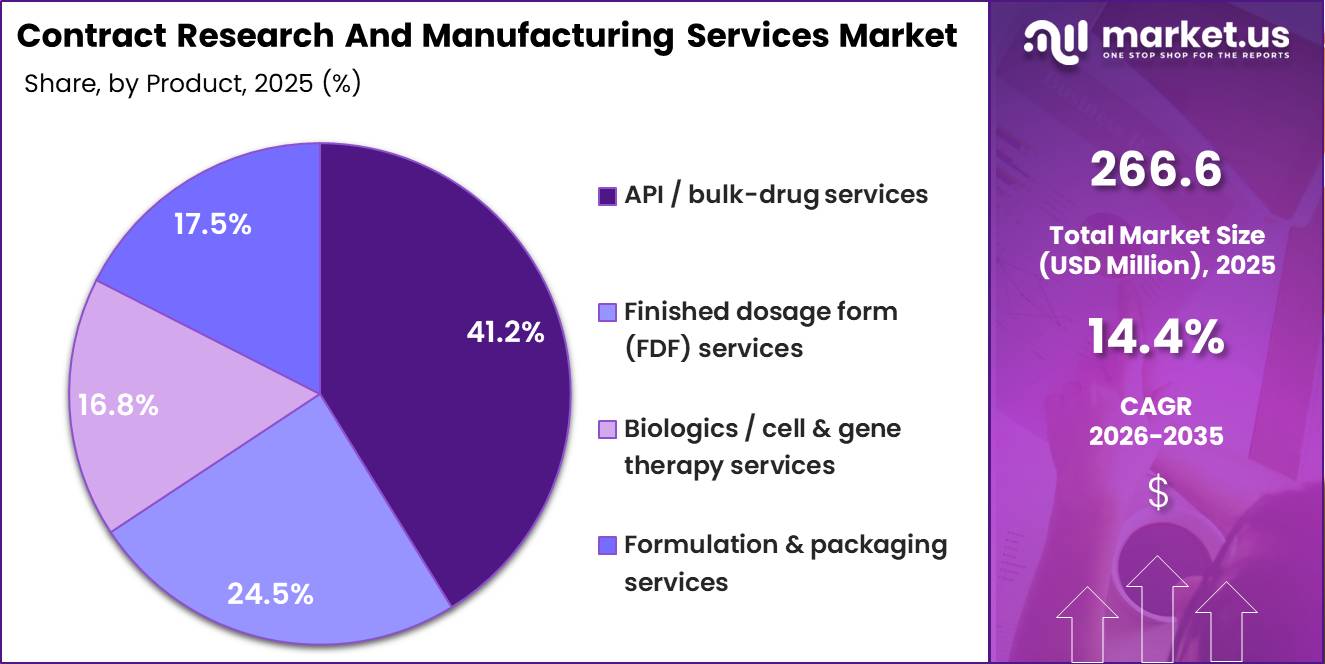
The API / bulk-drug services segment held the largest share of the Contract Research and Manufacturing Services market in 2025, representing 41.2% of total revenue. The dominance of this segment is attributed to rising global demand for active pharmaceutical ingredients used in branded drugs, generic medicines, and specialty therapeutics.
Pharmaceutical companies increasingly outsource API production to improve manufacturing efficiency, optimize costs, and ensure compliance with stringent quality regulations. Growing demand for high-potency APIs and complex molecules has further strengthened the segment, supported investments in advanced synthesis technologies and dedicated manufacturing facilities.
The finished dosage form (FDF) services segment accounted for 24.5% of the market, driven by increasing outsourcing of tablet, capsule, injectable, and oral liquid manufacturing. Formulation & packaging services represented 17.5%, supported by demand for innovative drug delivery systems, serialization, labeling, and patient-friendly packaging solutions.
Meanwhile, biologics/cell & gene therapy services captured 16.8% of the market as pharmaceutical companies expanded investments in monoclonal antibodies, cell therapies, viral vectors, and other advanced biologics requiring specialized development, manufacturing expertise, and highly controlled production environments.
End-user Analysis
The pharmaceutical & biotech companies segment dominated the Contract Research and Manufacturing Services market in 2025, accounting for 61.2% of total market share. The segment’s leadership is driven by increasing outsourcing of research, clinical development, manufacturing, analytical testing, and commercial production to improve operational efficiency and reduce development costs.
Expanding drug pipelines, rising biologics production, growing investments in precision medicine, and increasing regulatory complexity continue to encourage pharmaceutical and biotechnology firms to collaborate with contract service providers. The growing number of small and emerging biotech companies without in-house manufacturing infrastructure has also significantly contributed to segment growth.
The medical device companies segment accounted for a notable share as manufacturers increasingly outsourced product testing, sterilization, regulatory support, and specialized manufacturing services to accelerate product commercialization while maintaining quality standards.
The academic & research / other segment also contributed steadily to market expansion, supported collaborative research programs, government-funded drug discovery initiatives, university-based clinical studies, and partnerships with contract organizations for laboratory services, process development, and early-stage therapeutic research. Increasing public-private collaborations continue to support demand across these end-user categories.
Application Analysis
The monoclonal antibodies (mAbs) segment dominated the Contract Research and Manufacturing Services market in 2025, accounting for 40.1% of total market share. Strong demand for targeted biologic therapies across oncology, autoimmune disorders, infectious diseases, and inflammatory conditions has significantly increased outsourcing of antibody development and manufacturing.
Pharmaceutical companies increasingly rely on specialized CRAMS providers for cell line development, process optimization, analytical testing, large-scale biomanufacturing, and fill-finish operations. Continuous innovation in antibody engineering and expanding approvals of biologic therapies have further reinforced the segment’s market leadership.
The vaccines and viral vectors segment also represented a significant portion of the market, supported increasing investments in infectious disease prevention, pandemic preparedness, gene therapy development, and advanced vaccine technologies. Growing clinical research activities and commercial manufacturing requirements continue to drive outsourcing in this area.
The other biologics segment, including recombinant proteins, biosimilars, enzymes, and plasma-derived therapies, also experienced healthy growth due to expanding applications in chronic disease treatment and precision medicine. Increasing demand for specialized manufacturing capabilities and regulatory expertise continues to support CRAMS adoption across diverse biologic applications.
Key Market Segments
By Service Type
- Contract Manufacturing Services
- Contract Research Services
By Product
- API/Bulk-Drug Services
- Finished Dosage Form (FDF) Services
- Biologics/Cell & Gene Therapy Services
- Formulation & Packaging Services
By End User
- Pharmaceutical & Biotech Companies
- Medical Device Companies
- Academic & Research/Other
By Application
- Monoclonal Antibodies (mAbs)
- Vaccines and Viral Vectors
- Other Biologics
Drivers
Biologics and injectable outsourcing mix shift
The strongest structural driver in 2026 is the continued migration of development pipelines toward biologics, complex injectables, and high-containment modalities, which raises outsourcing intensity per asset because sponsors need specialized cell-line development, process characterization, sterile formulation, and validated fill-finish capacity rather than commodity small-molecule production.
FDA’s CDER approved 50 novel drugs in 2024 and 46 in 2025, sustaining a two-year flow of complex assets into scale-up and launch planning, while third-party reporting on the 2024 approval mix indicates 18 biologic entities among the 50 approvals, implying a biologics share near 36% for that year alone. Commercially, this changes CRAMS economics from labour-arbitrage manufacturing toward capability monetisation.
Batch failure risk is costlier, tech transfer timelines lengthen, and customers accept multi-year reservation fees for microbial, mammalian, and aseptic lines. The result is a higher revenue yield per program, more bundled contracts across development and manufacturing, and a measurable uplift to market growth as biologic programs generally require broader external service stacks than traditional oral solids.
| Driver | (~) % Impact on CAGR Forecast | Geographic Relevance | Impact Timeline |
|---|---|---|---|
| Biologics and injectable outsourcing mix shift | +2.4% | North America core, EU, Japan, South Korea, India spill-over | Medium term (2-4 years) |
| Capacity localization and supply-chain de-risking | +1.9% | US core, EU core, India and Singapore corridors | Medium term (2-4 years) |
| Biosecure Act and sponsor reallocation from China-linked vendors | +1.6% | US core, EU selective, India and South Korea gainers | Short term (≤ 2 years) |
| GLP-1 and high-volume fill-finish expansion cycle | +1.4% | US, Denmark, Belgium, Italy, APAC sterile hubs | Short term (≤ 2 years) |
| Quality remediation and sterile shortage resilience spending | +1.2% | US core, EU core, Canada, Australia | Short term (≤ 2 years) |
| Small-biotech virtual model and milestone-based outsourcing | +1.0% | North America core, EU biotech clusters, China spill-over, India | Medium term (2-4 years) |
Challenges
Biologics CRAMS Capacity Constraints Limit Market Growth Potential
Across monoclonal antibodies, recombinant proteins, viral vectors, and mRNA platforms, biologics Contract Research and Manufacturing Services (CRAMS) continue to experience elevated capacity utilization in 2026, particularly across leading CDMO hubs in North America, Europe, and Asia-Pacific.
Strong demand for commercial biologics and advanced therapy programs has resulted in extended production scheduling, with many facilities reporting long lead times for manufacturing slot reservations.
Operationally, biologics facilities continue to face challenges associated with multi-product manufacturing, including longer campaign changeovers, cleaning validation requirements, and extensive regulatory documentation. Single-use bioreactor platforms have improved operational flexibility; however, available manufacturing slots remain constrained as CDMOs prioritize commercial products and late-stage clinical programs.
Consequently, many facilities limit the number of concurrent projects to maintain quality compliance, regulatory readiness, and manufacturing reliability. To address these constraints, major biologics CDMOs are investing heavily in new manufacturing infrastructure through greenfield facilities, brownfield expansions, and modular single-use production suites across the United States, Europe, South Korea, Singapore, and China.
These investments are expected to gradually expand global biologics manufacturing capacity over the next several years. Nevertheless, because facility construction, qualification, and regulatory validation require multiple years, supply-demand imbalances are expected to persist in the near term.
As a result, biopharmaceutical sponsors are increasingly adopting dual-sourcing strategies, securing manufacturing capacity earlier in development, and incorporating additional schedule contingencies and higher manufacturing costs into commercialization planning until new capacity becomes fully operational.
| Challenge | (~) % CAGR Friction Drag | Geographic Relevance | Mitigation Horizon |
|---|---|---|---|
| Biologics capacity tightness | -1.6% | North America, EU5, East Asia | Medium term (2-4 years) |
| Senior talent and QA gap | -1.3% | North America core, EU hubs, India | Long term (≥ 4 years) |
| Regulatory complexity overload | -1.1% | US, EU, Japan, China | Long term (≥ 4 years) |
| Supply chain and lead-time volatility | -1.0% | APAC corridors, Transatlantic lanes | Medium term (2-4 years) |
| Digital and data integration lag | -0.9% | Global mid-tier CDMOs | Medium term (2-4 years) |
| Client concentration and margin pressure | -0.8% | US/EU large pharma-focused sites | Short term (≤ 2 years) |
Restraints
Regulatory divergence and slower PAC / tech transfer approvals
Regulatory divergence and post approval change PAC friction are adding meaningful latency to CRAMS revenue realization as multi jurisdiction filings across the US, EU, China, and emerging markets require divergent expectations on stability data, analytical methods, and digital validation, with PAC implementation for seemingly low risk changes such as supplier switches, site transfers, or process optimizations often taking 12 to 24 months end to end rather than the 6 to 9 months assumed in business cases.
While the EMA and FDA have introduced regulatory pathways such as mutual recognition and reliance models, their scope remains limited. The absence of harmonized expectations for concurrent stability studies, AI-enabled data integrity, and quality system documentation forces CDMOs and CROs to maintain parallel validation and stability programs for different jurisdictions.
As a result, regulatory project costs increase by approximately 10–20%, while scarce regulatory affairs and CMC resources are diverted from supporting additional client programs. This duplication reduces operational efficiency and slows the execution of outsourcing projects, particularly for companies operating across multiple global markets.
The impact is especially evident during technology transfers, where changing a manufacturing site or scaling production for a late-stage asset can require 6–12 additional variation filings across major regulatory markets. These submissions demand hundreds of extra analyst hours and can delay the first commercial batches from the new facility by 3–6 months.
Such delays postpone the realization of several hundred million dollars in potential product revenue across portfolios while extending the payback period for capital investments in new CRAMS facilities. Consequently, higher investment hurdle rates make company boards more cautious about approving greenfield biologics and sterile fill-finish projects, ultimately reducing the potential outsourcing market growth rate by nearly 1 % point compared with a more harmonized regulatory environment.
| Restraint | (~) % Impact on CAGR Forecast | Geographic Relevance | Impact Timeline |
|---|---|---|---|
| Capacity and talent bottlenecks in complex modalities | -1.2% | North America core, EU, APAC corridors | Medium term (2–4 years) |
| Regulatory divergence and slower PAC / tech-transfer approvals | -0.9% | US, EU, China, multi-country filings | Medium term (2–4 years) |
| Cost inflation in inputs, energy, and compliance | -0.8% | Global, esp. EU and energy-importing APAC | Short term (≤ 2 years) |
| Funding cyclicality in biotech pipeline and small sponsor risk | -0.7% | US, EU biotech hubs, China innovation zones | Short term (≤ 2 years) |
| IP, data integrity, and supply chain localization pressures | -0.6% | US, EU, China, India | Long term (≥ 4 years) |
| Overdependence on limited CDMO partners and site concentration risk | -0.5% | Global large-pharma outsourcing base | Medium term (2–4 years) |
Opportunity
Biologics fill finish roll up
This is better positioned as a market opportunity rather than a market driver because baseline CRAMS growth already incorporates routine outsourcing demand. The greater upside lies in consolidating fragmented sterile and biologics fill-finish assets into integrated multi-site networks capable of capturing pricing inefficiencies and cross-selling higher-value services that are not yet reflected in existing contracts.
With biologics pipelines exceeding 400 active outsourced programs and biologics CDMO demand growing materially faster than the broader CRAMS market, while sterile manufacturing capacity remains constrained, strategic acquirers have an opportunity to acquire underutilized regional facilities at sub-scale EBITDA multiples.
By increasing asset utilization from approximately 50–60% to 75–85%, adding premium services such as quality control release testing, device assembly, packaging, and regulatory support, companies can improve blended gross margins by an estimated 400–700 basis points.
These operational and commercial synergies create meaningful long-term value, with integrated cross-border fill-finish platforms potentially generating approximately 2.4 % points of incremental CAGR above baseline growth before industry capacity constraints begin to ease.
| Opportunity | (~) % Potential CAGR Upside | Geographic Relevance | Execution Window |
|---|---|---|---|
| Biologics fill-finish roll-up | +2.4% | North America core, EU, India, Singapore | Short term (≤ 2 years) |
| CGT automation platforms | +2.9% | US, EU, Japan, South Korea | Medium term (2-4 years) |
| Biosimilar launch partnerships | +2.1% | EU, US, India, LatAm | Short term (≤ 2 years) |
| India integrated CRDMO clusters | +1.8% | India, EU, US supply diversification | Medium term (2-4 years) |
| DCT-led development bundling | +1.5% | US, EU, APAC urban markets | Short term (≤ 2 years) |
| WHO/emerging-market registration engine | +1.3% | Africa, MENA, South Asia, ASEAN frontier | Medium term (2-4 years) |
Regional Analysis
In 2025, North America led the market, achieving over 41.3% share with a revenue of US$ 110.11 Million. The region’s leadership is supported by the strong presence of global pharmaceutical and biotechnology companies, advanced research infrastructure, and a well-established network of contract research organizations (CROs) and contract development and manufacturing organizations (CDMOs).
The United States remains the primary growth engine due to high pharmaceutical R&D spending, increasing biologics development, and favorable regulatory oversight from the U.S. Food and Drug Administration (FDA). Rising outsourcing of clinical trials, analytical testing, API production, and commercial manufacturing continues to strengthen regional demand.
In addition, growing investments in cell and gene therapies, precision medicine, and high-potency pharmaceuticals are driving long-term expansion across the region.
Europe represented the second-largest regional market, supported by strong pharmaceutical manufacturing capabilities, advanced biologics research, and harmonized regulatory standards across major countries such as Germany, Switzerland, France, and the United Kingdom.
Asia-Pacific is expected to register the fastest growth during the forecast period owing to competitive manufacturing costs, expanding pharmaceutical production, increasing clinical trial activity, and government support for life sciences. China, India, South Korea, and Singapore continue to attract global outsourcing projects through expanding CDMO capacity and skilled scientific talent.
Meanwhile, Latin America and the Middle East & Africa are experiencing steady growth as healthcare infrastructure improves, pharmaceutical investments increase, and multinational companies expand regional manufacturing and research partnerships.
Key Regions and Countries
North America
- The US
- Canada
Europe
- Germany
- France
- The U.K.
- Italy
- Spain
- Russia & CIS
- Rest of Europe
Asia Pacific
- China
- India
- Japan
- South Korea
- ASEAN
- Australia & New Zealand
- Rest of Asia Pacific
Middle East & Africa
- GCC
- South Africa
- Rest of Middle East & Africa
Latin America
- Brazil
- Mexico
- Rest of Latin America
Key Player Analysis
Competitive advantage in the global contract research and manufacturing services (CRAMS) market is driven by integrated CDMO capabilities that encompass API synthesis, finished dosage form (FDF) manufacturing, biologics production, formulation development, and packaging services.
Leading providers differentiate themselves through established regulatory compliance infrastructure that supports FDA, EMA, and ICH submission requirements across multiple product formats. Continuous investments in biologics, as well as cell and gene therapy manufacturing capacity, further strengthen their market position by addressing the fastest-growing product segments.
Major strategic priorities among leading CDMO providers include expanding monoclonal antibody (mAb) and biologics manufacturing capacity through investments in large-scale bioreactors and single-use bioprocessing technologies. Companies are also focusing on developing integrated contract research and manufacturing service offerings that enable end-to-end pharmaceutical development partnerships with biotechnology firms.
In addition, significant investments are being directed toward expanding manufacturing infrastructure across the Asia Pacific region to provide cost-competitive API and FDF production capacity for pharmaceutical and biotechnology companies.
Strong institutional relationships with pharmaceutical and biotechnology companies, supported by growing service capabilities for academic and research organizations, remain a critical competitive differentiator, particularly in the dominant API and monoclonal antibody manufacturing service segments globally.
Top Key Players
- Thermo Fisher Scientific Inc.
- Catalent, Inc.
- Lonza Group Ltd.
- Boehringer Ingelheim Biopharmaceuticals GmbH
- AbbVie Inc.
- Samsung Biologics
- WuXi AppTec / WuXi Biologics
- Grifols, S.A.
- Baxter BioPharma Solutions
- Recipharm AB
- Eurofins Scientific
- Evonik Industries AG
- Fresenius Kabi
- Vetter Pharma-Fertigung GmbH & Co. KG
- Dalton Pharma Services
- Other Key Players
Recent Developments
- In January 2026, Lonza Group Ltd. expanded its monoclonal antibody biologic manufacturing capacity at its Visp, Switzerland facility with new 2,000-liter bioreactor suites, targeting pharmaceutical and biotechnology company institutional clients requiring GMP commercial-scale mAb production capacity for late-stage clinical and commercial supply programs.
- In February 2026, Samsung Biologics commissioned a new 180,000-liter biologics manufacturing plant at its Incheon, South Korea campus, targeting global pharmaceutical company clients seeking Asia Pacific-based large-scale mAb and biologic drug substance manufacturing capacity to diversify supply chains beyond North American and European CDMO providers.
- In March 2026, Catalent, Inc. launched an expanded cell and gene therapy CDMO service offering integrating viral vector manufacturing and finished dosage form fill-finish capabilities, targeting biotechnology company clients advancing CAR-T and gene therapy programs requiring integrated clinical and commercial manufacturing partnerships.
- In April 2026, Thermo Fisher Scientific Inc. secured a multi-year contract manufacturing agreement with a leading global pharmaceutical company covering API synthesis, formulation development, and finished dosage form packaging services, expanding its integrated CDMO service presence across the client’s small molecule pharmaceutical development pipeline.
Report Scope
| Report Features | Description |
|---|---|
| Market Value (2025) | US$ 266.6 Million |
| Forecast Revenue (2035) | US$ 1,012.0 Million |
| CAGR (2026-2035) | 14.4% |
| Base Year for Estimation | 2025 |
| Historic Period | 2020-2024 |
| Forecast Period | 2026-2035 |
| Report Coverage | Revenue Forecast, Market Dynamics, Competitive Landscape, Recent Developments |
| Segments Covered | By Service Type (Contract Manufacturing Services, Contract Research Services), By Product (API/Bulk-Drug Services, Finished Dosage Form (FDF) Services, Biologics/Cell & Gene Therapy Services, Formulation & Packaging Services), By End User (Pharmaceutical & Biotech Companies, Medical Device Companies, Academic & Research/Other), By Application (Monoclonal Antibodies (mAbs), Vaccines and Viral Vectors, Other Biologics) |
| Regional Analysis | North America – The US, Canada; Europe – Germany, France, U.K., Italy, Spain, Russia & CIS, Rest of Europe; Asia Pacific – China, India, Japan, South Korea, ASEAN, Australia & New Zealand, Rest of Asia Pacific; Middle East & Africa – GCC, South Africa, Rest of Middle East & Africa; Latin America – Brazil, Mexico, Rest of Latin America |
| Competitive Landscape | Thermo Fisher Scientific Inc., Catalent, Inc., Lonza Group Ltd., Boehringer Ingelheim Biopharmaceuticals GmbH, AbbVie Inc., Samsung Biologics, WuXi AppTec / WuXi Biologics, Grifols, S.A., Baxter BioPharma Solutions, Recipharm AB, Eurofins Scientific, Evonik Industries AG, Fresenius Kabi, Vetter Pharma-Fertigung GmbH & Co. KG, Dalton Pharma Services, Other Key Players |
| Customization Scope | Customization for segments, region/country-level will be provided. Moreover, additional customization can be done based on the requirements. |
| Purchase Options | We have three licenses to opt for: Single User License, Multi-User License (Up to 5 Users), Corporate Use License (Unlimited User and Printable PDF) |





































