


Market Overview
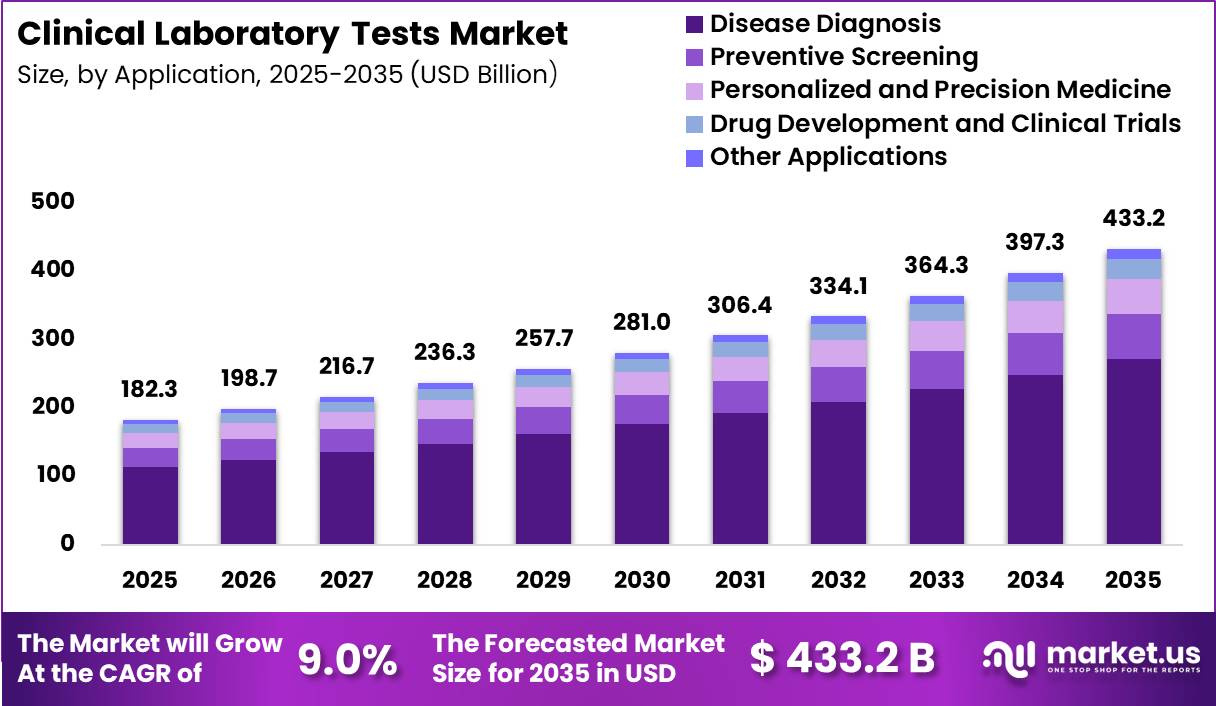
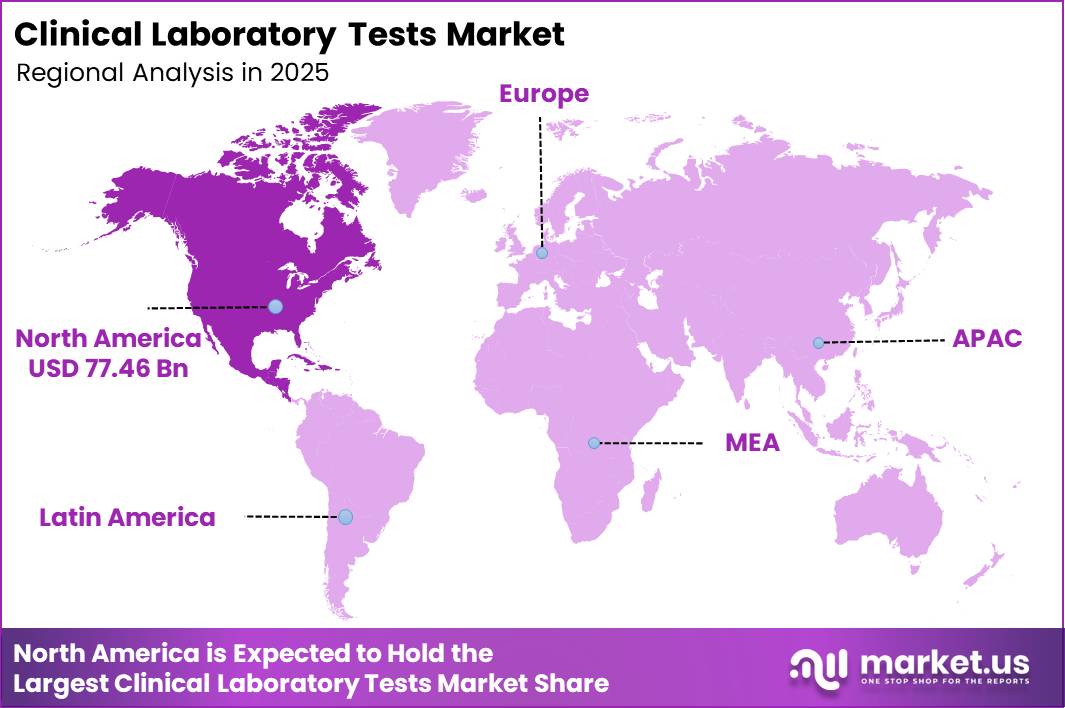
Global Clinical Laboratory Tests Market size is expected to be worth around US$ 433.2 Billion by 2035 from US$ 182.3 Billion in 2025, growing at a CAGR of 9.0% during the forecast period from 2026 to 2035. In 2025, North America led the market, achieving over 42.5% share with a revenue of US$ 77.5 Billion.
Clinical laboratory testing plays a central role in modern healthcare systems by supporting disease prevention, diagnosis, treatment monitoring, and public health surveillance. According to the World Health Organization (WHO), laboratory services are considered essential components of universal health coverage, enabling timely clinical decision-making and improved patient outcomes. Increasing incidences of chronic diseases, infectious conditions, and aging populations are contributing to the growing demand for laboratory-based diagnostics worldwide.
Data from the U.S. Centers for Disease Control and Prevention (CDC) indicate that approximately 129 million people in the United States are living with at least one major chronic disease, including heart disease, cancer, diabetes, obesity, and hypertension.
These conditions require frequent blood tests, biomarker assessments, and routine monitoring, supporting sustained demand for clinical laboratory services. The International Diabetes Federation estimates that more than 589 million adults globally were living with diabetes in 2024, further increasing the need for HbA1c testing, glucose monitoring, and metabolic panels.
Technological advancements are also transforming laboratory operations through automation, molecular diagnostics, digital pathology, and artificial intelligence-enabled workflows. Additionally, rising adoption of preventive healthcare programs, population screening initiatives, and personalized medicine approaches is expanding the utilization of laboratory testing across hospitals, diagnostic centers, physician offices, and community healthcare settings worldwide.
Key Takeaways
- Market Size : Clinical Laboratory Tests Market size is expected to be worth around US$ 433.2 Billion by 2035 from US$ 182.3 Billion in 2025.
- Market Share : The Market is growing at a CAGR of 9.0% during the forecast period from 2026 to 2035.
- Test Type Analysis : Clinical Chemistry Tests dominated the Clinical Laboratory Tests Market accounting for 38.5% of the total market share in 2025.
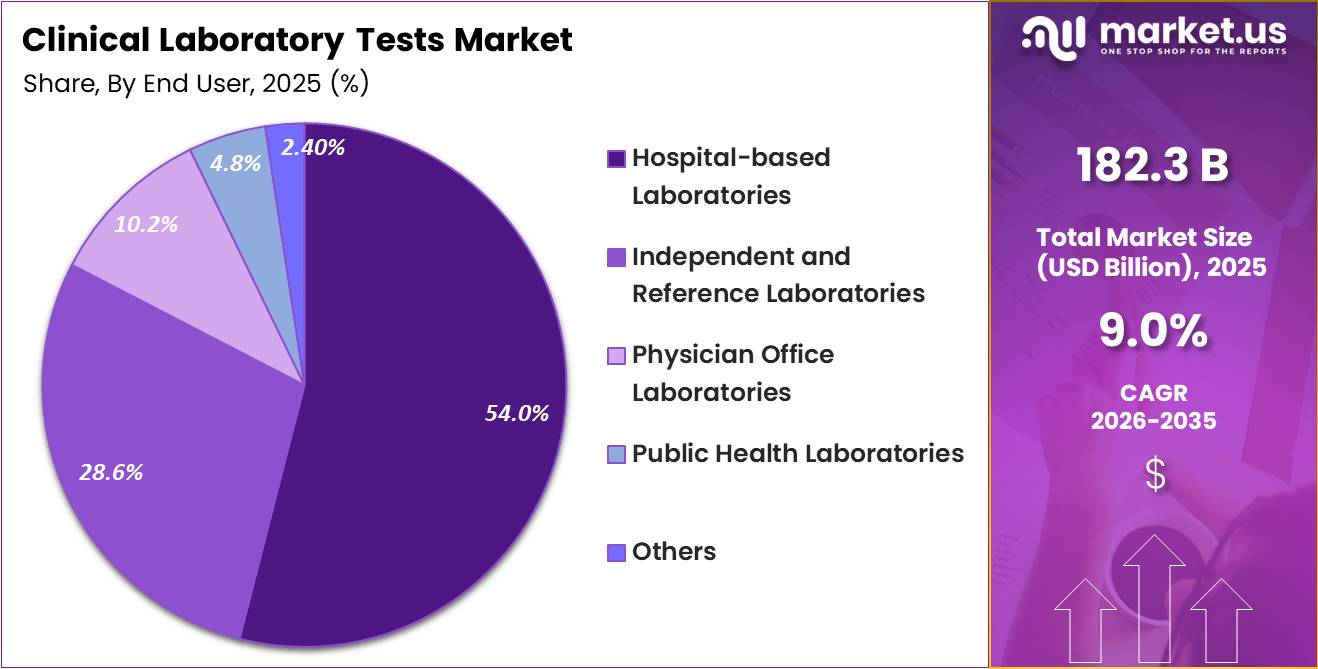
- End User Analysis : Hospital-based Laboratories dominated the Clinical Laboratory Tests Market in 2025, capturing 54.3% of the total market share.
- Application Analysis : Disease Diagnosis dominated the Clinical Laboratory Tests Market holding 62.7% of the market share in 2025.
- Mode of Testing Analysis : Centralized Laboratory Testing dominated the Clinical Laboratory Tests Market in 2025, accounting for 74.5% of the total market share.
- Regional Analysis : In 2025, North America led the market, achieving over 42.5% share with a revenue of US$ 77.5 Billion.
Test Type Analysis
Clinical Chemistry Tests dominated the Clinical Laboratory Tests Market in 2025, accounting for 38.5% of the total market share. The segment maintains its leading position due to the high volume of routine blood analyses performed for monitoring glucose levels, lipid profiles, liver function, kidney function, and electrolyte balance.
Growing prevalence of chronic diseases and increasing emphasis on preventive healthcare continue to support demand for clinical chemistry testing. Immunology and Serology Tests represented 18.2% of the market, driven by rising use in infectious disease detection, autoimmune disorder diagnosis, and immune response assessment.
Hematology Tests captured 14.7% share owing to their widespread application in evaluating blood disorders, anemia, and leukemia. Molecular Diagnostics accounted for 12.4% of the market, supported by advancements in precision medicine and rapid diagnostic technologies.
Microbiology Tests held 8.6% share due to increasing testing for bacterial, viral, and fungal infections. Genetic and Genomic Testing represented 4.3%, benefiting from growing interest in personalized medicine. Toxicology and Drug Testing contributed 2.1%, while Other Tests collectively accounted for 1.2% of the market in 2025.
End User Analysis
Hospital-based Laboratories dominated the Clinical Laboratory Tests Market in 2025, capturing 54.3% of the total market share. Their strong position is attributed to the availability of advanced diagnostic infrastructure, skilled laboratory professionals, and direct integration with patient care services. Hospitals perform a large number of routine and specialized tests to support emergency care, inpatient treatment, and disease management.
Independent and Reference Laboratories accounted for 28.6% of the market and continue to expand their presence through extensive testing portfolios, high-throughput capabilities, and broad geographic coverage. These laboratories are increasingly utilized for specialized diagnostics, molecular testing, and large-scale screening programs.
Physician Office Laboratories represented 10.2% of the market, supported by growing demand for convenient testing services and faster clinical decision-making at the point of care. Public Health Laboratories held 4.8% share owing to their role in disease surveillance, outbreak monitoring, and population health initiatives.
The Others segment accounted for 2.1%, including academic institutions, research facilities, and community-based laboratories that contribute to diagnostic services and clinical investigations.
Application Analysis
Disease Diagnosis dominated the Clinical Laboratory Tests Market in 2025, holding 62.7% of the market share. Clinical laboratory testing remains a fundamental component of disease identification, confirmation, and monitoring across various therapeutic areas, including oncology, cardiology, infectious diseases, and metabolic disorders.
Increasing prevalence of chronic illnesses and rising healthcare awareness continue to drive demand for diagnostic testing services globally. Preventive Screening represents an important growth segment as healthcare systems increasingly emphasize early detection and risk assessment programs to reduce long-term disease burden.
Personalized and Precision Medicine is gaining momentum due to expanding use of genetic profiling, biomarker analysis, and targeted treatment approaches. Drug Development and Clinical Trials also contribute significantly to market growth, as laboratory testing supports patient selection, therapeutic monitoring, and safety assessments during pharmaceutical research activities.
Other Applications include wellness testing, occupational health assessments, and specialized diagnostic procedures. Continuous technological advancements, improved testing accuracy, and growing patient awareness are expected to strengthen the role of laboratory testing across multiple healthcare applications in the coming years.
Mode of Testing Analysis
Centralized Laboratory Testing dominated the Clinical Laboratory Tests Market in 2025, accounting for 74.5% of the total market share. The segment benefits from large-scale testing capabilities, advanced analytical instruments, standardized procedures, and high operational efficiency.
Centralized laboratories are widely preferred for routine diagnostics, specialized testing, and high-volume sample processing due to their ability to deliver accurate and cost-effective results. The growing adoption of automation and digital laboratory management systems further supports the expansion of centralized testing facilities.
Point-of-Care Testing represents a rapidly growing segment driven by increasing demand for immediate diagnostic results, enhanced patient convenience, and improved clinical decision-making. These tests are commonly used in emergency departments, outpatient clinics, and remote healthcare settings.
At-Home Testing is also witnessing increasing adoption due to greater consumer awareness, technological innovations, and demand for convenient healthcare solutions. Home-based diagnostic kits enable patients to monitor health conditions independently and reduce the need for frequent hospital visits, supporting broader access to laboratory testing services worldwide.
Market Segmentations
By Test Type
- Clinical Chemistry Tests
- Immunology and Serology Tests
- Hematology Tests
- Molecular Diagnostics
- Microbiology Tests
- Genetic and Genomic Testing
- Toxicology and Drug Testing
- Other Tests
By End User
- Hospital-based Laboratories
- Independent and Reference Laboratories
- Physician Office Laboratories
- Public Health Laboratories
- Others
By Application
- Disease Diagnosis
- Preventive Screening
- Personalized and Precision Medicine
- Drug Development and Clinical Trials
- Other Applications
By Mode of Testing
- Centralized Laboratory Testing
- Point-of-Care Testing
- At-Home Testing
Drivers
Molecular oncology, genetics, and rapid infectious testing mix upshift
The market’s growth rate is being lifted more by test mix enrichment than by pure sample count growth, because oncology biomarker panels, NGS workflows, transplant matching, women’s health molecular assays, and rapid syndromic infectious disease panels carry materially higher revenue per requisition than routine chemistry and hematology.
Roche reported 2025 diagnostics sales of CHF 13.8 billion and highlighted a human genome decoded in less than four hours, alongside new launches across molecular lab, pathology lab, core lab, near patient care, and digital solutions, indicating that assay innovation is compressing turnaround times and improving the clinical economics of earlier stratification and targeted treatment selection.
The business model consequence is a steady shift from low value menu breadth to specialty led revenue density: labs that can combine sequencing, companion diagnostics, digital pathology, and software interpretation capture better margins, deepen pharma provider ties, and move customer acquisition from commodity bidding toward oncology center and health system integration.
| Driver | (~) % Impact on CAGR Forecast | Geographic Relevance | Impact Timeline |
|---|---|---|---|
| Aging and chronic-disease test volume expansion | +1.6% | North America core, EU, Japan, urban China | Medium term (2-4 years) |
| Molecular oncology, genetics, and rapid infectious testing mix-upshift | +1.9% | North America core, Western Europe, China, advanced APAC | Medium term (2-4 years) |
| Reimbursement reset and lab menu optimization under CLFS pressure | +1.1% | U.S. core, selective spill-over to private-pay markets | Short term (≤ 2 years) |
| Regulatory modernization and compliance-led assay replacement | +1.3% | EU core, U.S., UK, high-compliance APAC markets | Medium term (2-4 years) |
| Digital pathology, workflow automation, and AI-enabled productivity | +1.0% | North America, EU, Japan, tertiary APAC hubs | Medium term (2-4 years) |
| AMR surveillance and hospital stewardship diagnostics expansion | +0.8% | Europe, North America, GCC, India, Southeast Asia | Short term (≤ 2 years) |
Challenges
Unstable reimbursement policies and payer driven utilization management pressures
Clinical laboratories continue to bill and collect for a wide range of tests, but reimbursement conditions remain volatile due to pricing pressure, coding changes, and payer utilization controls.
Many markets experience low to mid single digit annual declines in reimbursement for high volume routine tests, partially offset by higher pricing for specialized assays. Value based care models, bundled payments, and prior authorization requirements are increasingly common, adding administrative burden and delays, particularly for advanced diagnostics.
Prior authorization processes typically add staff workload and can delay testing by one to two days, while also increasing the risk of test underutilization in some clinical areas such as chronic disease and oncology.
Overall, payer driven utilization management may reduce volume growth by around 1 to 3% age points in certain high cost segments, while commoditized test pricing pressures can reduce revenue by another 2 to 4% annually, creating an estimated net drag of about 1% age point on long term CAGR.
In response, laboratories are shifting toward higher reimbursement specialty testing, improving billing and coding analytics to reduce denials, and exploring direct contracting models with employers or patients. However, payer contract renegotiations often take 12 to 24 months, making reimbursement risk a persistent medium term challenge that requires active management through diversification and stronger payer engagement.
| Challenge | (~) % CAGR Friction Drag | Geographic Relevance | Mitigation Horizon |
|---|---|---|---|
| Chronic lab workforce gap | -1.4% | North America, Europe, GCC urban hubs | Long term (≥ 4 years) |
| Reagent & consumables volatility | -1.1% | EU regulatory hubs, APAC logistics corridors, Latin America | Medium term (2-4 years) |
| CAPEX-heavy automation rollout | -0.9% | North America core, OECD Asia, high-income MENA | Long term (≥ 4 years) |
| Data interoperability deficits | -0.8% | US, EU, Japan, urban India | Medium term (2-4 years) |
| Quality & compliance burden creep | -0.7% | Global reference labs, hospital networks | Long term (≥ 4 years) |
| Reimbursement & payer-policy flux | -1.0% | US, EU-5, selected APAC payers | Medium term (2-4 years) |
Restraints
Reimbursement compression and clawbacks eroding core lab economics
Reimbursement compression and pricing clawbacks are a major structural drag on clinical laboratory growth. Payors in the US and Europe are tightening fee schedules, increasing code bundling, and expanding prior authorization requirements to control diagnostic spending, which represents about 2 to 3% of total healthcare expenditure but influences a large share of clinical decisions.
In the US, routine chemistry and immunoassay panels that previously reimbursed around 12 to 18 dollars are increasingly being reduced into the 8 to 12 dollar range. Some molecular pathology codes have also seen cumulative cuts of 15 to 25% across multiple fee schedule updates, leading to annual blended price erosion of roughly 2 to 3% for large reference laboratories, even as input costs continue to rise.
In Europe, DRG adjustments and national tendering systems have reduced per test tariffs by an estimated 10 to 15 % over the past five years in several markets, including the UK, France, and the Nordics. Many contracts include multi year price reductions with limited inflation indexation, which further erodes real revenue per test.
These pressures reduce EBITDA margins by an estimated 150 to 300 basis points for mid tier laboratories, extend capital payback periods for high throughput analyzers from about 5 to 6 years toward 7 to 8 years, and force laboratories to rationalize low margin test menus and delay certain high cost molecular investments. Overall, reimbursement headwinds are estimated to reduce achievable sector CAGR by roughly 2% age points compared with a stable pricing environment.
| Restraint | (~) % Impact on CAGR Forecast | Geographic Relevance | Impact Timeline |
|---|---|---|---|
| Reimbursement compression and pricing clawbacks | -2.2% | North America, EU, selected APAC | Short–Medium term |
| Chronic workforce shortages in clinical labs | -1.9% | North America core, EU, Japan, GCC | Medium–Long term |
| Input cost inflation for reagents and consumables | -1.4% | Global, stronger in EU & import-dependent EM | Short term |
| Regulatory tightening and compliance overhead | -1.1% | US, EU, China, high-income APAC | Medium term |
| Capital expenditure constraints and lab consolidation | -1.0% | North America, EU, Latin America | Medium–Long term |
| Data interoperability, IT debt, and cybersecurity risk | -0.8% | US, EU, digitalizing APAC corridors | Long term |
Opportunity
Commercializing AI driven digital pathology platforms and workflow automation
Digital pathology and AI are still only partially embedded in routine laboratory workflows and reimbursement frameworks, so current market growth does not yet fully capture their monetization potential.
The upside lies in shifting pathology from a labor constrained service into a scalable digital platform model that combines algorithmic triage, automated image interpretation, remote subspecialty consultation, and workflow orchestration. In practice, digital platforms can increase slide throughput by about 15 to 25 %, improve pathologist productivity by 10 to 20 %, and reduce turnaround times by 20 to 30 %.
They also enable new revenue streams through remote second opinions and cross site or cross border expert reads, particularly in regions with specialist shortages and large hospital networks. This shift supports a transition from fee per test economics toward platform plus services models, where value is created through speed, accuracy, and networked expertise rather than volume alone.
Adoption is supported by industry direction, including global health organizations promoting digital diagnostics and leading laboratory companies investing in digital pathology and AI enabled workflows.
Overall, this trend could add roughly 1% age point of upside to long term growth as commercialization scales, although widespread reimbursement alignment and standardization are still evolving.
| Opportunity | (~) % Potential CAGR Upside | Geographic Relevance | Execution Window |
|---|---|---|---|
| Retail-home hybrid testing | +1.4% | North America core, EU, APAC urban | Short term (≤ 2 years) |
| Oncology-genomics care pathways | +1.8% | U.S., EU5, Japan, South Korea, China tier-1 | Medium term (2-4 years) |
| Lab roll-up and managed networks | +1.2% | U.S., Western Europe, GCC, India metros | Short term (≤ 2 years) |
| Biopharma real-world data bundling | +0.9% | U.S., EU, Japan | Medium term (2-4 years) |
| AI-enabled digital pathology monetization | +1.1% | U.S., EU, Australia, Singapore | Medium term (2-4 years) |
| Emerging-market localized production | +1.5% | India, Southeast Asia, Africa, LATAM | Long term (≥ 4 years) |
Regional Analysis
North America dominated the Clinical Laboratory Tests Market in 2025, accounting for more than 42.5% of the global market and generating revenue of US$ 77.5 billion.
The region’s leadership is supported by a well-established healthcare infrastructure, high healthcare spending, and widespread availability of advanced diagnostic technologies. Growing demand for early disease detection, preventive healthcare services, and routine health screening programs continues to drive the utilization of clinical laboratory testing across the region.
The increasing prevalence of chronic diseases, including diabetes, cardiovascular disorders, cancer, and kidney diseases, has significantly contributed to testing volumes in the United States and Canada. Healthcare providers are increasingly relying on laboratory diagnostics for accurate diagnosis, treatment planning, and patient monitoring.
In addition, rising awareness regarding personalized medicine and precision healthcare is encouraging the adoption of specialized testing services, including molecular diagnostics and genetic testing.
The presence of large diagnostic laboratory networks, continuous technological advancements, and increasing investments in laboratory automation further strengthen market growth in North America. Favorable reimbursement systems, strong regulatory frameworks, and ongoing public health initiatives also support market expansion.
Moreover, increasing demand for home sample collection services and digital health integration is creating new opportunities for clinical laboratory service providers throughout the region.
Key Regions and Countries
North America
- The US
- Canada
Europe
- Germany
- France
- The U.K.
- Italy
- Spain
- Russia & CIS
- Rest of Europe
Asia Pacific
- China
- India
- Japan
- South Korea
- ASEAN
- Australia & New Zealand
- Rest of Asia Pacific
Middle East & Africa
- GCC
- South Africa
- Rest of Middle East & Africa
Latin America
- Brazil
- Mexico
- Rest of Latin America
Key Player Analysis
The Clinical Laboratory Tests Market is characterized by the presence of established diagnostic service providers that focus on expanding testing capabilities, improving turnaround times, and strengthening laboratory networks. Companies are investing in automation, digital technologies, and advanced diagnostic platforms to enhance efficiency and support the growing demand for routine and specialized testing services.
Quest Diagnostics Incorporated and Laboratory Corporation of America Holdings maintain strong market positions through extensive laboratory infrastructure, broad test portfolios, and strategic collaborations with healthcare providers. Sonic Healthcare Limited and Eurofins Scientific continue to expand their global presence through acquisitions, service diversification, and investments in molecular and genetic testing.
SYNLAB Bondco PLC and Unilabs SA emphasize integrated diagnostic services and regional expansion to improve patient access to laboratory testing. ARUP Laboratories is recognized for its expertise in esoteric testing and advanced clinical diagnostics, supporting hospitals, academic institutions, and healthcare organizations. These companies collectively contribute to innovation, service quality improvement, and the adoption of advanced laboratory testing solutions worldwide.
Top Key Players
- Quest Diagnostics Incorporated
- Laboratory Corporation of America Holdings
- Sonic Healthcare Limited
- Eurofins Scientific
- SYNLAB Bondco PLC
- Unilabs SA
- ARUP Laboratories
- Mayo Clinic Laboratories
- NeoGenomics Laboratories Inc.
- SRL Diagnostics
- Metropolis Healthcare Limited
- Thyrocare Technologies Limited
- Abbott Laboratories
- Siemens Healthineers AG
- F. Hoffmann-La Roche Ltd
- Others
Recent Developments
- In May 2026, Metropolis Healthcare Limited announced plans to evaluate 4–5 acquisition opportunities in specialty diagnostics, genomics, and next-generation sequencing to strengthen its presence in high-growth segments of the Indian diagnostics market.
- In September 2025, Laboratory Corporation of America Holdings (Labcorp) completed the acquisition of BioReference Health’s oncology testing assets in a transaction valued at up to US$225 million, expanding specialized cancer testing services in the United States.
- In August 2025, Quest Diagnostics Incorporated completed the acquisition of select clinical testing assets of Spectra Laboratories, expanding its renal and dialysis-related laboratory testing capabilities across the U.S. market.
- In May 2025, F. Hoffmann-La Roche Ltd announced an investment of up to US$550 million through 2030 to expand its Indianapolis diagnostics manufacturing hub, increasing production capacity for diagnostic technologies and continuous glucose monitoring products in North America.
Report Scope
| Report Features | Description |
|---|---|
| Market Value (2025) | US$ 182.3 Billion |
| Forecast Revenue (2035) | US$ 433.2 Billion |
| CAGR (2026-2035) | 9.0 % |
| Base Year for Estimation | 2025 |
| Historic Period | 2020-2024 |
| Forecast Period | 2026-2035 |
| Report Coverage | Revenue Forecast, Market Dynamics, Competitive Landscape, Recent Developments |
| Segments Covered | By Test Type (Clinical Chemistry Tests, Immunology and Serology Tests, Hematology Tests, Molecular Diagnostics, Microbiology Tests, Genetic and Genomic Testing, Toxicology and Drug Testing, Other Tests), By End User (Hospital-based Laboratories, Independent and Reference Laboratories, Physician Office Laboratories, Public Health Laboratories, Others), By Application (Disease Diagnosis, Preventive Screening, Personalized and Precision Medicine, Drug Development and Clinical Trials, Other Applications), By Mode of Testing (Centralized Laboratory Testing, Point-of-Care Testing, At-Home Testing) |
| Regional Analysis | North America – The US, Canada; Europe – Germany, France, U.K., Italy, Spain, Russia & CIS, Rest of Europe; Asia Pacific – China, India, Japan, South Korea, ASEAN, Australia & New Zealand, Rest of Asia Pacific; Middle East & Africa – GCC, South Africa, Rest of Middle East & Africa; Latin America – Brazil, Mexico, Rest of Latin America |
| Competitive Landscape | Quest Diagnostics Incorporated, Laboratory Corporation of America Holdings, Sonic Healthcare Limited, Eurofins Scientific, SYNLAB Bondco PLC, Unilabs SA, ARUP Laboratories, Mayo Clinic Laboratories, NeoGenomics Laboratories Inc., SRL Diagnostics, Metropolis Healthcare Limited, Thyrocare Technologies Limited, Abbott Laboratories, Siemens Healthineers AG, F. Hoffmann-La Roche Ltd, Others |
| Customization Scope | Customization for segments, region/country-level will be provided. Moreover, additional customization can be done based on the requirements. |
| Purchase Options | We have three licenses to opt for: Single User License, Multi-User License (Up to 5 Users), Corporate Use License (Unlimited User and Printable PDF) |





































