


Market Overview
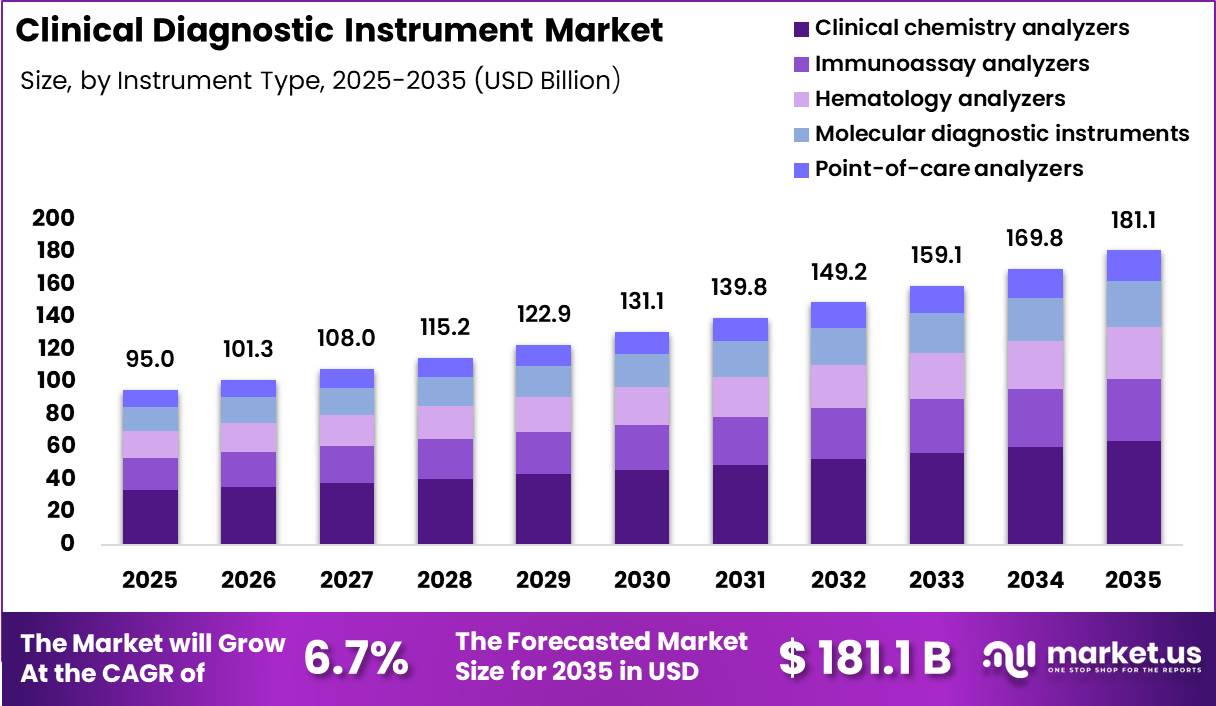
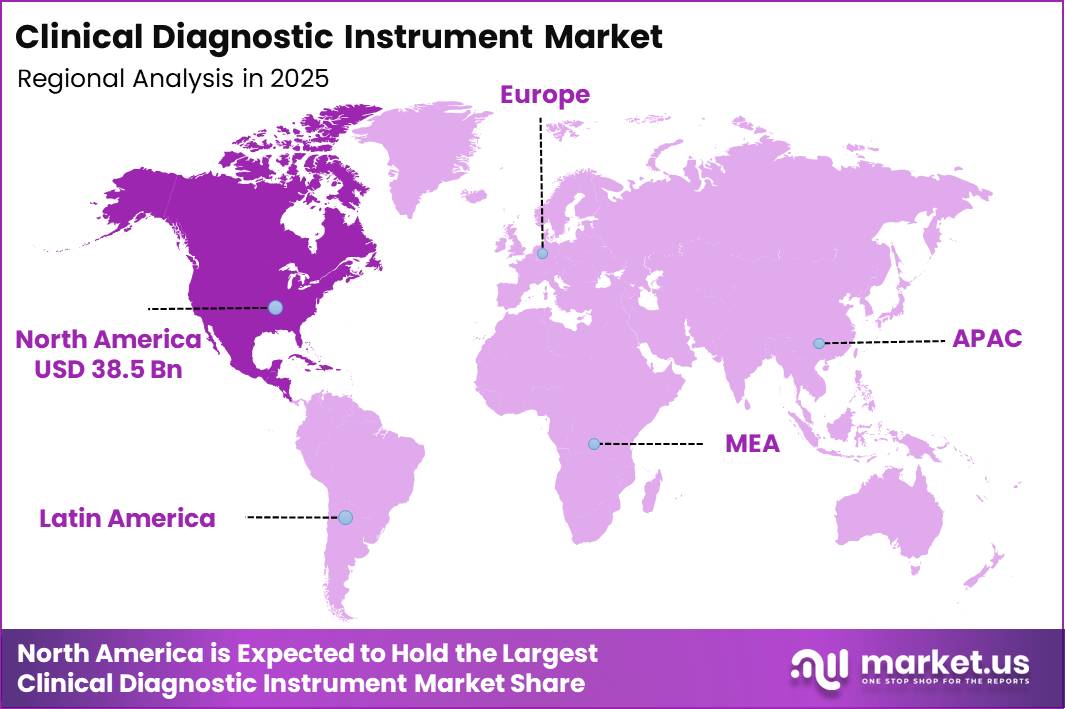
Global Clinical Diagnostic Instrument Market size is expected to be worth around US$ 181.1 Billion by 2035 from US$ 95.0 Billion in 2025, growing at a CAGR of 6.7% during the forecast period from 2026 to 2035. In 2025, North America led the market, achieving over 40.5% share with a revenue of US$ 38.5 Billion.
The clinical diagnostic instrument market is witnessing steady growth due to increasing global disease burden, expansion of laboratory infrastructure, and rising demand for early and accurate disease detection.
According to the World Health Organization (WHO), diagnostic services are essential across all levels of healthcare, influencing nearly 70% of clinical decision-making while still receiving only a small portion of total healthcare spending globally. This imbalance continues to drive investments in modern diagnostic instruments to improve access, speed, and accuracy of testing.
Clinical diagnostic instruments, including chemistry analyzers, hematology systems, immunoassay platforms, and molecular diagnostic tools, are widely used in hospitals and laboratories for disease detection, monitoring, and prevention. The growing prevalence of infectious diseases, cancer, and chronic conditions such as diabetes and cardiovascular disorders is significantly increasing test volumes across healthcare systems.
Government-backed health programs and strengthening laboratory networks in emerging economies are further accelerating adoption of automated and high-throughput diagnostic systems. Additionally, the integration of digital technologies, AI-assisted analysis, and point-of-care testing solutions is improving workflow efficiency and reducing turnaround time for critical results.
WHO highlights that diagnostics play a key role in outbreak detection and health system resilience, especially during epidemics and pandemics, reinforcing their importance in modern healthcare infrastructure. As healthcare systems move toward precision medicine and preventive care, demand for advanced clinical diagnostic instruments is expected to continue rising globally.
Key Takeaways
- Market Size: Global Clinical Diagnostic Instrument Market size is expected to be worth around US$ 181.1 Billion by 2035 from US$ 95.0 Billion in 2025.
- Market Share: The market is growing at a CAGR of 6.7% during the forecast period from 2026 to 2035.
- Instrument Type Analysis: The Clinical Diagnostic Instrument Market by instrument type is led by Clinical chemistry analyzers, which accounted for 35.3% of the global market share in 2025.
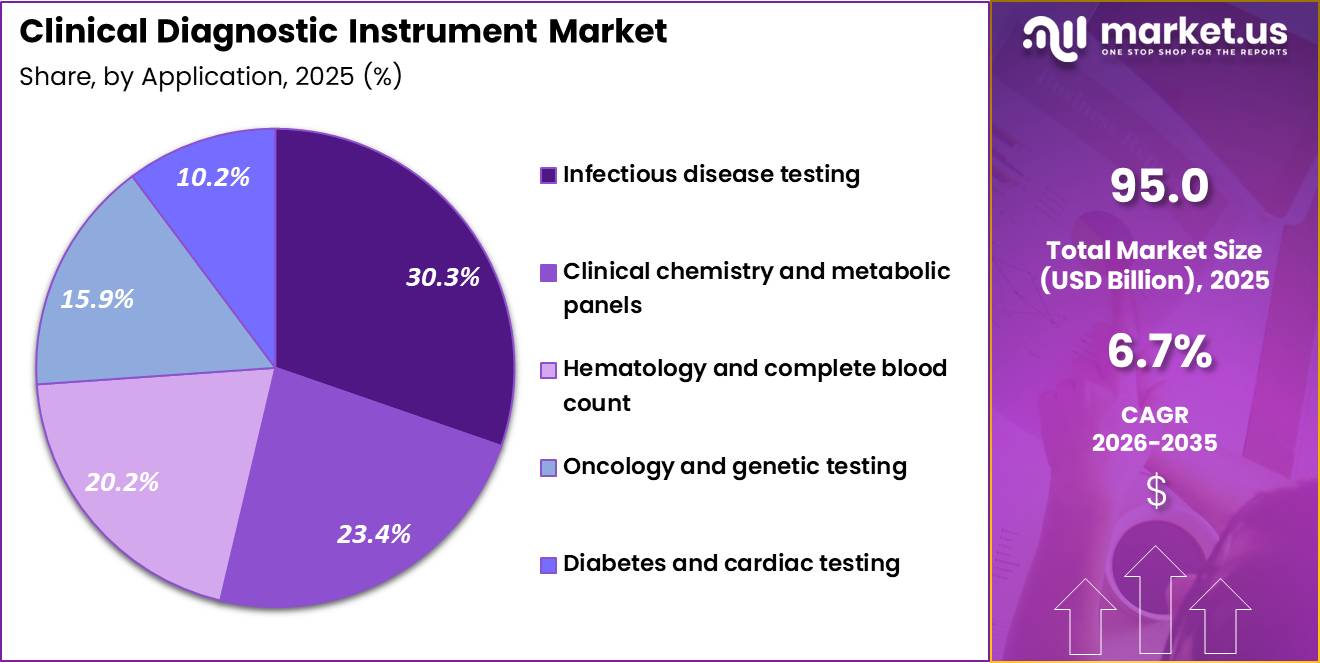
- Application Analysis: Infectious disease testing dominates the application segment with a 30.3% market share in 2025.
- End-user Analysis: Diagnostic laboratories dominate the end-user segment with a 40.7% market share in 2025.
- Regional Analysis: In 2025, North America led the market, achieving over 40.5% share with a revenue of US$ 38.5 Billion.
Instrument Type Analysis
Clinical Chemistry Analyzers Dominate Instrument Type Segment in Clinical Diagnostic Instrument Market.
Clinical chemistry analyzers dominate the instrument type segment with a 35.3% market share, driven by their position as the core platform for routine biochemical testing across healthcare systems. Their dominance is primarily due to high-throughput automation, standardized workflows, and cost-efficient processing of large sample volumes, making them essential for hospital laboratories and large diagnostic networks.
These analyzers are deeply embedded in everyday diagnostic operations, supporting tests such as liver function, kidney function, lipid profiling, and electrolyte balance, which ensures consistent utilization across patient populations.
Immunoassay analyzers hold a 21.1% share, supported by increasing demand for hormone testing, infectious disease screening, and biomarker-based diagnostics. Hematology analyzers account for a 17.6% share, remaining crucial for complete blood count and blood disorder detection, especially in emergency and routine care settings.
Molecular diagnostic instruments represent a 15.5% share, expanding rapidly due to rising adoption in oncology, genetic testing, and infectious disease identification, particularly with precision medicine growth. Point-of-care analyzers contribute a 10.5% share, gaining traction as healthcare systems shift toward decentralized testing, enabling faster clinical decisions in emergency rooms, outpatient clinics, and remote care environments.
Application Analysis
Infectious Disease Testing Dominates Application Segment in Clinical Diagnostic Instrument Market.
Infectious disease testing dominates the application segment with a 30.3% market share, driven by persistent global disease burden, outbreak preparedness needs, and strong demand for rapid and accurate diagnostics.
This segment plays a critical role in hospital laboratories, public health surveillance systems, and emergency response frameworks, ensuring continuous utilization across both routine screening and crisis situations. The dominance is reinforced by its essential function in detecting viral, bacterial, and emerging pathogens, which makes it a frontline diagnostic priority worldwide.
Clinical chemistry and metabolic panels hold a 23.4% share, supported by their widespread use in routine health assessments and chronic disease monitoring such as liver, kidney, and metabolic disorders. Hematology and complete blood count testing account for a 20.2% share, driven by its essential role in diagnosing anemia, infections, and blood-related disorders.
Oncology and genetic testing represent a 15.9% share, growing rapidly due to advancements in precision medicine and molecular diagnostics. Diabetes and cardiac testing hold a 10.2% share, expanding steadily as lifestyle-related diseases rise globally, supported by increasing adoption of compact, rapid, and point-based diagnostic solutions in outpatient and home-care settings.
End-user Analysis
Diagnostic Laboratories Dominate End-user Segment in Clinical Diagnostic Instrument Market.
Diagnostic laboratories dominate the end-user segment with a 40.7% market share in 2025, and their strong leadership is driven by their unmatched capacity to process high testing volumes with precision, automation, and operational efficiency.
Their dominance is further reinforced by centralized infrastructure, advanced analytical platforms, and standardized workflows that allow large-scale testing at lower per-sample costs. This makes them the preferred choice for both routine diagnostics and complex testing services across healthcare systems.
Large diagnostic networks and reference labs increasingly rely on platforms from Sysmex Corporation, BD (Becton, Dickinson and Company), and Danaher (Beckman Coulter) to improve efficiency and accuracy across testing operations.
Hospital laboratories, diagnostic centers and clinics, and academic and research laboratories make up the remaining structure of the market. Hospital labs continue to grow steadily as they are directly integrated into patient care pathways and emergency diagnostics.
Diagnostic centers and clinics are expanding rapidly due to rising outpatient testing demand and increasing accessibility of private healthcare services. Academic and research laboratories also play an important role in innovation, assay development, and validation of new technologies, with strong contributions from Bio-Rad Laboratories and PerkinElmer / Revvity supporting research-driven advancements in clinical diagnostics.
Key Market Segments
By Instrument Type
- Clinical chemistry analyzers
- Immunoassay analyzers
- Hematology analyzers
- Molecular diagnostic instruments
- Point‑of‑care analyzers
By Application
- Infectious disease testing
- Clinical chemistry and metabolic panels
- Hematology and complete blood count
- Oncology and genetic testing
- Diabetes and cardiac testing
By End-user
- Diagnostic laboratories
- Hospital laboratories
- Diagnostic centers and clinics
- Academic and research labs
Challenges
Skilled Lab Talent Gap.
Clinical diagnostic instruments are increasingly sold into workflows that need fewer manual touches but higher operator judgment, and that creates a bottleneck because demand for laboratory professionals continues to exceed training output: U.S. sources indicate roughly 10,000 new professionals are needed annually.
While only about 5,000 graduates enter the pipeline, with more than 60% of the workforce approaching retirement age and vacancy rates still elevated above pre-COVID levels across many laboratory departments, pushing instrument utilization below nameplate capacity by an estimated 6% to 11% in mid-sized hospital labs and stretching validation, maintenance, and assay menu expansion cycles by 3 to 9 months.
For instrument vendors, that labor deficit does not stop purchases outright, but it lowers realized throughput, delays placement-to-revenue conversion, and increases the customer’s preference for simplified, highly automated systems with remote diagnostics, autoverification, and bundled application support.
The resulting market drag is best modeled at about 1.2% points of forgone CAGR because labs defer full menu activation, consolidate benches, and run instruments on narrower shift patterns until staffing normalizes through wage inflation, training-program expansion, workflow redesign, and deeper vendor-managed service models.
| Challenge | (~) % CAGR Friction Drag | Geographic Relevance | Mitigation Horizon |
|---|---|---|---|
| Skilled Lab Talent Gap | -1.2% | North America core, EU hospital networks, developed APAC labs | Long term (≥ 4 years) |
| Component-Reagent Supply Volatility | -1.0% | APAC manufacturing corridors, North America import channels, EU assembly hubs | Medium term (2-4 years) |
| Regulatory Transition Complexity | -0.9% | EU regulatory hubs, U.S. quality-system market, global export manufacturers | Medium term (2-4 years) |
| Cybersecurity Validation Burden | -0.7% | U.S. connected-device market, EU digital diagnostics base, advanced APAC systems | Medium term (2-4 years) |
| Installed Base Interoperability Debt | -0.8% | Mature hospital systems in North America, Western Europe, Japan, South Korea | Long term (≥ 4 years) |
| Emerging-Market Service Fragility | -0.6% | Latin America, Africa, South and Southeast Asia procurement systems | Long term (≥ 4 years) |
Opportunity
Decentralized chronic-care analyzers.
This is an opportunity rather than a current driver because most baseline growth in clinical diagnostic instruments still comes from routine hospital and central-lab replacement cycles, while the white space lies in shifting higher-frequency chronic-disease monitoring into community, pharmacy, employer-clinic, and home-linked workflows using compact chemistry, immunoassay, and connected glucose/cardiometabolic platforms.
WHO’s essential diagnostics agenda has increasingly legitimized broader access to diabetes and cardiovascular testing, including personal-use glucose monitoring and high-sensitivity troponin pathways, while India’s 2025 National Essential Diagnostics List also signals demand formalization beyond tertiary hospitals, creating a platform entry point for instrument makers that can redesign throughput, connectivity, and consumables economics for lower-acuity settings.
If vendors capture even 8% to 12% of outpatient chronic-testing volumes now handled in centralized labs, the adjacent instrument-and-service TAM could expand by roughly $5 billion to $8 billion by 2030, with gross margin uplift of 200 to 350 basis points from software-linked consumables, remote QC subscriptions, and service bundle.
Customer acquisition cost can also fall 15% to 20% through channel partnerships with retail health networks and diabetes programs rather than direct hospital sales. The upside is highest in India, Southeast Asia, and selected EU systems where diagnostic decentralization is underpenetrated, but it requires action within two years before care-pathway standards and procurement frameworks harden around incumbent POC ecosystems
| Opportunity | (~) % Potential CAGR Upside | Geographic Relevance | Execution Window |
|---|---|---|---|
| Decentralized chronic-care analyzers | +1.9% | North America, EU, India, SEA | Short term |
| Companion diagnostics scale-out | +2.4% | North America core, EU, Japan, China | Medium term |
| Lab-as-a-service leasing models | +1.6% | APAC emerging, Africa, LatAm | Short term |
| Digital pathology AI monetization | +1.8% | North America, Western Europe, GCC | Medium term |
| LDT-to-platform commercialization | +2.1% | U.S., Canada, academic hub markets | Medium term |
| Roll-up of niche assay platforms | +1.7% | U.S., EU, Japan | Long term |
Drivers
Infectious disease preparedness and rapid-test capacity.
The post-pandemic market is no longer driven by emergency COVID volumes, but public-health systems are still allocating capital toward flexible molecular and rapid-testing capacity because unresolved infectious burdens remain large and diagnosis gaps are still material.
WHO-linked 2025 tuberculosis reporting shows 10.7 million estimated TB cases in 2024, only 8.3 million cases reported, more than 2 million undiagnosed or untreated people, and rapid-testing coverage rising from 48% in 2023 to 54% in 2024; these numbers support continued procurement of molecular instruments, sample-to-answer systems, and integrated respiratory/infectious panels in high-burden settings.
Strategically, this changes procurement logic from single-disease systems toward multiplex and menu-flexible platforms that can absorb TB, STI, respiratory, and hospital-acquired infection assays on the same installed base.
Danaher’s 2026 commentary showed Cepheid’s non-respiratory menu growing in the mid-teens, including about 20% growth in sexual health and hospital-acquired infection assays, which suggests the next phase of growth comes from retaining infectious-testing infrastructure while repurposing it for broader syndromic and public-health use.
| Driver | (~) % Impact on CAGR Forecast | Geographic Relevance | Impact Timeline |
|---|---|---|---|
| Chronic disease screening intensity | +1.2% | North America core, EU, China, India, Gulf urban systems | Medium term (2-4 years) |
| Infectious disease preparedness and rapid-test capacity | +0.9% | APAC corridors, Africa, U.S. reference labs, EU public systems | Short term (≤ 2 years) |
| Lab automation and workforce productivity upgrades | +1.5% | North America core, Western Europe, Japan, South Korea, tier-1 China hospitals | Short term (≤ 2 years) |
| Decentralized care and point-of-care instrument rollout | +1.3% | U.S. outpatient networks, EU emergency care, India private chains, Southeast Asia | Medium term (2-4 years) |
| IVDR and compliance-driven replacement cycle | +0.8% | EU core, UK adjacency, export-oriented APAC manufacturers | Medium term (2-4 years) |
| Molecular and specialty assay menu expansion | +1.1% | U.S. oncology centers, EU tertiary labs, China top-tier hospitals, GCC flagships | Medium term (2-4 years) |
Retstraints
Lab reimbursement pressure.
In the U.S., reimbursement remains a meaningful medium-term brake because instrument adoption in clinical labs is tightly linked to assay-level return on investment, and payment visibility is still shaped by CLFS and PAMA reporting cycles rather than by pure technology merit.
CMS states there is no phase-in reduction in 2026, but rates affecting 2027 onward will be reset using private-payer data reported from May 1 to July 31, 2026, covering January to June 2025 utilization, which means laboratories are already underwriting procurement decisions against the risk of future reimbursement compression even before the cuts are realized.
That uncertainty suppresses discretionary analyzer upgrades in routine chemistry, immunoassay, and certain molecular workflows because a 5% to 10% expected erosion in reimbursement on high-volume assays can wipe out 100 to 250 basis points of lab EBITDA, lengthen payback on new placements from roughly 3 years toward 4 to 5 years, and redirect capital toward automation retrofits or software rather than full-system replacements, supporting an estimated -1.2% point CAGR deduction in the North American core market
| Restraint | (~) % Impact on CAGR Forecast | Geographic Relevance | Impact Timeline |
|---|---|---|---|
| IVDR certification congestion | -1.4% | EU core, UK-linked Europe | Medium term (2-4 years) |
| Lab reimbursement pressure | -1.2% | North America core | Medium term (2-4 years) |
| Hospital CapEx deferral | -1.0% | North America, EU, developed APAC | Short term (≤ 2 years) |
| Electronics sourcing volatility | -0.9% | Global, APAC corridors, US/EU assembly | Short term (≤ 2 years) |
| Quality-system compliance inflation | -0.7% | North America core, export manufacturers | Short term (≤ 2 years) |
| Regulatory uncertainty in advanced assays | -0.6% | US specialty lab market, selective EU | Medium term (2-4 years) |
Regional Analysis
North America Dominates Clinical Diagnostic Instrument Market in 2025.
In 2025, North America dominated the Clinical Diagnostic Instrument Market, accounting for over 40.5% share and generating revenue of US$ 38.5 Billion. The region’s leadership is primarily driven by advanced healthcare infrastructure, widespread adoption of automated diagnostic technologies, and strong presence of major diagnostic companies.
High prevalence of chronic diseases such as diabetes, cardiovascular disorders, and cancer further increases demand for accurate and rapid diagnostic solutions. In addition, favorable reimbursement policies and significant healthcare expenditure support early adoption of innovative diagnostic instruments across hospitals and laboratories.
Europe held a significant share of the Clinical Diagnostic Instrument Market in 2025 due to strong regulatory frameworks, high healthcare quality standards, and increasing investment in laboratory automation. Countries such as Germany, the United Kingdom, and France are key contributors, driven by growing demand for early disease detection and precision diagnostics.
Asia Pacific is expected to witness the fastest growth, supported by expanding healthcare infrastructure, rising patient population, increasing awareness of preventive healthcare, and government initiatives to strengthen diagnostic capabilities.
Latin America and the Middle East and Africa are gradually expanding markets, driven by improving healthcare access, rising investments in diagnostic services, and growing adoption of modern laboratory technologies across urban healthcare systems segments.
Key Regions and Countries
North America
- The US
- Canada
Europe
- Germany
- France
- The U.K.
- Italy
- Spain
- Russia & CIS
- Rest of Europe
Asia Pacific
- China
- India
- Japan
- South Korea
- ASEAN
- Australia & New Zealand
- Rest of Asia Pacific
Middle East & Africa
- GCC
- South Africa
- Rest of Middle East & Africa
Latin America
- Brazil
- Mexico
- Rest of Latin America
Key Player Analysis
The Clinical Diagnostic Instrument Market is highly consolidated, with a strong presence of global leaders such as Roche Diagnostics, Abbott Laboratories, Siemens Healthineers, Danaher (Beckman Coulter, Cepheid), Thermo Fisher Scientific, Becton, Dickinson and Company (BD), bioMérieux, Bio-Rad Laboratories, Hologic, Sysmex Corporation, Qiagen, DiaSorin, PerkinElmer / Revvity, Ortho Clinical Diagnostics / QuidelOrtho, Fujifilm Holdings, and Others.
Competitive dynamics are shaped by continuous technological advancement, rising demand for automation, and rapid expansion of molecular and point-of-care diagnostics. Companies compete on accuracy, speed, and integration of diagnostic platforms across laboratories and hospitals, with increasing focus on end-to-end diagnostic solutions and data-driven testing ecosystems.
Key players are heavily investing in R&D to strengthen assay sensitivity, workflow efficiency, and multiplex testing capabilities. Roche Diagnostics, Abbott Laboratories, and Siemens Healthineers focus on integrated diagnostic ecosystems, while Danaher (Beckman Coulter, Cepheid) and Thermo Fisher Scientific emphasize molecular diagnostics and high-throughput platforms.
BD and bioMérieux advance infection diagnostics and laboratory automation, whereas Bio-Rad Laboratories and Sysmex Corporation focus on hematology and immunoassay innovation. Qiagen and DiaSorin expand precision diagnostics through genetic and infectious disease testing solutions.
PerkinElmer / Revvity and Ortho Clinical Diagnostics / QuidelOrtho enhance specialty testing and immunodiagnostics, while Fujifilm Holdings develops diversified diagnostic imaging and lab solutions. Strategic partnerships, acquisitions, and AI-driven workflow integration are key competitive strategies, enabling companies to strengthen global reach and build connected diagnostic ecosystems.
Top Key Players
- Roche Diagnostics
- Abbott Laboratories
- Siemens Healthineers
- Danaher (Beckman Coulter, Cepheid)
- Thermo Fisher Scientific
- Becton, Dickinson and Company (BD)
- bioMérieux
- Bio‑Rad Laboratories
- Hologic
- Sysmex Corporation
- Qiagen
- DiaSorin
- PerkinElmer / Revvity
- Ortho Clinical Diagnostics / QuidelOrtho
- Fujifilm Holdings
- Others
Recent Developments
- In December 2025, Roche Diagnostics expanded its cobas Mass Spec solution with new CE-marked assays, increasing its clinical mass spectrometry menu to 39 diagnostic tests and strengthening its position in automated laboratory diagnostics.
- In March 2026, Abbott Laboratories completed its acquisition of Exact Sciences, adding leading cancer screening and precision oncology diagnostics assets including Cologuard and Oncotype DX to its diagnostics portfolio.
- In May 2026, Siemens Healthineers’ Atellica IM Testosterone II assay became the only immunoassay to achieve CDC HoST-TT Certification, validating performance equivalent to gold-standard mass spectrometry methods.
- In March 2025, Danaher subsidiary Beckman Coulter Diagnostics received FDA clearance for the DxC 500i Clinical Analyzer, an integrated clinical chemistry and immunoassay platform designed for laboratories of all sizes.
Report Scope
| Report Features | Description |
|---|---|
| Market Value (2025) | US$95.0 Billion |
| Forecast Revenue (2035) | US$181.1 Billion |
| CAGR (2026-2035) | 6.7% |
| Base Year for Estimation | 2025 |
| Historic Period | 2020-2024 |
| Forecast Period | 2026-2035 |
| Report Coverage | Revenue Forecast, Market Dynamics, Competitive Landscape, Recent Developments |
| Segments Covered | By Instrument Type (Clinical chemistry analyzers, Immunoassay analyzers, Hematology analyzers, Molecular diagnostic instruments, Point-of-care analyzers), By Application (Infectious disease testing, Clinical chemistry and metabolic panels, Hematology and complete blood count, Oncology and genetic testing, Diabetes and cardiac testing), By End-user (Diagnostic laboratories, Hospital laboratories, Diagnostic centers and clinics, Academic and research labs) |
| Regional Analysis | North America – The US, Canada; Europe – Germany, France, U.K., Italy, Spain, Russia & CIS, Rest of Europe; Asia Pacific – China, India, Japan, South Korea, ASEAN, Australia & New Zealand, Rest of Asia Pacific; Middle East & Africa – GCC, South Africa, Rest of Middle East & Africa; Latin America – Brazil, Mexico, Rest of Latin America |
| Competitive Landscape | Roche Diagnostics, Abbott Laboratories, Siemens Healthineers, Danaher (Beckman Coulter, Cepheid), Thermo Fisher Scientific, Becton, Dickinson and Company (BD), bioMérieux, Bio‑Rad Laboratories, Hologic, Sysmex Corporation, Qiagen, DiaSorin, PerkinElmer / Revvity, Ortho Clinical Diagnostics / QuidelOrtho, Fujifilm Holdings, Others |
| Customization Scope | Customization for segments, region/country-level will be provided. Moreover, additional customization can be done based on the requirements. |
| Purchase Options | We have three licenses to opt for: Single User License, Multi-User License (Up to 5 Users), Corporate Use License (Unlimited User and Printable PDF) |





































