


Market Overview
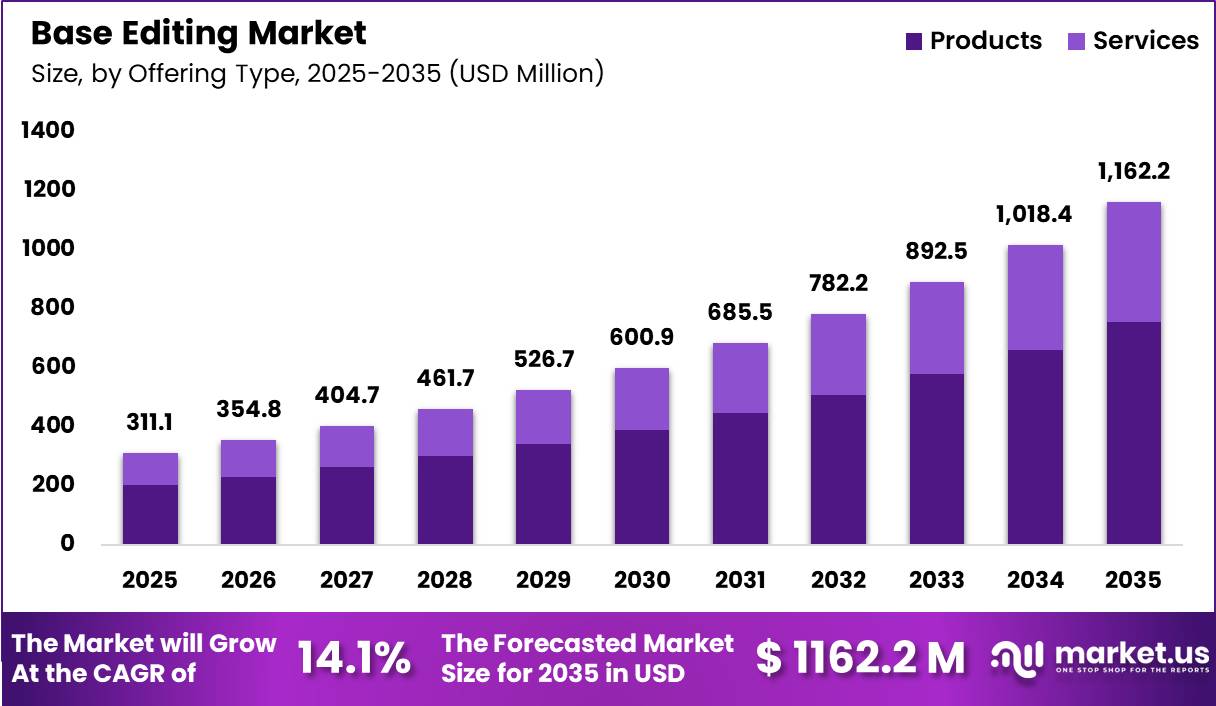
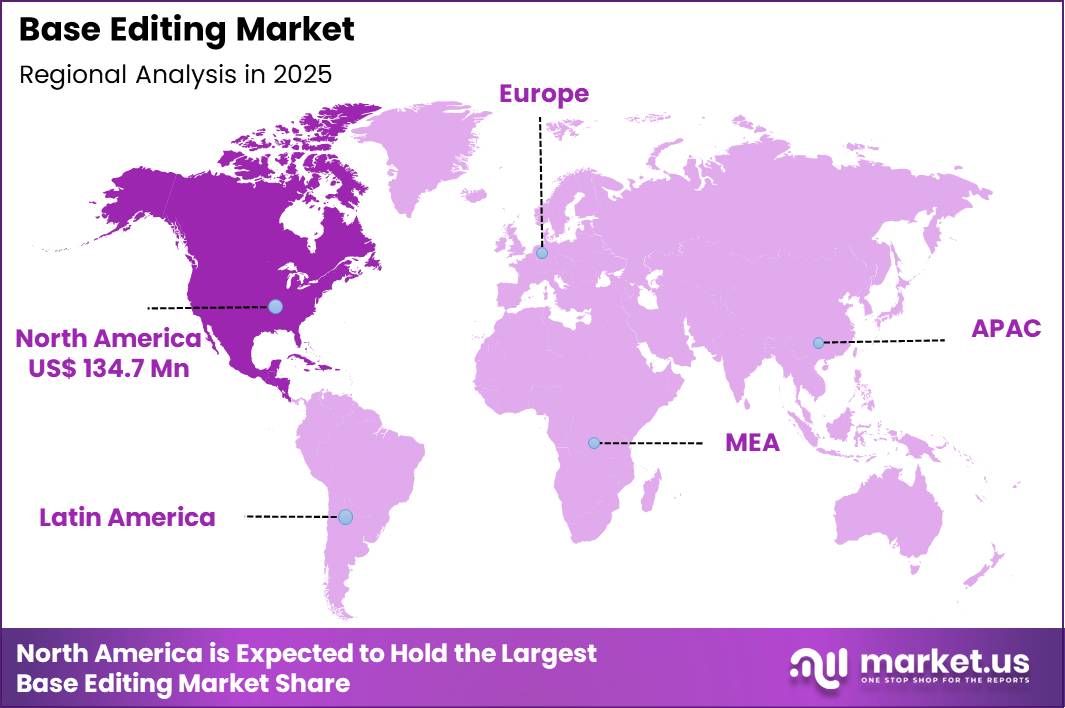
The Global Base Editing Market is projected to reach US$ 1162.2 Million by 2035, rising from US$ 311.1 Million in 2025, at a CAGR of 14.1% during the forecast period from 2026 to 2035. In 2025, North America dominated the global market, accounting for 43.3% of share with a revenue of US$ 134.7 Million.
Base editing is an advanced genome-editing technology that enables scientists to precisely convert one DNA base into another without creating double-strand DNA breaks. This approach offers improved editing accuracy and reduced unintended genetic changes compared with conventional CRISPR-Cas9 methods, making it highly promising for the treatment of inherited genetic disorders, cancer, and rare diseases.
The technology is also expanding its role in drug discovery, functional genomics, and agricultural biotechnology. Growing investments in gene-editing research, coupled with increasing clinical development of precision genetic therapies, continue to strengthen market expansion.
According to the U.S. National Institutes of Health (NIH), gene-editing technologies are being actively investigated for a broad range of inherited diseases, including sickle cell disease, beta-thalassemia, and retinal disorders.
In parallel, the U.S. Food and Drug Administration (FDA) continues to provide regulatory guidance for human gene therapy products, supporting the clinical translation of innovative genome-editing platforms. The World Health Organization (WHO) has also emphasized the importance of responsible governance and international oversight for human genome editing, reflecting the growing global focus on safe clinical adoption.
Product innovation, expanding collaborations between biotechnology companies and academic institutions, and increasing funding for genomic medicine are accelerating commercialization. As clinical evidence continues to strengthen and regulatory frameworks evolve, base editing is expected to become an increasingly important platform for precision medicine, supporting long-term growth across therapeutic research and advanced biotechnology applications.
Key Takeaways
- Market Size: The Base Editing Market size was US$ 311.1 Million in 2025.The market is estimated to grow to US$ 1,162.2 Million by 2035.
- Market Share: The Compound Annual Growth Rate (CAGR) of the market from 2026 to 2035 will be 14.1%.
- By Offering: Products has the largest market share, accounting for 65.0% of total sales.
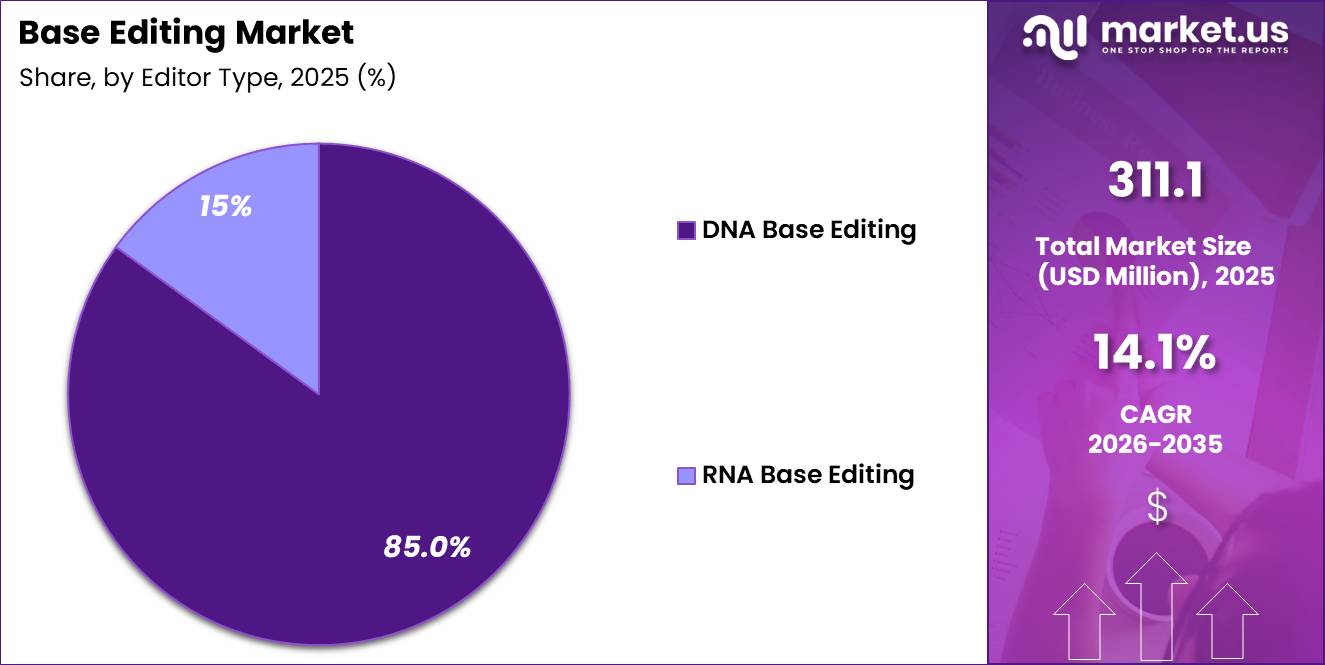
- By Editor Type:DNA Base Editing dominate the segment, accounting for 85.0% of total revenue.
- By End User:Pharmaceutical & Biotechnology Companies leads the segment, accounting for 45.2% of total revenue.
- Regional: North America is the dominant regional market, accounting for 43.3% of global sales.
Offering Analysis
The Products segment dominated the Base Editing Market in 2025, accounting for 65.0% of the global market share. This leadership is driven by the widespread adoption of base editing reagents, engineered enzymes, guide RNA kits, plasmids, viral vectors, cell lines, and laboratory consumables required for genome editing workflows.
Continuous advancements in CRISPR-derived base editors and increasing commercialization of ready-to-use research kits have significantly improved editing precision, reproducibility, and workflow efficiency. Pharmaceutical companies, biotechnology firms, academic institutes, and contract research organizations increasingly rely on standardized products to accelerate preclinical research, target validation, and therapeutic discovery.
The growing number of gene-editing studies focused on correcting point mutations further supports demand for high-quality editing products. Moreover, manufacturers continue expanding product portfolios with next-generation adenine and cytosine base editors, optimized delivery systems, and high-fidelity editing tools that minimize off-target effects. Regulatory emphasis on research quality and reproducibility also encourages adoption of validated commercial products over laboratory-developed alternatives.
The Services segment represented 35.0% of the market in 2025 and continues to gain traction as organizations increasingly outsource complex genome editing activities. Specialized services including custom cell engineering, gene editing design, sequencing validation, functional genomics studies, and preclinical research support enable customers to access advanced technical expertise without significant infrastructure investments.
Rising collaborations between biotechnology companies, research institutions, and contract research organizations are expected to sustain steady growth in this segment.
Editor Type Analysis
The DNA Base Editing segment held the largest share of the Base Editing Market in 2025, capturing 85.0% of total revenue. Its dominance reflects the extensive use of DNA-targeted base editors for permanently correcting single-nucleotide mutations associated with inherited genetic disorders and various diseases.
Cytosine base editors (CBEs) and adenine base editors (ABEs) have become essential tools for precise genome modification without introducing double-stranded DNA breaks, reducing the risk of unwanted genomic rearrangements. Their broad applicability in therapeutic development, disease modeling, functional genomics, and agricultural biotechnology has accelerated adoption across research and commercial settings.
Ongoing improvements in editing efficiency, expanded targeting windows, and enhanced specificity continue to strengthen the clinical and research potential of DNA base editing technologies. Increasing investments in gene-editing drug development and precision medicine further reinforce demand for DNA base editing platforms worldwide.
The RNA Base Editing segment accounted for 15.0% of the market in 2025. Although smaller, it is emerging as an attractive alternative for applications requiring temporary and reversible genetic modifications without permanent changes to the genome.
RNA base editing offers potential advantages in treating conditions where transient therapeutic intervention is preferred and may reduce long-term safety concerns. Continued innovation in RNA-targeting enzymes and delivery technologies is expected to drive future expansion of this segment.
End User Analysis
Pharmaceutical & Biotechnology Companies dominated the Base Editing Market in 2025, accounting for 45.2% of the global market share. Their leadership is supported by substantial investments in gene-editing research, therapeutic pipeline expansion, and precision medicine programs.
These organizations actively employ base editing technologies for target identification, functional genomics, disease modeling, and the development of next-generation treatments for genetic, oncological, and rare diseases.
Growing strategic collaborations with academic institutions, technology providers, and contract research organizations have accelerated innovation while improving access to advanced editing platforms. Increasing clinical translation of gene-editing therapies and rising private investment in biotechnology continue to strengthen demand from this end-user segment.
Academic and research institutes represent another significant end-user category, benefiting from expanding government funding for genomic research and increasing adoption of CRISPR-derived technologies in basic science and translational medicine.
Contract research organizations are also experiencing rising demand as pharmaceutical and biotechnology companies outsource genome editing, sequencing, and validation services to improve operational efficiency and reduce development timelines.
Additionally, hospitals and clinical research centers are gradually incorporating base editing into translational and early-stage clinical studies investigating novel therapies for inherited disorders. Collectively, these end users are expected to support sustained market expansion as genome editing technologies continue advancing toward broader research and therapeutic applications.
Market Segmentations
By Offering
- Products
- Services
By Editor Type
- DNA Base Editing
- RNA Base Editing
By End User
- Pharmaceutical & Biotechnology Companies
- Academic & Research Institutes
- Contract Research Organizations
- Others
Drivers
Manufacturing platformization and CMC knowledge reuse acceleration
Base editing is capital intensive not only because of biology risk but because each clinical asset traditionally carries a heavy CMC burden spanning editor production, guide RNA synthesis, formulation controls, potency assays, stability, release testing, and comparability after process changes.
FDA guidance emphasizes that even early IND packages must define composition, mechanism, dose related assay qualification, and controls appropriate to development stage, and that combination product style architectures require clearly separated manufacturing information for each component.
In 2026, the more consequential shift is FDA’s willingness in draft guidance to let genome editing sponsors reuse public or platform knowledge with product specific rationale, including more pragmatic treatment of incremental manufacturing changes and prior data relevance.
That matters because companies such as Beam are already operating multi asset strategies and reported completion of all doses for risto cel manufacturing by December 2025 while extending runway into 2029, evidence that manufacturing maturity is becoming a competitive moat rather than a back office function.
As platformized CMC reduces the number of de novo assays, bridging studies, and lot specific surprises needed per new program, development cost per candidate falls and CDMO utilization becomes more efficient, supporting an estimated plus 1.6 percentage point lift to CAGR.
| Driver | (~) % Impact on CAGR Forecast | Geographic Relevance | Impact Timeline |
|---|---|---|---|
| Clinical proof from in vivo liver programs | +2.4% | North America core, EU, UK, APAC translational hubs | Short term (≤ 2 years) |
| Regulatory streamlining for somatic genome editing | +1.8% | U.S. core, EU follow-through, UK spill-over | Short term (≤ 2 years) |
| LNP and GalNAc delivery maturation | +2.1% | U.S., EU, China, South Korea, Singapore corridors | Medium term (2-4 years) |
| Manufacturing platformization and CMC reuse | +1.6% | North America core, EU, selected APAC CDMO hubs | Medium term (2-4 years) |
| Rare-disease to cardiometabolic expansion | +2.0% | U.S. core, EU5, Japan, Gulf high-income markets | Medium term (2-4 years) |
| Capital durability and partnering validation | +1.4% | U.S. core, EU biotech clusters, APAC licensing markets | Short term (≤ 2 years) |
Challenges
GMP-grade base editing manufacturing capacity constraints
The base editing ecosystem relies on highly specialized GMP facilities capable of handling viral vectors, LNP systems, and complex plasmid constructs, yet as of 2026 fewer than 120 globally have demonstrable experience with base editing or closely related precision gene editing workflows, creating a structural capacity gap of an estimated 25 to 35% versus projected trial and precommercial demand.
Single suite facilities routinely run at 80 to 90 % utilization with campaign changeovers adding 3 to 7 days per batch, pushing effective lead times for clinical grade base editing materials to 7 to 10 months and inflating batch costs by 20 to 30% compared with conventional biologics, which translates into a realistic drag of roughly 1.2 % points on potential market CAGR as firms stagger trial starts and sequence programs to fit constrained slots instead of launching in parallel.
Strategically, sponsors are responding with multiyear CDMO framework agreements, dual sourcing of vector and LNP production across North America, Europe, and East Asia, and a gradual shift toward modular, single use infrastructure that can cut campaign changeover time by 30 to 40% and improve volumetric throughput by 15 to 20%, but these investments typically require 24 to 48 months of planning, permitting, and validation before materially easing current friction.
| Challenge | (~) % CAGR Friction Drag | Geographic Relevance | Mitigation Horizon |
|---|---|---|---|
| GMP-grade editing capacity | -1.2% | North America, EU, East Asia | Medium term (2–4 years) |
| High-precision off-target control | -0.9% | US, EU, China | Long term (≥ 4 years) |
| Clinical trial execution complexity | -1.0% | US, EU, APAC hubs | Medium term (2–4 years) |
| Specialized talent and skills gap | -0.8% | US, EU, Asia biotech clusters | Long term (≥ 4 years) |
| Regulatory-methodology uncertainty | -0.7% | US, EU, Asia regulators | Long term (≥ 4 years) |
| Capital cost and payer risk | -0.6% | US, Europe, high-income Asia | Medium term (2–4 years) |
Restraints
Regulatory safety scrutiny on emerging base editing therapies
Evolving regulatory scrutiny surrounding gene editing safety is expected to reduce the base editing market’s projected CAGR by approximately 2.3 % points through 2030. Increasing concerns regarding on-target and off-target effects are prompting regulatory agencies to impose stricter clinical evidence requirements, extending development timelines and increasing commercialization costs.
Experience gained from early CRISPR approvals and ongoing gene editing trials has encouraged regulators to require comprehensive off-target analysis, long-term durability assessments, and detailed immunogenicity evaluations. As a result, pivotal clinical programs for gene editing therapies are increasingly expected to span 8–10 years, compared with approximately 6–7 years for many conventional biologics.
For base editing therapies, demonstrating single-base precision requires extensive next-generation sequencing and long-read genomic analysis across large patient cohorts. Analytical expenses frequently exceed USD 30,000–50,000 per patient, substantially higher than those associated with traditional biologic studies. Consequently, early-stage development budgets commonly reach USD 150–250 million, while late-stage clinical programs often exceed USD 400 million.
These heightened safety expectations increase capital requirements, delay revenue generation, and reduce the number of candidates that remain commercially viable, particularly for smaller patient populations. Long-term post-approval monitoring, patient registries, and mandatory follow-up lasting 10–15 years further increase operating costs and payer caution, collectively moderating the overall growth trajectory of the global base editing market.
| Restraint | (~) % Impact on CAGR Forecast | Geographic Relevance | Impact Timeline |
|---|---|---|---|
| Evolving gene-editing safety scrutiny | -2.3% | US, EU5, UK, Japan, Korea | Medium term (2–4 years) |
| High GMP manufacturing and QC cost stack | -1.9% | North America core, EU, East Asia | Long term (≥ 4 years) |
| Complex IP thicket and licensing tolls | -1.6% | US, EU, China | Medium term (2–4 years) |
| Slow reimbursement and HTA evidence bar | -1.8% | US, EU, UK, Japan | Long term (≥ 4 years) |
| Talent, tooling, and CDMO capacity gaps | -1.4% | US, EU, China, Singapore hubs | Short to medium term (≤ 4 years) |
| Ethical, public-opinion, and geopolitical risk | -1.2% | Global, with EU and China focus | Long term (≥ 4 years) |
Opportunity
Enabling tools and platform monetization beyond drugs
A promising yet less crowded opportunity in the base editing market lies in monetizing the supporting research infrastructure rather than depending solely on therapeutic commercialization. This includes editor design, guide RNA optimization, delivery screening, off-target analysis, cell line engineering, and preclinical research services.
Beam Therapeutics has demonstrated the commercial potential of this approach, with collaboration revenue increasing to USD 31.7 million in Q1 2026 from USD 7.5 million in the corresponding period of the previous year, highlighting the value of strategic partnerships as a source of non-dilutive revenue.
Unlike conventional market strategies centered on drug approvals, this model generates recurring income from biopharmaceutical companies, CDMOs, and academic institutions, while reducing cash burn, accelerating returns on intellectual property, and improving operating margins through licensing and milestone-based revenue.
| Opportunity | (~) % Potential CAGR Upside | Geographic Relevance | Execution Window |
|---|---|---|---|
| Cardio prevention pivot | +2.8% | North America core, EU, Gulf, East Asia | Medium term (2-4 years) |
| Hepatic rare-disease platforming | +2.4% | US, EU5, Japan, South Korea | Short term (≤ 2 years) |
| Ex vivo hematology scale-out | +2.1% | US, EU, India, GCC, Africa hubs | Medium term (2-4 years) |
| CNS/ocular delivery adjacency | +1.7% | US, EU, Japan | Long term (≥ 4 years) |
| Enabling-tools monetization | +1.5% | North America, EU, APAC research clusters | Short term (≤ 2 years) |
| Regional manufacturing roll-ups | +1.9% | US, EU, Singapore, South Korea, UAE | Medium term (2-4 years) |
Regional Analysis
In 2025, North America dominated the global market, accounting for 43.3% of share with a revenue of US$ 134.7 Million.
North America region’s leadership is supported by a highly developed biotechnology ecosystem, extensive investment in gene-editing research, and the presence of leading biotechnology companies, academic research centers, and contract research organizations.
Strong public and private funding for genomic medicine, coupled with favorable regulatory pathways for advanced therapeutics and growing clinical trial activity, continues to accelerate the adoption of base editing technologies. Collaborations between pharmaceutical companies, research institutes, and healthcare organizations further strengthen innovation and commercialization across the United States and Canada.
Europe represents the second-largest regional market, driven by increasing government support for precision medicine initiatives, expanding biotechnology infrastructure, and rising investments in rare disease and oncology research. Countries such as Germany, the United Kingdom, France, and Switzerland are actively advancing genome-editing programs through academic-industry collaborations and public research funding.
The Asia-Pacific region is expected to register the fastest growth during the forecast period, supported by expanding biotechnology capabilities, increasing healthcare expenditure, and substantial investments in genomic research across China, Japan, South Korea, and Singapore.
Growing clinical research activities and supportive government initiatives are fostering rapid market expansion. Meanwhile, Latin America and the Middle East & Africa are emerging markets, benefiting from improving research infrastructure, rising awareness of advanced gene-editing technologies, and increasing participation in international clinical research collaborations, although adoption remains comparatively lower than in developed regions.
Key Regions and Countries
North America
- The US
- Canada
Europe
- Germany
- France
- The U.K.
- Italy
- Spain
- Russia & CIS
- Rest of Europe
Asia Pacific
- China
- India
- Japan
- South Korea
- ASEAN
- Australia & New Zealand
- Rest of Asia Pacific
Middle East & Africa
- GCC
- South Africa
- Rest of Middle East & Africa
Latin America
- Brazil
- Mexico
- Rest of Latin America
Key Player Analysis
The Base Editing Market is moderately consolidated, with competition led by a combination of genome-editing innovators, life science technology providers, and specialized manufacturing organizations. The market remains in an early commercialization phase, where clinical validation, intellectual property portfolios, and translational research capabilities are key competitive differentiators.
Companies are directing investments toward next-generation precision genome editing platforms that improve editing accuracy, minimize off-target effects, and expand therapeutic applications across inherited genetic disorders, oncology, cardiovascular diseases, and rare diseases.
The competitive landscape can be viewed across three strategic tiers. Innovation-driven biotechnology companies—including Beam Therapeutics Inc., Prime Medicine Inc., Verve Therapeutics Inc., Metagenomi Inc., Bio Palette Co., Ltd., Mammoth Biosciences Inc., and Cellectis S.A. primarily focus on advancing proprietary editing platforms and expanding clinical pipelines.
Clinical-stage genome editing specialists such as Intellia Therapeutics Inc., CRISPR Therapeutics AG, Editas Medicine Inc., and Sangamo Therapeutics Inc. emphasize therapeutic development, strategic licensing, and collaborations to accelerate clinical translation.
Supporting this ecosystem, GenScript Biotech Corporation, Danaher Corporation, Merck KGaA, Thermo Fisher Scientific Inc., Revvity, Inc., Maravai LifeSciences Holdings Inc., ElevateBio LLC, Synthego Corporation, and Aldevron L.L.C. provide critical research tools, GMP manufacturing, cell engineering, analytical technologies, and nucleic acid production capabilities that enable scalable product development.
Competition is driven by sustained R&D investment, expansion of intellectual property, strategic collaborations with pharmaceutical and academic organizations, and continuous pipeline advancement.
Companies are increasingly integrating manufacturing platforms, biomarker research, genomic analytics, and precision medicine workflows to improve development efficiency and clinical outcomes. This ecosystem-oriented strategy strengthens competitive positioning while supporting broader adoption of base editing technologies across research and therapeutic applications.
Top Key Players
- Beam Therapeutics Inc.
- Intellia Therapeutics Inc.
- CRISPR Therapeutics AG
- Editas Medicine Inc.
- Prime Medicine Inc.
- Verve Therapeutics Inc.
- Metagenomi Inc.
- Sangamo Therapeutics Inc.
- GenScript Biotech Corporation
- Danaher Corporation
- Merck KGaA
- Thermo Fisher Scientific Inc.
- Revvity, Inc.
- Maravai LifeSciences Holdings Inc.
- ElevateBio LLC
- Cellectis S.A.
- Bio Palette Co., Ltd.
- Mammoth Biosciences Inc.
- Synthego Corporation
- Aldevron L.L.C.
Recent Developments
- In June 2025, Eli Lilly announced an agreement to acquire Verve Therapeutics, strengthening its cardiovascular gene-editing portfolio through Verve’s in vivo editing programs.
- In February 2026, Beam Therapeutics announced a US$ 500 million strategic financing facility with Sixth Street to support commercialization of its base-editing pipeline, including risto-cel for sickle cell disease.
- In April 2026, Metagenomi announced a Nature Structural & Molecular Biology publication highlighting its proprietary compact CRISPR nuclease designed to improve genome-editing efficiency
Report Scope
| Report Features | Description |
|---|---|
| Market Value (2025) | US$ 311.1 Million |
| Forecast Revenue (2035) | US$ 1,62.2 Million |
| CAGR (2026-2035) | 14.1 % |
| Base Year for Estimation | 2025 |
| Historic Period | 2020-2024 |
| Forecast Period | 2026-2035 |
| Report Coverage | Revenue Forecast, Market Dynamics, Competitive Landscape, Recent Developments |
| Segments Covered | By Offering (Products, Services) By Editor Type (DNA Base Editing, RNA Base Editing) By End User (Pharmaceutical & Biotechnology Companies, Academic & Research Institutes, Contract Research Organizations, Others) |
| Regional Analysis | North America – The US, Canada; Europe – Germany, France, U.K., Italy, Spain, Russia & CIS, Rest of Europe; Asia Pacific – China, India, Japan, South Korea, ASEAN, Australia & New Zealand, Rest of Asia Pacific; Middle East & Africa – GCC, South Africa, Rest of Middle East & Africa; Latin America – Brazil, Mexico, Rest of Latin America |
| Competitive Landscape | Beam Therapeutics Inc.,Intellia Therapeutics Inc.,CRISPR Therapeutics AG,Editas Medicine Inc.,Prime Medicine Inc.,Verve Therapeutics Inc.,Metagenomi Inc.,Sangamo Therapeutics Inc.,GenScript Biotech Corporation,Danaher Corporation,Merck KGaA,Thermo Fisher Scientific Inc.,Revvity, Inc.,Maravai LifeSciences Holdings Inc.,ElevateBio LLC,Cellectis S.A.,Bio Palette Co., Ltd.,Mammoth Biosciences Inc.,Synthego Corporation,Aldevron L.L.C. |
| Customization Scope | Customization for segments, region/country-level will be provided. Moreover, additional customization can be done based on the requirements. |
| Purchase Options | We have three licenses to opt for: Single User License, Multi-User License (Up to 5 Users), Corporate Use License (Unlimited User and Printable PDF) |





































