


Market Overview
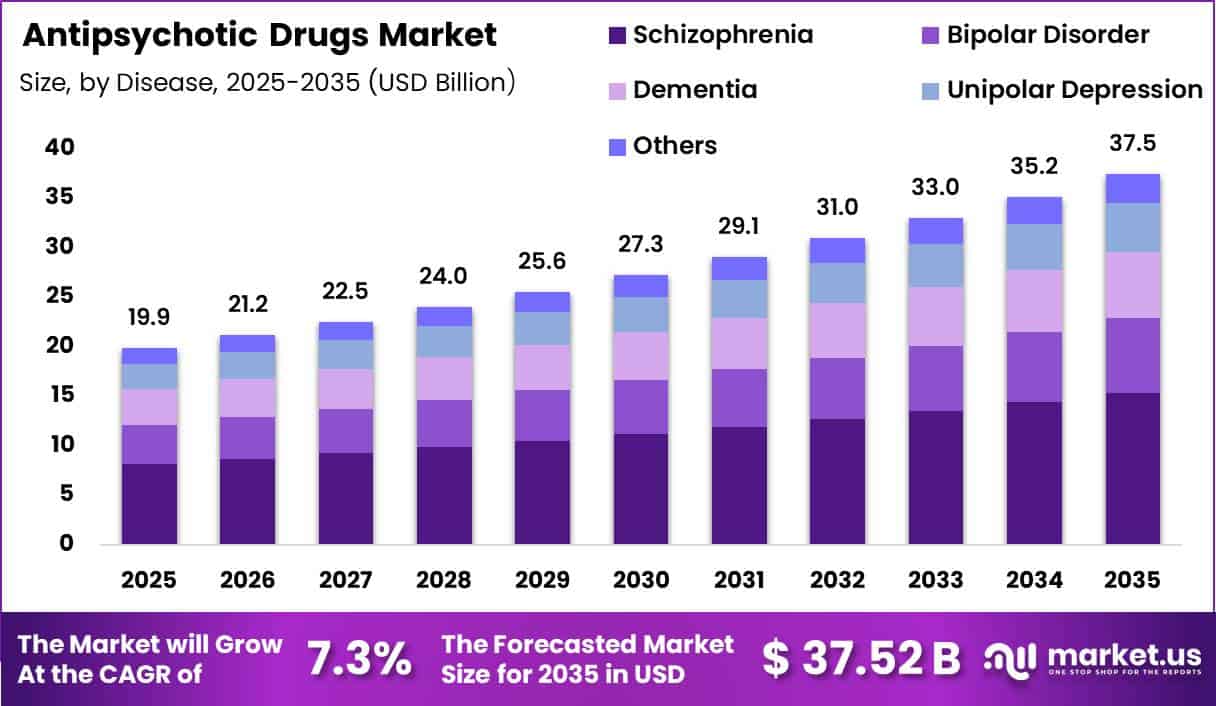
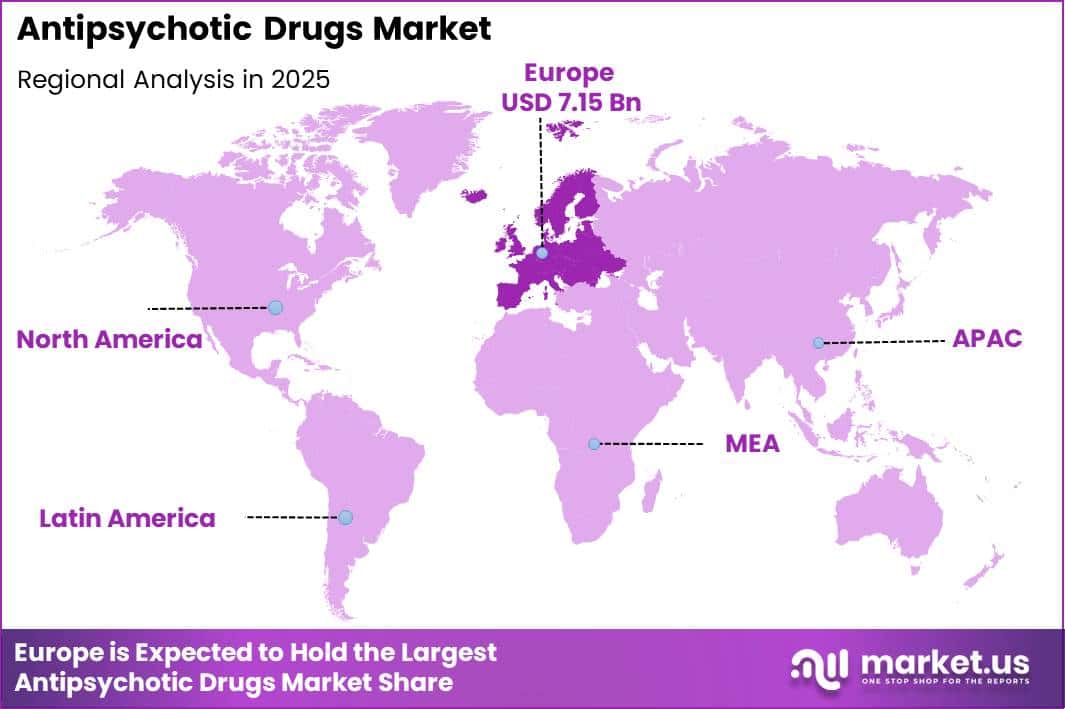
The Global Antipsychotic Drugs Market size is expected to be worth around US$ 37.52 Billion by 2035 from US$ 19.87 Billion in 2025, growing at a CAGR of 7.3% during the forecast period from 2026 to 2035. In 2025, Europe led the market, achieving over 36.0% share with a revenue of US$ 7.15 Billion.
The global use of antipsychotic drugs continues to expand as healthcare systems focus on improving the management of severe mental health conditions, including schizophrenia, bipolar disorder, and treatment-resistant depression.
Antipsychotic medications are a key component of psychiatric care, helping reduce symptoms such as hallucinations, delusions, mood instability, and severe behavioural disturbances. According to the World Health Organisation, schizophrenia affects approximately 24 million people worldwide, representing about 1 in 300 individuals globally, creating a sustained need for effective long-term treatment options.
In the United States, the demand for antipsychotic therapies is supported by the significant burden of mental health disorders. The National Institute of Mental Health reports that approximately 23.1 million U.S. adults experienced serious mental illness in 2022, representing around 8.3% of adults aged 18 or older. A substantial proportion of these patients require pharmacological interventions, including first-generation and second-generation antipsychotics, for symptom control and relapse prevention.
Advancements in psychiatric treatment are driving greater adoption of newer atypical antipsychotics, long-acting injectable formulations, and personalised medication approaches designed to improve adherence and reduce relapse rates. The National Institute for Health and Care Excellence highlights antipsychotic medication as a central treatment option for schizophrenia management alongside psychological and social interventions.
Increasing diagnosis rates, rising awareness of mental health conditions, and improvements in access to psychiatric services are expected to support continued demand for antipsychotic drugs. However, treatment challenges such as medication side effects, adherence issues, and the need for continuous monitoring remain important considerations in improving patient outcomes.
Key Takeaways
- Market Size: The Global Antipsychotic Drugs Market size was US$ 19.87 billion in 2025. The market is estimated to grow to US$ 37.52 billion by 2035.
- Market Share: The Compound Annual Growth Rate (CAGR) of the market from 2026 to 2035 will be 7.3%.
- Disease: Schizophrenia leads the segment, accounting for 41.0% of total revenue.
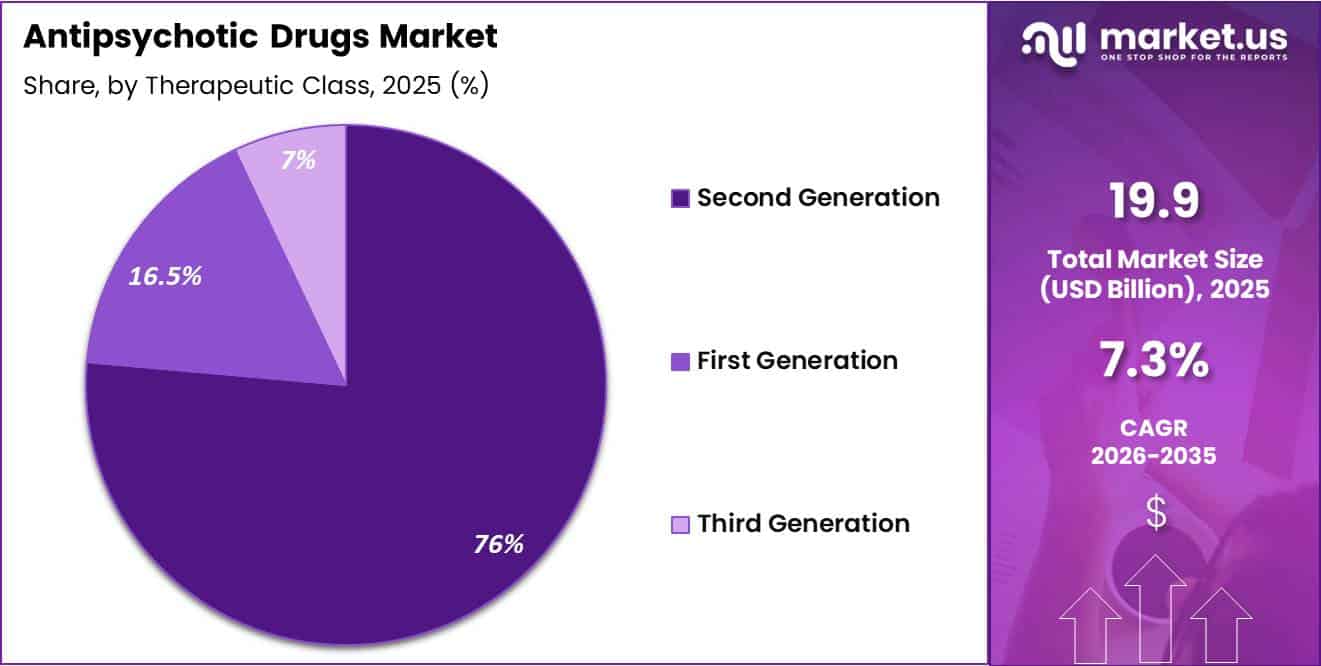
- Therapeutic Class: Second Generation dominates the segment, accounting for 76% of total revenue.
- Drug: Risperidone leads the drug segment, accounting for 30.0% of total revenue.
- Distribution Channel: Hospital Pharmacies dominate the segment, accounting for 45.0% of total revenue.
- Regional: Europe is the dominant regional market, accounting for 36% of global sales, holding US$ 7.15 billion in revenue.
Disease Analysis
The disease segment of the antipsychotic drugs market is led by schizophrenia, which dominates with a 41.0% market share in 2025, supported by the high disease burden, chronic nature of the disorder, and continued requirement for maintenance antipsychotic therapy to manage symptoms and prevent relapse.
Schizophrenia remains one of the primary indications for antipsychotic medications due to the need for long-term pharmacological intervention across acute and maintenance treatment phases.
Bipolar disorder represents the fastest-growing segment, accounting for a 20.0% share, driven by increasing recognition of mood disorder episodes requiring antipsychotic therapy for mania management, mood stabilisation, and relapse prevention.
Dementia contributes 18.0% of the market, supported by the use of selected antipsychotic treatments for managing severe behavioural and psychological symptoms associated with dementia, although clinical guidelines emphasise cautious utilisation due to safety considerations.
Unipolar depression holds a 13.0% share, primarily supported by the growing use of certain atypical antipsychotics as adjunctive therapies in treatment-resistant depression cases. Other indications account for 8.0% share, including conditions involving psychosis-related symptoms and behavioural disturbances, contributing to the overall expansion of antipsychotic drug utilisation across diverse psychiatric care settings.
Therapeutic Class Analysis
The therapeutic class segment of the antipsychotic drugs market is dominated by second-generation antipsychotics, capturing a 76.0% market share in 2025, owing to their extensive clinical adoption, broader indications, and improved tolerability profiles compared with earlier therapies.
Second-generation antipsychotics, also known as atypical antipsychotics, are widely preferred in clinical practice due to their effectiveness in treating schizophrenia, bipolar disorder, and other psychiatric conditions while offering advantages in managing both positive and negative symptoms.
First-generation antipsychotics account for 16.5% of the market, supported by their long-established therapeutic history, continued use in specific clinical scenarios, and availability of cost-effective treatment options. However, their utilisation is influenced by concerns regarding extrapyramidal side effects and movement-related adverse effects.
Third-generation antipsychotics represent 7.0% of the market and are identified as the fastest-growing segment, driven by advancements in dopamine modulation approaches, improved safety profiles, and increasing adoption of newer agents designed to address limitations associated with previous drug classes. The evolving focus on personalised psychiatric treatment and improved patient adherence continues to support innovation across therapeutic classes.
Drug Analysis
The drug segment of the antipsychotic drugs market is led by risperidone, accounting for a 30.0% market share in 2025, supported by its extensive clinical application, established efficacy profile, broad physician acceptance, and availability across multiple formulations, including oral and long-acting injectable options. Risperidone continues to maintain strong adoption due to its use in managing schizophrenia, bipolar disorder, and other psychiatric conditions requiring sustained symptom control.
Quetiapine represents a significant segment, driven by its wide therapeutic application in schizophrenia, bipolar depression, and adjunctive treatment of major depressive disorder. Aripiprazole holds a prominent position due to its favourable tolerability profile, partial dopamine agonist mechanism, and increasing use across various psychiatric indications.
Brexpiprazole is identified as the fastest-growing drug segment, supported by expanding clinical adoption, improved symptom management capabilities, and its role in treating schizophrenia and adjunctive major depressive disorder.
Paliperidone palmitate continues to gain importance due to its long-acting injectable formulation, which supports treatment adherence and relapse prevention. Olanzapine and other antipsychotic drugs contribute to market growth through established clinical utilisation and continued demand across global psychiatric care systems.
Distribution Channel Analysis
The distribution channel segment of the antipsychotic drugs market is dominated by hospital pharmacies, accounting for a 45.0% market share in 2025, supported by higher prescription volumes, supervised medication dispensing, and extensive utilisation within institutional healthcare environments.
Hospital pharmacies play a critical role in providing antipsychotic medications for newly diagnosed patients, acute psychiatric care, inpatient treatment programs, and patients requiring close clinical monitoring.
Retail pharmacies and drug stores represent another significant distribution channel, supported by the increasing availability of outpatient psychiatric treatments, chronic disease management, and prescription refilling requirements for long-term medication users. These channels provide convenient access for patients receiving maintenance therapy outside hospital settings.
Online pharmacies are identified as the fastest-growing segment, driven by increasing digital healthcare adoption, improved access to prescription medications, and growing consumer preference for convenient medicine delivery services.
The expansion of telepsychiatry and remote patient management models is further supporting online pharmacy growth by improving medication accessibility for individuals requiring continuous psychiatric treatment. Overall, evolving healthcare delivery models and increasing emphasis on patient convenience are reshaping antipsychotic drug distribution pathways globally.
Key Market Segments
By Disease
- Schizophrenia
- Bipolar Disorder
- Dementia
- Unipolar Depression
- Others
By Therapeutic Class
- First Generation
- Second Generation
- Third Generation
By Drug
- Risperidone
- Quetiapine
- Aripiprazole
- Brexpiprazole
- Paliperidone Palmitate
- Olanzapine
- Others
By Distribution Channel
- Hospital Pharmacies
- Retail Pharmacies / Drug Stores
- Online Pharmacies
Driver
Rising treated burden in schizophrenia and severe mental illness
The first structural growth engine is not just prevalence, but the gap between prevalence and formal treatment capture. WHO states that nearly 1 in 7 people globally, or 1.1 billion people, were living with a mental disorder in 2021, while schizophrenia alone affects about 23 million people worldwide, and only 29 % of people with psychosis receive formal mental health care. This combination implies a large untreated or undertreated pool that can still convert into prescription demand as diagnosis rates, referral pathways, and continuity of care improve.
For antipsychotics, this matters because schizophrenia patients have a life expectancy about nine years below the general population and often require medication plus psychosocial support, making pharmacotherapy a recurring rather than episodic revenue stream.
From a forecasting standpoint, even a modest increase in treated penetration from a low base produces outsized volume leverage if formal psychosis care coverage rises only a few % points in large public systems; the incremental patient additions can exceed the volume effect from ordinary population growth, especially in urbanising APAC and public insurance-heavy markets.
| Driver | (~) % Impact on CAGR Forecast | Geographic Relevance | Impact Timeline |
|---|---|---|---|
| Rising treated burden in schizophrenia and severe mental illness | +1.4% | North America core, EU, APAC urban systems, LMIC catch-up | Medium term (2-4 years) |
| Long-acting injectables improve adherence and reduce relapse costs | +1.8% | North America core, EU, Australia, advanced APAC | Short term (≤ 2 years) |
| New-mechanism innovation after muscarinic entry broadening treatment mix | +1.2% | U.S. launch core, EU follow-on, Japan/Korea high-value markets | Medium term (2-4 years) |
| Protected formulary access and Medicare benefit redesign sustaining paid demand | +0.9% | U.S. core, spill-over to commercial and Medicaid management | Short term (≤ 2 years) |
| Community mental-health scale-up and low treatment coverage are creating expansion headroom | +1.1% | LMICs, South Asia, Africa, Latin America, and selected ASEAN | Long-term (≥ 4 years) |
| Bipolar maintenance use and a wider severe-mood-disorder prescribing base | +0.8% | U.S., EU, Canada, Gulf, urban APAC | Medium term (2-4 years) |
Challenge
Polypharmacy complexity in antipsychotic treatment
Widespread antipsychotic polypharmacy introduces both clinical risk and operational inefficiency in psychiatric care, reducing overall treatment system effectiveness rather than driving meaningful therapeutic gains. Observational data show relatively high rates of concurrent antipsychotic use, particularly in severe mental illness and intellectual disability populations, often involving off-label or non-standard combinations.
For example, in some cohorts of adults with intellectual disability, antipsychotic prescribing rates approach 43.7 %, with polypharmacy more common in institutional or residential settings. Across broader schizophrenia populations, studies suggest that 20 to 40 % of patients may be exposed to some form of combination antipsychotic therapy at any given time.
This complexity increases monitoring requirements such as metabolic panels, ECGs, and blood pressure tracking, raises adverse event risk including sedation, extrapyramidal symptoms, metabolic effects, and hypertension, and contributes to higher medication switching and discontinuation rates. These factors increase clinical workload and reduce prescribing efficiency, while regulatory and guideline pressure continues to favour monotherapy.
Overall, this structural complexity is estimated to reduce achievable market CAGR by approximately 0.8 % points due to higher system costs, cautious prescribing behaviour, and reduced treatment optimisation efficiency. Mitigation strategies include standardised prescribing pathways, therapeutic drug monitoring, and structured multidisciplinary review to gradually reduce unnecessary polypharmacy over time.
| Challenge | (~) % CAGR Friction Drag | Geographic Relevance | Mitigation Horizon |
|---|---|---|---|
| Treatment access gaps | -1.4% | LMICs, fragmented care systems | Long-term (≥ 4 years) |
| Chronic drug shortages | -1.1% | North America, Europe, global generics hubs | Medium term (2-4 years) |
| Metabolic safety burden | -1.0% | High-income urban centres, ageing populations | Long-term (≥ 4 years) |
| Polypharmacy complexity | -0.8% | Hospital networks, long-term care settings | Medium term (2-4 years) |
| Regulatory and safety flux | -0.7% | US, EU, major APAC regulators | Medium term (2-4 years) |
| Talent and care model gaps | -0.9% | Global, especially LMICs and rural regions | Long-term (≥ 4 years) |
Restraints
Antipsychotic treatment adherence erosion and market constraints
Antipsychotic demand is structurally constrained by poor real-world treatment persistence, where diagnosis rates may remain stable, but long-term medication continuity breaks down early and frequently.
Although CMS frameworks often use a Proportion of Days Covered threshold of 80 % to define adherence in schizophrenia treatment, real-world adherence is closer to 50 %, with primary nonadherence reported at 31.7 % in some cohorts and broader estimates of nonadherence ranging from 30 to 70 %.
This gap between prescriptions written and sustained medication use significantly reduces effective treatment exposure, particularly for oral generics where monthly refill interruptions quickly translate into lost annual revenue equivalents. It also increases relapse risk, drives reactive switching rather than stable maintenance therapy, and reinforces payer caution around expanding branded formulary coverage.
To counteract this, manufacturers increasingly invest in adherence support programs, long-acting injectable conversion strategies, and digital monitoring tools. However, these measures increase selling and support costs and only partially recover lost demand. Overall, adherence erosion is estimated to reduce achievable CAGR by approximately 1.4 % points in prescription-heavy markets due to sustained leakage between initiation and long-term maintenance therapy.
| Restraint | (~) % Impact on CAGR Forecast | Geographic Relevance | Impact Timeline |
|---|---|---|---|
| Adherence erosion | -1.4% | North America core, EU5, urban APAC | Short term (≤ 2 years) |
| Metabolic side-effect burden | -1.2% | North America core, EU, Japan, South Korea | Medium term (2-4 years) |
| Generic price compression | -1.0% | U.S. core, EU tenders, LATAM public systems | Medium term (2-4 years) |
| Supply shortage volatility | -0.9% | U.S., EU, select APAC import markets | Short term (≤ 2 years) |
| Dementia-use safety limits | -0.8% | North America core, EU, developed APAC | Long-term (≥ 4 years) |
| Access and community-care gaps | -1.1% | LMICs, rural U.S., frontier APAC, Africa | Long-term (≥ 4 years) |
Opportunity
Integrated digital platforms for antipsychotic adherence and outcomes
Integrated digital platforms combining medication adherence tracking, symptom reporting, and outcomes analytics for antipsychotic patients remain in an early stage and are not fully reflected in 2026 baseline forecasts, which largely assume traditional prescribing and follow-up models.
Given the chronic and disabling nature of conditions such as schizophrenia and bipolar disorder, the burden of non-adherence and poor monitoring is significant. A key opportunity is embedding antipsychotic treatment into subscription-based digital ecosystems using smartphones and clinical dashboards. These platforms could improve adherence by 15 to 25 % and reduce relapse events by 10 to 20 %, lowering hospitalisation costs and improving long term outcomes.
If 10 to 15 % of patients in North America, Europe, and urban APAC adopt such systems by 2030, with annual fees of USD 80 to 120 per patient, incremental revenue could reach USD 3 to 5 billion. This could also drive 3 to 5 % points of margin expansion and contribute approximately 1.5 % points of CAGR upside.
However, most current digital mental health tools focus on general wellness rather than antipsychotic specific adherence and pharmacovigilance, making this an emerging rather than established growth driver.
| Opportunity | (~) % Potential CAGR Upside | Geographic Relevance | Execution Window |
|---|---|---|---|
| Long-acting depot expansion into underserved LMICs | +2.0% | APAC emerging, Africa, LatAm | Medium term (2-4 years) |
| Integrated digital adherence and outcomes platforms | +1.5% | North America core, EU, urban APAC | Short term (≤ 2 years) |
| Community-based generic optimization and bundling | +1.2% | India, Southeast Asia, Africa | Medium term (2-4 years) |
| Precision psychiatry and biomarker-linked treatment pathways | +1.8% | North America, EU, Japan | Long-term (≥ 4 years) |
| Collaborative care and primary-care channel monetisation | +1.0% | North America, EU, upper-middle-income APAC | Short–Medium (≤ 4 years) |
| Specialised access models for high-risk populations (migrants, youth) | +1.3% | EU, UK, Middle East, urban APAC | Medium–Long (≥ 3 years) |
Regional Analysis
In 2025, Europe led the market, achieving over 36.0% share with a revenue of US$ 7.15 billion. The regional landscape of the antipsychotic drugs market is influenced by the prevalence of psychiatric disorders, healthcare infrastructure development, treatment accessibility, and the adoption of advanced mental health management approaches.
North America represents a significant market, supported by the high diagnosis rate of mental health conditions, strong presence of specialised psychiatric care facilities, and widespread adoption of second-generation antipsychotics and long-acting injectable formulations. The region benefits from established healthcare systems, increased awareness of schizophrenia and bipolar disorder management, and continuous investments in mental health services.
Europe demonstrates steady market growth due to expanding mental healthcare programs, government initiatives supporting psychiatric treatment access, and increasing focus on improving outcomes for individuals with severe mental illnesses. Favourable reimbursement frameworks and clinical guideline-based treatment approaches contribute to sustained demand for antipsychotic therapies across major European countries.
Asia Pacific is projected to experience the fastest growth, driven by rising awareness of mental health disorders, improving healthcare infrastructure, increasing availability of psychiatric medications, and expanding access to professional mental healthcare services. Growing investments in healthcare modernisation and increasing diagnoses of schizophrenia, bipolar disorder, and depression are supporting regional expansion.
Latin America, the Middle East & Africa regions are gradually developing due to improving healthcare access, rising mental health awareness campaigns, and efforts to strengthen psychiatric care systems. However, limited specialist availability and treatment access disparities remain key challenges. Overall, increasing global recognition of mental health needs and advancements in pharmacological therapies continue to support the expansion of the antipsychotic drugs market across all regions.
Key Regions and Countries
North America
- The US
- Canada
Europe
- Germany
- France
- The U.K.
- Italy
- Spain
- Russia & CIS
- Rest of Europe
Asia Pacific
- China
- India
- Japan
- South Korea
- ASEAN
- Australia & New Zealand
- Rest of Asia Pacific
Middle East & Africa
- GCC
- South Africa
- Rest of the Middle East & Africa
Latin America
- Brazil
- Mexico
- Rest of Latin America
Key Player Analysis
Competitive advantage in the global antipsychotic drugs market is achieved through broad therapeutic class portfolio coverage spanning first-, second-, and third-generation antipsychotics, established hospital formulary relationships supporting institutional schizophrenia and bipolar disorder procurement, and continued investment in next-generation partial dopamine agonist and novel mechanism antipsychotic pipeline development.
Major strategic priorities for leading manufacturers include expansion of long-acting injectable antipsychotic formulations addressing medication adherence challenges in schizophrenia maintenance therapy, development of branded and generic second-generation antipsychotics serving the dominant therapeutic class segment, and growing investment in online pharmacy distribution channels serving chronic outpatient antipsychotic prescription demand.
Strong hospital pharmacy and retail pharmacy procurement relationships, combined with an expanding online pharmacy presence, represent a critical competitive differentiator for manufacturers serving the dominant schizophrenia treatment segment globally.
Top Key Players
- Johnson & Johnson (Janssen)
- Eli Lilly and Company
- Otsuka Pharmaceutical Co., Ltd.
- AstraZeneca plc
- Pfizer Inc.
- AbbVie Inc.
- Bristol-Myers Squibb Company
- H. Lundbeck A/S
- Alkermes, Inc.
- GSK plc (GlaxoSmithKline)
- Teva Pharmaceutical Industries
- Sun Pharmaceutical Industries Ltd.
- Dr. Reddy’s Laboratories Ltd.
- Hikma Pharmaceuticals PLC
- Viatris Inc.
Recent Developments
- In January 2026, Johnson & Johnson (Janssen) expanded its long-acting injectable paliperidone palmitate portfolio with a new six-monthly formulation, targeting hospital psychiatry departments and community mental health centres seeking extended dosing intervals for chronic schizophrenia maintenance therapy.
- In February 2026, Otsuka Pharmaceutical Co., Ltd. launched its aripiprazole twice-monthly long-acting injectable across European markets following EMA approval, targeting psychiatry clinics and community mental health centre institutional buyers seeking flexible LAI dosing options.
- In March 2026, AbbVie Inc. initiated Phase III clinical trials for its novel muscarinic receptor agonist antipsychotic, targeting treatment-resistant schizophrenia patients with inadequate response to existing second-generation dopamine-blocking agents.
- In April 2026, Teva Pharmaceutical Industries expanded its generic second-generation antipsychotic portfolio with new risperidone and quetiapine formulations, targeting hospital pharmacy and retail pharmacy institutional buyers across North American and European generic antipsychotic procurement channels.
Report Scope
| Report Features | Description |
|---|---|
| Market Value (2025) | US$ 19.87 Billion |
| Forecast Revenue (2035) | US$ 37.52 Billion |
| CAGR (2026-2035) | 7.3% |
| Base Year for Estimation | 2025 |
| Historic Period | 2020-2024 |
| Forecast Period | 2026-2035 |
| Report Coverage | Revenue Forecast, Market Dynamics, Competitive Landscape, Recent Developments |
| Segments Covered | By Disease (Schizophrenia, Bipolar Disorder, Dementia, Unipolar Depression, Others), By Therapeutic Class (First Generation, Second Generation, Third Generation), By Drug (Risperidone, Quetiapine, Aripiprazole, Brexpiprazole, Paliperidone Palmitate, Olanzapine, Others), By Distribution Channel (Hospital Pharmacies, Retail Pharmacies/Drug Stores, Online Pharmacies) |
| Regional Analysis | North America – The US, Canada; Europe – Germany, France, U.K., Italy, Spain, Russia & CIS, Rest of Europe; Asia Pacific – China, India, Japan, South Korea, ASEAN, Australia & New Zealand, Rest of Asia Pacific; Middle East & Africa – GCC, South Africa, Rest of Middle East & Africa; Latin America – Brazil, Mexico, Rest of Latin America |
| Competitive Landscape | Johnson & Johnson (Janssen), Eli Lilly and Company, Otsuka Pharmaceutical Co., Ltd., AstraZeneca plc, Pfizer Inc., AbbVie Inc., Bristol-Myers Squibb Company, H. Lundbeck A/S, Alkermes, Inc., GSK plc (GlaxoSmithKline), Teva Pharmaceutical Industries, Sun Pharmaceutical Industries Ltd., Dr. Reddy’s Laboratories Ltd., Hikma Pharmaceuticals PLC, Viatris Inc. |
| Customization Scope | Customization for segments, region/country-level will be provided. Moreover, additional customization can be done based on the requirements. |
| Purchase Options | We have three licenses to opt for: Single User License, Multi-User License (Up to 5 Users), Corporate Use License (Unlimited User and Printable PDF) |





































