


Market Overview
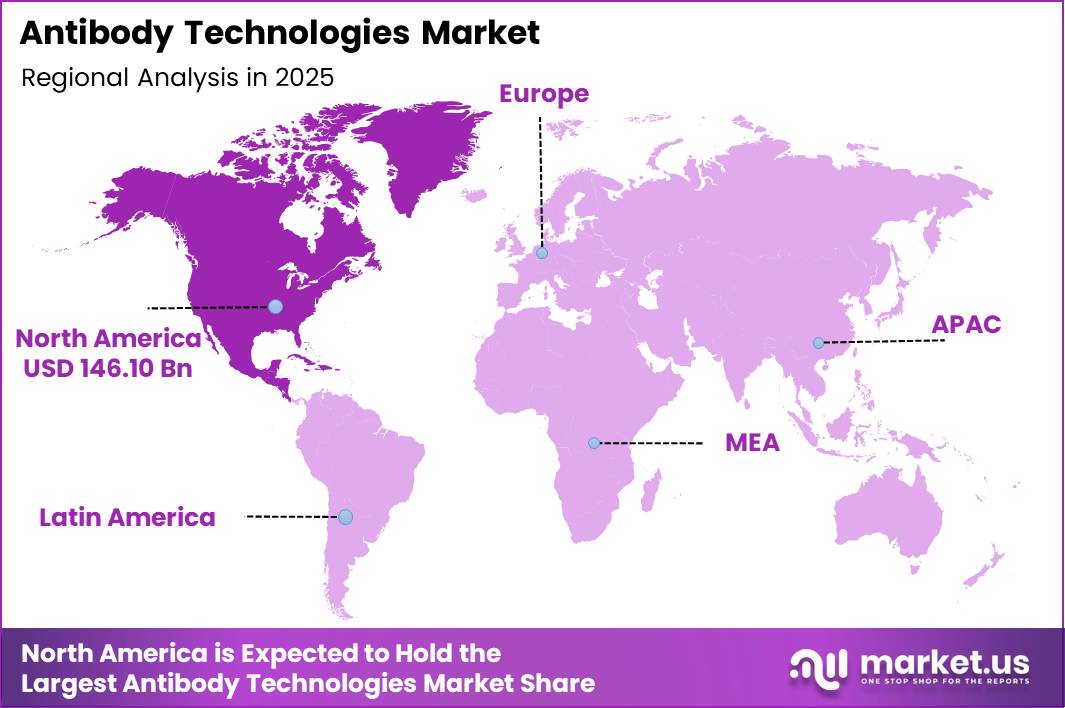
The Global Antibody Technologies Market size is expected to be worth around US$ 1000.34 Billion by 2035 from US$ 365.26 Billion in 2025, growing at a CAGR of 10.6% during the forecast period from 2026 to 2035. In 2025, North America led the market, achieving over 40% share with a revenue of US$ 146.1026 Billion.
The global antibody technologies market is advancing rapidly due to the expanding role of antibody-based platforms in precision medicine, immunotherapy, diagnostics, and targeted disease management. Antibody technologies involve the development, engineering, production, and application of antibodies such as monoclonal antibodies (mAbs), bispecific antibodies, antibody-drug conjugates (ADCs), and recombinant antibody platforms.
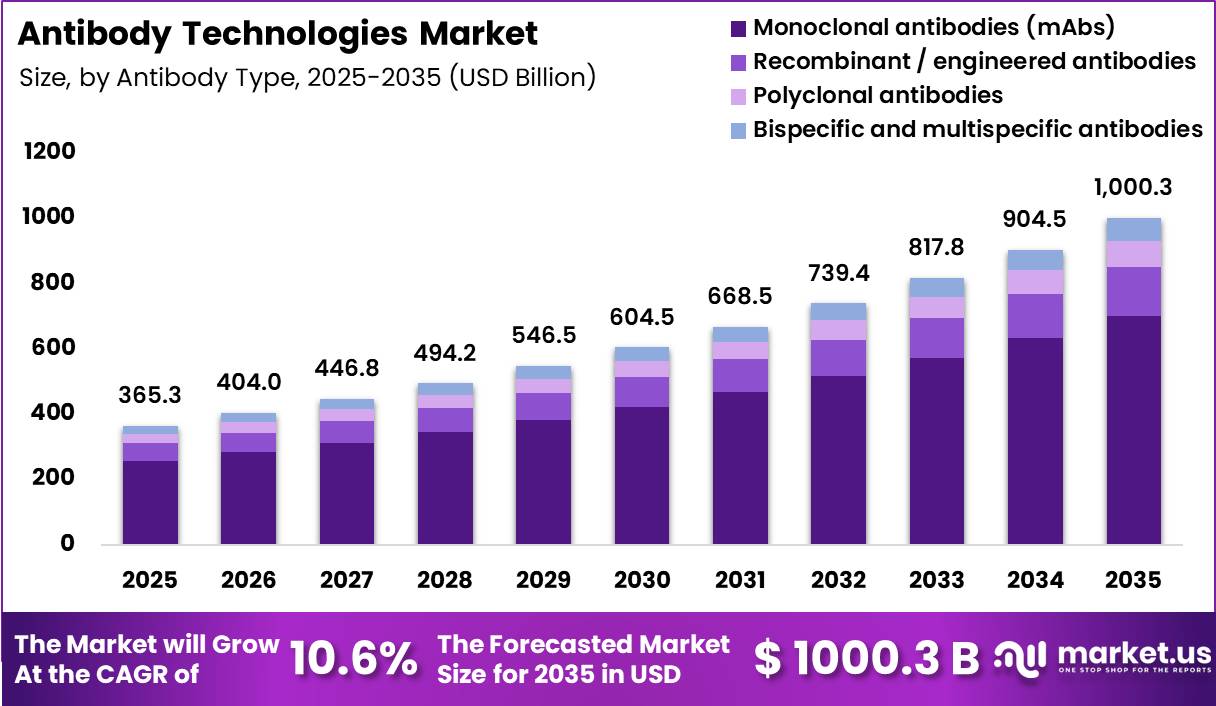
These technologies enable highly specific targeting of disease-related molecules and have become a major component of modern biopharmaceutical development. Monoclonal antibodies represent one of the most established antibody technology applications, with widespread use in oncology, autoimmune disorders, infectious diseases, and inflammatory conditions.
In cancer care, antibody-based therapies are used as targeted treatments that recognise specific markers on cancer cells and help stimulate immune responses against tumours. Antibody platforms are also being investigated for infectious disease prevention and treatment, including research programs evaluating monoclonal antibodies against pathogens such as malaria and Ebola.
Growth in antibody technologies is supported by increasing investment in biologics research, advances in antibody engineering, improved recombinant production methods, and the adoption of next-generation formats such as bispecific antibodies and antibody-drug conjugates.
The National Cancer Institute highlights monoclonal antibodies as an important category of targeted therapy, while the National Institutes of Health continues to support antibody-based approaches across multiple disease areas.
The market is expected to benefit from rising demand for personalised therapies, expansion of immunotherapy applications, and continued innovation in antibody discovery technologies, including computational and AI-assisted antibody design approaches.
Key Takeaways
- Market Size: The Global Antibody Technologies Market size was US$ 365.26 billion in 2025. The market is estimated to grow to US$ 1,000.34 billion by 2035.
- Market Share: The Compound Annual Growth Rate (CAGR) of the market from 2026 to 2035 will be 10.6%.
- Antibody Type: Monoclonal Antibodies (mAbs) has the largest market share, accounting for 70% of total antibody type revenue.
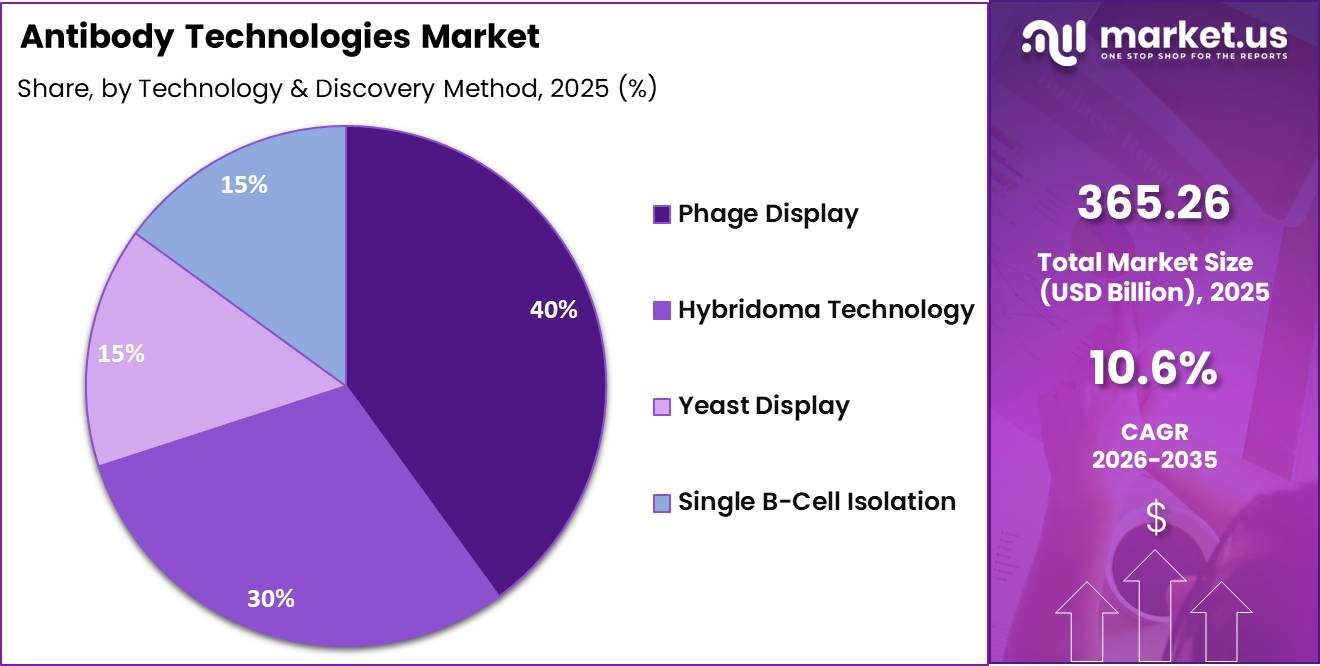
- Technology & Discovery Method: Phage Display leads the segment, accounting for 40% of total technology segment revenue.
- Application: Therapeutic Applications leads the segment, accounting for 85% of total application revenue.
- End User: Pharmaceutical & Biotechnology Companies leads the segment, accounting for 55% of total end-user revenue.
- Regional: North America is the dominant regional market, accounting for 40% of global revenue.
Antibody Type Analysis
The antibody type segment of the antibody technologies market is primarily led by monoclonal antibodies (mAbs), which account for approximately 70.0% of the market share in 2025, supported by their extensive adoption in therapeutic development, targeted treatments, and advanced biologics research.
Monoclonal antibodies remain the preferred antibody format due to their high specificity, reproducible manufacturing characteristics, and established clinical success in oncology, autoimmune disorders, inflammatory diseases, and infectious disease management.
The growing pipeline of antibody-based therapeutics and continued regulatory approvals of mAb products further strengthen their market position. Recombinant and engineered antibodies represent the second-largest segment with around a 15.0% share, driven by advancements in antibody engineering, improved affinity optimisation, enhanced stability, and development of next-generation biologics with customised therapeutic properties.
Polyclonal antibodies account for nearly 8.0% of the share and continue to maintain demand in research applications, diagnostic assays, and laboratory workflows due to their ability to recognise multiple epitopes.
Bispecific and multispecific antibodies represent approximately a 7.0% share but are emerging as a high-growth category due to their ability to engage multiple biological targets simultaneously, improving treatment precision and expanding opportunities in cancer immunotherapy and immune-cell activation approaches.
Technology & Discovery Method Analysis
The technology and discovery method segment of the antibody technologies market is dominated by Phage Display technology, accounting for approximately 40.0% market share in 2025, driven by its widespread application in antibody discovery, screening workflows, and development of high-affinity antibody candidates.
Phage Display enables rapid identification of antibody fragments with desired binding characteristics and has become an established platform in therapeutic antibody development due to its scalability, efficiency, and compatibility with recombinant antibody engineering.
Hybridoma Technology represents another significant segment with a nearly 30.0% share, supported by its long-standing role in generating monoclonal antibodies through hybrid cell-line production and its continued use in academic, diagnostic, and therapeutic research environments.
Yeast Display contributes around 15.0% share, benefiting from advantages such as eukaryotic expression systems, improved protein folding, and efficient screening of antibody libraries.
Single B-Cell Isolation also represents approximately 15.0% share and is identified as the fastest-growing technology segment due to its ability to directly identify naturally occurring antibody-producing cells, accelerate discovery timelines, and support personalised antibody development approaches. Increasing adoption of advanced screening platforms and high-throughput discovery methods is expected to further transform antibody identification and optimisation processes.
Application Analysis
The application segment of the antibody technologies market is primarily driven by therapeutic applications, which account for approximately 85.0% market share in 2025, representing the largest application category due to increasing adoption of antibody-based therapies across oncology, autoimmune diseases, infectious diseases, and other complex medical conditions.
Therapeutic antibodies, including monoclonal antibodies, antibody-drug conjugates, and bispecific antibodies, continue to gain importance due to their targeted mechanism of action, improved treatment specificity, and expanding clinical applications. Growth in biologics pipelines and increasing investment in precision medicine approaches are further supporting the dominance of therapeutic applications.
Non-therapeutic applications, including research and diagnostic uses, represent an important segment supported by extensive utilisation of antibodies in laboratory techniques such as Western blotting, ELISA, flow cytometry, immunohistochemistry (IHC), and immunofluorescence (IF).
In vitro diagnostics (IVD) applications use antibody technologies for biomarker detection, disease identification, and clinical testing, while companion diagnostics support personalised treatment decisions by identifying patients most likely to benefit from specific targeted therapies.
Continuous advancements in biomarker discovery, molecular diagnostics, and translational research are expected to expand the role of antibody technologies beyond therapeutic development and strengthen demand across research and diagnostic applications.
End User Analysis
The end-user segment of the antibody technologies market is led by pharmaceutical and biotechnology companies, which account for approximately 55.0% market share in 2025, driven by extensive utilisation of antibody platforms in drug discovery, biologics development, clinical research, and therapeutic manufacturing.
These companies increasingly invest in antibody engineering, screening technologies, and next-generation biologics pipelines to develop targeted therapies for cancer, autoimmune disorders, and other complex diseases.
Contract Research Organisations (CROs) represent a growing segment due to rising outsourcing trends in antibody discovery, preclinical evaluation, assay development, and clinical research activities. CROs provide specialised expertise, advanced laboratory infrastructure, and cost-efficient solutions that support biotechnology companies and pharmaceutical developers throughout antibody development programs.
Academic and Research Institutes contribute significantly through fundamental immunology research, antibody discovery studies, and innovation in antibody engineering technologies supported by public and institutional funding. These organisations play a critical role in early-stage research and technology advancement.
Other end users, including diagnostic laboratories, healthcare research organisations, and specialised testing facilities, utilise antibody technologies for diagnostic development, biomarker analysis, and scientific applications. Increasing collaboration between industry, academia, and research organisations continues to strengthen adoption of antibody platforms across diverse end-user environments.
Key Market Segments
By Antibody Type
- Monoclonal Antibodies (mAbs)
- Recombinant/Engineered Antibodies
- Polyclonal Antibodies
- Bispecific and Multispecific Antibodies
By Technology & Discovery Method
- Phage Display
- Hybridoma Technology
- Yeast Display
- Single B-Cell Isolation
By Application
- Therapeutic Applications
- Oncology
- Autoimmune & Inflammatory Diseases
- Infectious Diseases
- Cardiovascular & Metabolic Diseases
- Neurology
- Others (Ophthalmology, Dermatology, Rare Diseases)
- Non-Therapeutic/Research & Diagnostic Applications
- Research Use (Western Blot, ELISA, Flow Cytometry, IHC/IF, Others)
- In Vitro Diagnostics (IVD)
- Companion Diagnostics
By End User
- Pharmaceutical & Biotechnology Companies
- Contract Research Organisations (CROs)
- Academic & Research Institutes
- Others
Driver
Higher disease surveillance burden and prophylactic antibody demand
Preventive and infection-focused antibody use is emerging as an incremental growth driver, particularly in neonatal, immunocompromised, and other high-risk populations where prophylaxis can be economically justified against hospitalisation costs.
The FDA approval of clesrovimab in June 2025 for RSV prevention in infants highlights the shift of antibody technologies from treatment toward seasonal and population-based prevention models. This evolution supports more predictable, repeat demand cycles aligned with annual infection seasons and strengthens integration with pediatric and hospital procurement systems.
It also encourages broader use of population-level contracting rather than individual specialist prescribing, expanding addressable demand in high-income healthcare systems.
From a supply perspective, success depends on manufacturers’ ability to manage cold chain logistics, scale fill-finish capacity, and ensure product stability, as these programs rely on large-scale distribution rather than niche clinical use.
While the overall CAGR contribution is more moderate than in oncology, prophylactic antibody programs expand the market’s recurring revenue base and reinforce policy-supported demand in regions such as the US, Europe, and high-income APAC pediatric systems.
| Driver | (~) % Impact on CAGR Forecast | Geographic Relevance | Impact Timeline |
|---|---|---|---|
| Oncology case-load and biomarker-led antibody use expansion | +2.4% | North America core, EU5, Japan, China urban tier-1, South Korea | Medium term (2-4 years) |
| Regulatory throughput for novel antibodies and label expansion | +1.9% | U.S. core, EU spill-over, Japan, selected APAC regulators | Short term (≤ 2 years) |
| Biosimilar reimbursement and access broadening | +1.5% | U.S., EU, Canada, Australia, selective LATAM | Short term (≤ 2 years) |
| Subcutaneous and convenient delivery formats improving site-of-care economics | +1.3% | U.S. core, Western Europe, Japan, urban China | Medium term (2-4 years) |
| Autoimmune and rare-disease pipeline diversification beyond oncology | +1.7% | U.S., EU, Japan, Gulf high-income markets | Medium term (2-4 years) |
| Higher disease-surveillance burden and prophylactic antibody demand in infection-prone populations | +1.1% | U.S., EU, APAC neonatal corridors, Middle East | Short term (≤ 2 years) |
Challenge
Developability attrition in antibody discovery pipelines
Early-stage antibody programs continue to face productivity losses due to developability issues such as poor expression, aggregation risk, high viscosity, and unstable physicochemical profiles, challenges that are particularly pronounced in bispecifics and other complex formats.
In 2026, these limitations are estimated to create a 1.2 % point drag on potential CAGR, as a significant share of candidate libraries fail developability filters late in the process. This results in rework cycles that extend lead optimisation timelines by roughly 6 to 14 weeks and increase downstream attrition by 15 to 25 % compared with simpler monoclonal antibodies.
The strategic response is a shift toward a developability-first workflow, including earlier in silico screening, improved biophysical liability assessment, larger clone triage sets, and more intensive sequence engineering. These measures aim to reduce late-stage failure rates and shorten overall discovery cycles.
| Challenge | (~) % CAGR Friction Drag | Geographic Relevance | Mitigation Horizon |
|---|---|---|---|
| Developability attrition | -1.2% | US biotech hubs, EU innovation clusters, APAC discovery centres | Medium term |
| Complex CMC scale-up | -1.4% | North America core, EU regulatory hubs, China/India CDMO belts | Long term |
| Single-use supply volatility | -0.8% | North America, EU, APAC export corridors | Short term |
| Skilled bioprocess gap | -1.0% | US, Germany, UK, India, Singapore | Medium term |
| Regulatory comparability burden | -0.9% | US FDA market, EU EMA market, Japan PMDA market | Medium term |
| Cold-chain yield loss | -0.7% | Global, highest in emerging-market distribution lanes | Short term |
Restraints
Skilled workforce and process development gaps in antibody manufacturing
Skilled workforce shortages in bioprocess engineering, analytical development, and GMP quality functions continue to constrain antibody technology scale-up across North America, Europe, and emerging APAC hubs. In key biotech clusters such as Boston, Cambridge, Basel, and Singapore, vacancy rates for mid- to senior-level roles often range from 10 to 20 %, with hiring cycles exceeding six months and annual salary inflation of 8 to 12 % for critical expertise.
This talent gap slows the adoption of advanced manufacturing approaches such as continuous processing, perfusion bioreactors, and automation systems, which could otherwise improve productivity by 20 to 40 % and reduce cost of goods by 10 to 20 %. Instead, many facilities remain reliant on fed-batch processes, leading to longer development timelines, often 6 to 9 months per molecule and higher batch failure risk due to suboptimal process tuning.
Strategically, companies tend to prioritise incremental capacity expansion over transformative process innovation and concentrate operations in limited centres of excellence, increasing operational risk and limiting geographic diversification.
Overall, these workforce and process development constraints are estimated to reduce potential CAGR by approximately 1.5 % points by slowing throughput and limiting efficiency gains across the antibody manufacturing value chain.
| Restraint | (~) % Impact on CAGR Forecast | Geographic Relevance | Impact Timeline |
|---|---|---|---|
| Biologics manufacturing capacity bottlenecks | -2.3% | North America, EU, East Asia | Medium term (2-4 years) |
| Regulatory complexity and evolving biologics guidance | -1.9% | US, EU, China | Medium term (2-4 years) |
| High upstream input and cold-chain logistics costs | -1.7% | North America core, EU, APAC corridors | Short to medium term (≤ 4 years) |
| Skilled workforce and process development gaps | -1.5% | North America, EU, emerging APAC | Long-term (≥ 4 years) |
| Quality, validation, and reproducibility issues in antibodies | -1.4% | Global research hubs | Short to medium term (≤ 4 years) |
| Geopolitical supply risk in critical raw materials | -1.2% | US, EU, China, India | Long-term (≥ 4 years) |
Opportunity
Decentralised and low-cost antibody manufacturing
Decentralised antibody manufacturing using smaller single-use bioreactors, modular clean rooms, and regional fill-finish hubs is emerging as a strategic shift to address the geographic concentration of biologics production in North America and Europe. This concentration limits access in many low- and middle-income regions despite rising global demand for biologic therapies.
With biologics expected to exceed 1 trillion dollars by 2035 and monoclonal antibodies representing approximately 45 % of that value, decentralised production could significantly expand market reach. Deploying 2000 to 5000 liter single use systems in tier 2 and tier 3 markets may reduce per-gram production costs by 20 to 30 % and shorten supply timelines by 25 to 35 %, improving affordability and availability.
This model enables broader patient access through price volume expansion strategies, potentially increasing treated populations by 30 to 50 % in selected indications without necessarily compressing innovator margins, especially when paired with tiered pricing approaches. It could also unlock 50 to 80 billion dollars in incremental antibody and biosimilar revenues by 2035.
Overall, decentralised manufacturing represents a future growth lever rather than a current driver, requiring regulatory adaptation, stronger tech transfer ecosystems, and public-private risk-sharing frameworks. If scaled successfully, it could contribute approximately 2.2 % points of CAGR upside by expanding biologics access across APAC emerging markets, Latin America, and parts of Africa.
| Opportunity | (~) % Potential CAGR Upside | Geographic Relevance | Execution Window |
|---|---|---|---|
| AI-native antibody design platforms | +3.0% | North America, EU, APAC tier-1 | Short–Medium term |
| Modular multi-specific & Fc-engineered toolkits | +2.5% | North America, EU5, Japan | Medium term |
| Decentralised & low-cost antibody manufacturing | +2.2% | APAC emerging, LatAm, Africa | Medium–Long term |
| Antibody platforms for infectious disease & pandemic readiness | +1.8% | Global, LMIC-focused | Short–Medium term |
| Antibody-based precision immunology & chronic disease stratification | +2.0% | North America, EU, urban APAC | Medium term |
| Data-backed platform licensing & outcome-based antibody contracts | +1.5% | North America core, EU | Short–Medium term |
Regional Analysis
In 2025, North America led the market, achieving over 40% share with a revenue of US$ 146.1026 billion. North America represents a leading region in the antibody technologies market, supported by a strong biotechnology ecosystem, advanced healthcare infrastructure, significant investment in biologics research, and a high concentration of pharmaceutical and biotechnology companies.
The region benefits from extensive adoption of monoclonal antibodies, antibody engineering platforms, and precision medicine approaches, particularly across oncology, autoimmune disorders, and immunotherapy applications. Strong academic research networks and government-supported biomedical programs further contribute to innovation in antibody discovery and development.
Europe holds a significant position in the global antibody technologies landscape, driven by established life sciences research capabilities, increasing adoption of targeted biologics, and growing demand for advanced diagnostic and therapeutic antibody platforms. Supportive regulatory frameworks, collaborative research initiatives, and expansion of biopharmaceutical manufacturing capabilities continue to strengthen regional development.
Asia Pacific is emerging as the fastest-growing region due to increasing biotechnology investments, expanding pharmaceutical manufacturing capabilities, rising healthcare expenditure, and growing research activities in countries across the region. The increasing presence of contract research organisations and biologics development centres is supporting broader adoption of antibody discovery and production technologies.
Latin America, the Middle East & Africa regions are gradually expanding due to improving healthcare access, rising focus on advanced diagnostics, and increasing investments in biotechnology infrastructure. However, adoption remains influenced by factors such as research capacity, healthcare funding, and availability of advanced therapeutic platforms.
Overall, regional growth is being shaped by innovation in antibody engineering, rising demand for biologic therapies, and increasing integration of precision healthcare solutions.
Key Regions and Countries
North America
- The US
- Canada
Europe
- Germany
- France
- The U.K.
- Italy
- Spain
- Russia & CIS
- Rest of Europe
Asia Pacific
- China
- India
- Japan
- South Korea
- ASEAN
- Australia & New Zealand
- Rest of Asia Pacific
Middle East & Africa
- GCC
- South Africa
- Rest of the Middle East & Africa
Latin America
- Brazil
- Mexico
- Rest of Latin America
Key Player Analysis
Suppliers in the global antibody technologies market seek competitive advantage through next-generation antibody discovery platform development encompassing single B-cell isolation technology enabling rapid identification of rare antigen-specific antibody sequences from human donors.
AI-driven antibody engineering platforms optimising bispecific and multispecific antibody architecture for improved tumour microenvironment penetration and target engagement, and phage display library diversity expansion generating broader epitope coverage across novel therapeutic target classes.
Our key strategic focus areas include the innovation of bispecific and multispecific antibody formats, which are among the fastest-growing therapeutic modalities. We are also developing linker and payload technologies for antibody-drug conjugates to create next-generation precision medicine assets for oncology.
In addition, we are engaging in co-development programs for companion diagnostics that facilitate biomarker-based patient selection, supporting premium reimbursement authorisation for approved therapeutic antibody products.
Companies continue to invest in mammalian cell expression system optimisation, chromatographic purification process development, and regulatory CMC filing capabilities to secure long-term licensing, co-development, and contract manufacturing agreements with pharmaceutical and biotechnology institutional buyer programs globally.
The convergence of artificial intelligence with antibody discovery and engineering, enabling computational prediction of antibody-antigen binding affinity, developability, and immunogenicity risk, is fundamentally accelerating therapeutic antibody development timelines and reshaping competitive positioning across the discovery technology segment through 2035.
Top Key Players
- Thermo Fisher Scientific Inc.
- Sartorius AG
- bioMérieux SA
- Merck KGaA (MilliporeSigma)
- Particle Measuring Systems
- Lighthouse Worldwide Solutions
- MBV AG
- IUL Instruments
- Bio-Rad Laboratories Inc.
- PerkinElmer Inc.
- SKC Inc.
- Restek Corporation
- TSI Incorporated
- Cherwell Laboratories
- Casella (Ideal Vacuum Products)
Recent Developments
- In January 2026, Thermo Fisher Scientific launched an AI-enhanced single B-cell antibody discovery platform targeting pharmaceutical and biotechnology institutional R&D buyers seeking accelerated therapeutic monoclonal antibody identification from human donor immune repertoire libraries.
- In February 2026, Sartorius AG expanded its antibody bioprocess development services capacity across its North American and European facilities, securing multi-program master service agreements with leading biopharmaceutical institutional buyers for monoclonal antibody upstream process optimisation programs.
- In May 2026, Bio-Rad Laboratories secured a multi-year research antibody supply agreement with a leading academic research consortium covering Western blot, ELISA, and flow cytometry application antibody procurement across its member research institute institutional buyer network.
Report Scope
| Report Features | Description |
|---|---|
| Market Value (2025) | US$ 365.26 Billion |
| Forecast Revenue (2035) | US$ 1000.34 Billion |
| CAGR (2026-2035) | 10.6% |
| Base Year for Estimation | 2025 |
| Historic Period | 2020-2024 |
| Forecast Period | 2026-2035 |
| Report Coverage | Revenue Forecast, Market Dynamics, Competitive Landscape, Recent Developments |
| Segments Covered | By Antibody Type (Monoclonal Antibodies (mAbs), Recombinant/Engineered Antibodies, Polyclonal Antibodies, Bispecific and Multispecific Antibodies), By Technology & Discovery Method (Phage Display, Hybridoma Technology, Yeast Display, Single B-Cell Isolation), By Application (Therapeutic Applications, Non-Therapeutic/Research & Diagnostic Applications ), By End User (Pharmaceutical & Biotechnology Companies, Contract Research Organizations (CROs), Academic & Research Institutes, Others) |
| Regional Analysis | North America – The US, Canada; Europe – Germany, France, U.K., Italy, Spain, Russia & CIS, Rest of Europe; Asia Pacific – China, India, Japan, South Korea, ASEAN, Australia & New Zealand, Rest of Asia Pacific; Middle East & Africa – GCC, South Africa, Rest of Middle East & Africa; Latin America – Brazil, Mexico, Rest of Latin America |
| Competitive Landscape | Thermo Fisher Scientific Inc., Sartorius AG, bioMérieux SA, Merck KGaA (MilliporeSigma), Particle Measuring Systems, Lighthouse Worldwide Solutions, MBV AG, IUL Instruments, Bio-Rad Laboratories Inc., PerkinElmer Inc., SKC Inc., Restek Corporation, TSI Incorporated, Cherwell Laboratories, Casella (Ideal Vacuum Products) |
| Customization Scope | Customization for segments, region/country-level will be provided. Moreover, additional customization can be done based on the requirements. |
| Purchase Options | We have three licenses to opt for: Single User License, Multi-User License (Up to 5 Users), Corporate Use License (Unlimited User and Printable PDF) |





































