


Market Overview
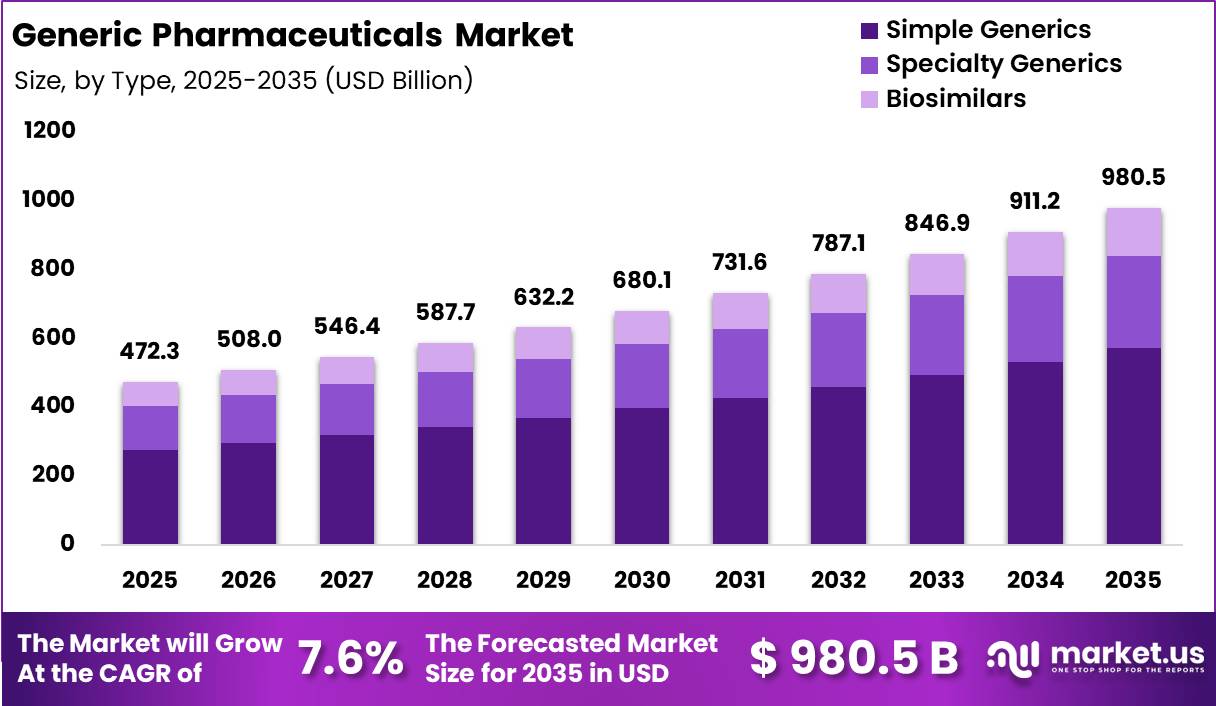
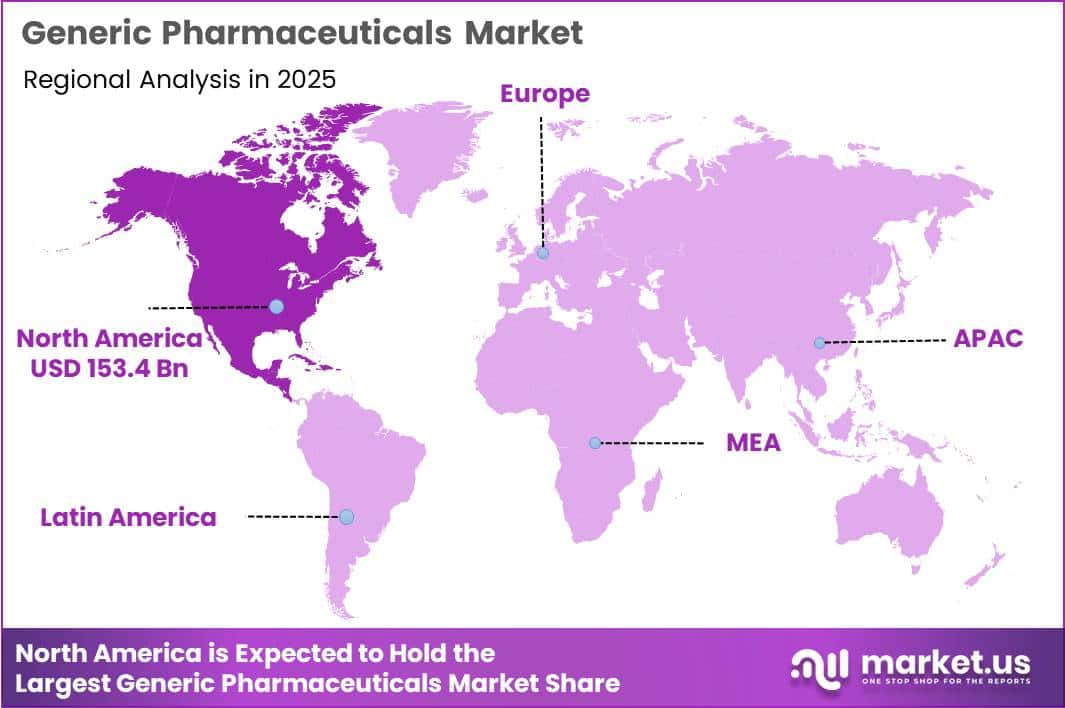
The Global Generic Pharmaceuticals Market size is expected to be worth around US$ 980.5 Billion by 2035 from US$ 472.3 Billion in 2025, growing at a CAGR of 7.6% during the forecast period from 2026 to 2035. In 2025, North America led the market, achieving over 32.4% share with a revenue of US$ 153.04 Billion.
Generic pharmaceuticals are medications that contain the same active ingredient, dosage form, strength, route of administration, and intended use as their branded counterparts.
Regulatory agencies such as the U.S. Food and Drug Administration (FDA) and the European Medicines Agency (EMA) require generic medicines to demonstrate bioequivalence and meet the same standards for quality, safety, and manufacturing as reference products before approval. Generic drugs play a critical role in expanding access to affordable healthcare by offering clinically equivalent treatments at significantly lower prices than branded medicines.
The growing burden of chronic diseases, including cardiovascular disorders, diabetes, cancer, and respiratory illnesses, continues to increase demand for cost-effective therapies worldwide. According to the World Health Organization (WHO), noncommunicable diseases account for approximately 43 million deaths annually, representing about 74% of all global deaths, highlighting the sustained need for accessible medicines.
In the United States alone, the FDA approved more than 900 generic drugs in 2024, reflecting continued efforts to expand competition and improve patient access to essential medications. Additionally, the Association for Accessible Medicines (AAM) reports that generic medicines account for approximately 90% of prescriptions dispensed in the U.S. while representing a substantially smaller share of total drug spending.
Government initiatives promoting affordable healthcare, increasing patent expirations of branded drugs, expanding healthcare coverage in emerging economies, and continuous improvements in pharmaceutical manufacturing technologies are expected to support long-term market expansion.
Biosimilars, complex generics, and digital manufacturing capabilities are also creating new opportunities for manufacturers to strengthen supply chains and improve the availability of high-quality medicines worldwide.
Key Takeaways
- Market Size: Generic Pharmaceuticals Market size was US$ 472.3 billion in 2025. The market is estimated to grow to US$ 980.5 billion by 2035.
- Market Share: The Compound Annual Growth Rate (CAGR) of the market from 2026 to 2035 will be 7.6%.
- By Type: Simple Generics has the largest market share, accounting for 58.4% of total sales.
- By Application: Cardiovascular Diseases, accounting for 21.3% of total revenue.
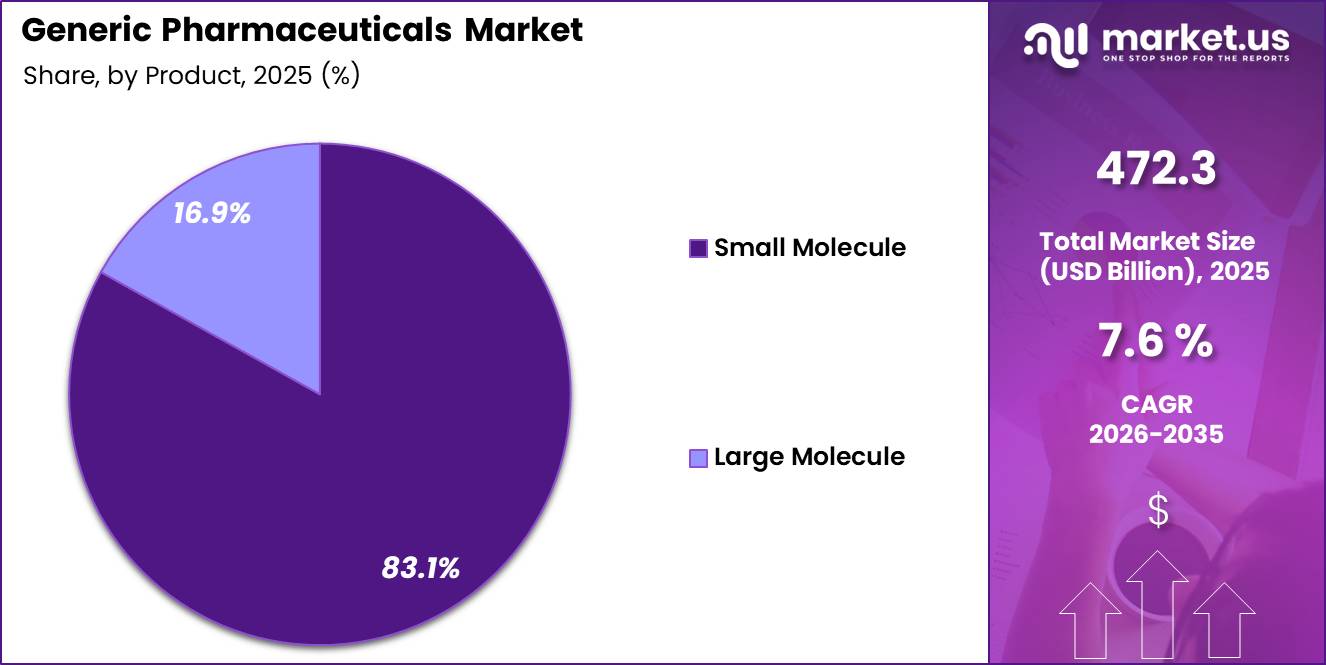
- By Product: Small Molecule leads the segment, accounting for 83.1% of total revenue.
- By Route of Administration: Oral leads the segment, accounting for 58.4% of total revenue.
- By Distribution Channel: Retail Pharmacies lead the segment, accounting for 41.2% of total revenue.
- Regional: North America is the dominant regional market, accounting for 51.4% of global sales
Type Segmentation Analysis
In 2025, Simple Generics accounted for the largest share of the Generic Pharmaceuticals Market, capturing 58.4% of the total market. Their dominance is driven by widespread demand for affordable alternatives to branded medicines across major therapeutic areas.
Simple generics benefit from well-established manufacturing processes, lower development costs, and faster regulatory approval pathways compared to innovative drugs. Governments and healthcare providers continue to promote their adoption to reduce healthcare expenditures while ensuring broad patient access to essential medications.
The expiration of patents for widely prescribed drugs has further strengthened the availability and utilization of simple generic formulations across hospitals, clinics, and retail pharmacies. Their consistent quality, proven therapeutic equivalence, and extensive distribution networks continue to support sustained market leadership.
Specialty Generics represented 27.3% of the market in 2025, driven by increasing demand for complex formulations, injectables, inhalation therapies, and modified-release products. These medicines require advanced manufacturing capabilities and address specialized therapeutic needs, creating opportunities for manufacturers with strong technical expertise.
Biosimilars accounted for 14.3% of the market and are experiencing steady growth as patents for biologic medicines expire. Rising acceptance among physicians, supportive regulatory frameworks, and increasing investments in biologic manufacturing are expected to accelerate biosimilar adoption, particularly for oncology, autoimmune disorders, and chronic disease management.
Application Segmentation Analysis
In 2025, Cardiovascular Diseases emerged as the leading application segment in the Generic Pharmaceuticals Market, accounting for 21.3% of total revenue. The high prevalence of hypertension, coronary artery disease, heart failure, and related chronic conditions continues to generate substantial demand for cost-effective generic medicines.
Growing aging populations, increasing cardiovascular risk factors, and long-term medication requirements have reinforced the adoption of generic cardiovascular therapies worldwide. Healthcare systems also encourage generic substitution to reduce treatment costs while maintaining therapeutic effectiveness, further strengthening this segment’s market position.
Central Nervous System Disorders held 15.8% of the market, supported by increasing prescriptions for epilepsy, depression, anxiety, and neurological conditions. Infectious Diseases accounted for 14.2%, reflecting continued demand for generic antibiotics, antivirals, and antifungal medications across healthcare settings.
Cancer represented 9.8%, driven by expanding availability of generic oncology drugs following patent expirations. Respiratory Diseases captured 9.6%, while Diabetes contributed 8.9%, supported by the growing burden of chronic metabolic disorders. Gastrointestinal Diseases accounted for 8.7%, followed by Hormones and Related Diseases at 7.4%.
The Others category represented 4.3%, covering various therapeutic areas where generic medicines continue to improve treatment accessibility and affordability.
Product Segmentation Analysis
In 2025, Small Molecule products dominated the Generic Pharmaceuticals Market, accounting for 83.1% of total revenue. Their leadership is attributed to extensive use across multiple therapeutic categories, established manufacturing technologies, and relatively straightforward regulatory approval processes.
Small molecule drugs have long been the foundation of the generic pharmaceutical industry due to their proven efficacy, chemical stability, and lower production costs compared to biologics.
The expiration of patents for blockbuster medicines has significantly expanded opportunities for manufacturers to introduce affordable generic versions, supporting widespread adoption by healthcare providers and patients. Strong physician confidence, broad availability through retail and hospital pharmacies, and favorable reimbursement policies have further reinforced their market dominance.
The remaining market consists primarily of Large Molecule Products, including biosimilars and other biologic-based generics. Although this segment represents a smaller share, it is expected to experience notable growth due to increasing demand for affordable biologic therapies.
Advancements in biotechnology, improved manufacturing capabilities, and supportive regulatory pathways are encouraging greater biosimilar development. Rising incidences of cancer, autoimmune disorders, and other chronic diseases are also driving investments in biologic alternatives.
As healthcare systems seek to reduce biologic treatment costs, the large molecule segment is anticipated to gain momentum while complementing the continued dominance of small molecule generic pharmaceuticals.
Route of Administration Segmentation Analysis
In 2025, the Oral route of administration held the largest share of the Generic Pharmaceuticals Market, accounting for 58.4% of total revenue. Oral formulations remain the preferred choice due to their convenience, ease of administration, high patient compliance, and cost-effective manufacturing.
Tablets, capsules, and oral liquids are widely prescribed for chronic diseases such as hypertension, diabetes, cardiovascular disorders, and infectious diseases, making them the most commonly utilized dosage forms worldwide.
Their long shelf life, simple storage requirements, and efficient large-scale production further strengthen their market position. Continuous innovation in oral drug formulations, including extended-release and orally disintegrating tablets, also contributes to sustained demand across diverse patient populations.
Other routes of administration, including injectable, topical, inhalation, ophthalmic, and transdermal formulations, collectively represent a significant portion of the market. Injectable generics continue to gain traction in hospitals for oncology, critical care, and biologic therapies.
Inhalation products are expanding alongside the growing prevalence of respiratory disorders, while topical formulations remain widely used in dermatology and pain management. Ophthalmic and transdermal products also support specialized treatment needs.
As pharmaceutical companies develop more patient-friendly dosage forms and complex generic formulations, these alternative administration routes are expected to witness steady growth, complementing the continued leadership of oral generic medicines.
Distribution Channel Segmentation Analysis
In 2025, Retail Pharmacies dominated the Generic Pharmaceuticals Market, accounting for 41.2% of total revenue. Their leadership is supported by widespread accessibility, extensive geographic presence, and the growing preference for convenient outpatient medication dispensing.
Retail pharmacies serve as the primary distribution channel for prescription refills and over-the-counter generic medicines, particularly for patients managing chronic conditions such as cardiovascular diseases, diabetes, and respiratory disorders.
Increasing awareness of cost-effective treatment options, favorable generic substitution policies, and expanding pharmacy networks have further strengthened this segment. Pharmacists also play a vital role in promoting generic medicines by educating patients about therapeutic equivalence and affordability.
Other important distribution channels include hospital pharmacies, online pharmacies, and institutional healthcare providers. Hospital pharmacies remain essential for supplying injectable generics, specialty medicines, and critical care treatments within inpatient settings.
Online pharmacies are experiencing rapid growth due to digital healthcare adoption, home delivery services, competitive pricing, and improved access to medications in remote regions. Institutional procurement through government healthcare systems and large healthcare organizations also contributes significantly to market demand, particularly in public health programs.
As digital pharmacy platforms continue to expand and healthcare access improves globally, multiple distribution channels are expected to complement retail pharmacies while supporting broader availability of affordable generic pharmaceuticals.
Market Segmentations
By Type
- Simple Generics
- Specialty Generics
- Biosimilars
By Application
- Central Nervous System Disorders
- Respiratory Diseases
- Hormones and Related Diseases
- Gastrointestinal Diseases
- Cardiovascular Diseases
- Infectious Diseases
- Cancer
- Diabetes
- Others
By Product
- Small Molecule
- Large Molecule
By Route of Administration
- Oral
- Injectable
- Inhalable
- Others
By Distribution Channel
- Retail Pharmacies
- Hospital Pharmacies
- Online Pharmacies
- Wholesale Distributors
- Direct Sales
Driver
Patent-Loss Conversion Accelerates First-Generic Market Expansion
The most immediate demand-and-revenue driver in 2026 is the continuing conversion of off-patent branded molecules into first-generic and multi-source generic opportunities.
FDA’s published first-generic lists show a dense 2025 approval cadence across diabetes, anticoagulation, obesity, oncology, ophthalmology, HIV, emergency care, and hospital injectables, including sitagliptin, sitagliptin/metformin, liraglutide, rivaroxaban, naloxone nasal spray, darunavir, and multiple injectable products; the 2026 list continues this flow with rifaximin, mesalamine ER, fluticasone aerosol, ipratropium aerosol, mirabegron suspension, and HIV therapies.
Structurally, this matters because each first generic opens a price-reset pathway: the first entrant typically captures high initial conversion where payer formularies, substitution laws, and pharmacy procurement can move volume quickly, while later entrants deepen erosion but widen access.
The commercial effect is strongest in therapies with large refill bases and well-established prescriber behavior, where even modest price discounts can produce rapid unit migration; diabetes therapies are a strong illustration, with FDA’s 2025 first-generic approvals including Januvia and Janumet variants late in 2025, extending genericization into a high-volume chronic-care pool.
For manufacturers, the business-model implication is a continuing pivot from commodity oral solids toward a portfolio strategy mixing paragraph IV timing, first-to-file optionality, and launch sequencing in chronic high-adherence categories, which supports the estimated +1.9 %-point uplift to market growth over baseline in the near term.
| Driver | (~) % Impact on CAGR Forecast | Geographic Relevance | Impact Timeline |
|---|---|---|---|
| Patent-loss conversion into first-generic launches | +1.9% | North America core, EU majors, APAC export hubs | Short term (≤ 2 years) |
| Diabetes, obesity, and chronic-care volume expansion | +1.6% | North America, EU5, India, GCC, Latin America urban markets | Medium term (2-4 years) |
| Payer and government affordability pressure favoring generics | +1.4% | U.S., EU, selected OECD, public-procurement LMICs | Short term (≤ 2 years) |
| Regulatory acceleration for complex generics and injectables | +1.2% | U.S. core, EU, India, China, sterile-export corridors | Medium term (2-4 years) |
| Shortage mitigation and supply-chain localization | +1.0% | U.S., EU, Japan, India manufacturing base | Medium term (2-4 years) |
| Global access programs and pooled procurement expansion | +0.8% | Sub-Saharan Africa, South Asia, Southeast Asia, multilateral tender markets | Long term (≥ 4 years) |
Challenge
Patent Cliff Accelerates Brand-to-Generic Market Migration
The ongoing cycle of patent expirations for blockbuster drugs, particularly in oncology, immunology, and cardiometabolic segments, is driving a structured migration of volumes from brands to generics and biosimilars, contributing an estimated 1.8 % point uplift to generic CAGR as multiple high-value molecules lose exclusivity between 2026 and 2030.
Historical data show generics can capture 60–90% of prescription volume within 2–3 years of patent expiry in certain classes, with price declines often exceeding 50% from pre-cliff levels, creating both large volume opportunities and margin compression risks.
The FDA reported approving hundreds of new generic drugs via abbreviated new drug applications (ANDAs) in recent years and maintains a dedicated “First Generic” approvals stream, signaling sustained regulatory throughput for follow-on products as originator patents lapse. In biologics, CDER recorded a record 18 biosimilar approvals for eight reference products in 2024, indicating an acceleration of complex generic-like entry into markets where spending intensity is high.
Strategically, generic and biosimilar players are prioritizing molecules with annual pre-expiry global sales above several billion dollars, investing in advanced manufacturing, such as high-capacity sterile injectables lines, large-scale bioreactors, and formulation expertise, to meet tight launch windows while building global launch platforms that coordinate registrations across 20–50 jurisdictions to maximize early post-cliff capture and leverage economies of scale in API and fill-finish capacity.
| Driver | (~) % Impact on CAGR Forecast | Geographic Relevance | Impact Timeline |
|---|---|---|---|
| Chronic disease load shift | +2.2% | North America, EU, APAC urban | Long term (≥ 4 years) |
| Aging & essential medicines focus | +1.6% | Global, OECD, China | Long term (≥ 4 years) |
| Policy push for affordability | +1.4% | US, EU, emerging markets | Medium term (2-4 years) |
| Patent cliff & brand-to-generic | +1.8% | Global, oncology, cardiometabolic | Medium term (2-4 years) |
| Regulatory streamlining for generics | +1.0% | US, EU, India | Short–Medium (≤ 4 years) |
| Pooled procurement & access programs | +0.9% | LMICs, global health initiatives | Medium–Long (≥ 4 years) |
Restraints
Aggressive Price Controls Intensify Generic Margin Pressures
Aggressive price regulation and payer reimbursement reforms are structurally compressing generic margins over a long horizon, as governments and large payers seek to cap annual price increases, rationalize trade margins, and drive net prices closer to international reference levels to address affordability concerns.
In markets such as India, proposals to extend price control frameworks and trade margin rationalization to a broader set of non-scheduled formulations would constrain both ex-factory prices and downstream mark-ups, potentially cutting cumulative trade margins by 20–40% on selected high-volume molecules and reducing manufacturer pricing flexibility to single-digit annual increases, while government-backed generic retail networks often sell molecules at up to 70–80% lower prices, exerting competitive pressure on branded generics.
In the US, evolving CMS payment rules and drug pricing reforms, including tighter linkages of reimbursement to average sales price or wholesale acquisition cost and potential “lower-of” formulas, are reinforcing an environment where net prices for many mature molecules are flat to declining despite volume growth, and overall market net price growth in branded segments has recently exceeded 9% annually, increasing payer focus on generic cost containment.
For generic manufacturers whose operating margins often sit in the 10–20% range for commodity molecules, a 5–10% compression in realized net prices over a 3–5-year period, with limited offset from cost deflation, can erode EBIT margins by 300–500 basis points, forcing consolidation, exit from marginal markets, and under-investment in plant modernization and portfolio diversification.
Strategically, aggressive price controls dampen incentives to enter complex segments, such as biosimilars and long-acting injectables, slow launch cadence for low-margin molecules, and increase reliance on volume-driven models in emerging markets where regulatory risk is higher, collectively subtracting nearly 2 % points from the long-term CAGR potential relative to a scenario with more flexible margin structures.
| Restraint | (~) % Impact on CAGR Forecast | Geographic Relevance | Impact Timeline |
|---|---|---|---|
| Escalating API tariffs and trade frictions | -1.5% | US, EU, India, China export corridors | Medium term (2–4 years) |
| Persistent shortages of critical generics | -1.3% | US, EU, Japan, global hospital channels | Short–Medium term (≤ 4 years) |
| Aggressive price controls and margin squeeze | -1.8% | US, EU, India, emerging markets | Long term (≥ 4 years) |
| Regulatory backlog and ANDA approval friction | -0.9% | US, EU, selected EM regulatory systems | Medium term (2–4 years) |
| Quality, compliance, and recall risk | -0.7% | Global, especially multi-site manufacturers | Long term (≥ 4 years) |
| Digital and supply chain CapEx under-investment | -1.1% | Global mid-tier generics, EM manufacturing hubs | Medium–Long term (≥ 3 years) |
Opportunity
Chronic Disease Bundling Expands Generic Market Value Creation
Adherence bundling represents a forward-looking opportunity where generic manufacturers design integrated medication-plus-support packages for chronic diseases such as diabetes, cardiovascular disease, and mental health disorders. Capitalizing on projected double-digit increases in global chronic disease prevalence and health spending rather than merely supplying low-cost pills into fragmented channels.
It is distinct from current drivers because today’s generic business model is largely transactional and volume-based, with minimal monetization of adherence, outcomes, or patient engagement despite chronic conditions accounting for over 70% of health expenditures in many systems and a substantial proportion of avoidable hospitalizations and complications.
By offering fixed-fee monthly adherence bundles, including multi-drug blister packs, telehealth check-ins, glucometers or blood pressure monitors, and app-based reminders, generic firms could capture an additional 5–10% of spending per patient while simultaneously reducing payer costs by 10–20% through fewer emergency visits and complications, allowing outcomes-linked gain-sharing contracts that lift realized margins by 3–4 points versus standard generic margins.
If such models penetrate even 10–15% of the diabetic and hypertensive populations across North America, EU, and high-growth APAC and LATAM markets by 2030, the incremental revenue stream could add roughly 1.5 % points to generic CAGR, supported by lower churn, 20–30% lower customer acquisition costs through payer and provider integration, and the ability to cross-sell adjacent chronic therapies.
| Opportunity | (~) % Potential CAGR Upside | Geographic Relevance | Execution Window |
|---|---|---|---|
| Biosimilar-linked generics platforms | +2.0% | North America, EU, APAC core | Medium term (2–4 years) |
| Chronic disease adherence bundling | +1.5% | North America, EU, APAC emerging | Short term (≤ 2 years) |
| Value-based tendering & risk-share | +1.8% | EU, LATAM, APAC emerging | Medium term (2–4 years) |
| Digital DTC low-cost channels | +1.2% | North America core, EU, India | Short term (≤ 2 years) |
| Regional API & supply resilience hubs | +1.0% | APAC, MENA, Sub-Saharan Africa | Long term (≥ 4 years) |
| Off-patent biologic–generic hybrids | +2.3% | North America, EU, Japan, China | Long term (≥ 4 years) |
Regional Analysis
In 2025, North America led the market, achieving over 32.4% share with a revenue of US$153.04 billion.
North America region’s leadership is supported by a well-established healthcare infrastructure, widespread adoption of generic medicines, and strong regulatory frameworks that encourage the use of cost-effective alternatives to branded drugs.
High healthcare expenditures and increasing demand for affordable treatments for chronic diseases such as cardiovascular disorders, diabetes, and cancer continue to accelerate generic drug consumption across the United States and Canada.
Government initiatives promoting generic substitution, along with the expiration of patents for several blockbuster drugs, have further expanded market opportunities. The presence of major generic drug manufacturers, advanced pharmaceutical manufacturing capabilities, and efficient distribution networks also strengthens the regional market.
In addition, favorable reimbursement policies and growing acceptance of biosimilars are enhancing competition while reducing healthcare costs. Investments in research, manufacturing modernization, and regulatory compliance continue to improve product quality and supply reliability.
Meanwhile, Europe remains a significant market, supported by universal healthcare systems and policies encouraging generic prescriptions. Asia-Pacific is projected to register the fastest growth during the forecast period due to expanding healthcare access, rising population, increasing prevalence of chronic diseases, and rapidly growing pharmaceutical manufacturing hubs in countries such as India and China.
Latin America and the Middle East & Africa are also experiencing gradual growth, driven by improving healthcare infrastructure, government healthcare reforms, and increasing availability of affordable generic medicines.
Key Regions and Countries
North America
- The US
- Canada
Europe
- Germany
- France
- The U.K.
- Italy
- Spain
- Russia & CIS
- Rest of Europe
Asia Pacific
- China
- India
- Japan
- South Korea
- ASEAN
- Australia & New Zealand
- Rest of Asia Pacific
Middle East & Africa
- GCC
- South Africa
- Rest of Middle East & Africa
Latin America
- Brazil
- Mexico
- Rest of Latin America
Key Player Analysis
The global Generic Pharmaceuticals Market is highly fragmented, with a mix of multinational pharmaceutical companies and established generic drug manufacturers competing across therapeutic areas and geographic regions. Competition is driven by pricing, manufacturing scale, regulatory compliance, product portfolio expansion, and the ability to secure timely approvals for complex generics and biosimilars.
Market participants are increasingly investing in research and development to develop differentiated generic formulations, improve drug delivery technologies, and expand into high-value specialty generics.
Strategic partnerships, licensing agreements, and regional collaborations also play an important role in strengthening market presence, improving distribution capabilities, and accelerating product commercialization.
Companies are further emphasizing workflow integration through advanced manufacturing technologies, digital quality management systems, and supply chain optimization to improve operational efficiency while ensuring consistent product availability.
Ecosystem-based competition is becoming increasingly important as manufacturers collaborate with healthcare providers, distributors, contract manufacturing organizations, and regulatory agencies to enhance market access and patient reach.
Key participants operating in the market include Teva Pharmaceuticals, Inc., Viatris, Zydus Lifesciences, Sun Pharmaceuticals, Ltd., Sanofi, Pfizer, Novartis AG, Lupin, Hikma, Glenmark Pharmaceuticals, Fresenius Kabi, Dr. Reddy’s Laboratories, Cipla, Aurobindo Pharma, and Aspen Pharmacare.
These companies continue to strengthen their competitive positions through expanded generic portfolios, biosimilar development, strategic acquisitions, manufacturing capacity expansion, and continuous investment in quality assurance. Their combined focus on affordability, regulatory excellence, innovation, and global distribution networks is expected to support sustained growth and reinforce competitiveness in the evolving generic pharmaceuticals landscape.
Top Key Players
- Teva Pharmaceuticals, Inc.
- Viatris
- Zydus Lifesciences
- Sun Pharmaceuticals, Ltd.
- Sanofi
- Pfizer
- Novartis AG
- Lupin
- Hikma
- Glenmark Pharmaceuticals
- Fresenius Kabi
- Dr. Reddy’s Laboratories
- Cipla
- Aurobindo Pharma
- Aspen Pharmacare
Recent Developments
- In September 2025, Sanofi announced the completion of its acquisition of Blueprint Medicines, strengthening its rare immunology and specialty medicines portfolio.
- In January 2026, Zydus Lifesciences completed the acquisition of Agenus Inc.’s biologics manufacturing facilities and launched Zylidac Bio LLC in the U.S. to strengthen its biologics CDMO capabilities.
- In February 2026, Novartis AG completed the acquisition of Avidity Biosciences, strengthening its neuroscience pipeline and expanding its RNA-based therapeutic capabilities.
Report Scope
| Report Features | Description |
|---|---|
| Market Value (2025) | US$ 472.3 Bn |
| Forecast Revenue (2035) | US$ 980.5 Bn |
| CAGR (2026-2035) | 7.6% |
| Base Year for Estimation | 2025 |
| Historic Period | 2020-2024 |
| Forecast Period | 2026-2035 |
| Report Coverage | Revenue Forecast, Market Dynamics, Competitive Landscape, Recent Developments |
| Segments Covered | By Type (Simple Generics, Specialty Generics, Biosimilars) By Application (Central Nervous System Disorders, Respiratory Diseases, Hormones and Related Diseases, Gastrointestinal Diseases, Cardiovascular Diseases, Infectious Diseases, Cancer, Diabetes, Others) By Product (Small Molecule, Large Molecule) By Route of Administration (Oral, Injectable, Inhalable, Others) By Distribution Channel (Retail Pharmacies, Hospital Pharmacies, Online Pharmacies, Wholesale Distributors, Direct Sales) |
| Regional Analysis | North America – The US, Canada; Europe – Germany, France, U.K., Italy, Spain, Russia & CIS, Rest of Europe; Asia Pacific – China, India, Japan, South Korea, ASEAN, Australia & New Zealand, Rest of Asia Pacific; Middle East & Africa – GCC, South Africa, Rest of Middle East & Africa; Latin America – Brazil, Mexico, Rest of Latin America |
| Competitive Landscape | Teva Pharmaceuticals, Inc., Viatris, Zydus Lifesciences, Sun Pharmaceuticals, Ltd., Sanofi, Pfizer, Novartis AG, Lupin, Hikma, Glenmark Pharmaceuticals, Fresenius Kabi, Dr. Reddy’s Laboratories, Cipla, Aurobindo Pharma, Aspen Pharmacare |
| Customization Scope | Customization for segments, region/country-level will be provided. Moreover, additional customization can be done based on the requirements. |
| Purchase Options | We have three licenses to opt for: Single User License, Multi-User License (Up to 5 Users), Corporate Use License (Unlimited User and Printable PDF) |





































