


Market Overview
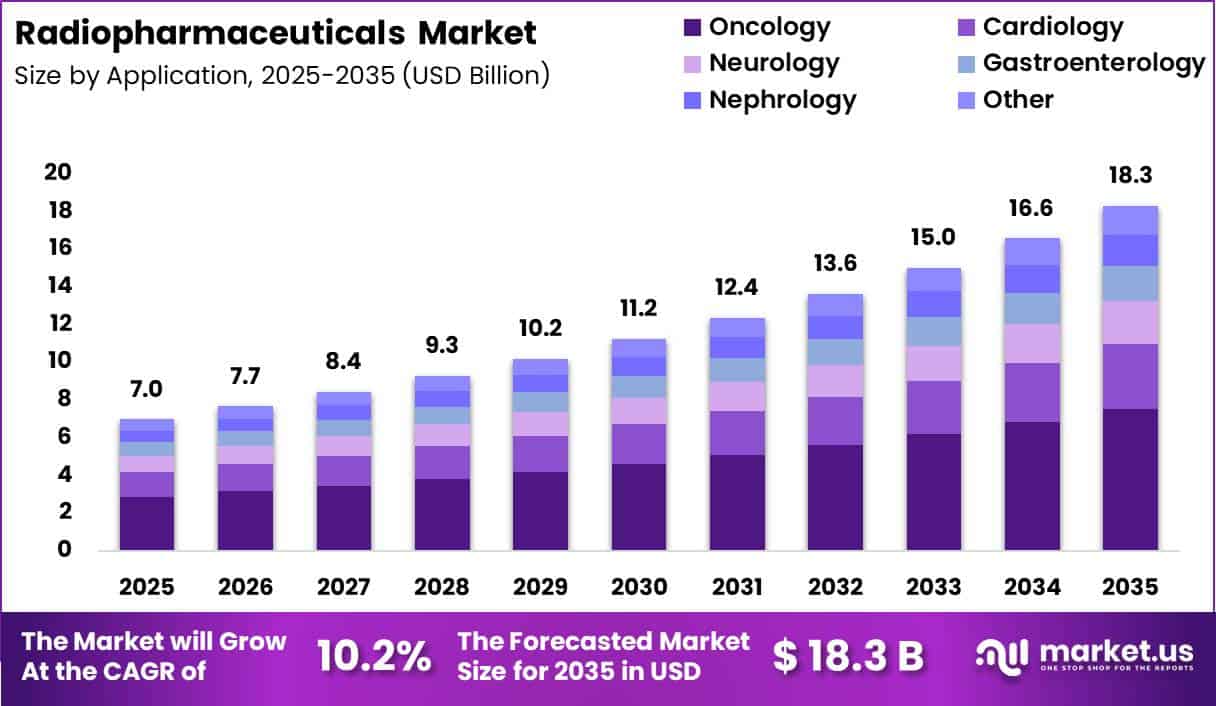
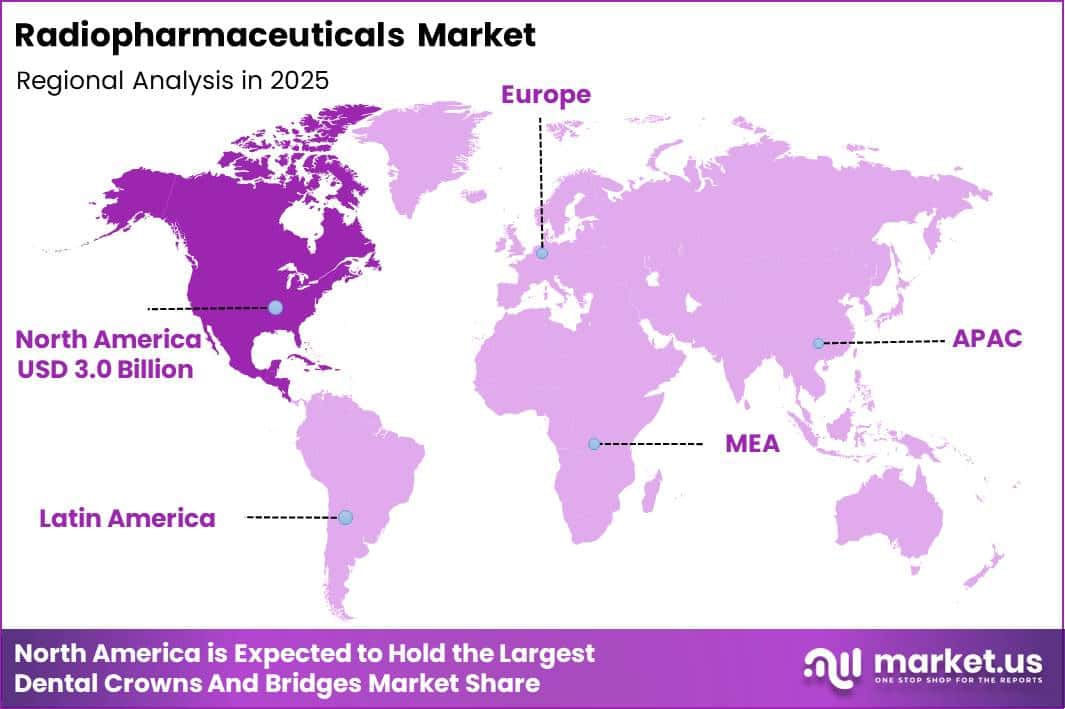
Global Radiopharmaceuticals Market size is expected to be worth around US$ 18.3 Billion by 2035 from US$ 7.0 Billion in 2025, growing at a CAGR of 10.2% during the forecast period from 2026 to 2035. In 2025, North America led the market, achieving over 43.4% share with a revenue of US$ 3.0 Billion.
The global radiopharmaceuticals industry is gaining strategic importance as healthcare systems increasingly adopt precision medicine and molecular imaging for early disease detection and targeted therapy.
Radiopharmaceuticals, which combine radioactive isotopes with pharmaceutical compounds, play a central role in positron emission tomography (PET) and single-photon emission computed tomography (SPECT), enabling physicians to diagnose and monitor cancer, cardiovascular disorders, neurological diseases, and other complex conditions with high accuracy.
According to the World Health Organization (WHO), cancer accounts for approximately one in six deaths worldwide, reinforcing the need for advanced diagnostic and therapeutic technologies.
The International Atomic Energy Agency (IAEA) also highlights that radiopharmaceutical-based nuclear medicine is becoming an essential component of personalized cancer care, particularly through the growing use of theranostics that integrate diagnosis and treatment.
Healthcare infrastructure supporting radiopharmaceuticals continues to expand globally. The IAEA maintains the Nuclear Medicine Database (NUMDAB), which tracks thousands of nuclear medicine facilities, PET scanners, gamma cameras, cyclotrons, and radiopharmacies across member states, reflecting increasing investment in nuclear medicine capabilities and trained professionals.
The U.S. Food and Drug Administration (FDA) states that radiopharmaceuticals are widely used for PET and SPECT imaging to evaluate cancers, heart disease, and neurological disorders, while therapeutic radiopharmaceuticals are increasingly used to treat cancer and relieve tumor-related symptoms.
In parallel, WHO and the IAEA have jointly developed international quality standards and good manufacturing and quality-control guidelines to ensure the safety, efficacy, and consistency of radiopharmaceutical production worldwide.
Growing demand for precision oncology, increasing adoption of theranostic approaches, expanding PET/CT and SPECT imaging infrastructure, and continued regulatory support for high-quality radiopharmaceutical manufacturing are expected to remain key drivers supporting the long-term development of the global radiopharmaceuticals market.
Key Takeaways
- Market Size : Global Radiopharmaceuticals Market size is expected to be worth around US$ 18.3 Billion by 2035 from US$ 7.0 Billion in 2025.
- Market Share : The market is growing at a CAGR of 10.2% during the forecast period from 2026 to 2035.
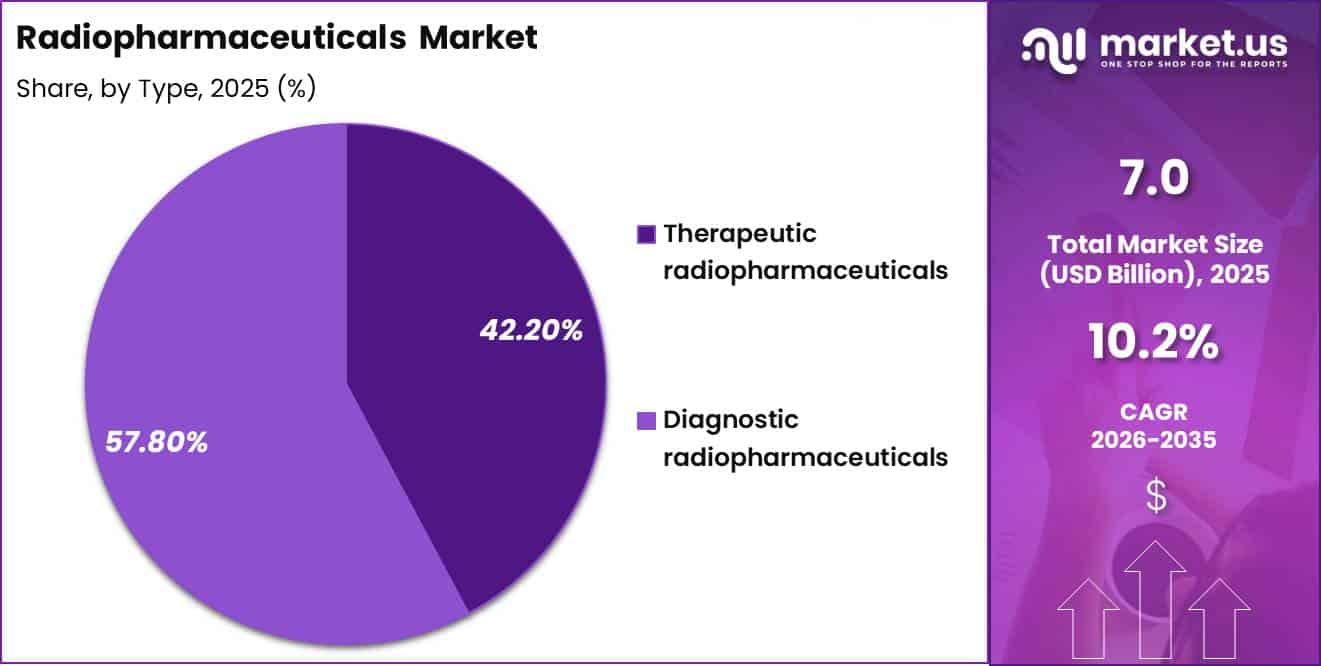
- Type Analysis : The diagnostic radiopharmaceuticals segment dominated the global radiopharmaceuticals market, accounting for 57.8% of the market share in 2025.
- Application Analysis : The oncology segment accounted for the largest share of the radiopharmaceuticals market, representing 41.2% in 2025.
- Radioisotopes Analysis : Technetium-99m (Tc-99m) dominated the radioisotopes segment, accounting for 36.9% of the global market in 2025.
- End-user Analysis : Hospitals dominated the global radiopharmaceuticals market with 43.5% of the market share in 2025.
- Regional Analysis : In 2025, North America led the market, achieving over 43.4% share with a revenue of US$ 3.0 Billion.
Type Analysis
The diagnostic radiopharmaceuticals segment dominated the global radiopharmaceuticals market, accounting for 57.8% of the market share in 2025. This leadership is driven by the increasing use of nuclear imaging techniques such as positron emission tomography (PET) and single-photon emission computed tomography (SPECT) for the early detection and monitoring of diseases.
Diagnostic radiopharmaceuticals enable physicians to visualize organ function, metabolic activity, and disease progression with high precision, making them indispensable in oncology, cardiology, and neurology.
According to the International Atomic Energy Agency (IAEA), diagnostic radiopharmaceuticals have become a cornerstone of modern nuclear medicine because they provide functional information that complements conventional imaging modalities.
The continued expansion of PET imaging infrastructure, along with increasing adoption of fluorine-18 and technetium-99m-based tracers, further supports segment growth.
The therapeutic radiopharmaceuticals segment held 42.2% of the market in 2025 and is experiencing strong growth due to rising demand for targeted radionuclide therapies. These products deliver radiation directly to diseased cells while minimizing damage to surrounding healthy tissues.
Increasing clinical adoption of Lutetium-177, Iodine-131, Yttrium-90, and other therapeutic isotopes for treating neuroendocrine tumors, prostate cancer, thyroid cancer, and bone metastases continues to drive demand.
Growing investment in theranostics, expanding clinical research, and regulatory support for precision oncology are expected to accelerate the therapeutic segment during the forecast period.
Application Analysis
The oncology segment accounted for the largest share of the radiopharmaceuticals market, representing 41.2% in 2025. The segment benefits from the increasing global burden of cancer and the growing use of radiopharmaceuticals for both tumor imaging and targeted radionuclide therapy.
PET and SPECT imaging agents enable accurate tumor localization, disease staging, treatment planning, and monitoring, while therapeutic radiopharmaceuticals offer personalized treatment options for prostate cancer, neuroendocrine tumors, thyroid cancer, and metastatic bone disease. Advances in theranostics continue to strengthen the role of radiopharmaceuticals in cancer management.
The cardiology segment captured 18.8% of the market, supported by continued use of myocardial perfusion imaging for coronary artery disease diagnosis. Neurology accounted for 12.5%, driven by increasing evaluation of Alzheimer’s disease, Parkinson’s disease, epilepsy, and other neurological disorders through molecular imaging.
Gastroenterology represented 10.2%, where radiopharmaceuticals assist in gastrointestinal function and bleeding assessments, while nephrology held 8.9%, supported by renal function imaging and evaluation.
The remaining 8.4% comprised other clinical applications, including endocrinology, infectious diseases, and pulmonary imaging. Continuous expansion of precision diagnostics and increasing healthcare investments are expected to support growth across all application areas.
Radioisotopes Analysis
Technetium-99m (Tc-99m) dominated the radioisotopes segment, accounting for 36.9% of the global market in 2025. Tc-99m remains the most widely used medical radioisotope because of its favorable physical properties, short half-life, and compatibility with numerous diagnostic procedures.
It is extensively utilized in SPECT imaging for evaluating cardiac disorders, bone diseases, renal function, pulmonary conditions, and several other clinical indications. The International Atomic Energy Agency recognizes Tc-99m as the foundation of nuclear medicine due to its broad clinical utility and widespread availability through molybdenum-99 generators.
Other radioisotopes continue to gain importance across diagnostic and therapeutic applications. Fluorine-18 (F-18) remains the preferred isotope for PET imaging, particularly FDG-based oncology studies.
Iodine-131 (I-131) continues to play a major role in thyroid disease treatment and diagnosis. Lutetium-177 (Lu-177) has witnessed strong adoption for targeted radionuclide therapy, while Gallium-68 (Ga-68) supports advanced PET imaging in oncology.
Yttrium-90 (Y-90) remains important for liver cancer and radioembolization therapies. Other isotopes, including Actinium-225 and Copper-64, are gaining clinical attention as research advances precision medicine and theranostic approaches.
End-user Analysis
Hospitals dominated the global radiopharmaceuticals market with 43.5% of the market share in 2025. Hospitals remain the primary users because they integrate nuclear medicine departments, advanced PET/CT and SPECT imaging systems, oncology treatment facilities, and multidisciplinary clinical teams.
Large hospitals perform a significant volume of diagnostic imaging and radionuclide therapies, allowing comprehensive patient management within a single healthcare setting. Increasing investments in molecular imaging infrastructure and precision oncology continue to strengthen hospital demand for radiopharmaceuticals.
Diagnostic and imaging centers represent the second-largest end-user group, benefiting from growing demand for outpatient PET and SPECT examinations and improved accessibility to molecular imaging services.
Specialty and cancer centers continue to expand their use of therapeutic radiopharmaceuticals for personalized cancer treatment and theranostic applications. Meanwhile, academic and research institutes contribute significantly through clinical trials, isotope research, and development of next-generation radiopharmaceuticals.
Collaboration between healthcare providers, research organizations, and isotope manufacturers is accelerating innovation, supporting wider adoption of advanced radiopharmaceutical technologies, and improving patient access to precision diagnostics and targeted therapies worldwide.
Market Segmentations
By Type
- Therapeutic radiopharmaceuticals
- Diagnostic radiopharmaceuticals
By Application
- Oncology
- Cardiology
- Neurology
- Gastroenterology
- Nephrology
- Other
By Radioisotopes
- Technetium‑99m (Tc‑99m)
- Fluorine‑18 (F‑18)
- Iodine‑131 (I‑131)
- Lutetium‑177 (Lu‑177)
- Gallium‑68 (Ga‑68)
- Yttrium‑90 (Y‑90)
- Other isotopes
By End-user
- Hospitals
- Diagnostic / imaging centers
- Specialty / cancer centers
- Academic & research institutes
Driver
Theranostics Shift from Imaging Only to Paired Diagnosis Treatment Pathways
Radiopharmaceuticals are increasingly transitioning from stand-alone imaging agents toward integrated diagnosis and treatment pathways, creating a broader value proposition across oncology and precision medicine.
A recent peer-reviewed overview notes that 67 radiopharmaceuticals have been approved worldwide, including 54 diagnostic agents and 13 therapeutic agents, highlighting that the field is no longer structurally limited to imaging applications. At the same time, oncology remains a major focus area for FDA drug development, reinforcing investment in targeted cancer treatment ecosystems.
The commercial impact is significant because diagnostic tracers increasingly act as gatekeepers for matched radioligand therapies, expanding value generation from a single imaging procedure into a connected care pathway involving biomarker confirmation, treatment selection, dosimetry, repeated therapeutic cycles, and response monitoring.
This transition shifts suppliers toward higher-lifetime-value healthcare accounts, encourages integrated manufacturing and distribution agreements, and supports greater investment in specialized treatment infrastructure, including shielded handling facilities, scheduling capabilities, and multidisciplinary nuclear oncology workflows.
As healthcare systems adopt more personalized treatment models, theranostics creates opportunities for radiopharmaceutical companies to move beyond imaging-based revenue models toward recurring therapy-linked ecosystems.
This evolution is estimated to contribute approximately 2.1 % points to CAGR over the medium term, particularly in regions with advanced oncology infrastructure, established reimbursement frameworks, and growing adoption of precision medicine approaches.
| Driver | (~) % Impact on CAGR Forecast | Geographic Relevance | Impact Timeline |
|---|---|---|---|
| Oncology case-load expansion lifting scan and therapy volumes | +2.4% | North America core, EU big-5, Japan, China urban tier-1, India metros | Medium term (2-4 years) |
| CMS outpatient unbundling improving diagnostic radiopharma economics | +1.8% | U.S. core, selective spill-over to private payer benchmarks | Short term (≤ 2 years) |
| Theranostics shift from imaging-only to paired diagnosis-treatment pathways | +2.1% | U.S., EU, Australia, Japan, Gulf tertiary hubs | Medium term (2-4 years) |
| Isotope localization and Ac-225 scale-up reducing supply bottlenecks | +1.5% | U.S. core, Canada linkages, EU supply corridors | Medium term (2-4 years) |
| Hospital workflow modernization favoring higher-value PET/SPECT utilization | +1.2% | North America, Western Europe, South Korea, Singapore, India private chains | Short term (≤ 2 years) |
| Regulatory formalization of radiotherapeutic dose development | +0.9% | U.S. first, then EU and global trial spill-over | Long term (≥ 4 years) |
Challenge
Solid Interface Loss Limiting Solid State Battery Commercialization
The core technical friction is the solid-electrolyte/electrode interface, where contact loss, interfacial impedance growth, and localized current concentration continue to reduce usable capacity and cycle stability even when laboratory-level conductivity appears strong.
Current research continues to highlight significant impedance penalties and capacity degradation at the interface, making 2026 a verification phase rather than a full-scale commercialization year.
In commercial terms, this creates an estimated -1.4 %-point drag on maximum CAGR because pack-level redesigns, surface coatings, stack-pressure management, and tighter thermal controls increase cell manufacturing complexity by 8–15%, raise pilot-line scrap rates by 3–7 % points, and require OEMs to maintain conservative energy-density claims until field data confirms durability across 1,000+ charge cycles and broad temperature operating ranges.
The dominant economic challenge remains the cost structure, with 2026 all-solid-state cells still priced around 3–5 times higher than mainstream lithium-ion alternatives due to expensive electrolyte systems, premium cathode and anode materials, and low-throughput manufacturing processes.
This creates an additional estimated -1.7 %-point CAGR drag because every 10% reduction in electrolyte and processing costs directly improves vehicle pack affordability.
In sulfide-based architectures, lithium sulfide alone is estimated to represent roughly half to nearly two-thirds of total cell cost, while raw materials can account for 60–70% of operating expenses in small- to mid-scale production facilities.
Commercial normalization will require multi-year scale effects, improved equipment utilization, and chemistry simplification to move cell economics toward the sub-1 yuan/Wh threshold needed for broader passenger vehicle adoption.
| Challenge | (~) % CAGR Friction Drag | Geographic Relevance | Mitigation Horizon |
|---|---|---|---|
| Solid-solid interface loss | -1.4% | East Asia pilot hubs, North America EV clusters, EU labs | Long term |
| High material cost stack | -1.7% | East Asia supply base, North America, EU industrial centers | Medium term |
| Yield instability at scale | -1.2% | APAC manufacturing corridors, EU cell plants, US gigafactories | Medium term |
| Sulfide supply bottlenecks | -1.0% | East Asia refining nodes, EU import markets, North America | Medium term |
| Skilled process labor gap | -0.8% | North America, EU, Japan, South Korea | Short term |
| Qualification and validation lag | -0.9% | North America OEMs, EU homologation markets, China/Japan | Short term |
Restraints
High Capex and Opex Intensity Limiting Radiopharmaceutical Expansion
Radiopharmaceutical production and associated nuclear medicine infrastructure are inherently capital- and operating-expense intensive, requiring investments in specialized cyclotrons or reactor access, shielded GMP facilities, hot cells, remote handling equipment, dosimetry instrumentation, and advanced radiation safety systems.
Greenfield manufacturing facilities typically require investments ranging from tens to hundreds of millions of dollars, while hospital nuclear medicine suites often require multimillion-dollar upgrades to support theranostic workflows.
Although recent years have seen expansion through new radioligand manufacturing capacity and isotope production facilities commissioned during 2024–2025, overall infrastructure growth remains constrained by long permitting cycles, complex environmental and nuclear safety approvals, and the need for long-term isotope supply agreements before financing decisions are finalized.
These factors create 3–5 year development timelines for major facilities, producing a delay between rising clinical demand and available supply capacity.
On the operating side, highly skilled personnel, continuous radiation monitoring, specialized equipment maintenance, and stringent quality-control requirements drive operating costs significantly above conventional small-molecule or biologic manufacturing.
The requirement to run multiple small production campaigns aligned with local patient schedules further limits economies of scale and increases per-dose manufacturing complexity.
Overall, these capex and opex constraints slow capacity expansion, delay geographic penetration beyond established North American and European hubs, and reduce investment appetite among both incumbents and new entrants.
These infrastructure barriers are estimated to subtract around 1.9 % points from baseline global CAGR as supply growth remains below potential demand and some radiopharmaceutical pipelines face underutilization due to manufacturing and delivery limitations.
| Restraint | (~) % Impact on CAGR Forecast | Geographic Relevance | Impact Timeline |
|---|---|---|---|
| Radioisotope production fragility | -2.2% | North America core, EU, select APAC | Short–Medium term |
| Complex multi-agency regulation | -1.7% | U.S., EU, Japan | Medium–Long term |
| Cold-chain and last-mile logistics gaps | -1.4% | Global, esp. APAC, LATAM, EMEA corridors | Short–Medium term |
| High capex and opex intensity | -1.9% | Global, all high-complexity sites | Medium–Long term |
| Reimbursement and pricing uncertainty | -1.3% | U.S., EU, high-income APAC | Short–Medium term |
| Talent and GMP capacity constraints | -1.1% | North America, EU, emerging APAC hubs | Medium–Long term |
Opportunity
Neurodegenerative and Cardiometabolic Imaging Franchises Creating Growth Opportunities
Current radiopharmaceutical demand is primarily concentrated in oncology, cardiology, and selected neurology applications, focusing mainly on perfusion, tumor burden assessment, and seizure localization.
However, significant white space exists in advanced imaging for neurodegenerative disorders, including Alzheimer’s and Parkinson’s disease, as well as cardiometabolic conditions such as diabetic cardiomyopathy and atherosclerosis, which are only beginning to achieve broader clinical and commercial adoption.
With ageing populations and rising diabetes and obesity prevalence globally, precision imaging of biomarkers such as amyloid, tau, synuclein, and inflammatory markers in the brain and vasculature is becoming increasingly important for clinical trial stratification, early diagnosis, and treatment-response monitoring.
WHO and CDC data highlight the continued expansion of diabetes and obesity burdens, creating a larger population requiring advanced disease characterization and longitudinal monitoring.
Strategically, companies can develop dedicated neuro-cardiometabolic imaging portfolios by combining targeted tracers with AI-enabled quantification software and longitudinal monitoring services.
This approach can shift revenue models from one-time diagnostic services with 20–25% margins toward platform-based solutions approaching 30–35% margins over multi-year patient journeys.
Partnerships with neurologists, cardiologists, and endocrinologists could also reduce patient acquisition costs by 10–15%. Because these applications remain dependent on future drug launches, guideline evolution, reimbursement development, and physician education, they represent a future growth opportunity rather than a current baseline demand driver.
| Opportunity | (~) % Potential CAGR Upside | Geographic Relevance | Execution Window |
|---|---|---|---|
| Theranostic oncology platforms expansion | +2.5% | North America, EU, APAC developed | Medium term (2-4 years) |
| Decentralized dose production & micro-radiopharmacies | +1.8% | North America secondary, EU, APAC emerging | Medium term (2-4 years) |
| CMS-driven premium diagnostics monetization | +1.5% | US Medicare core | Short term (≤ 2 years) |
| Neurodegenerative & cardiometabolic imaging franchises | +2.0% | North America, EU, Japan, high-income APAC | Long term (≥ 4 years) |
| Lu-177 and novel isotope vertical integration | +1.7% | EU, North America, APAC production hubs | Medium term (2-4 years) |
| Emerging-market oncology access platforms | +1.3% | APAC emerging, Latin America, MENA | Long term (≥ 4 years) |
Regional Analysis
In 2025, North America dominated the global radiopharmaceuticals market, accounting for over 43.4% of global revenue, equivalent to approximately US$ 3.0 billion. The region’s leadership is supported by advanced healthcare infrastructure, widespread adoption of PET and SPECT imaging, strong reimbursement systems, and continuous innovation in targeted radionuclide therapies.
The United States remains the primary growth engine, benefiting from a large network of cyclotrons, radiopharmacies, and nuclear medicine centers.
According to the U.S. Food and Drug Administration (FDA), radiopharmaceuticals are increasingly used for the diagnosis and treatment of cancer, cardiovascular diseases, and neurological disorders, while the agency continues to support the development and approval of novel imaging and therapeutic agents.
The International Atomic Energy Agency (IAEA) also reports that North America has one of the world’s most mature nuclear medicine infrastructures, with extensive availability of PET scanners, gamma cameras, and radionuclide therapy facilities.
Additionally, the United States performs more than 17 million nuclear medicine procedures annually, including over 1.5 million PET procedures, with more than 90% of PET/PET-CT scans used in oncology, reinforcing sustained demand for radiopharmaceuticals.
Europe represents the second-largest regional market, supported by established nuclear medicine networks, favorable regulatory frameworks, and increasing adoption of theranostic approaches for cancer management.
Asia-Pacific is projected to register the fastest growth, driven by expanding healthcare infrastructure, rising investments in cyclotrons and isotope production, and increasing access to nuclear medicine services across China, Japan, India, South Korea, and Australia.
According to an IAEA regional study, 62% of Asia-Pacific countries currently provide nuclear medicine services, while Eastern Asia accounts for more than two-thirds of the region’s nuclear medicine centers and cyclotrons, highlighting significant long-term growth potential.
Latin America and the Middle East & Africa are gradually expanding their nuclear medicine capabilities through government investments, improved cancer care programs, and greater collaboration with international organizations, although infrastructure limitations continue to moderate adoption compared with developed regions.
Key Regions and Countries
North America
- The US
- Canada
Europe
- Germany
- France
- The U.K.
- Italy
- Spain
- Russia & CIS
- Rest of Europe
Asia Pacific
- China
- India
- Japan
- South Korea
- ASEAN
- Australia & New Zealand
- Rest of Asia Pacific
Middle East & Africa
- GCC
- South Africa
- Rest of Middle East & Africa
Latin America
- Brazil
- Mexico
- Rest of Latin America
Key Player Analysis
The global radiopharmaceuticals market is characterized by strong competition among companies specializing in molecular imaging, radioisotope production, targeted radionuclide therapy, and radiopharmacy services.
Advanced Accelerator Applications (a Novartis company) continues to strengthen its radioligand therapy platform for precision oncology, while GE HealthCare Technologies Inc. integrates radiopharmaceuticals with advanced PET and SPECT imaging technologies to support early disease detection and personalized treatment.
Cardinal Health, Inc., Curium Pharma, and Jubilant Radiopharma (Jubilant Pharmova Limited) operate extensive radiopharmacy networks that manufacture and distribute time-sensitive radiopharmaceuticals to hospitals and diagnostic centers, helping ensure reliable patient access.
Companies are also investing in expanding isotope production capacity and developing next-generation targeted therapies. ITM Isotopen Technologien München AG (ITM) is a vertically integrated biotechnology company focused on producing medical radioisotopes, including Lutetium-177 (Lu-177) and Actinium-225 (Ac-225), while advancing a precision oncology pipeline.
Eckert & Ziegler AG strengthens the market through radioisotope manufacturing and radiopharmaceutical production technologies. Bayer AG continues to expand its healthcare portfolio with advanced radiology and oncology solutions, and Bracco Group remains a leading provider of diagnostic imaging products that complement nuclear medicine procedures.
Continuous investment in research, manufacturing, regulatory approvals, and strategic collaborations enables these companies to improve product availability and support the growing adoption of precision medicine worldwide.
Top Key Players
- Advanced Accelerator Applications
- Bayer AG
- Bracco Group
- Cardinal Health, Inc.
- Curium Pharma
- Eckert & Ziegler AG
- GE HealthCare Technologies Inc.
- ITM Isotopen Technologien München AG (ITM)
- Jubilant Radiopharma / Jubilant Pharmova Limited
- Lantheus Holdings, Inc.
- Mallinckrodt Pharmaceuticals
- Nordion Inc.
- Novartis AG
- Siemens Healthineers AG
- Telix Pharmaceuticals Limited
- Others
Recent Developments
- In March 2025, Telix Pharmaceuticals Limited announced that the U.S. Food and Drug Administration (FDA) approved GOZELLIX® (TLX007-CDx), a gallium-68 PSMA-PET imaging kit for prostate cancer, expanding diagnostic imaging options and strengthening the company’s radiopharmaceutical portfolio in the U.S.
- In June 2025, Eckert & Ziegler AG announced the expansion of its GMP radiopharmaceutical manufacturing capacity in Europe to support increasing global demand for radiopharmaceuticals and secure the supply of medical radioisotopes for clinical and commercial applications.
- In May 2025, ITM Isotopen Technologien München AG (ITM) announced a strategic collaboration with Radiopharm Theranostics to develop and commercialize novel radiopharmaceutical therapies targeting multiple solid tumors by combining ITM’s medical radioisotope expertise with Radiopharm’s targeting technologies.
- In April 2025, Lantheus Holdings, Inc. completed the acquisition of Evergreen Theragnostics for US$1.0 billion, strengthening its radiopharmaceutical manufacturing capabilities, isotope production, and theranostics pipeline.
- In April 2025, Curium Pharma completed the acquisition of Nucleis, a Belgium-based biotechnology company developing AI-enabled PET imaging biomarkers, expanding Curium’s precision diagnostics and molecular imaging capabilities.
Report Scope
| Report Features | Description |
|---|---|
| Market Value (2025) | US$ 7.0 Billion |
| Forecast Revenue (2035) | US$ 18.3 Billion |
| CAGR (2026-2035) | 10.2% |
| Base Year for Estimation | 2025 |
| Historic Period | 2020-2024 |
| Forecast Period | 2026-2035 |
| Report Coverage | Revenue Forecast, Market Dynamics, Competitive Landscape, Recent Developments |
| Segments Covered | By Type (Therapeutic radiopharmaceuticals, Diagnostic radiopharmaceuticals), By Application (Oncology, Cardiology, Neurology, Gastroenterology, Nephrology, Other), By Radioisotopes (Technetium‑99m (Tc‑99m), Fluorine‑18 (F‑18), Iodine‑131 (I‑131), Lutetium‑177 (Lu‑177), Gallium‑68 (Ga‑68), Yttrium‑90 (Y‑90), Other isotopes), By End-user (Hospitals, Diagnostic / imaging centers, Specialty / cancer centers, Academic & research institutes) |
| Regional Analysis | North America – The US, Canada; Europe – Germany, France, U.K., Italy, Spain, Russia & CIS, Rest of Europe; Asia Pacific – China, India, Japan, South Korea, ASEAN, Australia & New Zealand, Rest of Asia Pacific; Middle East & Africa – GCC, South Africa, Rest of Middle East & Africa; Latin America – Brazil, Mexico, Rest of Latin America |
| Competitive Landscape | Advanced Accelerator Applications , Bayer AG, Bracco Group, Cardinal Health, Inc., Curium Pharma , Eckert & Ziegler AG, GE HealthCare Technologies Inc., ITM Isotopen Technologien München AG (ITM), Jubilant Radiopharma / Jubilant Pharmova Limited, Lantheus Holdings, Inc., Mallinckrodt Pharmaceuticals, Nordion Inc., Novartis AG , Siemens Healthineers AG, Telix Pharmaceuticals Limited, Others |
| Customization Scope | Customization for segments, region/country-level will be provided. Moreover, additional customization can be done based on the requirements. |
| Purchase Options | We have three licenses to opt for: Single User License, Multi-User License (Up to 5 Users), Corporate Use License (Unlimited User and Printable PDF) |





































