Market Overview
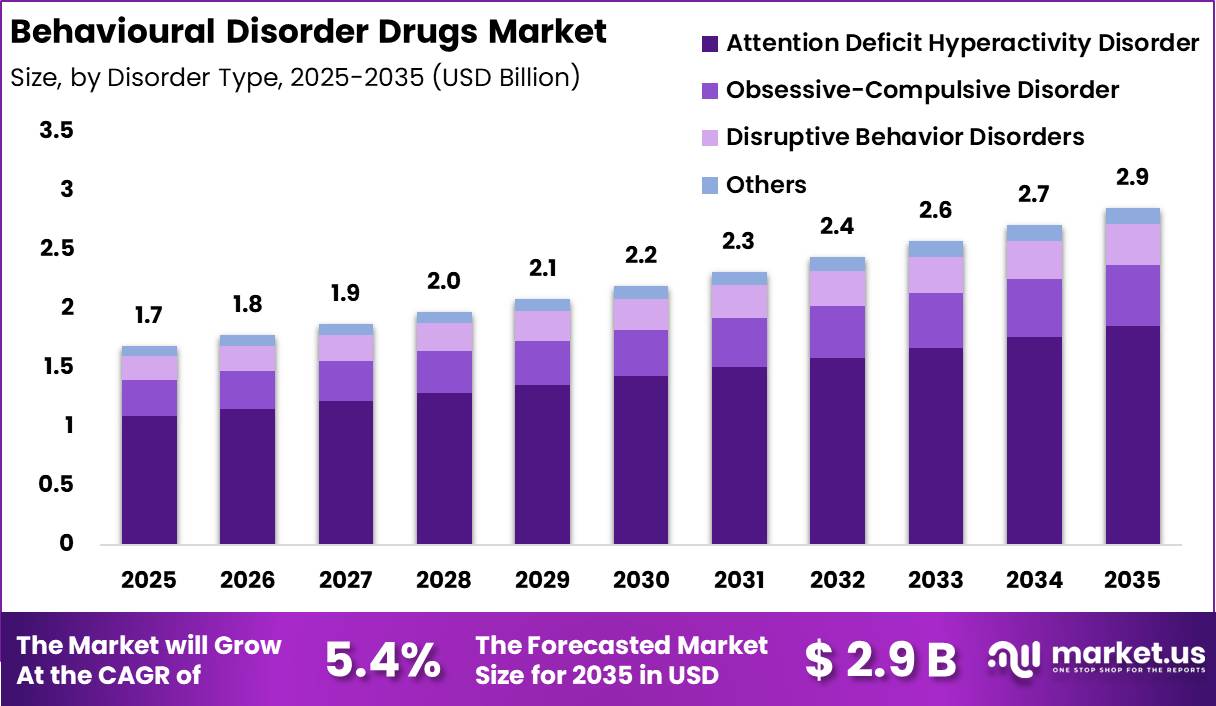
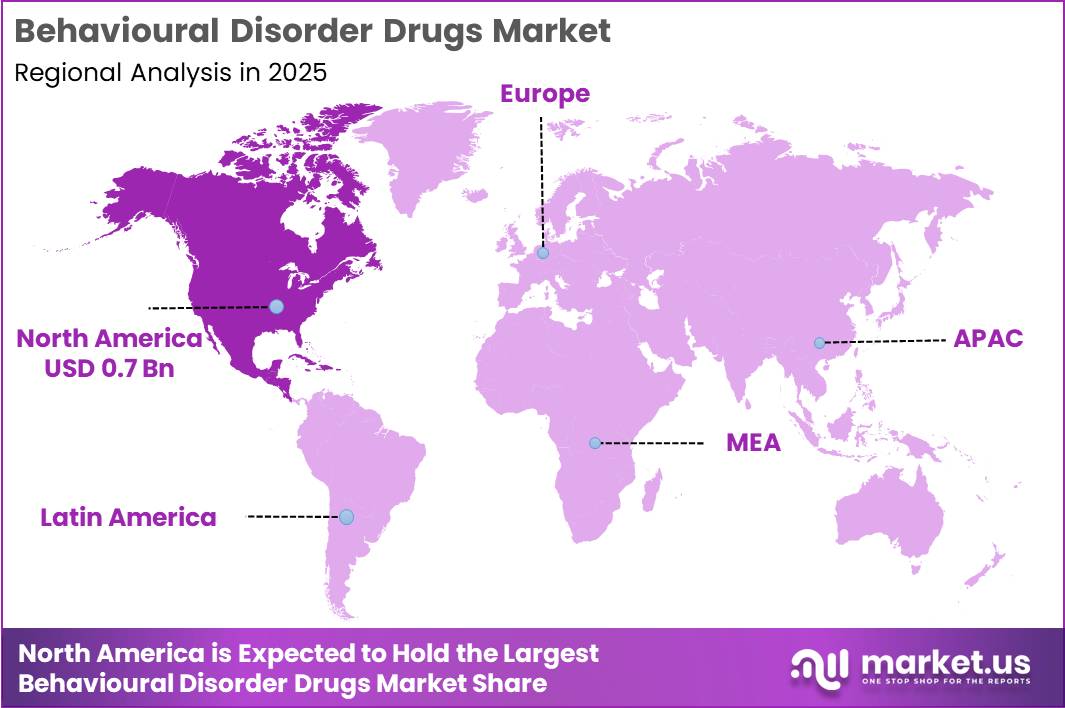
Global Behavioral Disorder Drugs Market size is expected to be worth around US$ 2.9 Billion by 2035 from US$ 1.7 Billion in 2025, growing at a CAGR of 5.4% during the forecast period from 2026 to 2035. In 2025, North America led the market, achieving over 44.0% share with a revenue of US$ 0.7 Billion.
Behavioral disorder drugs are medications used to manage symptoms associated with conditions that affect emotions, behavior, attention, and impulse control. These disorders include attention-deficit/hyperactivity disorder (ADHD), conduct disorder, oppositional defiant disorder, autism spectrum disorder–associated irritability, and behavioral symptoms linked with certain psychiatric illnesses. Treatment typically combines medication with behavioral therapy and psychosocial interventions to improve long-term outcomes.
According to the World Health Organization, mental, neurological, and substance use disorders collectively affect approximately 1 in every 8 people worldwide, highlighting the significant need for effective behavioral health management. The organization also estimates that around 970 million people were living with a mental disorder in 2019, with anxiety and depressive disorders representing the largest share.
The burden of behavioral disorders is particularly evident among children and adolescents. According to the Centers for Disease Control and Prevention, approximately 7 million U.S. children aged 3–17 years (11.4%) have been diagnosed with ADHD, making it one of the most common neurodevelopmental disorders requiring pharmacological treatment alongside behavioral interventions.
The National Institute of Mental Health also reports that nearly 49.5% of U.S. adolescents experience a mental disorder at some point, emphasizing the growing demand for early diagnosis and evidence-based treatment strategies.
Behavioral disorder drug development continues to focus on improving efficacy, minimizing adverse effects, and expanding treatment options through novel mechanisms of action, extended-release formulations, and personalized medicine approaches.
Government agencies and healthcare organizations continue to emphasize integrated care models that combine medication, psychological therapy, family support, and community-based services to improve patient outcomes and quality of life while reducing the long-term social and economic burden of behavioral disorders.
Key Takeaways
- Market Size: The Behavioral Disorder Drugs Market size was US$ 1.7 Billion in 2025. The market is estimated to grow to US$ 2.9 Billion by 2035.
- Market Share: The Compound Annual Growth Rate (CAGR) of the market from 2026 to 2035 will be 5.4%.
- By Disorder Type: Attention Deficit Hyperactivity Disorder has the largest market share, accounting for 65.0% of total sales.
- By Drug Class: Stimulants dominate the segment, accounting for 55.0% of total revenue.
- By Patient Age Group: Pediatric and Adolescent (Children below 18 years) leads the segment, accounting for 50.7% of total revenue.
- By Route of Administration: Oral lead the segment, accounting for 85.0% of total revenue.
- By Distribution Channel: Hospital Pharmacies dominates the segment, accounting for 48.0% of total revenue.
- Regional: North America is the dominant regional market, accounting for 44.0% of global sales.
Disorder Type Analysis
The behavioral disorder drugs market is segmented by disorder type into Attention Deficit Hyperactivity Disorder (ADHD), Obsessive Compulsive Disorder (OCD), and Disruptive Behavior Disorders. In 2025, Attention Deficit Hyperactivity Disorder (ADHD) dominates the market, accounting for 65.0% of the total market share.
The segment’s leadership is driven by the high global prevalence of ADHD, increasing diagnosis rates among children and adults, wider acceptance of pharmacological therapy, and the availability of both stimulant and non-stimulant treatment options.
Continuous clinical guideline updates supporting early diagnosis and long-term medication management have further strengthened prescription volumes. Growing awareness among parents, educators, and healthcare professionals has also contributed to higher treatment adoption.
The Obsessive Compulsive Disorder (OCD) segment represents 18.0% of the market and continues to expand steadily due to improved recognition of anxiety-related disorders and increased use of selective serotonin reuptake inhibitors (SSRIs) as first-line pharmacological treatment.
Enhanced access to psychiatric care and greater public awareness are supporting sustained demand. Meanwhile, Disruptive Behavior Disorders account for 12.0% of the market, supported by rising diagnosis of conduct disorder and oppositional defiant disorder, particularly in pediatric populations. Increased multidisciplinary treatment approaches combining medication with behavioral therapy continue to support growth across this segment.
Drug Class Analysis
Based on drug class, the behavioral disorder drugs market is categorized into Stimulants, Non-Stimulants, Antidepressants (SSRIs, SNRIs, TCAs), and Antipsychotics. In 2025, Stimulants hold the leading position with 55.0% of the global market share.
Their dominance is primarily attributed to their established efficacy as first-line therapy for ADHD, rapid symptom improvement, and strong clinical evidence supporting long-term treatment outcomes. Broad physician familiarity, availability of multiple formulations including extended-release products, and consistent prescribing across pediatric and adult populations continue to reinforce their market leadership.
Non-Stimulants account for 22.0% of the market and are increasingly prescribed for patients who experience intolerance, contraindications, or inadequate response to stimulant medications. Their favorable safety profile for selected patient groups supports continued adoption.
Antidepressants (SSRIs, SNRIs, TCAs) contribute 15.0% of the market, driven by their widespread use in treating obsessive compulsive disorder and associated anxiety disorders. Rising diagnosis of mood-related behavioral conditions has further strengthened demand.
Antipsychotics, representing 6.0% of the market, are primarily utilized for severe behavioral disturbances, aggression, and treatment-resistant psychiatric conditions. Although prescribed for a smaller patient population, ongoing research into newer atypical antipsychotics continues to improve therapeutic outcomes and supports steady market growth.
Patient Age Group Analysis
By patient age group, the behavioral disorder drugs market is segmented into Pediatric and Adolescent (Children below 18 years) and Adults. In 2025, the Pediatric and Adolescent segment dominates the market with 50.7% of the total share.
The segment benefits from the high prevalence of neurodevelopmental and behavioral disorders diagnosed during childhood, particularly ADHD, autism-related behavioral symptoms, and disruptive behavior disorders.
Increased school-based screening programs, improved access to child psychiatric services, and heightened parental awareness have contributed to earlier diagnosis and treatment initiation. Clinical recommendations emphasizing timely intervention have also strengthened demand for approved pharmacological therapies in younger patients.
The Adult segment continues to represent a substantial portion of the market, supported by growing recognition that many behavioral disorders persist into adulthood or are diagnosed later in life. Rising awareness of adult ADHD, obsessive compulsive disorder, anxiety-related behavioral conditions, and mood disorders has significantly increased treatment-seeking behavior.
Expanding availability of specialized psychiatric care, tele psychiatry services, and long-acting formulations has improved medication adherence among adult patients. Continued research focused on personalized treatment approaches and improved safety profiles is expected to support balanced growth across both age groups throughout the forecast period.
Route of Administration Analysis
Based on route of administration, the behavioral disorder drugs market is segmented into Oral, Injectable, and Other Routes of Administration. In 2025, the Oral segment dominates the market, capturing 85.0% of total revenue. Oral medications remain the preferred treatment option due to their convenience, ease of administration, high patient compliance, and broad availability across nearly all behavioral disorder indications.
Tablets, capsules, chewable formulations, and oral solutions are widely prescribed for both pediatric and adult patients, making oral therapy the standard approach in long-term disease management. The availability of immediate-release and extended-release formulations further enhances treatment flexibility and adherence.
Injectable therapies account for a smaller but clinically important share of the market, primarily used in patients requiring long-acting treatment, improved adherence, or management of severe psychiatric conditions. Long-acting injectable antipsychotics have gained increased acceptance among healthcare providers for reducing relapse risk and improving medication compliance.
Other routes of administration, including transdermal and alternative delivery systems, remain relatively limited but continue to attract research interest for improving patient convenience and therapeutic outcomes. Ongoing pharmaceutical innovation focused on extended drug delivery technologies is expected to gradually expand treatment options beyond conventional oral formulations.
Distribution Channel Analysis
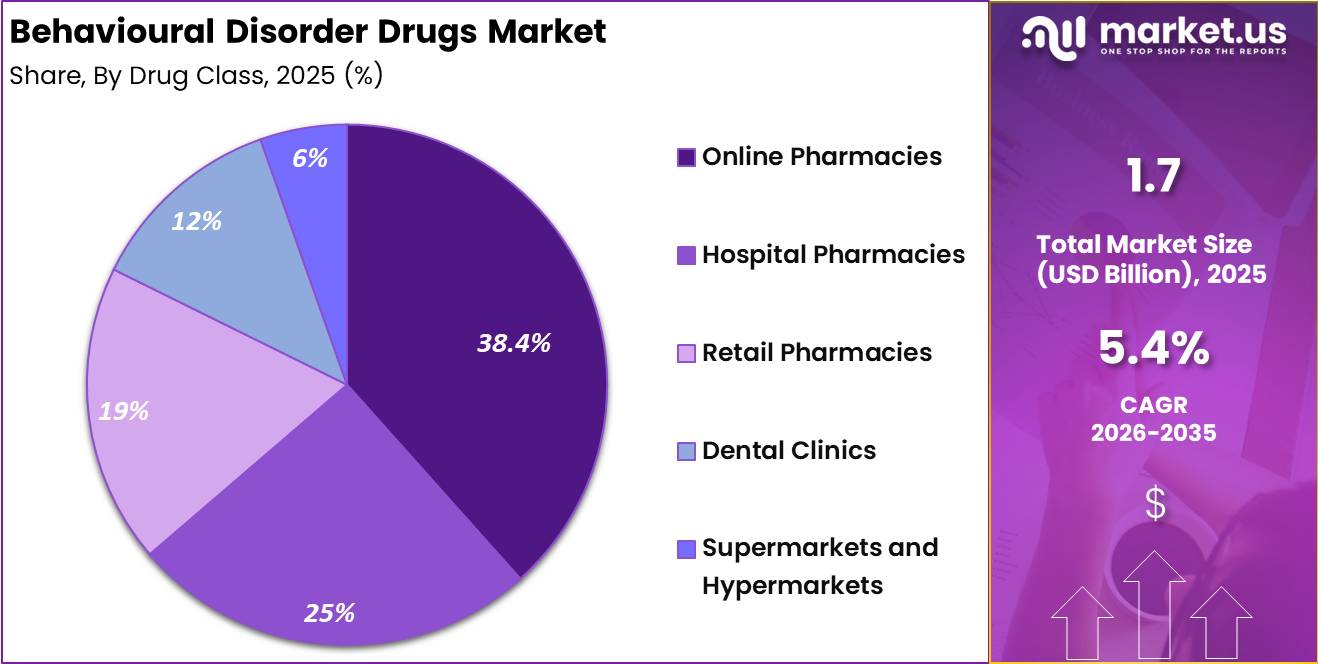
The behavioral disorder drugs market is segmented by distribution channel into Hospital Pharmacies, Retail Pharmacies, and Online Pharmacies. In 2025, Hospital Pharmacies lead the market with 48.0% of the total market share. Their dominance is supported by the large volume of prescriptions generated through hospitals, psychiatric institutions, and specialized behavioral health centers.
Hospital pharmacies ensure access to prescription medications under specialist supervision, particularly for newly diagnosed patients, severe psychiatric disorders, and complex treatment regimens requiring continuous clinical monitoring. Strong integration between psychiatrists, neurologists, pediatricians, and hospital pharmacy services further strengthens this segment.
Retail pharmacies account for a significant share of the market owing to their widespread accessibility and convenience for patients requiring long-term maintenance therapy. Their extensive geographic presence supports regular prescription refills and improves continuity of care. Meanwhile, online pharmacies continue to gain momentum as digital healthcare adoption expands globally.
Increasing use of e-prescriptions, home delivery services, and telemedicine consultations has enhanced patient access to behavioral disorder medications, particularly for individuals managing chronic conditions. Growing digital pharmacy infrastructure and improvements in prescription verification systems are expected to support continued expansion of online distribution channels during the forecast period.
Market Segmentations
By Disorder Type
- Attention Deficit Hyperactivity Disorder
- Obsessive-Compulsive Disorder
- Disruptive Behavior Disorders
- Others
By Drug Class
- Stimulants
- Non-Stimulants
- Antidepressants (SSRIs, SNRIs, TCAs)
- Antipsychotics
- Others
By Patient Age Group
- Pediatric and Adolescent (Children below 18 years)
- Adult (18-60 years)
- Geriatric (60+ years)
By Route of Administration
- Oral
- Transdermal
- Injectable
By Distribution Channel
- Hospital Pharmacies
- Retail Pharmacies
- Online Pharmacies
- Others
Drivers
Autism and pediatric behavioral case identification broadening adjunct drug demand
Autism prevalence and broader pediatric behavioural case identification are not creating a pure “autism drug market,” but they are enlarging the addressable pool for adjunctive prescribing in irritability, aggression, sleep disruption, comorbid ADHD, and conduct-related symptoms.
In April 2025, CDC-linked reporting showed 1 in 31 U.S. 8-year-old children were identified with autism spectrum disorder in 2022, up from 1 in 36 in 2020, while WHO still places global autism prevalence at roughly 1 in 100 children, showing both the scale and the increasing diagnostic capture in higher-screening systems.
That translates into higher downstream demand for stimulants, non-stimulants, antipsychotics, and supportive CNS therapies used alongside behavioural interventions rather than instead of them, especially in referral-heavy pediatric systems.
For manufacturers, the value capture mechanism is not only new patient additions but also poly-treatment persistence, because these patients often remain under specialist observation longer and generate recurring prescription episodes tied to school functioning, caregiver burden, and comorbidity management.
| Driver | (~) % Impact on CAGR Forecast | Geographic Relevance | Impact Timeline |
|---|---|---|---|
| ADHD diagnosis expansion and adult treatment uptake | +1.8% | North America core, Western Europe core, APAC urban corridors | Short term (≤ 2 years) |
| Autism and pediatric behavioral case identification broadening adjunct drug demand | +1.1% | U.S. core, Canada, UK, EU5, developed APAC | Medium term (2-4 years) |
| Behavioral health reimbursement and telehealth permanency improving prescription conversion | +1.4% | U.S. core, selected EU markets, Australia spill-over | Short term (≤ 2 years) |
| Community-care shift sustaining chronic antipsychotic and mood-stabilizing utilization | +1.6% | North America, EU, Latin America urban systems, Gulf public health systems | Medium term (2-4 years) |
| Pipeline modernization and label optimization lifting treated patient value per course | +0.9% | U.S. launch market, EU follow-on, Japan selective | Medium term (2-4 years) |
| Supply normalization after ADHD and CNS shortages restoring fill rates | +0.8% | Europe core, U.S., selected OECD markets | Short term (≤ 2 years) |
Challenges
Clinician capacity bottleneck and structural workforce constraints
The behavioral and mental health software market in 2026 is constrained by a structural workforce deficit where more than 1 billion people live with mental health conditions while the global median mental health workforce remains close to 13 professionals per 100,000 population, with many low and middle income countries operating at one tenth of that density.
This forces platforms to ration clinician time and cap throughput even as digital mental health venture funding reached about 2.7 billion dollars across 180 to 190 deals in 2024.At the operational level, tele behavioral platforms typically carry therapist caseloads of 60 to 90 active patients versus a modeled 120 to 150 patient efficiency frontier under full task shifting, AI triage, and stepped care, implying a 25 to 40 % unrealized capacity gap.
In many OECD markets, wait times of 21 to 45 days in community care and 7 to 14 days in digital networks reduce conversion and contribute to 30 to 35 % churn in the first 90 days.Vendors also face friction from clinician workflow burden, where 10 to 15 minutes of added documentation per session can reduce 1 to 2 billable hours per week, creating 3 to 5 % revenue dilution per clinician.
Mitigation depends on AI assisted documentation, routing low severity cases to non clinician support, and expanded multi jurisdiction licensure, together recovering roughly 1.0 to 1.5 %age points of CAGR lost to workforce constraints.
| Challenge | (~) % CAGR Friction Drag | Geographic Relevance | Mitigation Horizon |
|---|---|---|---|
| Clinician capacity bottleneck | -1.3% | North America, Europe, OECD APAC | Long term (≥ 4 years) |
| Fragmented payer integration | -1.1% | US, EU-5, GCC payers | Medium term (2-4 years) |
| Data privacy compliance load | -0.9% | US, EU, UK, Canada | Medium term (2-4 years) |
| Interoperability and legacy EHRs | -1.4% | North America, Europe, Japan | Long term (≥ 4 years) |
| Engagement and outcomes variance | -1.0% | Global urban digital hubs | Medium term (2-4 years) |
| Capital discipline and vendor churn | -0.8% | US, Europe, Israel digital hubs | Short term (≤ 2 years) |
Restraints
Persistent stimulant shortages constraining behavioural drugs growth
The most immediate restraint on the behavioural disorder drugs market is the continued fragility of stimulant supply, especially across ADHD therapies, because demand remains elevated while manufacturing concentration, API import dependence, and batch quality disruptions still constrain fulfillment.
FDA states that shortages can be driven by manufacturing, quality issues, delays, recalls, discontinuations, and demand surges, while 2025 still recorded 216 active U.S. shortages and published evidence on amphetamine derivative shortages notes multi product disruptions with resolved cases averaging about 20.7 months, implying that even when demand exists, realized market revenue is capped by physical availability rather than prescription intent.
For market modeling, that translates into a practical 6% to 9% annual shipment loss across exposed stimulant SKUs, wholesaler allocation patterns that can push pharmacy fill rates below internal 80 % alert thresholds, and therapy switching that reduces adherence, raises abandonment, and shifts volume into lower margin alternatives, collectively justifying an estimated 1.6% age point drag on 2026 baseline CAGR in North America and adjacent export linked corridors.
| Restraint | (~) % Impact on CAGR Forecast | Geographic Relevance | Impact Timeline |
|---|---|---|---|
| Stimulant shortage persistence | -1.6% | North America core, selected EU supply nodes | Short term (≤ 2 years) |
| Controlled-substance quota friction | -1.1% | U.S. core, Canada spillover | Medium term (2-4 years) |
| Generic erosion and rebate pressure | -1.3% | U.S., EU5, Japan | Medium term (2-4 years) |
| Pediatric safety and label scrutiny | -0.9% | U.S., EU, UK | Medium term (2-4 years) |
| Specialist access and diagnosis bottlenecks | -1.2% | North America, Western Europe, urban APAC | Short term (≤ 2 years) |
| Payer utilization controls | -1.0% | U.S. core, selective OECD markets | Medium term (2-4 years) |
Opportunity
Precision psychiatry stratification for optimized behavioral treatments
This is an opportunity because current prescribing in behavioral disorders still relies heavily on symptom based trial and error, and baseline forecasts generally assume gradual innovation uptake rather than a step change in patient stratification economics.
FDA linked evidence shows the psychiatric innovation base is still relatively thin compared with broader drug development, with psychiatric novel approvals representing a small share of total FDA approvals in recent years, which means the market has not yet fully monetized biomarker guided selection, response prediction, or subgroup specific launches.
The future upside comes from pairing drugs with phenotype algorithms, digital biomarkers, pharmacogenomic panels, and responder enrichment diagnostics that can improve first line match rates, shorten titration cycles by 20 % to 30 %, reduce avoidable switching, and justify premium pricing or companion test reimbursement in depression, bipolar disorder, schizophrenia, and complex pediatric behavioral disorders.
Even if precision tools initially influence just 6 % to 8 % of treated patients in the U.S., EU, and Japan, the effect on realized revenue per patient, persistence, and physician confidence could generate 1.4 %age points of CAGR upside, with additional value accruing through higher phase III success probabilities and lower launch waste in narrowly targeted subpopulations.
| Opportunity | (~) % Potential CAGR Upside | Geographic Relevance | Execution Window |
|---|---|---|---|
| Pediatric non-stimulant expansion | +1.6% | North America core, EU, Japan, urban APAC | Short term |
| DTx-plus-drug bundles | +1.9% | U.S., EU5, South Korea, Australia | Medium term |
| Long-acting schizophrenia platforms | +2.1% | U.S., EU, GCC, China urban centers | Medium term |
| Emerging-market access models | +2.4% | India, SEA, LATAM, MENA, Africa urban | Medium term |
| Precision psychiatry stratification | +1.4% | U.S., EU, Japan, private China | Long term |
| CNS roll-up and lifecycle M&A | +1.8% | U.S., EU, Japan, selected APAC | Short term |
Regional Analysis
In 2025, North America led the market, achieving over 44.0% share with a revenue of US$ 0.74 Billion.
North America region’s leadership is supported by a high prevalence of behavioral disorders such as attention-deficit/hyperactivity disorder (ADHD), obsessive-compulsive disorder (OCD), autism spectrum disorder (ASD), and disruptive behavior disorders.
Well-established mental healthcare infrastructure, broad access to psychiatric specialists, favorable reimbursement systems, and the widespread adoption of both branded and generic therapies continue to drive market growth. Strong investments in neuroscience research and the presence of major pharmaceutical companies further reinforce North America’s leading position.
Europe held the second-largest market share, supported by expanding public mental health initiatives, improved diagnosis rates, and increasing availability of evidence-based treatment options. Countries across Western Europe continue to strengthen psychiatric care through government-funded healthcare systems and greater awareness of behavioral disorders among children and adults.
The Asia-Pacific region is projected to register the fastest growth during the forecast period. Rising healthcare expenditure, increasing recognition of mental health conditions, expanding access to psychiatric services, and growing pharmaceutical manufacturing capabilities are accelerating market expansion. Urbanization and educational campaigns are also encouraging earlier diagnosis and treatment.
Latin America and the Middle East & Africa represent emerging markets with steady growth potential. Improving healthcare infrastructure, expanding access to mental health services, and increasing government efforts to address behavioral disorders are expected to support gradual market development across these regions over the coming years.
Key Regions and Countries
North America
- The US
- Canada
Europe
- Germany
- France
- The U.K.
- Italy
- Spain
- Russia & CIS
- Rest of Europe
Asia Pacific
- China
- India
- Japan
- South Korea
- ASEAN
- Australia & New Zealand
- Rest of Asia Pacific
Middle East & Africa
- GCC
- South Africa
- Rest of Middle East & Africa
Latin America
- Brazil
- Mexico
- Rest of Latin America
Key Player Analysis
The Behavioral Disorder Drugs Market exhibits a moderately consolidated competitive structure, with established multinational pharmaceutical companies holding significant market positions alongside specialty pharmaceutical manufacturers and generic drug producers.
The market has reached a mature stage in established therapeutic categories, while continued innovation in neuropsychiatric research, precision medicine, biomarker-guided treatment approaches, and genetically informed drug development is creating new opportunities for differentiation. Competitive intensity is driven by the need to improve treatment efficacy, reduce adverse effects, and expand therapeutic options across multiple behavioral disorders.
Leading multinational pharmaceutical companies, including Takeda Pharmaceutical Company Limited, Novartis AG, Pfizer Inc., Eli Lilly and Company, and Johnson & Johnson, leverage extensive research capabilities, global commercialization networks, and diversified neuroscience portfolios to maintain competitive leadership.
Mid-tier specialty pharmaceutical companies such as Supernus Pharmaceuticals, Inc., Neos Therapeutics, Inc., Tris Pharma, Inc., Rhodes Pharmaceuticals L.P., and Mallinckrodt Pharmaceuticals focus on differentiated formulations, targeted central nervous system therapies, and lifecycle management strategies that address specific patient populations.
Meanwhile, Hikma Pharmaceuticals PLC, Teva Pharmaceutical Industries Ltd., Mylan N.V., Lupin Limited, and Sun Pharmaceutical Industries Ltd. strengthen market accessibility through broad generic portfolios, cost-efficient manufacturing, and geographic expansion.
Competition increasingly centers on sustained investment in neuroscience-focused R&D, strategic licensing agreements, collaborative clinical development, and product pipeline expansion. Companies are integrating digital clinical workflows, real-world evidence generation, and biomarker-supported patient stratification into development programs to improve therapeutic outcomes.
Ecosystem-based competition is also emerging, combining pharmaceutical innovation with precision diagnostics and personalized treatment strategies to enhance long-term market positioning and support evolving standards of behavioral disorder management.
Top Key Players
- Takeda Pharmaceutical Company Limited
- Novartis AG
- Pfizer Inc.
- Eli Lilly and Company
- Johnson & Johnson
- Supernus Pharmaceuticals, Inc.
- Neos Therapeutics, Inc.
- Tris Pharma, Inc.
- Rhodes Pharmaceuticals L.P.
- Mallinckrodt Pharmaceuticals
- Hikma Pharmaceuticals PLC
- Teva Pharmaceutical Industries Ltd.
- Mylan N.V.
- Lupin Limited
- Sun Pharmaceutical Industries Ltd.
Recent Developments
- In January 2025, Takeda Pharmaceutical Company Limited announced that the U.S. FDA accepted the New Drug Application (NDA) for soticlestat for the treatment of Dravet syndrome and Lennox-Gastaut syndrome, expanding its neuroscience pipeline focused on rare neurological disorders.
- In March 2025, Johnson & Johnson received U.S. FDA approval for an expanded indication of SPRAVATO (esketamine) as the first monotherapy for adults with treatment-resistant depression, representing a major advancement in psychiatric therapeutics.
- In March 2025, Supernus Pharmaceuticals, Inc. announced positive Phase IIb results for SPN-820, an investigational treatment for major depressive disorder, supporting further clinical development in neuropsychiatry.
- In April 2025, Novartis AG completed the acquisition of Anthos Therapeutics, strengthening its innovative medicines portfolio through a transaction valued at up to US$ 3.1 billion.
Report Scope
| Report Features | Description |
|---|---|
| Market Value (2025) | US$ 1.7 Billion |
| Forecast Revenue (2035) | US$ 2.9 Billion |
| CAGR (2026-2035) | 5.4% |
| Base Year for Estimation | 2025 |
| Historic Period | 2020-2024 |
| Forecast Period | 2026-2035 |
| Report Coverage | Revenue Forecast, Market Dynamics, Competitive Landscape, Recent Developments |
| Segments Covered | By Disorder Type (Attention Deficit Hyperactivity Disorder, Obsessive-Compulsive Disorder, Disruptive Behavior Disorders) By Drug Class (Stimulants, Non-Stimulants, Antidepressants (SSRIs, SNRIs, TCAs),Antipsychotics) By Patient Age Group (Pediatric and Adolescent (Children below 18 years), Adult (18-60 years),Geriatric (60+ years) By Route of Administration (Oral, Transdermal ,Injectable) By Distribution Channel (Hospital Pharmacies ,Retail Pharmacies ,Online Pharmacies) |
| Regional Analysis | North America – The US, Canada; Europe – Germany, France, U.K., Italy, Spain, Russia & CIS, Rest of Europe; Asia Pacific – China, India, Japan, South Korea, ASEAN, Australia & New Zealand, Rest of Asia Pacific; Middle East & Africa – GCC, South Africa, Rest of Middle East & Africa; Latin America – Brazil, Mexico, Rest of Latin America |
| Competitive Landscape | Takeda Pharmaceutical Company Limited, Novartis AG ,Pfizer Inc., Eli Lilly and Company, Johnson & Johnson, Supernus Pharmaceuticals, Inc., Neos Therapeutics, Inc., Tris Pharma, Inc. ,Rhodes Pharmaceuticals L.P., Mallinckrodt Pharmaceuticals, Hikma Pharmaceuticals PLC, Teva Pharmaceutical Industries Ltd., Mylan N.V.,Lupin Limited, Sun Pharmaceutical Industries Ltd. |
| Customization Scope | Customization for segments, region/country-level will be provided. Moreover, additional customization can be done based on the requirements. |
| Purchase Options | We have three licenses to opt for: Single User License, Multi-User License (Up to 5 Users), Corporate Use License (Unlimited User and Printable PDF) |