Report Overview
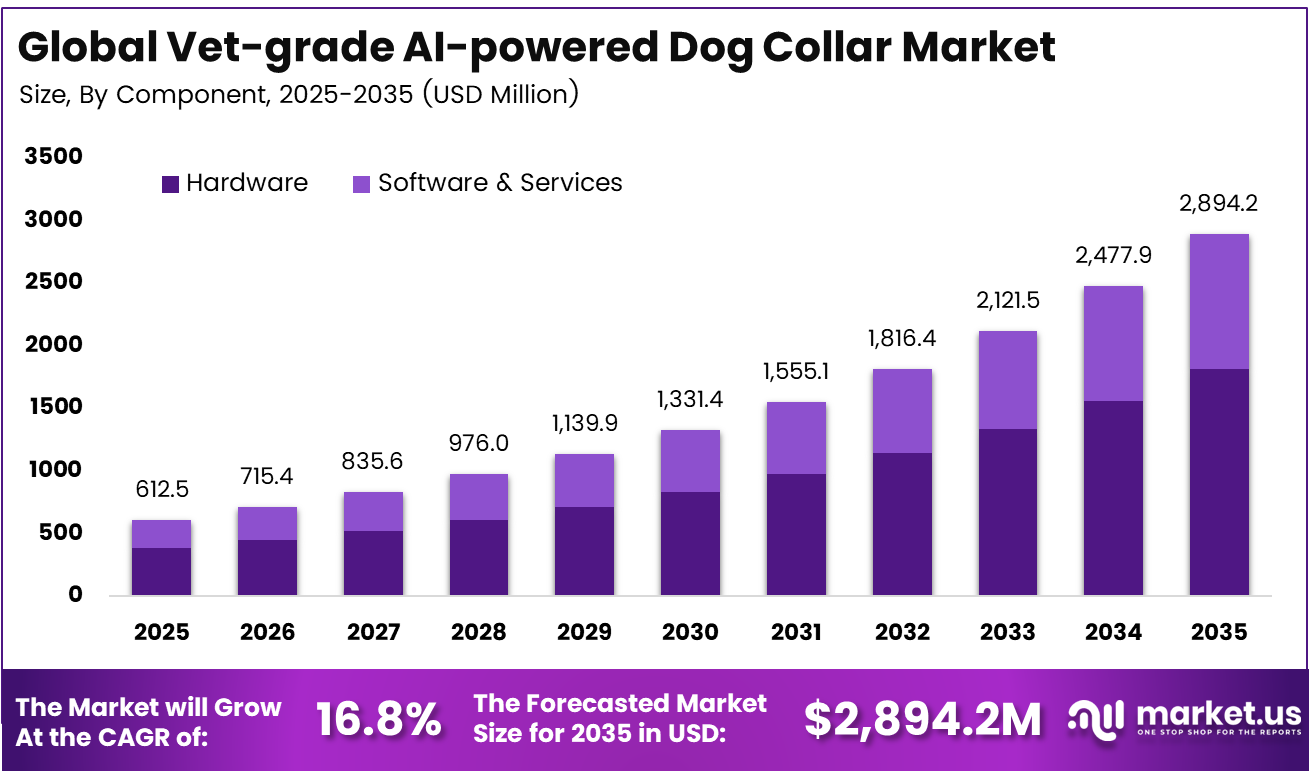
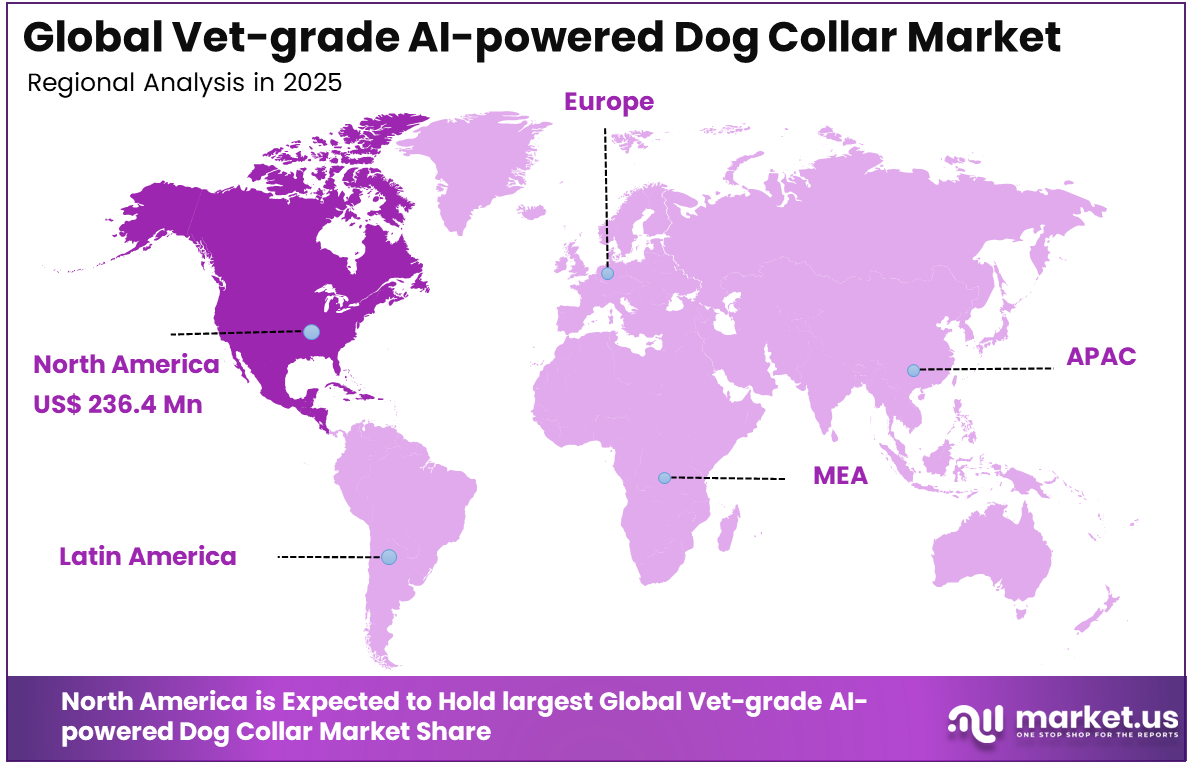
The Global Vet-grade AI-powered Dog Collar Market size is expected to be worth around USD 2,894.2 million by 2035, from USD 612.5 million in 2025, growing at a CAGR of 16.8% during the forecast period from 2025 to 2035. North America held a dominant market position, capturing more than a 38.6% share, holding USD 236.4 million in revenue.
Vet-grade AI-powered dog collar refers to a smart wearable device designed to monitor a dog’s health and behaviour using advanced sensors and artificial intelligence. It tracks vital signs, activity, and patterns, then converts this data into simple insights that help pet owners and veterinarians detect issues early and support ongoing care decisions.
Rising pet humanisation is shaping demand for advanced monitoring tools, as dogs often conceal pain until conditions worsen. Over 70% of pet owners treat animals as family, which increases interest in medical-grade insights rather than basic tracking. This shift supports early diagnosis and continuous health monitoring solutions in everyday pet care.
The market for Vet-grade AI-powered dog collars is driven by rising demand for preventive pet healthcare, early disease detection, and continuous health monitoring. Pet owners are becoming more willing to invest in smart tools that offer real-time insights into a dog’s condition, while veterinarians value data that supports better diagnosis, follow-up care, and more informed treatment decisions.
Demand is strengthened by growing pet healthcare spending and frequent veterinary visits. The rise of telehealth allows collar-generated data to support remote consultations effectively. Around 40% of veterinarians already use AI tools, which improves acceptance of connected devices and enables smoother integration of real-time health data into clinical decision-making.
For instance, in December 2025, Garmin expanded its pet-wearable line with smart collars offering longer battery life and integrated activity, fitness, and location tracking in one device. These collars target both working and companion dogs, pairing rugged outdoor performance with data that can support weight-management and conditioning programs, an important bridge toward clinic-ready datasets.
Key Takeaway
- In 2025, the Hardware segment held a dominant market position, capturing a 62.8% share of the Global Vet-grade AI-powered Dog Collar Market.
- In 2025, the Health Monitoring segment held a dominant market position, capturing a 58.4% share of the Global Vet-grade AI-powered Dog Collar Market.
- In 2025, the Veterinary Clinics & Hospitals segment held a dominant market position, capturing a 48.7% share of the Global Vet-grade AI-powered Dog Collar Market.
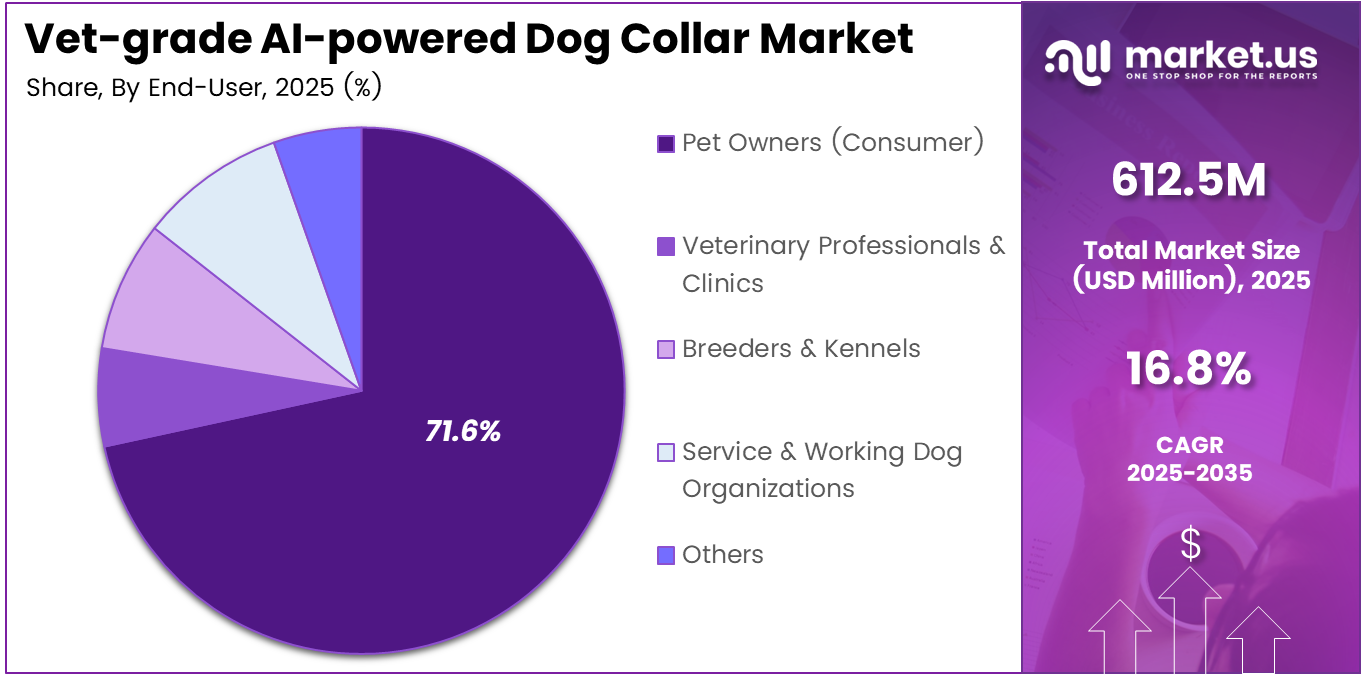
- In 2025, the Pet Owners (Consumer) segment held a dominant market position, capturing a 71.6% share of the Global Vet-grade AI-powered Dog Collar Market.
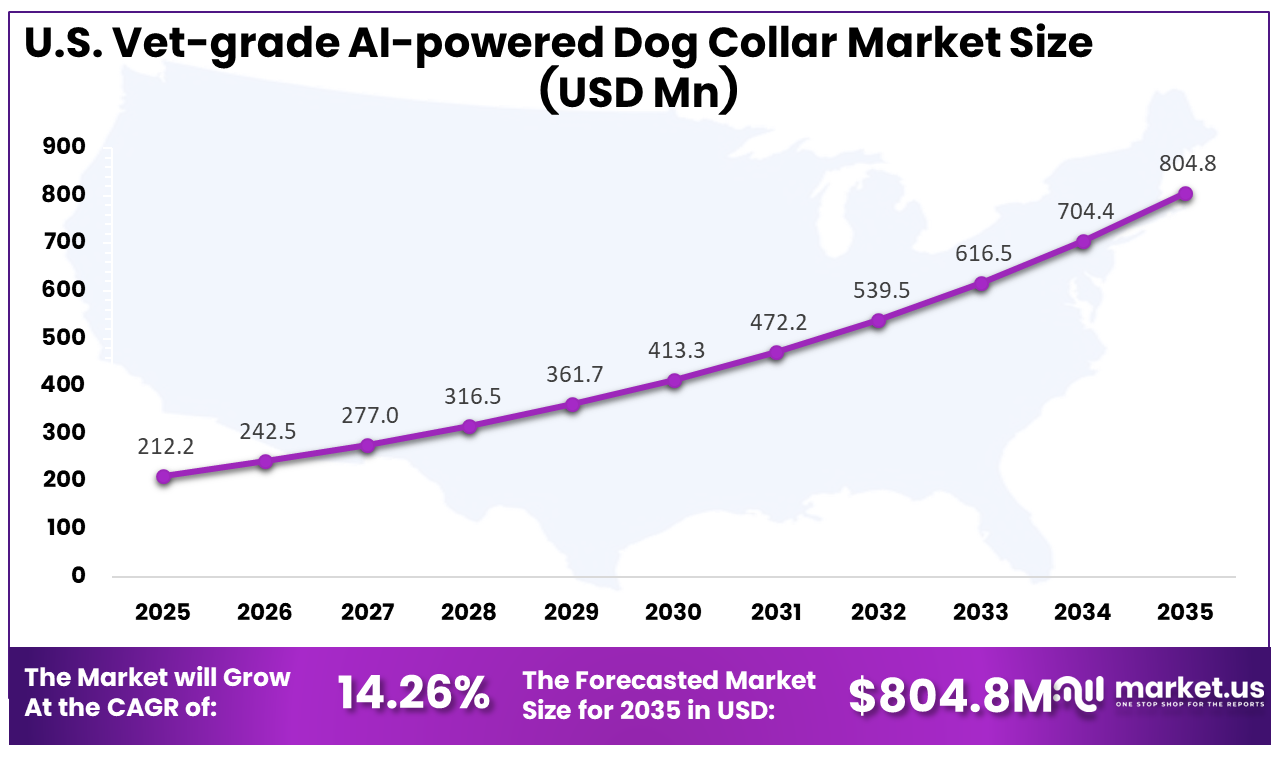
- The U.S. Vet-grade AI-powered Dog Collar Market was valued at USD 212.2 Million in 2025, with a robust CAGR of 14.26%.
- In 2025, North America held a dominant market position in the Global Vet-grade AI-powered Dog Collar Market, capturing more than a 38.6% share.
Role of Generative AI
Generative AI is acting as a silent assistant that monitors continuous sensor data and converts it into simple insights for pet owners and veterinarians. AI-powered collars now track temperature, pulse, respiration, and activity, using trained models to identify patterns linked to pain, distress, or early-stage disease conditions.
At the platform level, generative AI is shifting toward cognitive wearable systems that interpret emotional states and behavioural context. New solutions aim to enable real-time interaction between dogs and humans. Recent funding activity in this space reflects growing confidence that such intelligent interfaces could become commercially viable in upcoming product cycles.
Investment and Business Benefits
Investment potential is expanding across AI-driven software, sensor technology, and telehealth platforms. Opportunities are also present in regional customisation, especially in markets like India. Platforms that unify collar data with clinics, grooming, and insurance services can create preventive care models and scalable risk assessment systems for large pet populations.
Companies and veterinary partners benefit from subscription-based revenue and improved customer retention. Data collected over time enhances algorithm accuracy and service quality. Clinics can manage higher patient volumes as AI-based triage and remote monitoring reduce routine visits by 10–20%, allowing professionals to focus more on complex and urgent cases.
Regional Analysis
In 2025, North America held a dominant market position in the Global Vet-grade AI-powered Dog Collar Market, capturing more than a 38.6% share, holding USD 236.4 million in revenue. This dominance is due to high pet ownership, strong spending on advanced pet healthcare, and early adoption of digital health technologies. Well-established veterinary infrastructure and growing use of telehealth also support demand, while awareness of preventive care continues to encourage use of AI-enabled monitoring devices.
For instance, in October 2025, FitBark deepened its presence in North America as a leading health-focused smart collar, with devices tracking activity, sleep, calories, and behavior shifts to flag emerging issues. Positioned as a “Fitbit for dogs,” FitBark’s U.S.-centric data and integrations with human wearables help vets and owners collaborate on longitudinal health management, reinforcing the region’s vet-grade collar standards.
U.S. Vet-grade AI-powered Dog Collar Market Size
The market for Vet-grade AI-powered Dog Collars within the U.S. is growing tremendously and is currently valued at USD 212.2 million. The market has a projected CAGR of 14.26%. The market is growing due to rising pet humanisation, higher spending on preventive healthcare, and increasing adoption of remote monitoring tools. Pet owners seek early disease detection and real-time insights, while veterinarians benefit from continuous data that supports better diagnosis, follow-up care, and improved treatment outcomes.
For instance, in June 2025, Fi launched its Series 3+ AI-powered smart dog collar in the U.S., adding behavior detection for barking, licking, scratching, eating, and drinking alongside upgraded GPS tracking. The collar uses proprietary AI trained on one of the largest dog-behavior datasets, giving North American pet owners vet-grade, real-time health insights from a subscription model platform.
Key Regions and Countries
North America
- US
- Canada
Europe
- Germany
- France
- The UK
- Spain
- Italy
- Russia
- Netherlands
- Rest of Europe
Asia Pacific
- China
- Japan
- South Korea
- India
- Australia
- Singapore
- Thailand
- Vietnam
- Rest of APAC
Latin America
- Brazil
- Mexico
- Rest of Latin America
Middle East & Africa
- South Africa
- Saudi Arabia
- UAE
- Rest of MEA
Component Analysis
In 2025, the Hardware segment held a dominant market position, capturing a 62.8% share of the Global Vet-grade AI-powered Dog Collar Market. This dominance is due to the critical role of physical sensors that capture real-time health signals such as temperature, movement, and breathing patterns. Accurate data collection depends on well-designed hardware that ensures comfort, durability, and continuous monitoring without interruption, making it the backbone of advanced collar systems.
Hardware also supports long battery life and reliable connectivity, which are essential for uninterrupted tracking and timely alerts. Improvements in miniaturisation and sensor precision are helping devices become lighter and more efficient, encouraging wider adoption among pet owners who expect both performance and comfort in daily use.
For instance, in September 2025, PetPace introduced a new generation of its vet-grade AI collar focused on richer biometric sensing and more comfortable everyday wear for dogs. The hardware now supports continuous tracking of vital signs while remaining light and flexible on the neck, which makes it easier for veterinarians to rely on the device for longer-term clinical monitoring.
Application Analysis
In 2025, the Health Monitoring segment held a dominant market position, capturing a 58.4% share of the Global Vet-grade AI-powered Dog Collar Market. This dominance is due to the growing need for continuous tracking of vital signs and behaviour to detect early health issues. Pet owners and veterinarians increasingly rely on real-time insights that support preventive care, reduce risks, and enable quicker response to abnormal patterns observed in a dog’s daily routine.
Health monitoring applications also improve long-term care by supporting recovery tracking and chronic condition management. Regular data collection helps build detailed health profiles, which can guide treatment decisions and improve outcomes, making these applications essential in modern pet care practices.
For instance, in September 2025, PetPace announced an upgraded AI health collar that can flag subtle changes in posture, sleep, and activity patterns that may indicate pain or early disease. The company highlights how vets can use continuous data from the collar to adjust treatment plans between visits, which reinforces health monitoring as the primary use case rather than simple location tracking.
Distribution Channel Analysis
In 2025, the Veterinary Clinics & Hospitals segment held a dominant market position, capturing a 48.7% share of the Global Vet-grade AI-powered Dog Collar Market. This dominance is due to the trust and expertise associated with veterinary settings, where data from smart collars can be accurately interpreted. Clinics provide structured environments for diagnosis and follow-up, which makes them key points for introducing and recommending advanced monitoring solutions to pet owners.
Veterinary professionals also use these devices to support remote care and reduce unnecessary visits. By reviewing continuous data, clinics can manage more cases efficiently while maintaining quality care, which strengthens the role of this channel in distributing and supporting such technologies.
For instance, in June 2025, Invoxia took part in a veterinary technology event in France to demonstrate how its animal health trackers can support clinical practice. By engaging directly with veterinarians in workshops and live demos, the company is encouraging clinics to see connected collars as part of their toolkit, which strengthens the role of professional channels in recommending and distributing these devices.
End-User Analysis
In 2025, the Pet Owners (Consumer) segment held a dominant market position, capturing a 71.6% share of the Global Vet-grade AI-powered Dog Collar Market. This dominance is due to the strong emotional connection between owners and their pets, which drives spending on advanced care solutions. Many owners prefer tools that provide daily health updates and early warnings, helping them take timely action and avoid serious health complications.
Pet owners also value convenience and control, as these devices allow monitoring without frequent clinic visits. Access to simple insights and alerts builds confidence in managing pet health at home, which continues to support strong adoption among consumer users.
For instance, in July 2025, Tractive acquired Whistle from Mars Petcare, bringing an established base of connected-collar users onto its platform. The transition offers those pet owners a path to more advanced health and activity features while staying within a familiar product category, which helps maintain and grow consumer engagement with AI-powered collars across different brands and device generations.
Key Market Segments
By Component
- Hardware
- AI Collar Device
- Sensors & Biometric Monitors
- GPS & Connectivity Module
- Others
- Software & Services
- Mobile Application & Analytics Dashboard
- AI Health & Behavior Analysis Platform
- Veterinary Telemedicine Subscription
- Data Storage & Professional Reporting
- Others
By Application
- Health Monitoring
- Vital Signs Tracking
- Activity & Rest Analysis
- Early Disease Detection Alerts
- Post-operative Care
- Others
- Behavioral Analysis & Training
- Anxiety & Stress Detection
- Barking & Behavior Tracking
- Training Reinforcement
- Others
- Safety & Location
- GPS Tracking & Geo-fencing
- Theft Prevention
- Others
By Distribution Channel
- Veterinary Clinics & Hospitals
- Pet Specialty Stores
- Online Retailers
- Direct-to-Consumer
By End-User
- Pet Owners (Consumer)
- Veterinary Professionals & Clinics
- Breeders & Kennels
- Service & Working Dog Organizations
- Others
Emerging Trends
Smart collars are evolving beyond GPS tracking into advanced health and behaviour intelligence platforms. These devices now combine edge computing and cloud-based AI to deliver clinical-level insights. Companies are repositioning collars as integrated healthcare tools that connect with telehealth services and veterinary systems, rather than simple outdoor safety devices.
The broader pet technology ecosystem is expanding with AI wearables, implants, and NFC-enabled chips that support continuous monitoring. Industry observations indicate strong double-digit CAGR growth for connected pet solutions, suggesting that AI-enabled, vet-grade collars will benefit from this trend and accelerate adoption across both developed and emerging markets.
Growth Factors
Demand growth is driven by increasing emotional attachment between owners and pets, encouraging investment in early detection and preventive care. Smart collars offering real-time alerts, health tracking, and personalised wellness plans are gaining traction. This behavioural shift is supporting long-term adoption of AI-enabled collars designed for clinical relevance.
On the supply side, advancements in low-power sensors and on-device AI are improving performance without affecting comfort or battery life. Studies highlight high single to low double-digit CAGR growth for smart collars globally, with premium AI-driven devices expanding faster due to their ability to provide actionable health insights.
Market Dynamics
Drivers - Shift toward Preventive Pet Healthcare
Preventive pet healthcare is becoming a major force behind this market as owners look for ways to detect health issues before they become serious. Vet-grade AI collars support this need by tracking signs continuously, helping owners and veterinarians respond earlier and manage health conditions with greater confidence and care.
This shift is also linked to changing attitudes toward pet wellbeing, where regular monitoring is valued as part of everyday care. Instead of waiting for visible symptoms, owners increasingly prefer tools that offer early alerts and clearer health insights, which makes these collars more relevant in routine wellness management.
For instance, in February 2026, Invoxia introduced the 2026 edition of its Biotracker dog collar with continuous GPS plus upgraded heart, respiratory, and variability monitoring, strengthening its position as a preventive health tool rather than just a tracker. The collar focuses on early detection of cardiac and respiratory issues so owners and vets can act before symptoms become obvious.
Restraint - High Cost
High cost remains a key restraint because vet-grade AI collars are often priced above standard pet wearables. Many buyers may hesitate when faced with the combined expense of device purchase, software access, and ongoing service fees, especially when the benefits are still being evaluated at home.
This cost pressure can also slow adoption in price-sensitive households and smaller veterinary practices. Even when the technology is appealing, purchasing decisions are often influenced by budget limits, making affordability an important issue for companies trying to expand usage across broader customer groups.
For instance, in June 2025, the Fi Series 3+ is sold through a subscription model that spreads payments yet still represents a notable recurring expense on top of the hardware. While owners gain richer health and behavior insights, the ongoing fee can deter users who only need basic tracking or who manage multiple dogs at once.
Opportunities - Expansion into Emerging Pet Care Ecosystems
A strong opportunity is emerging as pet care becomes more connected across services such as clinics, grooming, insurance, training, and digital consultations. Vet-grade AI collars can play a central role in this ecosystem by supplying continuous health and behaviour data that supports better coordination and more personalised care planning.
This expansion creates room for new service models built around data sharing and preventive support. As pet care systems become more integrated, collars can move beyond standalone devices and become part of a broader care network, helping providers deliver more timely advice and stronger everyday engagement with owners.
For instance, in April 2026, PetPace’s collar with integrated telehealth and telemedicine plugs directly into virtual veterinary services, showing how a device can act as an on-ramp to a larger digital care platform. Sharing continuous vitals during video or chat sessions positions the collar as a key node in a connected pet health ecosystem.
Challenges - Data Privacy
Data privacy is a key challenge because these collars collect continuous health and behaviour information that must be stored, processed, and shared responsibly. Pet owners may become cautious if they are unclear about how data is used, who can access it, or how securely it is protected.
This challenge also affects trust between technology providers, veterinarians, and consumers. Clear consent practices, secure systems, and transparent communication are important for wider acceptance. Without strong privacy safeguards, even well-designed products may face hesitation from buyers who value both pet health and responsible data handling.
For instance, in January 2025, Tractive’s next-generation tracker gathers health-related indicators in addition to precise GPS routes, deepening the sensitivity of the information held in its systems. As the company scales in North America and beyond, managing cross-border data protection rules and customer trust becomes increasingly important.
Key Players Analysis
One of the leading players in November 2025, PetPace’s AI collar was profiled for enabling secure data sharing between pet owners and veterinarians, including pilots for tracking epilepsy episodes remotely. This kind of longitudinal, objective data stream is exactly what clinics want when they talk about “vet-grade” wearables, because it supports earlier intervention and more evidence-based treatment decisions.
Top Key Players in the Market
- PitPat Pet Ltd
- Invoxia
- Link AKC
- Fi, Inc.
- Whistle Labs, Inc. (a Mars, Incorporated company)
- Tractive GmbH
- PetPace Ltd.
- Voyce (a i4C Innovations company)
- WÜF
- Pod Trackers
- Loc8tor Ltd.
- Garmin Ltd.
- FitBark, Inc.
- Nuzzle
- Motorola Mobility LLC
- Others
Recent Developments
- In June 2025, Fi launched the Fi Series 3+, which it calls the world’s first AI-powered smart dog collar built for real-time health and behaviour detection. The collar tracks activity, sleep, and adds AI-based detection of scratching, licking, barking, eating, and drinking, giving vets and owners 360-degree insight into a dog’s wellbeing in everyday conditions.
- In December 2024, PetPace introduced PetPace 2.0, a vet-grade AI collar focused on continuous, clinical-level health monitoring for dogs. The device collects millions of data points on vital signs and behaviour, flags anomalies in near real time, and is backed by peer-reviewed studies, which makes it a serious tool for veterinarians managing chronic and high-risk canine patients.
Report Scope
| Report Features | Description |
|---|---|
| Market Value (2025) | USD 612.5 Million |
| Forecast Revenue (2035) | USD 2,894.2 Million |
| CAGR (2026-2035) | 16.8% |
| Base Year for Estimation | 2025 |
| Historic Period | 2020-2024 |
| Forecast Period | 2026-2035 |
| Report Coverage | Revenue Forecast, Market Dynamics, Competitive Landscape, Recent Developments |
| Segments Covered | By Component (Hardware, Software & Services), By Application (Health Monitoring, Behavioral Analysis & Training, Safety & Location), By Distribution Channel (Veterinary Clinics & Hospitals, Pet Specialty Stores, Online Retailers, Direct-to-Consumer), By End-User (Pet Owners (Consumer), Veterinary Professionals & Clinics, Breeders & Kennels, Service & Working Dog Organizations, Others) |
| Regional Analysis | North America (US and Canada), Europe (Germany, France, The UK, Spain, Italy, and Rest of Europe), Asia Pacific (China, Japan, South Korea, India, Australia, and Rest of APAC), Latin America (Brazil, Mexico, and Rest of Latin America), Middle East & Africa (GCC, South Africa, and Rest of MEA) |
| Competitive Landscape | PitPat Pet Ltd, Invoxia, Link AKC, Fi, Inc., Whistle Labs, Inc. (a Mars, Incorporated company), Tractive GmbH, PetPace Ltd., Voyce (a i4C Innovations company), WÜF, Pod Trackers, Loc8tor Ltd., Garmin Ltd., FitBark, Inc., Nuzzle, Motorola Mobility LLC, Others |
| Customization Scope | Customization at the segment and region/country levels will be provided. Moreover, customization can be tailored to the requirements. |
| Purchase Options | We have three licenses to opt for: Single User License, Multi-User License (Up to 5 Users), Corporate Use License (Unlimited Users and Printable PDF) |