Vending Telemetry Platform Market By Component (Hardware, Software, Services), By Application (Beverage Vending, Food Vending, Ticket Vending, Others), By Connectivity (Wired, Wireless), By Deployment Mode (On-Premises, Cloud-Based), By End-User (Retail, Transportation, Hospitality, Corporate, Others), By Regional Analysis, Global Trends and Opportunity, Future Outlook By 2026-2035
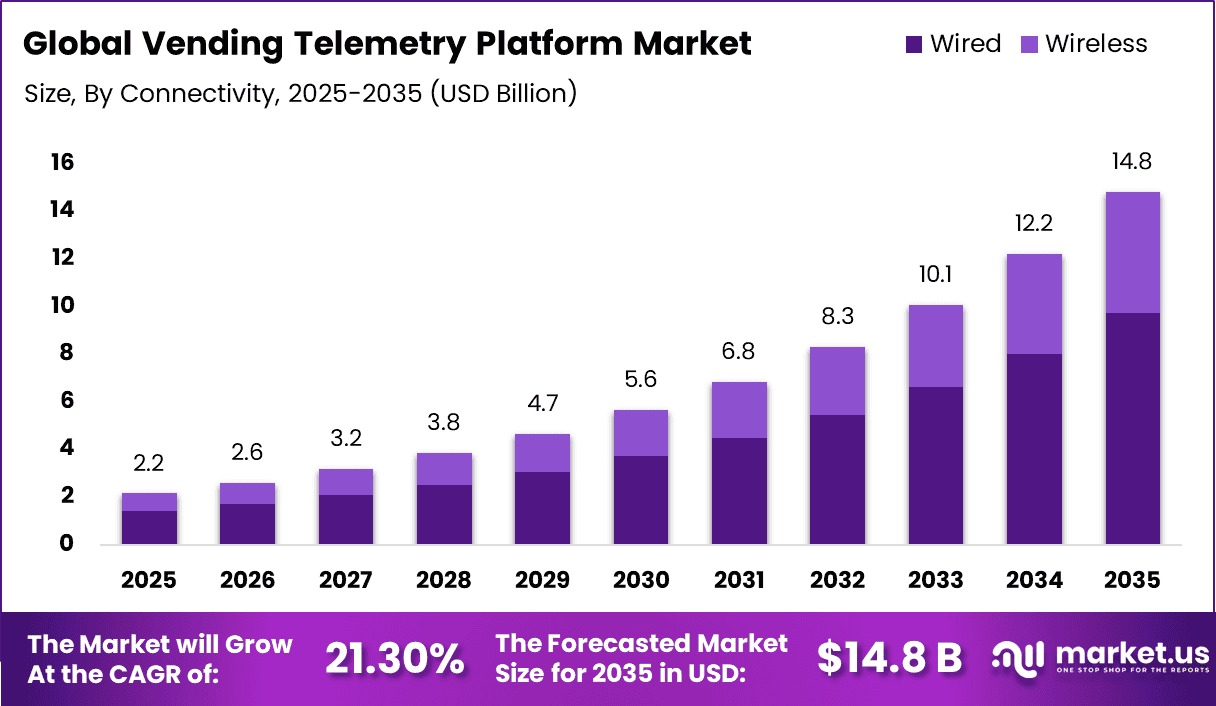
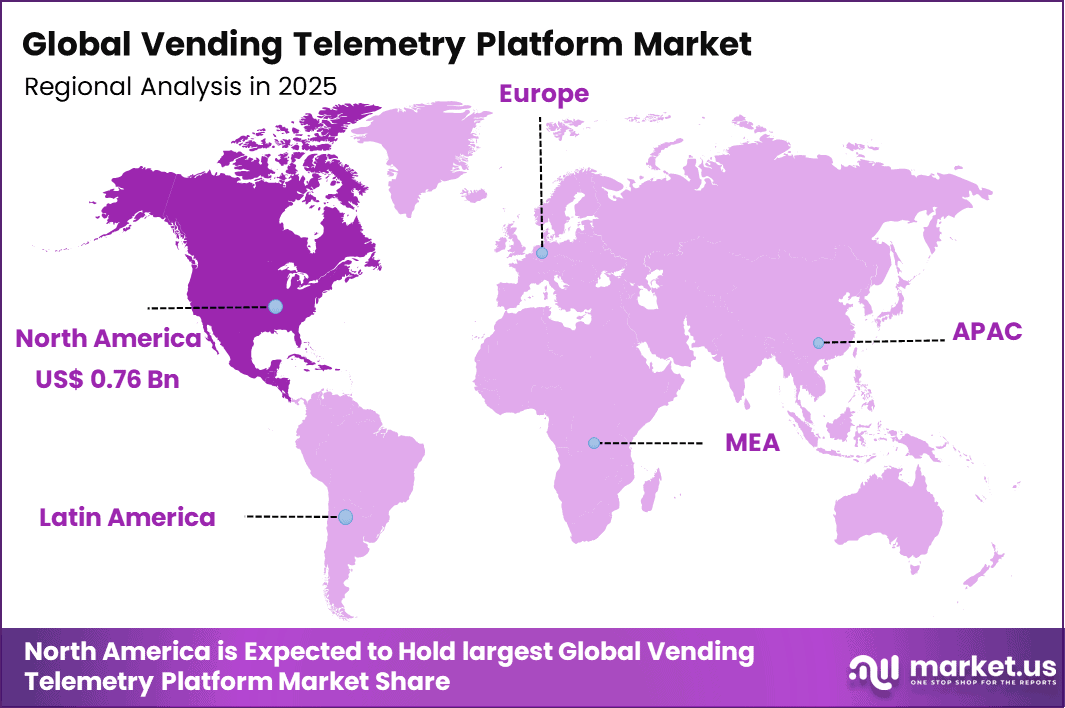
The Global Vending Telemetry Platform Market generated USD 2.2 billion in 2025 and is predicted to register growth from USD 2.6 billion in 2026 to about USD 14.8 billion by 2035, recording a CAGR of 21.30% throughout the forecast span. In 2025, North America held a dominant market position, capturing more than a 35.7% share, holding USD 0.76 Billion revenue.
Top Market Takeaways
Hardware commands 54.6% market share, delivering rugged controllers, sensors, and telemetry modules for real-time machine health monitoring and sales tracking.
Beverage vending applications capture 45.4%, enabling inventory alerts, temperature compliance, and dynamic pricing for high-volume drink dispensers.
Wired connectivity dominates at 65.6%, providing reliable data transmission through Ethernet backhaul in fixed-location vending deployments.
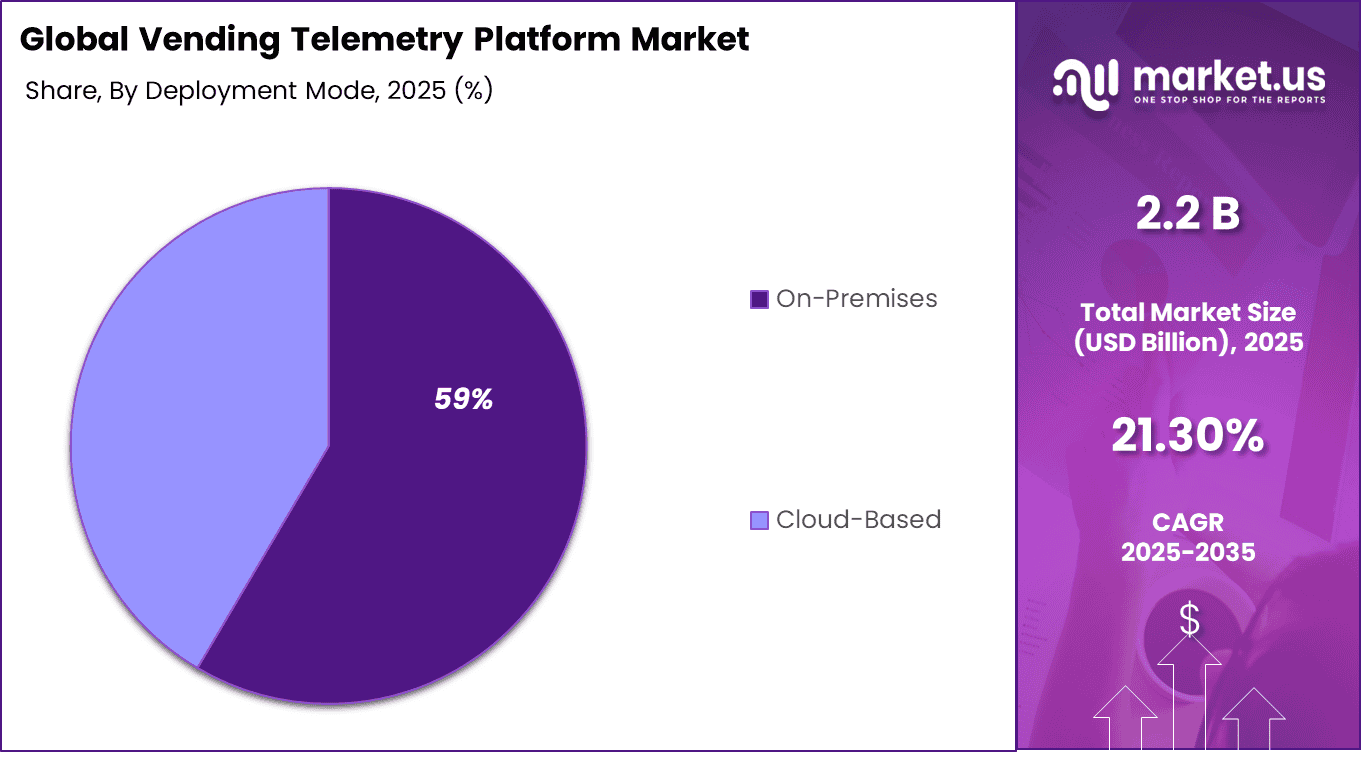
On-premises deployment claims 58.5%, ensuring low-latency control, local data caching, and integration with legacy vending management systems.
Retail end-users hold 38.5%, leveraging telemetry for store-level analytics, shrinkage reduction, and consumer preference insights.
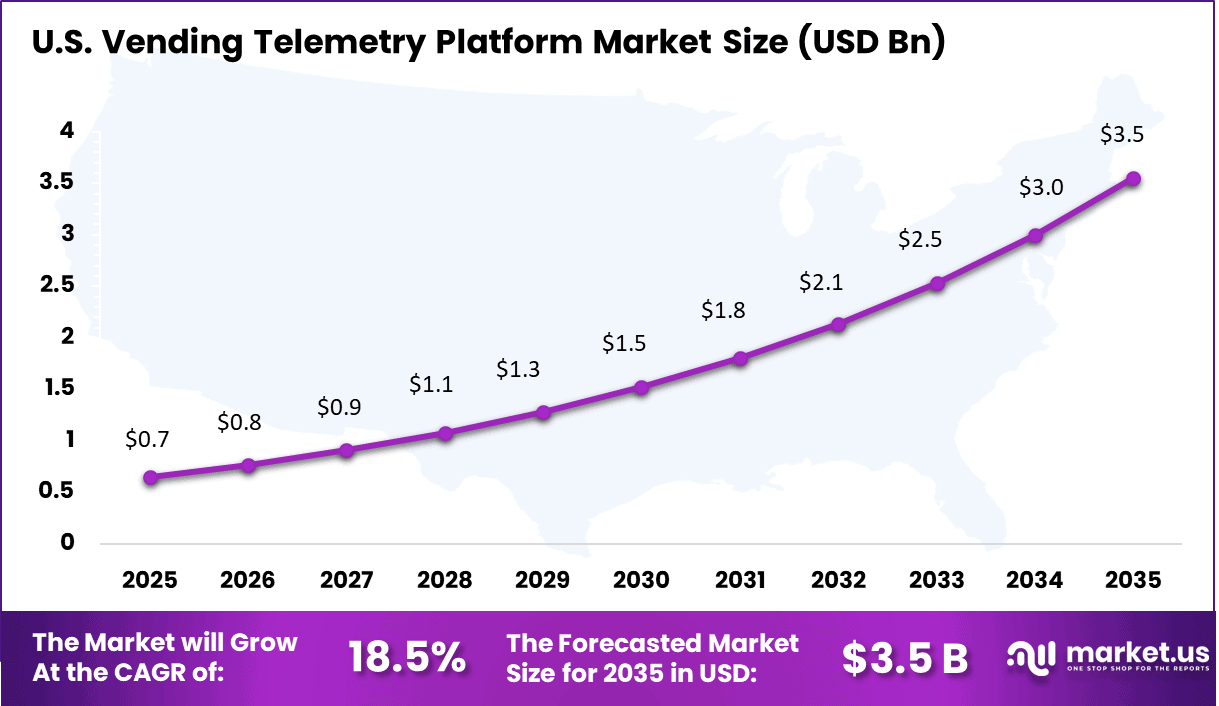
North America drives 35.7% global value, with U.S. market at USD 0.65 billion and 18.5% CAGR, fueled by micromarket expansion and 24/7 uptime requirements.
Vending Telemetry Platform market refers to software and connected monitoring systems that help vending operators track machine status, sales activity, stock levels, payment performance, and technical alerts from a central platform.
These solutions improve visibility across large vending machine networks and help operators manage remote assets more efficiently. The market is gaining importance as vending operations become more digital and businesses look for better control over inventory, uptime, and machine performance across different locations.
One of the main factors driving this market is the growing need for real time monitoring and lower machine downtime. Operators want platforms that can show stock status, technical faults, payment activity, and service needs without requiring frequent physical inspection.
Another important driver is the shift toward smarter vending operations, where connected systems support better route planning, preventive maintenance, and stronger day to day operational efficiency.
Demand for vending telemetry platforms is increasing among vending operators, unattended retail businesses, and beverage machine service providers that need better visibility across machine fleets. These buyers want practical tools that can improve refill planning, reduce unnecessary service visits, and support quicker action when technical issues appear. Demand is also rising because businesses increasingly prefer centralized systems that combine machine monitoring, inventory control, and performance analysis in one platform.
Drivers Impact Analysis
Key Driver
Impact on CAGR Forecast (~%)
Geographic Relevance
Impact Timeline
Strategic Effect
Increasing adoption of smart vending machines and connected devices
+3.5%
North America, Europe, Asia Pacific
Short to Mid Term (2025–2031)
Enables real time monitoring and control
Growing demand for remote inventory and sales tracking
+3.2%
Global
Mid Term (2026–2032)
Improves operational efficiency
Expansion of cashless payment systems and digital transactions
+3.0%
Global
Mid Term (2026–2032)
Enhances customer convenience
Rising focus on predictive maintenance and machine uptime
+2.7%
Global
Mid to Long Term (2026–2035)
Reduces downtime and service costs
Increasing use of data analytics for vending optimization
+2.5%
Global
Mid to Long Term (2026–2035)
Improves revenue generation
Restraints Impact Analysis
Key Restraint
Impact on CAGR Forecast (~%)
Geographic Relevance
Impact Timeline
Strategic Effect
High cost of implementing telemetry and IoT systems
-2.4%
Global
Mid Term (2026–2032)
Limits adoption among small operators
Connectivity issues in remote or low coverage areas
-2.1%
Emerging regions
Short to Mid Term (2025–2030)
Affects real time data transmission
Data security and privacy concerns
-1.9%
Global
Mid to Long Term (2026–2035)
Creates trust barriers
Integration challenges with legacy vending machines
-1.7%
North America, Europe
Mid Term (2026–2032)
Slows modernization
Maintenance and operational complexity
-1.5%
Global
Mid to Long Term (2026–2035)
Increases total cost of ownership
By Component Analysis
Hardware accounted for 54.6% of the Vending Telemetry Platform Market. This segment leads because devices such as sensors, communication modules, and control units are essential for collecting and transmitting real time data from vending machines. These components enable monitoring of inventory levels, machine status, and operational performance.
The segment is also supported by increasing deployment of connected vending systems. Operators invest in reliable hardware to ensure accurate data capture and continuous communication, which strengthens demand across smart vending environments.
By Application Analysis
Beverage vending represented 45.4% of the market. This segment dominates because beverage machines are widely installed across offices, public spaces, and commercial locations, generating high transaction volumes. Telemetry platforms help track stock levels, sales patterns, and machine performance efficiently.
The segment is driven by the need for optimized inventory management and improved customer service. Operators use telemetry data to reduce stockouts, manage refilling schedules, and enhance overall vending operations.
By Connectivity Analysis
Wired connectivity held 65.6% of the market. This segment leads because wired systems provide stable and consistent data transmission, which is critical for monitoring vending machines in fixed locations. It ensures reliable communication without signal interruptions.
The segment is also supported by lower operational risk and predictable performance. Many operators prefer wired connectivity for established vending networks where consistent data flow and system reliability are essential.
By Deployment Mode Analysis
On premises deployment accounted for 59% of the market. This segment leads because operators prefer to manage telemetry systems within their own infrastructure to maintain control over operational data and system performance. It allows direct monitoring and customization based on business needs.
The segment is driven by the need for data security and system reliability. On premises solutions provide stable operation and reduce dependency on external platforms, which supports adoption across large vending networks.
By End User Analysis
Retail represented 38.5% of the market. This segment dominates because retail locations such as malls, convenience stores, and supermarkets host a large number of vending machines. Telemetry platforms help retailers manage machine performance and improve sales efficiency.
The segment is supported by increasing focus on automated retail solutions. Retailers adopt telemetry systems to monitor usage patterns, optimize product placement, and enhance customer experience, which drives steady demand in this segment.
Investor Type Impact Analysis
Investor Type
Growth Sensitivity
Risk Exposure
Geographic Focus
Investment Outlook
Venture Capital Firms
Very High
High
US, Europe
Strong smart vending opportunity
Private Equity Firms
High
Medium
North America, Europe
Expansion in retail automation
Strategic Technology Investors
Very High
Medium
US, China, Japan
Strengthens IoT ecosystem
Corporate Venture Arms
High
Medium
Global
Supports retail and IoT integration
Government and Smart Infrastructure Funds
Medium
Low
Asia Pacific, Europe
Supports smart city initiatives
Technology Enablement Analysis
Technology Enabler
Impact on CAGR Forecast (~%)
Geographic Relevance
Impact Timeline
Implementation Significance
IoT based telemetry and real time monitoring systems
+3.6%
Global
Short to Mid Term (2025–2031)
Enables continuous data collection
Cloud based vending management platforms
+3.3%
Global
Short to Mid Term (2025–2030)
Supports centralized control
AI driven analytics for demand forecasting and optimization
+3.0%
Global
Mid Term (2026–2032)
Improves inventory planning
Integration with cashless and digital payment systems
+2.7%
Global
Mid Term (2026–2032)
Enhances user experience
Mobile and remote device management applications
+2.5%
Global
Mid to Long Term (2026–2035)
Improves accessibility and control
Key Challenges
Connectivity is a major challenge because vending telemetry platforms depend on stable network access to send machine data, sales records, and alerts in real time.
Integration with older vending machines can be difficult because many machines do not support modern sensors, software, or remote communication systems.
Data accuracy is important, and wrong inventory, payment, or machine status data can affect restocking, maintenance, and business decisions.
Cybersecurity is a growing concern because connected vending systems may handle payment data, machine controls, and operational information that need protection.
Managing large numbers of machines across different locations can be complex because operators need smooth monitoring, updates, and technical support at scale.
Emerging Trends
A key trend in the Vending Telemetry Platform market is the increasing use of connected monitoring systems that provide real time visibility into machine performance and inventory levels. Operators are adopting platforms that track product availability, machine status, and transaction activity remotely.
These systems help reduce manual checks and allow quicker response to maintenance needs or restocking requirements. This trend reflects a shift toward smarter vending operations where data insights support better decision making and improve overall service efficiency.
Growth Factors
The growing need for efficient vending operations and improved customer experience is supporting the expansion of vending telemetry platforms. Operators aim to reduce downtime and ensure machines remain stocked with the right products. Telemetry solutions help optimize routes, improve inventory planning, and maintain machine performance.
At the same time, increasing adoption of digital payment systems and connected devices encourages the use of platforms that can manage operations remotely and provide better control over vending networks.
Key Market Segments
By Component
Hardware
Software
Services
By Application
Beverage Vending
Food Vending
Ticket Vending
Others
By Connectivity
Wired
Wireless
By Deployment Mode
On-Premises
Cloud-Based
By End-User
Retail
Transportation
Hospitality
Corporate
Others
Regional Analysis
North America accounted for 35.7% of the Vending Telemetry Platform Market, reflecting strong adoption of connected vending solutions across retail, transportation hubs, and commercial spaces. Operators across the region increasingly deploy telemetry platforms to monitor machine performance, track inventory levels, and manage sales data in real time. The growing need for operational efficiency, reduced maintenance costs, and improved customer experience continues to drive demand for smart vending management systems across North America.
The U.S. generated about USD 0.65 Billion within the regional market and is projected to expand at a CAGR of 18.5%. Businesses across the country continue to invest in telemetry platforms that enable remote monitoring, automated restocking, and data driven decision making.
These systems help operators optimize product placement, reduce downtime, and enhance revenue generation. As vending operations become more digitized and data focused, demand for advanced telemetry platforms continues to grow rapidly across the US market.
Key Regions and Countries
North America
US
Canada
Europe
Germany
France
The UK
Spain
Italy
Russia
Netherlands
Rest of Europe
Asia Pacific
China
Japan
South Korea
India
Australia
Singapore
Thailand
Vietnam
Rest of APAC
Latin America
Brazil
Mexico
Rest of Latin America
Middle East & Africa
South Africa
Saudi Arabia
UAE
Rest of MEA
Competitive Analysis
The competitive landscape of the Vending Telemetry Platform market includes payment technology companies, vending equipment providers, and remote monitoring platform developers. Crane Co., Cantaloupe Inc., Nayax Ltd., Ingenico Group, USA Technologies Inc., Vendon SIA, Televend (INTIS Ltd.), Azkoyen Group, SandenVendo, and FAS International S.p.A. hold strong positions because they offer connected solutions for machine monitoring, cashless payments, sales tracking, and inventory visibility. These companies compete by helping vending operators improve machine uptime, route planning, and consumer convenience.
Other players such as Vianet Group plc, Parlevel Systems Inc., Smarter Vending, Mikrolab S.r.l., Payter BV, InHand Networks, Telemetron, Matellio Inc., Alberici S.p.A., and Coin Acceptors Inc. add competition through telemetry software, connectivity systems, and vending management tools.
The market is shaped by data accuracy, ease of integration, payment support, and the ability to deliver real time machine insights. Overall, companies compete by improving operational efficiency, digital payment experience, and remote control of vending networks.
The future outlook for the Vending Telemetry Platform Market looks positive as vending operators increasingly use connected platforms to monitor machine sales, health, and inventory from a central system. Current industry platforms already support real time remote monitoring, machine alerts, reporting, and pre pick inventory planning, which helps reduce service visits and improve machine performance. As unattended retail expands and operators focus more on route efficiency, cashless operations, and data driven decisions, demand for vending telemetry platforms is expected to grow steadily in the coming years.
Recent Developments
March, 2026 – Crane Co. adds 5G modules to NAC telemetry for US routes and links Vendnet cloud with AI stock forecasts. Cuts visits 25% and targets offices with UPI refunds. Adds dynamic pricing for peak hours and partners CPG for shelf data.
February, 2026 – Cantaloupe Seed platform hits 1M machines with edge AI and enables multi-vend carts. Live temp logs and grows micro-markets 30% YoY. Sells consumer insights to brands and adds QR loyalty scans.
Report Scope
Report Features
Description
Market Value (2025)
USD 2.2 Billion
Forecast Revenue (2035)
USD 14.8 Billion
CAGR(2025-2035)
21.30%
Base Year for Estimation
2024
Historic Period
2020-2024
Forecast Period
2026-2035
Report Coverage
Revenue forecast, AI impact on Market trends, Share Insights, Company ranking, competitive landscape, Recent Developments, Market Dynamics and Emerging Trends
Segments Covered
By Component (Hardware, Software, Services), By Application (Beverage Vending, Food Vending, Ticket Vending, Others), By Connectivity (Wired, Wireless), By Deployment Mode (On-Premises, Cloud-Based), By End-User (Retail, Transportation, Hospitality, Corporate, Others)
Regional Analysis
North America – US, Canada; Europe – Germany, France, The UK, Spain, Italy, Russia, Netherlands, Rest of Europe; Asia Pacific – China, Japan, South Korea, India, New Zealand, Singapore, Thailand, Vietnam, Rest of Latin America; Latin America – Brazil, Mexico, Rest of Latin America; Middle East & Africa – South Africa, Saudi Arabia, UAE, Rest of MEA