


Market Overview
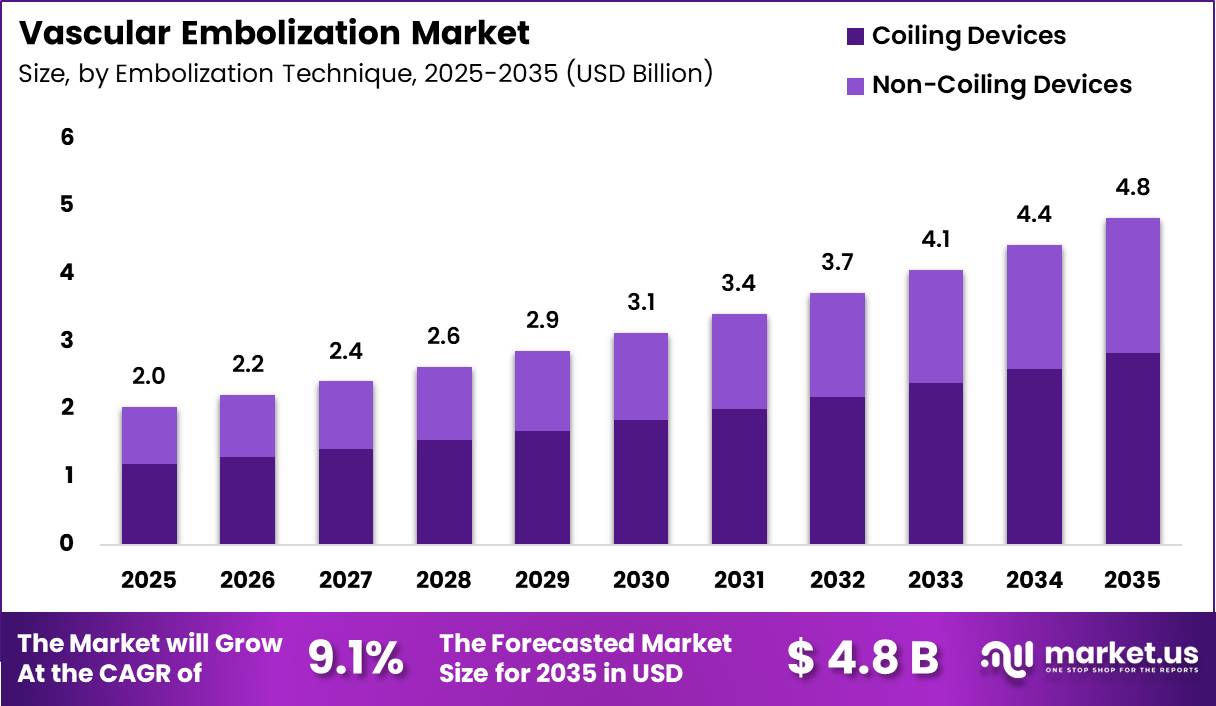
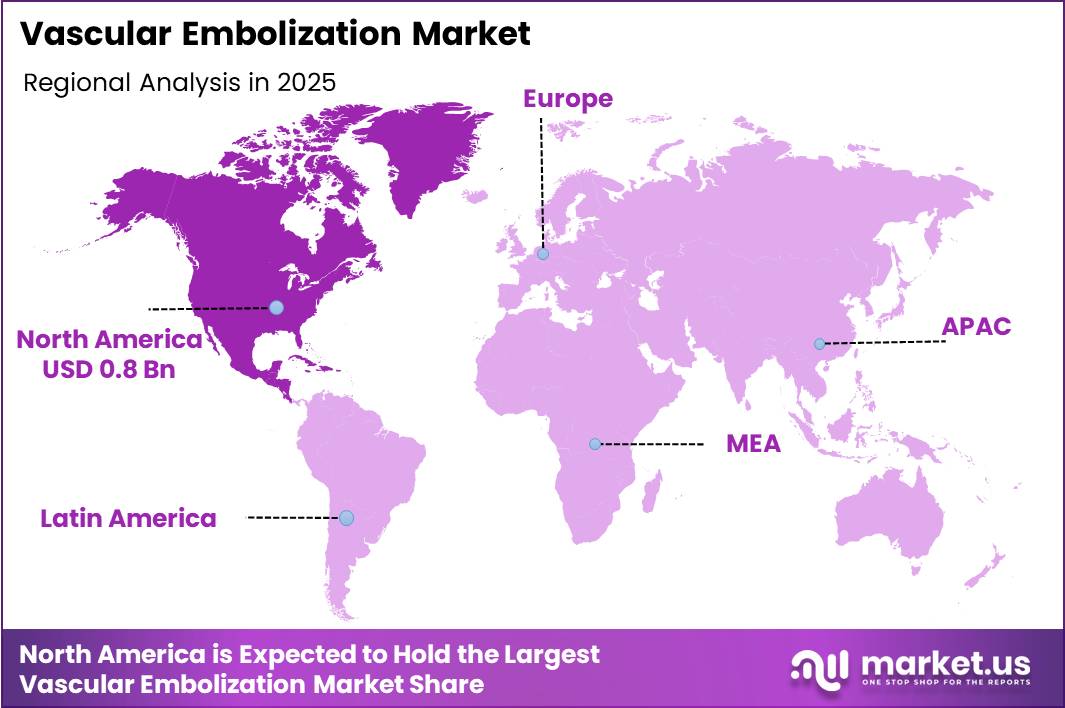
The Global Vascular Embolization Market size is expected to be worth around US$ 4.8 Billion by 2035 from US$ 2 Billion in 2025, growing at a CAGR of 9.10% during the forecast period from 2026 to 2035. In 2025, North America led the market, achieving over 39.50% share with a revenue of US$ 0.79 billion.
Vascular embolization is a minimally invasive interventional radiology procedure that intentionally blocks a blood vessel to stop haemorrhage, devascularize tumours, or treat vascular conditions such as aneurysms and arteriovenous malformations. According to the National Cancer Institute (NCI), this procedure uses tiny particles or coils delivered through a catheter to occlude blood vessels, thereby reducing blood flow to targeted tissues or tumours.
In the United States, medical devices used for vascular embolization are regulated by the FDA under Title 21 of the Code of Federal Regulations, Section 870.3300. These devices are classified as Class II medical devices, subject to special controls.
They include embolic coils, particles, and occlusive agents designed for haemorrhage control and tumour treatment. Embolisation procedures are part of comprehensive endovascular care, providing a less invasive alternative to open surgery, typically requiring hospital stays of only 1 to 2 days for uncomplicated cases.
Government data indicate that the volume of percutaneous embolization procedures nearly doubled in the U.S. Medicare population, with a 125% increase from approximately 20,262 procedures in 2005 to about 45,478 procedures in 2016, reflecting strong adoption of these minimally invasive techniques. Clinically, embolization is utilised worldwide for treating trauma-related bleeding, gastrointestinal haemorrhage, uterine fibroids, and preoperative tumour devascularization.
National treatment guidelines in India also recommend embolization for bronchial artery bleeding and other vascular conditions. As healthcare systems increasingly prioritize less invasive therapies, vascular embolization remains a critical, evidence-based treatment supported by regulatory standards and clinical practices.
Key Takeaways
- Market Size: The Global Vascular Embolization Market size is expected to be worth around US$ 4.8 Billion by 2035 from US$ 2 Billion in 2025.
- Market Share: The market is growing at a CAGR of 9.10% during the forecast period from 2026 to 2035.
- Embolization Technique Analysis: The embolization technique is a crucial aspect of the vascular embolization market. Coiling devices are expected to account for 58.7% of the market share by 2025.
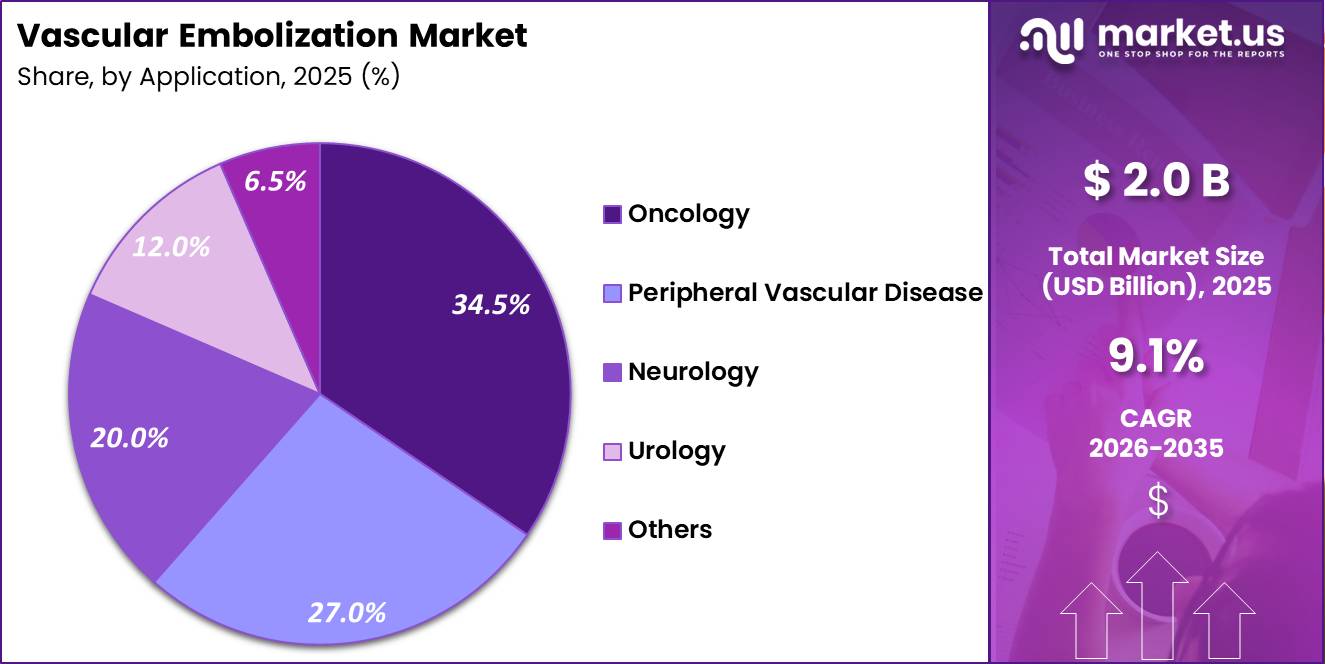
- Application Analysis: The application segment of the vascular embolization market is led by oncology, which accounts for 34.5% of the market share in 2025,
- Regional Analysis: In 2025, North America led the market, achieving over 39.50% share with a revenue of US$ 0.79 billion.
Embolization Technique Analysis
The embolization technique is a crucial aspect of the vascular embolization market. Coiling devices are expected to account for 58.7% of the market share by 2025. These coils are the preferred choice in many endovascular procedures as they are commonly used to block blood flow in aneurysms and other abnormal blood vessels. They offer controlled placement and are well-established in clinical practice.
This segment benefits from widespread adoption in areas such as neurology, interventional radiology, and peripheral vascular applications, where precise vessel occlusion and minimally invasive treatments are essential.
Non-coiling devices represent 41.3% of the market and are gaining popularity due to their increasing significance in complex cases and their broader therapeutic versatility. This category encompasses liquid embolic agents, microspheres, vascular plugs, particulate embolics, and flow diversion devices, each designed for specific lesion types, vessel sizes, and clinical objectives.
The growth of non-coiling devices is fueled by their rising use in tumor embolization, arteriovenous malformations, and scenarios that necessitate deeper penetration or more durable occlusion. Overall, the landscape of embolization techniques indicates a market shift toward more customised, image-guided treatment options. While coiling devices continue to dominate, non-coiling technologies are expanding their clinical and commercial presence.
Application Analysis
The application segment of the vascular embolization market is led by oncology, which accounts for 34.5% of the market share in 2025, reflecting the strong clinical role of embolization in tumour management, pre-surgical devascularization, and palliative care. This segment benefits from the growing preference for minimally invasive procedures that help reduce bleeding risk, improve procedural precision, and support faster recovery in cancer patients.
Peripheral vascular disease follows with a 27.0% share, driven by increasing cases of vascular narrowing, aneurysms, and other circulatory disorders that require targeted vessel occlusion. Neurology represents 20.0% of the market, supported by embolization use in aneurysm repair, arteriovenous malformations, and other cerebrovascular conditions where accurate flow control is essential.
Urology holds a 12.0% share, largely due to its use in managing conditions such as hematuria and renal vascular abnormalities through precise endovascular intervention. The others category, at 6.5%, includes additional applications across specialities where embolization is used to control bleeding or isolate diseased vessels.
Overall, the application landscape underscores the versatility of embolization technology and its expanding adoption across oncology-centred and non-oncology procedures, with demand increasingly shaped by minimally invasive treatment pathways and broader interventional use cases.
Key Market Segments
By Embolization Technique
- Coiling Devices
- Detachable Coils
- Pushable Coils
- Hydrogel Coils
- Others
- Non-Coiling Devices
- Liquid Embolic Agents
- Microspheres
- Vascular Plugs
- Particulate Embolics
- Flow Diversion Devices
- Others
By Application
- Peripheral Vascular Disease
- Oncology
- Neurology
- Urology
- Others
Drivers
Device Efficiency and Large-Scale Coil Advancements Driving Procedural Productivity
Device efficiency and coil scale-up are key market drivers because newer embolization platforms are designed for large-vessel and high-flow procedures with coils reaching 40 mm in diameter and 70 cm in length. Advanced coil systems can deliver 2× greater volume than comparable microcoils and 3× greater volume than conventional 0.035-inch coils, reducing the number of devices required per procedure. This improves packing efficiency and enables faster vessel occlusion in complex cases.
Fewer coils can shorten procedure times, reduce fluoroscopy exposure, and improve catheter-lab throughput. The efficiency gains also lower inventory utilisation per case while supporting treatment of larger vascular targets. As a result, healthcare providers increasingly favour premium, efficiency-focused embolization platforms that enhance procedural speed and operational productivity.
| Driver | (~) % Impact on CAGR Forecast | Geographic Relevance | Impact Timeline |
|---|---|---|---|
| Trauma hemostasis protocol adoption | +2.1% | North America core, EU trauma hubs, Middle East | Short term |
| Women’s health in the UAE: normalisation | +1.8% | North America, EU, India metros, LATAM | Medium term |
| Oncology embolization line expansion | +2.3% | US, EU, Japan, China tertiary centres | Medium term |
| Device efficiency and coil scale-up | +1.4% | North America, EU, Japan | Short term |
| Outpatient IR pathway migration | +1.6% | North America, UK, EU, Gulf | Short term |
| Post-EVAR reintervention formalisation | +1.2% | North America, EU vascular hubs, Japan | Medium term |
Challenges
Fragmented Care Pathways and Variability in Embolization Practice
Heterogeneous care pathways remain a significant challenge because embolization procedures are used across multiple specialties, including trauma care, oncology, women’s health, vascular interventions, and benign urology, each with different referral and treatment protocols.
Clinical practice varies widely in imaging requirements, admission criteria, procedural planning, and post-treatment follow-up. Some embolization indications continue to have limited high-quality evidence, leading to variability in utilisation and clinical decision-making.
Differences in trauma embolization protocols, fibroid embolization recovery pathways, and endoleak management strategies further contribute to inconsistent care delivery. This fragmentation reduces demand predictability and complicates inventory planning for healthcare providers.
It also creates variation in procedural coding, reimbursement capture, and outcomes measurement across institutions. Until greater pathway standardisation and multidisciplinary coordination are achieved, embolization services will continue to face operational inefficiencies and uneven adoption.
| Challenge | (~) % CAGR Friction Drag | Geographic Relevance | Mitigation Horizon |
|---|---|---|---|
| IR workforce gaps | -1.5% | North America core, rural EU, APAC secondary cities | Medium term |
| Recanalisation and retreatment | -1.3% | Global | Medium term |
| Post-embolisation syndrome burden | -0.9% | Global, strongest in oncology and women’s health | Short term |
| Complex case selection | -1.1% | US, EU, Japan tertiary centres | Medium term |
| Device submission burden | -0.8% | North America, EU regulatory hubs | Medium term |
| Heterogeneous care pathways | -1.0% | Global, mixed hospital systems | Long term |
Restraints
Impact of Safety-Related Labelling Updates on Adoption and Clinical Confidence
Safety-event labelling shocks are a significant restraint because safety-related labelling updates can quickly affect physician confidence and alter clinical practice even without a product withdrawal. Regulatory actions linked to procedural safety concerns may require revised usage instructions, additional training, and stricter procedural protocols.
In one notable case, a safety-related action affected 1,594 devices, with reports of 15 injuries and 4 deaths associated with off-target embolization complications. Such events increase caution around newer embolic technologies and can slow adoption in additional clinical indications. Hospitals often respond by favouring more established devices with longer safety track records.
The resulting increase in compliance requirements, staff training needs, and procedural complexity can delay market uptake and reduce operational efficiency across provider networks.
| Restraint | (~) % Impact on CAGR Forecast | Geographic Relevance | Impact Timeline |
|---|---|---|---|
| Limited specialist access | -1.7% | North America rural, EU regional, APAC secondary cities | Medium term |
| Safety-event labelling shocks | -1.3% | North America, EU regulatory hubs | Short term |
| Fertility-sensitive indication limits | -1.1% | North America, EU, Japan, India metros | Medium term |
| Reintervention in endoleaks | -1.0% | North America, EU vascular centres, Japan | Medium term |
| Off-target embolization risk | -1.2% | Global, highest in GI and complex vascular cases | Short term |
| Complication-driven pathway caution | -0.9% | Global | Medium term |
Opportunity
Expansion of Trauma Interventional Radiology Hubs as a Growth Opportunity
Trauma IR hub build-out is a major opportunity because access to interventional radiology for trauma care remains uneven despite embolization being a first-line treatment for selected pelvic trauma cases. Many hospitals still lack 24/7 specialist coverage, dedicated activation protocols, and immediate access to embolic supplies. Regional trauma IR hubs can improve treatment availability through guaranteed response pathways and coordinated emergency workflows.
Evidence from established programs has demonstrated 107 trauma activations, a 58% therapeutic embolization rate, and 72% survival among high-acuity patients, highlighting the effectiveness of organised IR services. Expanded hub networks can increase utilisation of embolic devices while reducing reliance on open surgery, blood transfusions, and prolonged ICU stays. This makes trauma IR infrastructure expansion a significant untapped growth opportunity beyond current procedural volumes.
| Opportunity | (~) % Potential CAGR Upside | Geographic Relevance | Execution Window |
|---|---|---|---|
| Same-day embolization platforms | +1.9% | North America, EU, Gulf, urban APAC | Short term |
| Women’s health embolization expansion | +2.2% | North America, EU, India metros, LATAM | Medium term |
| Trauma IR hub build-out | +1.7% | North America, EU trauma centres, Middle East | Short term |
| Oncology combo embolization | +2.4% | US, EU, Japan, China tertiary centres | Medium term |
| Post-EVAR embolization pathways | +1.5% | North America, EU vascular hubs, Japan | Medium term |
| Next-gen degradable embolics | +2.0% | US, EU, Japan, South Korea | Long term |
Regional Analysis
In 2025, North America led the vascular embolization market, achieving over a 39.50% share with a revenue of US$ 0.79 Billion. The market demonstrates varied regional adoption patterns, influenced by healthcare infrastructure, clinical expertise, and regulatory frameworks. The United States dominates North America due to its advanced interventional radiology ecosystem, high procedure volumes, and early adoption of minimally invasive therapies.
Government-supported reimbursement systems and the widespread availability of catheterisation laboratories have contributed to the steady growth of embolization procedures for oncology, trauma, and haemorrhage control. Data from U.S. public health sources show a sustained rise in endovascular interventions over the past decade, reflecting strong clinical acceptance.
In Europe, adoption is driven by well-established public healthcare systems and robust clinical guidelines that support embolization for uterine fibroids, gastrointestinal bleeding, and neurovascular conditions. Countries such as Germany, France, and the UK emphasise evidence-based interventional care, with national health services increasingly favoring embolization as an alternative to open surgery to reduce both hospital stays and procedural risks.
The Asia-Pacific region is experiencing accelerated growth, supported by expanding hospital infrastructure and rising investments in interventional radiology. Countries like China, India, and Japan are seeing increased use of embolization for oncology and emergency bleeding management, aided by growing clinician training programs and government-led healthcare modernisation initiatives.
Meanwhile, Latin America, the Middle East & Africa represent emerging markets. Gradual improvements in access to advanced imaging, specialist training, and public healthcare funding are expected to support the long-term adoption of vascular embolization procedures in these regions.
Key Regions and Countries
North America
- The US
- Canada
Europe
- Germany
- France
- The U.K.
- Italy
- Spain
- Russia & CIS
- Rest of Europe
Asia Pacific
- China
- India
- Japan
- South Korea
- ASEAN
- Australia & New Zealand
- Rest of Asia Pacific
Middle East & Africa
- GCC
- South Africa
- Rest of the Middle East & Africa
Latin America
- Brazil
- Mexico
- Rest of Latin America
Key Player Analysis
Competitive advantage in the global vascular embolization market is achieved through broad device portfolio coverage spanning coiling and non-coiling embolization technologies, established clinical relationships with interventional radiologists and neurointerventionalists, and continued investment in next-generation embolic agent and device technologies addressing oncology, neurology, and peripheral vascular disease treatment applications.
Major strategic priorities for leading manufacturers include expansion of detachable and hydrogel coil product lines, improving procedural precision and aneurysm occlusion outcomes, development of advanced liquid embolic agents and microsphere technologies for oncology tumour embolization procedures, and growing investment in flow diversion device platforms addressing complex neurovascular conditions.
Strong relationships with hospital interventional radiology and neurointerventional departments, combined with an expanding presence across oncology treatment centres, represent a critical competitive differentiator for manufacturers serving the dominant coiling device segment globally.
Top Key Players
- Medtronic
- Boston Scientific Corporation
- Terumo Corporation
- Johnson & Johnson (Cerenovus)
- Stryker Corporation
- Cook Medical
- B. Braun Melsungen AG
- Abbott Laboratories
- AngioDynamics Inc.
- Penumbra Inc.
- MicroVention, Inc. (Terumo subsidiary)
- Merit Medical Systems
- Kaneka Corporation
- Sirtex Medical
- BTG plc (part of Boston Scientific)
- Other Key Players
Recent Developments
- In January 2026, Medtronic launched an expanded hydrogel coil portfolio featuring enhanced aneurysm packing density technology, targeting hospital interventional radiology departments seeking improved long-term occlusion outcomes for cerebral aneurysm treatment.
- In February 2026, Boston Scientific Corporation introduced a new liquid embolic agent for oncology tumor embolization procedures, targeting hospital oncology and interventional radiology centres seeking improved precision in hepatocellular carcinoma treatment.
- In March 2026, Stryker Corporation expanded its flow diversion device portfolio with new low-profile stent technology, targeting neurointerventional centres seeking improved deliverability for complex and wide-neck aneurysm treatment cases.
Report Scope
| Report Features | Description |
|---|---|
| Market Value (2025) | US$ 2 Billion |
| Forecast Revenue (2035) | US$ 4.8 Billion |
| CAGR (2026-2035) | 9.10% |
| Base Year for Estimation | 2025 |
| Historic Period | 2020-2024 |
| Forecast Period | 2026-2035 |
| Report Coverage | Revenue Forecast, Market Dynamics, Competitive Landscape, Recent Developments |
| Segments Covered | By Embolization Technique (Coiling Devices, Non-Coiling Devices), By Application (Peripheral Vascular Disease, Oncology, Neurology, Urology, Others) |
| Regional Analysis | North America – The US, Canada; Europe – Germany, France, U.K., Italy, Spain, Russia & CIS, Rest of Europe; Asia Pacific – China, India, Japan, South Korea, ASEAN, Australia & New Zealand, Rest of Asia Pacific; Middle East & Africa – GCC, South Africa, Rest of Middle East & Africa; Latin America – Brazil, Mexico, Rest of Latin America |
| Competitive Landscape | Medtronic, Boston Scientific Corporation, Terumo Corporation, Johnson & Johnson (Cerenovus), Stryker Corporation, Cook Medical, B. Braun Melsungen AG, Abbott Laboratories, AngioDynamics Inc., Penumbra Inc., MicroVention, Inc. (Terumo subsidiary), Merit Medical Systems, Kaneka Corporation, Sirtex Medical, BTG plc (part of Boston Scientific), Other Key Players |
| Customization Scope | Customization for segments, region/country-level will be provided. Moreover, additional customization can be done based on the requirements. |
| Purchase Options | We have three licenses to opt for: Single User License, Multi-User License (Up to 5 Users), Corporate Use License (Unlimited User and Printable PDF) |





































