


Global Tissue Nanotransfection Market By Technology (Electroporation (Nanoelectroporation), Magnetoporation, Optoporation, Sonoporation and Others), By Application (Oncology, Dermatology, Neurology, Cardiology and Vascular, Orthopedics, Musculoskeletal and Spine, Wound Healing and Others), By End-User (Hospitals, Specialty Clinics, Diagnostic Centers and Others), Region and Companies – Industry Segment Outlook, Market Assessment, Competition Scenario, Trends and Forecast 2026-2035
- Published date: March 2026
- Report ID: 183053
- Number of Pages: 380
- Format:
-
keyboard_arrow_up
Quick Navigation
Report Overview
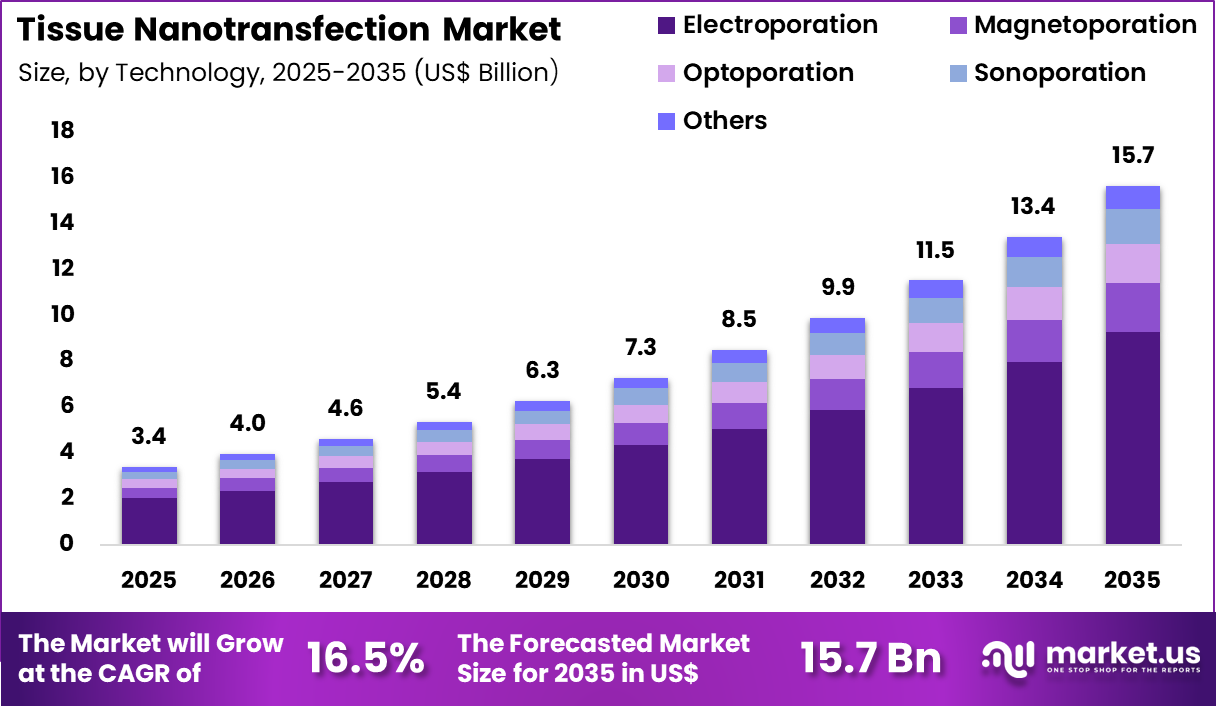
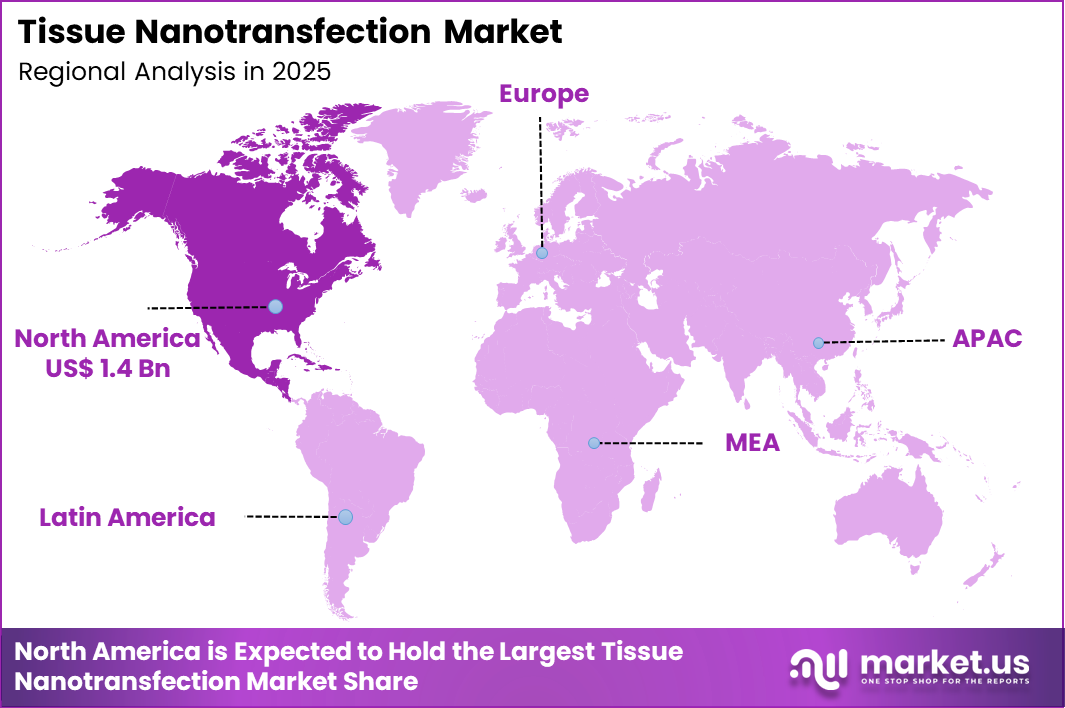
The Global Tissue Nanotransfection Market size is expected to be worth around US$ 15.7 Billion by 2035 from US$ 3.4 Billion in 2025, growing at a CAGR of 16.5% during the forecast period 2026-2035. In 2025, North America led the market, achieving over 42.2% share with a revenue of US$ 1.4 Billion.
Rising interest in regenerative medicine and non-viral gene delivery technologies propels the Tissue Nanotransfection market as researchers and clinicians seek precise, localized methods to reprogram cells directly within living tissue without systemic exposure or viral vectors. Scientists increasingly apply tissue nanotransfection to induce transdifferentiation in skin wounds, converting dermal fibroblasts into functional neurons or endothelial cells to accelerate nerve regeneration and vascularization in diabetic ulcers and spinal cord injuries.
These approaches support cardiac repair by reprogramming scar fibroblasts into cardiomyocytes at the site of myocardial infarction, restoring contractile function and reducing fibrosis in preclinical heart failure models. In dermatology, tissue nanotransfection facilitates in situ generation of insulin-producing cells within subcutaneous tissue, offering a potential long-term treatment for type 1 diabetes by enabling localized insulin secretion without immunosuppressive drugs.
Researchers also utilize the technique in musculoskeletal applications, transfecting muscle or tendon cells with myogenic or tenogenic factors to enhance repair after volumetric muscle loss or tendon injuries. The non-invasive, needle-free nature of the process allows repeated applications, making it suitable for chronic wound management and tissue engineering in burn reconstruction.
Manufacturers and biotechnology firms pursue opportunities to refine nanotransfection devices with improved penetration depth and transfection efficiency, expanding applications in solid tumor therapy where localized delivery of tumor-suppressor genes or immunotherapeutic factors can enhance antitumor responses.
Developers advance multi-gene delivery platforms that simultaneously express growth factors and anti-inflammatory molecules, broadening utility in complex tissue regeneration scenarios such as peripheral nerve gaps and cartilage defects. These innovations facilitate integration with imaging-guided systems for precise targeting in deep tissues.
Opportunities emerge in combination therapies that pair nanotransfection with biomaterials or scaffolds to create hybrid regenerative constructs. Companies invest in scalable, GMP-compliant delivery platforms to support clinical translation. In February 2026, Integra LifeSciences reported stabilization in its Integra Skin product line following earlier operational challenges.
The company is implementing a structured compliance and quality initiative within its Tissue Technologies segment, while continuing development of regenerative solutions aimed at complex surgical applications. Recent trends emphasize in vivo cell reprogramming, device miniaturization, and multi-factor delivery, positioning the market for growth in personalized regenerative therapies that address unmet needs in wound healing, neurological repair, and metabolic disorders.
Key Takeaways
- In 2025, the market generated a revenue of US$ 3.4 Billion, with a CAGR of 16.5%, and is expected to reach US$ 15.7 Billion by the year 2035.
- The technology segment is divided into electroporation, magnetoporation, optoporation, sonoporation and others, with electroporation taking the lead with a market share of 59.4%.
- Considering application, the market is divided into oncology, dermatology, neurology, cardiology and vascular, orthopedics, musculoskeletal and spine, wound healing and others. Among these, oncology held a significant share of35. 4%.
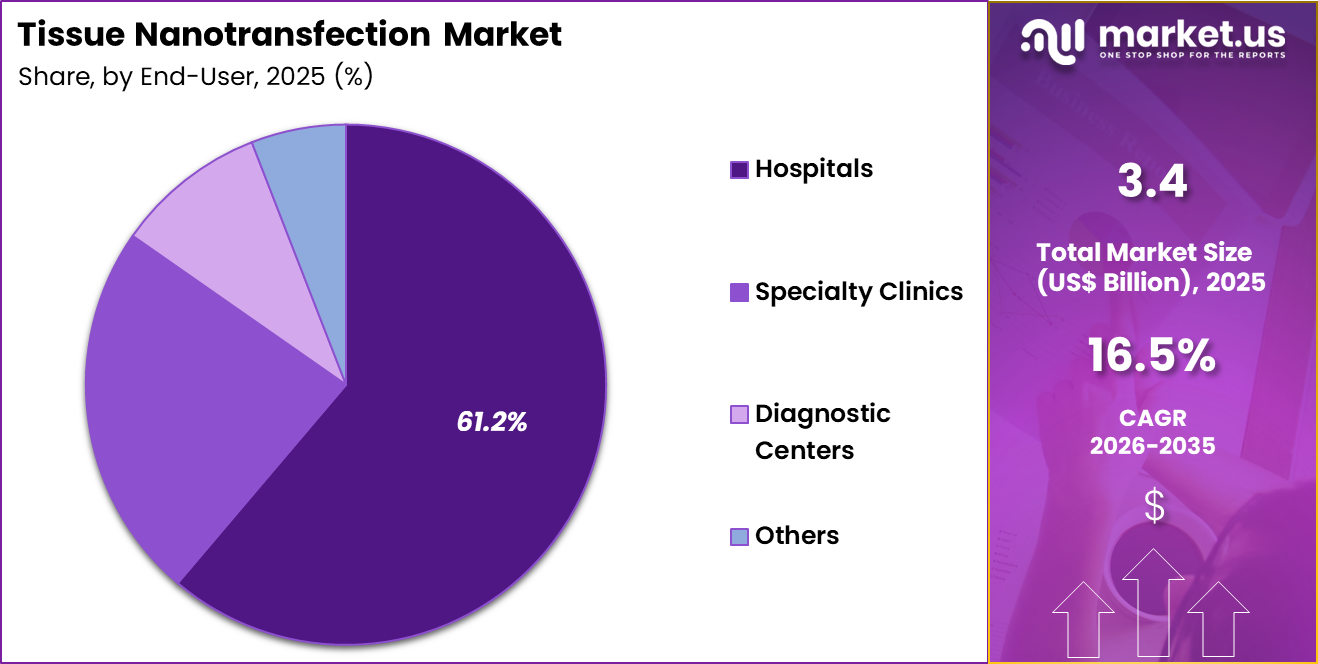
- Furthermore, concerning the end-user segment, the market is segregated into hospitals, specialty clinics, diagnostic centers and others. The hospitals sector stands out as the dominant player, holding the largest revenue share of 61.2% in the market.
- North America led the market by securing a market share of 42.2%.
Technology Analysis
Electroporation accounted for 59.4% of growth within technology and dominates the tissue nanotransfection market due to its proven ability to deliver genetic material directly into cells with controlled electrical pulses. Researchers and clinicians widely adopt this method because it offers precise, non-viral delivery with relatively high efficiency compared to alternative techniques.
Electroporation is expected to expand further as regenerative medicine and gene therapy applications continue to advance. Scientific studies show that electroporation supports targeted cell reprogramming, which increases its relevance in tissue repair and therapeutic development. The technology is likely to gain traction as healthcare systems explore minimally invasive approaches for cellular modification.
Researchers prefer electroporation because it reduces reliance on viral vectors and improves safety profiles in clinical settings. Continuous innovation in device design and pulse modulation is projected to enhance delivery accuracy and cell viability. Growing investments in cell-based therapies are anticipated to strengthen adoption across research and clinical environments. As demand for controlled and efficient gene delivery rises, electroporation is estimated to remain the leading technology in this market.
Application Analysis
Oncology accounted for 32.4% of growth within application and dominates the tissue nanotransfection market due to the increasing focus on targeted cancer therapies and personalized treatment approaches. Cancer remains one of the leading causes of mortality globally, with international health agencies reporting millions of new cases diagnosed each year, which expands the demand for innovative therapeutic solutions.
Tissue nanotransfection technologies are expected to support oncology applications by enabling localized gene delivery and cellular reprogramming directly at tumor sites. Researchers are increasingly exploring these approaches to enhance immune response and improve treatment precision. Oncology is likely to remain dominant as clinical trials continue to evaluate gene-based and regenerative therapies for cancer treatment.
The segment benefits from strong research funding and growing collaboration between academic institutions and healthcare providers. Rising interest in minimally invasive therapeutic techniques is projected to support wider adoption. As precision medicine continues to evolve, oncology applications are anticipated to lead growth in this market.
End-User Analysis
Hospitals accounted for 61.2% of growth within end user and dominate the tissue nanotransfection market due to their access to advanced infrastructure, multidisciplinary expertise, and clinical research capabilities. Hospitals serve as primary centers for implementing emerging therapies that require specialized equipment and trained professionals.
Tissue nanotransfection procedures are expected to gain adoption in hospital settings as clinical validation progresses and treatment protocols become standardized. Hospitals are likely to lead because they support complex procedures involving gene delivery, regenerative therapy, and patient monitoring. The segment benefits from ongoing investments in research facilities and translational medicine programs within large healthcare institutions.
Hospitals also collaborate with academic and biotechnology organizations, which accelerates innovation and clinical adoption. Increasing focus on advanced therapeutic solutions is projected to strengthen hospital-based implementation. As healthcare systems integrate next-generation treatment approaches, hospitals are estimated to maintain their dominant position in the tissue nanotransfection market.
Key Market Segments
By Technology
- Electroporation (Nanoelectroporation)
- Magnetoporation
- Optoporation
- Sonoporation
- Others
By Application
- Oncology
- Dermatology
- Neurology
- Cardiology and Vascular
- Orthopedics, Musculoskeletal and Spine
- Wound Healing
- Others
By End-User
- Hospitals
- Specialty Clinics
- Diagnostic Centers
- Others
Drivers
Advancements in regenerative medicine applications are driving the Tissue Nanotransfection market.
Tissue nanotransfection (TNT) enables direct in vivo cellular reprogramming without viral vectors or extensive laboratory processing, facilitating rapid tissue repair and functional restoration. This non-invasive approach uses a silicon chip-based nanoelectroporation device to deliver genetic payloads, converting skin cells into specialized types such as vascular or neural cells.
Preclinical studies have demonstrated efficacy in addressing conditions including ischemia, wound healing, diabetic peripheral neuropathy, and lymphedema rescue. The technology’s ability to operate at the point of care without requiring elaborate infrastructure enhances its appeal for clinical translation.
Research published in 2025 highlights TNT’s potential in antimicrobial gene delivery to combat bacterial biofilms in wounds. Additional applications include gene editing, myogenesis promotion, and tumor regression support. Growing recognition of these capabilities accelerates investment in biotechnology platforms focused on regenerative outcomes.
The method’s scalability for austere or remote environments further broadens its utility in global healthcare settings. Ongoing preclinical validations continue to expand the range of treatable pathologies. As a result, these scientific and therapeutic progresses serve as a primary driver propelling market expansion during the recent period.
Restraints
High costs associated with device development and regulatory approval are restraining the Tissue Nanotransfection market.
Development of TNT platforms involves sophisticated nanotechnology fabrication, including precise silicon chip design and nanochannel integration for efficient electroporation. Substantial resources are required for optimizing genetic cargo delivery while ensuring safety and minimizing off-target effects.
Regulatory pathways demand extensive preclinical data to demonstrate biocompatibility, long-term efficacy, and absence of adverse immune responses. Compliance with stringent standards for medical devices and gene therapies adds layers of complexity and expense. Limited established reimbursement frameworks for novel regenerative interventions further complicate commercialization efforts.
Smaller entities face barriers in securing sufficient funding to navigate these hurdles. The need for specialized manufacturing processes increases production costs compared to conventional therapies. Clinical trial requirements for diverse indications extend timelines and financial commitments. These economic and procedural constraints slow broader adoption and market penetration. Consequently, such factors impose notable restraint on accelerated growth within the sector.
Opportunities
Expanding point-of-care regenerative capabilities are creating growth opportunities in the Tissue Nanotransfection market.
TNT’s design permits application in diverse clinical settings without dependence on centralized laboratories or cell culturing facilities. The brief, one-second contact procedure using a portable chip enables immediate tissue reprogramming at the bedside or in field conditions. This characteristic supports deployment in emergency care, military medicine, and underserved regions lacking advanced infrastructure.
Opportunities arise for integration into treatments for chronic wounds, traumatic injuries, and peripheral vascular disorders. Partnerships between academic institutions and biotechnology entities facilitate technology licensing and scaled production. Potential for combination with existing wound management protocols enhances therapeutic versatility.
The non-viral delivery mechanism reduces risks associated with viral vectors, appealing to regulatory bodies and clinicians. Emerging data on applications in immunotherapy and infection control open additional therapeutic avenues.
Financial commitments from defense and health sectors underscore viability for specialized uses. Overall, these attributes generate substantial prospects for market diversification and adoption across healthcare environments.
Impact of Macroeconomic / Geopolitical Factors
Macroeconomic shifts and geopolitical developments are influencing investment pace, research continuity, and supply chains in the tissue nanotransfection market. Strong interest in regenerative medicine supports funding and collaboration, while inflation and tighter capital conditions increase research costs and slow early-stage commercialization.
Currency volatility and trade uncertainty affect procurement of precision instruments, nanomaterials, and electronic components used in device development. Geopolitical tensions can limit cross-border academic partnerships and delay technology transfer in advanced therapeutic research. Current US tariffs on imported electronic parts and specialized lab equipment raise capital expenditure for research institutes and biotech firms, which may slow adoption in smaller labs.
At the same time, these tariffs encourage domestic sourcing and local manufacturing, improving long-term supply security. Ongoing advancements in non-viral gene delivery continue to attract clinical and translational interest. Overall, despite near-term cost and collaboration challenges, sustained innovation and expanding therapeutic applications are expected to support long-term market growth.
Latest Trends
Increased focus on non-viral in vivo reprogramming platforms represents a recent trend in the Tissue Nanotransfection market.
In 2025, research emphasis has intensified on TNT as a non-viral methodology for localized gene delivery and direct cellular reprogramming via nanoelectroporation. Publications from that year detail optimized device architectures and enhanced delivery of plasmid DNA, mRNA, and CRISPR/Cas9 components into superficial tissues.
This shift prioritizes in situ applications over ex vivo cell manipulation, reducing procedural complexity and contamination risks. Studies demonstrate TNT’s utility in delivering antimicrobial gene cargos to eliminate bacterial biofilms in infected wounds. The trend aligns with broader regenerative medicine goals of achieving functional tissue conversion without systemic interventions.
Advancements in chip-based electroporation improve precision and efficiency for targeted reprogramming. Recognition in peer-reviewed literature underscores TNT’s role in diverse areas, including ischemia repair and neural tissue restoration. This development reflects a move toward scalable, patient-specific therapies implementable in varied settings. Continued exploration in 2025 positions the technology as a key innovation in non-invasive gene therapy approaches.
Regional Analysis
North America is leading the Tissue Nanotransfection Market
North America accounted for 42.2% of the tissue nanotransfection market in 2025 as research institutions and biotechnology companies accelerated development of non-viral gene delivery technologies for regenerative medicine and tissue repair. Universities and biomedical research centers across the United States are actively advancing nanotransfection platforms that enable direct reprogramming of skin cells into functional cell types for therapeutic applications.
According to the National Institutes of Health, federal funding for gene and cell therapy research exceeded USD 2 billion in 2023, supporting continued innovation in advanced delivery technologies and regenerative approaches. Researchers are increasingly focusing on non-invasive techniques that avoid complications associated with viral vectors, improving safety and clinical potential.
Academic collaborations with biotechnology firms are driving rapid progress in preclinical studies related to wound healing, vascular repair, and neurological regeneration. Hospitals and translational research centers are exploring applications of nanotransfection in treating chronic conditions such as ischemic injuries and tissue degeneration.
Advances in nanomaterials and microchip-based delivery systems are improving precision and efficiency of gene transfer at the cellular level. Venture funding and government grants are also accelerating commercialization pathways for emerging regenerative therapies. These developments collectively supported strong growth of advanced gene delivery technologies across North America in 2025.
The Asia Pacific region is expected to experience the highest CAGR during the forecast period
Asia Pacific is expected to experience strong expansion during the forecast period as governments and research institutions invest heavily in biotechnology innovation and regenerative medicine research. Countries such as China, Japan, South Korea, and Singapore are strengthening national programs focused on gene therapy, stem cell research, and advanced biomedical engineering.
China’s National Bureau of Statistics reported that research and development spending reached about 3.09 trillion yuan in 2022, reflecting strong commitment to high-technology research including advanced gene delivery technologies. Universities and biotechnology companies across the region are expanding research in cellular reprogramming and regenerative therapies that rely on non-viral delivery systems.
Pharmaceutical companies are also exploring novel therapeutic approaches that integrate gene modulation technologies for tissue repair and disease treatment. Governments are supporting innovation through funding programs, research parks, and public-private partnerships in life sciences.
Academic institutions are strengthening training programs in molecular biology and bioengineering to build skilled research talent. Increasing prevalence of chronic diseases and growing interest in personalized medicine are also encouraging adoption of advanced therapeutic technologies. These developments are expected to accelerate the adoption of innovative gene delivery and regenerative medicine platforms across Asia Pacific in the coming years.
Key Regions and Countries
North America
- The US
- Canada
Europe
- Germany
- France
- The U.K.
- Italy
- Spain
- Russia & CIS
- Rest of Europe
Asia Pacific
- China
- India
- Japan
- South Korea
- ASEAN
- Australia & New Zealand
- Rest of Asia Pacific
Middle East & Africa
- GCC
- South Africa
- Rest of Middle East & Africa
Latin America
- Brazil
- Mexico
- Rest of Latin America
Key Players Analysis
Key participants in the Tissue Nanotransfection Market expand growth by advancing nanochip-based delivery technologies, strengthening collaborations with research institutes, and accelerating translational studies that enable non-viral gene transfer directly into targeted tissues. Companies invest in regenerative medicine applications and precision gene delivery systems that support tissue repair, wound healing, and vascular regeneration.
They also focus on securing intellectual property, expanding clinical research programs, and partnering with biotechnology firms to move laboratory innovations toward commercialization. NanoScope Therapeutics represents a notable participant in the Tissue Nanotransfection Market and operates as a U.S.-based biotechnology company that develops gene therapy solutions and advanced delivery platforms for regenerative medicine applications.
The company emphasizes innovation in non-invasive gene transfer technologies and clinical research to address unmet medical needs. Industry competitors continue to strengthen research pipelines, expand academic collaborations, and invest in advanced nanotechnology platforms to accelerate adoption of next-generation tissue engineering solutions.
Top Key Players
- Zimmer Biomet Holdings Inc.
- Integra LifeSciences Corporation
- Organogenesis Inc.
- Nano Biotechnology Co., Ltd.
- NanoSonic, Inc.
- NanoBio Corporation
- Biotime Inc.
Recent Developments
- In February 2026, Zimmer Biomet outlined its transformation strategy focused on combining regenerative medicine with digital surgical technologies. The approach emphasizes integrating advanced robotics and data-driven tools with its orthopedic implant portfolio to support improved bone and joint healing outcomes through next-generation treatment methods.
- In December 2025, Organogenesis began submitting a rolling Biologics License Application for ReNu, a biologic therapy under development for severe knee osteoarthritis. The product is intended to provide a non-surgical treatment option, with regulatory review expected to progress into 2026.
Report Scope
Report Features Description Market Value (2025) US$ 3.4 Billion Forecast Revenue (2035) US$ 15.7 Billion CAGR (2026-2035) 16.5% Base Year for Estimation 2025 Historic Period 2020-2024 Forecast Period 2026-2035 Report Coverage Revenue Forecast, Market Dynamics, COVID-19 Impact, Competitive Landscape, Recent Developments Segments Covered By Technology (Electroporation (Nanoelectroporation), Magnetoporation, Optoporation, Sonoporation and Others), By Application (Oncology, Dermatology, Neurology, Cardiology and Vascular, Orthopedics, Musculoskeletal and Spine, Wound Healing and Others), By End-User (Hospitals, Specialty Clinics, Diagnostic Centers and Others) Regional Analysis North America – The US, Canada; Europe – Germany, France, The U.K., Italy, Spain, Russia & CIS, Rest of Europe; Asia Pacific – China, India, Japan, South Korea, ASEAN, Australia & New Zealand, Rest of Asia Pacific; Middle East & Africa – GCC, South Africa, Rest of Middle East & Africa; Latin America – Brazil, Mexico, Rest of Latin America Competitive Landscape Zimmer Biomet Holdings Inc., Integra LifeSciences Corporation, Organogenesis Inc., Nano Biotechnology Co., Ltd., NanoSonic, Inc., NanoBio Corporation, Biotime Inc. Customization Scope Customization for segments, region/country-level will be provided. Moreover, additional customization can be done based on the requirements. Purchase Options We have three licenses to opt for: Single User License, Multi-User License (Up to 5 Users), Corporate Use License (Unlimited User and Printable PDF)  Tissue Nanotransfection MarketPublished date: March 2026add_shopping_cartBuy Now get_appDownload Sample
 -
-
- Zimmer Biomet Holdings Inc.
- Integra LifeSciences Corporation
- Organogenesis Inc.
- Nano Biotechnology Co., Ltd.
- NanoSonic, Inc.
- NanoBio Corporation
- Biotime Inc.
Our Clients

- 183053
- March 2026






