


Report Overview
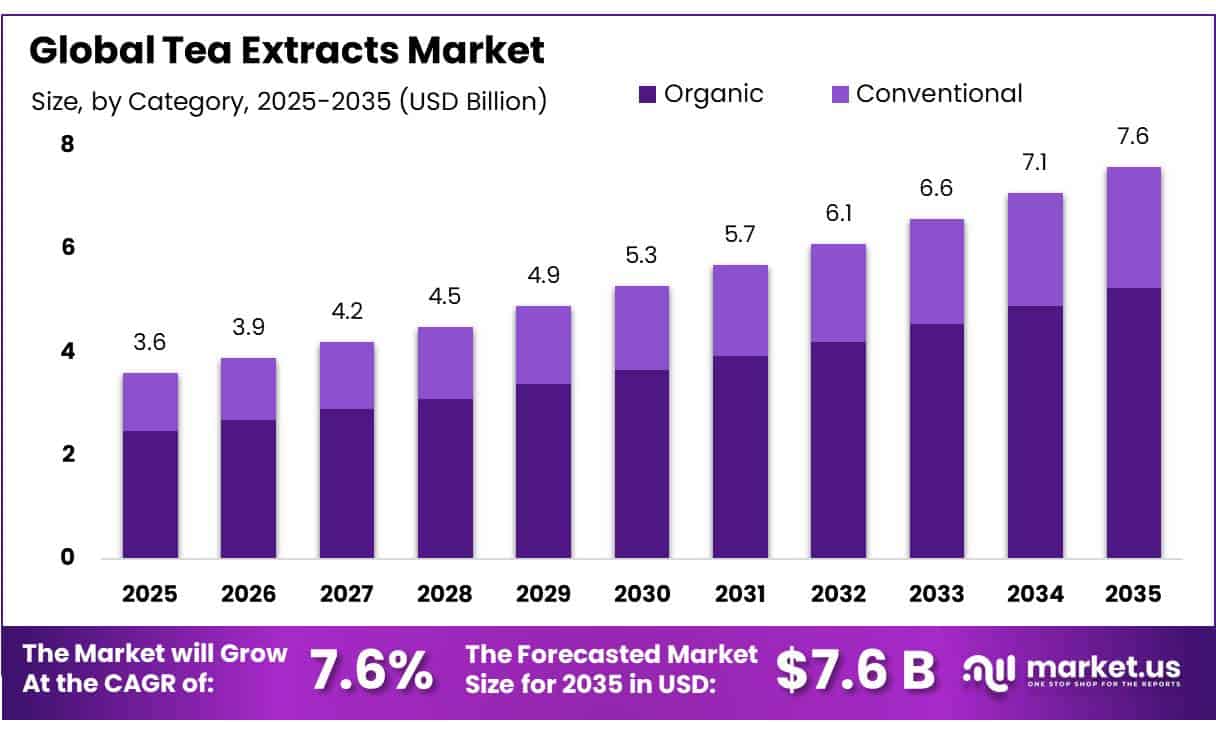
The Global Tea Extracts Market size is expected to be worth around USD 7.6 Billion by 2035, from USD 3.6 Billion in 2025, growing at a CAGR of 7.6% during the forecast period from 2026 to 2035. In 2025, Asia Pacific held a dominant market position, capturing more than a 41.7% share, holding USD 1.5 Billion revenue.
Tea extracts are an increasingly strategic value-added segment within the wider tea industry because they convert black, green and specialty teas into soluble powders, concentrates and functional ingredients for ready-to-drink beverages, premixes, nutraceuticals and food applications.
The category is supported by the scale of the upstream tea economy: FAO reported that world tea production, including black, green, instant and other tea, reached 6.7 million tonnes in 2022, after expanding at 3.2% annually over the previous decade. FAO also noted that international tea prices, after rising 14.5% in 2022, fell 9.2% in 2023, which is relevant for extract makers because softer raw-tea pricing can improve input economics for industrial processors.
World Bank WITS data for HS 210120 shows that global exports of tea and mate extracts, essences and concentrates reached about US$1.65 billion in 2024, while the top exporters included the Netherlands at US$283.7 million, the United States at US$172.1 million, and China at US$163.7 million. India also remains a notable supplier, with US$89.25 million of exports and 16.99 million kg shipped in 2024 under the same code, indicating that the industry is increasingly tied to beverage ingredient trade rather than only bulk leaf tea.
Government and regulatory support is also improving the operating environment. In India, the Ministry of Commerce said support under the Tea Development & Promotion Scheme increased by 82%, from Rs.290.81 crore to Rs.528.97 crore for 2024-25 and 2025-26, while the scheme is designed to improve production, productivity and quality.
In food compliance, FSSAI’s 2025 beverage standards and labelling framework specifically recognize “instant or soluble tea or tea extract,” which supports clearer category definition for organized manufacturers. For export-led producers, the European Commission’s harmonized pesticide MRL framework continues to shape sourcing and quality assurance standards.
In 2025, AVT Natural Products reported consolidated revenue from operations of Rs.55,604.43 lakh for the year ended 31 March 2025, alongside a 40% final dividend, reflecting stable operating momentum.
Key Takeaways
- Tea Extracts Market size is expected to be worth around USD 7.6 Billion by 2035, from USD 3.6 Billion in 2025, growing at a CAGR of 7.6%.
- Conventional held a dominant market position, capturing more than a 69.4% share.
- Powder held a dominant market position, capturing more than a 63.8% share.
- Green held a dominant market position, capturing more than a 44.7% share.
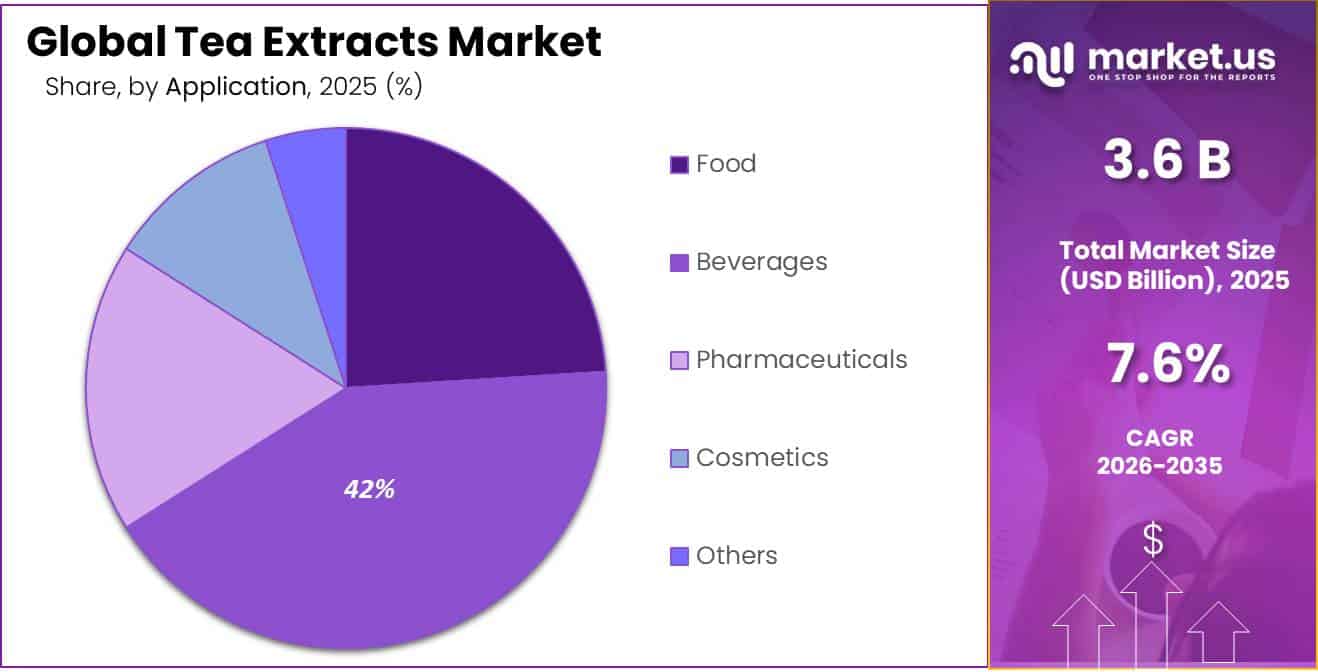
- Beverages held a dominant market position, capturing more than a 42.6% share.
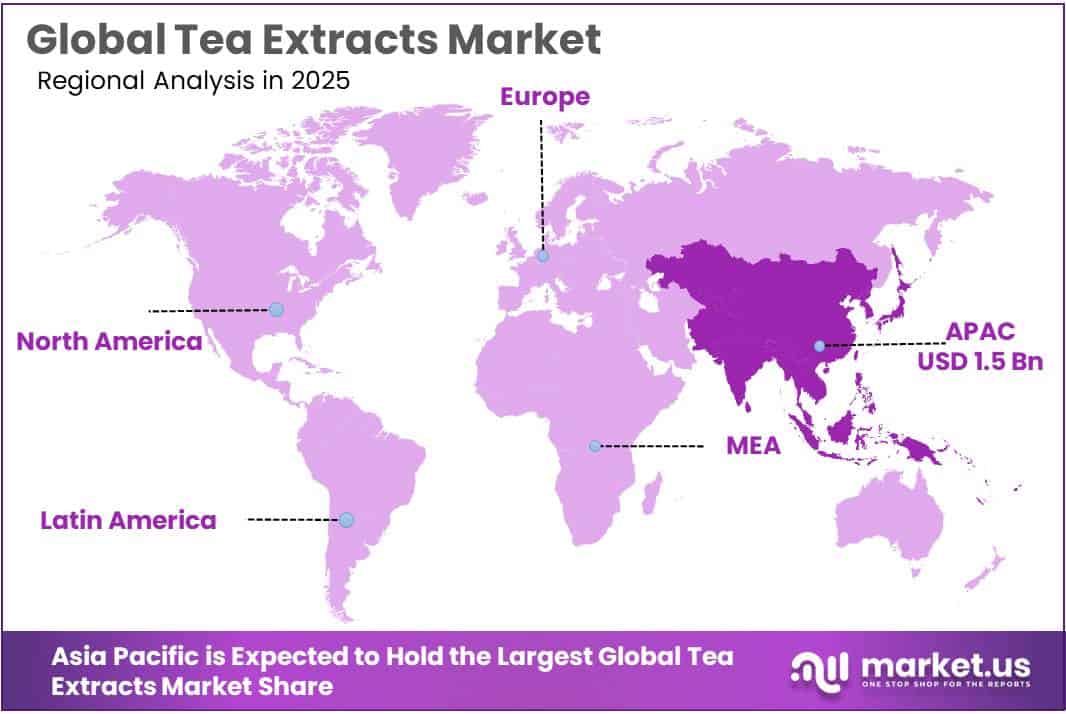
- Asia Pacific held a dominant position in the tea extracts market, accounting for 41.7% share and reaching a value of around USD 1.5 billion.
By Category Analysis
Conventional Tea Extracts lead the market with a strong 69.4% share driven by consistent demand and established production methods
In 2025, Conventional held a dominant market position, capturing more than a 69.4% share. This strong presence was mainly supported by its wide availability, lower production costs, and long-standing consumer trust in traditionally processed tea extracts. Many manufacturers continued to rely on conventional farming and extraction techniques as they offer higher yield stability and easier scalability compared to alternative methods. The supply chain for conventional tea extracts also remained more structured and reliable, which helped maintain its leading position across both developed and emerging markets.
By Form Analysis
Powder form leads the tea extracts market with a solid 63.8% share thanks to easy storage and longer shelf life
In 2025, Powder held a dominant market position, capturing more than a 63.8% share. This was mainly because powdered tea extracts are easy to handle, store, and transport compared to liquid forms. Many food and beverage manufacturers prefer powder as it blends well into products like instant drinks, supplements, and flavored mixes without affecting shelf stability. Its longer shelf life also makes it a practical choice for bulk production and export, especially in regions where storage conditions can vary.
By Type Analysis
Green tea extracts dominate with a 44.7% share driven by growing health awareness and daily consumption trends
In 2025, Green held a dominant market position, capturing more than a 44.7% share. This growth was largely supported by increasing consumer focus on health and wellness, as green tea extracts are widely known for their antioxidant properties. Many people preferred green tea-based products for weight management, detox routines, and overall lifestyle improvement. The segment also benefited from its strong presence in functional beverages, dietary supplements, and skincare products, making it a popular choice across different industries.
By Application Analysis
Beverages segment leads with a 42.6% share as tea extracts remain a go-to choice for ready-to-drink products
In 2025, Beverages held a dominant market position, capturing more than a 42.6% share. This was mainly due to the strong demand for ready-to-drink teas, flavored beverages, and functional drinks that use tea extracts as a key ingredient. Consumers increasingly preferred convenient and refreshing drink options that also offer perceived health benefits, which made tea-based beverages a popular choice. Manufacturers also found it easier to incorporate tea extracts into beverage formulations, helping them launch a wide range of products across different taste profiles.
Key Market Segments
By Category
- Organic
- Conventional
By Form
- Liquid
- Powder
By Type
- Green
- Black
- Oolong
- Others
By Application
- Food
- Beverages
- Pharmaceuticals
- Cosmetics
- Others
Emerging Trends
Innovation in tea-based beverages is reshaping how extracts are used
By 2025, consumers are clearly shifting toward convenient and refreshing drink options that still feel natural and less processed. Tea extracts make this possible because they are easy to mix and maintain consistent taste in packaged drinks. At the same time, global tea consumption has reached around 6.5 million tonnes, proving that demand is strong enough to support these new product formats.
Moving into 2026, this trend continues as companies experiment with new flavors, low-sugar options, and even tea-based alternatives to alcohol. Governments and health bodies are also encouraging reduced sugar intake, which indirectly supports tea-based drinks. As a result, tea extracts are becoming a core ingredient in innovation, not just a traditional product.
Sustainability and ethical sourcing are becoming a key focus area
Another important trend shaping the tea extracts market is the growing focus on sustainability and responsible sourcing. Consumers today are paying more attention to where their products come from and how they are produced. According to the Food and Agriculture Organization, around 13 million people are employed in the global tea sector, with nearly 60% of production coming from smallholder farmers.
Brands are increasingly highlighting ethical sourcing, fair wages, and environmentally friendly farming practices. This is not just about image—it is becoming a real buying factor for many consumers. Governments and global organizations are also promoting sustainable agriculture through initiatives like International Tea Day, which focuses on improving conditions for tea workers and reducing environmental impact.
Drivers
Rising global tea consumption is pushing steady demand for tea extracts
One of the biggest drivers for tea extracts is the simple fact that tea consumption keeps growing every year across the world. According to the Food and Agriculture Organization, tea is the second most consumed beverage globally after water, which shows how deeply it is part of daily life. Over the past decade, global tea consumption has increased by around 3.3% every year, reaching nearly 6.5 million tonnes in 2022. This steady rise means more raw tea is being processed, and a good portion of that goes into extracts used in beverages, supplements, and food products.
This trend is clearly visible in urban markets where ready-to-drink teas and functional beverages are becoming common. People are not just drinking tea traditionally but also consuming it in new forms like iced teas, powders, and health drinks. By 2026, the demand continues to grow as younger consumers shift toward natural and plant-based drinks. Even per capita tea consumption has been rising at about 2.1% annually, showing that demand is not slowing down anytime soon.
Health awareness and natural ingredients are boosting extract usage
Another strong factor is the increasing focus on health and wellness. Tea has always been linked with natural benefits, and now more people are actively choosing it for that reason. Studies and global reports highlight that tea contains antioxidants and plant compounds that support general well-being, which has made it popular in modern diets.
This trend becomes even stronger as governments and health organizations continue to promote better eating habits and reduced sugar intake. At the same time, tea production itself has been growing steadily, reaching around 6.8 million tonnes globally, ensuring enough supply for extract production. Because of this combination of health awareness and strong supply, tea extracts are becoming a preferred ingredient across multiple industries, supporting long-term market growth.
Restraints
Climate change and unstable tea production are slowing down extract supply
One of the key challenges for the tea extracts market is the growing impact of climate change on tea production. Tea plants are very sensitive to weather conditions, especially temperature and rainfall. According to the Food and Agriculture Organization, changing climate patterns have already started affecting tea-growing regions, leading to fluctuations in output. In some major producing countries, irregular rainfall and rising temperatures have reduced both yield and quality of tea leaves.
By 2025, producers in regions like India and Kenya have reported uneven harvest cycles, which directly affects the raw material supply for tea extracts. Since extract manufacturing depends heavily on consistent leaf quality, any disruption at the farming level creates a ripple effect across the supply chain.
Price fluctuations and rising production costs are limiting market stability
Another major restraint comes from fluctuating prices and increasing production costs. Tea cultivation involves labor-intensive processes, and with rising labor costs in key producing countries, the overall cost of tea leaves has increased. According to the International Labour Organization, wage pressures in agricultural sectors have been steadily rising, especially in developing economies where most tea is grown.
At the same time, input costs such as fertilizers, transportation, and energy have also gone up. This has made tea production more expensive, which eventually impacts the cost of tea extracts. In 2025, many manufacturers faced tighter margins as they had to balance higher input costs with competitive pricing in the market.
Opportunity
Expanding ready-to-drink and functional beverage industry is opening new doors
One of the biggest growth opportunities for tea extracts is the fast expansion of ready-to-drink and functional beverages. Tea is already deeply connected with daily consumption habits, and now it is being used in modern formats like iced teas, energy drinks, and wellness beverages. According to data supported by the Food and Agriculture Organization, global tea consumption reached around 6.5 million tonnes and continues to grow steadily each year, showing strong demand across different formats.
By 2026, this trend is expected to grow further as urban lifestyles continue to drive on-the-go consumption. Governments in many countries are also encouraging reduced sugar intake and healthier beverage options, indirectly supporting tea-based drinks. With millions of cups consumed daily worldwide, the shift from traditional brewing to convenient formats creates a strong and long-term opportunity for tea extract manufacturers.
Rising demand for natural and plant-based ingredients is creating new product scope
Another strong opportunity comes from the growing preference for natural and plant-based ingredients across food, beverages, and supplements. Tea fits naturally into this trend because it is already seen as a simple and plant-based product. Reports show that more than 60% of wellness beverage consumers choose tea mainly for its perceived health benefits, highlighting how consumer mindset is changing.
By 2025, brands are increasingly using tea extracts in products like dietary supplements, skincare, and functional foods. This is because extracts offer a concentrated form that is easier to use compared to raw leaves. At the same time, global tea production has reached around 6.7 million tonnes, ensuring a steady supply for expanding applications.
Regional Insights
Asia Pacific dominates the tea extracts market with 41.7% share, supported by strong production base and high consumption levels
Asia Pacific held a dominant position in the tea extracts market, accounting for 41.7% share and reaching a value of around USD 1.5 billion. The region’s leadership is strongly backed by its massive tea production and deep-rooted consumption culture. Countries like China and India play a central role, with China alone contributing nearly 50% of global tea production, while India adds over 20%, making the region the backbone of global supply.
The region produces close to 80% of the world’s total tea output, highlighting its importance not just in raw tea but also in extract manufacturing. This strong production base ensures easy availability of raw materials, which supports large-scale extract processing across industries such as beverages, nutraceuticals, and cosmetics. In addition, countries like Sri Lanka, Vietnam, and Indonesia further strengthen regional supply, creating a well-established value chain.
Key Regions and Countries Insights
- North America
- US
- Canada
- Europe
- Germany
- France
- The UK
- Spain
- Italy
- Rest of Europe
- Asia Pacific
- China
- Japan
- South Korea
- India
- Australia
- Rest of APAC
- Latin America
- Brazil
- Mexico
- Rest of Latin America
- Middle East & Africa
- GCC
- South Africa
- Rest of MEA
Key Players Analysis
AVT Natural Products Limited is a strong player in tea extracts, especially in instant tea and decaffeinated extracts. In 2025, the company reported revenue of around ₹572 crore, with tea extracts contributing a notable share of its plant-based portfolio. It generated over ₹130+ crore from instant tea and related products, showing its specialization in this segment. With exports contributing more than 60%+ of revenue, AVT remains a reliable supplier for global beverage and nutraceutical companies in 2025–2026.
FutureCeuticals, Inc. is a mid-sized company focused on high-value botanical extracts, including tea extracts used in nutraceuticals. As of 2025, the company generates estimated revenue between $5–25 million and operates with around 50–200 employees. Its strength lies in research-based formulations and standardized extracts for health products. With over 25+ years of experience, the company focuses on premium applications rather than volume, positioning itself well in functional foods and supplements in 2025–2026.
Hunan NutraMax Inc. is a China-based manufacturer specializing in tea and plant extracts, including sweet tea extract. The company operates 2 major production facilities with a processing capacity of around 30,000 tons of raw materials annually and extract output of nearly 800 tons per year. It exports to 50+ countries, reflecting its strong global reach. With plantation coverage of over 200+ hectares, NutraMax ensures stable supply, making it a competitive bulk supplier in the tea extracts market in 2025–2026.
Top Key Players Outlook
- AVT Natural Products Limited
- John Swire & Sons Ltd
- FutureCeuticals, Inc.
- Hunan NutraMax Inc.
- Indena S.p.A.
- Layn Natural Ingredients Corp.
- Martin Bauer Group
- Nutra Green Biotechnology Co., Ltd.
- Sabinsa Corporation
- Taiyo Kagaku Co., Ltd.
- Verdant Health Australia Pty Ltd
Recent Industry Developments
AVT Natural Products Limited has built a steady position in the tea extracts sector by focusing on value-added tea ingredients like instant tea and decaffeinated extracts, mainly serving global food and beverage companies. As of 2025, the company reported revenue of around ₹572.21 crore with a net profit of ₹48.23 crore, showing stable performance despite cost pressures.
John Swire & Sons Ltd is also known for exporting a large portion of its tea-based products globally, with earlier estimates showing up to 95% of certain tea outputs being export-driven, highlighting its strong international demand base.
Report Scope
| Report Features | Description |
|---|---|
| Market Value (2025) | USD 3.6 Bn |
| Forecast Revenue (2035) | USD 7.6 Bn |
| CAGR (2026-2035) | 7.6% |
| Base Year for Estimation | 2025 |
| Historic Period | 2020-2024 |
| Forecast Period | 2026-2035 |
| Report Coverage | Revenue Forecast, Market Dynamics, Competitive Landscape, Recent Developments |
| Segments Covered | By Category (Organic, Conventional), By Form (Liquid, Powder), By Type (Green, Black, Oolong, Others), By Application (Food, Beverages, Pharmaceuticals, Cosmetics, Others) |
| Regional Analysis | North America – US, Canada; Europe – Germany, France, The UK, Spain, Italy, Rest of Europe; Asia Pacific – China, Japan, South Korea, India, Australia, Singapore, Rest of APAC; Latin America – Brazil, Mexico, Rest of Latin America; Middle East & Africa – GCC, South Africa, Rest of MEA |
| Competitive Landscape | AVT Natural Products Limited, John Swire & Sons Ltd, FutureCeuticals, Inc., Hunan NutraMax Inc., Indena S.p.A., Layn Natural Ingredients Corp., Martin Bauer Group, Nutra Green Biotechnology Co., Ltd., Sabinsa Corporation, Taiyo Kagaku Co., Ltd., Verdant Health Australia Pty Ltd |
| Customization Scope | Customization for segments, region/country-level will be provided. Moreover, additional customization can be done based on the requirements. |
| Purchase Options | We have three licenses to opt for: Single User License, Multi-User License (Up to 5 Users), Corporate Use License (Unlimited User and Printable PDF) |





































