


Report Overview
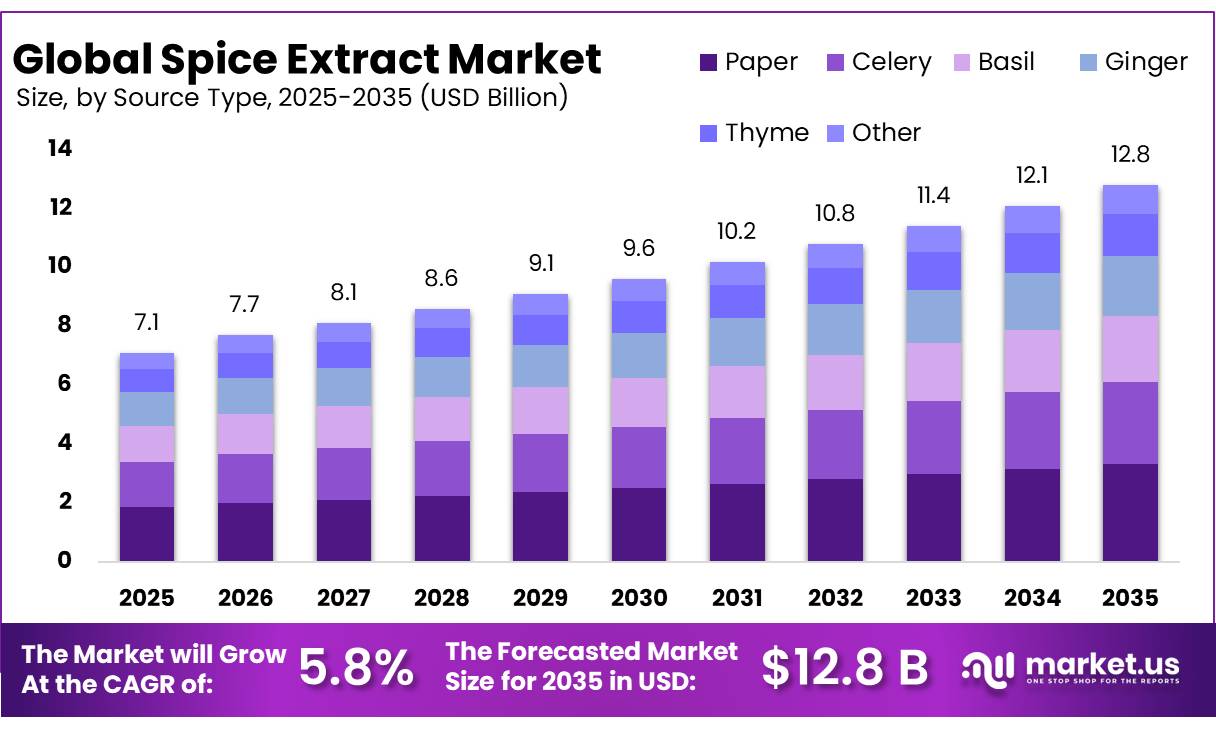
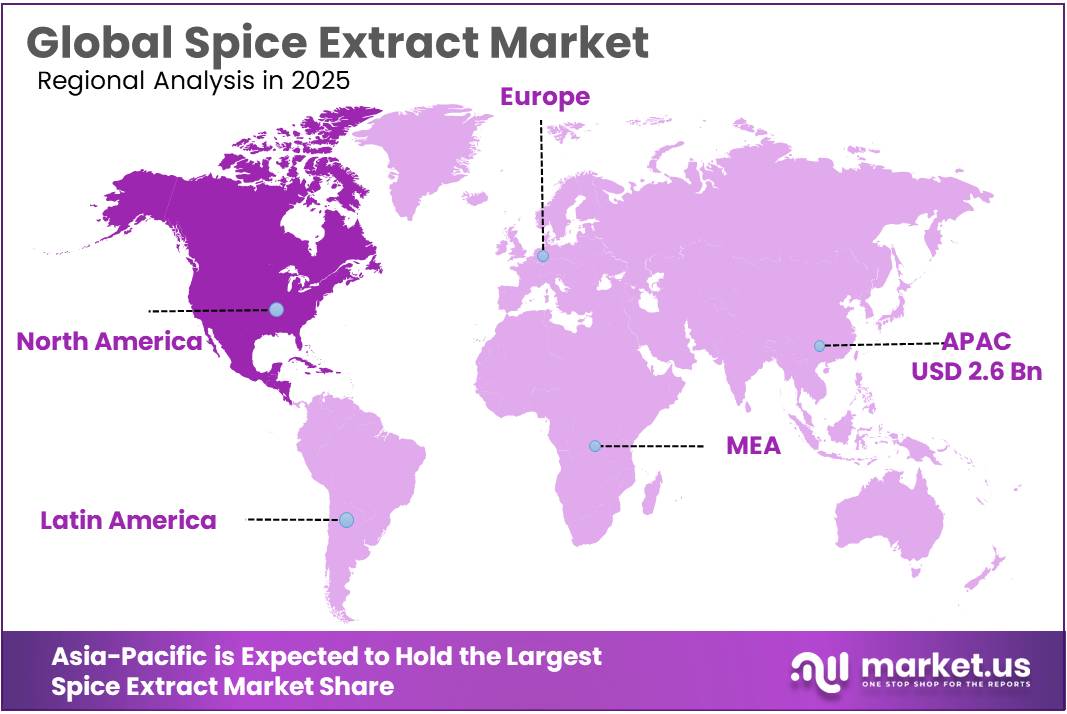
The Global Spice Extract Market size is expected to be worth around USD 12.8 Billion by 2035, from USD 7.1 Billion in 2025, growing at a CAGR of 5.8% during the forecast period from 2026 to 2035. In 2025, Asia-Pacific held a dominant market position, capturing more than a 37.2% share, holding USD 2.6 Billion revenue.
The spice extract industry is positioned as a natural-ingredient segment serving seasonings, sauces, meat, snacks, beverages and clean-label formulations. It is gaining industrial relevance as food manufacturers replace synthetic colours, preservatives and flavour systems with botanical extracts, oleoresins, essential oils and natural antioxidants. In the U.S., certified organic product sales reached USD 71.6 billion in 2024, growing 5.2%, supporting demand for natural spice-derived ingredients.
The industrial scenario is being shaped by reformulation pressure and regulatory scrutiny on synthetic additives. In the U.S., the FDA revoked authorization for FD&C Red No. 3 on January 15, 2025, with food manufacturers required to reformulate by January 15, 2027, creating stronger demand for botanical colour sources such as paprika, turmeric, beet, and other natural extracts. In Europe, Regulation EC 1333/2008 requires authorised additives to meet safety assessment, technological need, and non-misleading-use conditions, supporting demand for compliant, traceable natural ingredient systems.
Key driving factors include clean-label purchasing, organic and natural product growth, and industrial demand for stable flavour platforms. In the U.S., certified organic product sales reached US$71.6 billion in 2024, growing 5.2%, more than double the overall marketplace growth of 2.5%, indicating consumer willingness to support naturally positioned products.
Government and regulatory actions are also encouraging natural extract adoption. The EU Farm to Fork strategy targets 25% organic agricultural land by 2030, supporting organic spice and botanical sourcing. In the U.S., FDA revoked authorization for brominated vegetable oil in food, effective August 2, 2024, with a 1-year compliance period, adding pressure on beverage and flavor systems to reformulate with safer alternatives.
McCormick & Company remains a key industry participant through its consumer spices and B2B Flavor Solutions business. In Q1 2025, its Flavor Solutions operating income, excluding special charges, grew 28% to $79 million, reflecting stronger product mix, pricing and cost savings. In August 2025, McCormick signed an agreement to acquire an additional 25% stake in McCormick de Mexico, increasing ownership to 75% after completion.
Key Takeaways
- Spice Extract Market size is expected to be worth around USD 12.8 Billion by 2035, from USD 7.1 Billion in 2025, growing at a CAGR of 5.8%.
- Paper held a dominant market position, capturing more than a 26.1% share in the Spice Extract Market.
- Liquid Oleoresins held a dominant market position, capturing more than a 41.7% share in the Spice Extract Market.
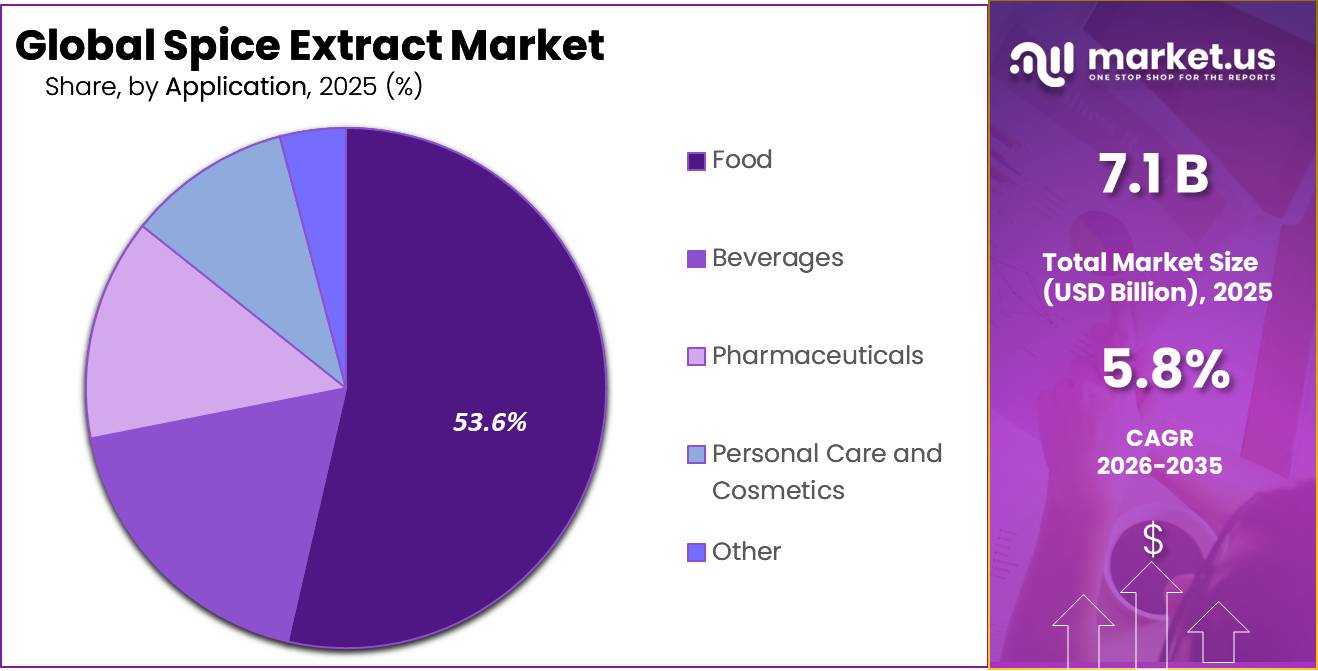
- Food held a dominant market position, capturing more than a 53.6% share in the Spice Extract Market.
- Asia-Pacific held a dominant position in the global Spice Extract Market, accounting for 37.2% of the total market share and reaching a value of nearly USD 2.6 Billion.
By Source Type Analysis
Paper dominates with 26.1% share due to its reliable use in spice extract packaging and labeling applications.
In 2025, Paper held a dominant market position, capturing more than a 26.1% share in the Spice Extract Market by source type of paper. The segment maintained strong demand because paper-based materials continue to be widely used for spice extract packaging, sachets, cartons, labels, and protective wrapping across food and beverage industries. Many manufacturers preferred paper solutions as they are lightweight, easy to print on, and suitable for bulk transportation and retail presentation. The growing focus on sustainable and recyclable packaging also supported the steady adoption of paper materials in spice extract applications during the year.
By Form Analysis
Liquid Oleoresins dominates with 41.7% share due to its strong flavor concentration and wide use in food processing.
In 2025, Liquid Oleoresins held a dominant market position, capturing more than a 41.7% share in the Spice Extract Market by form. The segment gained strong traction because liquid oleoresins offer concentrated flavor, color, and aroma in a stable and easy-to-use format. Food manufacturers widely adopted these extracts in sauces, seasonings, ready-to-eat meals, processed foods, and beverage applications where consistent taste and longer shelf life are important. The liquid form also allowed easier blending during large-scale food production, making it a preferred option among industrial users.
By Application Analysis
Food dominates with 53.6% share due to rising demand for natural flavors and processed food products.
In 2025, Food held a dominant market position, capturing more than a 53.6% share in the Spice Extract Market by application. The segment witnessed strong demand as spice extracts became widely used in processed foods, snacks, ready-to-cook meals, sauces, bakery products, and seasoning blends. Food manufacturers increasingly preferred spice extracts because they provide consistent flavor, color, and aroma while improving product shelf life and reducing the need for raw spice handling. The growing consumer preference for natural ingredients and authentic taste profiles also supported the large-scale use of spice extracts across the food industry.
Key Market Segments
By Source Type
- Paper
- Celery
- Basil
- Ginger
- Thyme
- Other
By Form
- Liquid Oleoresins
- Powder Extracts
- Essential Oils
- Micro-encapsulated Extracts
By Application
- Food
- Dairy
- Dressings, Soups and Sauces
- Meat and Poultry
- Snacks and Convenience Food
- Other
- Beverages
- Pharmaceuticals
- Personal Care and Cosmetics
- Other
Emerging Trends
Clean-Label and Plant-Based Food Trends are Increasing the Use of Natural Spice Extracts
One of the latest trends shaping the spice extract market is the rapid growth of clean-label and plant-based food products. Consumers are paying closer attention to ingredient lists and are increasingly choosing foods made with natural flavors and colors instead of synthetic additives. Ingredients like paprika extract, turmeric oleoresin, black pepper extract, and ginger concentrates are becoming more common because they provide both flavor and natural coloring properties.
- According to the International Food Information Council (IFIC), around 73% of consumers say they try to choose foods made with recognizable ingredients, reflecting the growing interest in clean-label eating habits.
This trend is encouraging food companies to reformulate products using plant-derived ingredients to improve consumer trust and product appeal. Spice extracts are also gaining popularity because they support longer shelf life while maintaining natural positioning. Governments and food safety authorities in several countries are supporting clearer ingredient labeling standards, which is increasing demand for natural food additives.
Advanced Extraction Technologies are Improving Product Quality and Export Demand
Another important trend in the spice extract market is the growing use of advanced extraction technologies to improve purity, flavor concentration, and production efficiency. Manufacturers are increasingly adopting methods such as supercritical CO2 extraction and solvent-free processing to produce cleaner and more stable spice extracts. These technologies help retain the natural aroma and active compounds of spices while reducing contamination risks.
Government-supported organizations are also encouraging modernization in spice processing industries. According to the Spices Board India, the country exported spices and spice products worth nearly USD 4.72 billion during FY 2024–25, highlighting strong international demand for processed and value-added spice ingredients. Export-focused manufacturers are investing in modern extraction facilities to meet strict quality standards in Europe and North America.
Drivers
Rising Demand for Processed and Convenience Foods is Boosting Spice Extract Use
The growing consumption of processed and ready-to-eat food products is one of the major driving factors for the spice extract market. Food manufacturers are increasingly using spice extracts because they provide strong flavor, better consistency, and longer shelf life compared to raw spices. As urban lifestyles become busier, consumers are spending more on packaged foods, frozen meals, sauces, snacks, and instant mixes, all of which require standardized flavor solutions.
According to the U.S. Department of Agriculture, India’s food processing sector is expected to reach nearly USD 535 billion by 2025/26, supported by rising consumption and expansion in Tier-II and Tier-III cities. Spice extracts are becoming an important ingredient in this industry because they help food companies maintain uniform taste during large-scale production. In addition, many food brands are shifting toward natural ingredients and clean-label products, which has increased the preference for spice-based extracts over synthetic additives.
Strong Growth in Global Spice Trade and Government Support is Supporting Market Expansion
The continuous expansion of global spice exports is another important factor driving the spice extract market. Countries such as India are increasing their focus on value-added spice products including spice oils, oleoresins, and natural extracts. According to the Spices Board India, India exported 17.99 lakh tons of spices and spice products during FY 2024–25, valued at around USD 4.72 billion. The government has also introduced export promotion activities, quality monitoring systems, and international market access programs to strengthen the spice sector.
The rise in exports shows increasing worldwide demand for processed spice ingredients in food manufacturing, beverages, nutraceuticals, and seasoning products. Spice oils and oleoresins are seeing strong demand because they offer concentrated flavor and easier storage for industrial applications. Government-backed organizations are also supporting farmers and exporters with better traceability, quality certification, and modern processing facilities.
Restraints
Fluctuating Raw Spice Prices are Creating Supply Pressure for Spice Extract Manufacturers
One of the biggest restraining factors for the spice extract market is the continuous fluctuation in raw spice prices caused by changing weather conditions, crop diseases, and uneven agricultural output. Spice extract manufacturers depend heavily on crops such as pepper, chili, turmeric, cumin, and cardamom for extraction processes. When the prices of these raw materials increase suddenly, production costs also rise, making it difficult for companies to maintain stable pricing.
- According to the Food and Agriculture Organization (FAO), the global Food Price Index averaged 122.0 points in 2024, showing ongoing volatility in agricultural commodity prices due to climate-related disruptions and supply chain uncertainty.
Small and medium-scale spice extract producers are especially affected because they often lack long-term sourcing contracts and large storage facilities. In several producing countries, irregular rainfall and rising temperatures have reduced spice crop productivity, creating supply shortages in export markets. As a result, manufacturers face difficulties in securing consistent raw material supply at predictable costs. These uncertainties can reduce profit margins and slow investment in new extraction technologies and production expansion.
Strict Food Safety and Export Regulations are Increasing Compliance Costs
Another major challenge for the spice extract market is the growing number of food safety regulations and quality standards imposed by international authorities. Spice extracts used in food and beverage products must meet strict limits related to pesticide residues, contamination, heavy metals, and microbiological safety. Exporters often need advanced testing, certification, and traceability systems before products can enter markets such as the United States and the European Union.
According to the European Commission’s Rapid Alert System for Food and Feed (RASFF), spices and herbs continue to face regular border rejections due to contamination and quality concerns. These compliance requirements increase operational expenses for manufacturers and exporters.
Opportunity
Growing Demand for Natural and Clean-Label Ingredients is Creating Strong Opportunities for Spice Extracts
One of the biggest growth opportunities for the spice extract market is the rising global demand for natural and clean-label food ingredients. Consumers are becoming more conscious about what goes into packaged foods, beverages, and health products. This shift is encouraging food manufacturers to replace artificial flavors, colors, and preservatives with plant-based alternatives such as spice extracts. Ingredients derived from turmeric, pepper, paprika, ginger, and cumin are increasingly used in snacks, sauces, ready meals, beverages, and dietary supplements because they provide natural flavor along with functional benefits.
According to the International Food Information Council (IFIC), nearly 62% of consumers in the United States check ingredient labels while buying food products, showing strong interest in recognizable and natural ingredients.
Government food safety agencies are also encouraging transparency in ingredient labeling, which is increasing demand for naturally sourced additives. Spice extracts are gaining preference because they help manufacturers maintain flavor quality while supporting clean-label positioning. The trend is especially strong in premium packaged foods, organic products, and health-focused beverages. As more consumers move toward minimally processed foods, the use of spice extracts is expected to rise steadily across global food industries.
Expansion of Functional Foods and Nutraceutical Products is Opening New Revenue Areas
The fast-growing functional food and nutraceutical industry is creating another major opportunity for spice extract manufacturers. Many spice extracts contain natural bioactive compounds that are linked with digestive health, immunity support, and antioxidant properties. Because of this, food and supplement companies are increasingly using spice extracts in wellness beverages, herbal supplements, fortified snacks, and nutrition products.
According to the Food and Agriculture Organization (FAO), consumers worldwide are showing increasing preference for food products that offer added health benefits beyond basic nutrition. This has encouraged manufacturers to explore plant-derived ingredients with functional value.
Regional Insights
Asia-Pacific dominates the Spice Extract Market with 37.2% share, valued at USD 2.6 Billion due to strong spice production and growing processed food demand.
Asia-Pacific held a dominant position in the global Spice Extract Market, accounting for 37.2% of the total market share and reaching a value of nearly USD 2.6 Billion. The region’s leadership is mainly supported by its large-scale spice cultivation, strong food processing industry, and deep-rooted consumption of spice-based products across countries such as India, China, Thailand, Vietnam, and Indonesia. India remained one of the key contributors due to its position as one of the world’s largest producers and exporters of spices and spice-derived ingredients.
The expanding middle-class population and rising urbanization across Asia-Pacific have also increased demand for convenience foods, where spice extracts are widely used for flavor consistency and shelf-life improvement. In addition, growing awareness regarding natural food ingredients and clean-label products has encouraged manufacturers to adopt spice-based extracts instead of synthetic additives. Countries across the region are investing in modern food processing and export-oriented spice extraction facilities to strengthen global competitiveness.
Key Regions and Countries Insights
- North America
- US
- Canada
- Europe
- Germany
- France
- The UK
- Spain
- Italy
- Rest of Europe
- Asia Pacific
- China
- Japan
- South Korea
- India
- Australia
- Rest of APAC
- Latin America
- Brazil
- Mexico
- Rest of Latin America
- Middle East & Africa
- GCC
- South Africa
- Rest of MEA
Key Players Analysis
McCormick & Company, Inc. remains one of the leading players in the spice extract market with operations across more than 170 countries. The company generated over USD 6.5 billion in annual revenue in 2025, supported by strong demand for seasonings, flavor solutions, and spice-based ingredients. McCormick continues to expand its extract portfolio for processed foods, sauces, snacks, and ready meals.
Givaudan S.A. remains a key participant in the spice extract market through its extensive flavor and ingredient business operations. The company reported annual sales of more than CHF 7 billion in 2025, supported by increasing demand for natural flavor systems and botanical extracts. Givaudan supplies spice-based ingredients for beverages, savory foods, dairy products, and nutraceutical applications.
Top Key Players Outlook
- McCormick & Company, Inc.
- Kalsec Inc.
- Givaudan S.A.
- Symrise AG
- Kerry Group plc
- Döhler GmbH
- DSM Firmenich AG
- Sensient Technologies Inc.
- Archer Daniels Midland Company
- Naturex
- Synthite Industries
- Olam International
- International Flavors & Fragrances (IFF)
Recent Industry Developments
In partnership and agreement, ADM signed a 2025 exclusive distribution agreement with Asahi Group Foods for a postbiotic ingredient backed by 8 human clinical trials, supporting ADM’s functional ingredient pipeline, although it was not a spice-extract deal. In investment and expansion, ADM announced in January 2026 a USD 26 million upgrade at its Erlanger, Kentucky flagship flavors facility to increase capacity and consistency for naturally derived color and flavor solutions; ADM also noted that over 80% of U.S. consumers favor reformulation, with 52% calling it a must for brands.
In 2026, Sensient focused more on investment and expansion, announcing Project Prism, under which it plans to spend up to USD 250 million to expand natural color manufacturing capacity, supply chain strength, and people; this also supports spice and botanical extract demand because many natural colors and flavors come from plant-based raw materials. The company also planned USD 150 million to USD 170 million in consolidated capital expenditure for 2026, with natural color conversion-related spending expected at USD 225 million to USD 250 million during 2025–2028.
Report Scope
| Report Features | Description |
|---|---|
| Market Value (2025) | USD 7.1 Bn |
| Forecast Revenue (2035) | USD 12.8 Bn |
| CAGR (2026-2035) | 5.8% |
| Base Year for Estimation | 2025 |
| Historic Period | 2020-2024 |
| Forecast Period | 2026-2035 |
| Report Coverage | Revenue Forecast, Market Dynamics, Competitive Landscape, Recent Developments |
| Segments Covered | By Source Type (Paper, Celery, Basil, Ginger, Thyme, Other), By Form (Liquid Oleoresins, Powder Extracts, Essential Oils, Micro-encapsulated Extracts), By Application (Food, Beverages, Pharmaceuticals, Personal Care and Cosmetics, Other) |
| Regional Analysis | North America – US, Canada; Europe – Germany, France, The UK, Spain, Italy, Rest of Europe; Asia Pacific – China, Japan, South Korea, India, Australia, Singapore, Rest of APAC; Latin America – Brazil, Mexico, Rest of Latin America; Middle East & Africa – GCC, South Africa, Rest of MEA |
| Competitive Landscape | McCormick & Company, Inc., Kalsec Inc., Givaudan S.A., Symrise AG, Kerry Group plc, Döhler GmbH, DSM Firmenich AG, Sensient Technologies Inc., Archer Daniels Midland Company, Naturex, Synthite Industries, Olam International, International Flavors & Fragrances (IFF) |
| Customization Scope | Customization for segments, region/country-level will be provided. Moreover, additional customization can be done based on the requirements. |
| Purchase Options | We have three licenses to opt for: Single User License, Multi-User License (Up to 5 Users), Corporate Use License (Unlimited User and Printable PDF) |





































