


Market Overview
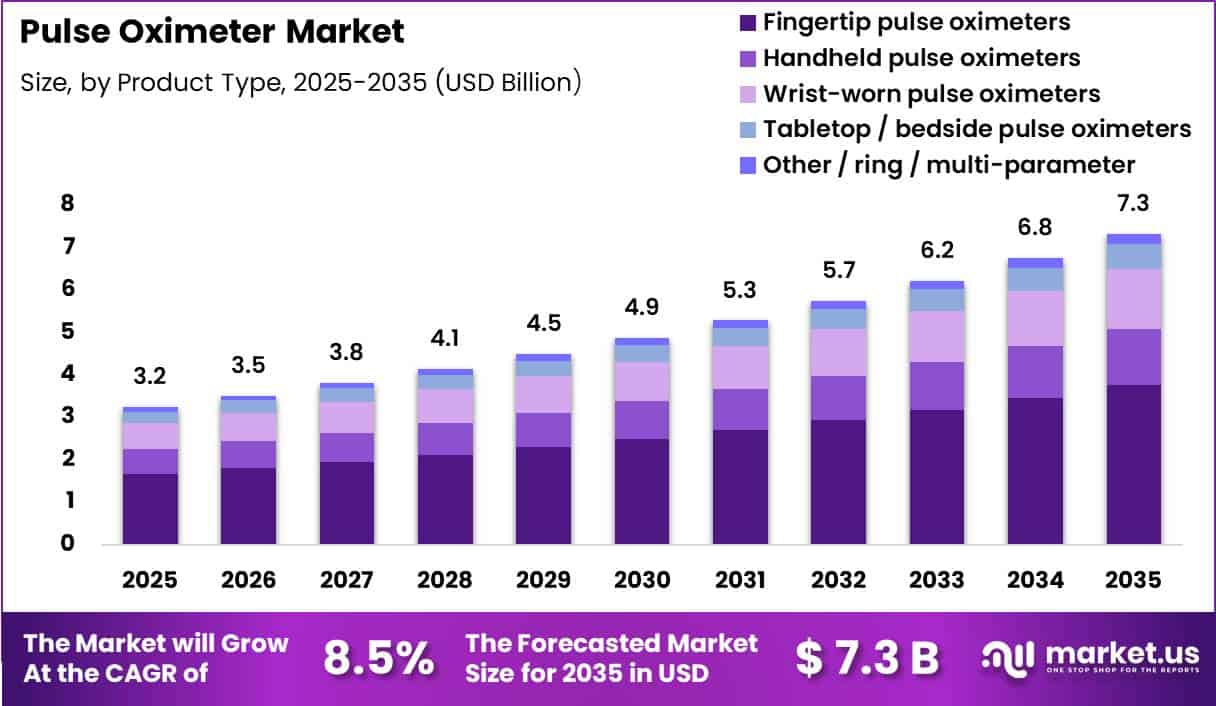
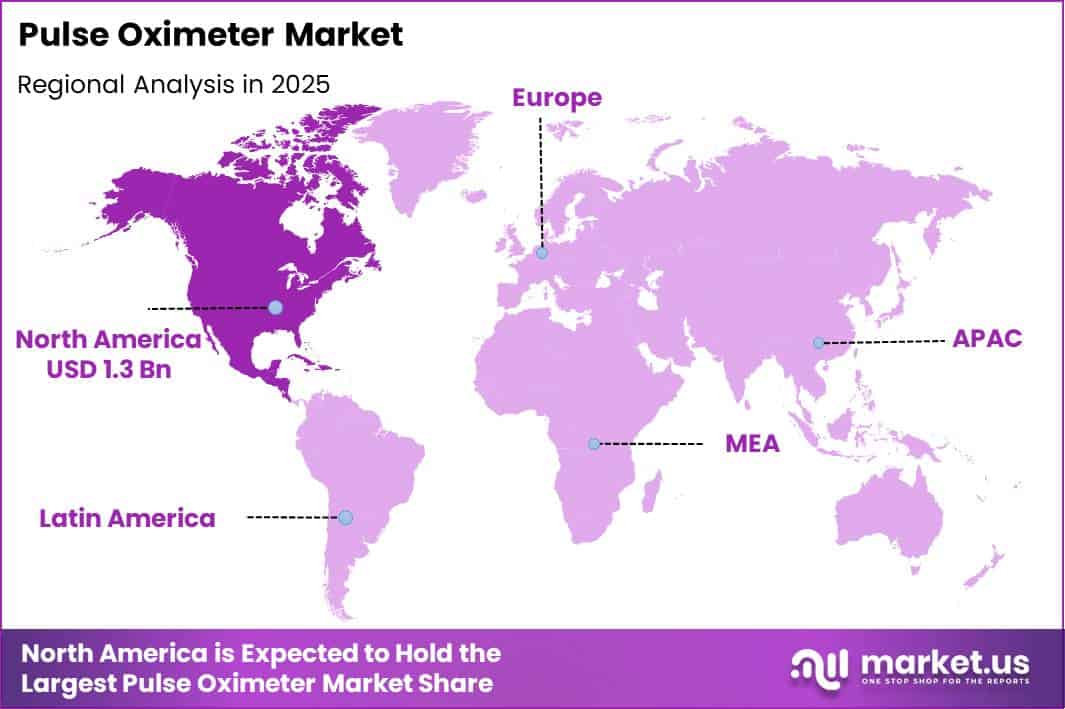
The Global Pulse Oximeter Market size is expected to be worth around US$ 7.3 Billion by 2035 from US$ 3.2 Billion in 2025, growing at a CAGR of 8.5% during the forecast period from 2026 to 2035. In 2025, North America led the market, achieving over 34.8% share with a revenue of US$ 1.13 Billion.
The global Pulse Oximeter Market is witnessing steady expansion driven by increasing demand for non-invasive patient monitoring technologies across hospitals, emergency care units, home healthcare, and wearable health applications.
A pulse oximeter is a medical device that uses light-based technology to estimate blood oxygen saturation (SpO₂) and pulse rate without requiring blood sampling. These devices are widely used for monitoring patients with respiratory disorders, cardiovascular conditions, anaesthesia requirements, and critical care needs.
Growing prevalence of chronic respiratory diseases, rising adoption of remote patient monitoring, and increased awareness of home-based health tracking are supporting market development. According to the U.S. Centers for Disease Control and Prevention (CDC), millions of adults in the United States live with chronic respiratory conditions such as asthma and chronic obstructive pulmonary disease (COPD), creating continued demand for oxygen monitoring solutions.
Pulse oximeters typically display oxygen saturation values as a percentage, with 95%–100% generally considered a common range for healthy individuals, although interpretation depends on clinical conditions.
Hospitals and clinics remain major users of pulse oximeters due to their importance in intensive care, surgical monitoring, and emergency medicine. At the same time, compact fingertip devices and connected wearable monitors are gaining popularity for home monitoring and telehealth applications.
The U.S. Food and Drug Administration (FDA) issued draft guidance in January 2025 to improve performance testing and accuracy evaluation of medical pulse oximeters across different skin pigmentations, highlighting ongoing innovation and regulatory focus in this sector.
Key growth areas include wireless monitoring, AI-enabled healthcare platforms, portable devices, and integration with digital health ecosystems. Increasing emphasis on early detection of oxygen-level abnormalities is expected to further strengthen adoption of pulse oximetry technologies worldwide.
Key Takeaways
- Market Size: The Global Pulse Oximeter Market size was US$ 3.2 billion in 2025. The market is estimated to grow to US$ 7.3 billion by 2035.
- Market Share: The Compound Annual Growth Rate (CAGR) of the market from 2026 to 2035 will be 8.5%.
- Product Type: Fingertip Pulse Oximeters has the largest market share, accounting for 51.2% of total sales.
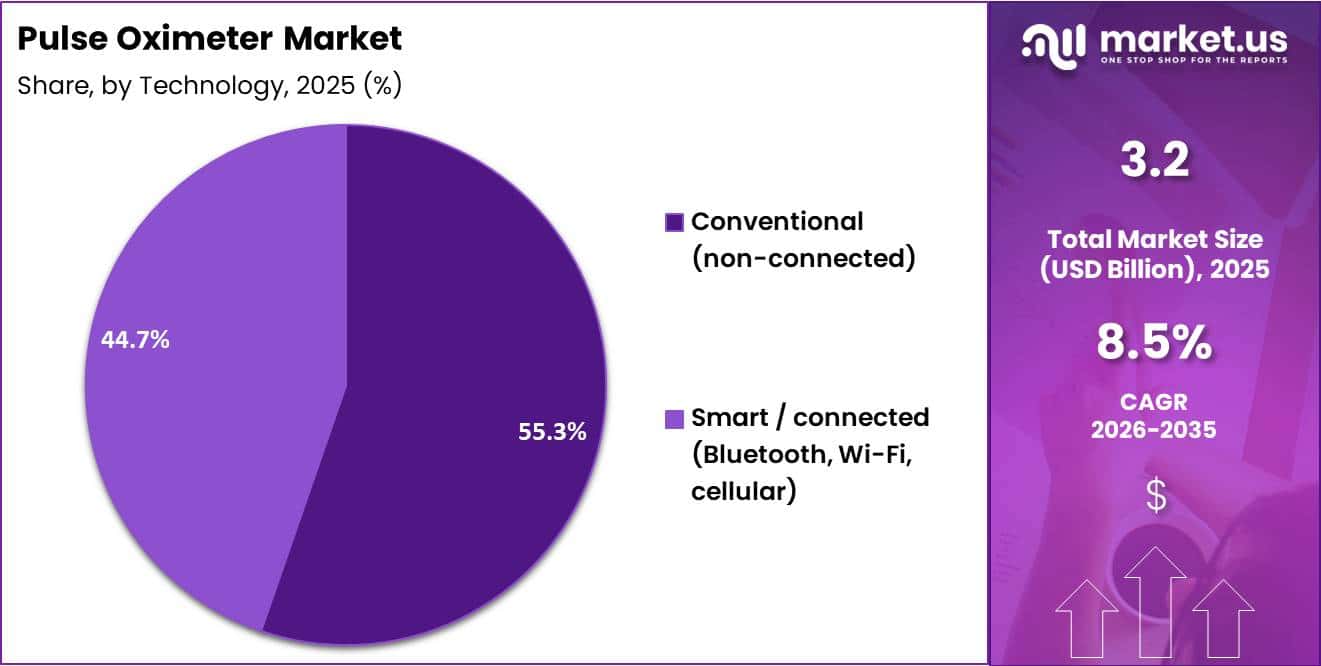
- Technology: Conventional (Non-Connected) dominates the segment, accounting for 55.3% of total revenue.
- Sensor: Disposable Sensors dominate the segment, accounting for 74.6% of total revenue.
- End User: Hospitals & Clinics dominate the segment, accounting for 59.1% of total revenue.
- Regional: North America is the dominant regional market, accounting for 34.8% of global sales, holding US$ 1.13 billion in revenue.
Product Type Analysis
The product type segment of the pulse oximeter market is led by Fingertip Pulse Oximeters, which accounted for 51.2% market share in 2025. Their dominance is attributed to widespread adoption among home users, primary care settings, and outpatient monitoring environments due to their compact size, affordability, ease of operation, and rapid oxygen saturation measurement capability.
Increased awareness of respiratory health monitoring and the growing prevalence of chronic respiratory conditions have further supported demand for portable fingertip devices. Handheld Pulse Oximeters captured an 18.1% share in 2025, supported by their use in hospitals, emergency care, and professional clinical environments where enhanced accuracy, larger displays, and advanced monitoring features are required.
Wrist-Worn Pulse Oximeters represented a 19.2% share, benefiting from rising demand for continuous monitoring solutions and integration with wearable healthcare technologies. Tabletop / Bedside Pulse Oximeters held an 8.2% share, primarily used in intensive care units, operating rooms, and hospital wards requiring continuous patient surveillance.
Other devices, including Ring and Multi-Parameter Pulse Oximeters, accounted for a 3.3% share, supported by innovation in wearable monitoring and remote healthcare applications. The product landscape is expected to evolve toward more connected, compact, and patient-friendly monitoring solutions.
Technology Analysis
The technology segment of the pulse oximeter market is dominated by Conventional (Non-Connected) Pulse Oximeters, which held 55.3% market share in 2025. These devices remain widely adopted due to their reliability, lower cost, simple operation, and extensive usage across hospitals, clinics, emergency departments, and home monitoring environments.
Conventional pulse oximeters continue to serve as essential diagnostic tools, particularly in regions where healthcare infrastructure and digital connectivity remain limited.
Smart / Connected Pulse Oximeters, including Bluetooth, Wi-Fi, and Cellular-enabled devices, accounted for a 44.7% share in 2025 and represent a rapidly expanding segment. Growth in this category is driven by increasing adoption of remote patient monitoring, telehealth platforms, digital health ecosystems, and wearable medical technologies.
Connected devices enable real-time data transmission, cloud-based health tracking, and integration with smartphones or electronic health record systems, improving patient management and clinical decision-making.
Rising demand for home-based monitoring of chronic respiratory and cardiovascular conditions is accelerating adoption of smart pulse oximeters. As healthcare systems increasingly prioritize connected care models, technology advancements such as artificial intelligence-based analytics and remote monitoring capabilities are expected to strengthen the position of smart pulse oximeter solutions.
Sensor Analysis
The sensor segment of the pulse oximeter market is primarily driven by Disposable Sensors, which accounted for 74.6% market share in 2025. Disposable sensors are widely preferred in hospitals, intensive care units, emergency departments, and surgical settings due to their ability to reduce cross-contamination risks, support infection control practices, and provide patient-specific monitoring solutions.
Growing emphasis on healthcare-associated infection prevention and increasing patient admissions requiring continuous oxygen saturation monitoring have strengthened demand for single-use sensor technologies. These sensors are particularly valuable in critical care environments where frequent replacement and reliable performance are essential.
Reusable Probes / Sensors represent the remaining market share, supported by their cost-effectiveness and long-term usability in outpatient facilities, diagnostic centers, and resource-conscious healthcare settings. Reusable sensors are commonly used where sterilization processes and maintenance protocols are well established.
Technological advancements in sensor design, including improved accuracy, flexible materials, and compatibility with multiple patient populations, are enhancing overall product performance. While disposable sensors continue to dominate due to clinical safety advantages, reusable sensor adoption remains significant in facilities focused on reducing operational costs and improving equipment utilization efficiency.
End-User Analysis
The end-user segment of the pulse oximeter market is led by Hospitals & Clinics, which accounted for 59.1% market share in 2025. Hospitals remain the largest users due to the extensive application of pulse oximeters in emergency care, intensive care units, surgical procedures, inpatient monitoring, and respiratory disease management.
Increasing hospitalization rates associated with chronic respiratory disorders, cardiovascular diseases, and postoperative care requirements continue to drive adoption across clinical settings.
Home Healthcare represents a significant and rapidly expanding segment, supported by the growing preference for remote patient monitoring, aging populations, and increased management of chronic conditions outside traditional healthcare facilities.
The availability of affordable portable, and connected pulse oximeters has encouraged patients to monitor oxygen levels at home. Ambulatory Surgical Centers & Emergency Medical Services (EMS) also contribute substantially to market demand due to the need for rapid, accurate, and portable oxygen saturation assessment during procedures and emergency response situations.
Other end users, including diagnostic centers, rehabilitation facilities, and long-term care centers, continue to adopt pulse oximetry solutions for routine patient monitoring. The market is expected to witness increasing decentralization of monitoring, with home-based and connected healthcare models gaining importance alongside traditional hospital usage.
Key Market Segments
By Product Type
- Fingertip Pulse Oximeters
- Handheld Pulse Oximeters
- Wrist-Worn Pulse Oximeters
- Tabletop/Bedside Pulse Oximeters
- Other/Ring/Multi-Parameter
By Technology
- Conventional (Non-Connected)
- Smart/Connected (Bluetooth, Wi-Fi, Cellular)
By Sensor
- Disposable Sensors
- Reusable Probes/Sensors
By End User
- Hospitals & Clinics
- Home Healthcare
- Ambulatory Surgical Centers & EMS
- Others
Drivers
Post-COVID Remote Monitoring Protocols and Home Oximetry Pathways
Post-COVID clinical practice has permanently embedded home pulse oximetry into respiratory care pathways, transforming a temporary pandemic response tool into a structural demand driver across primary care, outpatient management, and consumer health markets.
Clinical guidance widely recognises oxygen saturation thresholds typically around 92 % for urgent escalation and 93 to 94 % for moderate risk as key triggers for intervention, shifting a meaningful portion of patient monitoring from hospitals to home-based settings.
Between 2020 and 2024, health systems in the UK, Europe, and North America scaled virtual ward models that incorporated pulse oximeters into standardized home monitoring kits for COVID-19, influenza complications, and chronic respiratory conditions.
Evaluations of these programs demonstrated reductions in avoidable hospital admissions and improved early detection of clinical deterioration, reinforcing continued procurement and integration into 2025 to 2026 budgets.
As a result, pulse oximeters are increasingly treated as essential triage devices rather than optional accessories. This shift is expanding adoption in general practice clinics, home care programs, and pharmacy distribution channels.
At the same time, manufacturers are transitioning from one-time device sales toward bundled offerings that include monitoring software, remote clinical support, and data integration services, increasing lifetime value per user and supporting tiered pricing strategies.
Overall, the institutionalization of remote monitoring is expected to contribute approximately 1.5 % points of incremental CAGR through 2030, driven by higher home care penetration, faster replacement cycles, and the normalization of continuous respiratory monitoring in both acute and chronic care settings.
| Driver | (~) % Impact on CAGR Forecast | Geographic Relevance | Impact Timeline |
|---|---|---|---|
| Post-COVID remote monitoring protocols and home oximetry pathways | +1.5% | North America core, EU, APAC corridors | Short–Medium (≤ 3 years) |
| Rising prevalence of COPD, sleep apnea and cardiorespiratory comorbidities | +1.2% | North America, EU, East Asia, GCC | Medium–Long (2–6 years) |
| Regulatory push for accuracy across skin pigmentation and labeling reforms | +0.9% | United States, EU, UK, Canada | Medium term (2–4 years) |
| Integration with smartphones, wearables and telehealth platforms | +1.0% | Global urban markets, APAC, EU, North America | Medium term (2–4 years) |
| Shift to hospital-grade continuous monitoring and virtual wards | +0.8% | EU, UK, North America, selected APAC | Short–Medium (≤ 3 years) |
| Emerging markets expansion and primary care digitization | +0.7% | India, ASEAN, Latin America, Africa | Long-term (≥ 4 years) |
Challenges
Skin Tone Related Accuracy Bias in Pulse Oximetry and Clinical Monitoring Systems
Persistent accuracy bias in pulse oximetry across different skin tones remains a significant clinical and operational challenge, with multiple post 2021 studies and regulatory reviews indicating systematic overestimation of oxygen saturation in patients with darker skin pigmentation, particularly in the 88 to 94 % SpO₂ range. This can lead to delayed recognition of hypoxemia and misclassification of disease severity in respiratory conditions, including COVID 19 and chronic lung disease.
In practical clinical workflows, this bias introduces additional safeguards and complexity. Many health systems now rely on confirmatory testing such as arterial blood gas analysis or repeated oximetry readings in higher-risk populations, increasing per-patient evaluation time by approximately 8 to 12 minutes.
Some remote monitoring programs have also adjusted escalation thresholds upward, for example, triggering alerts at 93 % rather than 92 %, and increasingly emphasise trend-based monitoring rather than single-point readings.
At scale, these adjustments create friction in the expansion of home-based monitoring programs, particularly in ethnically diverse urban populations. They also slow the deployment of large virtual care initiatives that depend on high-confidence single-device readings.
Regulatory expectations are tightening, with calls for validation across diverse cohorts, often 200 to 500 plus subjects spanning broad saturation ranges before widespread approval. From a strategic perspective, manufacturers are being pushed to improve algorithmic correction for skin pigmentation, incorporate perfusion and signal quality indices, and redesign clinical validation protocols to ensure equitable performance.
Providers, in parallel, must adopt more nuanced interpretation frameworks that integrate oximetry with clinical assessment rather than relying on it as a standalone metric. Overall, this issue is estimated to reduce maximum achievable market expansion by approximately 1.2 % points of CAGR, while increasing compliance, validation, and workflow complexity over the medium term.
| Challenge | (~) % CAGR Friction Drag | Geographic Relevance | Mitigation Horizon |
|---|---|---|---|
| Skin tone accuracy bias | -1.2% | US, UK, EU, high-diversity markets | Medium term (2-4 years) |
| Clinical-grade vs consumer quality gap | -1.0% | North America core, EU, urban APAC | Medium term (2-4 years) |
| Data integration & interoperability lag | -0.9% | Hospital networks, telehealth hubs globally | Long-term (≥ 4 years) |
| Home-use education & misuse risk | -0.8% | Global home monitoring segment | Short term (≤ 2 years) |
| Regulatory test burden & evidence gaps | -0.7% | US (FDA), EU MDR, select APAC regulators | Long-term (≥ 4 years) |
| Supply chain & sensor component volatility | -0.6% | APAC manufacturing corridors, global OEMs | Medium term (2-4 years) |
Restraints
Stricter Accuracy and Bias Regulation in Pulse Oximetry
Stricter regulatory scrutiny around pulse oximeter accuracy and racial bias is emerging as a structural constraint on market growth, particularly in the U.S. and EU hospital segments. The FDA’s evolving draft guidance is pushing manufacturers toward significantly more rigorous clinical validation across diverse skin tones, increasing both trial size and design complexity.
Where legacy studies often required 40 to 60 subjects, new protocols are trending toward 120 to 180 participants, with mandatory representation across standardised pigmentation scales such as the Monk Skin Tone Scale. This expansion in validation scope is extending development timelines by an estimated 9 to 12 months per device iteration.
At the same time, tighter accuracy expectations commonly interpreted around ±3 % error across the 70 to 100 % SpO₂ range are forcing redesigns in optical systems, sensor calibration, and signal processing algorithms. These upgrades often require multi-wavelength LEDs, enhanced photodetectors, and more advanced ASICs, increasing bill of materials costs by roughly 8 to 15 %.
From a commercial standpoint, these requirements compress margins by approximately 150 to 250 basis points for mid-tier manufacturers and delay product launches into high-value clinical settings such as ICUs and operating rooms by one to two procurement cycles.
Increased spending on regulatory compliance and clinical validation also diverts resources away from geographic expansion and marketing investment.
Overall, stricter bias and accuracy regulations are estimated to reduce potential global pulse oximetry market CAGR by around 2.0 % points (2026–2030), primarily through longer development cycles, higher engineering costs, and slower product refresh rates despite growing underlying demand for remote and inpatient monitoring solutions.
| Restraint | (~) % Impact on CAGR Forecast | Geographic Relevance | Impact Timeline |
|---|---|---|---|
| Stricter accuracy & bias regulation | -2.0% | North America core, EU, high-income APAC | Medium term (2–4 years) |
| Quality crackdown on low-cost devices | -1.5% | India, broader LMIC APAC, Africa, LatAm | Short to medium term (≤ 3 years) |
| Sensor & electronics cost volatility | -1.3% | Global, with import-dependent regions | Short term (≤ 2 years) |
| Reimbursement & budget constraints | -1.2% | North America, EU public systems | Medium to long term (3–6+ years) |
| Accuracy limitations in diverse skin tones | -1.0% | North America, EU, multi-ethnic APAC | Medium term (2–4 years) |
| Post-pandemic demand normalization | -0.8% | Global, especially high-income markets | Short term (≤ 2 years) |
Opportunity
Chronic Disease Population Analytics and Risk Stratification
The use of pulse oximeter data for chronic disease population analytics and risk stratification represents an emerging but still underdeveloped growth layer beyond traditional device sales. While baseline demand is driven by increasing prevalence of COPD, asthma, and other chronic respiratory conditions, most oxygen saturation monitoring today remains episodic and clinically reactive rather than continuously integrated into population health systems.
As health systems digitize, longitudinal SpO₂ datasets from millions of connected devices can be aggregated and analyzed to generate predictive risk scores for respiratory deterioration, exacerbations, and hospital admissions. These models can segment patients into risk tiers and support proactive interventions, particularly in payer-driven care management and value-based reimbursement frameworks.
In advanced deployments, oximetry data can feed directly into predictive analytics platforms that aim to reduce unplanned respiratory admissions by 10 to 20 %, creating meaningful shared savings opportunities for payers and providers.
This transforms pulse oximetry from a standalone monitoring device into an input layer for broader chronic care management ecosystems. Commercially, this enables a shift toward data as a service models, where anonymised patient datasets are monetized through subscription analytics offerings priced at approximately USD 3 to 5 per patient per month.
At scale covering an estimated 50 to 70 million chronic respiratory patients, this could generate a data services market of roughly USD 1.8 to 4.2 billion by the early 2030s, with software-driven EBITDA margins in the 45 to 50 % range.
Because most traditional pulse oximeter manufacturers remain hardware-focused, this transition represents a structural business model shift. It could add an estimated 1.8 % points to long-term market CAGR (2026 to 2035) by unlocking recurring software and analytics revenue on top of existing device penetration.
| Opportunity | (~) % Potential CAGR Upside | Geographic Relevance | Execution Window |
|---|---|---|---|
| Integrated RPM & care-pathway bundles | +2.0% | North America, EU, urban APAC | Short term (≤ 2 years) |
| Skin-tone-calibrated and equity-certified devices | +1.5% | North America core, EU, LatAm | Medium term (2-4 years) |
| Chronic disease population analytics & risk stratification | +1.8% | North America, EU, APAC emerging | Medium term (2-4 years) |
| Low-cost connected oximeters for primary care and LMICs | +2.2% | APAC emerging, Africa, LatAm | Long-term (≥ 4 years) |
| Consumer-grade continuous monitoring in wearables & fitness ecosystems | +1.7% | North America, EU, affluent APAC | Medium term (2-4 years) |
| Hospital workflow automation & algorithmic early-warning platforms | +1.3% | North America, EU, GCC | Short to medium term (≤ 3 years) |
Regional Analysis
In 2025, North America led the market, achieving over 34.8% share with a revenue of US$ 1.13 billion. North America accounted for a significant share of the global pulse oximeter market, supported by advanced healthcare infrastructure, high adoption of remote patient monitoring technologies, and increasing demand for home-based respiratory care solutions.
The region benefits from widespread availability of connected healthcare devices, strong presence of medical device manufacturers, and growing utilization of pulse oximeters in hospitals, ambulatory care centers, and home healthcare settings. Rising prevalence of chronic respiratory disorders, cardiovascular diseases, and an aging population further supports market expansion.
Europe represents another major market, driven by increasing healthcare expenditure, improved patient monitoring standards, and strong adoption of digital health technologies. Countries across the region are emphasizing remote monitoring programs and connected medical devices to enhance chronic disease management and reduce healthcare burdens.
Asia-Pacific is expected to witness rapid growth during the forecast period, fueled by expanding healthcare infrastructure, increasing awareness of oxygen monitoring devices, rising healthcare investments, and growing demand for affordable portable diagnostic solutions. Emerging economies are experiencing higher adoption of fingertip and wearable pulse oximeters due to improving access to healthcare services.
Latin America and the Middle East & Africa are gradually expanding markets, supported by improving healthcare facilities, increasing disease awareness, and greater availability of cost-effective monitoring devices.
However, adoption in some areas remains influenced by affordability, healthcare accessibility, and infrastructure limitations. Overall, global market growth is being shaped by the shift toward portable, connected, and home-based patient monitoring solutions across regions.
Key Regions and Countries
North America
- The US
- Canada
Europe
- Germany
- France
- The U.K.
- Italy
- Spain
- Russia & CIS
- Rest of Europe
Asia Pacific
- China
- India
- Japan
- South Korea
- ASEAN
- Australia & New Zealand
- Rest of Asia Pacific
Middle East & Africa
- GCC
- South Africa
- Rest of Middle East & Africa
Latin America
- Brazil
- Mexico
- Rest of Latin America
Key Player Analysis
Competitive advantage in the global pulse oximeter market is achieved through broad product portfolio coverage spanning fingertip, handheld, wrist-worn, and tabletop pulse oximeter formats, established distribution relationships with hospitals, clinics, and home healthcare providers, and continued investment in smart connected pulse oximeter technology integrating Bluetooth and Wi-Fi data transmission with electronic health record systems.
Major strategic priorities for leading manufacturers include expansion of smart connected pulse oximeter product lines addressing the fastest-growing technology segment, development of wrist-worn and ring format oximeters targeting the growing consumer health monitoring and remote patient management segments.
Growing investment in home healthcare distribution channels supporting the structural shift toward decentralized patient monitoring for chronic respiratory and cardiovascular disease management.
Strong hospital and clinic procurement relationships, combined with expanding home healthcare and ambulatory surgical center presence, represent a critical competitive differentiator for manufacturers serving the dominant fingertip pulse oximeter segment globally.
Top Key Players
- Medtronic plc
- Masimo Corporation
- Koninklijke Philips N.V.
- GE Healthcare
- Nihon Kohden Corporation
- Nonin Medical, Inc.
- Smiths Group plc / Smiths Medical
- Drägerwerk AG & Co. KGaA
- ICU Medical, Inc.
- Contec Medical Systems Co., Ltd.
- Opto Circuits (India) Ltd.
- Omron Healthcare, Inc.
- CAS Medical Systems, Inc.
- Spacelabs Healthcare (OSI Systems)
- Beurer GmbH
- Other Key Players
Recent Developments
- In January 2026, Masimo Corporation launched an expanded wrist-worn smart pulse oximeter with continuous Bluetooth-connected SpO2 monitoring, targeting home healthcare and remote patient monitoring institutional buyers seeking real-time oxygen saturation data integration with telehealth platforms.
- In February 2026, Koninklijke Philips N.V. introduced a new tabletop bedside pulse oximeter with enhanced multi-parameter monitoring capabilities, targeting hospital ICU and general ward buyers seeking integrated SpO2, pulse rate, and perfusion index monitoring in a single compact bedside device.
- In March 2026, Nonin Medical, Inc. expanded its disposable sensor portfolio with new neonatal and pediatric-specific pulse oximeter sensor designs, targeting hospital NICU and pediatric ward buyers seeking accurate SpO2 monitoring across vulnerable patient populations with challenging perfusion characteristics.
- In April 2026, Omron Healthcare, Inc. secured a multi-year distribution agreement with a leading Asian retail pharmacy and home healthcare network covering its fingertip and wrist-worn pulse oximeter portfolio, expanding its consumer and home healthcare institutional presence across Asia Pacific markets.
Report Scope
| Report Features | Description |
|---|---|
| Market Value (2025) | US$ 3.2 Billion |
| Forecast Revenue (2035) | US$ 7.3 Billion |
| CAGR (2026-2035) | 8.5% |
| Base Year for Estimation | 2025 |
| Historic Period | 2020-2024 |
| Forecast Period | 2026-2035 |
| Report Coverage | Revenue Forecast, Market Dynamics, Competitive Landscape, Recent Developments |
| Segments Covered | By Product Type (Fingertip Pulse Oximeters, Handheld Pulse Oximeters, Wrist-Worn Pulse Oximeters, Tabletop/Bedside Pulse Oximeters, Other/Ring/Multi-Parameter), By Technology (Conventional (Non-Connected), Smart/Connected (Bluetooth, Wi-Fi, Cellular)), By Sensor (Disposable Sensors, Reusable Probes/Sensors), By End User (Hospitals & Clinics, Home Healthcare, Ambulatory Surgical Centers & EMS, Others) |
| Regional Analysis | North America – The US, Canada; Europe – Germany, France, U.K., Italy, Spain, Russia & CIS, Rest of Europe; Asia Pacific – China, India, Japan, South Korea, ASEAN, Australia & New Zealand, Rest of Asia Pacific; Middle East & Africa – GCC, South Africa, Rest of Middle East & Africa; Latin America – Brazil, Mexico, Rest of Latin America |
| Competitive Landscape | Medtronic plc, Masimo Corporation, Koninklijke Philips N.V., GE Healthcare, Nihon Kohden Corporation, Nonin Medical, Inc., Smiths Group plc / Smiths Medical, Drägerwerk AG & Co. KGaA, ICU Medical, Inc., Contec Medical Systems Co., Ltd., Opto Circuits (India) Ltd., Omron Healthcare, Inc., CAS Medical Systems, Inc., Spacelabs Healthcare (OSI Systems), Beurer GmbH, Other Key Players |
| Customization Scope | Customization for segments, region/country-level will be provided. Moreover, additional customization can be done based on the requirements. |
| Purchase Options | We have three licenses to opt for: Single User License, Multi-User License (Up to 5 Users), Corporate Use License (Unlimited User and Printable PDF) |





































