


Global Plant Genomics Market Size, Share, And Enhanced Productivity By Type (Molecular Engineering, Genetic Engineering, Others), By Trait (Yield Improvement, Disease Resistance, Herbicide Tolerance, Others), By Objective (DNA Extraction and Purification, DNA/RNA Sequencing, Genotyping, GENE Expression Profiling, Marker-Assisted Selection, GMO-Trait Purity Testing, Others), By Application (Cereals and Grains, Oilseeds and Pulses, Fruits and Vegetables, Others), By Region and Companies - Industry Segment Outlook, Market Assessment, Competition Scenario, Trends, and Forecast 2025-2034
- Published date: March 2026
- Report ID: 181195
- Number of Pages: 385
- Format:
-
keyboard_arrow_up
Quick Navigation
Report Overview
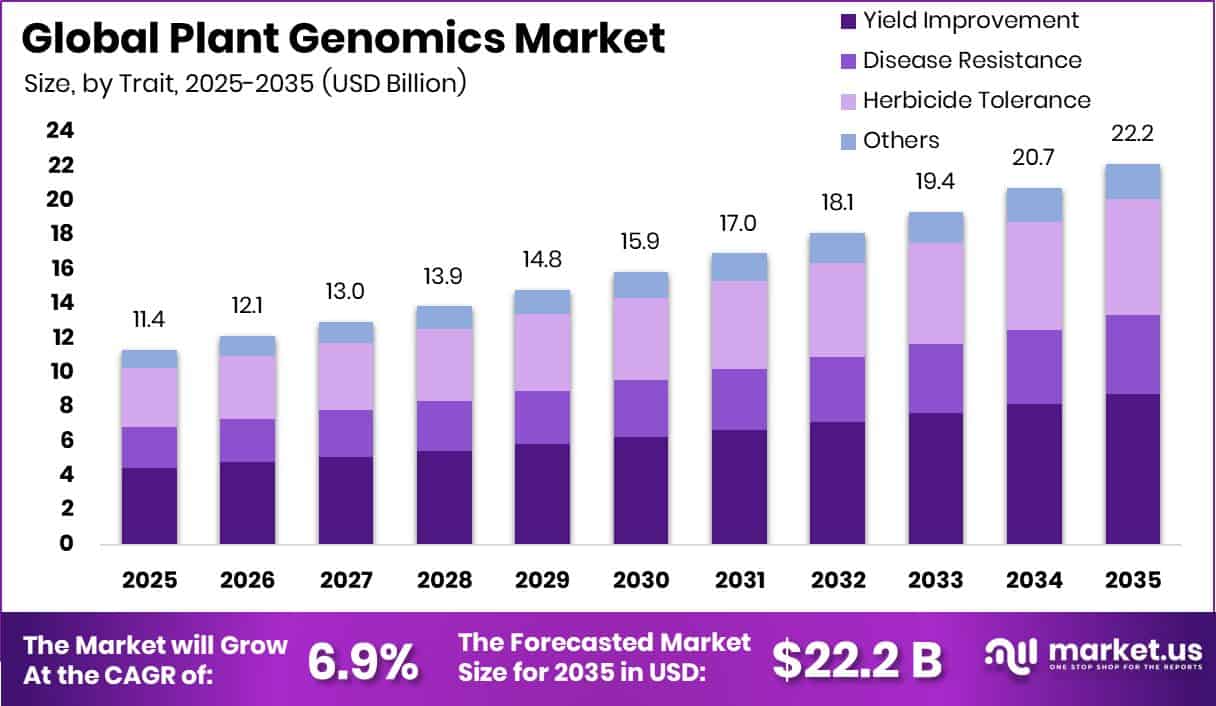
The Global Plant Genomics Market is expected to be worth around USD 22.2 billion by 2034, up from USD 11.4 billion in 2024, and is projected to grow at a CAGR of 6.9% from 2025 to 2034. In 2025, North America led the Plant Genomics Market, holding a 39.6% share with a value of USD 4.5 Bn.
Plant genomics refers to the scientific study of the complete genetic makeup of plants, including the structure, function, and interaction of genes within plant cells. It focuses on understanding how genetic information controls plant growth, development, productivity, and resistance to environmental stress. Through technologies such as DNA sequencing, genotyping, and gene expression analysis, researchers can identify important genetic traits that influence crop performance. This knowledge supports the development of improved crop varieties with better yield, quality, and resilience.
The Plant Genomics Market includes technologies, tools, and services used to analyze plant genetic information for agricultural research and crop improvement. The market covers activities such as DNA extraction and purification, DNA/RNA sequencing, genotyping, gene expression profiling, marker-assisted selection, and GMO-trait purity testing. These technologies are applied across various crops including cereals and grains, oilseeds and pulses, fruits and vegetables, and others. Plant genomics plays a key role in improving crop productivity and enabling better management of agricultural resources.
One of the major growth factors supporting the market is the increasing focus on improving agricultural productivity and crop resilience. Researchers and agricultural organizations are investing in genomic technologies to better understand plant traits such as yield improvement, disease resistance, and herbicide tolerance. The integration of molecular engineering and genetic engineering techniques has accelerated crop research programs and strengthened the use of genomics in plant breeding and agricultural innovation.
Rising demand for high-quality agricultural produce and efficient crop supply chains is further supporting plant genomics adoption. Investment activity in agriculture and plant science continues to grow. For example, British spinout Wild Bio raised €51 million to improve crop varieties through plant genetic research, while Living Models secured $7 million in seed funding to map the language of plants. In the agri-food ecosystem, KisanKonnect raised INR 72 crore, Handpickd secured $15 million, and another agri-startup raised $12.5 million to deliver residue-free fruits and vegetables directly from farmers.
The market also presents strong opportunities as countries strengthen agricultural innovation and global food supply networks. Expanding export activity and better crop management practices are creating new possibilities for genomics-driven agriculture. For instance, India’s fruits and vegetables exports increased by 47.3% with support from APEDA’s strategic initiatives, highlighting the growing importance of crop quality and productivity. As genomic technologies continue to advance, plant genomics is expected to play a crucial role in supporting sustainable agriculture and improving crop development worldwide.
Key Takeaways
- The Global Plant Genomics Market is expected to be worth around USD 22.2 billion by 2034, up from USD 11.4 billion in 2024, and is projected to grow at a CAGR of 6.9% from 2025 to 2034. In 2025,
- Molecular engineering dominates the Plant Genomics Market, accounting for 49.7% due to advanced gene-editing technologies.
- Yield improvement drives 39.5% of the Plant Genomics Market, supporting higher productivity and food security globally.
- DNA and RNA sequencing represent 27.9% of the Plant Genomics Market, enabling precise crop genetic analysis.
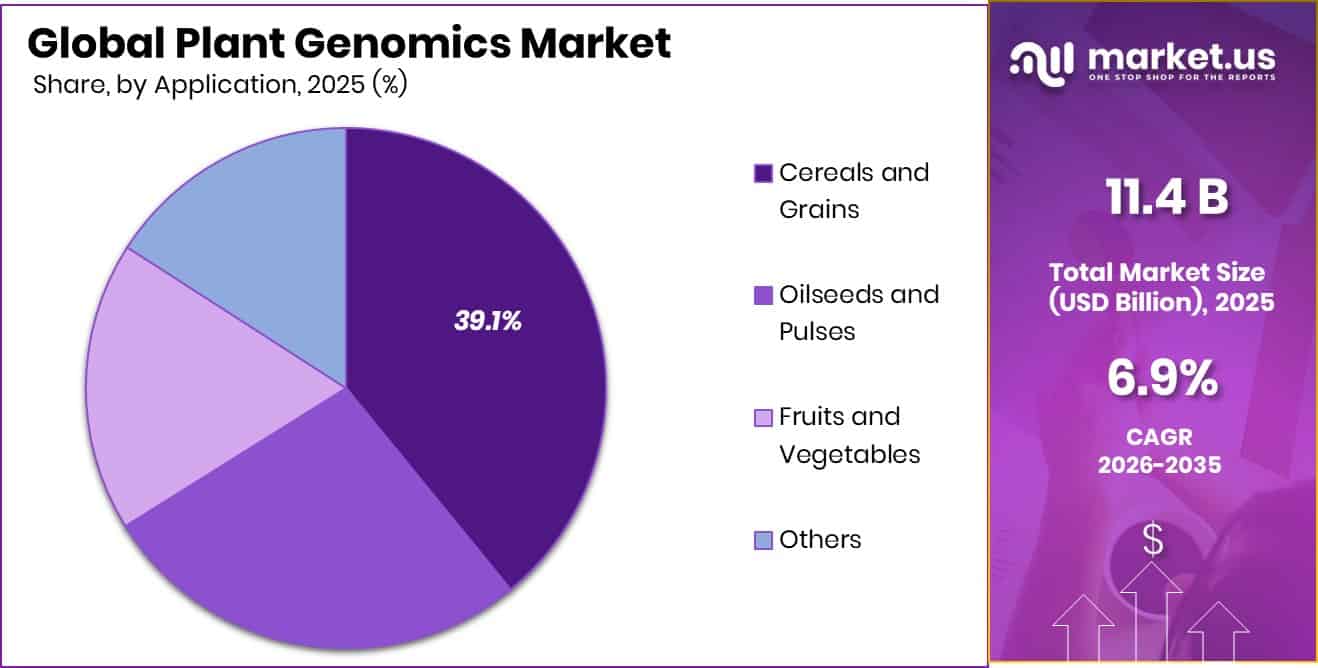
- Cereals and grains lead applications with 39.1% share in the Plant Genomics Market due to global demand.
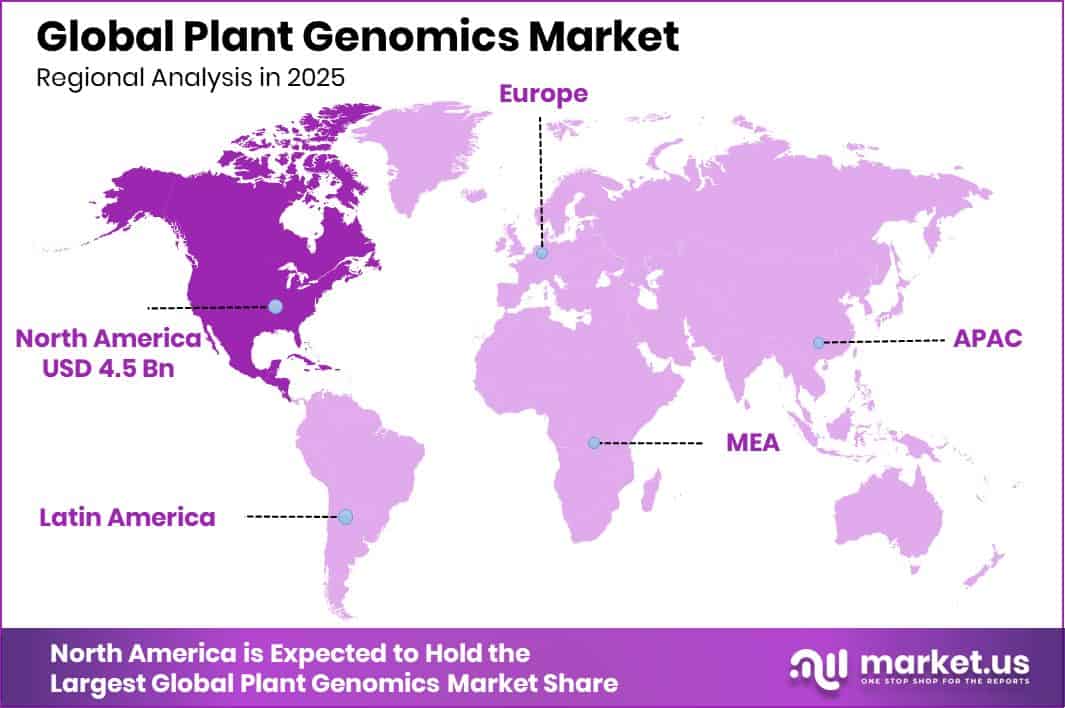
- The Plant Genomics Market in North America accounted for 39.6% share, valued at USD 4.5 Bn.
By Type Analysis
Molecular engineering dominated the Plant Genomics Market by type with 49.7% share.
In 2025, the Plant Genomics Market by type was dominated by molecular engineering, which accounted for 49.7% of the total market share. This segment held the leading position because molecular engineering techniques allow precise modification of plant genetic material, helping researchers develop crops with improved productivity, resilience, and nutritional value.
Companies and research institutions increasingly adopted tools such as gene editing and advanced molecular breeding to accelerate crop improvement programs. The demand for sustainable agricultural solutions and climate-resilient crops further strengthened the dominance of molecular engineering in plant genomics. Its ability to enable targeted genetic modifications and reduce the time required for developing new crop varieties made it the most preferred approach across agricultural biotechnology research and commercial breeding initiatives.
By Trait Analysis
Yield improvement dominated the Plant Genomics Market by trait with 39.5% share.
In 2025, the Plant Genomics Market by trait was dominated by yield improvement, which held 39.5% of the market share. This segment maintained its leadership as agricultural producers and biotechnology companies prioritized the development of high-yield crop varieties to meet rising global food demand. Yield improvement traits are designed to enhance plant productivity by optimizing genetic characteristics that influence plant growth, grain production, and overall crop performance.
Researchers increasingly focused on identifying and modifying genes responsible for higher yield potential through genomics technologies and molecular breeding strategies. The dominance of this segment was also supported by increasing investments in agricultural biotechnology research aimed at improving farm productivity and ensuring stable food supply in regions experiencing population growth and changing climatic conditions.
By Objective Analysis
DNA/RNA sequencing dominated the Plant Genomics Market by objective with 27.9% share.
In 2025, the Plant Genomics Market by objective was dominated by DNA/RNA sequencing, capturing 27.9% of the overall market share. This segment led the market due to the essential role sequencing technologies play in understanding plant genomes and identifying genetic variations associated with desirable agricultural traits.
DNA and RNA sequencing enable researchers to analyze gene expression, discover novel genes, and support precision breeding programs. The widespread use of next-generation sequencing platforms in plant research institutions and agricultural biotechnology companies strengthened the segment’s dominance.
Additionally, decreasing sequencing costs and advancements in bioinformatics tools contributed to the growing adoption of genomic sequencing techniques, making them fundamental for crop improvement, genetic diversity studies, and the development of stress-tolerant plant varieties.
By Application Analysis
Cereals and grains dominated the Plant Genomics Market by application with 39.1% share.
In 2025, the Plant Genomics Market by application was dominated by cereals and grains, accounting for 39.1% of the market share. This segment held the largest position because cereals and grains such as wheat, rice, maize, and barley represent staple food sources for a large portion of the global population.
Plant genomics technologies are widely applied in these crops to enhance yield, disease resistance, and tolerance to environmental stresses such as drought and salinity. Agricultural research organizations and seed companies invested heavily in genomic studies focused on cereals and grains to ensure food security and improve crop performance. The continued importance of staple crops in global agriculture reinforced the dominance of this application segment in the plant genomics market.
Key Market Segments
By Type
- Molecular Engineering
- Genetic Engineering
- Others
By Trait
- Yield Improvement
- Disease Resistance
- Herbicide Tolerance
- Others
By Objective
- DNA Extraction and Purification
- DNA/RNA Sequencing
- Genotyping
- GENE Expression Profiling
- Marker-Assisted Selection
- GMO-Trait Purity Testing
- Others
By Application
- Cereals and Grains
- Oilseeds and Pulses
- Fruits and Vegetables
- Others
Driving Factors
Rising demand for high-yield crops
One of the major driving forces supporting the Plant Genomics Market is the rising demand for high-yield crops as global agriculture works to improve productivity and stability in food supply. Farmers and agricultural researchers are increasingly focusing on crop varieties that deliver stronger output while maintaining resilience to environmental stress. Plant genomics tools help scientists identify genes responsible for productivity traits and improve breeding strategies. Investment activity also reflects this growing focus on crop improvement.
For instance, Moldova’s Trans-Oil Group received a EUR 24 million grant to support an oilseed processing plant in Romania, strengthening the agricultural value chain. Similarly, MSU researchers are leading an $11 million study to deepen understanding of camelina, a crop gaining interest for sustainable agriculture and oilseed production. These initiatives highlight the growing importance of genomic research in crop development.
Restraining Factors
High cost of genomic technologies
Despite technological progress, the high cost of genomic technologies remains a notable challenge for the Plant Genomics Market. Advanced sequencing platforms, genomic data analysis tools, and laboratory infrastructure require significant investment, which can limit adoption among smaller research institutions and agricultural organizations. The cost of establishing and maintaining genomic research programs also increases operational expenses. At the same time, agricultural industry developments demonstrate the scale of financial commitments required in the sector.
For example, GrainCorp has reportedly placed a price tag of more than $500 million on an oilseed processing plant, reflecting the capital intensity associated with agricultural processing and technology development. In addition, the growing flow of industry information—such as updates shared through newsletters read by more than 25,000 professionals worldwide—highlights the competitive and investment-heavy nature of modern agricultural biotechnology and genomics.
Growth Opportunity
Expanding research in crop genetic improvement
The expansion of research focused on crop genetic improvement is creating strong growth opportunities for the Plant Genomics Market. Agricultural scientists and biotechnology innovators are increasingly studying plant genetics to enhance crop performance, resilience, and nutritional quality.
Genomic research helps identify valuable traits and accelerates breeding programs that support sustainable agriculture. Broader investment in agrifood innovation is also contributing to this momentum. For example, Paine Schwartz launched a $1.7 billion agrifood investment fund, signaling strong financial support for agricultural technologies and food system innovation.
At the same time, developments across the sector continue to reshape the industry, such as Cricket One unveiling a new production plant while Infarm was declared bankrupt, highlighting the evolving nature of agri-innovation. These changes emphasize the importance of scientific research and genomic technologies in shaping the future of crop development.
Latest Trends
Integration of AI in plant genomics
A key trend influencing the Plant Genomics Market is the integration of artificial intelligence in plant genomics, which is transforming how researchers analyze large genetic datasets and identify valuable plant traits. AI tools help accelerate genomic interpretation, enabling scientists to detect gene patterns, predict crop performance, and improve breeding decisions with greater efficiency. The convergence of digital technologies and plant science is supporting faster discoveries in crop genetics.
Innovation activity across the plant-based and agricultural biotechnology ecosystem also reflects this trend. For instance, Cano-ela raised €1.6 million to develop technology that extracts innovative plant-based ingredients from oilseeds, demonstrating growing interest in plant-derived solutions and advanced research. As genomic data continues to expand, the integration of AI and computational tools is becoming an increasingly important part of plant genetics research and agricultural innovation.
Regional Analysis
In 2025, North America dominated the Plant Genomics Market with 39.6% share, reaching USD 4.5 Bn.
The Plant Genomics Market demonstrates notable regional distribution across North America, Europe, Asia Pacific, the Middle East & Africa, and Latin America, supported by increasing research activity and agricultural biotechnology adoption.
North America dominated the global Plant Genomics Market, accounting for 39.6% of the total share with a market value of USD 4.5 Bn. The region maintains a strong position due to the presence of advanced genomics research infrastructure, well-established agricultural biotechnology companies, and significant adoption of genomic technologies in crop improvement programs. The United States and Canada represent key contributors to regional market expansion through extensive use of plant genomic sequencing, molecular breeding, and crop trait development.
Europe represents another significant market supported by strong agricultural research programs and genomic innovation across several countries. Asia Pacific is experiencing growing adoption of plant genomics technologies as countries focus on improving crop productivity and food security.
Meanwhile, Latin America continues to adopt genomics tools for enhancing major crops cultivated across the region. The Middle East & Africa region is gradually integrating plant genomics applications to support agricultural research and improve crop resilience in challenging climatic environments.
Key Regions and Countries
- North America
- US
- Canada
- Europe
- Germany
- France
- The UK
- Spain
- Italy
- Rest of Europe
- Asia Pacific
- China
- Japan
- South Korea
- India
- Australia
- Rest of APAC
- Latin America
- Brazil
- Mexico
- Rest of Latin America
- Middle East & Africa
- GCC
- South Africa
- Rest of MEA
Key Players Analysis
In 2025, Eurofins Scientific plays an important role in the global Plant Genomics Market through its strong capabilities in laboratory testing, genomic analysis, and specialized agricultural research services. The company supports plant genomics activities by offering advanced sequencing, genetic analysis, and laboratory solutions that assist researchers and agricultural organizations in understanding plant genetic structures. Its broad network of laboratories and scientific expertise enables efficient genomic testing and analysis for crop research programs. By providing reliable genomic data and analytical services, Eurofins Scientific helps researchers identify important plant traits and genetic variations that contribute to crop improvement and agricultural productivity.
Agilent Technologies Inc. remains a significant participant in the plant genomics ecosystem through its portfolio of analytical instruments, genomic technologies, and laboratory solutions used in genetic research. The company’s technologies support plant scientists in conducting genomic sequencing, gene expression studies, and molecular analysis essential for plant breeding and crop research. Agilent’s platforms are widely utilized in research laboratories and biotechnology facilities where precise genomic data is required. Its focus on high-performance laboratory instrumentation and genomics-related technologies enables researchers to analyze plant genomes more efficiently and accurately.
BGI Group continues to contribute strongly to the plant genomics field through its expertise in large-scale genome sequencing and bioinformatics capabilities. The organization is recognized for operating advanced sequencing platforms that support comprehensive genomic analysis across various plant species. BGI’s capabilities enable detailed study of plant genetic information, assisting researchers in understanding genome structures and identifying traits associated with crop development. Through its sequencing infrastructure and genomic research expertise, the company supports plant genome mapping, gene discovery, and broader agricultural genomics initiatives worldwide.
Top Key Players in the Market
- Eurofins Scientific
- Agilent Technologies Inc.
- BGI Group
- Roche Diagnostics (F. Hoffmann-La Roche Ltd)
- Pacific Biosciences of California Inc.
- Oxford Nanopore Technologies plc Novogene Co., Ltd.
- Corteva Agriscience
- Syngenta Group
- Bayer AG
- KeyGene
- GENEWIZ (Azenta Life Sciences)
- Illumina, Inc.
- Qiagen
- Thermo Fisher Scientific Inc.
Recent Developments
- In September 2025, BGI Genomics, part of BGI Group, launched the T7+ ultra-high-throughput sequencing platform. BGI Group works in genome sequencing, omics technologies, and bioinformatics solutions used for biological and agricultural research. The new system supports large-scale genome projects and faster analysis of genetic data across plant and other organisms.
- In April 2024, Eurofins Genomics AgriGenomics Europe partnered with Gencove to deliver improved genomic sequencing and analysis solutions. Eurofins Scientific works in DNA sequencing, gene synthesis, and genomic testing for research and agriculture. The collaboration combines Eurofins’ sequencing capacity with Gencove’s genomic data analysis platform.
Report Scope
Report Features Description Market Value (2025) USD 11.4 Billion Forecast Revenue (2035) USD 22.2 Billion CAGR (2026-2035) 22.2 Base Year for Estimation 2025 Historic Period 2020-2024 Forecast Period 2026-2035 Report Coverage Revenue Forecast, Market Dynamics, Competitive Landscape, Recent Developments Segments Covered By Type (Molecular Engineering, Genetic Engineering, Others), By Trait (Yield Improvement, Disease Resistance, Herbicide Tolerance, Others), By Objective (DNA Extraction and Purification, DNA/RNA Sequencing, Genotyping, GENE Expression Profiling, Marker-Assisted Selection, GMO-Trait Purity Testing, Others), By Application (Cereals and Grains, Oilseeds and Pulses, Fruits and Vegetables, Others) Regional Analysis North America – US, Canada; Europe – Germany, France, The UK, Spain, Italy, Rest of Europe; Asia Pacific – China, Japan, South Korea, India, Australia, Singapore, Rest of APAC; Latin America – Brazil, Mexico, Rest of Latin America; Middle East & Africa – GCC, South Africa, Rest of MEA Competitive Landscape Eurofins Scientific, Agilent Technologies Inc., BGI Group, Roche Diagnostics (F. Hoffmann-La Roche Ltd), Pacific Biosciences of California Inc., Oxford Nanopore Technologies plc Novogene Co., Ltd., Corteva Agriscience, Syngenta Group, Bayer AG, KeyGene, GENEWIZ (Azenta Life Sciences), Illumina, Inc., Qiagen, Thermo Fisher Scientific Inc. Customization Scope Customization for segments, region/country-level will be provided. Moreover, additional customization can be done based on the requirements. Purchase Options We have three licenses to opt for: Single User License, Multi-User License (Up to 5 Users), Corporate Use License (Unlimited User and Printable PDF) 
-
-
- Eurofins Scientific
- Agilent Technologies Inc.
- BGI Group
- Roche Diagnostics (F. Hoffmann-La Roche Ltd)
- Pacific Biosciences of California Inc.
- Oxford Nanopore Technologies plc Novogene Co., Ltd.
- Corteva Agriscience
- Syngenta Group
- Bayer AG
- KeyGene
- GENEWIZ (Azenta Life Sciences)
- Illumina, Inc.
- Qiagen
- Thermo Fisher Scientific Inc.
Our Clients

- 181195
- March 2026






